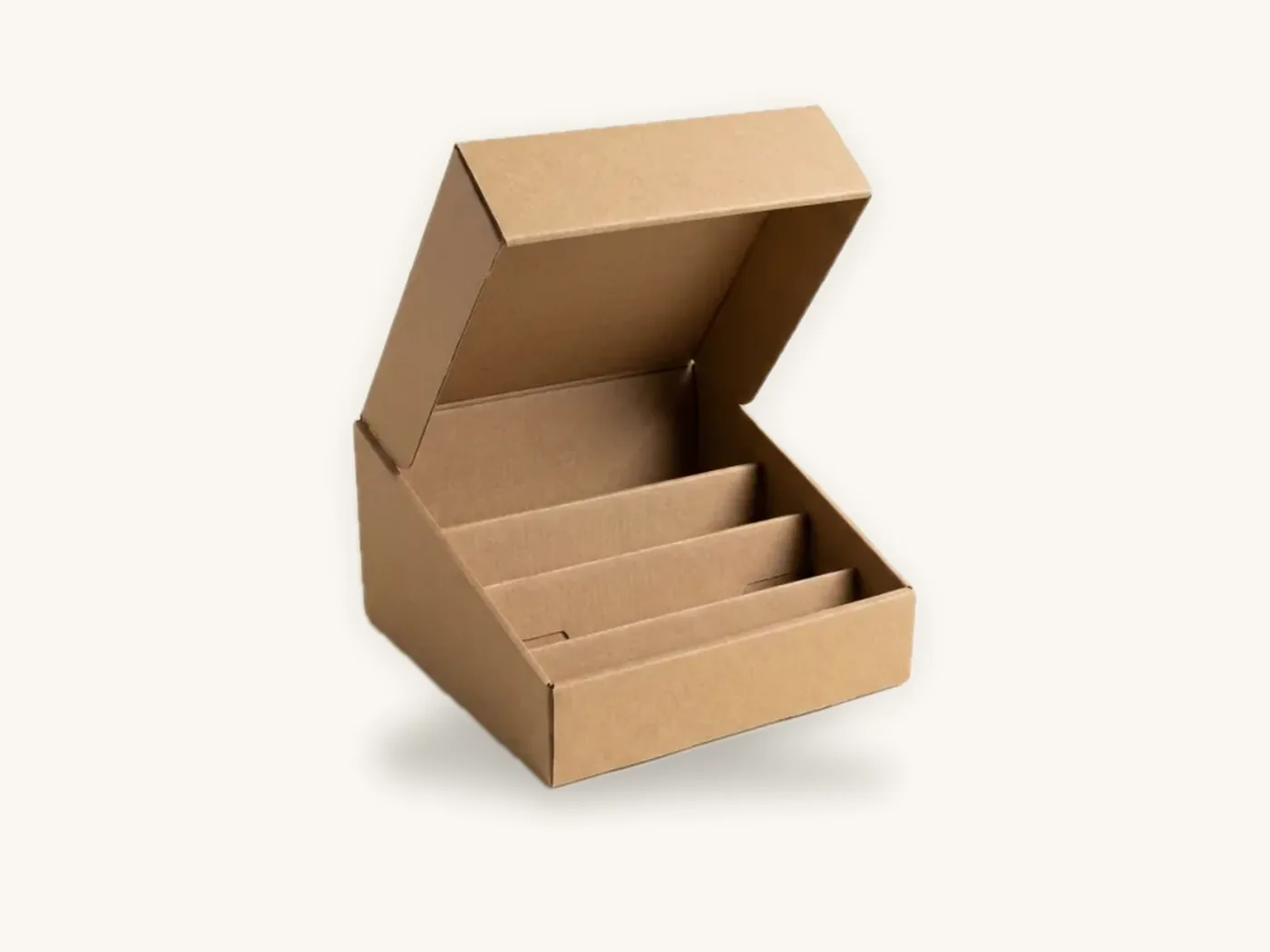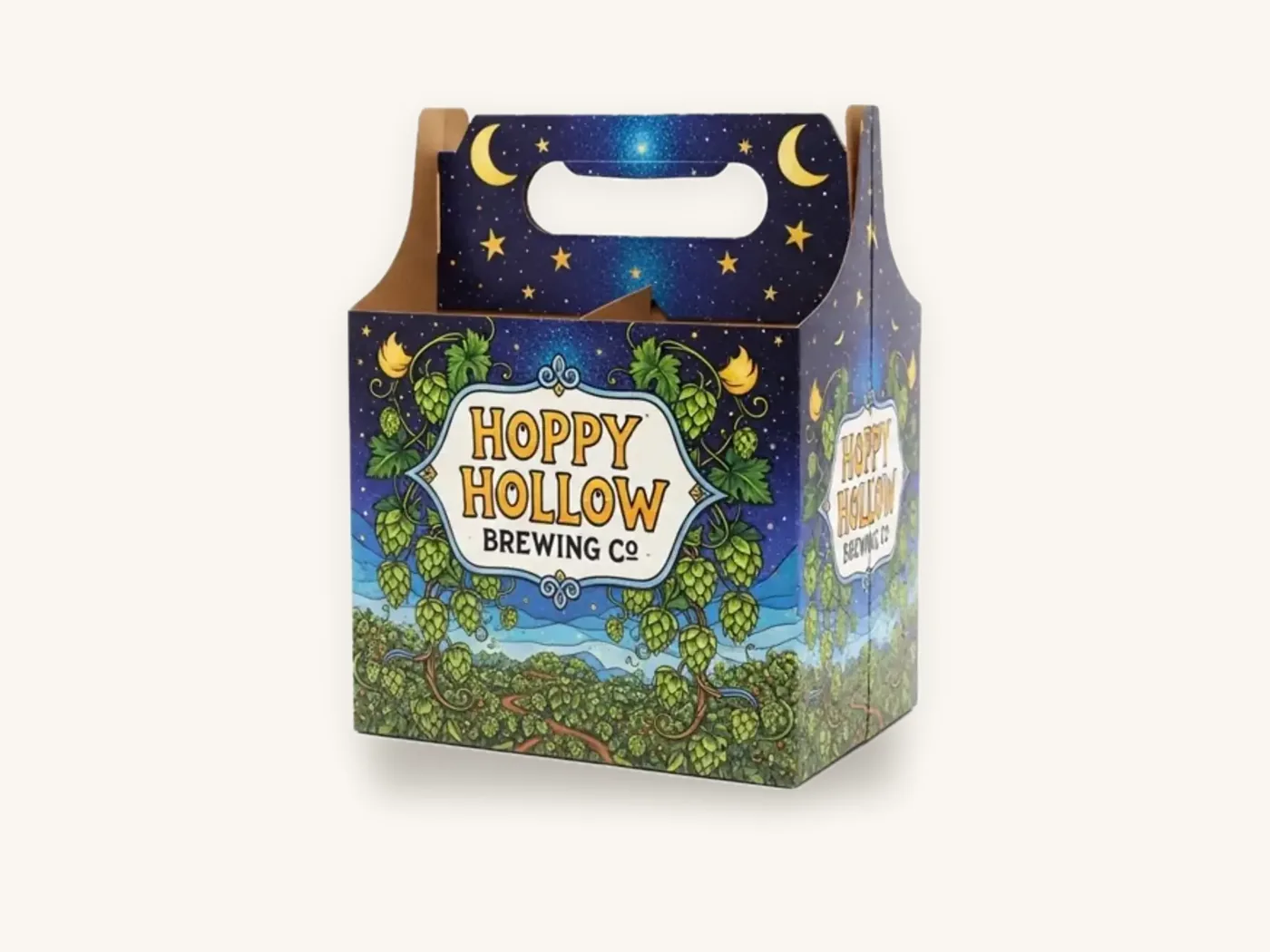
Beverage carriers are the printed paperboard or corrugated packs that group cans or bottles into four-packs, six-packs and mixed packs with a handle, so a customer can carry them out of a taproom or pull them from a store cooler. For craft breweries, cideries, kombucha makers, coffee roasters with canned cold brew and ready-to-drink cocktail brands, the carrier is often the only branded surface on the shelf, since the cans themselves may be labeled rather than printed.
A good carrier fits the container exactly, holds its weight by the handle without tearing, stays strong in a sweating cooler, and gives you enough panel space to sell a new release. This guide covers the carrier styles, how to size for each can and bottle format, the moisture and load problems specific to cold drinks, design, and how to order.
Key takeaways
- The four main styles are basket carriers (open top, center handle), wraparound or sleeve carriers, top-grip clip carriers, and enclosed carton or gable-handle packs.
- Size every carrier from your exact container. A 12 oz standard can, a 12 oz sleek can and a 16 oz can need three different carriers.
- Cold drinks sweat. Choose board, coatings and handle design for condensation and cooler storage, not just for dry shelves.
- A six-pack carrier of 12 oz cans carries roughly 5 lb, and a six-pack of 12 oz glass bottles noticeably more. Handle design and board strength must allow for that load plus a margin.
- Carriers are the easiest place to run seasonal and limited releases: use one structure and change the print, or add labels to a blank printed carrier.
- Box Sense makes printed beverage carriers from 10 units with free design support and no die or plate charges.
Beverage carrier styles compared
Each style trades off shelf visibility, material use, packing speed and how much of the container stays visible. Our beverage carriers are produced in printed corrugated and paperboard across these formats.
| Style | How it holds the drinks | Visible container | Print area | Best for | Watch for |
|---|---|---|---|---|---|
| Basket carrier | Open-top cells with a tall center handle divider | Tops and upper sides | Side walls and handle panel | Bottles, taproom to-go, mixed packs | Uses more board than a wrap |
| Wraparound / sleeve | A band wraps the pack; cans held by friction or locks | Tops and bottoms | Large continuous side panels | Canned retail, shelf billboarding | Finger holes or handle cut-outs must be strong |
| Top-grip clip carrier | A paperboard sheet with holes that snap over can rims | Almost the whole can | Top panel only | Printed cans that sell themselves | Rim fit tolerance is tight |
| Enclosed carton | Fully closed box with a handle cut-out | None | All sides | Light-sensitive drinks, gifting, variety packs | Hides the product entirely |
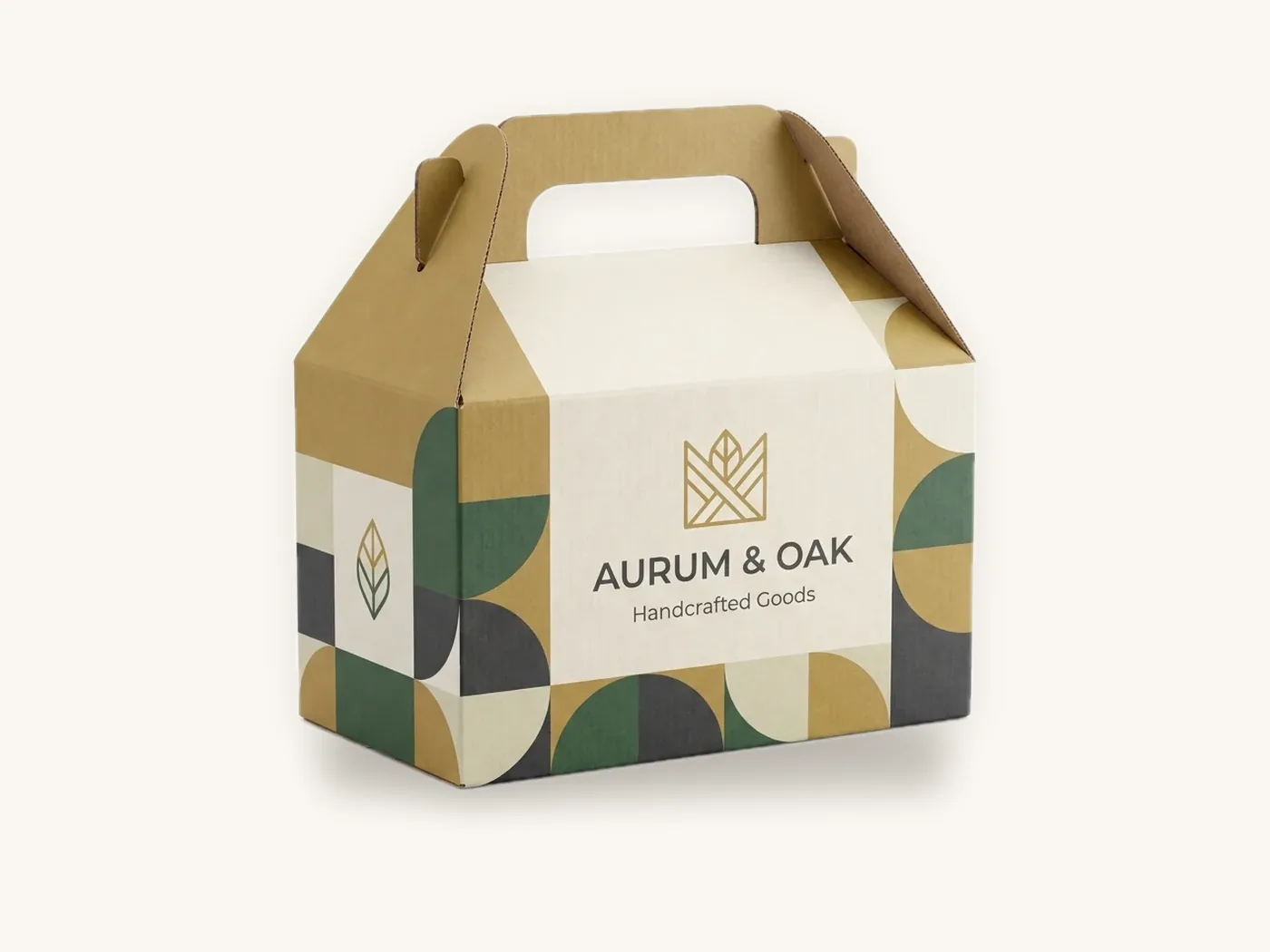
| Gable-handle pack | Enclosed pack with a raised handle at the top | None | All sides plus handle | Gift packs, mixed sampler sets | More board per unit |
| Corrugated tray with shrink film | Low tray, wrapped | All but base | Tray edge only | Case packing, warehouse clubs | Minimal branding |
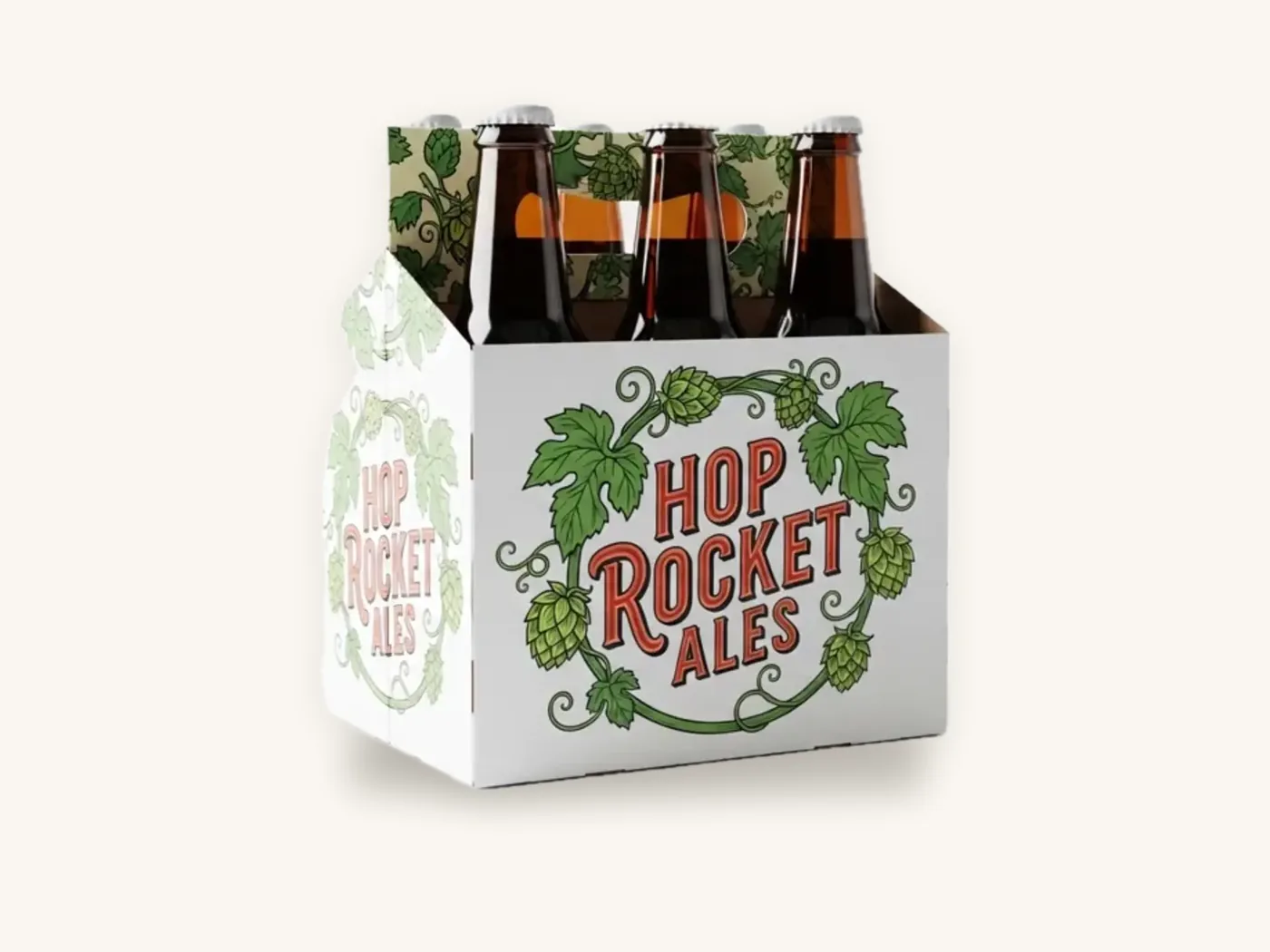
Basket carriers
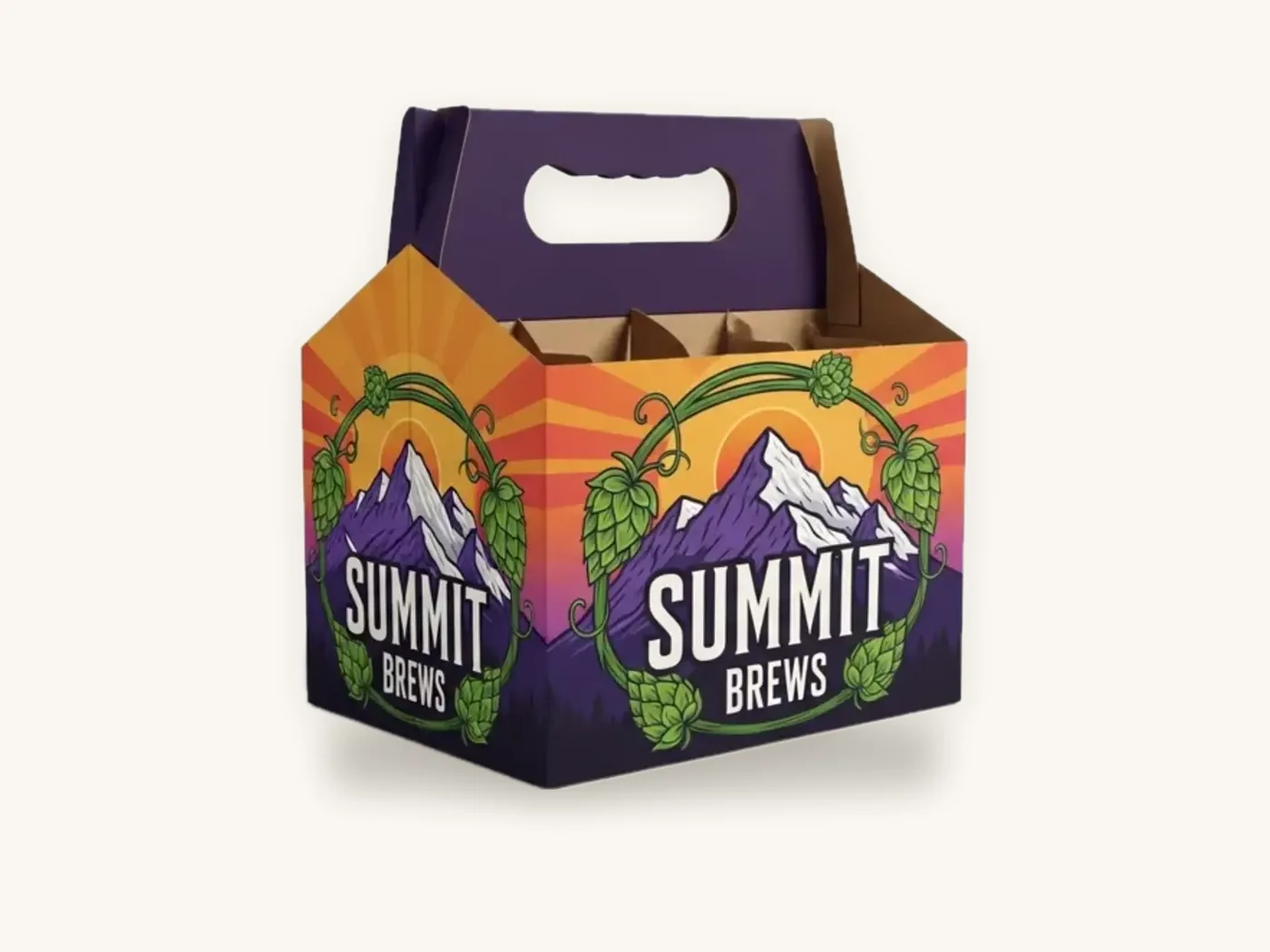
The basket carrier is the most recognizable six pack carrier. Internal dividers separate each bottle, which stops glass knocking together, and the center handle panel gives a strong spine to lift from. It is the default for bottled beer, cider and soda, and it works for cans when you want to show the tops.
Wraparound and sleeve carriers
A wraparound folds tightly around a block of cans and turns the pack into a single printed billboard. It uses board efficiently and presents a large, continuous graphic on the cooler shelf. Handle options include finger holes in the top panel or a reinforced cut-out on the sides.
Top-grip clip carriers
A clip carrier is a flat die-cut sheet that snaps over can rims. It uses the least material and leaves printed cans almost fully visible, which suits brands whose cans are already the main artwork. The tradeoff is a small print area and very tight tolerances, since the hole pattern must match the can end precisely.
Enclosed cartons and gable packs
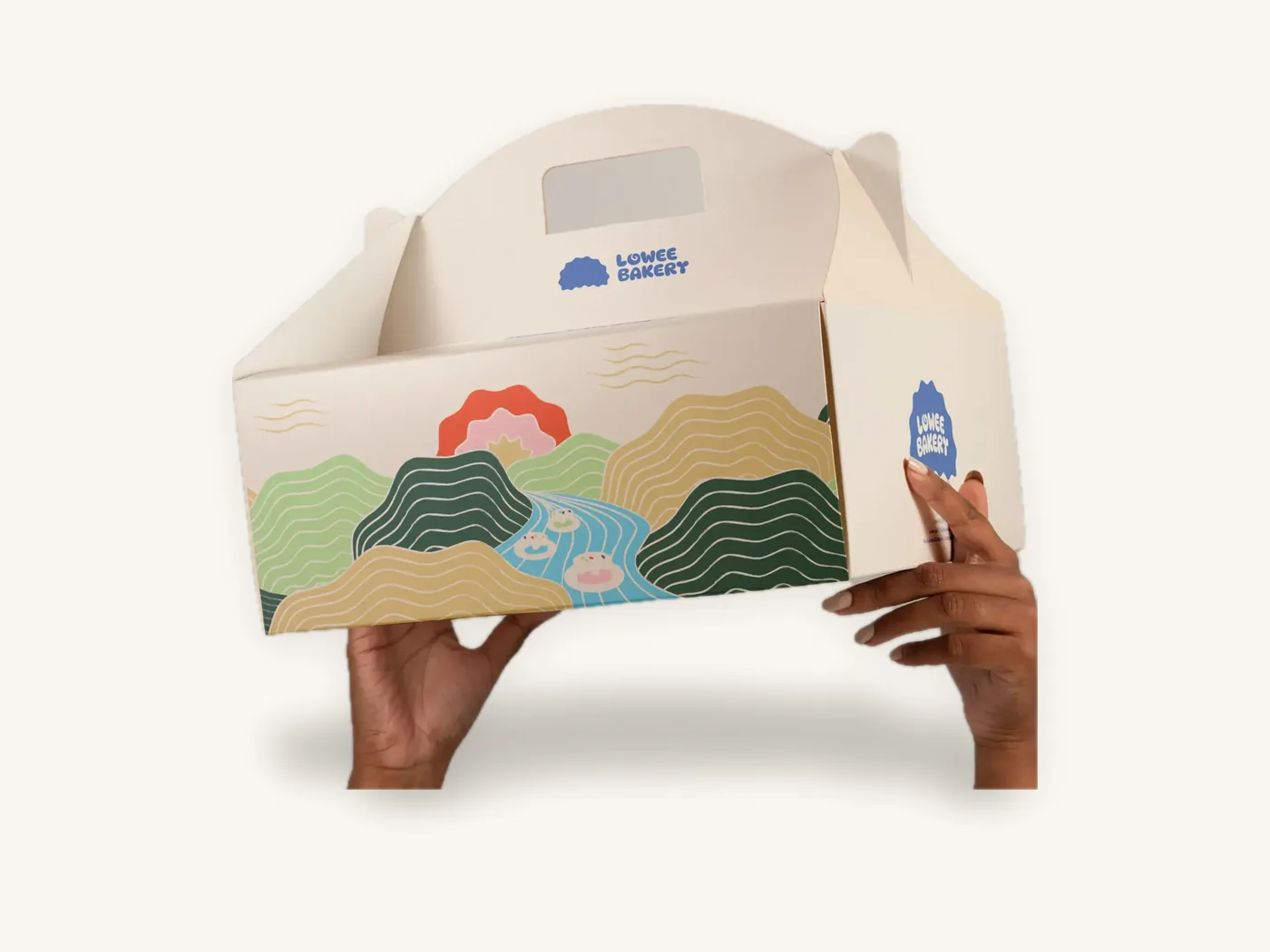
Enclosed cartons protect light-sensitive drinks, hide unlabeled cans and provide six full panels for storytelling. They suit variety packs, holiday gift packs and brands that want a retail box feel. A gable box with a raised handle is a strong choice for sampler sets, and our custom gable boxes guide covers the structure in detail.
Four-pack or six-pack: choosing the pack count
Pack count is a pricing decision as much as a packaging one, and it changes the carrier structure.
| Pack | Common container | Why brands choose it | Carrier notes |
|---|---|---|---|
| Four-pack | 16 oz cans | Premium positioning, higher-strength or specialty releases | Square footprint; wraparound or clip styles are common |
| Six-pack | 12 oz cans or bottles | Everyday price point, familiar to shoppers | 2 x 3 footprint; basket for bottles, wrap for cans |
| Two-pack or single | 16 oz or 19.2 oz cans, large bottles | Singles programs, trial of new releases | Often a simple sleeve or neck hanger |
| Eight-pack or twelve-pack | 12 oz cans | Value and variety packs | Enclosed carton; heavier load |
| Mixed variety pack | Any | Discovery, gifting | Enclosed carton or gable pack with dividers |
How to decide
Choose four-packs for 16 oz cans and small-batch releases, where shoppers expect a premium price and the square pack fits cooler shelves well. Choose six-packs for 12 oz formats at an everyday price. If you sell both, keep a consistent graphic system across the two carriers so the range reads as one family on the shelf.
Sizing beverage carriers by container
Container dimensions vary slightly between manufacturers, and a carrier that is 1/16 in too tight will slow packing or crush cans, while one that is loose lets cans slide out of a wrap. The figures below are approximate planning dimensions only.
| Container | Approximate diameter | Approximate height | Carrier considerations |
|---|---|---|---|
| 12 oz standard can | about 2.6 in | about 4.8 in | Most carrier stock is designed around this format |
| 16 oz standard can | about 2.6 in | about 6.2 in | Same diameter as 12 oz; taller walls and handle height |
| 19.2 oz can | about 2.6 in | about 6.6 in | Often sold as singles or two-packs |
| 12 oz sleek can | about 2.3 in | about 5.7 in | Narrower; needs its own cell spacing |
| 250 ml slim can | about 2.1 in | about 5.3 in | Energy and sparkling drinks; very narrow footprint |
| 12 oz longneck bottle | about 2.4 in | about 9 in | Basket carrier with tall dividers |
| 12 oz stubby bottle | about 2.5 in | about 7.5 to 8 in | Shorter basket; lower handle |
Always confirm with your can or glass supplier's specification drawing and with physical samples of the filled container.
Sizing process
- Collect filled containers from the same supplier and line you will pack, not empties.
- Measure diameter at the widest point. For cans that is usually the body; for bottles, the base or shoulder.
- Measure height including closure. Crown caps, screw caps and can ends differ.
- Account for labels and sleeves. Pressure-sensitive labels and shrink sleeves add thickness, and shrink sleeves add friction.
- Decide how the pack is loaded. Hand packing tolerates slightly looser cells; a packing machine needs the dimensions its manufacturer specifies.
- Check cooler shelf height. Tall handles on longneck baskets can foul a retailer's shelf spacing.
- Order an unprinted structural sample and pack it at cooler temperature before approving artwork.
Watch out: a carrier that fits perfectly with dry, room-temperature cans can behave differently in a cooler. Cold cans contract very slightly and condensation reduces friction, so a snug wraparound can loosen. Always test fit with chilled, wet containers.
Moisture, cold storage and board choice
Beverage carriers live in the worst environment of any paper packaging: refrigerated, humid, handled by wet hands and sometimes sitting in ice.
What moisture does to paperboard
Paperboard fibers absorb water and lose stiffness. A handle that lifts easily when dry can tear when the board is damp, and printed surfaces can scuff or cloud. Corrugated board loses compression strength in humid conditions, which affects stacked cases in walk-in coolers.
Choosing materials for cold drinks
| Condition | Board direction | Coating or finish | Notes |
|---|---|---|---|
| Dry shelf, room temperature | SBS or kraft paperboard | Aqueous coating | Lowest cost; fine for shelf-stable, room-temperature drinks |
| Retail cooler | Heavier paperboard or E-flute corrugated | Moisture-resistant coating or lamination | The most common case; test with chilled containers |
| Ice buckets, outdoor events | Corrugated with water-resistant treatment | Lamination on print surfaces | Assume the carrier will get wet |
| Walk-in cooler case storage | Corrugated shipper | Aqueous or none | Stack strength matters more than print |
Kraft paperboard gives a natural look and hides scuffs. Corrugated board handles heavier loads and taller stacks; the corrugated flutes guide explains how E-flute and B-flute differ.
Handle strength and load testing
A carrier that tears in the parking lot is worse than no carrier at all. Weight is the starting point: a six-pack of 12 oz cans comes to roughly 5 lb, a four-pack of 16 oz cans to a little over 4 lb, and six 12 oz glass bottles noticeably more than cans.
What makes a handle strong
- Grain direction: paperboard is stronger along its grain. Handle cut-outs should be oriented so the load runs with the grain.
- Double-thickness handles: folding a handle panel back on itself doubles the board where fingers grip.
- Rounded cut-outs: sharp corners in a handle hole concentrate stress and start tears.
- Load spread: handles connected to dividers or the base spread the load, rather than hanging it from a single glued seam.
- Glue coverage: in basket carriers, glue patterns on the handle panel carry the whole load.
A simple in-house test
- Pack a carrier with filled, chilled containers.
- Leave it in your cooler for several hours to absorb humidity.
- Lift it by the handle and swing it gently, as a customer would.
- Walk it up and down stairs or across a parking lot.
- Set it down and lift it again several times.
- Repeat with a carrier that has been splashed with water.
If the handle stretches, tears or pulls from a glue joint, adjust the board, handle design or coating before production.
Tip: test the carrier with the heaviest container you will ever put in it. If the same carrier might hold glass bottles for a special release, design and test for glass, even if most runs hold cans.
Can carrier packaging design
The carrier is often the most visible brand surface in a cooler door, so treat it like a label and a sign at the same time.
Panel priorities
- Main side panels: brand, drink name and style, in type large enough to read from several feet away.
- End panels: visible when packs are merchandised end-on; repeat the drink name.
- Top or handle panel: brand mark and a short flavor or style cue, since shoppers look down into a cooler.
- Bottom or inside: batch codes, recycling information and legal text where allowed.
Barcodes and retail requirements
Retailers usually expect a scannable barcode on the carrier that is distinct from the single-container barcode, so the register rings the pack price. Place it on a flat panel away from folds, with enough quiet space around it, and confirm barcode requirements with your retail partners before printing.
Seasonal and limited releases
Printing a new carrier for every release is expensive at small quantities. Two common approaches keep costs down:
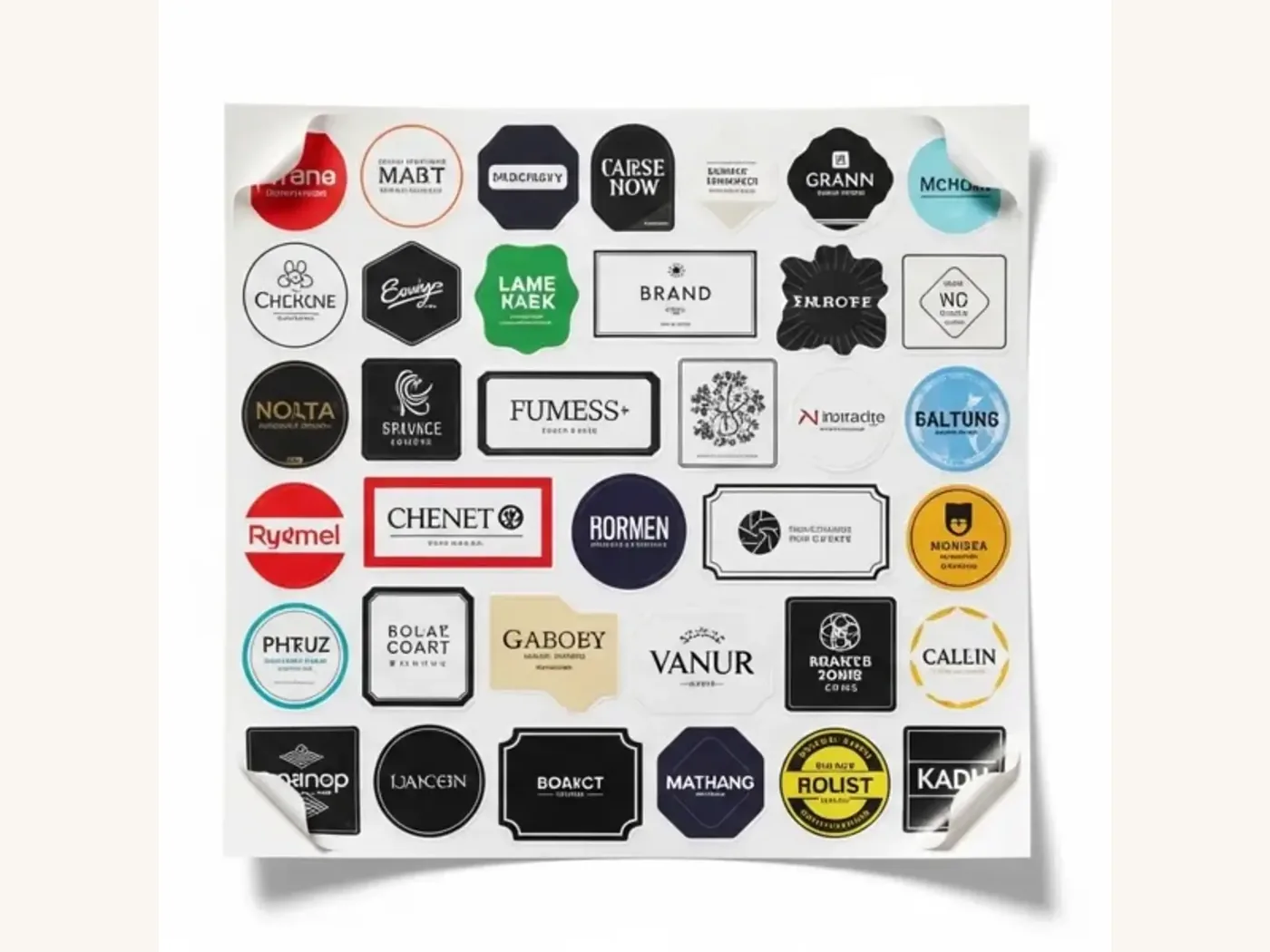
- One printed brand carrier plus a label. Print a house carrier with a blank label zone, then apply custom labels for each release.
- Short digital runs. Digital printing makes small quantities of release-specific carriers practical, since there are no plates.
Labeling and compliance
In the US, labeling of malt beverages, wine and distilled spirits is regulated federally by the TTB, and some drinks, such as non-alcoholic beverages and kombucha, fall under FDA food labeling rules instead or in addition. A carrier that covers container labels, or that makes its own claims, may carry its own requirements. Some states also require container deposit or refund information. Confirm packaging text with a compliance specialist or counsel, and review the TTB's labeling resources for alcoholic beverages.
Carriers by sales channel
Different channels put different demands on the same drink.
Taproom and tasting room
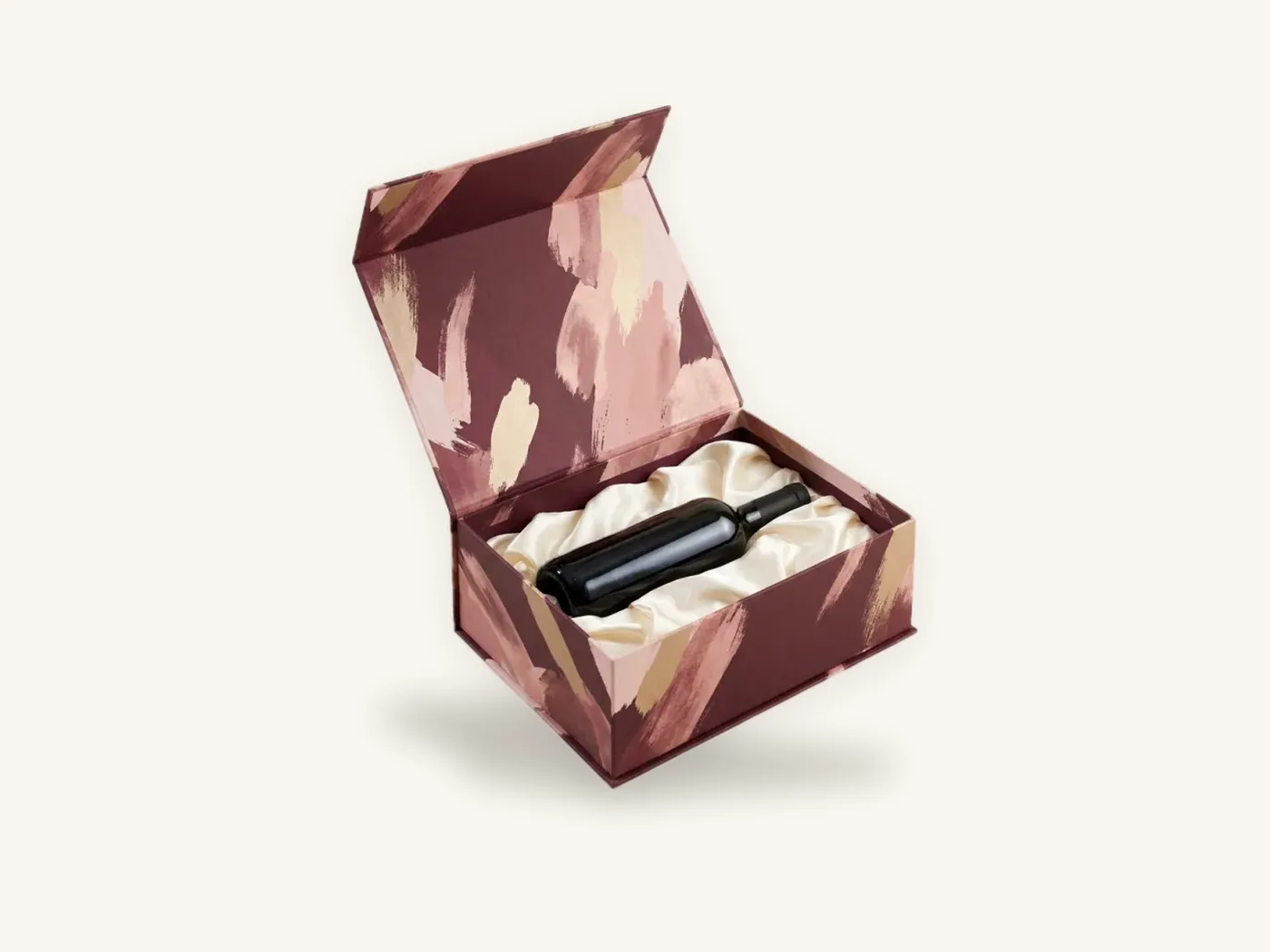
Speed and cost matter most. Staff fill carriers to order, so an open basket or wraparound that assembles in seconds is ideal. Kraft board with one or two colors looks right at home in a taproom and hides scuffs. For wine, cider and spirits producers who also sell bottles in the tasting room, our wine packaging guide covers bottle carriers and gift boxes.
Distribution and retail
Retail carriers need cooler performance, barcodes and consistent quality across thousands of units. They also travel in outer cases, so plan case packs with custom shipping boxes sized to four or six carriers.
Events, gifting and direct sales
Variety packs, holiday sets and festival packs benefit from enclosed cartons or gable packs with dividers. Point-of-sale units at the register, such as a counter display box for singles, extend the same graphics; see the custom display boxes guide for display structures.
Sustainability and plastic-free carriers
Many craft brands are moving away from plastic rings and plastic can handles toward paper-based carriers. Paperboard and corrugated carriers printed with water-based or soy inks and finished with aqueous coating stay in the paper recycling stream in many areas, and FSC-certified board is available.
Moisture-resistant laminations improve cooler performance but can affect recyclability, so match the coating to the real conditions the carrier faces. If you print a recycling or plastic-free claim, make sure it is accurate for every component, following the FTC's Green Guides on environmental marketing claims. Our eco-friendly materials page lists the paper-based options.
Cost drivers for beverage carriers
Carrier pricing depends on style, board, size, print and quantity, so run your spec in the instant estimator or ask for a quote rather than relying on a single figure.
| Driver | Effect | How to manage it |
|---|---|---|
| Style | Enclosed cartons and baskets use more board than wraps or clips | Match style to what the pack must do |
| Board grade and coating | Moisture resistance adds material cost | Specify for the real storage conditions |
| Handle construction | Double-thickness and reinforced handles add board | Design once, test, then standardize |
| Print coverage | Full-color all-over print costs more than one or two colors | Kraft with strong spot colors works well |
| Number of release designs | Each new design adds setup | House carrier plus release labels |
| Quantity | Setup is spread over more units | Forecast core styles and order in larger runs |
There are no die or plate charges; one-time tooling applies only if you add foil, embossing, spot UV or custom inserts.
How to order beverage carriers with Box Sense
Specs to send
- Container type, size and supplier, with filled samples or a specification drawing if available
- Pack count: four, six, eight, twelve or mixed
- Preferred style (basket, wraparound, clip, enclosed, gable) or a request for a recommendation
- Storage conditions: dry shelf, cooler, ice or outdoor
- Hand packing or machine packing, with machine specifications if applicable
- Print coverage, board preference and any barcodes
- Quantities per design and your release date
- Artwork, or a note that you need help from our design services team
Timeline and next steps
- Quote within 24 hours for each style and quantity.
- Dieline and 3D proof with two revision rounds included in our free design support.
- Samples. Unprinted structural samples are free, so you can pack and load test them with chilled containers. A printed sample of approved artwork is free on orders of 100 or more; see the samples page.
- Production. Standard production is 8–12 business days after proof approval, and rush in 5 business days is available on most paperboard and corrugated styles.
- Delivery. Free shipping on every US order; international shipping quoted at cost.
The minimum order is 10 carriers. Defective units reported within 14 days are reprinted free. More drink packaging is on our beverage, wine and spirits industry page.
Frequently asked questions
What is the best six pack carrier for cans?
For printed cans that sell themselves, a top-grip clip carrier uses the least material and keeps the cans visible. For labeled or plain cans that need shelf branding, a wraparound carrier turns the pack into a printed billboard. Basket carriers suit cans too, but they are most useful for bottles, where dividers keep glass from knocking together.
Are paperboard beverage carriers strong enough for a cooler?
Yes, when they are designed for it. Specify board strength and a moisture-resistant coating for cooler storage, orient handles with the board grain and use double-thickness handle panels. Test with filled, chilled containers after several hours in your cooler, and include a splash test, before approving a production run.
What size carrier do I need for 16 oz cans?
A 16 oz standard can shares its diameter with a 12 oz can, roughly 2.6 in, but stands about 6.2 in tall, so it needs taller walls and a higher handle. Four-packs are the most common format for 16 oz cans. Confirm your can supplier's exact dimensions and test with filled cans.
Can I use one carrier for different beers or flavors?
Yes. Many breweries print one house carrier with a blank label zone and apply a release-specific label for each beer. That keeps carrier costs low and inventory simple. Short digital runs are another option when a release deserves its own printed carrier, since there are no plates to pay for.
Do beverage carriers need barcodes?
If you sell through retailers, usually yes. Stores generally need a pack-level barcode on the carrier that is separate from the single-container barcode, so the register charges the pack price. Place it on a flat panel away from folds and confirm each retail partner's barcode requirements before printing.
Are paper beverage carriers recyclable?
Paperboard and corrugated carriers printed with water-based inks and finished with aqueous coating are generally accepted in paper recycling programs. Heavy plastic laminations can complicate that. If you print a recyclability or plastic-free claim, make sure it is accurate for the whole carrier and follows FTC guidance on environmental claims.
What is the minimum order for custom beverage carriers?
Box Sense produces custom beverage carriers from 10 units. Short runs are printed digitally without plates, which makes limited releases and test designs practical. Unit prices fall as quantity rises, so compare a few quantity tiers for your core styles and order release-specific carriers in smaller runs.
Next steps
Collect filled samples of every container you pack, decide on four-packs, six-packs or both, and note where the carriers will be stored. Price your spec in the beverage carrier estimator, then request a beverage carrier quote and ask for unprinted samples to load test in your cooler. We will confirm pricing within 24 hours and send a dieline and 3D proof.
Boxes in this guide
Order the packaging we covered
Written by the Box Sense Packaging Team
Our structural designers, prepress technicians and production staff print and convert custom boxes every day for brands in the United States, United Kingdom and UAE. Questions about this guide? Talk to us.