The main corrugated flute types are A, B, C, E and F, named for the size of the wavy paper layer inside the board. Larger flutes (A and C, about 4 to 5 mm) cushion and stack better; smaller flutes (E and F, about 0.8 to 1.6 mm) print sharper and fold tighter; B-flute (about 3 mm) sits in between and resists puncture well. Double wall boards such as BC combine two flutes for heavy or fragile loads.
For most brands the practical choice is narrower than the alphabet suggests. Printed mailers run on E-flute, parcel shipping boxes on B-flute, palletized case packs on C-flute, and heavy or breakable goods on BC double wall. The rest of this guide explains why each profile behaves the way it does, so you can pick with confidence instead of defaulting to the thickest board you can find.
Key takeaways
- A flute is the arched middle layer (the medium) of corrugated board. Its height and how many arches fit per foot decide thickness, cushioning, stacking strength and print quality.
- Approximate single wall calipers: F about 0.8 mm, E about 1.5 mm, B about 3 mm, C about 4 mm, A about 5 mm. Exact figures vary by corrugator, so treat these as ranges.
- E flute vs B flute is the most common decision: E for printed retail and DTC presentation, B when the product is heavy, dense, sharp-cornered or travels a long way.
- Double wall (most often BC, about 7 mm) roughly doubles the fiber in the wall and is the step up for heavy, fragile or stacked freight.
- Flute choice and board strength ratings are related but separate. Two boards with the same flute can carry very different ECT grades depending on liner and medium weights.
- Box Sense makes corrugated boxes from 10 units in E, B, C and BC board, with no die or plate charges and a quote confirmed within 24 hours.
What a flute actually is
Corrugated board has three or more paper layers. Two flat sheets, the liners, are glued to a sheet of paper that has been fluted into a continuous row of arches, the medium. That arch is the flute. Stand a piece of board on its edge and you are looking at a row of tiny columns that carry load from top to bottom, much like the ribs in an arched bridge.
On a corrugator, the medium is pressed between heated, grooved rolls, starch glue is applied to the arch tips and the liners are bonded on. Each flute profile needs its own roll set, so a plant may run only a few.
Take-up factor: why bigger flutes use more paper
Because the medium is wavy, it takes more than a foot of paper to make a foot of fluted board. The ratio is called the take-up factor. Commonly quoted approximations are about 1.5 for A-flute, about 1.4 for B and C, and about 1.25 to 1.3 for E. Figures vary by roll design, but the direction is consistent: taller flutes consume more medium per square foot.
Taller flutes therefore weigh and cost more, but they also put more paper into the columns that resist crushing, one reason C-flute outstacks B-flute with identical liners.
Corrugated flute types chart: A, B, C, E and F
The table below uses widely published industry figures. Every corrugator's rolls differ slightly, so a box plant's spec sheet may list a flute a few tenths of a millimeter thicker or thinner. Always confirm the caliper your supplier actually runs if a fraction of a millimeter matters to your insert or dieline.
| Flute | Approx. caliper (single wall) | Approx. flutes per foot | Character | Typical uses |
|---|---|---|---|---|
| A | about 4.5–5 mm (3/16 in) | about 33–36 | Tallest arches, best cushioning, softer print surface | Fragile goods, cushioning pads, some industrial cartons |
| C | about 3.6–4 mm (5/32 in) | about 38–42 | Strong stacking, good cushioning | Palletized case packs, bulk shippers, moving boxes |
| B | about 2.5–3 mm (1/8 in) | about 47–50 | Firm, puncture resistant, reasonably flat face | Parcel shipping boxes, heavier mailers, dividers |
| E | about 1.1–1.6 mm (1/16 in) | about 90–98 | Thin, smooth, crisp folds | Printed mailers, retail-ready boxes, display boxes |
| F | about 0.6–0.8 mm (1/32 in) | about 120–128 | Micro flute, close to heavy paperboard | Small retail cartons, cosmetic outer boxes, food boxes |
The letters are not in size order because they were assigned as profiles were introduced, not by height. You may also see N-flute or other micro profiles thinner than F, which behave more like thick paperboard.
Five things flute size changes
Picking a flute is a tradeoff, not a ranking. Here is how the single wall profiles compare.
| Property | E-flute | B-flute | C-flute | A-flute |
|---|---|---|---|---|
| Stacking (top-to-bottom) strength | Fair | Good | Very good | Very good |
| Cushioning against drops | Low | Moderate | Good | Best |
| Puncture and corner resistance | Moderate | Good | Good | Moderate |
| Print sharpness on the board face | Very good | Fair to good | Fair | Fair |
| Fold crispness and small box sizes | Excellent | Good | Fair | Poor |
| Flat storage volume | Smallest | Moderate | Larger | Largest |
Stacking strength
Taller arches act like longer columns with more paper in them, so C and A flutes resist top-to-bottom compression better than B or E at the same liner weight. That matters most for cartons stacked on pallets for weeks in a warehouse or trailer.
Cushioning
Tall flutes compress gradually on impact, absorbing energy before the product feels it. A-flute is the best cushion of the single walls, but it is rarely used for printed boxes because the arches crush easily when the board is run through printing and converting equipment.
Puncture resistance
B-flute packs more arches per foot than C, so a sharp corner or tool edge meets more supporting columns. This is why B-flute is often the default for parcel boxes carrying hard, dense items.
Print surface
Printing presses against the liner, and the liner sags slightly between arch tips. On tall flutes, that creates faint stripes known as washboarding, most visible in solid dark colors and fine type. E and F flutes have arches so close together that the face reads almost like paperboard. Our corrugated board page shows how each grade takes print.
Folding and storage
Thin board folds into sharp corners without cracking, and flat blanks take far less space, which adds up if a 3PL bills you by pallet position.
E flute vs B flute: the decision most brands face
Most e-commerce and retail brands are choosing between these two, so it is worth being specific.
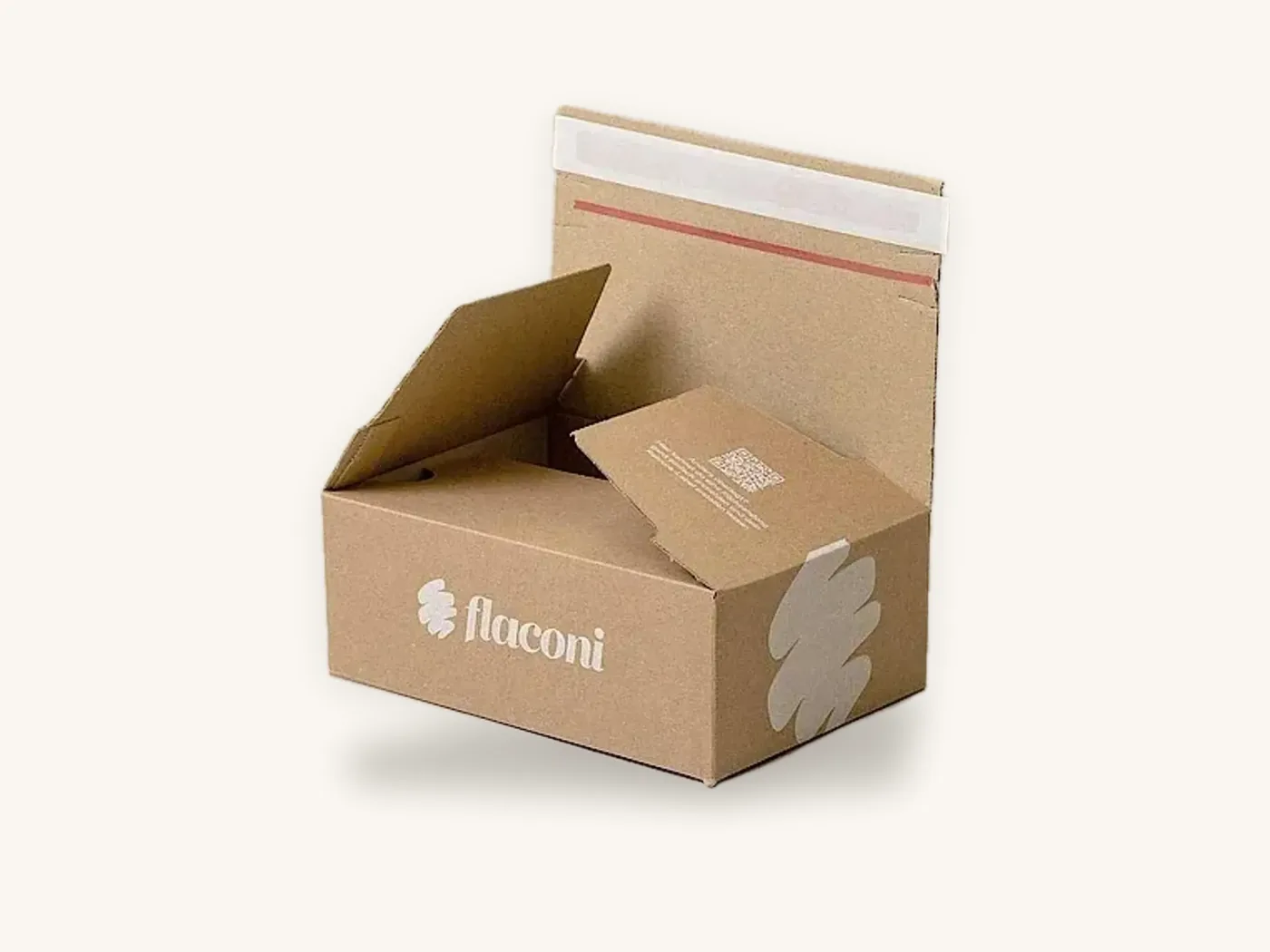
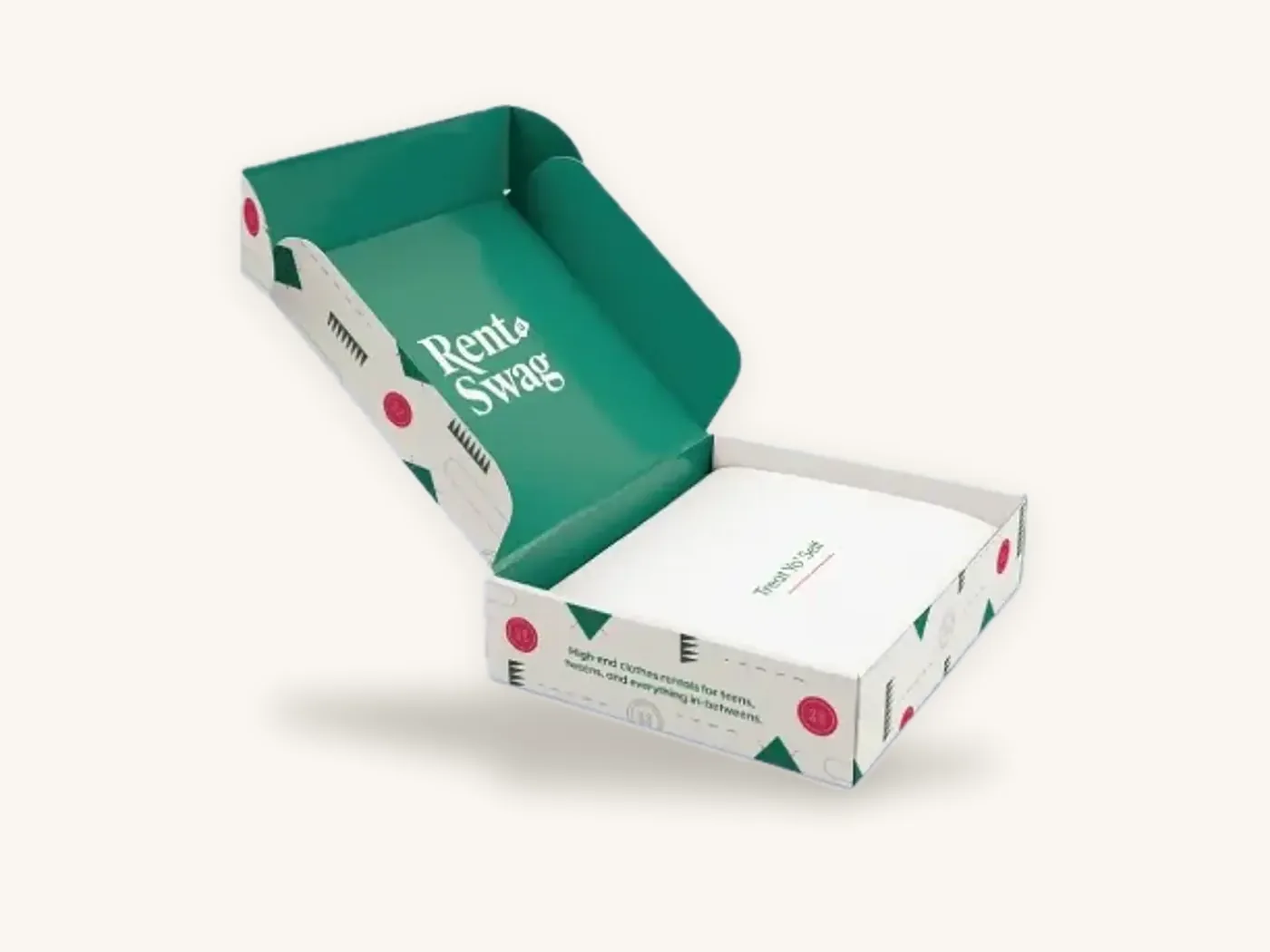
Choose E-flute when the box is mainly a presentation piece that also has to survive shipping. Apparel, skincare, candles in a snug fit, books, accessories and subscription kits under a few pounds all do well in E-flute. It prints close to a folding carton, folds into a tidy roll-end mailer, and ships flat in compact bundles. E-flute is the standard board for custom mailer boxes.
Choose B-flute when the product is heavy for its size, has hard corners, rattles against the walls, or passes through several carrier hubs. Cast iron, glass jars in multiples, tools, dense supplements and bulk refills belong here. B-flute is also the usual choice for plain or one-color custom shipping boxes where print detail matters less.
A worked example
Say you sell a boxed set of three 8 oz glass candles. Packed with a paperboard divider, the set weighs a little over 3 lb and needs an interior of roughly 10 x 4 x 4 in.
In E-flute, the box presents beautifully, but a hard drop onto a conveyor corner can transmit enough shock to crack a jar, because there is little cushioning in 1.5 mm of board. In B-flute, the walls absorb more of that impact and resist crushing if a heavier parcel lands on top. The practical answer for this set is B-flute for anything shipping direct to customers, or E-flute with a well-fitted corrugated insert if the unboxing matters enough to pay for the extra component. Test both with a structural sample before committing.
Tip: if you are torn between E and B, fix the fit first. A product that cannot move inside the box is protected by the walls; a product that slides around hits them. A snug insert in E-flute often outperforms a loose product in B-flute.
C-flute and A-flute: when height helps
C-flute is the most common profile in general-purpose shipping cartons worldwide. Its height gives it strong stacking performance for a single wall, which is why case packs going to a distribution center or retail backroom so often use it. If your cartons will sit five or six high on a pallet for a month, C-flute is usually the starting point.
A-flute, the original profile, is now uncommon in everyday boxes. It survives where cushioning outranks print, such as pads and some industrial packaging.
C-flute is a poor fit for small boxes, though: narrow panels bulge, folds soften and flat blanks take more space. For parcels that travel alone, B-flute usually gives better puncture resistance in a thinner board.
Double wall and triple wall combinations
Double wall board adds a second medium and a third liner: liner, flute, liner, flute, liner. The two flutes are usually different sizes, and the combination is named by both letters.
| Construction | Approx. caliper | Why the combination works | Typical uses |
|---|---|---|---|
| EB double wall | about 4–4.5 mm | E on the outside gives a better print face; B adds puncture resistance | Printed heavy mailers, retail shippers that need graphics |
| BC double wall | about 6.5–7 mm | B resists puncture, C adds stacking and cushioning | Heavy parts, glassware, kitchenware, multi-unit shipments |
| AC or other double wall | about 8–9 mm | Maximum cushioning and compression | Specialized industrial or very fragile goods |
| Triple wall (for example AAC) | about 13–15 mm | Three flutes for very heavy loads | Bulk bins, machinery, pallet containers |
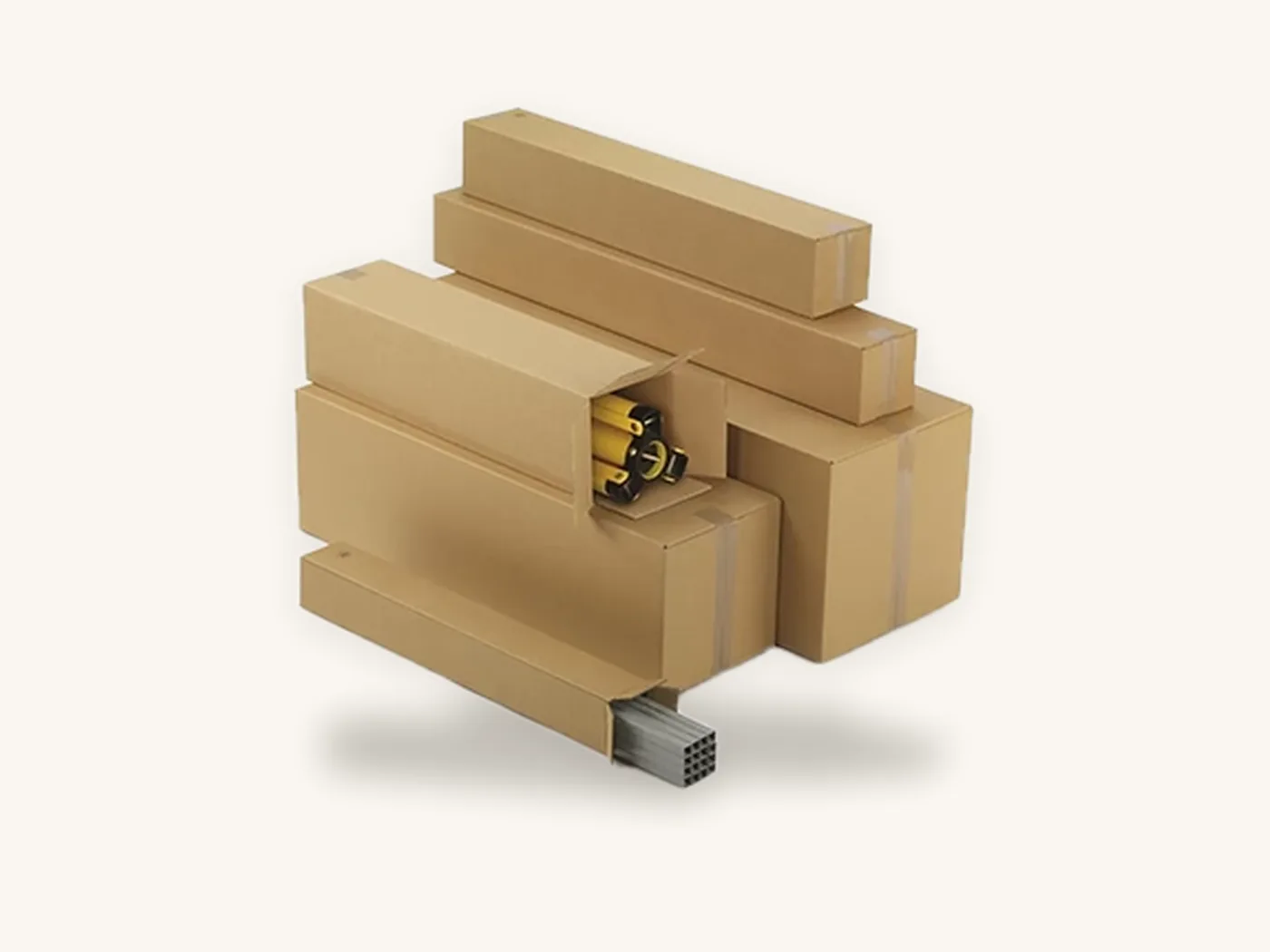
BC is by far the most common double wall and the construction behind our heavy duty double wall boxes. It roughly doubles the paper in each wall compared with single wall B-flute, and it tolerates rough handling, heavier contents and long storage much better.
When to move to double wall
Consider double wall when one or more of these is true:
- The packed box is heavy enough that a single wall carton bulges or its flaps pop under tape.
- The product is fragile and expensive enough that one broken unit costs more than the board upgrade.
- Cartons will be stacked high, or stored in humid or refrigerated conditions where paper loses strength.
- The box travels by freight or export, with multiple handoffs and long dwell times.
Double wall is not automatically better for a DTC parcel. It weighs more, costs more and can push outer dimensions into a higher dimensional weight charge.
Micro flutes vs paperboard
F-flute and other micro flutes blur the line between corrugated and folding cartons. At well under a millimeter, they print almost like coated paperboard but add real crush resistance and stiffness, especially at the corners.
Use one when a paperboard carton feels flimsy for the product's weight but E-flute looks bulky on a shelf, such as a heavy cosmetic set. For light products that sell on shelf graphics, paperboard is usually cheaper and sharper; our paperboard thickness guide explains how to choose a caliper.
Liners, medium weight and corrugated board grades
The flute is only one part of the board. Two E-flute boards can perform very differently because of the paper used in the liners and the medium. When a supplier talks about corrugated board grades, they mean that full combination, not just the flute letter.
Liner types you will see on a spec
- Kraft liner: made mostly from virgin unbleached fiber, strong and brown. Common for shipping boxes.
- Test liner (recycled liner): made mostly from recycled fiber. Economical, slightly weaker for the same weight. Common in the UK and Europe as a named grade.
- White top or bleached liner: a white surface layer for brighter print. Standard for colorful mailers and display boxes.
- Mottled white: a partially bleached liner with a subtle natural texture, between kraft and white in look and print brightness.
How grades are rated
In the US, board strength is usually stated as an edge crush test (ECT) value, such as 32 ECT or 44 ECT, or as a burst (Mullen) test value, such as 200 lb test. In the UK and much of Europe, board is often described by its liner weights and flute, for example a named kraft or test liner in grams per square meter on a B-flute. These ratings describe strength, not flute size, and they deserve their own explanation. Our guide to ECT vs burst strength walks through both tests and how to read the certificate printed on a box.
Matching a flute to your product
Use this as a starting point, then confirm with a sample packed and shipped the way your real orders travel.
| Product and journey | Suggested board | Why |
|---|---|---|
| Apparel, soft goods, DTC parcel | E-flute | Light load, best print, compact storage |
| Skincare or beauty kit with an insert, DTC parcel | E-flute, or EB if heavy | Presentation first; insert handles movement |
| Books, planners, framed prints | E-flute book mailer | Tight wrap prevents corner crush |
| Dense or hard items, 3 to 15 lb, parcel | B-flute | Puncture resistance at a sensible thickness |
| Retail case packs going to a distribution center | C-flute | Pallet stacking over time |
| Glass bottles, ceramics or kitchenware in multiples | BC double wall | Stacking plus impact protection |
| Heavy parts, tools, hardware | BC double wall | High loads and rough handling |
| Shelf-ready product box that needs extra stiffness | F-flute or E-flute | Paperboard look with more crush resistance |
The shipping boxes style page and mailer boxes style page show which structures pair with each board. If you are unsure whether you need a mailer or a shipper at all, our corrugated boxes guide compares box styles.
Finishes change the picture slightly
Aqueous coating works on every flute and keeps the box recyclable; see the aqueous coating guide. Lamination and foil look best on flat E and F faces. Tall flutes crush unevenly under an embossing die, so keep embossed logos simple and on E-flute, as the embossing and debossing guide explains. The printing and finishes page shows each option.
How to specify flute and board on a quote
A precise request gets a precise price and avoids a box that arrives thicker, thinner or weaker than you expected.
- State internal dimensions. Board thickness adds to the outside size, and the difference between E-flute and BC double wall is several millimeters on every wall. Internal dimensions keep the fit correct whatever board you pick.
- Give the packed weight. Include inserts, fill and multiple units if they ship together.
- Describe the journey. Single parcel, pallet freight, export, cold storage or retail shelf each point to a different board.
- Name the flute, or ask for a recommendation. If you already know you want E, B, C or BC, say so. If not, describe the product and let the structural team suggest one.
- Specify liner color. Kraft, white or mottled white changes both the look and how ink reproduces.
- Add a strength requirement if you have one. A retailer, 3PL or marketplace may require a minimum ECT or burst rating on case packs. Put it in writing.
- Order a structural sample. Pack the real product, close the box, drop it from waist height onto a hard floor on a corner, an edge and a face, and inspect both the box and the product.
Watch out: changing flute after the dieline is drawn is not a simple swap. Every fold allowance, tuck flap and slot is calculated for a specific caliper. Moving from E-flute to B-flute means redrawing the dieline and checking your insert again.
Ordering corrugated boxes from Box Sense
We run E, B, C and BC double wall board in kraft, white and mottled white, so the flute decision can follow your product rather than a supplier's stock list.
What to send
- Internal length, width and depth, plus packed weight
- The box style you have in mind: mailer, regular slotted shipper, display or die-cut
- Flute preference, or a description of how the box travels so we can recommend one
- Liner color and print: one color, full color, outside only or inside and outside
- Any required strength rating from a retailer or fulfillment partner
- Quantities to price, for example 100, 500 and 1,000
- Artwork, or a note that you would like help from our design services team
What drives the cost at typical specs
Board, size and print coverage drive price together, and real prices vary too much by job to publish a useful figure. The table ranks three typical specs by relative cost; request a quote with your own size and quantity for a real number.
| Spec | Relative cost | What drives the cost |
|---|---|---|
| Mailer box, E-flute, 8x6x3 in, full color outside | Lowest | Thin board and a small blank; full-color print is the main adder |
| Shipping box RSC, B-flute, 12x10x6 in, 1-color | Medium | A larger blank and thicker board, offset by simple one-color print |
| Double wall shipper, BC flute, 18x14x12 in, 1-color | Highest | Two flutes, three liners and a much larger sheet area |
Two patterns hold across all three. Board area matters more than flute letter, so a big single wall box can cost more than a small double wall one. And every spec gets cheaper per box as quantity rises, because setup is spread over more units, so ask for two or three quantity tiers when you compare boards.
Timeline and support
Quotes are confirmed within 24 hours. Design support is free and includes the dieline, artwork setup, a 3D digital proof and two revision rounds. Unprinted structural samples are available for a small fee, which is the cheapest way to settle an E-flute vs B-flute question, and a printed sample of approved artwork is available for a small fee; see samples. Standard production is 8–12 business days after proof approval, with rush production in 5 business days available on most corrugated styles. The minimum order is 10 boxes, shipping is free, and defective boxes reported within 14 days are reprinted free.
Frequently asked questions
What are the different corrugated flute types?
The common corrugated flute types are A, B, C, E and F. A-flute is the tallest at about 5 mm, C is about 4 mm, B is about 3 mm, E is about 1.5 mm and F is under 1 mm. Taller flutes give more cushioning and stacking strength, while shorter flutes print more sharply and fold more crisply. Exact thickness varies slightly between corrugators.
Is E flute or B flute stronger?
B-flute is generally stronger for shipping, because its taller arches give better stacking strength, cushioning and puncture resistance than E-flute with the same liners. E-flute is not weak, though. It holds up well for lighter DTC products and has a much better print surface. Choose B-flute for heavy, dense or hard-cornered items, and E-flute when presentation matters and the product fits snugly.
Why is C-flute used for so many shipping cartons?
C-flute offers some of the best stacking strength of any single wall board, which is what cartons need when they sit on pallets in warehouses and trucks. It also cushions reasonably well. The tradeoffs are a rougher print surface and bulkier flat storage, so it suits plain or simply printed case packs better than branded retail boxes or small parcels.
What does BC flute mean?
BC flute is a double wall board that combines a B-flute and a C-flute layer between three liners, for a total thickness of about 6.5 to 7 mm. The B layer resists puncture and the C layer adds stacking strength and cushioning. It is the most common double wall construction and the usual choice for heavy, fragile or high-value goods and for boxes stacked high.
Does flute size tell you how strong a box is?
Only partly. Flute size sets the thickness and general character of the board, but strength ratings also depend on liner and medium paper weights. Two B-flute boards can carry different edge crush test grades, such as 32 ECT or 44 ECT. When strength matters, specify the rating as well as the flute and check the box maker's certificate.
Can you print full color on corrugated board?
Yes. E-flute and F-flute take full-color print well because their faces are nearly flat, which is why printed mailers and display boxes use them. B and C flutes can carry bold graphics and one- or two-color branding, but fine type and large solid areas may show faint flute lines. A white or mottled white liner gives brighter color than kraft.
Next steps
Measure your product as it ships, weigh it, and decide whether the box is mainly a parcel, a pallet carton or a presentation piece. Then request a quote with your dimensions and journey and we will recommend a flute, send a dieline and confirm pricing within 24 hours.
Boxes in this guide
Order the packaging we covered

Corrugated Boxes
 Popular
Custom Shipping Boxes
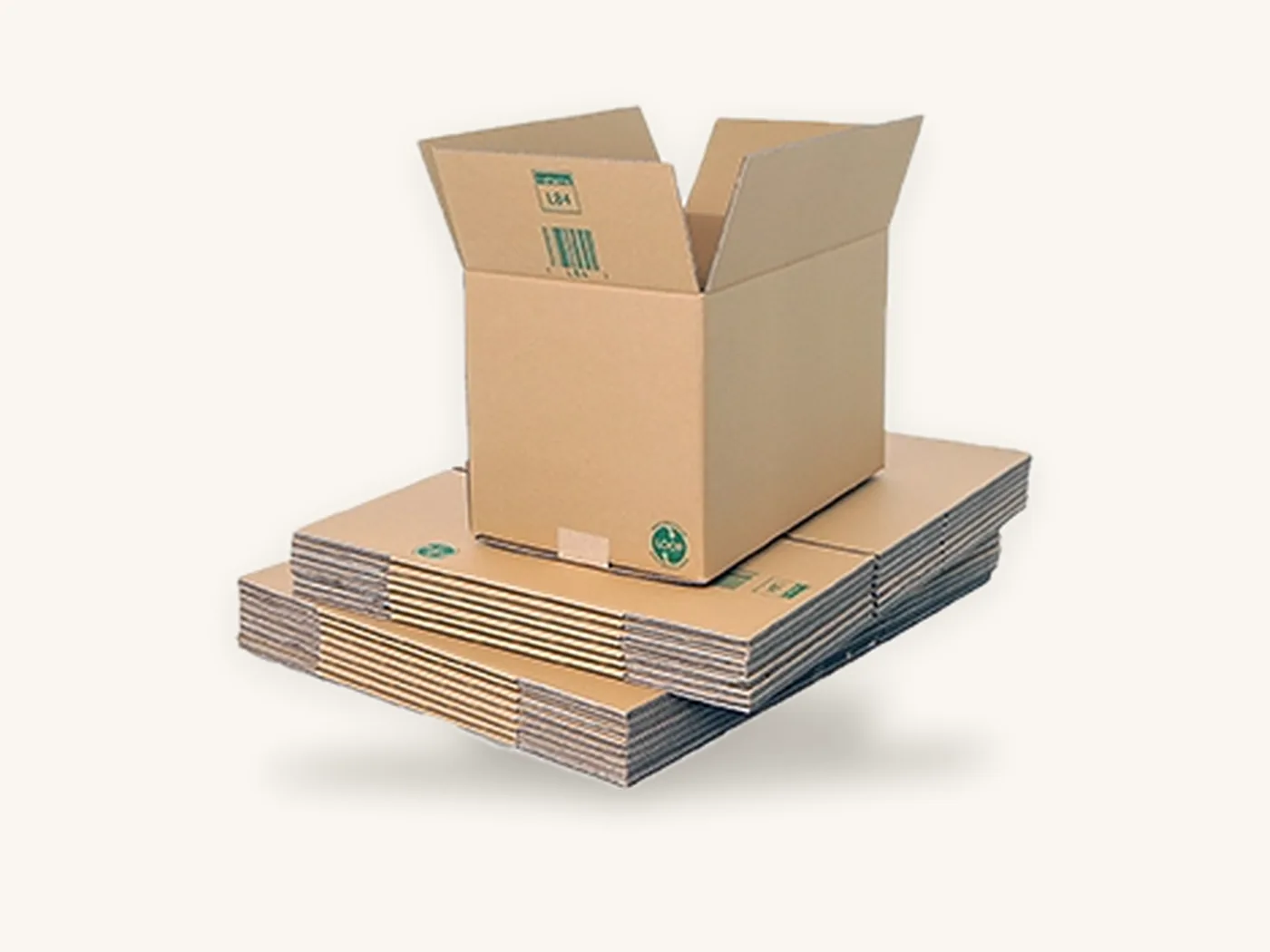
Heavy Duty Double Wall Boxes
Written by the Box Sense Packaging Team
Our structural designers, prepress technicians and production staff print and convert custom boxes every day for brands across the United States. Questions about this guide? Talk to us.