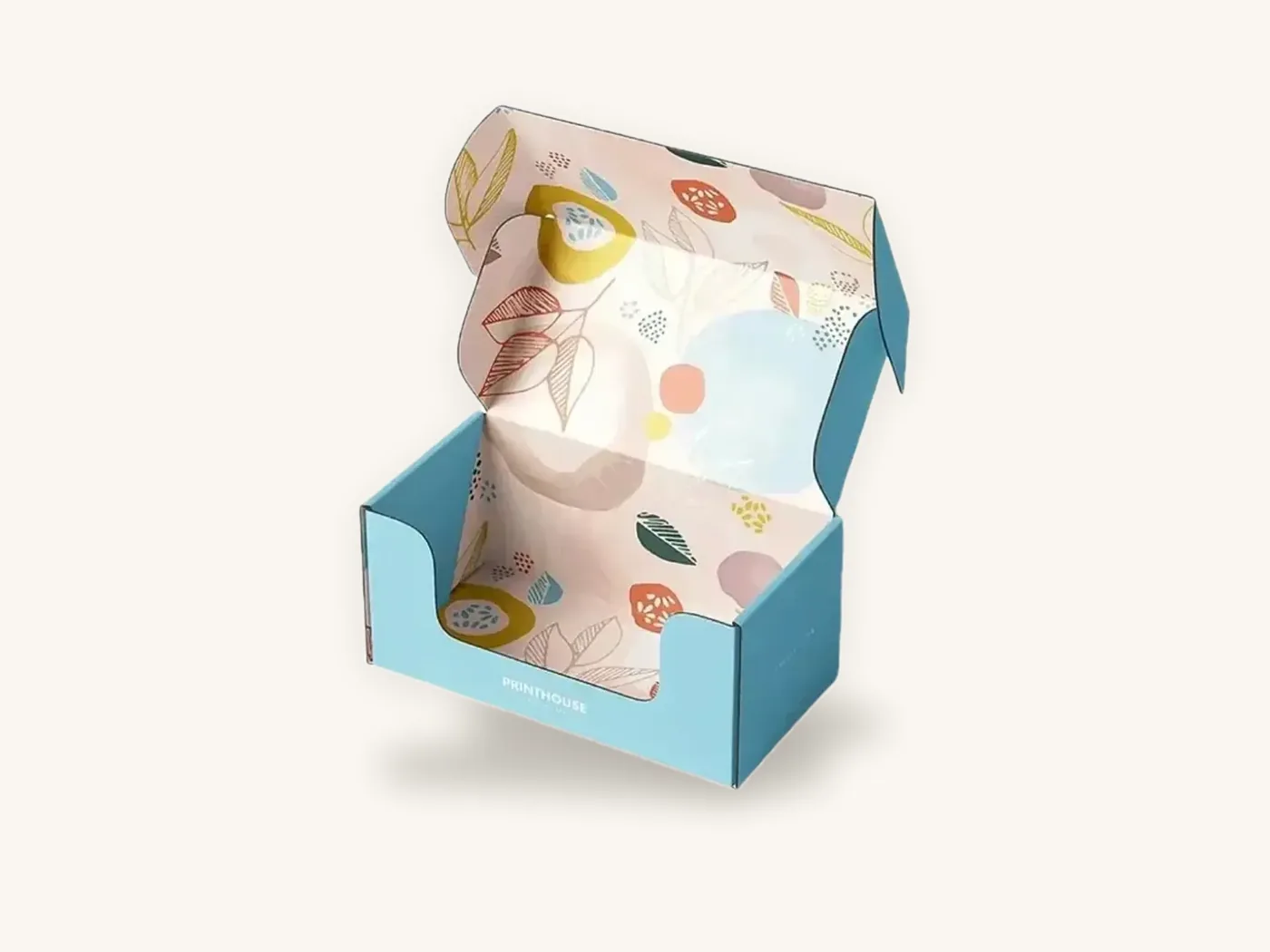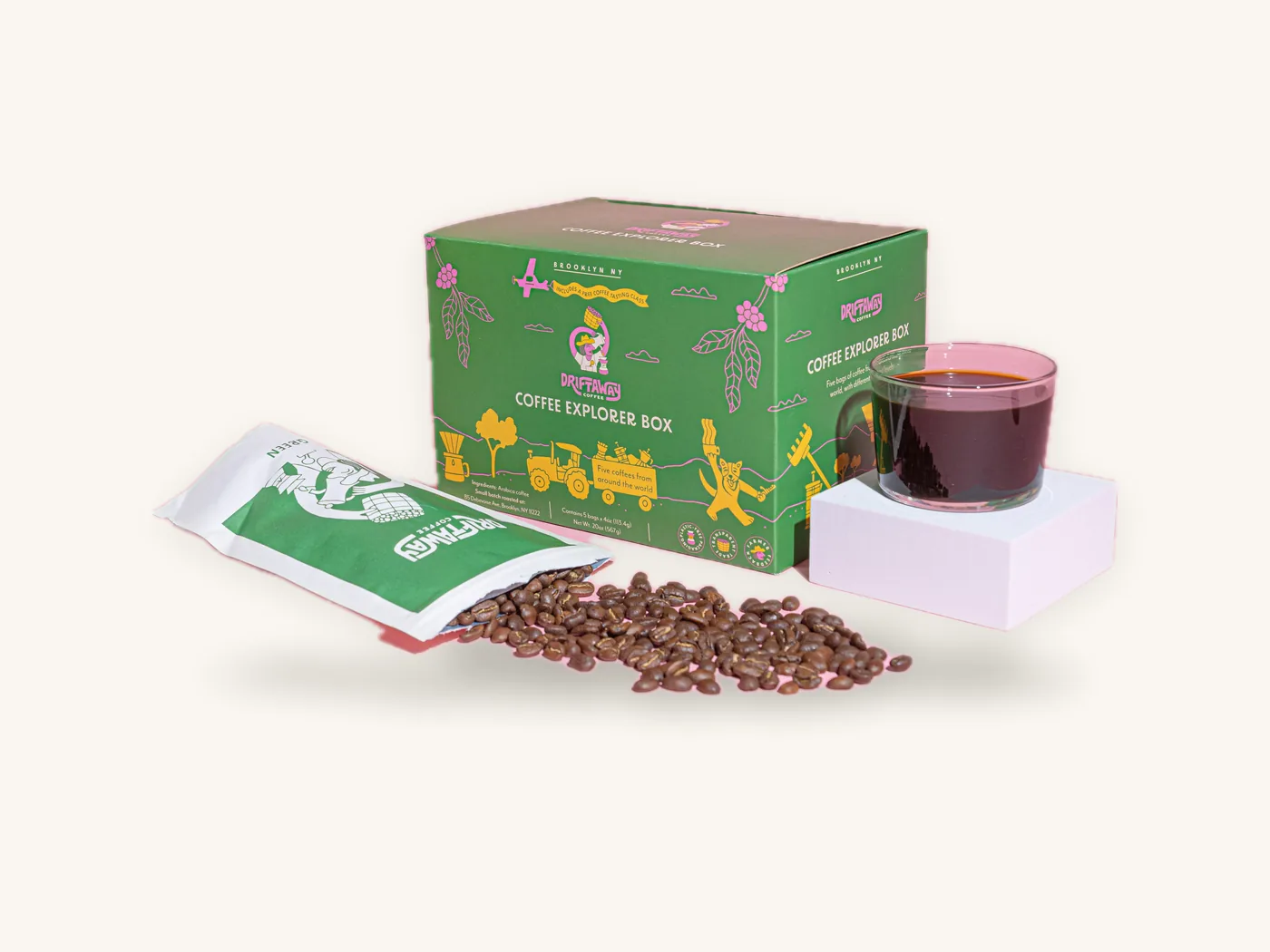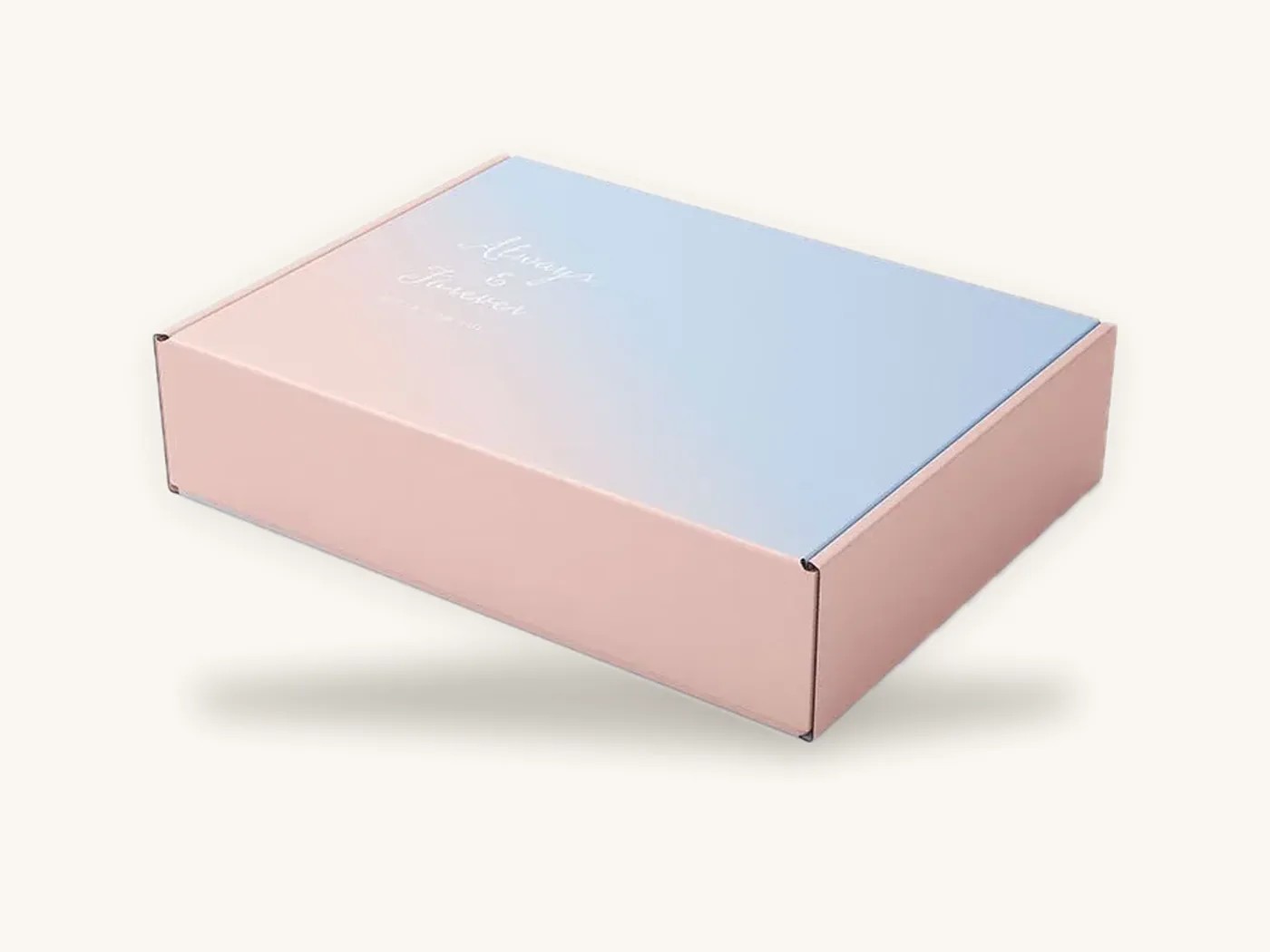
Custom corrugated boxes are boxes made to your size, strength and print spec from fluted board: a wavy paper medium glued between flat paper liners. To order the right one you need to settle four things, in this order: the flute (thickness), the wall construction and grade (strength), the box style (how it closes), and the print method (how your brand gets onto it).
Most buying mistakes come from choosing those in the wrong order, usually picking artwork and a style first and discovering later that the board cannot carry the weight or print the design. This guide works from the board outward, with the numbers a packaging engineer would ask for and the tradeoffs behind each choice.
Key takeaways
- Corrugated board is described by flute (E, B, C), wall (single or double) and grade (ECT or burst test). Specify all three, not just "cardboard."
- E-flute (about 1.5 mm) prints best; B-flute (about 3 mm) and C-flute (about 4 mm) protect and stack better; BC double wall (about 7 mm) is for heavy, dense or fragile loads.
- ECT (edge crush test) predicts stacking strength; burst (Mullen) test predicts resistance to rough handling and puncture. Match the grade to how the box actually travels.
- Printed corrugated boxes use digital printing for short runs of roughly 10 to 500 and offset for larger runs, with one-color print being the most economical choice on brown shippers.
- A B-flute 12x10x6 in shipping box with one-color print is about $4.69 each at 100 units and about $2.08 at 1,000, with free US shipping included.
- Box Sense makes corrugated packaging from 10 boxes, with no die or plate charges and standard production of 8–12 business days after proof approval.
How corrugated board is built
Every corrugated sheet has three kinds of layer. The outer liner is the face you print on. The medium is the fluted, arched paper in the middle that acts like a row of tiny columns. The inner liner faces the product. Glue at the tip of every flute locks them together.
That arch structure is why corrugated packaging is so efficient. A sheet only a few millimeters thick resists crushing far better than a solid paperboard of the same weight, because load travels down the flutes the way it travels down a column.
Single face, single wall, double wall and triple wall
- Single wall: two liners and one medium. This is the construction of most mailers and shipping boxes.
- Double wall: three liners and two media, usually a B-flute and a C-flute combined into BC flute. It is the standard for heavy or high-value goods.
- Triple wall: four liners and three media, used for industrial bulk containers rather than parcels.
Liner colors
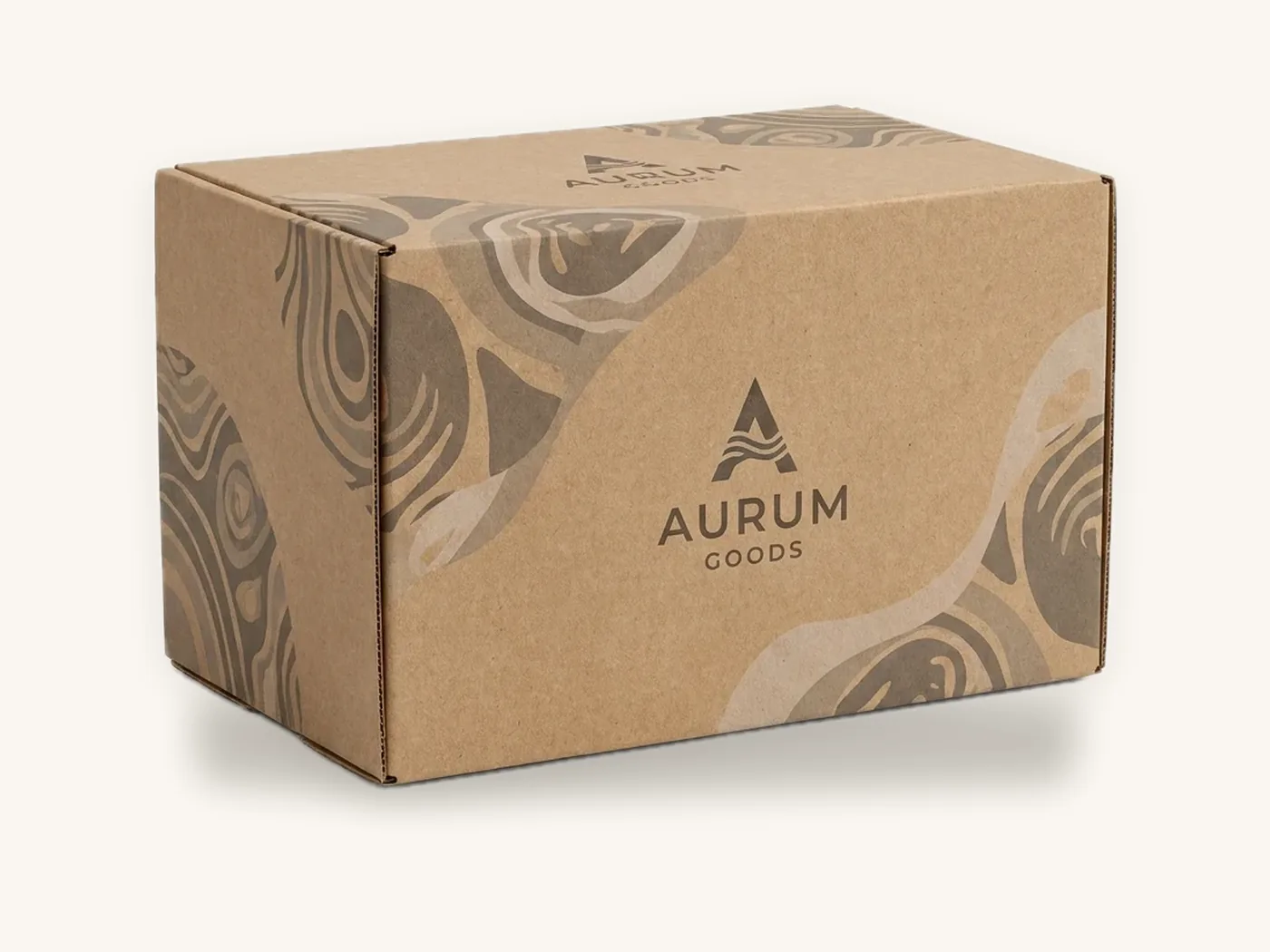
Liners come in natural kraft (brown), white (bleached) and mottled white (a white liner with a slightly uneven, cloudy tone). Kraft is the strongest-looking and hides scuffs; white gives the most accurate color. Our corrugated board material page lists the liners and flutes we run. If you are torn between brown and white, the kraft boxes guide goes deep on how ink behaves on natural board.
Flute sizes and what each one is for
The flute letter tells you roughly how tall the arches are, which sets thickness, stiffness and print surface. The letters were assigned in the order the flutes were developed, not by size, which is why the sequence looks random. For a deeper technical comparison, see corrugated flutes explained.
| Flute | Approx. thickness | Print surface | Protection profile | Typical uses |
|---|---|---|---|---|
| E-flute | 1.5 mm | Smooth, close to paperboard | Good crush resistance for its weight, compact when flat | Printed mailers, retail-ready boxes, counter displays |
| B-flute | 3 mm | Fair; fine type can soften | Strong puncture resistance, good flat crush | Shipping boxes, heavier mailers, inner packs |
| C-flute | 4 mm | Fair to rough | Best stacking and cushioning of the single walls | Shipping cartons stacked on pallets, bulk goods |
| BC double wall | 7 mm | Rough; best with simple graphics | High stacking and impact resistance | Heavy parts, glassware, multi-unit shipments |
Choosing a flute by product
Start from the product, not the look. Here is a practical way to narrow it down:
- Light, flat or soft goods (apparel, cosmetics, stationery): E-flute. It folds crisply and gives you the best canvas for full-color print.
- Dense or sharp-edged goods (tools, bottles, hardware): B-flute, because the flute resists punctures from corners.
- Boxes that sit in a stack for weeks (warehouse inventory, wholesale cartons): C-flute, which gives the most vertical strength in a single wall.
- Heavy, fragile or high-value loads (cast iron, glass sets, electronics shipped in bulk): BC double wall, often with partitions. Our heavy duty double wall boxes are built for exactly this.
Tip: flute direction matters. In a standard box the flutes run vertically, from top to bottom, so they act as columns when boxes are stacked. If a supplier proposes a layout that runs flutes horizontally to save board, ask what it does to stacking strength.
ECT vs burst strength: reading a corrugated grade
Flute tells you thickness. Grade tells you strength. In the US you will see corrugated packaging graded one of two ways, and they measure different things.
Edge crush test (ECT) measures how much force a small upright strip of board withstands before it crushes, in pounds per linear inch. Because stacking failure is really a crushing failure of the box walls, ECT is the better predictor of how a box behaves at the bottom of a pallet or in a trailer. Common single wall grades are 32 ECT and 44 ECT; a common double wall grade is 48 ECT.
Burst (Mullen) test measures the pressure needed to rupture the board face, in pounds per square inch. It relates more to rough handling, puncture and heavy contents pushing outward. A 200# burst board is the classic single wall grade, and 275# is a heavier single wall.
The two scales overlap in broad terms (32 ECT and 200# boards often do similar jobs) but they are not interchangeable.
The box maker's certificate
Many corrugated boxes carry a round printed stamp on a bottom flap called the box maker's certificate. It states the construction, the grade, and the size and gross-weight limits the box is certified for under the carriers' classification rules. If you ship freight or palletized loads, those limits matter. For current carrier rules, check with your freight carrier or the classification body it follows.
Which grade to specify
| How the box travels | Suggested starting point | Why |
|---|---|---|
| Single parcel, product under a few pounds | E-flute or 32 ECT B-flute | Parcel networks favor impact resistance over stacking |
| Single parcel, heavier or dense product | 32 ECT or 44 ECT B-flute | Extra puncture and crush margin |
| Palletized cartons stacked several high | 44 ECT C-flute | Stacking strength dominates |
| Heavy, fragile or high-value loads | 48 ECT BC double wall | Both stacking and impact resistance |
| Cold or humid storage | Step up one grade | Moisture weakens paper fibers over time |
These are starting points, not guarantees. Real performance depends on box dimensions, how full the box is, humidity, and how long it sits in a stack. A structural sample and a simple drop and stack test tell you more than any table. Our ISTA drop testing guide explains how brands formalize that testing.
Corrugated box styles and when to use them
The style is the shape of the flat blank and how it folds and closes. Different styles use board differently, which changes both cost and strength.
Regular slotted container (RSC)
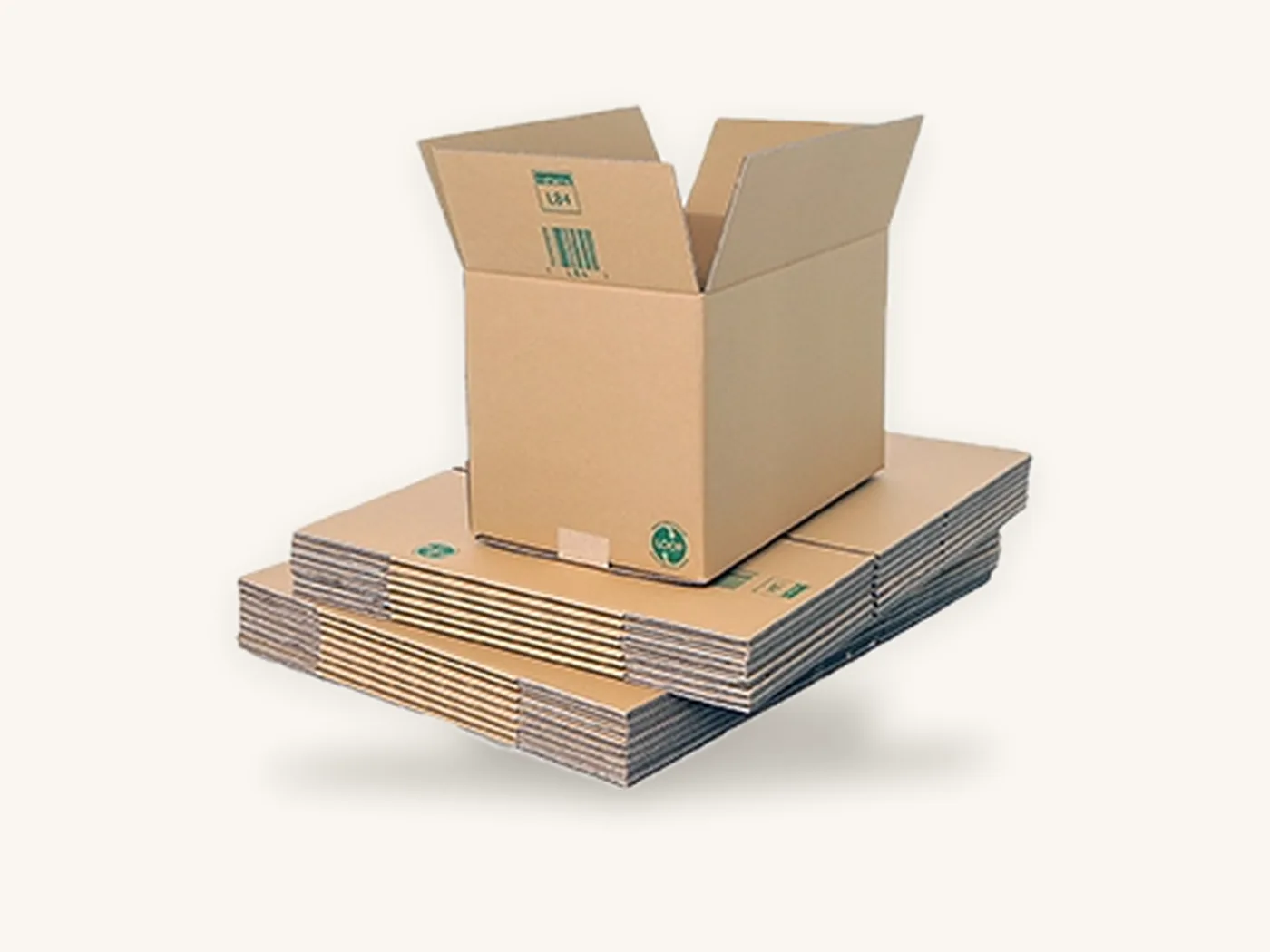
The RSC is the workhorse. All four top flaps and four bottom flaps are the same length, and the outer flaps meet in the middle. It uses the least board per cubic inch of any style, runs well on tape machines and suits almost any product. It is what we supply as standard custom shipping boxes. The downside is presentation: it has to be taped and the customer cuts it open.
Full overlap (FOL) and half slotted (HSC)
A full overlap box has outer flaps that extend the full width of the box, so they overlap completely. That double layer on top and bottom adds cushioning and makes the box harder to puncture from above or below. A half slotted container has flaps on one end only and is paired with a separate lid or used as an open tray.
Die-cut mailers and trays
Die-cut corrugated boxes are cut to a custom profile rather than slotted. The best-known is the roll-end tuck-front mailer, which locks without tape and has double-thickness side walls. Die-cut trays, bins and dividers also fall in this family. The custom mailer boxes guide covers that style in detail.
| Style | Assembly | Board efficiency | Presentation | Best for |
|---|---|---|---|---|
| RSC | Tape or glue | Highest | Basic | Shipping, inventory, overboxing |
| Full overlap | Tape | Medium | Basic | Heavy or rough-handled items |
| Die-cut mailer | Tape-free locks | Medium | High | DTC shipping, kits, gifting |
| Telescope | Lid slides over base | Lower | Medium to high | Apparel, large flat goods |
| Tray or bin | Folded, often glued | High | Open display | Retail shelves, parts bins |
For the difference between these and folding cartons, our mailer box vs shipping box vs folding carton comparison lays out the three families side by side.
Printing options for printed corrugated boxes
Corrugated board is harder to print than smooth paperboard because the surface has a slight washboard texture from the flutes underneath, and the board compresses under pressure. The print method you choose decides how fine your detail can be and how much each box costs.
Digital printing
Digital printers jet ink directly onto the finished corrugated sheet. There are no plates, so full-color artwork, gradients and photos cost the same per unit as one color, and changing designs between batches has no setup cost. It is the method we use for short runs, roughly 10 to 500 boxes, and it is what makes small orders of printed corrugated boxes practical.
Offset printing and litho lamination
For larger runs, artwork is printed offset onto a sheet of paper, which is then laminated onto the corrugated board before die-cutting. Because the printing happens on flat paper, you get the fine detail and color consistency of a folding carton on a corrugated structure. The unit cost drops steeply as quantity rises. Our digital vs offset printing guide explains the crossover point in more detail.
Flexographic printing, as used across the industry
Across the industry, flexographic presses print directly onto board with flexible plates. Flexo suits simple one or two-color designs on brown shippers, which is why most plain cartons carry a single dark logo, but fine type and photos are harder.
Designing for corrugated
- Favor bold shapes and generous type. Keep body copy at a comfortable size and avoid hairline rules on B-flute and thicker.
- Break up large solid areas. Big flat floods of dark color can show faint lines from the flutes under raking light, especially on E-flute and B-flute.
- Use one strong color on kraft. Pale inks mostly disappear into brown board unless you put opaque white underneath.
- Keep critical content off score lines. Board cracks slightly at folds, and print there can look broken.
The printing and finishes page shows the coatings we offer. On corrugated, aqueous coating is the usual choice; matte or gloss lamination adds scuff resistance and color depth on white-liner boxes.
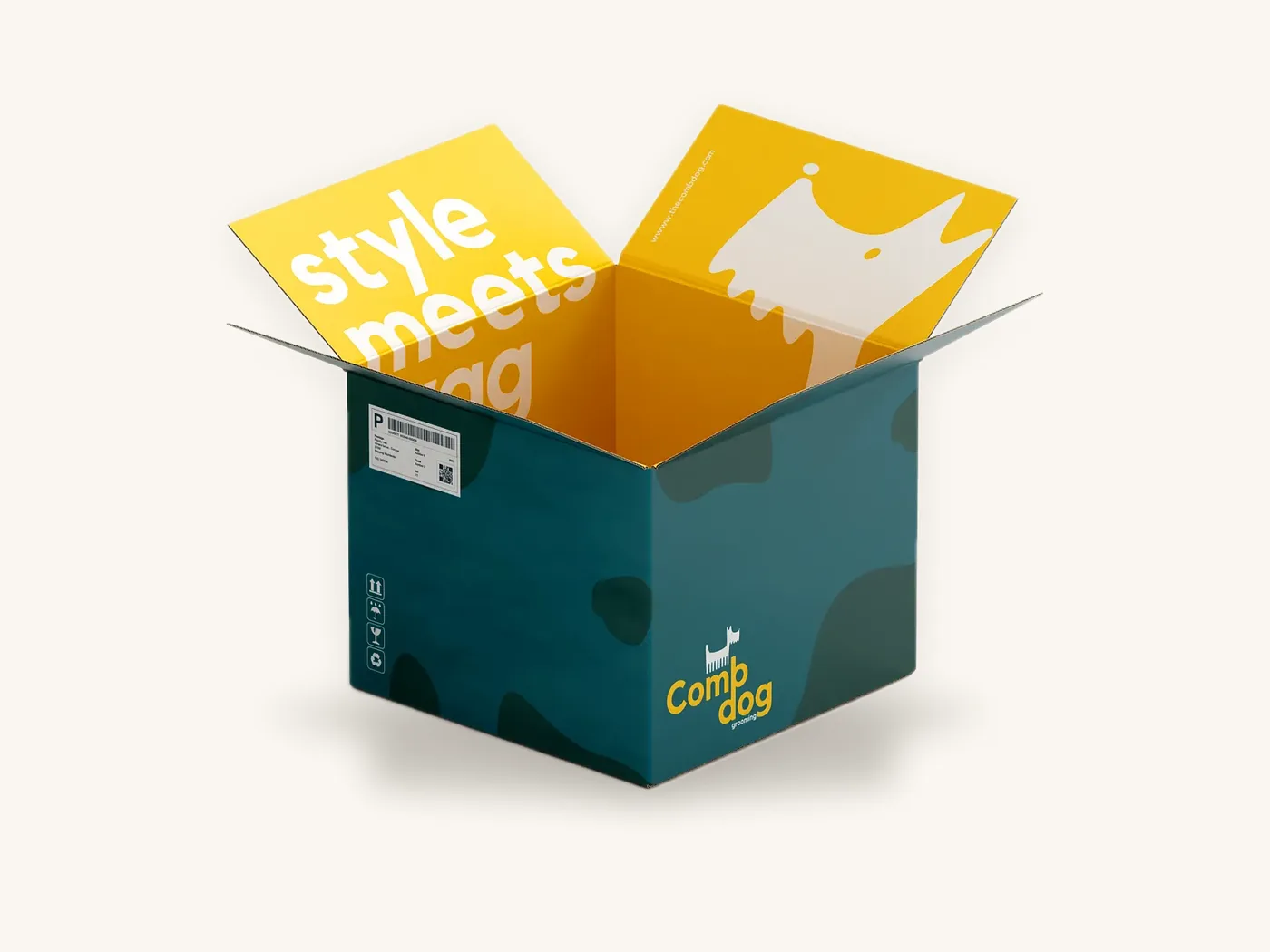
Watch out: printing a full-color photo on a brown BC double wall shipper is almost never worth it. The thick flutes and rough liner soften the image and the box will be scuffed and labeled in transit. Put the rich artwork on an inner mailer or product box and keep the outer shipper to one clean color.
What custom corrugated boxes cost
Five variables drive the price of corrugated packaging: box size (how much board), board construction (single or double wall), print coverage, finishes, and quantity. Quantity has the largest effect because setup time is spread across more boxes.
These are indicative per-unit prices from our current rates, with free US shipping included. Use the instant price estimator for your own dimensions and grade.
| Spec | 10 | 100 | 500 | 1,000 | 5,000 |
|---|---|---|---|---|---|
| Mailer box, E-flute, 8x6x3 in, full color outside | $3.99 | $2.64 | $1.41 | $1.17 | $0.83 |
| Shipping box RSC, B-flute, 12x10x6 in, 1-color | $7.08 | $4.69 | $2.50 | $2.08 | $1.48 |
| Shipping box RSC, B-flute, 16x12x8 in, 1-color | $11.29 | $7.47 | $3.99 | $3.32 | $2.36 |
| Double wall shipper, BC flute, 18x14x12 in, 1-color | $27.15 | $17.97 | $9.58 | $7.98 | $5.67 |
Size drives cost faster than most people expect, and double wall is a significant step up, so reserve it for loads that truly need it.
How to lower the unit price without losing strength
- Right-size the box. A box that fits the product closely uses less board and often reduces dimensional weight charges from carriers.
- Upgrade the grade before the wall. A heavier single wall grade is often enough where people reach for double wall.
- Add a partition instead of a thicker box. Dividers stop items from colliding and add column strength inside the box.
- Print one color on shippers. Save full color for the retail or mailer layer the customer actually sees.
- Price the next quantity tier. The per-box price falls sharply between 100 and 1,000 units, so if you reorder every few months, a larger single run may cost only modestly more in total.
For more on buying corrugated in volume, see custom boxes wholesale and our broader breakdown of how much custom boxes cost.
Sizing and testing corrugated packaging
Corrugated box dimensions are given as length x width x depth, and the convention in the US is that they are inside dimensions. Length is the longer side of the opening, width is the shorter side, and depth is the distance from the opening to the bottom.
Why inside dimensions matter
Each wall adds its thickness, so a BC double wall box is noticeably larger outside than inside. For pallets, master cartons or carrier limits, ask for outside dimensions too.
A practical test before a big run
- Order an unprinted structural sample in the grade you plan to use.
- Pack it exactly as it will ship, including inserts and fill.
- Close and tape it the way your packing team will.
- Drop it from waist height onto each corner, each edge and each face on a hard floor.
- Stack weight on top equal to what the box will see in storage and leave it overnight.
- Ship one to a distant address and inspect corners, seams and contents on arrival.
Corner failures usually point to fit; stack failures point to grade. A damaged product in an intact box means internal movement, not weak board.
Sustainability of corrugated packaging
Most US curbside programs accept corrugated board, and brown kraft liners skip the bleaching step used for white. To keep printed corrugated boxes easy to recycle:
- Choose aqueous coating over plastic lamination where scuff resistance allows.
- Use paper tape or water-activated tape instead of plastic tape.
- Replace foam with corrugated partitions or molded pulp.
- Specify FSC-certified board if responsible sourcing is part of your brand story.
If you print environmental claims on a box, such as "recyclable" or "made with recycled content," they must be accurate and qualified. The Federal Trade Commission's Green Guides explain how environmental marketing claims should be made, so review current guidance or ask counsel before printing one. Our sustainability page and eco-friendly boxes cover the options we offer.
How to order custom corrugated boxes from Box Sense
You do not need an engineering background to order. Send what you know, and our structural team will recommend flute, grade and style.
The spec sheet to send
- Product details: dimensions and weight of the packed contents, and whether they are fragile, sharp or liquid
- How it ships: single parcel, multi-pack, pallet or overboxed inside another carton
- Style: RSC, full overlap, mailer, tray, or "please recommend"
- Board: flute and grade if known, plus kraft or white liner
- Inside dimensions: length x width x depth
- Print: none, one color, or full color, and which panels
- Extras: partitions, inserts, handholds, tear strips, coatings
- Quantities: two or three tiers, for example 100, 500 and 1,000
- Timing and destination: in-hand date and ship-to address
What happens after you send it
- Quote within 24 hours. We confirm pricing for your spec and quantities, and flag anything that looks under-built or over-built.
- Dieline and proof. Our free design support includes the dieline, artwork setup and a 3D digital proof, with two revision rounds. Our design services page explains the process.
- Samples. Unprinted structural samples are free. A printed sample of your approved artwork is free on orders of 100 or more. See samples.
- Production. Standard production is 8–12 business days after proof approval. Rush production in 5 business days is available on most corrugated styles.
- Delivery. Shipping is free on every US order; international shipping is quoted at cost. Defective boxes reported within 14 days are reprinted free.
The minimum order is 10 boxes, and there are no die or plate charges. Browse the full range on our corrugated boxes page or the shipping boxes style page.
Frequently asked questions
What is the difference between corrugated and cardboard?
"Cardboard" is an everyday word that people use for several materials. Corrugated board has a fluted middle layer between two liners and is used for shipping and mailer boxes. Paperboard is a single solid sheet used for retail cartons, and chipboard or greyboard is dense board used for rigid boxes. When ordering, name the specific material so the supplier quotes the right thing.
Which flute is best for printed corrugated boxes?
E-flute gives the best print quality because its thin, tight flutes create the smoothest surface, close to paperboard. It suits printed mailers, retail-ready boxes and displays. B-flute prints acceptably with bold graphics and larger type. For photographic or detailed artwork on larger runs, offset printing laminated onto the board delivers the sharpest result.
What does 32 ECT mean on a box?
32 ECT means the board withstood 32 pounds of force per linear inch in an edge crush test, which measures how well the board resists crushing when stood on edge. It is a common single wall grade for parcel and general shipping. Higher ECT numbers indicate greater stacking strength. The rating appears on the box maker's certificate, if the box carries one.
When do I need double wall corrugated boxes?
Choose double wall when contents are heavy or dense, when boxes will be stacked high for long periods, or when the product is fragile and valuable enough that extra impact protection pays for itself. BC double wall is about 7 mm thick. For moderate loads, a stronger single wall grade or internal partitions are often enough and cost less.
How much do custom corrugated boxes cost?
Price depends on size, board, print and quantity. As a reference, a B-flute 12x10x6 in shipping box printed in one color is about $4.69 per box at 100 units and about $2.08 at 1,000, including US shipping. An 8x6x3 in E-flute mailer with full color outside is about $1.17 at 1,000. The pricing page estimates your exact spec.
Can I order a small quantity of printed corrugated boxes?
Yes. Box Sense produces custom corrugated boxes from 10 units. Short runs are printed digitally, so there are no plates and no die charges, which keeps small orders practical for launches, pilots and retailer samples. Unit prices fall significantly at higher quantities, so compare several tiers before choosing an order size.
Are corrugated boxes recyclable?
Corrugated boxes are accepted in most US curbside recycling programs. To keep printed corrugated packaging recyclable, choose aqueous coatings over plastic laminates, use paper-based tape, and avoid foam inserts in favor of corrugated or molded pulp. Local rules vary, so if you print a recycling claim, confirm it is accurate and follow FTC guidance on environmental claims.
How long does it take to make custom corrugated boxes?
After you approve the digital proof, standard production at Box Sense is 8–12 business days, and rush production in 5 business days is available on most corrugated styles. Quotes are confirmed within 24 hours. Build in time for proof revisions and, if you want one, a physical sample before the full run.
Next steps
Measure your packed product, decide how it will travel, and run a few sizes through the corrugated box price estimator to see how board and quantity change the numbers. When you are ready, request a quote for custom corrugated boxes and we will recommend a flute and grade, confirm pricing within 24 hours and send a dieline for your artwork.
Boxes in this guide
Order the packaging we covered
Written by the Box Sense Packaging Team
Our structural designers, prepress technicians and production staff print and convert custom boxes every day for brands in the United States, United Kingdom and UAE. Questions about this guide? Talk to us.