Custom shipping boxes are corrugated containers built to your exact inside dimensions and board grade, usually in the regular slotted container (RSC) style, and printed with your brand, handling marks or both. The right box is the smallest one that holds the product securely and survives the specific trip it will take: a parcel network, a pallet to a warehouse, or a long ride stacked under heavier cartons.
That means choosing strength before print. Start with how the box will travel and how much it will carry, pick the flute and wall construction that matches, size it from the packed product, and only then decide how much printing it needs. This guide walks through those decisions in that order, with specs, prices and a checklist for ordering.
Key takeaways
- Define the journey first. A 3 lb parcel, a 40 lb case on a pallet and an overbox for fragile goods need very different board.
- Single-wall B-flute (about 3 mm) covers most e-commerce shipping boxes; C-flute (about 4 mm) adds stacking strength; BC double-wall (about 7 mm) is for heavy, dense or fragile loads.
- Specify strength by edge crush test (ECT) or burst rating, not just "thick" or "strong."
- Size from inside dimensions of the packed product, then check the outer size against carrier dimensional weight rules.
- A 12x10x6 in B-flute RSC with one-color print is about $4.69 each at 100 units and about $2.08 at 1,000, with US shipping included.
- Box Sense makes custom corrugated shipping boxes from 10 units with no die or plate charges and standard production of 8–12 business days after proof approval.
Start with the journey, not the box
Two boxes with identical dimensions can fail in completely different ways, because the stresses depend on the route. Before you think about flutes or ink, write down three facts about the shipment.
How it moves. Parcel carriers sort by conveyor, chute and hand, so boxes take repeated drops, corner impacts and sideways shoves. Freight on pallets sees far fewer drops but heavy compression from cartons stacked above it, sometimes for weeks in a warehouse.
What it carries. Weight matters, but so does density and shape. A 20 lb box of loose bolts pushes against the bottom panel; a 20 lb cast-iron pan concentrates load on its edges; a 5 lb glass vase needs cushioning more than board strength.
Who opens it. A box going to a distribution center gets cut open and discarded. A box going to a customer's doorstep is part of the brand experience, which is where printed shipping boxes earn their cost.
Three common shipping profiles
| Profile | Typical contents | Main stress | Starting spec |
|---|---|---|---|
| Direct-to-consumer parcel | One to a few items, roughly under 15 lb | Drops, corner impacts, conveyor friction | Single-wall B-flute RSC, snug fit, printed outside |
| Wholesale or FBA case pack | Multiple retail units, 15 to 40 lb | Stacking on pallets, compression over time | Single-wall C-flute or B-flute with higher ECT |
| Heavy or fragile freight | Parts, glassware, tools, dense goods over 40 lb | Compression plus puncture and bursting | BC double-wall, often with partitions or inserts |
If the product ships directly to consumers and weighs only a few pounds, also compare a die-cut mailer. Our custom mailer boxes guide explains when a tape-free mailer is a better fit than an RSC.
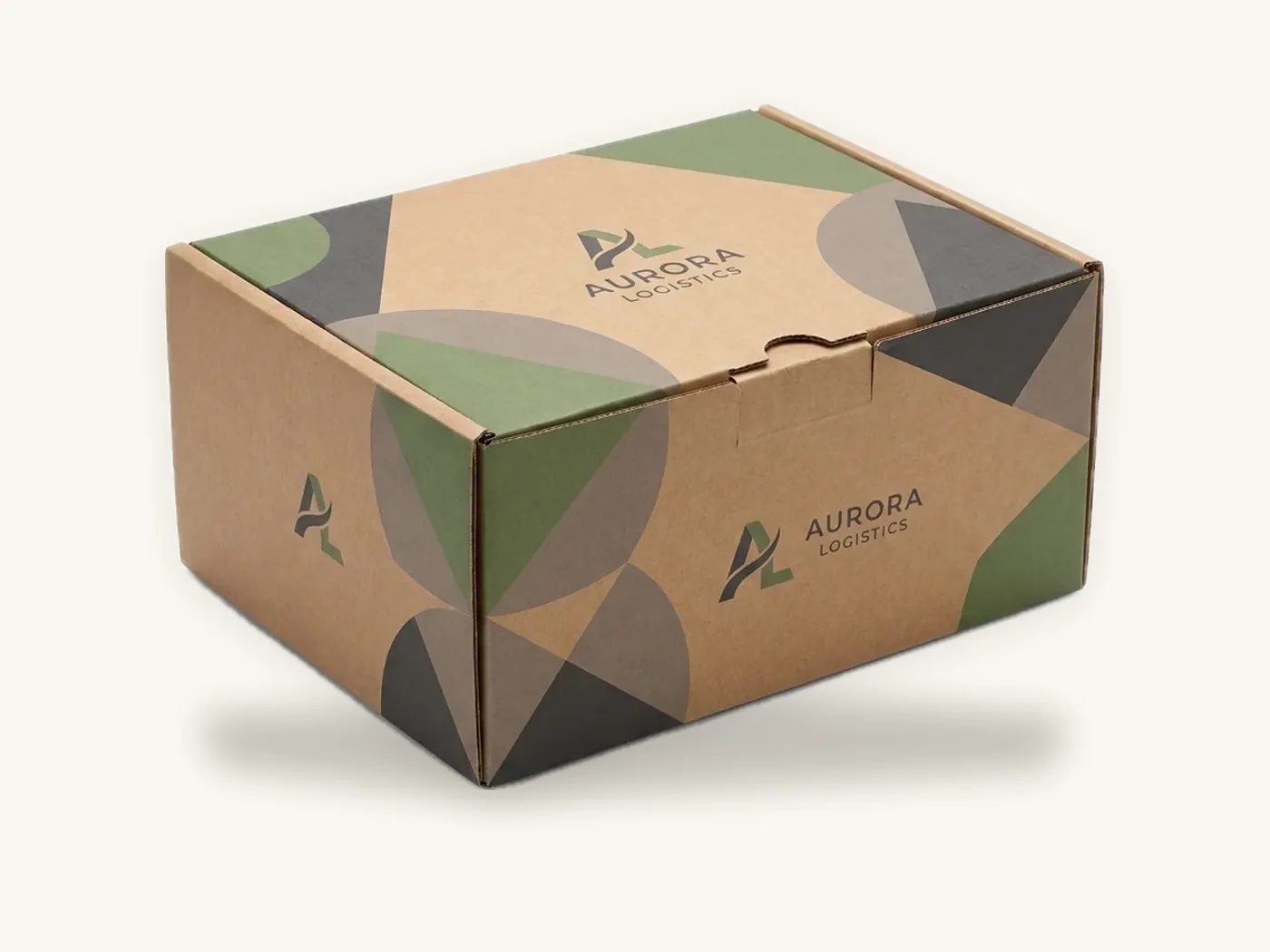
Shipping box styles: RSC and its alternatives
Most custom corrugated shipping boxes are RSCs because the style wastes almost no board. All four flaps on each end are the same length, and the outer flaps meet at the center when closed. The whole blank is a simple rectangle, which keeps the price per cubic inch low. The shipping boxes style page shows the range we produce.
When the RSC is not quite right, a few variations solve specific problems.
| Style | How it differs from an RSC | Choose it when | Tradeoff |
|---|---|---|---|
| Regular slotted container (RSC) | Standard: outer flaps meet at center | Almost every general shipping use | Center seam must be taped |
| Half slotted container (HSC) | Flaps on one end only; open top | Paired with a separate lid, or used as a tray or bin | Needs a cover or a second piece |
| Full overlap (FOL) | Outer flaps overlap across the full width | Heavy loads, rough handling, extra bottom strength | Uses more board than an RSC |
| Telescope (tray and cover) | Separate base and lid slide over each other | Tall or long items, repeat opening, heavy goods | Two pieces to store and pack |
| Die-cut shipper | One-piece structure with locking tabs | Branded shipments that need a cleaner open | Higher die complexity than an RSC |
Why the flute direction matters
Corrugated board is far stronger along the flutes than across them. In a standard RSC, the flutes run vertically in the side walls, which is exactly how a box resists stacking compression. If someone lays a tall box on its side during storage, it can lose a large part of its stacking strength. Mark "This side up" when orientation matters, and design the box so its long axis stands the way it will be stacked.
Board strength: flutes, walls and ratings
Corrugated board is a fluted medium glued between flat liners. Flute size controls thickness and cushioning; the number of walls and the paper weights control strength. For a deeper look at the physics, see the guides on corrugated flutes and ECT versus burst strength.
Flute and wall options
| Construction | Approximate caliper | Strengths | Typical use |
|---|---|---|---|
| E-flute single wall | 1.5 mm | Fine print surface, compact | Mailers and light shippers |
| B-flute single wall | 3 mm | Good puncture resistance, flat print surface | Most parcel shipping boxes |
| C-flute single wall | 4 mm | Better stacking and cushioning | Case packs and palletized goods |
| BC double wall | 7 mm | High compression and puncture resistance | Heavy, dense or fragile loads |
ECT or burst: how to read a strength spec
Box strength is usually described in one of two ways, and they measure different things.
Edge crush test (ECT) measures how much force the board's edge withstands before crushing, which predicts how well a box resists stacking compression. It is the more useful number when boxes will be stacked on pallets or in warehouses. Common single-wall grades are 32 ECT and 44 ECT; double-wall grades run higher.
Burst (Mullen) test measures the pressure needed to rupture the board's face, expressed as pounds per square inch, such as 200# test. It is a better predictor of resistance to punctures and rough handling from loose, heavy contents.
Printed box certificates on the bottom flap state which standard the board meets and the maximum gross weight it is intended for. Some carriers and freight classifications reference these ratings, so confirm current packaging requirements with the carrier or your freight provider before choosing the minimum grade.
Watch out: a higher rating does not fix a loose fit. If a product can slide an inch inside the box, it becomes a battering ram against the wall on every drop. Tighten the fit or add an insert before paying for heavier board.
When to move to double wall
Choose heavy duty double wall boxes when the packed weight climbs past roughly 40 lb, when a box will sit at the bottom of a tall pallet stack, when contents have sharp edges that can puncture single wall, or when the product is fragile and high value. For anything lighter, a well-sized single-wall box with the right ECT is usually the better spend.
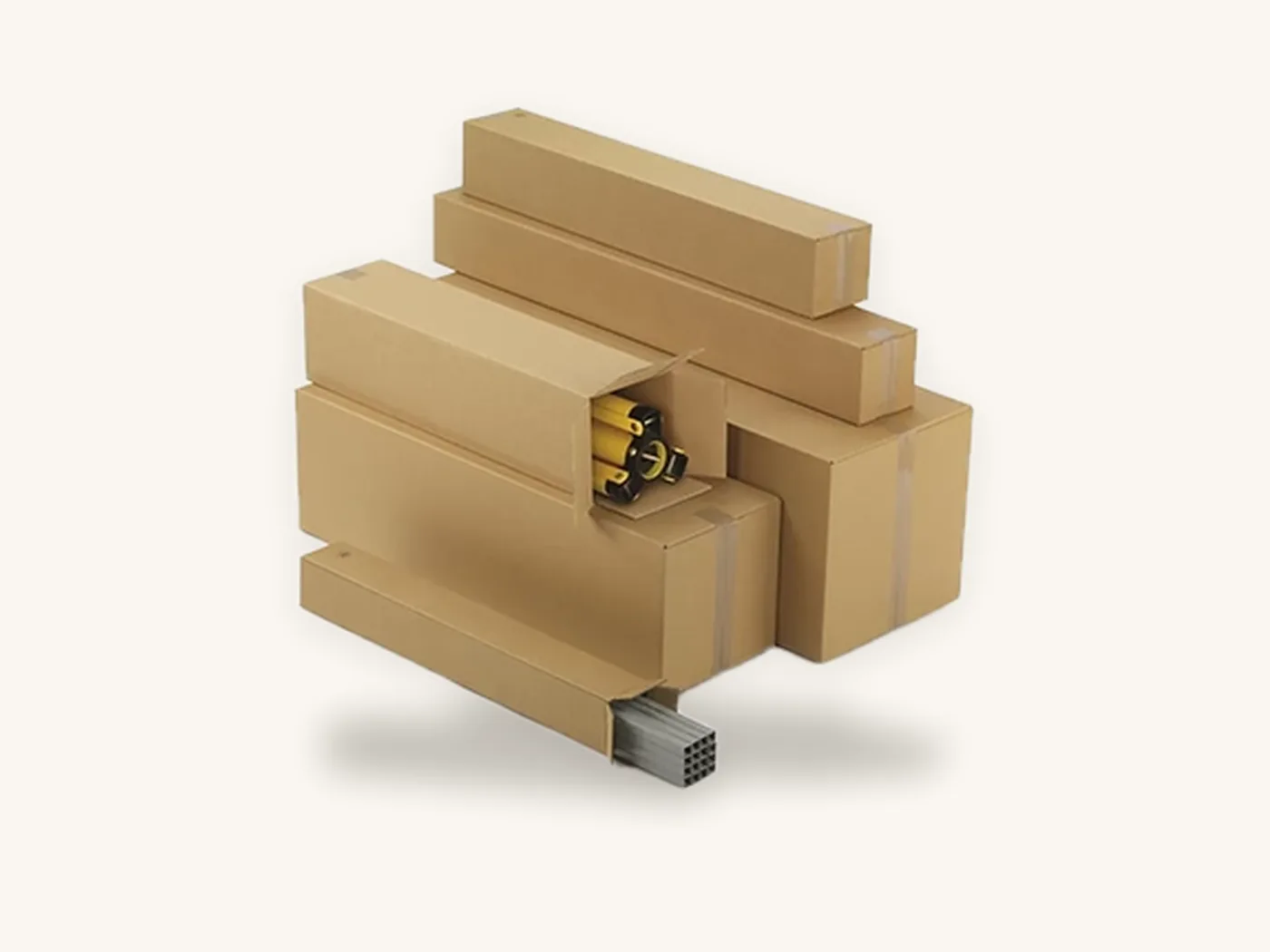
How to size a custom shipping box
Every custom shipping box is quoted on inside dimensions, written as length x width x depth. Length is the longer side of the opening, width is the shorter side, and depth is the distance from the opening to the bottom. Board thickness adds to every outside dimension, which is what carriers measure.
A sizing process that avoids reorders
- Pack the product completely. Include the retail carton, protective wrap, insert, paperwork and any cushioning you plan to use. Measure the packed bundle.
- Measure the maximum points. Handles, caps and protruding parts count.
- Add clearance by board type. For a rigid packed item in single-wall board, roughly 1/8 in to 1/4 in on length and width keeps packing quick without leaving room to shift. If you are using wraparound cushioning, add its compressed thickness on every side.
- Estimate outside dimensions. Add roughly two board thicknesses to each dimension: about 1/4 in for B-flute, about 5/16 in for C-flute and about 1/2 in for BC double wall.
- Check dimensional weight. Parcel carriers commonly bill by the greater of actual weight and a dimensional weight calculated from outer volume. Run your outside dimensions through the current formula from USPS, UPS or FedEx for your service.
- Consider pallet and carton counts. If boxes ship in volume, check how many fit per pallet layer. A small change in footprint can add a full row.
- Test a structural sample. Pack it, tape it, weigh it and drop it on its corners and edges before committing to a run.
Say you ship a boxed coffee grinder that measures 11.6 x 9.5 x 5.6 in in its retail carton. A 12x10x6 in inside-dimension RSC leaves just under 1/2 in of length and width and less than 1/2 in of depth. That leaves room for a thin layer of paper wrap but not enough for the carton to gain speed before it hits a wall.
For standard size breakpoints and how carriers treat them, the shipping box sizes guide and the dimensional weight guide go deeper.
Printed shipping boxes: how much print you need
Print on a shipping box has three possible jobs: identify the brand, communicate handling, and make a doorstep delivery feel intentional. How many of those jobs you need decides the spec.
Print coverage options
- Unprinted: fine for warehouse transfers and overboxes. You still get a custom size.
- One-color logo: the most economical branded option. A single dark ink on kraft reads clearly and hides scuffs.
- One or two colors on multiple panels: repeats the logo on top and sides so it shows no matter how the box is stacked or labeled.
- Full color: photography, gradients and edge-to-edge artwork. Brighter on a white liner than on kraft.
- Inside print: a message or pattern under the flaps, for boxes that customers open themselves.
Print methods by quantity
Short runs, roughly 10 to 500 units, are printed digitally with no plates, so a one-color box and a full-color box carry no setup charge. Larger runs move to offset, which gives the lowest unit cost and the most consistent color from box to box. The printing and finishes page shows each method on real board.
Designing for the parcel network
Shipping boxes get labels, tape and scuffs. Leave a clear, unprinted area on the top panel sized for a shipping label, or at least avoid placing the logo where a label will land. Keep critical text away from the flap scores and the manufacturer's joint. Aqueous coating helps printed panels resist scuffing without making the box harder to recycle.
Tip: print handling symbols and a short "open here" line on the box rather than using stickers. They cost almost nothing to add to the artwork and are never forgotten on a busy packing line.

What custom shipping boxes cost
Price depends on size, board grade, print coverage and quantity. Size and board grade matter more for shipping boxes than for most packaging, because corrugated board is the main cost and larger or double-wall boxes use much more of it.
These indicative per-unit prices come from our current rates and include free US shipping. For your exact dimensions and board, use the instant price estimator.
| Spec | 10 | 100 | 500 | 1,000 | 2,500 | 10,000 |
|---|---|---|---|---|---|---|
| RSC, B-flute, 12x10x6 in, 1-color | $7.08 | $4.69 | $2.50 | $2.08 | $1.77 | $1.33 |
| RSC, B-flute, 16x12x8 in, 1-color | $11.29 | $7.47 | $3.99 | $3.32 | $2.82 | $2.13 |
| Double wall, BC flute, 18x14x12 in, 1-color | $27.15 | $17.97 | $9.58 | $7.98 | $6.79 | $5.11 |
A few patterns are worth noticing. Moving from the 12x10x6 in box to the 16x12x8 in box raises the unit price by roughly 60 percent at most quantities, which is a strong argument for right-sizing. Double-wall boards cost substantially more, so use them where the load truly calls for it. And the steepest savings come between 10 and 500 units, after which material dominates.
Ways to lower the cost per shipment
- Right-size the box. Less board and often a lower dimensional weight charge.
- Standardize on a few sizes. Two or three well-chosen sizes usually beat a dozen that each run in small quantities.
- Match the grade to the load. Do not default to double wall for items a single-wall box handles well.
- Keep print simple on transit panels. One color on kraft gives brand recognition at the lowest price.
- Order to realistic usage. Corrugated is bulky to store, so balance the unit price at a higher tier against warehouse space.
Landed cost includes freight, storage and damage, not just the box. The custom packaging cost guide shows how to compare those factors.
Protecting what is inside
The box resists outside forces; inserts and cushioning control how the product moves. Most shipping damage comes from movement, so the internal fit deserves as much attention as the board.
Choosing internal protection
- Corrugated partitions: separate bottles, jars or multiple units, and add vertical stacking strength.
- Die-cut corrugated or paperboard inserts: hold a product in a fixed position; see box inserts and dividers.
- Molded pulp: a plastic-free cradle for glass, ceramics and electronics.
- Foam inserts: precise cavities for instruments, tools and high-value electronics.
- Paper void fill: fills leftover space in mixed-order boxes, but only works if packed tightly.
Double boxing fragile goods
For very fragile items, pack the product in a snug inner box, then float that box inside a larger shipper with at least a couple of inches of cushioning on every side. The inner box protects against shock; the outer box absorbs punctures and crushing. For glassware and ceramics, a double-wall outer is often the right pairing. The guide to reducing shipping damage covers testing methods in more detail.
Shipping boxes for Amazon FBA, 3PLs and retail
When boxes go to a fulfillment center or retailer rather than a consumer, the receiving party often sets the rules. Amazon publishes packaging and prep requirements for inbound cases, including limits on carton weight and dimensions and labeling expectations. Those rules change, so check current Seller Central guidance before finalizing a case size. Our Amazon FBA boxes are built with those considerations in mind, and the Amazon FBA packaging requirements guide summarizes what to check.
Third-party logistics providers and retail distribution centers may also specify maximum case weights, label placement, pallet patterns or carton markings. Ask for their routing guide before you order, and design the box footprint to fit their pallet standard.
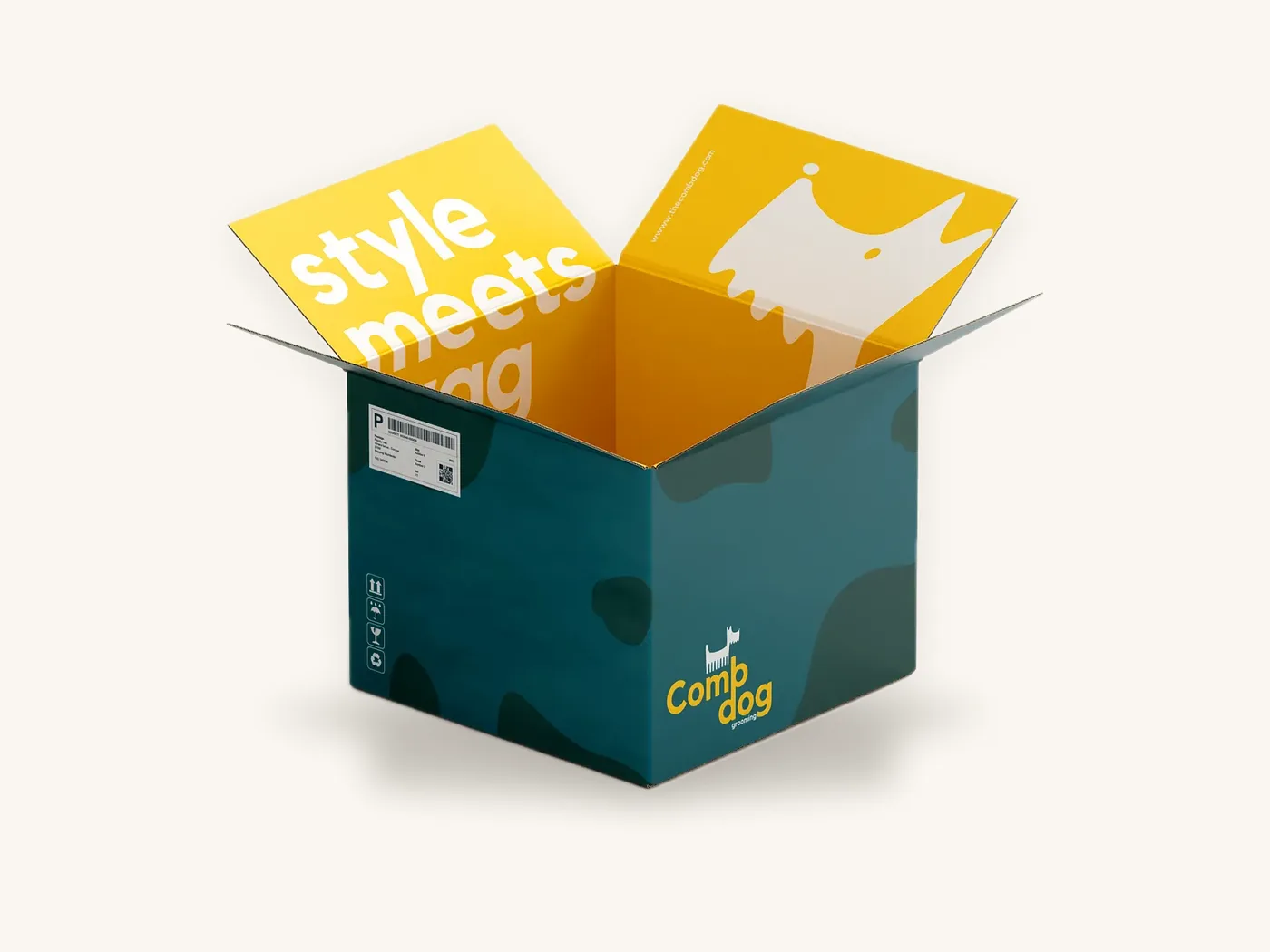
Sustainability for corrugated shippers
Corrugated board is made with recycled fiber and is widely accepted in curbside and commercial recycling. The easiest way to keep a shipping box recyclable is to avoid adding materials that complicate it: favor aqueous coating over plastic lamination, choose paper tape, and use paper-based fill or molded pulp instead of foam where the product allows.
Right-sizing is also a sustainability measure, because less board and less empty space mean fewer trucks for the same number of orders. FSC-certified board and soy or water-based inks are available; the eco-friendly boxes and sustainability pages cover options.
If you print a recyclability claim, make sure it is accurate and qualified. The FTC's Green Guides explain how environmental marketing claims should be made, so review current guidance or talk to counsel first.
How to order custom shipping boxes from Box Sense
We make custom shipping boxes and corrugated boxes in any size, from a 10-box test run to full production. The more of this you send, the more accurate the first quote.
Your ordering checklist
- Inside dimensions (length x width x depth), or product dimensions and a request for sizing help
- Packed weight per box, and whether boxes will be stacked on pallets
- Shipping method: parcel, LTL freight, FBA or 3PL
- Style: RSC, full overlap, telescope or a recommendation
- Board preference, or the ECT or burst rating you need
- Liner: kraft or white
- Print: unprinted, one color, full color, number of printed panels, inside print
- Inserts or partitions
- Quantities to compare, such as 250, 1,000 and 2,500
- Delivery address and target in-hand date
What happens after you ask
- Quote within 24 hours for your spec and quantity tiers.
- Free design support: we supply the dieline, set up artwork and send a 3D digital proof with two revision rounds.
- Samples: an unprinted structural sample is free, so you can pack and drop-test the real product. A printed sample of approved artwork is free on orders of 100 or more. See samples.
- Production: standard production takes 8–12 business days after proof approval. Rush in 5 business days is available on most corrugated styles.
- Delivery: free shipping on every US order, international shipping quoted at cost.
The minimum order is 10 boxes, with no die or plate charges. Defective boxes reported within 14 days are reprinted free. If you are shipping a presentation box inside a shipper, our custom rigid boxes guide explains how to size the outer carton around it.
Frequently asked questions
What is the difference between custom shipping boxes and mailer boxes?
Custom shipping boxes are usually regular slotted containers with four flaps on each end that are closed with tape, and they come in heavier grades for bulk or heavy shipments. Mailer boxes are one-piece, die-cut boxes with a hinged lid that locks without tape. Choose a shipping box for heavier goods, case packs and freight; choose a mailer for lighter, branded deliveries to customers.
How strong does my shipping box need to be?
Base it on weight, stacking and handling. Most parcel shipments of roughly under 15 lb do well in single-wall B-flute. Case packs that sit on pallets benefit from C-flute or a higher ECT rating, and loads heavier than about 40 lb or fragile goods usually need BC double wall. A snug fit matters as much as board grade, so always test a sample.
What does 32 ECT mean on a box?
ECT stands for edge crush test, a measure of how much force the corrugated board's edge can take before it crushes. The number reflects stacking strength, and 32 ECT is a common single-wall grade for general shipping. Higher ratings, such as 44 ECT, suit heavier or stacked loads. Check the box certificate and your carrier's current requirements when choosing a grade.
How do I measure for a custom shipping box?
Pack the product exactly as it will ship, then measure the longest length, width and height of that packed bundle. Add a small clearance, about 1/8 to 1/4 in for rigid items, or the compressed thickness of any cushioning. Give those numbers as inside dimensions. Remember the outside is larger by roughly two board thicknesses, which affects dimensional weight.
How much do custom printed shipping boxes cost?
Cost depends on size, board and quantity. As a reference, a 12x10x6 in B-flute RSC with one-color print is about $4.69 each at 100 units and about $2.08 at 1,000. A 16x12x8 in box runs about $3.32 at 1,000, and an 18x14x12 in double-wall box is about $7.98. All include US shipping. Use the pricing page for your exact spec.
Can you print on corrugated shipping boxes in full color?
Yes. Short runs are printed digitally, which handles full-color artwork on corrugated board with no plate costs, and larger runs move to offset for the lowest unit price. Full color looks brightest on a white liner. Many brands choose one dark color on kraft for transit boxes, since it reads clearly, hides scuffs and keeps the price down.
What is the minimum order for custom shipping boxes?
Box Sense makes custom shipping boxes from a minimum of 10 units, with no die or plate charges. That makes it practical to test a new size, run a pilot with a 3PL or cover a seasonal peak. Unit prices drop substantially as quantities rise, so compare a few tiers in the estimator before choosing your order size.
Next steps
Pack your product, measure the bundle and note the weight and how it will ship. Then run those numbers through the shipping box price estimator, and when the spec looks right, request a custom shipping box quote. We will confirm pricing within 24 hours and send a free structural sample so you can test the fit before production.
Boxes in this guide
Order the packaging we covered
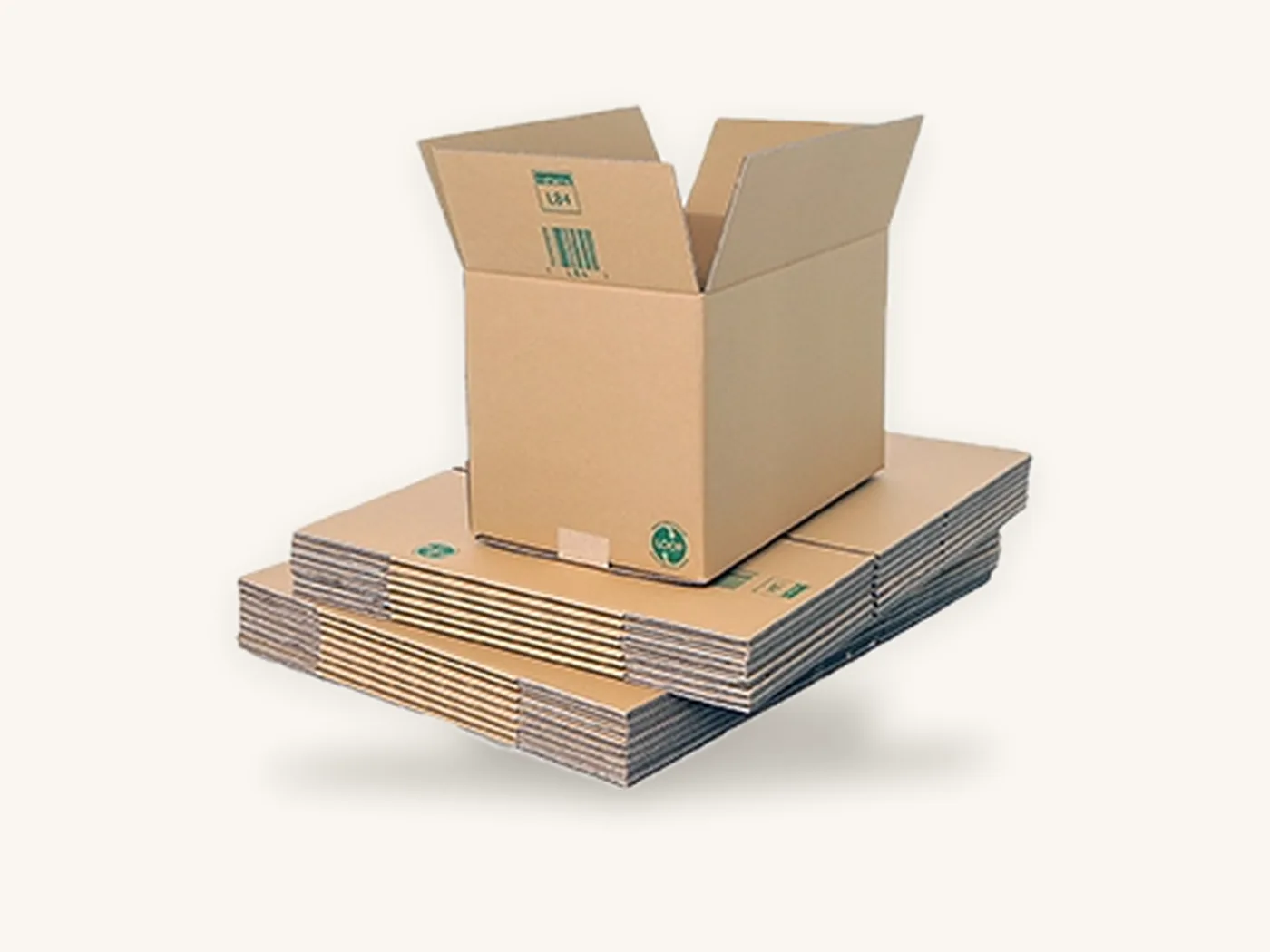
Written by the Box Sense Packaging Team
Our structural designers, prepress technicians and production staff print and convert custom boxes every day for brands in the United States, United Kingdom and UAE. Questions about this guide? Talk to us.