Custom packaging cost for printed boxes covers a very wide range. At the low end is a small one-color kraft soap sleeve ordered in the thousands; at the high end is a large double-wall shipping carton ordered as just 10 pieces. Most retail cartons and e-commerce mailers fall somewhere in between, and exactly where depends on the job.
That spread is not random. Every price per box is built from the same five layers: the board, the conversion work, the print, the finishes and extras, and the quantity that spreads setup across the run. Once you can see those layers, you can predict a quote before you request one and decide which layers are worth paying for.
This guide takes the price apart, shows how each packaging family behaves, walks through three hypothetical budgeting decisions and ends with a method for setting your own number.
Key takeaways
- A custom box price is a stack: board area and grade, cutting and gluing, print coverage, coatings and extras, then a quantity multiplier.
- Quantity moves price more than any other decision. The same carton costs several times more per unit at 10 pieces than at 1,000.
- Packaging family sets the baseline: folding cartons are cheapest, corrugated mailers sit in the middle, and wrapped rigid boxes cost several times more at the same footprint.
- Box Sense charges no die or plate fees. One-time tooling applies only to foil, embossing, spot UV and custom inserts.
- The box price is only part of total packaging cost. Freight, storage, packing time and damage belong in the budget too.
- Request a quote for your exact size and two or three quantities.
The five layers inside every custom box price
Suppliers present a single per-unit number, but it is always the sum of distinct costs. Knowing which layer dominates your box tells you where savings are possible and where they are not.
| Layer | What it covers | What makes it go up | Typical lever |
|---|---|---|---|
| Board | The sheet of paperboard, corrugated or greyboard, plus waste around the die | Larger dimensions, thicker or specialty stock, rigid greyboard | Right-size the box, pick the lightest grade that protects |
| Conversion | Die-cutting, creasing, gluing, or hand wrapping for rigid boxes | Complex structures, extra glue points, manual assembly | Choose a standard style over a custom structure |
| Ink coverage and the number of printed sides | Full color, inside and outside printing, PMS matching | Print outside only, or one color on kraft | |
| Finishes and extras | Coatings, laminations, foil, embossing, windows, inserts, tear strips | Soft-touch, multiple embellishments, custom inserts | Pick one hero finish instead of three |
| Quantity and setup | Press makeready, proofing, handling, spread across the run | Very short runs | Order the quantity you will use in the next few months |
Board: the layer driven by size
Board cost scales with the flat blank, not the closed box. A box that grows by one inch in every direction adds material on all six panels plus the glue flap and tuck flaps, so area rises faster than most people expect.
Grade matters too. An 18 pt SBS carton, E-flute corrugated and 2 mm wrapped greyboard use very different amounts of fiber per square inch. Our SBS paperboard and corrugated board pages list the grades we run and where each belongs.
Conversion: cutting, folding and gluing
Folding cartons and mailers are die-cut and glued on machines, which is why their conversion cost is small. Rigid boxes are wrapped around a greyboard shell with far more handling per unit, and that labor is the main reason they cost more.
Print and finishes: where brands overspend
Printing full color on one side is a modest adder. Printing the inside as well adds a second print pass, so the print layer grows noticeably. Laminations and embellishments each stack on top, and foil or embossing also triggers a one-time tooling charge. None of these is wrong, but each should earn its place.
Custom packaging cost by packaging family
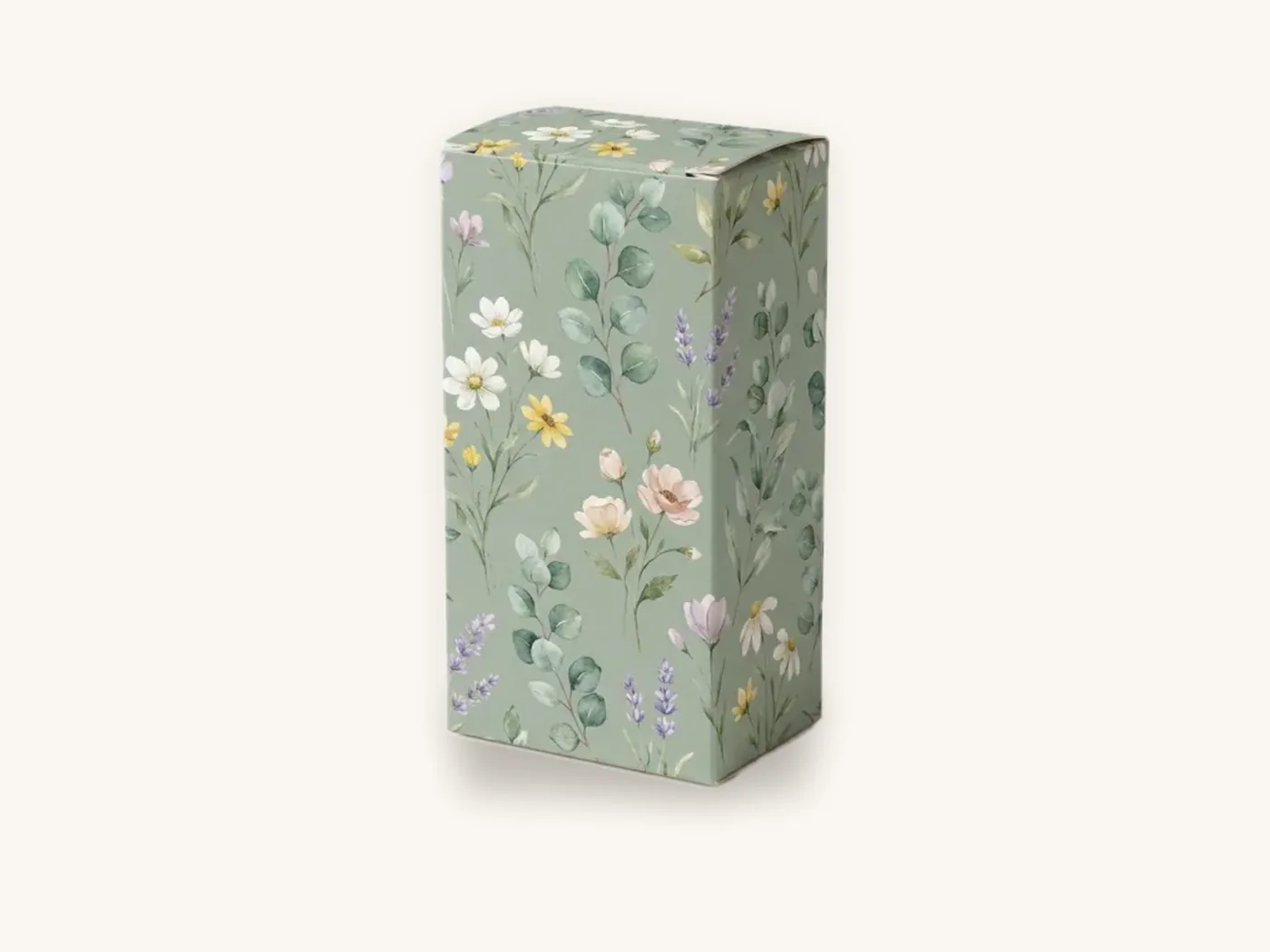
The type of box sets the floor under your price. Real prices vary too much by job to list fairly, so here is how representative specs from each family compare in relative terms, and what sits behind each position.
| Packaging family | Representative spec | Relative cost | What drives the cost |
|---|---|---|---|
| Folding carton | Straight tuck end, 18 pt SBS, 3x2x5 in, full color, aqueous | Lowest | Thin board and fast machine cutting and gluing |
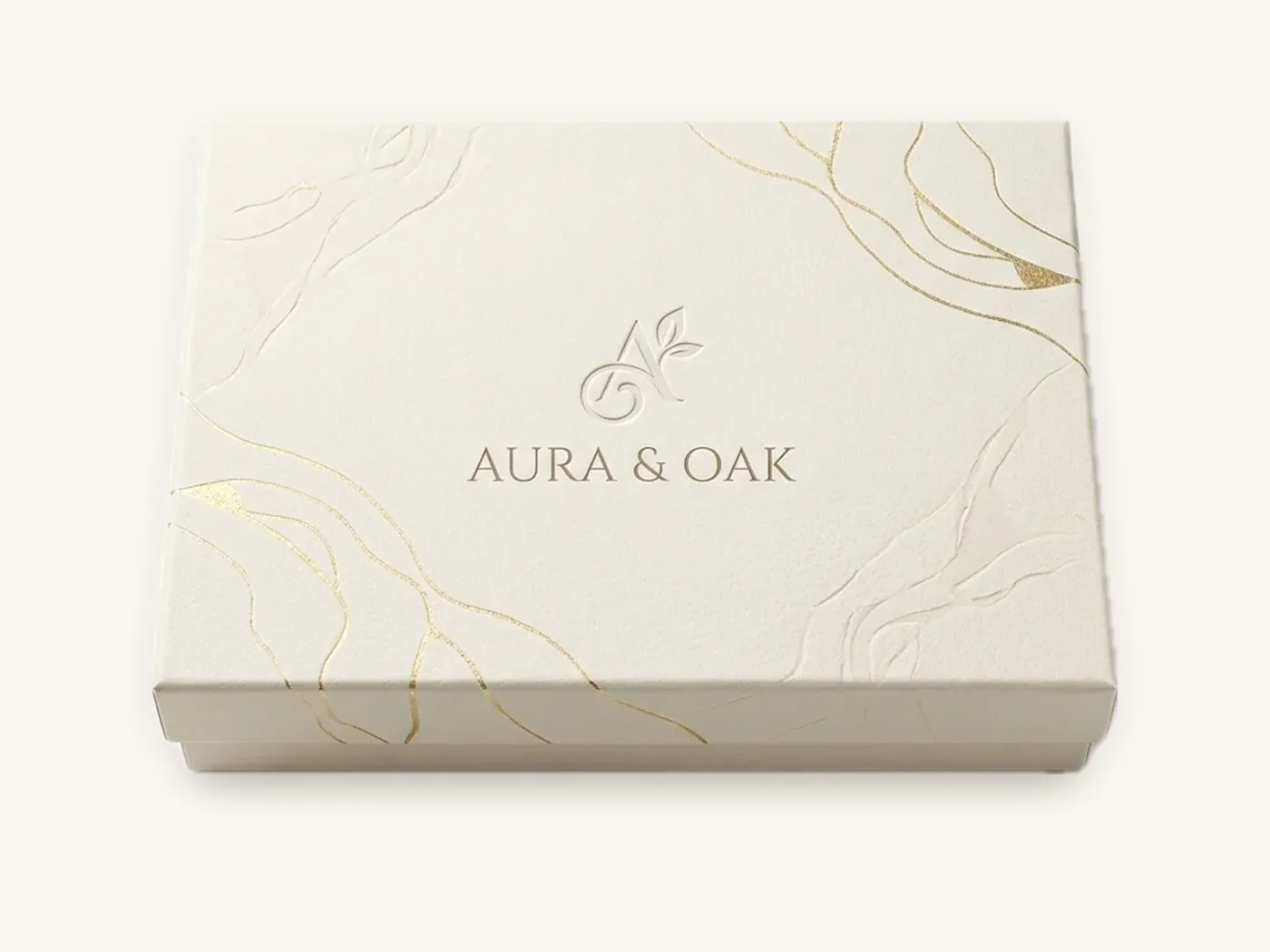
| Premium folding carton | Cosmetic carton, 18 pt SBS, 2.5x2.5x6 in, soft-touch and foil | Low | Lamination and foil on top of a small carton |
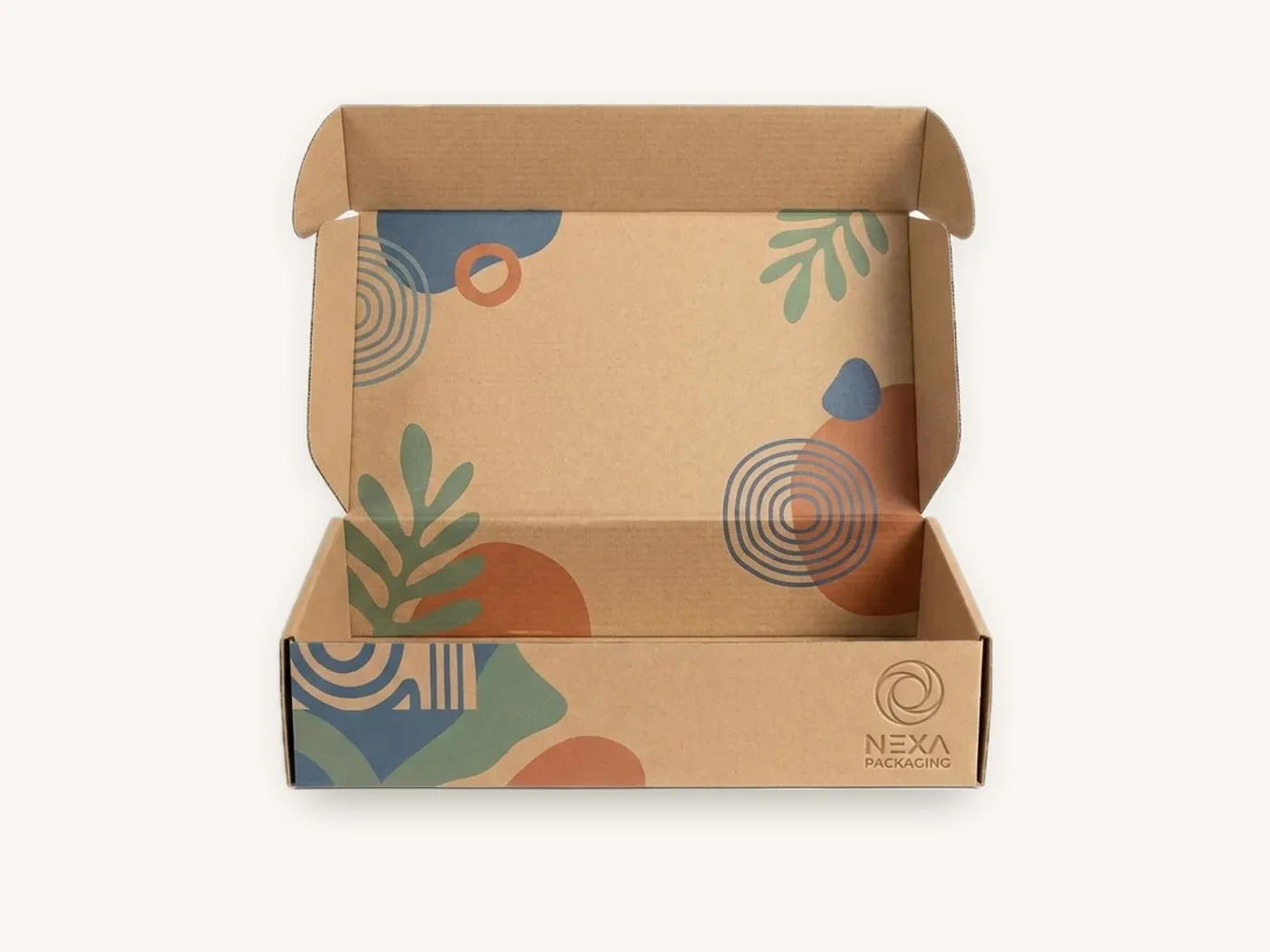
| Corrugated mailer | E-flute, 8x6x3 in, full color outside | Medium | A larger fluted blank and a bigger print area |
| Corrugated shipper | RSC, B-flute, 12x10x6 in, 1-color | High | The sheer amount of board, plus shipping weight |
| Rigid box | 2 mm greyboard wrapped, 8x6x3 in, full color, matte | Highest | Thick greyboard, wrap paper and hand assembly |
The order holds at every quantity. Ordering more lowers the unit cost of each family, but it does not change which family is cheaper than which.
Reading the family table
Notice that the 8x6x3 in rigid box costs several times more than the 8x6x3 in mailer at every quantity. Same footprint, very different construction. That gap is the price of greyboard, wrap paper and hand assembly, and our rigid box cost breakdown explains when it pays off.
The cosmetic carton shows the finish effect. It is smaller than a mailer but carries soft-touch lamination and foil, so it closes much of the gap to the corrugated mailer while using far less board.
Choosing a family on cost grounds
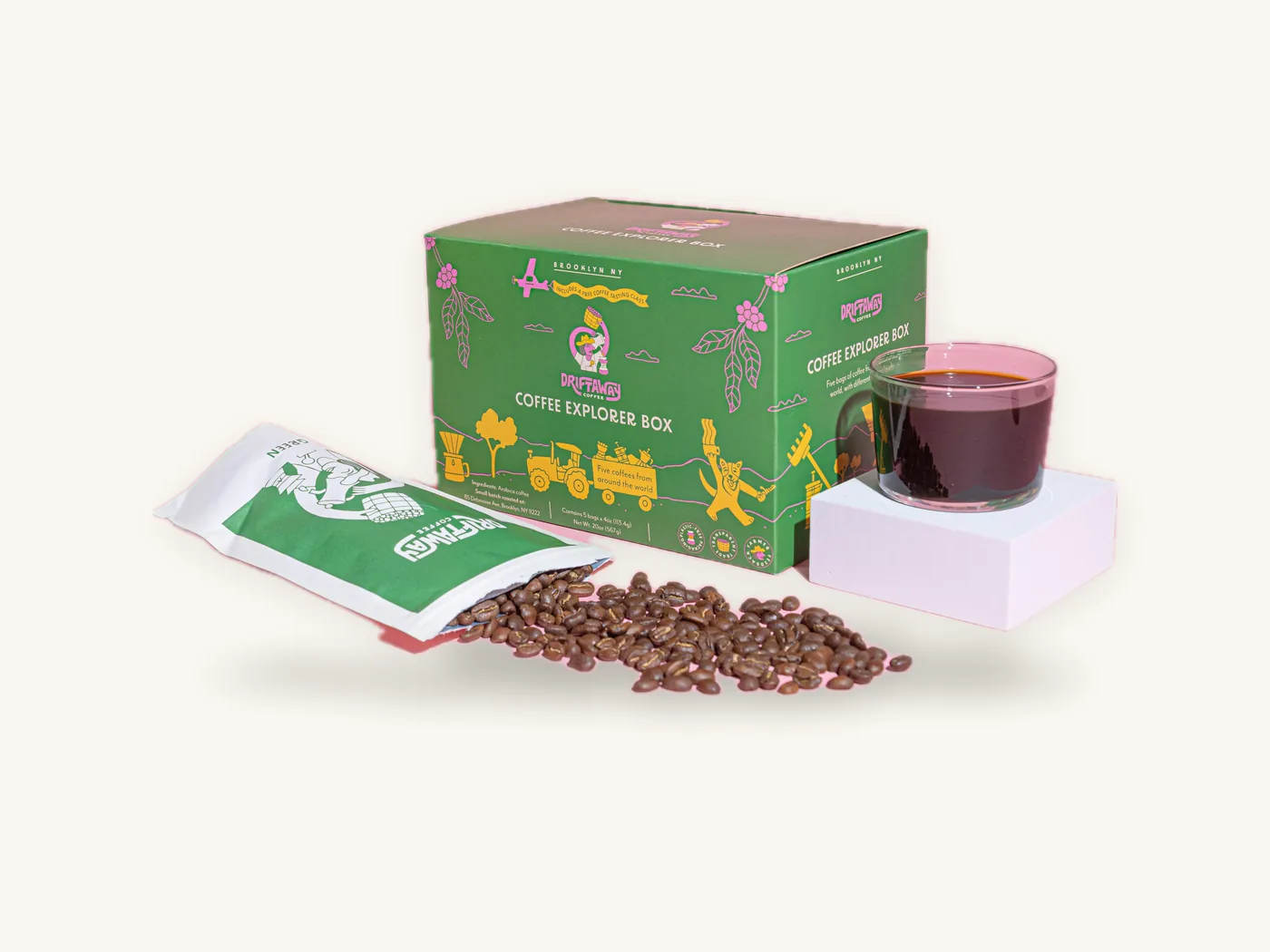
- Choose [custom product boxes](/products/product-boxes) in folding carton styles when the product sits on a shelf or goes inside a shipper, and weighs roughly under a pound or two.
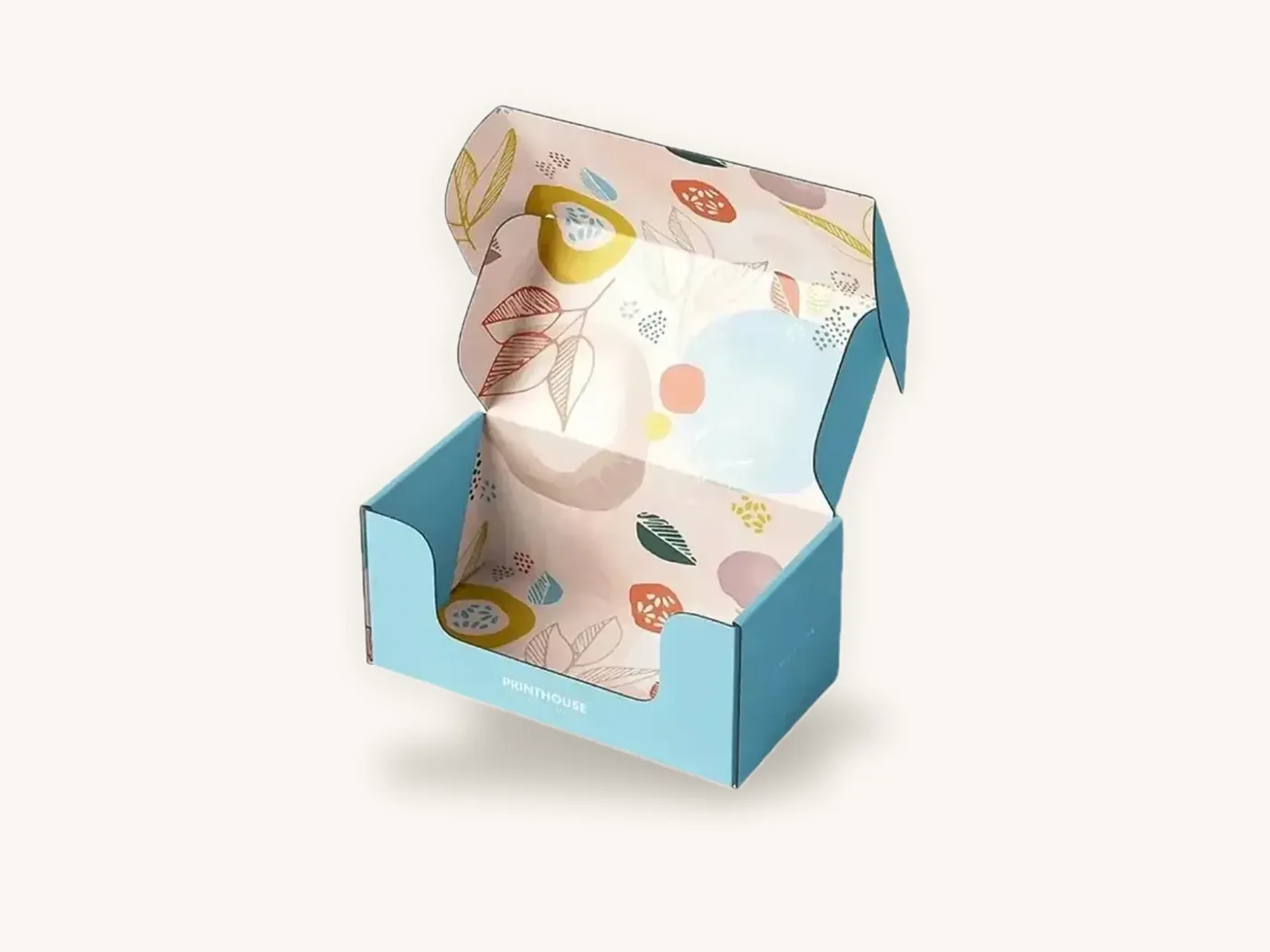
- Choose [custom mailer boxes](/products/custom-mailer-boxes) when the box ships on its own to the customer and doubles as the presentation piece.
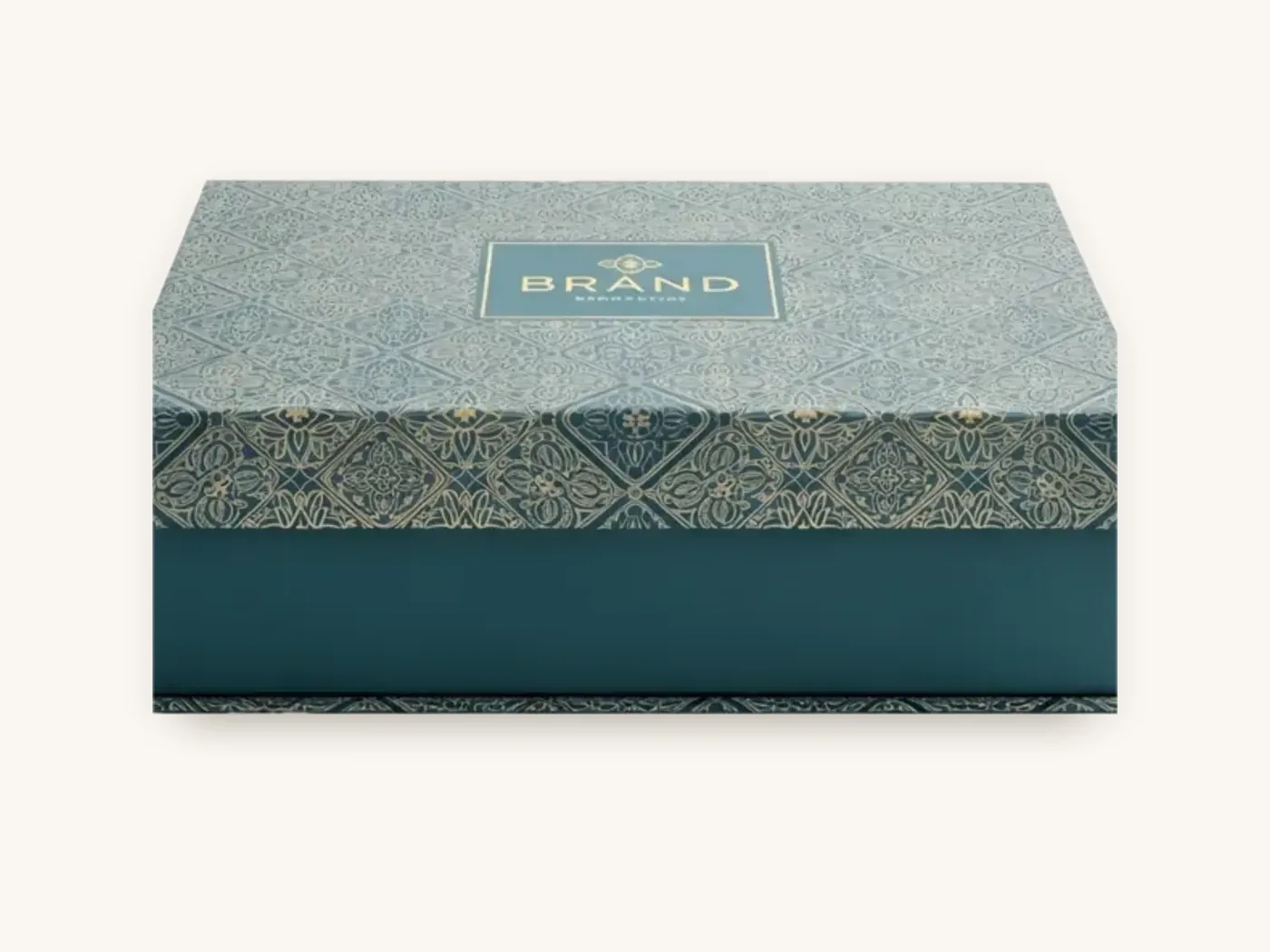
- Choose [custom rigid boxes](/products/rigid-boxes) when the box is kept, gifted or sold at a price point where presentation drives perceived value.
If you want the box-by-box view with more styles, our companion piece on how much custom boxes cost by type covers cartons, shippers, displays and bakery boxes one at a time.
Why price per box falls as quantity rises
Every order carries fixed work: preparing files, making the proof, setting up the press and cutter, and running test sheets before the first good box. On a 10-piece order that effort is divided by 10. On a 5,000-piece order it nearly disappears into the unit price.
The table follows a single straight tuck end carton spec across the quantity tiers and shows where the unit price sits and why.
| Quantity tier | Relative unit price | What is happening |
|---|---|---|
| 10 to 50 | Highest | Setup and proofing are shared by very few boxes |
| 100 | High | Still a digital short run; setup is a large share of each box |
| 250 to 500 | Medium | The steepest part of the curve; setup is thinning out fast |
| 1,000 | Low | Material, ink and finishing now make up most of the price |
| 2,500 to 5,000 | Low | Each step up still helps, but by less than the step before |
| 10,000 | Lowest | Close to the floor set by board and ink |
Where the curve flattens
The biggest percentage drops happen early, on the step up from a short run to a few hundred units. After a few thousand units, material and ink make up most of the price, so doubling the order saves very little per box. That is the point where negotiating quantity stops being useful and right-sizing or simplifying the spec starts to matter more.
The total-spend trap
A lower unit price does not always mean a lower bill. An order of 1,000 cartons carries a much lower unit price than an order of 250, but the invoice is still larger, because you are buying four times as many boxes. The larger order is the better deal only if you will actually use 1,000 cartons before the design, the product or the regulations change.
Tip: price three quantities side by side, for example 250, 500 and 1,000. Divide each total by the number of months it will last. The best option is usually the one with the lowest cost per month of use, not the lowest cost per box.

One-time tooling versus per-unit adders
Many buyers are surprised by setup lines on a quote. At Box Sense there are no die or plate charges; tooling applies only when you choose a finish that needs its own physical tool.
| Feature | One-time tooling | Also adds per unit? | Worth it when |
|---|---|---|---|
| Foil stamping | Yes | Yes | A logo or name needs a metallic highlight |
| Embossing or debossing | Yes | Yes | Touch matters, such as rigid lids and premium cartons |
| Spot UV | Yes | Yes | You want gloss contrast on a matte surface |
| Custom paperboard insert | Yes | Yes | The product must be held in a fixed position |
| Die-cut window with film | None | Yes | The product sells on sight |
| Tear strip | None | Yes | Subscription or tamper-evident shipping |
| Lamination or aqueous coating | None | Yes | Scuff resistance or tactile feel |
How tooling behaves across quantities
A tool costs the same whether it stamps 100 boxes or 10,000. On a 100-box order its cost is shared by 100 boxes, on top of the per-unit foil cost. On 1,000 boxes each box carries a tenth as much of it. On reorders of the same artwork, the tool is already made, so the charge does not repeat.
That is why embellishments feel expensive on short runs and reasonable at volume. If you are ordering small quantities, a single foil logo is often a better use of budget than foil plus embossing plus spot UV. The printing and finishes page shows what each option looks like in production.
Three hypothetical packaging budgets, worked through
These examples are illustrative and deliberately leave out prices, because real figures depend on your exact spec. Use them to understand how the decision works, then put your own quoted numbers into the same steps.
Example 1: a skincare serum launch
Say you are launching a serum in a 2.5x2.5x6 in carton with soft-touch lamination and a foil logo. You expect to sell 1,000 units in the first six months.
- Ask for the carton quoted at 1,000 units, matching what you expect to sell
- Add the one-time foil tooling to the order total
- Divide the total by 1,000 to get packaging cost per unit sold, tooling included
If the serum sells at a premium retail price, that carton is a small fraction of the price and does real work on shelf. If you ordered only 100, each carton would cost considerably more, and the same tooling would be shared by a tenth as many boxes.
Example 2: an apparel brand shipping direct
Say you ship folded T-shirts in an 8x6x3 in E-flute mailer printed full color outside, and you send around 250 orders a month.
- A 1,000-unit order covers four months at the lower unit price
- A 250-unit order covers one month at a higher unit price
Buying four monthly orders of 250 pays the short-run rate four times, so ordering four months at once costs clearly less over the same period, provided you have the storage space for flat-packed mailers. Ask for both quantities in one quote and multiply each out to four months to see the difference for your box. Our mailer box cost guide goes deeper on size and inside-print choices.
Example 3: a corporate gift program
Say a company sends 250 client gifts in a 10x8x3 in magnetic rigid box with soft-touch, foil and an insert.
- The boxes are quoted at 250 units, the highest-cost family at a fairly short run
- One-time tooling applies twice: once for the foil and once for the insert die
Here the box is part of the gift itself, and the per-unit cost is judged against the value of the relationship, not the product inside. The custom rigid boxes guide covers structure and material choices for this kind of program.
Hidden costs that sit outside the box price
The unit price on a quote is what you pay the manufacturer. Total packaging cost is what the box costs your business from arrival to the customer's doorstep. Before you compare suppliers or specs, run through this checklist.
- Inbound freight. Free shipping is included on Box Sense orders to any US address. Elsewhere, freight can be a separate line.
- Storage. Folding cartons and mailers ship flat. Rigid boxes usually arrive assembled and take far more shelf space.
- Packing labor. A tuck carton closes in seconds. Tape-sealed shippers, multi-part kits and ribbons take longer at the packing table.
- Inserts and fill. Tissue, void fill and box inserts add material and packing time.
- Outbound postage. Carriers bill larger parcels by dimensional weight, so an oversized box can cost more to ship than it saves in production. Confirm current rules with USPS, UPS or FedEx.
- Damage and returns. A cheaper box that crushes in transit costs you a replacement product, a second shipment and customer goodwill.
- Obsolescence. Boxes printed with an old ingredient list, address or claim become waste when anything changes.
Our guide to packaging landed cost turns this checklist into a per-order calculation.
Watch out: a quote that looks cheap because it excludes freight, tooling or proofing can end up costing more than an all-in price. Compare suppliers on the total delivered cost for the same spec and quantity.
How to set a custom packaging budget in seven steps
Rather than starting with a supplier's price list, start with your product and work outward.
- Define the job of the box. Shelf appeal, shipping protection, gifting or all three. This picks the packaging family.
- Measure the packed product. Include any bottle, pouch or insert. Internal dimensions drive board area, which drives cost.
- Choose the lightest board that protects. Test before upgrading; a snug fit often solves damage better than a heavier grade.
- Decide print coverage. Outside only, inside and outside, full color or one color. Put your brand where customers look.
- Pick one hero finish. Soft-touch, foil or spot UV, chosen for the product's price point.
- Estimate usage and pick a quantity. Forecast three to six months of sales and ask for at least two tiers when you request a quote.
- Add the hidden costs. Freight, storage, packing time and postage turn a box price into a real per-order number.
A sanity check on proportion
There is no universal right percentage for packaging. A better test: would a customer notice if you removed a feature? If the answer is no, the feature is a candidate to cut. If removing it would make the product feel cheaper than its price, it is doing its job.
Custom box pricing mistakes that inflate cost
Most overspending comes from a handful of repeat decisions.
Oversizing "just in case"
A box with an inch of play on every side uses more board, needs void fill and may push the parcel into a higher dimensional weight band. Size to the packed product with small clearances instead.
Stacking finishes on short runs
Foil, embossing and spot UV each carry a tool and a per-unit adder. On 100 boxes, three embellishments can cost more than the box itself. Choose one and let it stand out.
Reordering too often
Buying 100 boxes every month pays the short-run rate twelve times a year. If your artwork is stable, one larger order at a lower tier is usually cheaper overall.
Printing surfaces nobody sees
The bottom panel of a shipper, the inside of a carton that holds a bottle, and the back of a display tray rarely need full color. Print them in one color or leave them unprinted.
If you are working with a very small first run, the guide to custom boxes with no minimum explains how to stage quantities so the early per-unit premium does not become a habit.
How to get an accurate custom packaging price from Box Sense
An estimate is only as good as the spec behind it. The more detail you send, the closer the first quote will be to your final invoice.
What to send
- The box style, or a description of the product and how it is sold so we can recommend one
- Internal length, width and depth, plus product weight
- Board preference: paperboard grade, E-flute or B-flute corrugated, or rigid greyboard
- Print coverage: outside or inside and outside, full color, one color or PMS
- Coatings, finishes and extras such as windows, inserts or tear strips
- Two or three quantities to compare
- Delivery location and the date you need boxes in hand
What happens next
Quotes are confirmed within 24 hours. Our design services team supplies the dieline, sets up your artwork and sends a 3D digital proof, with two revision rounds included at no charge.
Unprinted structural samples and printed samples of approved artwork are available for a small fee; see samples for details. Standard production takes 8–12 business days after proof approval, with rush in 5 business days on most paperboard and corrugated styles.
The minimum order is 10 boxes. There are no die or plate charges, shipping is free, and defective boxes reported within 14 days are reprinted free. You can also browse the folding cartons range to compare structures before you request pricing.
Frequently asked questions
How much does custom packaging cost per box?
It depends on the box type, size, print, finishes and quantity. A small full-color folding carton sits at the low end, an E-flute mailer in the middle, and a wrapped rigid box of the same footprint costs several times more than the mailer. Because the figure moves so much with each choice, we do not publish a price list; request a quote with your spec and you get an exact price within 24 hours.
Why are small orders of custom boxes so expensive per unit?
Every run has fixed setup work: file preparation, proofing, press and cutter makeready, and test sheets. On small orders that work is shared across very few boxes. The same carton costs several times more per unit at 10 pieces than at 1,000. Digital printing keeps short runs practical, but the per-unit price will always be higher than at volume.
What is the cheapest type of custom packaging?
Small folding cartons in kraft or SBS paperboard are the lowest-cost printed boxes. A one-color 18 pt kraft soap sleeve and a small one-color kraft tuck carton are typical examples, because they use little board, one ink and no lamination. Cost rises with size, full-color coverage, laminations and embellishments, and rigid construction costs the most at any quantity.
Are there setup fees for custom boxes?
At Box Sense there are no die or plate charges. One-time tooling applies only when you choose certain finishes: foil stamping, embossing, spot UV and custom insert dies. Each appears as its own line on your quote. These tools are made once and reused on reorders of the same artwork, so the charge does not repeat.
Does custom packaging cost include shipping?
Box Sense includes free shipping on every order, and the unit prices on our quotes already reflect that. Orders for delivery outside the USA are quoted separately. When comparing suppliers, check whether freight, tooling and proofing are included, because a lower unit price can hide separate charges that raise the delivered total.
How can I reduce my custom packaging cost without looking cheap?
Right-size the box to cut board and postage, print outside only or use one color on kraft, choose one standout finish instead of several, and order a quantity that covers a few months of sales. Keep the inside lid or front panel strong, because that is where customers look. Removing features nobody notices saves money without changing perception.
How accurate is a ballpark price for custom boxes?
A ballpark is only useful for standard styles and finishes, and only when it comes from the same rates the quote team uses. Differences appear when the structure is unusual, the artwork needs PMS matching, or the product requires a custom insert. Treat any rough figure as a way to compare sizes and quantities, then request a quote to confirm the final price within 24 hours.
Next steps
Pick the packaging family that fits your product, measure the packed item and choose two or three quantities. Then request a quote with your spec and artwork, and we will confirm pricing within 24 hours and prepare a dieline and 3D proof.
Boxes in this guide
Order the packaging we covered
 Popular
Custom Mailer Boxes
Custom Product Boxes
 Popular
Custom Rigid Boxes
Written by the Box Sense Packaging Team
Our structural designers, prepress technicians and production staff print and convert custom boxes every day for brands across the United States. Questions about this guide? Talk to us.