Packaging landed cost is the full cost of a box by the time it is ready to use in your warehouse: the unit price plus tooling, freight, duties and brokerage, insurance, receiving, storage, assembly labor and the boxes lost to damage or obsolescence, divided by the boxes you actually use. It is the number that belongs in your product margin, and it is often well above the price on the quote.
The gap is widest when a quote is priced at the factory door and everything after that is left for you to discover. This guide lists every fee that sits between a unit price and a landed cost, gives a simple formula, works through an example, and shows how box size and construction change what you pay to ship the finished order to customers.
Key takeaways
- Landed cost per usable box = (goods + one-time tooling + inbound freight + duties and fees + handling and storage + assembly) divided by boxes you actually use.
- The trade term on a quote (EXW, FOB, DDP or delivered) decides which of those costs are already included. Compare quotes only on the same basis.
- Packaging is light but bulky, so packaging freight cost is driven by volume and pallet count more than weight.
- Boxes that ship flat, such as mailers and collapsible rigid boxes, cost far less to move and store than set-up rigid boxes.
- The box also sets your outbound box shipping cost. Oversized boxes can raise carrier charges on every order through dimensional weight pricing.
- Box Sense unit prices include free shipping on every US order; international shipping is quoted at cost.
The packaging landed cost formula
Keep the calculation simple enough that you will actually update it when quotes change.
Landed cost per usable box = total landed spend ÷ usable boxes
Where total landed spend is:
- Goods: unit price x quantity ordered, adjusted for any overs or unders shipped
- One-time charges: dies, plates, foil, embossing, spot UV and insert tooling
- Samples and proofs: any charged samples or press proofs
- Inbound freight: from the supplier to your door or warehouse
- Import costs: duties, customs brokerage, port and terminal fees, where applicable
- Insurance: cargo insurance for the shipment
- Receiving: unloading, counting and put-away fees at a warehouse
- Storage: pallet or shelf fees for the months the boxes sit before use
- Assembly and kitting: labor to erect, insert or pack boxes, where not automated
- Cost of capital: the value of cash tied up in stock, if you want to be thorough
And usable boxes are the boxes you receive, minus those damaged in transit or storage, defective, or scrapped when artwork or products change.
Why the denominator matters
Many landed cost calculations stop at dividing by the quantity ordered. That ignores the boxes that never ship to a customer. If you order 2,000 boxes and a label change makes 300 obsolete, every usable box carries the cost of those 300.
Hidden fees, one by one
Not every order carries every fee. The table shows where each typically comes from and how to estimate it before you buy.
| Cost line | Who usually charges it | How to estimate it | Often missed because |
|---|---|---|---|
| Die or plate charges | Supplier | Listed on quote, or ask directly | Mentioned only on the invoice |
| Embellishment tooling | Supplier | Per finish, per design | Assumed to be in the unit price |
| Overs and unders | Supplier | Allowance percentage times unit price | Buried in terms and conditions |
| Inbound freight | Supplier, freight forwarder or carrier | Pallet count, weight, distance, liftgate needs | Quote says "freight not included" |
| Duties | Customs authority | Tariff classification and country of origin | Assumed paid by supplier |
| Customs brokerage | Customs broker | Per entry fee plus services | Treated as part of freight |
| Port, terminal and drayage | Forwarder, port, trucking company | Container or pallet based | Appear after arrival |
| Cargo insurance | Forwarder or insurer | Percentage of shipment value | Assumed covered by carrier |
| Receiving | Warehouse or 3PL | Per pallet or per carton | Charged on the first invoice after delivery |
| Storage | Warehouse or 3PL | Pallet positions x months held | Large orders sit longer than expected |
| Assembly and kitting | Your team or 3PL | Seconds per box x labor rate | Invisible when staff do it |
| Damage and scrap | You | Boxes lost in transit, storage and changeovers | Written off quietly |
Tooling amortization
One-time charges should be spread across the order they apply to. At Box Sense, one-time tooling applies only to foil (about $60), embossing (about $60), spot UV (about $40) and custom insert dies (about $45), and there are no die or plate charges. On a 100-box order, a foil charge adds about 60 cents per box. On 1,000 boxes it adds about 6 cents. That difference is one reason short runs of heavily embellished boxes carry a higher landed cost than the unit price suggests.
Overs and unders
Many printers reserve the right to deliver a percentage more or fewer boxes than ordered, and invoice for what ships. Ask for the allowance in writing. If you need an exact count, say so before production.
Watch out: a quote that looks cheap on unit price but excludes freight, has a large overs allowance and charges tooling separately can land well above a higher delivered price. Always rebuild each quote into the same landed format before choosing.
Quote terms decide what is included
Trade terms, often written as Incoterms on international quotes, define where the supplier's responsibility ends and yours begins. Domestic suppliers usually quote either delivered or ex-works. The table below covers the common terms at a practical level; confirm the exact version used on any contract.
| Quote basis | What the supplier covers | What you still pay |
|---|---|---|
| EXW (ex works) | Goods ready at the factory | All freight, export and import steps, insurance, duties |
| FOB (free on board) | Goods loaded onto the vessel at origin port | Ocean or air freight, insurance, import clearance, duties, delivery |
| CIF (cost, insurance and freight) | Freight and basic insurance to destination port | Import clearance, duties, port fees, final delivery |
| DDP (delivered duty paid) | Delivery to your address, duties paid | Receiving, storage, assembly |
| Domestic delivered | Freight to your address | Receiving, storage, assembly |
A factory-door price and a delivered price are not comparable numbers. Convert each to your door, then add the costs that sit after delivery.
Packaging freight cost: why volume beats weight
Empty packaging is mostly air and board. A pallet of corrugated boxes is light for its size, so carriers and forwarders price it largely by space: pallet positions on a truck, cubic meters in a container or dimensional weight for air freight.
Flat-packed versus set-up construction
The single biggest freight lever is whether the box ships flat. The table compares common constructions.
| Construction | Ships as | Freight and storage impact |
|---|---|---|
| Folding cartons (tuck end, auto lock) | Flat, glued | Very compact; many boxes per pallet |
| Mailer boxes | Flat, unglued | Compact; assembled at packing |
| Shipping boxes (RSC) | Flat | Compact for their size |
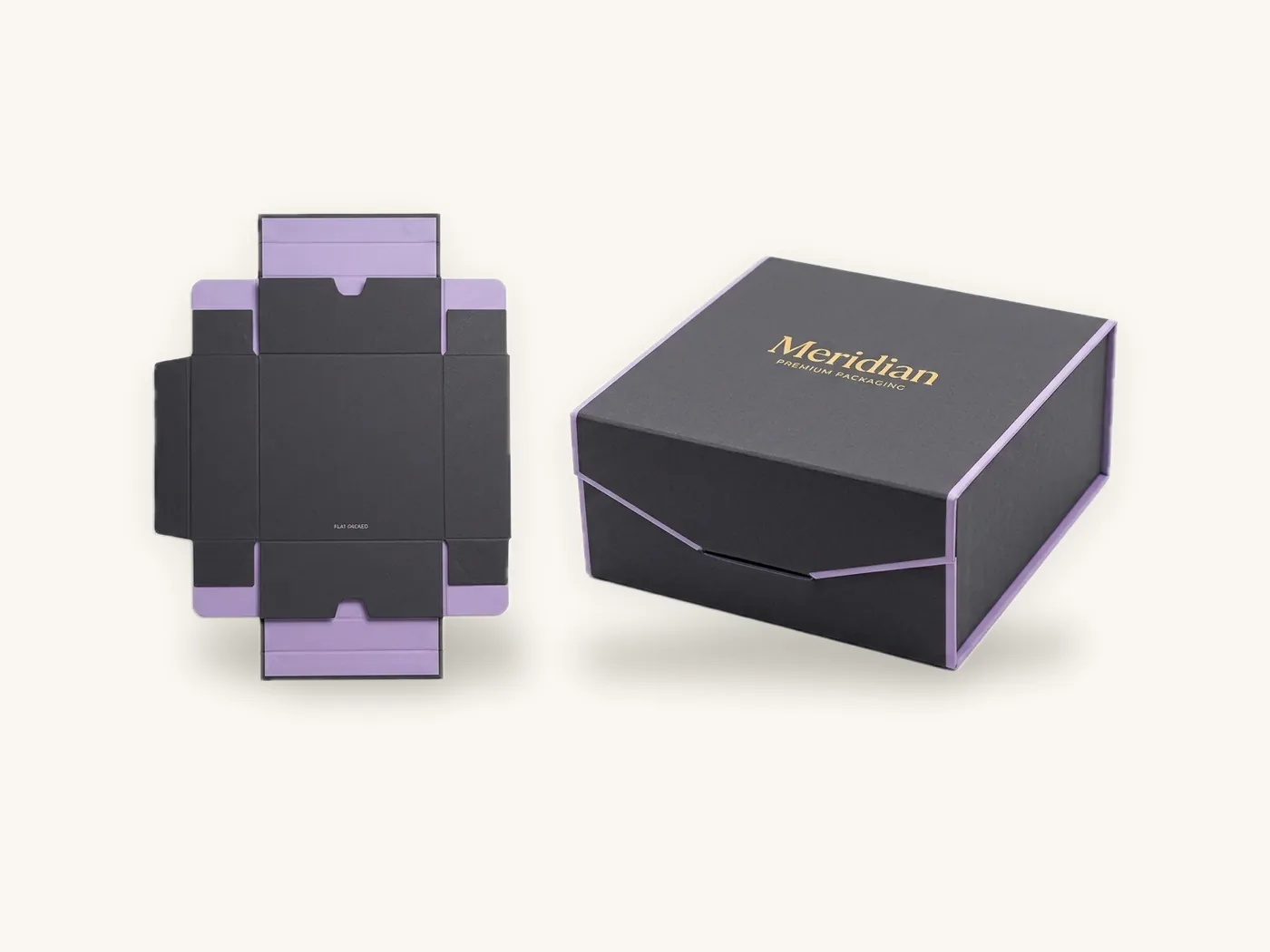
| Collapsible rigid boxes | Flat, fold up with magnets or tabs | Rigid look at a fraction of set-up volume |
| Set-up rigid boxes | Assembled, often nested in cartons | Mostly air; many more pallets per order |
| Boxes with pre-installed inserts | Partly assembled | Depends on insert; can add bulk |
If you want a rigid presentation box but freight and storage are a concern, a collapsible version often narrows the landed cost gap substantially. For reference, a rigid magnetic box at 10x8x3 in with soft-touch, foil and an insert is about $6.32 each at 1,000 on our price sheet, and the size of the shipment it creates matters as much as that number.

Board grade and weight
Weight still matters for heavier corrugated. Double-wall board weighs noticeably more than single-wall, and large orders of heavy duty double wall boxes can move from volume-based to weight-based pricing. Use the lightest board that passes your drop and stacking tests. The corrugated board page lists the grades.
Shipment consolidation
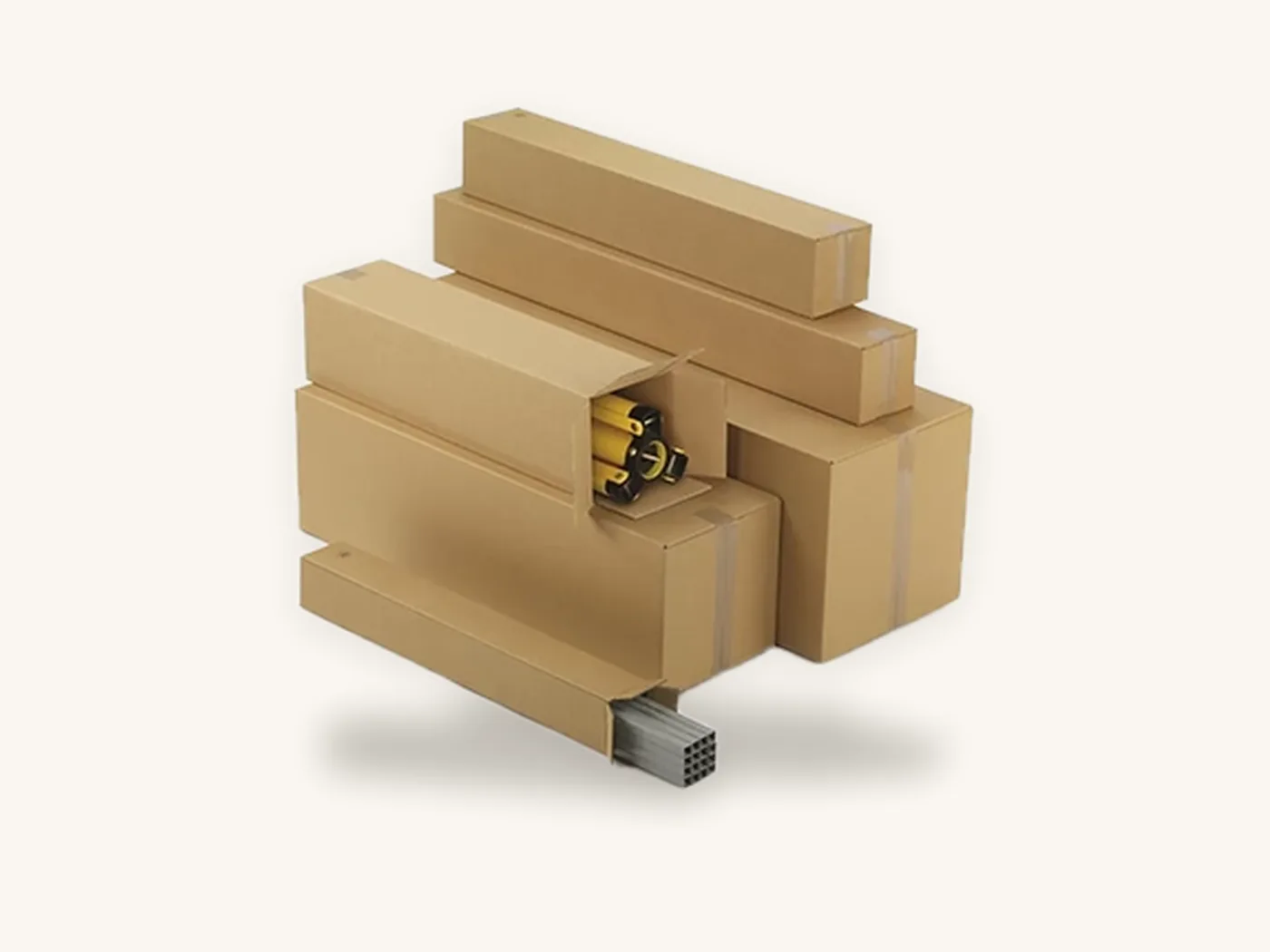
Several small shipments usually cost more than one larger one. If you order multiple SKUs from the same supplier, ask for them to ship together. If you order in releases, confirm who pays freight on each release.
Import costs for overseas packaging
When packaging is produced outside the country it is used in, the landed cost adds several import steps. The details depend on the product's tariff classification, its country of origin, the trade programs that apply and current policy, so treat this section as an overview and confirm specifics with a licensed customs broker.
The main import cost lines
- Duties: calculated from the tariff classification of the goods and the country of origin. Paper and paperboard packaging has its own classifications, and rates can change.
- Customs brokerage: a broker files the entry on your behalf and charges for the service.
- Government processing fees: US imports carry fees collected by U.S. Customs and Border Protection alongside duties.
- Port, terminal and container fees: charged on ocean shipments when goods move through a port.
- Drayage and final delivery: trucking from the port or airport to your address.
- Delays: inspections, holds and port congestion add storage and demurrage charges, and they push back your in-hand date.
U.S. Customs and Border Protection publishes guidance for importers at cbp.gov. Read it, then get a broker to confirm the classification and fees for your specific shipment.
Time is a cost too
Longer transit means ordering earlier, holding more safety stock and committing cash sooner. The domestic vs overseas packaging comparison looks at that tradeoff in detail, and custom packaging lead times shows how to plan an order backward from a launch date.
Storage, receiving and assembly: the costs after delivery
Once boxes arrive, they keep costing money until they ship to a customer.
Storage
Estimate how many pallets the order will occupy and how many months it will take to use. If a third-party warehouse charges per pallet per month, multiply the two. Large orders bought for a lower unit price often sit longest, which is why the packaging MOQ guide suggests matching quantity tiers to three to six months of use for newer products.
Receiving
Warehouses and 3PLs often charge to unload, count and put away inbound freight, sometimes per pallet and sometimes per carton. Floor-loaded shipments, where boxes are stacked loose in a trailer instead of on pallets, usually cost more to receive. Ask your supplier how the order will be packed.
Assembly and kitting
A mailer takes seconds to fold. A box with a tuck insert, tissue wrap and a printed card can take much longer. Time one packer assembling 20 boxes, then multiply by your labor rate to get a per-box assembly cost. For Amazon FBA or retail programs, add labeling and prep time. Our Amazon FBA boxes page covers boxes built around those requirements.

Tip: design choices like auto lock bottoms, tear strips and pre-glued inserts cost a little more per box but can cut assembly time sharply. On high-volume SKUs, the labor saving often outweighs the unit price difference.
Box shipping cost: how packaging shapes outbound parcels
Landed cost ends when the box is ready to use, but the box you choose keeps affecting cost on every order you ship.
Dimensional weight
Major parcel carriers price many services on the greater of actual weight and dimensional weight, which is calculated from the package's outer length, width and height divided by a carrier-specific factor. A box that is an inch too large in each direction can bill as a heavier parcel even though the product weighs the same. Confirm current dimensional weight rules and thresholds with your carriers for the services you use.
Right-sizing
- Measure outer dimensions, not just internal, because board thickness adds to every side. E-flute adds far less than B-flute or double wall.
- Remove wasted space with inserts rather than a larger box and void fill.
- Standardize a small set of sizes that cover most orders, instead of one box for everything or a unique box for every SKU.
- Test a packed sample through the carrier before a large order.
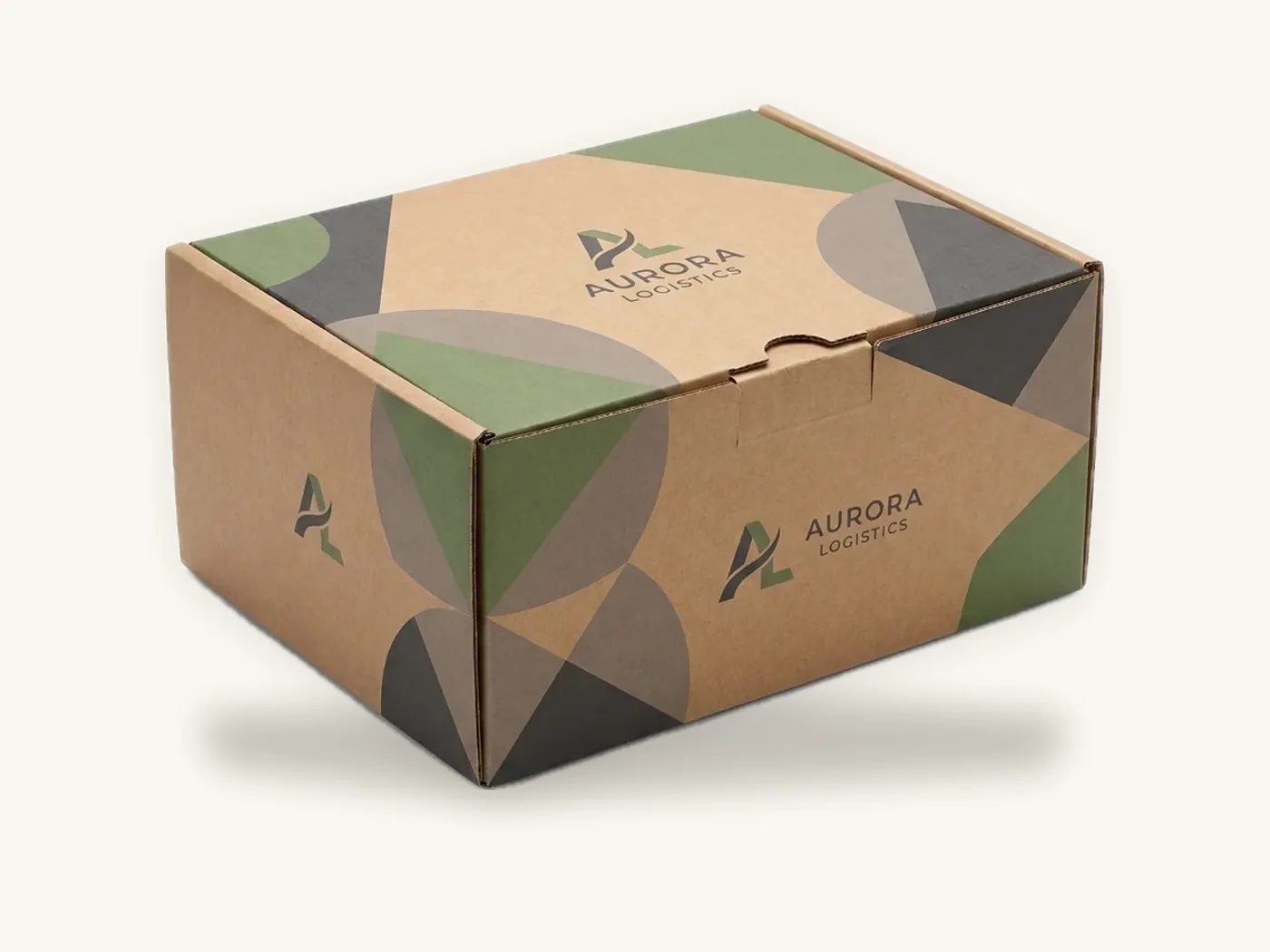
Custom mailer boxes in E-flute are a common way to keep outbound parcels compact while still printing the brand on the box. For multi-item or heavy orders, custom shipping boxes sized to the contents avoid paying to ship air. The shipping boxes style page shows the standard constructions.

A worked landed cost example
Say you run a direct-to-consumer brand and need 1,000 printed mailers at 8x6x3 in, E-flute, full color outside, with a gold foil logo. The inputs below are hypothetical except where they come from the Box Sense price sheet; replace them with your own figures.
| Line | Basis | Per box |
|---|---|---|
| Unit price | Price sheet, 1,000 units, US shipping included | $1.17 |
| Foil tooling | About $60 one-time, spread over 1,000 boxes | about 6 cents |
| Inbound freight | Included in unit price for US delivery | 0 |
| Receiving at 3PL | Hypothetical per-pallet fee spread across boxes | about 1 cent |
| Storage | Hypothetical pallet fee for four months of use | about 3 cents |
| Assembly | Hypothetical ten seconds per box at your labor rate | about 5 cents |
| Scrap and damage | Hypothetical 2 percent of boxes unusable | about 3 cents |
In this example, the landed cost is roughly 1.35 dollars per usable box, about 15 percent above the unit price. The biggest additions are assembly and tooling, not freight, because freight is already in the price.
Now picture an alternative quote with a lower unit price but priced at the factory door overseas. Add ocean freight, brokerage, duties, port fees, drayage, several extra months of storage because the order had to be larger, and higher scrap from a longer supply chain. The lower unit price can disappear quickly. Run both through the same table before deciding.
Landed cost checklist before you place an order
- Confirm the quote basis: delivered, EXW, FOB, CIF or DDP.
- List every one-time charge and divide by the quantity.
- Ask for the overs and unders allowance in writing.
- Get the pallet count, pallet dimensions and gross weight.
- Confirm freight mode, liftgate needs and delivery appointment rules.
- For imports, get the tariff classification and a broker's estimate of duties and fees.
- Add receiving and storage fees from your warehouse.
- Time assembly on a sample and convert it to a per-box cost.
- Estimate scrap from damage, defects and likely artwork changes.
- Divide total landed spend by usable boxes, not boxes ordered.
The custom packaging quote checklist covers the spec details to send so that every supplier quotes the same box.
How Box Sense quotes help you calculate landed cost
We designed our pricing so the unit price already covers the biggest variable for US buyers.
- Free shipping on every US order, built into the unit price shown on the instant price estimator and your confirmed quote. International shipping is quoted at cost.
- No die or plate charges. The only one-time tooling is for foil, embossing, spot UV and custom inserts, and it is listed separately.
- Quotes within 24 hours at several quantities, so you can compare tiers on a landed basis.
- Minimum order of 10 boxes, so you can buy closer to actual usage instead of paying to store excess.
- Flat-shipping styles including mailers, folding cartons and collapsible versions of our rigid box styles where a rigid look is needed.
- Free structural samples to test fit and assembly time, and a free printed sample of approved artwork on orders of 100 or more. See samples.
- Standard production of 8–12 business days after proof approval, with rush in 5 business days on most paperboard and corrugated styles.
- Defective boxes reported within 14 days are reprinted free, which keeps your scrap line down.
When you request a quote, tell us your ship-to address, whether it is a business with a dock, a residence or a 3PL, and any receiving requirements, so we can plan packing and delivery around them.
Frequently asked questions
What is included in packaging landed cost?
Packaging landed cost includes the unit price plus every cost to get boxes ready to use: one-time tooling, inbound freight, duties and customs fees for imports, insurance, warehouse receiving, storage, assembly labor, and boxes lost to damage, defects or obsolescence. Divide the total by the boxes you actually use, not the quantity ordered, to get a true per-box figure.
How do I calculate landed cost per box?
Add the goods cost, one-time charges, freight, import costs, receiving, storage and assembly for the order. Subtract boxes that will be damaged, defective or scrapped from the quantity received. Divide the total spend by those usable boxes. Rebuild every supplier quote in the same format so a factory-door price and a delivered price can be compared fairly.
How much does freight add to packaging costs?
It varies widely with the construction, order size, distance and freight mode. Flat-shipping boxes like cartons and mailers are compact, while set-up rigid boxes can take many more pallets for the same count. Overseas orders add ocean or air freight, port fees and drayage. Box Sense includes shipping in the unit price for every US order.
Why is my box shipping cost higher than expected?
Often because of dimensional weight. Many carrier services charge based on package size as well as weight, so an oversized box can bill as a heavier parcel. Board thickness also adds to outer dimensions. Right-size the box to the product, use inserts instead of extra void fill, and confirm current dimensional weight rules with your carriers.
Are duties charged on imported packaging?
Imported packaging can be subject to duties and fees depending on its tariff classification, country of origin and current trade policy. In the US, U.S. Customs and Border Protection administers import requirements, and a licensed customs broker can confirm the classification and applicable charges. Include brokerage, port fees and delays in your landed cost, not just the duty itself.
Does ordering more boxes lower landed cost?
Not always. A larger order lowers the unit price and spreads tooling further, but it also adds storage months, ties up cash and increases the risk of boxes becoming obsolete. Compare quantity tiers on landed cost per usable box, including storage for the months each tier will last and a realistic allowance for scrap.
Do collapsible rigid boxes really save on shipping?
They usually save substantially on freight and storage compared with set-up rigid boxes, because they ship flat and fold into shape at packing. A set-up rigid box ships assembled and is mostly empty space, so the same count fills far more pallets. Collapsible styles do add a few seconds of assembly per box, which belongs in your landed cost too.
Next steps
Start with a delivered unit price for your spec from the packaging price estimator, then add your own receiving, storage, assembly and scrap figures using the formula above. When you are ready, request a packaging quote with your ship-to details and quantities, and we will confirm pricing within 24 hours. For the broader cost picture by style and board, read the custom packaging cost guide.
Boxes in this guide
Order the packaging we covered
Written by the Box Sense Packaging Team
Our structural designers, prepress technicians and production staff print and convert custom boxes every day for brands in the United States, United Kingdom and UAE. Questions about this guide? Talk to us.