An accurate custom packaging quote depends on twelve pieces of information: box style, internal dimensions, product weight, board grade, print coverage, color method, coatings, embellishments, inserts, quantities, delivery location and your in-hand date. Send all twelve and a supplier can price the box you will actually receive. Leave any out and the number you get is a guess that will move once artwork and samples arrive.
Most quote surprises are not dishonesty. They come from a request that said "a nice box for a candle, about 500" and a supplier who filled the gaps with assumptions. This guide turns the gaps into a checklist, shows a filled-in packaging RFQ you can copy, and explains how to line up two box quotes so you compare the same thing.
Key takeaways
- A complete request names 12 specs: style, internal size, weight, board, print sides, color method, coating, embellishments, inserts, quantity tiers, ship-to and in-hand date.
- Internal dimensions and quantity tiers move the price more than any other line, so get them right before you ask anyone for a number.
- Ask for three quantities at once (for example 250, 500 and 1,000) to see the price curve instead of a single point on it.
- Compare quotes line by line: tooling, plates, proofs, samples, freight and lead time are often listed separately or left out entirely.
- A 3x2x5 in straight tuck end carton in 18 pt SBS with full-color print and aqueous coating is about $0.82 each at 250 and about $0.51 at 1,000 at Box Sense, shipping included.
- Box Sense confirms quotes within 24 hours, starts at 10 boxes and charges no die or plate fees.
Why two quotes for the same box can be far apart
Before the checklist, it helps to understand what a supplier is actually pricing. A box quote is built from a sheet of board, a cutting die, printing, finishing, gluing, packing and freight. Each of those steps has a setup cost and a per-unit cost, and the balance between them depends on the spec.
When a request is vague, each estimator fills it in differently. One assumes a 14 pt board and outside-only print. Another assumes 24 pt board, inside printing and a gloss lamination because the brief said "premium." Both quotes are honest, and neither describes the box you want.
The three kinds of quote you will receive
- Budgetary quote: a ballpark based on a style and rough size. Useful for planning, not for a purchase order.
- Spec quote: a price tied to a written specification. This is what the checklist below produces.
- Final quote: a spec quote confirmed against approved artwork and, where needed, a sample. The number should not change after this point unless you change the spec.
Your goal is to skip straight from nothing to a spec quote. That requires answering the twelve questions in writing, even if some answers are "please recommend."

The 12-point custom packaging quote checklist
Work through these in order. The first four define the structure, the next five define how it looks, and the last three define the commercial terms. If you do not know an answer, say so and ask for a recommendation. That is far better than leaving it blank.
1. Box style
Name the construction, not just the use. "Product box" could mean a straight tuck end box, a reverse tuck, an auto lock bottom, a two-piece rigid box or a mailer. Each uses a different amount of board and a different gluing process, so each prices differently.
If you are unsure, describe how the box should open and how it will be sold: on a shelf, shipped by parcel, or handed over as a gift. The folding cartons and rigid boxes style pages show the common constructions with their names.
2. Internal dimensions
Give length x width x depth measured on the inside, in inches or millimeters, and say which. For tuck end cartons, length and width describe the opening and depth is the tall dimension. For mailers, length is the side-to-side width of the front.
Measure the product packed the way it ships, including any pouch, bottle cap, or tissue. Add a little clearance for rigid items, roughly 1/16 to 1/8 in, so the product slides in without forcing the panels.
3. Product weight and fragility
Weight decides board grade. A 2 oz lip balm and a 2 lb glass jar can use the same footprint yet need completely different boards. Also note anything that affects protection: glass, liquids, sharp corners, or heat sensitivity.
4. Board grade and material
If you already know, name it: 18 pt SBS, 24 pt kraft, E-flute corrugated, 2 mm greyboard. If you do not, give the weight and use and ask for a recommendation. Also state any sourcing requirements, such as FSC-certified board, up front, because they can change which stock the estimator selects. The materials page lists the boards we run.
5. Printed surfaces
Say which sides are printed: outside only, inside only, or both. For mailers and rigid boxes, say whether the inside lid, inner base or wrap edges carry artwork. Inside printing is a second print pass on many structures, so it is a real cost line, not a detail.
6. Color method
Full-color CMYK, one or two PMS spot colors, or a single color on kraft. If exact brand color matters, name the PMS numbers. If you plan to print on kraft, note whether you need white ink under the artwork so light colors stay visible.
7. Coating or lamination
Aqueous coating, matte, gloss or soft-touch lamination, or nothing. Laminations add a film and a process step. Aqueous coating adds scuff protection at a lower cost and keeps paper packaging easier to recycle.
8. Embellishments
Foil stamping, embossing, debossing, spot UV and windows. For each, note the approximate size and location (for example, "gold foil logo on lid, about 2 in wide"). Embellishments can carry one-time tooling. At Box Sense that is about $60 for a foil or embossing die and about $40 for spot UV, each a one-time charge rather than a per-box cost.
9. Inserts and accessories
Paperboard, corrugated, foam or molded pulp inserts, plus ribbons, magnets, handles and tear strips. An insert is a second structure with its own die, so describe what it holds and how many cavities it needs. Box inserts and dividers covers the common types.
10. Quantity tiers
Ask for two to four quantities. Unit price falls as volume rises because setup is spread over more boxes, and the shape of that curve tells you where the sweet spot is. Our guide to packaging MOQs explains why the curve looks the way it does and how to pick a tier.
11. Ship-to location and delivery requirements
Give the delivery ZIP or city and country, and note whether the address is a business with a dock, a residence, or a fulfillment warehouse with receiving rules. Freight method, pallet requirements and liftgate needs can all change the delivered cost. The packaging landed cost guide lists every fee that sits between the unit price and the true cost.
12. In-hand date
State the date the boxes must be in your hands, not the date you would like production to start. A supplier can only confirm feasibility if they can count backward through proofing, production and transit. For a realistic schedule, see how long printed boxes really take.
How each spec moves the price
Not every line on the checklist carries the same weight. This table shows what each spec changes inside the estimate and how sensitive the price usually is to it.
| Spec | What it changes in the estimate | Price sensitivity |
|---|---|---|
| Internal dimensions | Sheet size, sheets per press run, freight volume | High |
| Quantity | How setup is spread across units | High |
| Board grade | Material cost per sheet, die pressure, freight weight | High |
| Box style | Board used, gluing process, assembly | Medium to high |
| Printed surfaces | Number of print passes | Medium |
| Color method | Press type, ink setup, color matching time | Medium |
| Coating or lamination | Added material and a finishing step | Low to medium |
| Embellishments | One-time tooling plus a finishing pass | Low per unit, visible on small runs |
| Inserts | Second die, extra board, hand assembly | Medium |
| Ship-to and delivery terms | Freight mode, distance, handling | Varies widely |
| In-hand date | Standard or rush scheduling | Low unless rush |
The practical lesson: fix dimensions, quantity and board before you debate finishes. A quarter inch trimmed from every side of an oversized carton can save more than dropping a foil stamp.
A sample packaging RFQ you can copy
A packaging RFQ (request for quotation) does not need to be a formal document. A clear email or form entry with the fields below is enough. Here is a hypothetical example for a candle brand.
Project: retail carton for an 8 oz candle in a glass tumbler
- Style: straight tuck end carton with a paperboard insert
- Internal size: 3.5 x 3.5 x 4 in (L x W x D)
- Product weight: about 14 oz, glass
- Board: 18 pt SBS, FSC-certified if available
- Printed surfaces: outside full coverage, inside unprinted
- Color: CMYK, plus a note that the logo is PMS and should match closely
- Coating: matte
- Embellishments: gold foil logo on front panel, about 1.5 in wide
- Insert: single-cavity paperboard insert to stop the jar moving
- Quantities: 250, 500, 1,000
- Ship-to: business address with a dock, New Jersey
- In-hand date: six weeks from today
- Artwork: ready, will supply on your dieline

For that spec, our price sheet lists a candle box in 18 pt SBS at 3.5x3.5x4 in with full color, matte, foil and an insert at about $1.66 each for 250, about $1.24 for 500 and about $1.03 for 1,000. Foil and insert dies are one-time charges of about $60 and about $45. Your exact figure comes from the instant price estimator, which uses the same rates.
Tip: attach a photo of the product next to a ruler and a note on how it will be sold. Estimators catch sizing and protection problems from a photo that no spec line would reveal.
How to compare box quotes line by line
Once quotes arrive, the headline unit price is the least reliable number on the page. Two suppliers can reach the same total by very different routes, and one of them may be excluding costs the other includes.
Build a comparison sheet with these rows and fill it in for every quote:
| Line item | Supplier A | Supplier B | What to check |
|---|---|---|---|
| Unit price at each tier | Same quantities quoted by both? | ||
| Board and caliper | Same grade, or a substitution? | ||
| Print sides and method | Inside print included? | ||
| Coating and embellishments | Listed, or assumed? | ||
| Die, plate and tooling charges | One-time or repeated per order? | ||
| Digital proof and revisions | How many rounds included? | ||
| Physical sample | Free, credited or charged? | ||
| Freight to your address | Included, estimated or excluded? | ||
| Production lead time | Business days from which event? | ||
| Defect policy | Reprint, credit or nothing? | ||
| Payment terms | Deposit and balance timing |
Normalize before you compare
Convert every quote to a delivered cost per usable box at the same quantity. Add any one-time charges divided by the quantity, add freight if it is excluded, and allow for any overs or unders the supplier reserves the right to ship. Only then compare.
Watch the lead time start point
"10 days" can mean from order, from payment, from proof approval or from sample approval. A quote that looks faster may simply start its clock later. Ask each supplier to state lead time in business days from proof approval.
Red flags in a custom packaging quote
Most suppliers quote carefully. These are the signs that a number will not hold.
- No board grade listed. If the quote says "cardboard" or "premium paper," the material can change without the price changing.
- One quantity only. You cannot judge value without seeing how price moves with volume.
- Freight "to be advised." Freight on bulky packaging can be a meaningful share of the delivered cost.
- Tooling mentioned only in fine print. Plates, dies and embellishment tooling should be separate, visible lines.
- Overs and unders not stated. Many printers ship a percentage above or below the ordered quantity and invoice accordingly. Know the allowance before you order.
- No proof step. A quote that goes from payment straight to print gives you no chance to catch dieline or color errors.
- Price valid "until changed." A quote should carry a validity period, because board costs move.
Watch out: a much lower unit price combined with a thinner board or a missing coating is not a discount. Ask each supplier to confirm the caliper in points or millimeters so the comparison is fair.
Quoting rigid boxes, mailers and cartons: what changes
The checklist applies to every structure, but each family has a few questions that matter more.
Folding cartons
For custom product boxes and tuck end cartons, caliper and print coverage dominate. Tell the supplier whether the carton hangs on a peg, sits on a shelf or ships inside another box, because that changes whether a hang tab, auto lock bottom or heavier board is worth it. Barcode placement also matters for retail, so flag any regulatory panels you need.
Mailer boxes
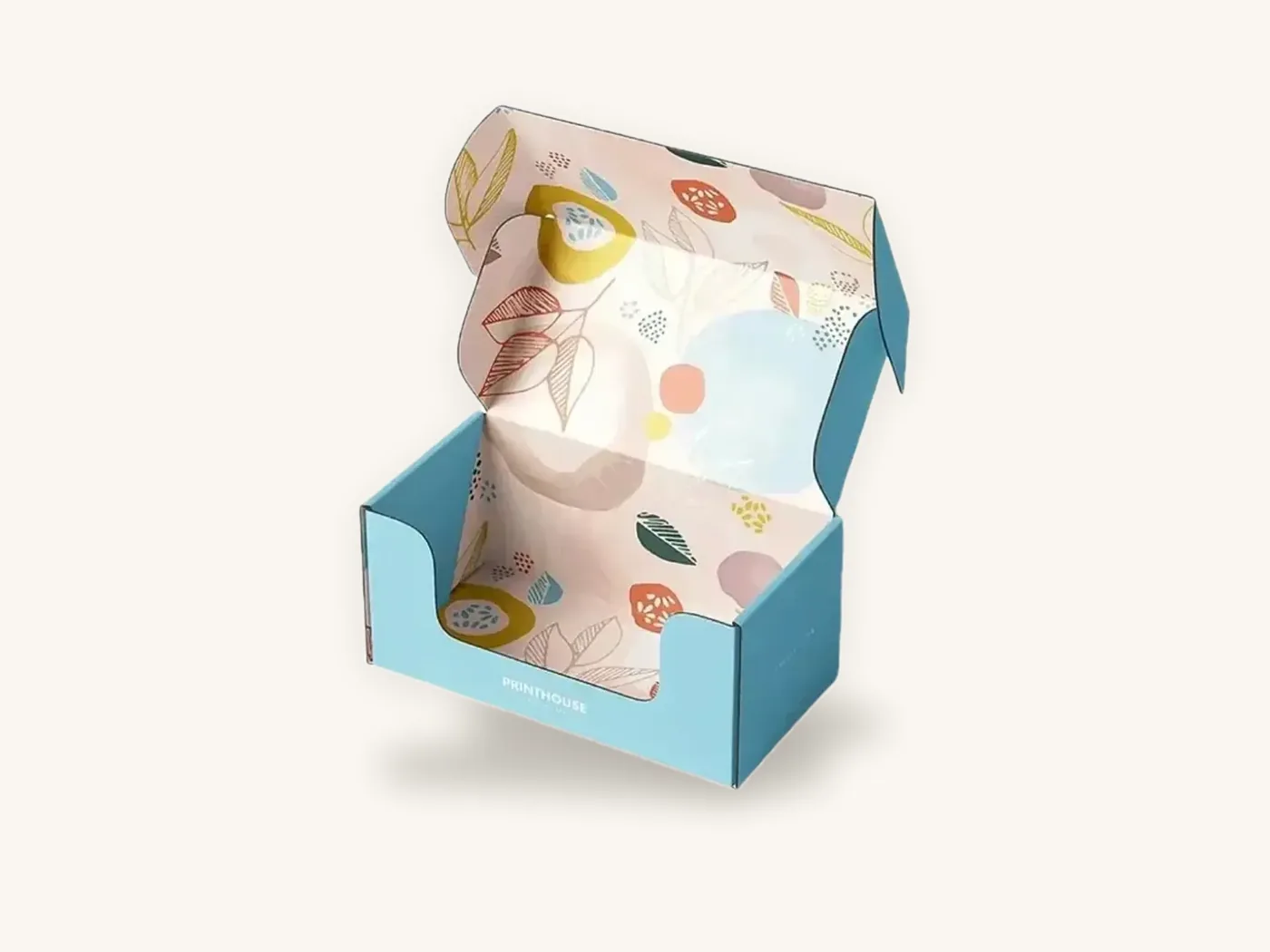
For custom mailer boxes, specify flute (E-flute is standard, B-flute for heavier contents), kraft or white liner, and inside printing. Mailers ship through carriers on their own, so state the packed weight and whether you need a tear strip. The mailer box packaging style page shows the common variants.
Rigid boxes
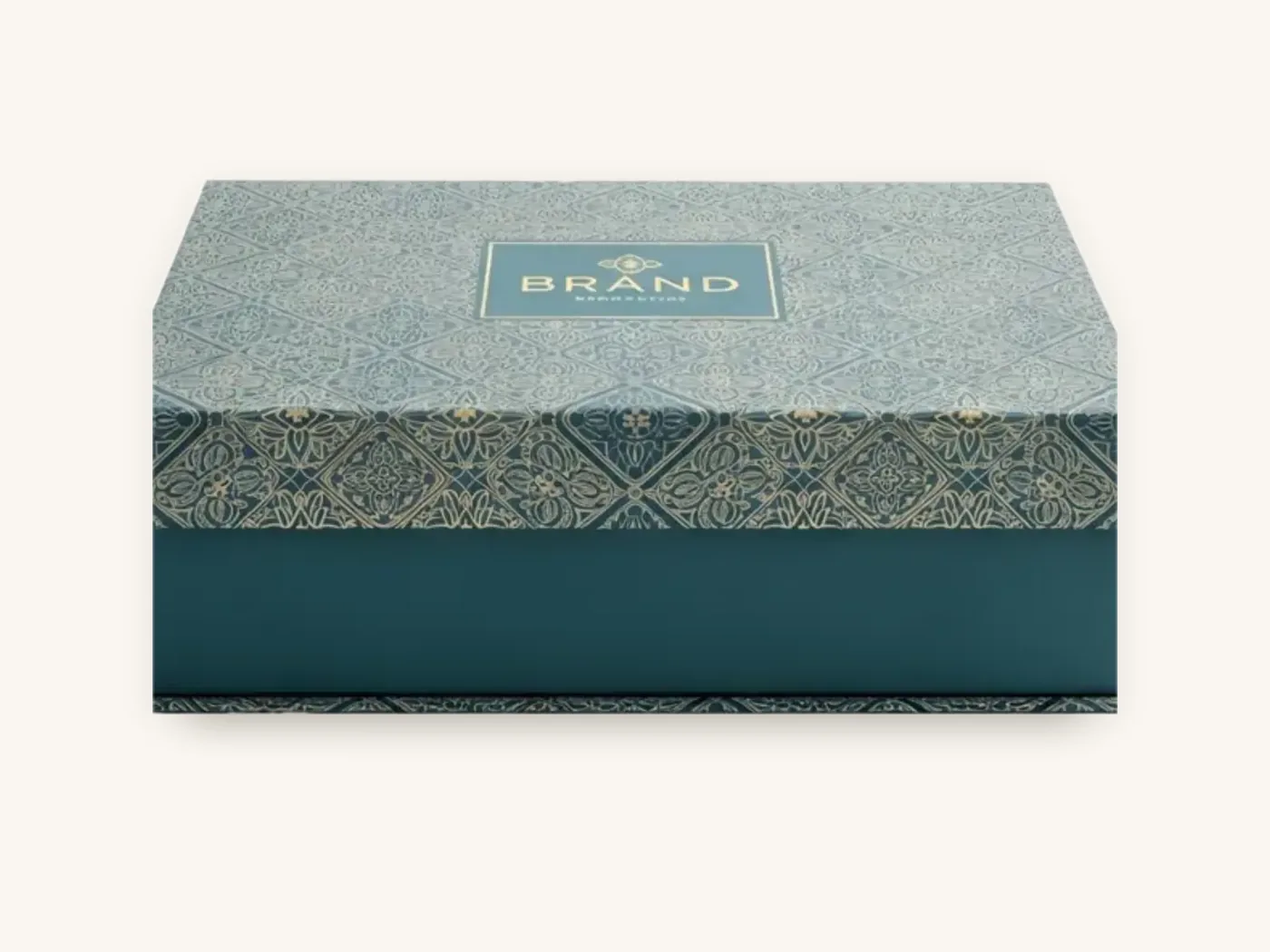
For custom rigid boxes, name the construction (lid and base, magnetic flap, drawer, shoulder neck), the greyboard thickness, the wrap paper, and the insert. Rigid boxes are partly hand-assembled, so inserts and wrap details change cost more than they do on cartons. As a reference point, a 2 mm wrapped rigid box at 8x6x3 in with full-color matte wrap is about $9.10 each at 100 and about $4.05 at 1,000 on our price sheet.
What a good quote should tell you back
A quote is also a test of the supplier. A good one reflects your spec back so you can confirm nothing was misread. Look for:
- The exact style name and internal dimensions you sent, or a note explaining why they were adjusted.
- Board grade and caliper, stated as a number.
- Print sides, color method, coating and every embellishment, each as its own line.
- Unit price at each quantity, with any one-time tooling separated out.
- What is included: dieline, proof, revision rounds, samples and freight.
- Lead time in business days from a named event, plus rush availability.
- Quote validity and payment terms.
If any of these is missing, reply and ask. A supplier who clarifies in writing before you order is much easier to work with after you order.
How to request a custom packaging quote from Box Sense
Our quote form follows the checklist above, so filling it in produces a spec quote rather than a ballpark. You do not need every answer. Where you are unsure, pick "recommend" and our team suggests a board, style or finish based on your product.
What we confirm, and when
- Within 24 hours: a confirmed price for your spec at the quantities you asked for.
- With the quote: the board grade, print and finish lines, and any one-time tooling for foil, embossing, spot UV or custom inserts. There are no die or plate charges.
- Freight: shipping is free on every US order and already built into the unit price. International shipping is quoted at cost.
- Lead time: standard production of 8–12 business days after proof approval, with rush in 5 business days on most paperboard and corrugated styles.
What happens after you accept
- We send a dieline sized to your internal dimensions.
- Our design services team sets up your artwork and prepares a 3D digital proof, with two revision rounds included at no charge.
- If you want to test fit first, an unprinted structural sample is free. A printed sample of approved artwork is free on orders of 100 or more; see samples.
- Production starts when you approve the proof.
- Boxes ship to your address. Any defective boxes reported within 14 days are reprinted free.
The minimum order is 10 boxes, which lets you validate a spec with a small run before committing to volume.
Frequently asked questions
What information do I need for a custom packaging quote?
You need the box style, internal dimensions, product weight, board grade, printed sides, color method, coating, embellishments, inserts, quantity tiers, delivery location and in-hand date. If you do not know the board or style, give the product weight and how it will be sold and ask for a recommendation. A photo of the product next to a ruler also helps the estimator.
Why did my box quote change after I sent artwork?
Usually because the artwork revealed something the request did not mention, such as inside printing, a PMS color, a foil logo or a larger print area. Sizing can also change once a dieline is drawn around the real product. To avoid this, describe print coverage and embellishments in the original request, and ask for a spec quote rather than a ballpark.
How many quantities should I ask to be quoted?
Ask for two to four quantities, spaced far enough apart to show the price curve, such as 250, 500 and 1,000. Unit price drops as quantity rises because setup costs are spread across more boxes. Seeing several tiers helps you choose between ordering fewer boxes now or more boxes at a lower unit price.
What is a packaging RFQ?
A packaging RFQ, or request for quotation, is a written description of the packaging you want priced, sent to one or more suppliers. It lists structure, size, material, print, finishes, quantities, delivery terms and timing. A good RFQ lets every supplier price the same box, which makes their quotes directly comparable instead of a mix of different assumptions.
Are tooling and plate charges included in a box quote?
It depends on the supplier, so always check. Some list dies and plates as separate one-time charges, some build them into the unit price, and some mention them only after ordering. Box Sense charges no die or plate fees; one-time tooling applies only to foil, embossing, spot UV and custom inserts, and it is shown on the quote.
How long does it take to get a box quote?
Box Sense confirms quotes within 24 hours when the request includes the core specs. You can also get an indicative figure immediately from the instant estimator on the pricing page. Complex projects with unusual structures or several inserts may need a sample or a follow-up question before the price is final, which is why a complete request speeds things up.
Should I get quotes from several packaging suppliers?
Comparing two or three quotes is sensible for any sizable order, provided every supplier prices the same spec. Send identical requests, then normalize each quote to a delivered cost per usable box at the same quantity, including tooling, freight, samples and overs or unders. Compare lead times from the same starting event, such as proof approval.
Next steps
Gather your product measurements, weight, target quantities and in-hand date, then check where your spec lands with the custom box price estimator. When you are ready for a confirmed number, submit your custom packaging quote request and we will reply within 24 hours with pricing, a dieline and next steps. For a deeper look at what drives the numbers, the custom packaging cost guide and how much custom boxes cost break down rates by style.
Boxes in this guide
Order the packaging we covered
Written by the Box Sense Packaging Team
Our structural designers, prepress technicians and production staff print and convert custom boxes every day for brands in the United States, United Kingdom and UAE. Questions about this guide? Talk to us.