A packaging minimum order quantity (MOQ) is the smallest number of boxes a supplier will produce in one run. It exists because every custom job carries fixed setup work, such as plates, cutting dies, press make-ready and machine changeovers, and a supplier needs enough units to cover that work at a sensible price. The MOQ you are quoted is a direct signal of which production process the supplier plans to use.
That means a high box MOQ is rarely a number to argue down on its own. The better move is to change what drives it: the print process, the structure, the finishes or the way the order is split. This guide explains where MOQs come from, how to read the quantity price curve, and the negotiation levers that actually work.
Key takeaways
- MOQs come from fixed setup cost: plates, dies, make-ready sheets, color matching and changeover time that do not scale with quantity.
- Digital printing needs no plates, which is why short runs from 10 boxes are possible. Offset and flexographic runs need volume to spread their setup.
- The MOQ and the price curve are two views of the same economics. A low minimum is useful only if the unit price at that quantity fits your margin.
- The strongest negotiation levers are changing process, simplifying finishes, standardizing sizes across SKUs and committing to a schedule of releases.
- Ordering far above what you will sell in six to twelve months often costs more than it saves once storage, cash and obsolescence are counted.
- Box Sense's minimum is 10 boxes on custom printed packaging, with no die or plate charges.
Why packaging suppliers set minimum order quantities
Every custom box passes through steps that have to be prepared before the first good sheet comes off the line. That preparation costs the same whether the job is 300 boxes or 30,000.
The fixed costs behind a box MOQ
- Printing plates. Offset and flexo presses transfer ink through plates, typically one per color. A four-color job with a PMS spot color needs five.
- Cutting dies. A steel-rule die is built to the exact dieline of your box. Custom sizes need a new die unless the supplier already has one.
- Make-ready. Operators run sheets to bring color, registration and cutting pressure into tolerance. Those sheets are waste, and they are the same count on a small or large job.
- Changeovers. Swapping inks, plates, dies and glue settings between jobs takes machine time that could otherwise be producing.
- Finishing setups. Foil, embossing and spot UV each need their own tooling and adjustment.
- Administration. Prepress, proofing, scheduling and quality checks happen once per job.
When a supplier sets a minimum, they are choosing the quantity at which those costs, divided across the run, give a unit price they can sell and a margin they can accept.
Why minimums vary so much between suppliers
The same box can carry a minimum of 10 at one supplier and many thousands at another, and both can be reasonable. The difference usually comes from:
- Equipment. A plant built around large offset or flexo lines is efficient at volume and expensive for short runs. A plant with digital presses can run short jobs without plates.
- Stock sizes. Suppliers with standard dies in common sizes avoid die costs on those sizes.
- Material buying. Specialty papers, metallic boards and unusual calipers may be bought by the pallet or by the mill run, which pushes the minimum up.
- Where the plant is. Overseas production often carries higher minimums because freight and container economics favor large shipments.
Typical MOQ ranges by packaging type and process
These are common patterns across the industry, not rules. Individual suppliers vary, and the only way to know a firm minimum is to ask for your exact spec.
| Packaging and process | What drives the minimum | Typical minimum pattern |
|---|---|---|
| Digitally printed folding cartons and mailers | Prepress and handling only; no plates | Very low, often tens of units |
| Offset printed folding cartons | Plates, make-ready sheets, die | Hundreds to low thousands |
| Flexo printed corrugated shipping boxes | Printing plates, die or slotter setup | Often hundreds or more, depending on size |
| Plain stock-size shipping boxes | No print; standard die | Low, sold by the bundle |
| Rigid boxes | Wrap printing, greyboard cutting, hand or semi-automatic assembly | Varies from short runs to thousands |
| Printed flexible pouches and bags | Cylinders or plates, film by the roll | Often high for gravure; lower for digital |
| Specialty boards or custom papers | Mill or distributor buying minimums | Set by material, not by the box |
| Complex inserts (foam, molded pulp) | Separate tooling and material | Varies by insert type |
Two lessons follow. First, if a quote carries a minimum far above what you need, the spec or process is the problem, not the number. Second, the material can impose its own minimum even when printing does not, so a specialty paper can quietly raise a box MOQ.
How to read the quantity price curve
The minimum tells you where the curve starts. The curve tells you what each extra box actually costs. Here are three specs from the Box Sense price sheet, per unit with US shipping included.
| Spec | 10 | 100 | 250 | 500 | 1,000 | 5,000 |
|---|---|---|---|---|---|---|
| Straight tuck end carton, 18 pt SBS, 3x2x5 in, full color, aqueous | $1.73 | $1.15 | $0.82 | $0.61 | $0.51 | $0.36 |
| Cosmetic carton, 18 pt SBS, 2.5x2.5x6 in, full color, soft-touch and foil | $2.91 | $1.93 | $1.37 | $1.03 | $0.86 | $0.61 |
| Mailer box, E-flute, 8x6x3 in, full color outside | $3.99 | $2.64 | $1.88 | $1.41 | $1.17 | $0.83 |
What the curve is telling you
The steepest drops happen early. On the mailer, moving from 10 to 250 units cuts the unit price by more than half. From 1,000 to 5,000 it falls by roughly 30 percent, a much smaller drop for five times the boxes. Past a few thousand units, board and ink are most of the cost, so the curve flattens.
That gives you three zones:
- Validation zone (roughly 10 to 100). Highest unit price, lowest total spend. Use it to test fit, photography, retail samples and customer reaction.
- Launch zone (roughly 250 to 1,000). Unit price has already dropped sharply. Most small brands find their first real order here.
- Scale zone (several thousand and up). Savings per box are real but small. Order here when sales are predictable and the design is stable.
Unit price versus total spend
A lower unit price is not the same as a lower bill. On the cosmetic carton, 1,000 units at about $0.86 costs roughly 860 dollars, while 500 at about $1.03 is roughly 515 dollars. The larger order saves about 17 cents per box but ties up about 345 dollars more in cash and in boxes on a shelf. Whether that is a good trade depends entirely on how fast you will use them.
Tip: calculate how many months each quantity tier covers at your current sales rate. If a tier covers more than a year, the lower unit price is often an illusion once storage and the risk of a redesign are counted.

The hidden cost of ordering above your needs
Suppliers sometimes suggest a larger quantity to reach a better price. That is a fair suggestion, and sometimes a good one. But the invoice is only part of the cost of excess packaging.
Storage and handling
Flat cartons are compact, but corrugated mailers and shipping boxes take real space, and rigid boxes that ship assembled take far more. If you pay a third-party warehouse by pallet position, every extra pallet has a monthly fee. If you store in-house, it takes floor space from product.
Obsolescence
Packaging goes out of date faster than most founders expect. Label copy changes, a retailer asks for a new barcode placement, a regulation shifts, a product is reformulated, or the brand simply refreshes. Every box left over after a change is a write-off.
Cash and opportunity
Money in packaging inventory is not available for product, marketing or payroll. For a young brand, that is often the highest cost of all.
Damage and aging
Paperboard absorbs humidity, corrugated loses stacking strength in damp storage, and soft-touch surfaces scuff when handled repeatedly. Boxes stored for a long time are not always boxes you want to ship.
The packaging landed cost guide shows how to put numbers on storage, freight and waste so you can compare quantity tiers on a true cost basis.
How to negotiate a packaging MOQ
Asking a supplier to "just lower the minimum" rarely works, because the minimum protects them from losing money on setup. Changing the inputs does work. Here are the levers, roughly in order of effectiveness.
1. Change the print process
The biggest lever. If a quote assumes offset or flexo, ask whether the job can run digitally at your quantity. Digital printing removes plates entirely and makes short runs practical. The tradeoffs in color, coverage and unit cost are covered in digital vs offset printing for boxes.
2. Use a standard size or existing die
If the supplier already has a die close to your dimensions, using it removes die cost and often lowers the minimum. A few millimeters of extra clearance, filled with an insert or tissue, can be much cheaper than a new die.
3. Simplify finishes on the first run
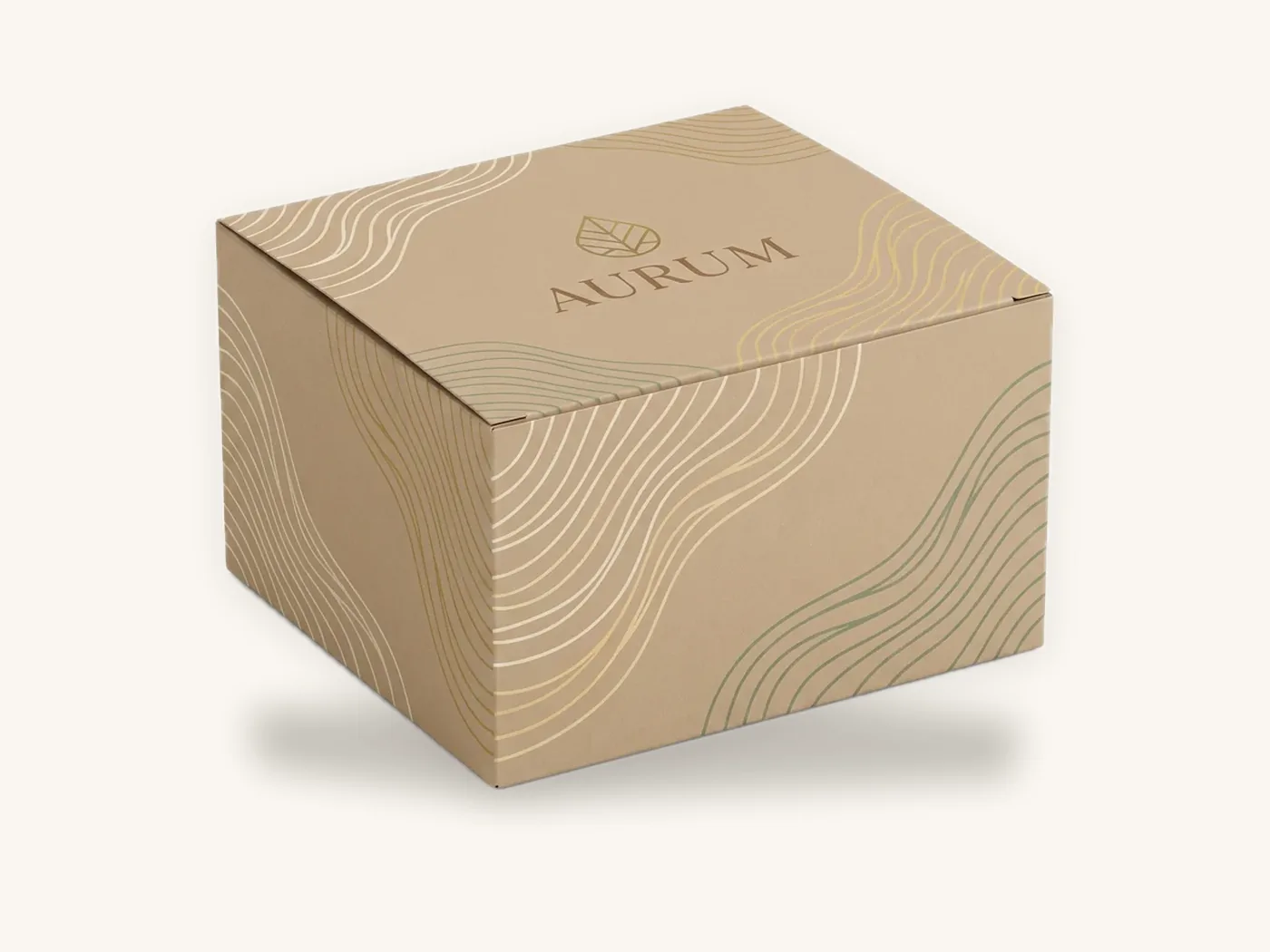
Foil, embossing, spot UV and special laminations each add a setup. Launch with print and a standard coating, then add embellishments once volume justifies them. The artwork can be designed so a foil logo later replaces a printed one without other changes.
4. Choose a common board
Standard SBS, kraft and E-flute corrugated are easy to buy and run. Specialty textured papers and metallic boards may carry their own material minimums.
5. Gang SKUs onto one run
If you have several products in the same box size, ask whether different artwork versions can share a run. On digital presses this is often straightforward. On offset it depends on how the sheets are laid out.
6. Commit to scheduled releases
Some suppliers will produce a larger quantity and ship it in several releases, or hold a price for repeat orders over a period. This lowers your unit price without forcing you to store everything at once. Get the terms, including storage, release timing and payment, in writing.
7. Pay for setup separately
Where a supplier cannot drop the minimum, ask whether you can pay setup as a visible one-time charge and order fewer units. You then see exactly what the short run costs and can decide whether it is worth it.
Watch out: a very low MOQ offered by a supplier whose main process is high-volume offset can hide setup inside an unusually high unit price. Always ask for the price at two or three quantities, not just the minimum.
A staged ordering plan for new products
For a new product, the safest approach is to let quantity follow evidence. Here is a practical plan using minimum order custom boxes as the starting point.
- Structural sample. Get an unprinted sample to test fit, closure and drop performance before spending on print.
- Validation run of 10 to 50. Print a short run for photography, retailer pitches, influencer kits and a small group of real customers.
- Adjust. Fix anything the validation run revealed: size, board, copy, color, finish.
- Launch run of 250 to 1,000. Choose the tier that covers roughly three to six months of expected sales.
- Measure usage. Track how many boxes you actually use per month, including damage and giveaways.
- Scale. Once usage is steady and the design is stable, move to a larger tier and consider whether offset printing now makes sense.
This plan costs more per box in the first two stages, but it avoids the far larger cost of a warehouse full of boxes that do not fit or no longer match the product.
MOQ questions to ask every supplier
Before you compare minimums across suppliers, get answers to the same questions so the numbers mean the same thing.
| Question | Why it matters |
|---|---|
| Is the minimum per design, per size or per order? | Several designs in one size may be allowed on a single order |
| Which print process is this quantity based on? | Tells you whether a smaller digital run is possible |
| Are dies, plates or tooling included? | Setup charges can double the real cost of a small order |
| What are the overs and unders allowances? | You may be invoiced for more boxes than you ordered |
| Does the price hold for reorders? | Tooling reuse and price validity affect your second order |
| Can the order ship in releases? | Spreads storage and cash without losing the volume price |
| Is a sample available at the minimum? | Confirms the spec before the full run |
Put these in the same request as your spec. The custom packaging quote checklist lists the other details every quote needs.
Ordering short runs with Box Sense
Box Sense produces custom printed packaging from a minimum of 10 boxes. Short runs of roughly 10 to 500 are printed digitally, and larger runs move to offset, so the process fits the quantity rather than the other way around.
What that means in practice
- No die or plate charges. A 10-box order does not carry hidden setup fees. One-time tooling applies only to foil (about $60), embossing (about $60), spot UV (about $40) and custom insert dies (about $45).
- Several tiers quoted at once. The instant price estimator shows unit prices across quantities, and every confirmed quote lists multiple tiers.
- Free design support. We supply a dieline, set up artwork and send a 3D digital proof with two revision rounds.
- Samples. Unprinted structural samples are free. A printed sample of approved artwork is free on orders of 100 or more; the samples page has details.
- Timeline. Quotes are confirmed within 24 hours. Standard production is 8–12 business days after proof approval, with rush in 5 business days on most paperboard and corrugated styles.
- Delivery. Free shipping on every US order; international shipping quoted at cost.
- Quality. Defective boxes reported within 14 days are reprinted free.
What to send
Send the product size and weight, the style you want (for example custom mailer boxes, cosmetic boxes or custom product boxes), board, print and finish preferences, and two or three quantities you are considering. If you sell in beauty, the cosmetics and beauty packaging page shows the carton styles most brands start with, and the SBS paperboard page explains the board behind them.
Frequently asked questions
What is a typical minimum order quantity for custom boxes?
It depends on the print process and structure. Digitally printed cartons and mailers can have minimums in the tens of units, while offset-printed cartons and flexo-printed corrugated often start in the hundreds or thousands. Specialty materials can raise the minimum further. Box Sense produces custom printed boxes from 10 units, printing short runs digitally.
Why do packaging suppliers have minimum order quantities?
Because each job carries fixed setup work that does not change with quantity: plates, cutting dies, press make-ready sheets, color matching, machine changeovers and prepress. A supplier sets the minimum at the quantity where that setup, spread across the run, produces a unit price they can sell. Processes with less setup, like digital printing, allow lower minimums.
Can I negotiate a lower box MOQ?
Yes, but change the inputs rather than asking for a smaller number. Ask whether the job can print digitally, use an existing die size, drop embellishments for the first run, use a standard board, combine SKUs on one run or ship in scheduled releases. You can also ask to pay setup as a separate one-time charge on a smaller order.
Is it cheaper to order more boxes at once?
The unit price falls as quantity rises, but the total cost does not always. Larger orders tie up cash, take storage space and risk becoming obsolete if artwork, regulations or products change. Compare tiers by how many months of sales each covers. Buying more than a year of packaging often costs more than it saves once those factors are counted.
What does MOQ per design mean?
It means the minimum applies to each artwork version separately. If a supplier's minimum is per design, three flavors in three different artworks each need to meet the minimum. Some suppliers instead apply the minimum per size or per order, allowing several designs to share one run. Always ask which rule applies before planning a multi-SKU order.
Do low MOQ boxes look worse than large runs?
Not necessarily. Modern digital printing produces sharp full-color graphics suited to most retail and e-commerce packaging. Differences show mainly in exact PMS color matching, very large solid areas and consistency across separate runs, where offset has the edge. For many brands, a short digital run is visually indistinguishable from offset to customers.
How many boxes should I order for a product launch?
A practical approach is a small validation run first, then a launch order covering roughly three to six months of expected sales. Validation runs of 10 to 50 boxes confirm fit, look and customer reaction. After adjusting the design, a launch run in the 250 to 1,000 range suits many small brands, and larger tiers make sense once usage is predictable.
Next steps
Pick two or three quantities that match your sales plan and compare their unit prices in the packaging price estimator. When you know which tier fits, request a quote for your packaging and we will confirm pricing across quantities within 24 hours. For a wider look at how style, board and finishes add up, read the custom packaging cost guide or how much custom boxes cost.
Boxes in this guide
Order the packaging we covered
Written by the Box Sense Packaging Team
Our structural designers, prepress technicians and production staff print and convert custom boxes every day for brands in the United States, United Kingdom and UAE. Questions about this guide? Talk to us.