A realistic custom packaging lead time is the sum of five stages: quoting, artwork and proofing, optional sampling, production and delivery. Production itself is often the most predictable part. At Box Sense it is 8–12 business days after proof approval, or 5 business days on rush for most paperboard and corrugated styles. The stages before production, especially artwork and approvals, are where most schedules slip.
So when you ask how long custom boxes take, the honest answer is "from which moment?" From a finished, approved proof, printed boxes can be on their way in about two to three working weeks. From a rough idea with no dieline or artwork, plan for longer and build in time for at least one round of changes. This guide breaks down each stage, shows how to plan backward from the date you need boxes in hand, and explains when rush packaging is worth it.
Key takeaways
- Lead time has five stages: quote, artwork and proof, sample, production, delivery. Only production has a fixed range; the rest depend on how fast decisions are made.
- Suppliers usually count production in business days from proof approval, not calendar days from your first email.
- Artwork readiness is the biggest variable. A print-ready file on the supplier's dieline can save more time than rush production.
- Rigid boxes, custom inserts and specialty finishes add steps. Confirm their timing at the quote stage.
- Plan backward from your in-hand date, and add a buffer for holidays, peak season and freight.
- Box Sense confirms quotes within 24 hours, runs standard production in 8–12 business days and offers rush in 5 business days on most paperboard and corrugated styles.
The five stages of a custom packaging lead time
Every custom box order passes through the same sequence, whether it is 10 boxes or 10,000. What changes is how long each stage takes and whether some can be skipped.
| Stage | What happens | Who controls the pace | Typical range at Box Sense |
|---|---|---|---|
| 1. Quote | Spec review, pricing, recommendations | Mostly the supplier; faster with complete specs | Confirmed within 24 hours |
| 2. Artwork and proof | Dieline, artwork setup, 3D digital proof, revisions | Mostly you: files, feedback, approval | Depends on file readiness and revision rounds |
| 3. Sample (optional) | Structural or printed sample made and shipped | Shared | Adds production and transit time for the sample |
| 4. Production | Printing, finishing, die-cutting, gluing, packing | Supplier | 8–12 business days standard; 5 business days rush on most paperboard and corrugated styles |
| 5. Delivery | Freight from factory to your address | Carrier and distance | Depends on destination; free shipping on US orders |
The clock that most suppliers quote, including ours, starts at proof approval. Everything before that point is controlled by how quickly specs, files and decisions move.
Stage 1: Quoting
A quote can come back quickly or bounce back and forth for days. The difference is almost always the completeness of the request. Missing dimensions, an unclear board choice or a vague "premium finish" all trigger questions before a price can be confirmed.
How to shorten the quote stage
- Give internal dimensions, product weight and quantity tiers in the first message.
- Name the style and board, or ask explicitly for a recommendation.
- List every finish and insert you want priced.
- State your in-hand date and ship-to location so feasibility is checked at the same time.
The custom packaging quote checklist lists the twelve specs that turn a quote into a same-day answer.
Stage 2: Artwork, dielines and proofing
This is where the calendar usually stretches. The supplier needs a dieline sized to your product, artwork placed correctly on it, and a proof you approve in writing. Each round of changes restarts part of that loop.
What speeds it up
- Get the dieline first. Ask for the dieline as soon as the size is confirmed, so your designer is not working from a guess.
- Supply print-ready files. Vector logos, outlined fonts, images at 300 dpi at final size, 1/8 in bleed and text kept inside the safe zone. The artwork preparation guide covers each rule.
- Consolidate feedback. Collect comments from everyone who must sign off and send them in one message per round.
- Name one approver. Proofs stall when approval needs several people who each see the file at different times.
- Check the boring panels. Barcodes, ingredient lists, net contents and regulatory text cause late changes more often than the front design.
Design support and revision rounds
If you do not have artwork ready, our design services team supplies the dieline, sets up artwork and prepares a 3D digital proof with two revision rounds included. That is often faster than coordinating an outside designer with a supplier's technical requirements, because file setup and proofing happen in one place.
Tip: approve the proof as soon as it is right, not at the end of the week. Because production is counted in business days from approval, a proof that is ready on Monday but not signed until Friday pushes delivery back by most of a working week.
Stage 3: Samples and when to skip them
A sample confirms fit, structure and finish before the full run. It also adds time, so decide early whether you need one.
| Sample type | What it confirms | Adds time for | Skip it when |
|---|---|---|---|
| Unprinted structural sample | Fit, closure, strength, insert position | Making and shipping the sample | You are reordering an existing size, or using a standard size with generous clearance |
| Printed sample of approved artwork | Color, finish, overall look | Printing, finishing and shipping the sample | Artwork is simple and a 3D proof is enough |
| Existing stock sample | Board feel, finish type | Shipping only | You already know the board and finish |
At Box Sense, unprinted structural samples are free, and a printed sample of approved artwork is free on orders of 100 or more. The samples page has the details, and the packaging samples guide explains which sample type fits which decision.
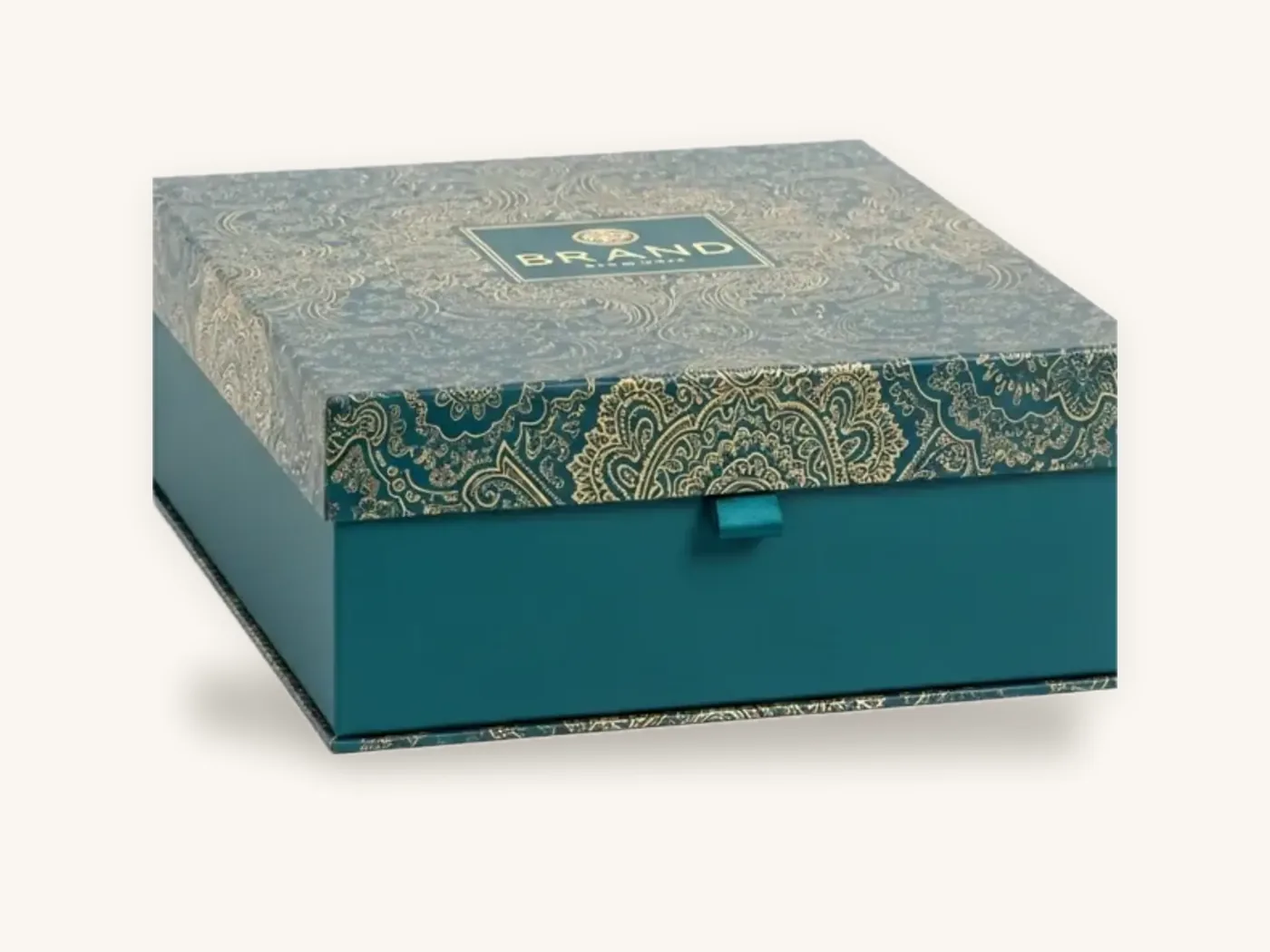
Stage 4: Production, step by step
Production is the stage where the supplier's own equipment and schedule set the pace. For folding cartons and corrugated boxes it follows a predictable path.
- Prepress: approved files are checked, imposed on the press sheet and prepared for the chosen print process.
- Board and material staging: the specified board is pulled from stock and cut to sheet size.
- Printing: digital for short runs, offset for larger runs. See digital vs offset printing for boxes for how the process choice affects setup.
- Drying or curing: ink and coatings set before handling.
- Finishing: lamination, foil stamping, embossing or spot UV, each on its own pass.
- Die-cutting and creasing: sheets are cut to the dieline.
- Stripping, folding and gluing: waste is removed, and glued styles are folded and glued.
- Quality checks and packing: boxes are inspected, counted and packed for shipping.
Each added finish is another pass through another machine. That is why a carton with soft-touch lamination, foil and embossing takes longer to move through the plant than one with aqueous coating alone, even at the same quantity.
Lead time by packaging type
The table compares the relative production complexity of common packaging. Use it to anticipate which projects need more schedule room, then confirm your exact timing on the quote.
| Packaging type | Production complexity | Schedule notes |
|---|---|---|
| Folding cartons, aqueous or lamination | Low | Most predictable; rush available on most styles |
| Corrugated mailers and shipping boxes | Low to medium | Rush available on most styles; inside printing adds a pass |
| Cartons with foil, embossing or spot UV | Medium | Extra finishing passes and one-time tooling |
| Boxes with custom inserts | Medium | Insert has its own die and may need assembly |
| Rigid boxes | Medium to high | Wrapping and assembly steps; confirm timing at quote |
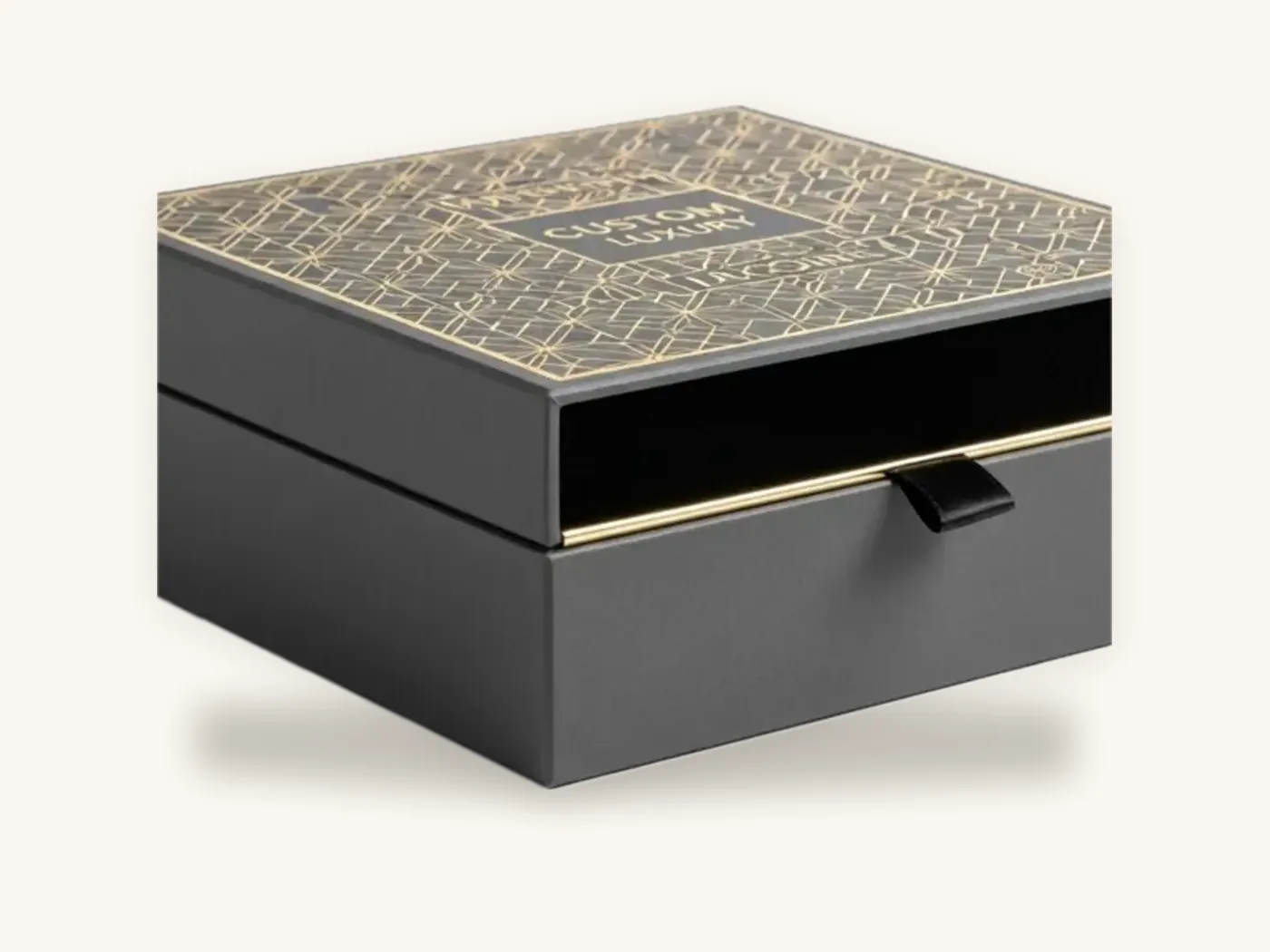
| Magnetic, drawer and specialty rigid styles | High | Extra components such as magnets, ribbons or trays |
| Display boxes and floor stands | Medium to high | Structural testing and multi-part assembly |
Stage 5: Delivery and freight
Production ending is not the same as boxes arriving. Build the transit leg into your plan from the start.
Domestic delivery
Shipping is free on every US order from Box Sense. Transit time depends on distance, shipment size and whether the order ships as parcels or on pallets. Deliveries to a business with a dock are usually simpler than residential addresses. If your boxes go to a 3PL or fulfillment center, check their receiving appointment rules, because some warehouses need advance booking before they will accept freight.
International delivery
International shipping is quoted at cost, and delivery time depends on destination, service level and customs clearance. Allow time for import paperwork and possible inspection. Air freight is faster and costs more; ocean freight is slower but economical for large, heavy orders.
Domestic versus overseas production
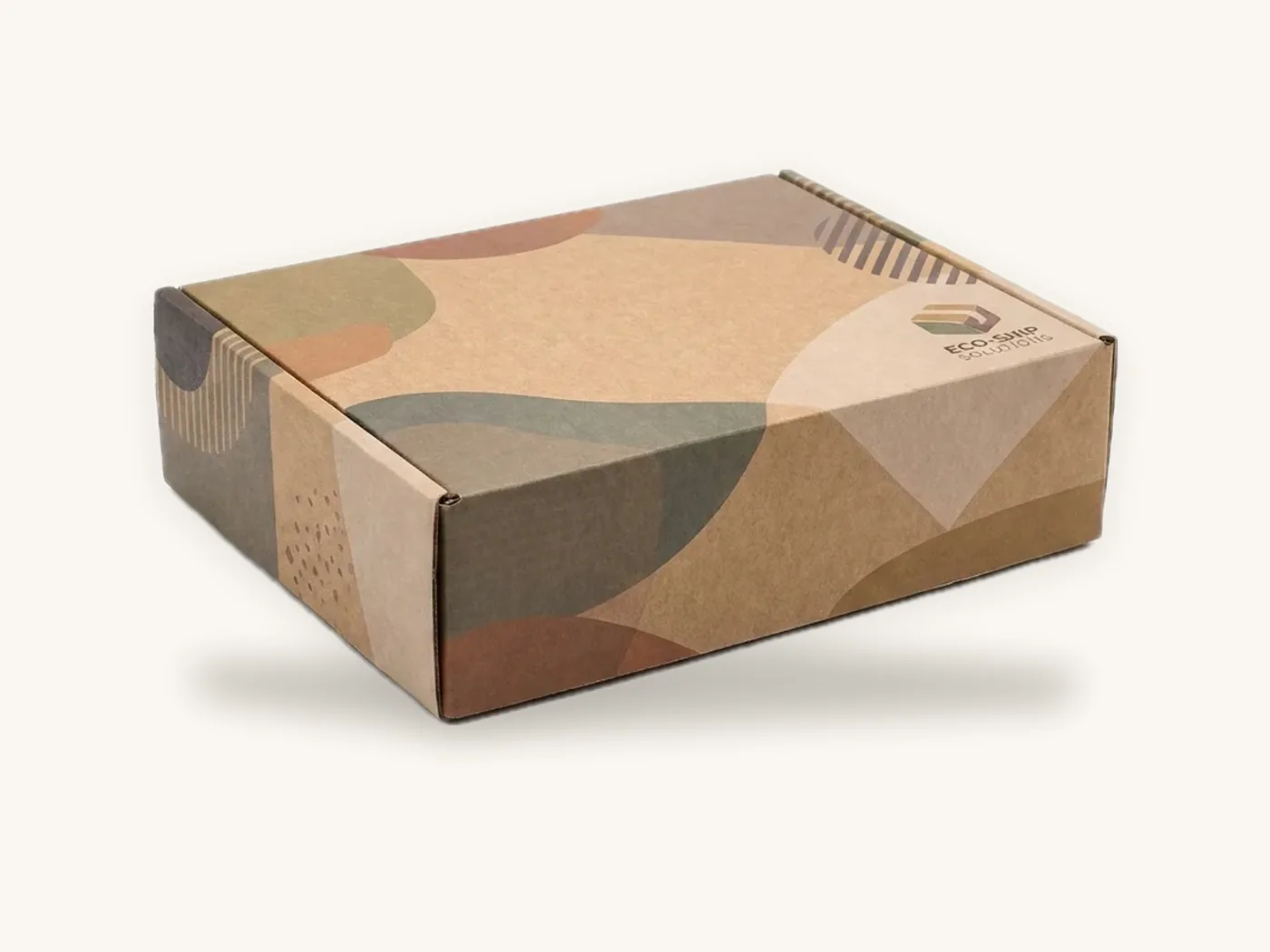
Packaging produced overseas for US use typically adds weeks of ocean transit, port handling and customs clearance on top of production, and delays at any of those steps push the in-hand date back. Those extra weeks also mean ordering larger quantities further ahead. The domestic vs overseas packaging comparison weighs speed against unit price, and the packaging landed cost guide shows how longer lead times turn into storage and cash costs.
How to plan backward from your in-hand date
The most reliable way to hit a launch is to start from the date boxes must be in your hands and count backward, stage by stage. Work in business days, then convert to calendar dates using a calendar that shows weekends and public holidays.
A worked example
Say you are launching a skincare set and need 500 printed custom product boxes with foil at your fulfillment center on a fixed date. Artwork exists but has not been placed on a dieline. Counting backward:
| Working back from in-hand date | Business days | Notes |
|---|---|---|
| Buffer before in-hand date | 3 | Covers receiving appointments and small surprises |
| US delivery transit | 2–5 | Hypothetical; depends on distance and shipment size |
| Standard production after proof approval | 8–12 | Use 12 for planning |
| Proof approval and revisions | 3–5 | Two revision rounds, fast turnaround on your side |
| Artwork placed on dieline | 2–3 | Your designer or our design team |
| Structural sample made, shipped and tested | 5–8 | Hypothetical; skip if size is proven |
| Quote confirmed and order placed | 1 | Confirmed within 24 hours |
Using the upper end of each range, this plan needs roughly 37 business days, a little over seven calendar weeks. Skipping the structural sample and approving proofs quickly brings it closer to five weeks. Switching to rush production, if the carton qualifies, cuts up to seven more business days.
Planning rules of thumb
- Always plan on the top of each range. Use the bottom as your upside, not your commitment.
- Count business days only for production. Freight and your own team may work different days.
- Mark public holidays in the US, and in the country of production if it is elsewhere.
- Add a buffer that matches the stakes. A retail launch with a fixed shelf date deserves more buffer than a web store restock.
Watch out: peak season compresses everyone's schedule. Brands preparing holiday boxes, corporate gifts and fourth-quarter promotions all order in the same weeks, and freight networks slow down at the same time. Lock artwork and approve proofs early in the season rather than late.
Rush packaging: when it helps and when it does not
Rush production shortens stage 4 only. At Box Sense, rush is 5 business days after proof approval on most paperboard and corrugated styles, compared with 8–12 business days standard.
When rush is worth it
- A launch, event or retail delivery date cannot move.
- Artwork and specs are final, so the only remaining variable is production.
- You are reordering a proven box and simply ran low.
- A standard box style with no complex inserts or specialty components.
When rush will not save you
- Artwork is not approved. Rush cannot start until the proof is signed, so a slow approval erases the gain.
- You still need a sample. The sample cycle happens before production.
- The style is not rush-eligible. Rigid boxes, specialty components or complex inserts may need standard timing; confirm at quote.
- Freight is the bottleneck. If transit or receiving appointments are the constraint, production speed does not help.
Fast alternatives to rush
- Order a small digital run now for launch, and a larger order on standard timing for ongoing stock.
- Launch with a simpler finish and add foil or embossing on the reorder.
- Use a proven size and structure from an earlier order to skip sampling.
Reorder planning so you never need rush
Rush is useful for launches, but running out of boxes on a steady product is avoidable. A simple reorder point tells you when to place the next order.
Reorder point = average boxes used per week x total lead time in weeks + safety stock
Total lead time here means from placing a reorder to boxes on your shelf. For a reorder of an existing design, that is mostly production plus delivery, because the dieline and artwork are already approved.
A reorder example
Say you use about 150 custom mailer boxes a week. Your reorder lead time, using standard production and a few days of transit, is about three weeks. You keep two weeks of safety stock for sales spikes. Your reorder point is 150 x 3 + 300 = 750 boxes. When stock falls to 750, place the order.
Keep reorders fast
- Keep approved files, PMS numbers and board specs on record with your supplier.
- Avoid small artwork edits on every reorder; batch changes into planned updates.
- Review usage every month and adjust the reorder point as sales change.
- For seasonal peaks, raise safety stock ahead of the season, not during it.
Ordering with Box Sense on a deadline
Tell us your in-hand date at the start, and we will confirm whether the schedule works for your spec before you commit. Our how it works page shows the process end to end.
What to send for the fastest schedule
- Style, internal dimensions and product weight
- Board, print coverage and finishes
- Quantity, ship-to address and delivery requirements
- In-hand date, and whether it is fixed or flexible
- Artwork files, or a request for design support
- Whether you need a structural or printed sample
What happens next
- Quote within 24 hours, including whether rush applies to your style.
- Dieline and artwork setup, with a 3D digital proof and two revision rounds included.
- Optional samples: free unprinted structural samples, and a free printed sample of approved artwork on orders of 100 or more.
- Production: 8–12 business days standard after proof approval, or 5 business days rush on most paperboard and corrugated styles.
- Delivery: free shipping on every US order; international shipping quoted at cost.
The minimum order is 10 boxes, with no die or plate charges, which makes a short bridging run practical when a large order will not arrive in time. Defective boxes reported within 14 days are reprinted free. For premium projects such as custom rigid boxes or magnetic closure boxes, mention your date early so we can confirm timing for wrapping and assembly. Gifting programs with fixed event dates are covered on our gifts and events packaging page.
Frequently asked questions
How long do custom boxes take to make?
At Box Sense, standard production takes 8–12 business days after you approve the digital proof, and rush production takes 5 business days on most paperboard and corrugated styles. The full timeline also includes quoting, artwork setup, proof revisions, any samples and delivery. With print-ready artwork and quick approvals, printed boxes can arrive in roughly three working weeks.
When does the custom packaging lead time start?
Most suppliers start the production clock at proof approval, not when you first ask for a quote or pay a deposit. Everything before approval, including dieline creation, artwork setup and revisions, adds to the total. When comparing suppliers, ask each one to state production time in business days from proof approval so the numbers are comparable.
What is rush packaging and how fast is it?
Rush packaging is production scheduled ahead of the standard queue to shorten the time from proof approval to shipment. Box Sense offers rush in 5 business days on most paperboard and corrugated styles. Rush speeds up production only, so artwork must be final and approved first. Rigid boxes and specialty components should be confirmed at the quote stage.
What causes delays in custom packaging orders?
The most common causes are incomplete specs at quoting, artwork that is not print-ready, slow or multi-person proof approvals, late changes to barcodes or regulatory text, sample rounds added after the schedule is set, public holidays, peak-season demand and freight or receiving delays. Most of these can be avoided by finalizing specs and artwork early and naming one approver.
Do samples add to lead time?
Yes. A sample has to be made and shipped, and you need time to test it, before the full order goes into production. Unprinted structural samples confirm fit and strength; printed samples confirm color and finish. Skip the sample when you are reordering a proven size or using a standard structure with generous clearance, and rely on the 3D digital proof instead.
Are rigid boxes slower to produce than folding cartons?
Rigid boxes generally involve more steps than folding cartons: cutting greyboard, printing and laminating wrap paper, wrapping, assembly and sometimes magnets, ribbons or inserts. That extra work can make them take longer, and rush may not apply. Mention your in-hand date when requesting a rigid box quote so the timing can be confirmed for your specific design.
How far ahead should I order packaging for a product launch?
Plan backward from your in-hand date using the top of each stage range, then add a buffer. For a new design with a structural sample, many launches need roughly six to eight weeks of total planning time. For a proven box with approved artwork, two to three weeks can be enough. Order earlier for peak season and overseas destinations.
Next steps
Pick your in-hand date, count backward through the five stages, and check the cost of your spec in the packaging price estimator. Then request a quote with your deadline, and we will confirm pricing and timing within 24 hours. If you are weighing speed against unit price, the custom packaging cost guide and how much custom boxes cost help you balance the two.
Boxes in this guide
Order the packaging we covered
Written by the Box Sense Packaging Team
Our structural designers, prepress technicians and production staff print and convert custom boxes every day for brands in the United States, United Kingdom and UAE. Questions about this guide? Talk to us.