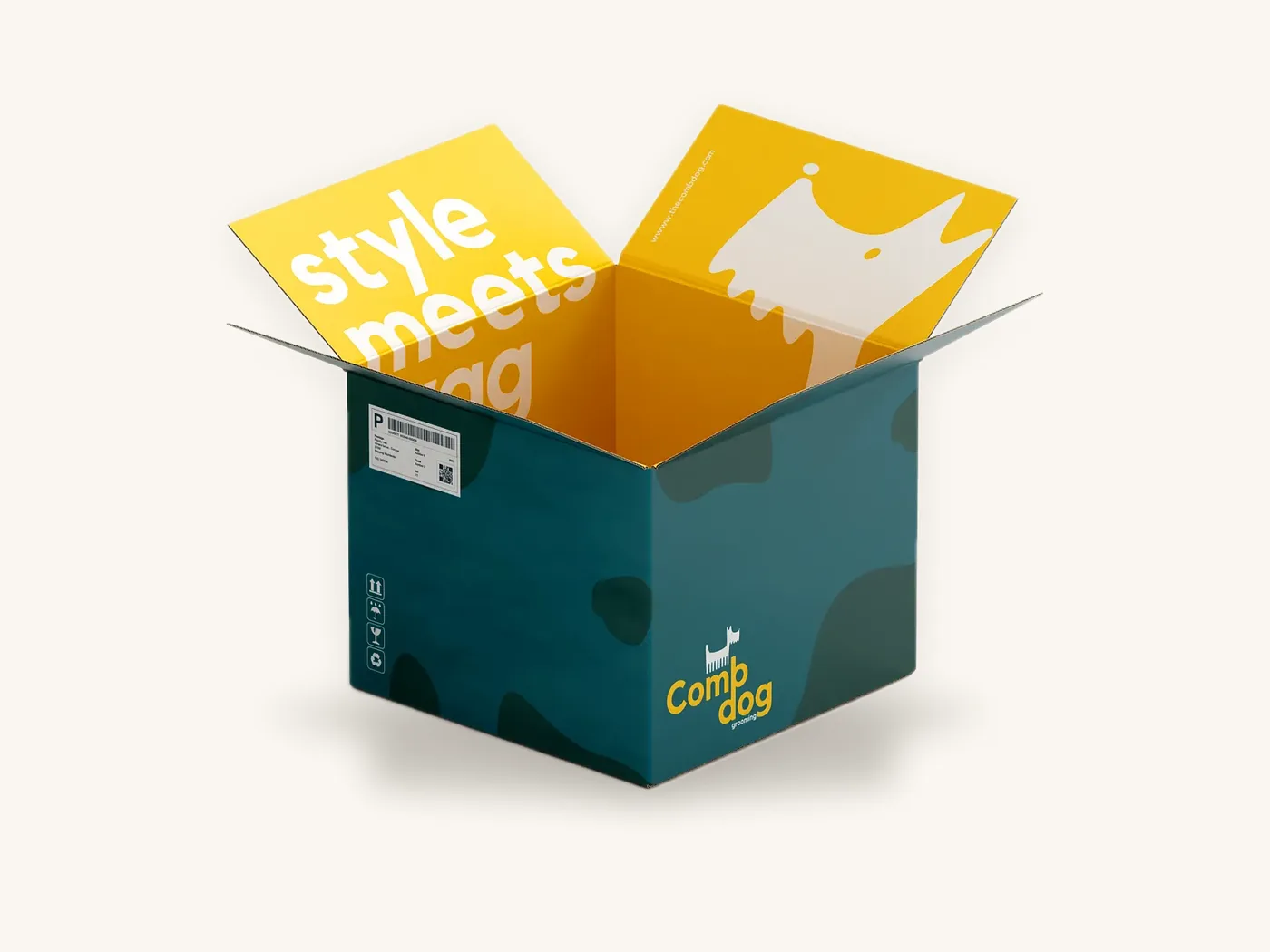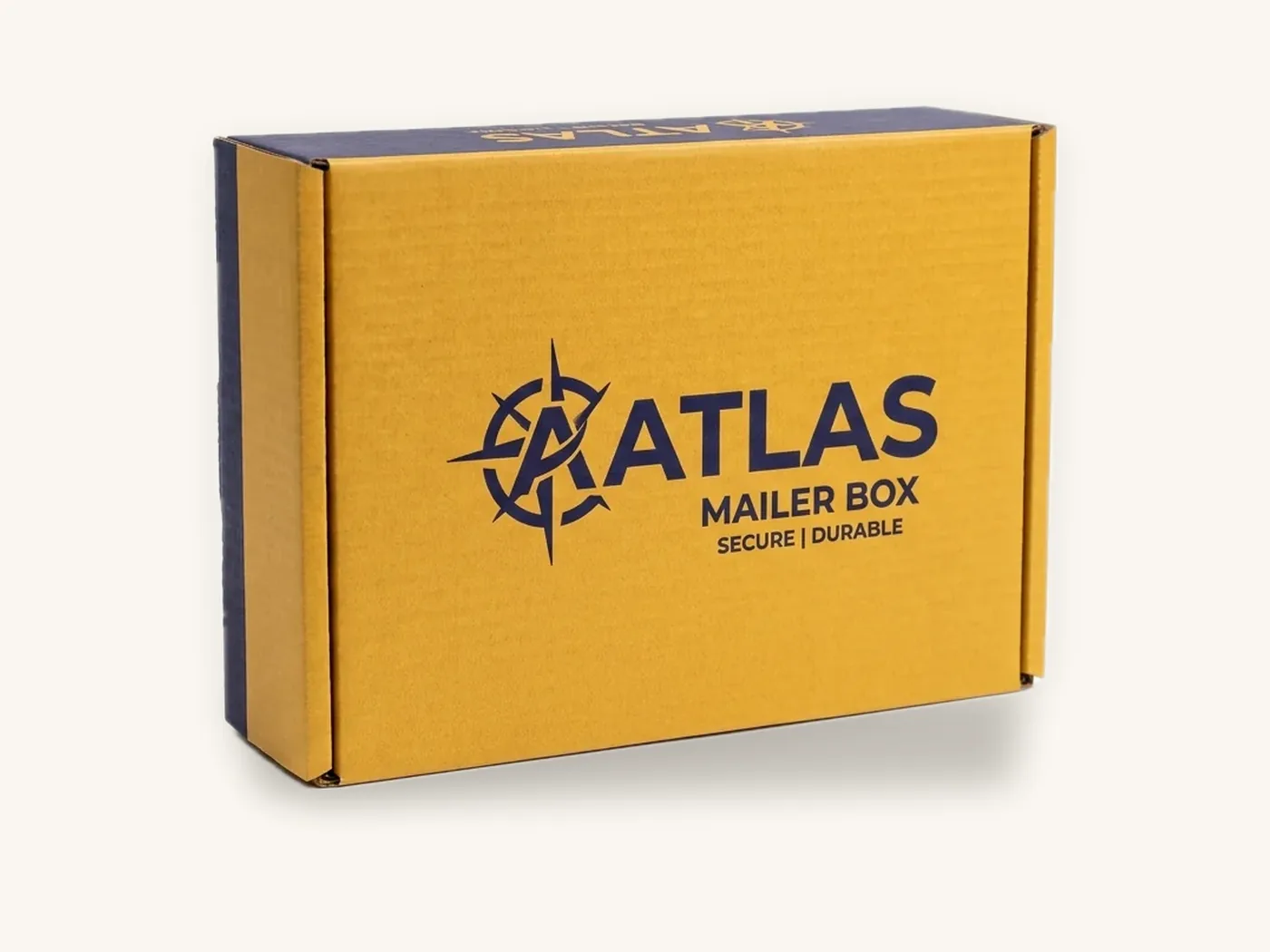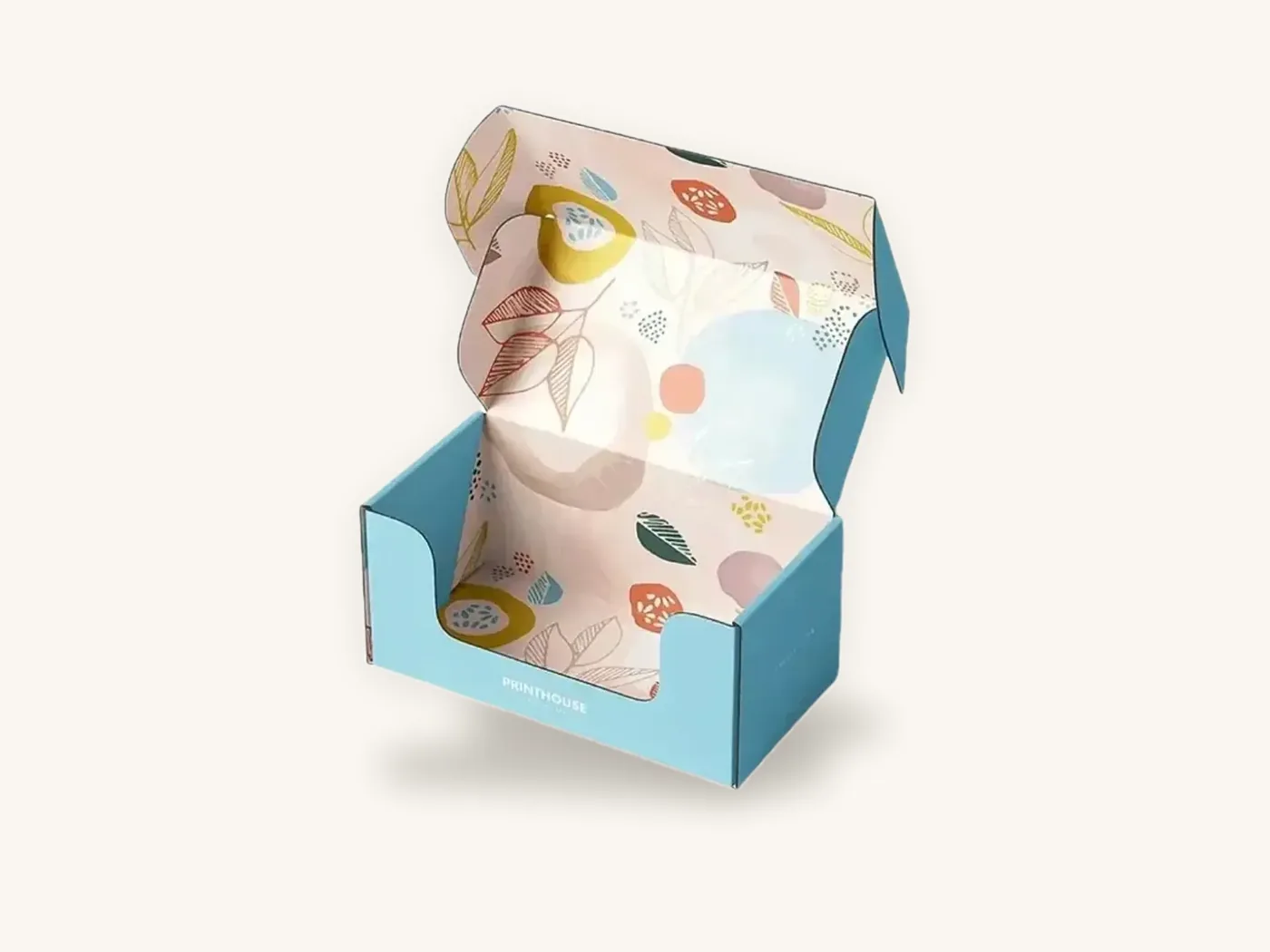
Searching for custom boxes no minimum usually turns up offers that sound like one printed box is possible. In practice, a truly custom box, cut to your dimensions and printed with your artwork, almost always has some floor, because every run needs file preparation, press setup and cutting. What has changed is how low that floor can go.
At Box Sense the minimum order is 10 boxes. Digital printing and no die or plate charges are what make that practical: a 10-piece run of 3x2x5 in printed tuck cartons is about $1.73 per box, and a 10-piece run of 8x6x3 in printed mailers is about $3.99 per box, with US shipping included.
This guide explains why minimums exist, what "no minimum" really means from different suppliers, what small batch custom boxes cost, and how to plan a path from a first 10 boxes to a volume order without wasting money.
Key takeaways
- "No minimum" rarely means one custom-printed box. It usually means a very low MOQ, a stock box with custom printing, or a price that makes small quantities impractical.
- Minimums exist because of fixed setup: plates, dies, press makeready and waste sheets. Digital printing and reusable cutting remove most of that cost.
- Small batches cost more per box, often roughly three and a half times the 1,000-unit price at 10 units, but the total bill is small.
- One-time finish tooling hurts most on tiny runs: a $60 foil tool adds six dollars per box to a 10-box order.
- The smart path is staged: 10 to test, around 100 to launch, then 500 or more once the design and sales pace are proven.
- Box Sense makes custom boxes from 10 units with free design support, free structural samples and standard production of 8–12 business days after proof approval.
What "no minimum" really means in custom packaging
Suppliers use the phrase in several different ways. Knowing which one you are looking at prevents surprises at checkout.
| What the offer actually is | How it works | Good for | Watch for |
|---|---|---|---|
| Low MOQ custom boxes | Your size and artwork, digitally printed, from a small floor such as 10 units | Launches, samples, testing designs | Higher price per box than volume |
| Stock box plus custom label or sticker | A standard-size plain box branded with a printed label | Very small quantities, quick starts | Limited sizes, less polished look |
| Stock box with custom print | Standard sizes only, printed with your logo | Brands that fit a common size | Paying for empty space if the size is wrong |
| "No minimum" with steep short-run pricing | Any quantity accepted, but setup fees make small runs expensive | Rarely a good deal | Separate plate, die or setup charges |
| Minimum by order value | A dollar floor rather than a unit count | Mixed orders | Small boxes need many units to reach it |
When comparing offers, ask three questions: Is the box cut to my dimensions? Is it printed with my artwork, not labeled? Are there die, plate or setup charges on top of the unit price? A low MOQ with no setup fees is usually the most honest version of "no minimum."
For a deeper look at how suppliers set order floors, see packaging MOQ explained.
Why custom boxes have minimum order quantities
Minimums are not arbitrary. They reflect costs that exist whether you order 10 boxes or 10,000.
Setup costs in traditional production
In conventional offset production, each color needs a printing plate. Each box shape needs a steel-rule cutting die. Before the first good sheet, the press operator runs makeready sheets to bring color and registration into spec, and the die-cutter is adjusted until creases fold cleanly.
Those costs are the same for a short run and a long one. Spread over 5,000 boxes they are invisible; spread over 50 boxes they can exceed the cost of the boxes themselves. That is why many offset-only suppliers set their floors in the hundreds or thousands.
How digital printing lowers the floor
Digital presses print directly from the file, with no plates. Color is set by the press profile, so makeready waste is minimal. Paired with digital cutting or reusable standard cutting setups, short runs no longer carry a heavy fixed cost.
At Box Sense, digital printing handles short runs of roughly 10 to 500 boxes, and offset takes over for larger runs where its lower unit cost wins. There are no die or plate charges on either. The digital vs offset printing guide explains the quality and cost differences in detail.
What still carries a setup cost
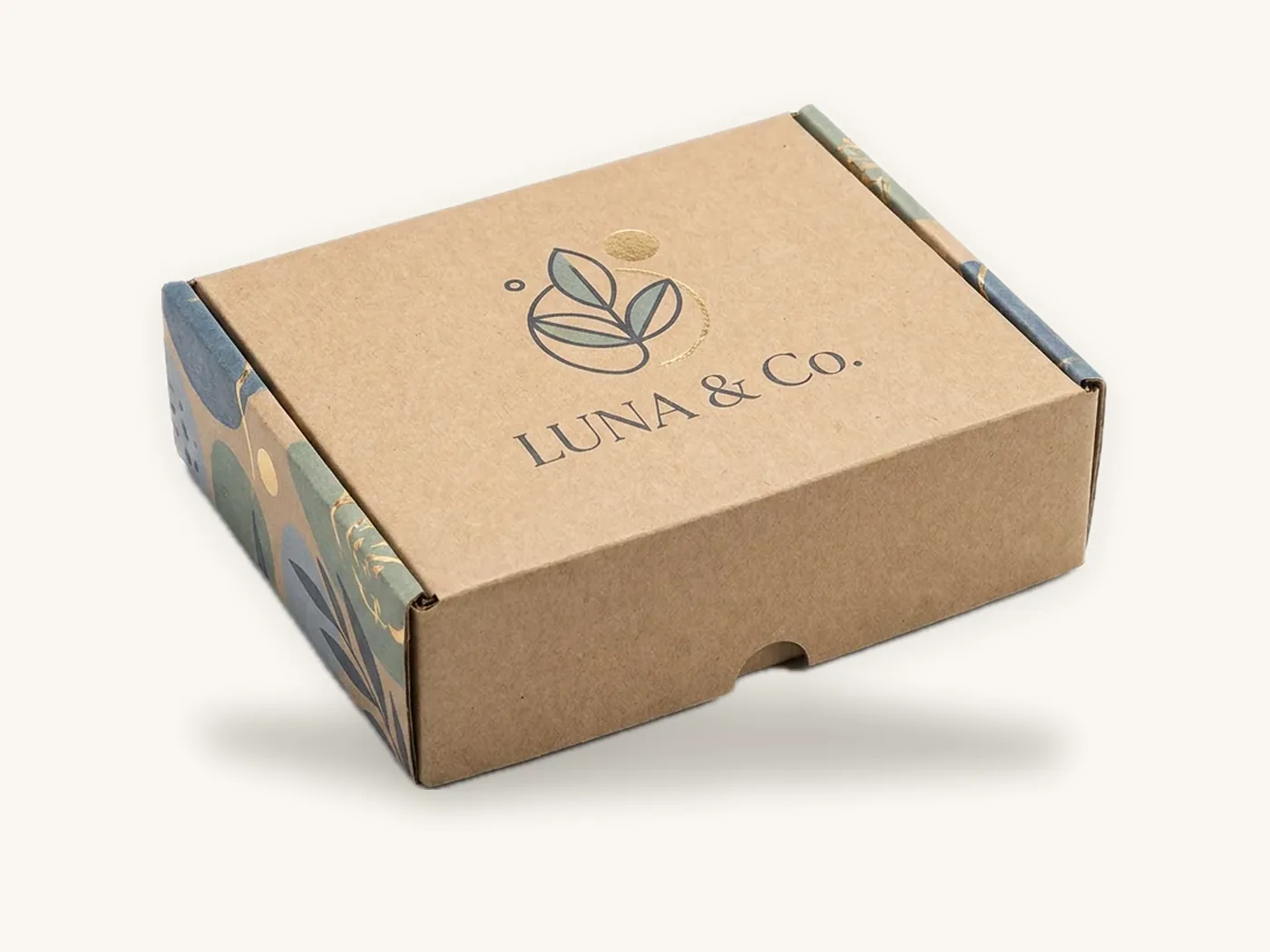
A few features need a dedicated physical tool no matter how the box is printed. At Box Sense, those are foil stamping and embossing at $60 each, spot UV at $40, and a custom insert die at $45. These tools are made once and reused on reorders of the same artwork.
What small batch custom boxes cost
Here is what low minimum custom boxes cost at 10, 50 and 100 units across several common specs. All prices include free US shipping.
| Spec | 10 units | 50 units | 100 units |
|---|---|---|---|
| Soap sleeve, 18 pt kraft, 3.5x2.5x1.25 in, 1-color | about $0.99 | about $0.76 | about $0.66 |
| Kraft tuck carton, 18 pt kraft, 4x3x2 in, 1-color | about $1.22 | about $0.93 | about $0.81 |
| Straight tuck end carton, 18 pt SBS, 3x2x5 in, full color, aqueous | about $1.73 | about $1.32 | about $1.15 |
| Candle box, 18 pt SBS, 3.5x3.5x4 in, matte, foil, insert | about $3.52 | about $2.69 | about $2.33 |
| Mailer box, E-flute, 8x6x3 in, full color outside | about $3.99 | about $3.05 | about $2.64 |
| Jewelry rigid box, 2 mm, 3x3x1.5 in, matte, foil, insert | about $5.06 | about $3.87 | about $3.35 |
Price per box versus total spend
The price per box at 10 units looks high next to volume pricing, but the total is small. Ten printed tuck cartons cost roughly seventeen dollars. Ten printed mailers cost roughly forty dollars. Ten jewelry rigid boxes with foil and inserts cost roughly fifty dollars before the one-time tooling.
That is a modest price for boxes you can photograph for your store, hand to a retail buyer, send to an influencer or ship to your first customers. Compare it with the cost of ordering 1,000 boxes and discovering the size is wrong.
How tooling changes the math on tiny runs
Finish tooling is where small batches get expensive. A $60 foil tool adds six dollars per box on 10 boxes, one dollar twenty per box on 50, and sixty cents on 100. The candle and jewelry rows above include the per-unit cost of foil and an insert, but not the tools.
For a first run of 10 or 50 boxes, skip foil, embossing and spot UV unless they are essential to the product. Print the logo instead, and add embellishments on the larger reorder when the tool is spread across hundreds of boxes.
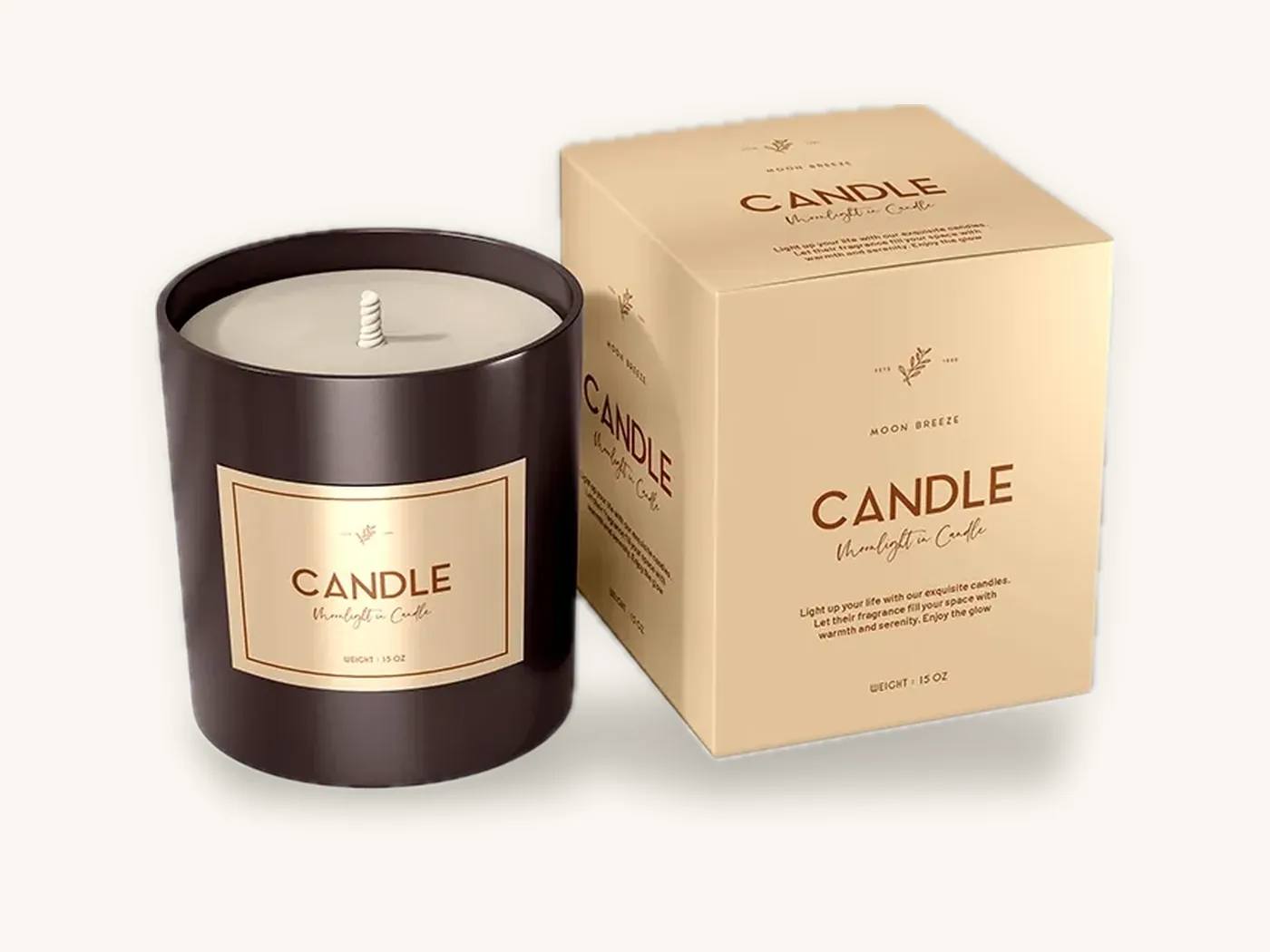
Tip: if you want a premium look on a 10-box run, use full-color printing with a matte or soft-touch lamination. Laminations add a per-unit cost but no tooling, so they scale down to tiny quantities far better than foil or embossing.
Who low minimum custom boxes are right for
Small runs are a tool, not a permanent strategy. They make sense in specific situations.
| Situation | Suggested quantity | Why |
|---|---|---|
| Testing a new box size or structure | 10 | Confirm fit, closure and protection before committing |
| Product photography and store listings | 10 | Real boxes photograph better than mockups |
| Retail buyer or distributor pitch | 10 to 50 | Show finished packaging, not a render |
| Influencer or PR kits | 25 to 100 | Small, high-impact send-outs |
| Crowdfunding or pre-order fulfillment | Matched to backer count | Order exactly what you need |
| Limited edition or seasonal release | 50 to 250 | Avoid leftover stock with dated artwork |
| Market or pop-up sellers | 50 to 250 | Low cash commitment, fast turnover |
| Established product with steady sales | 500 or more | Volume pricing lowers cost per shipment |
If you are funding a launch through backers, the guide to packaging for Kickstarter covers timing and quantity planning around campaign results.
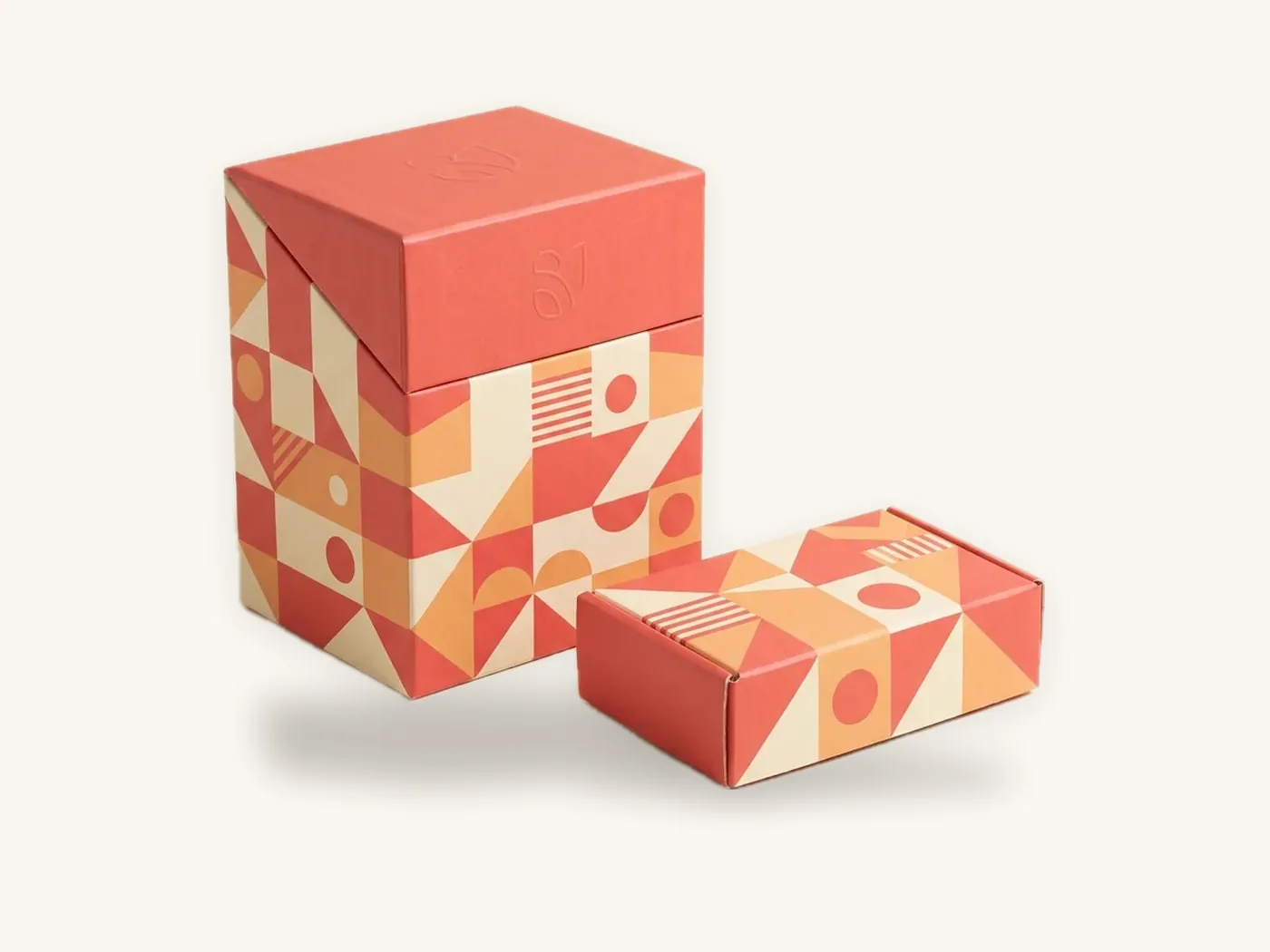
A staged plan: from 10 boxes to a volume order
Ordering in stages keeps early risk small and moves you to better pricing once you have proof the packaging works.
- Request a free unprinted structural sample. Test the size with your real product. Close it, shake it, drop it from waist height. This costs nothing and catches most sizing mistakes.
- Order 10 printed boxes. Check color, text legibility, crease placement and how the box looks in photos. Show them to a few customers or retail contacts.
- Fix what you learn. Adjust artwork, correct any regulatory text and tweak dimensions if needed. Changes cost nothing but time at this stage.
- Order a launch quantity of about 50 to 250. Enough to cover your first weeks or a first retail order. At 100 units, the price per box already drops by about a third from the 10-unit price on most specs.
- Track usage for a month or two. Note how many boxes you use, any damage in transit and any customer feedback about the packaging.
- Move to a volume order. Once artwork and sales pace are stable, order three to six months of supply. At 500 units, the 8x6x3 in mailer is about $1.41, roughly a third of the 10-unit price.
- Add embellishments on the larger run. Foil, embossing or spot UV now cost only cents per box in tooling.
On orders of 100 units or more, a printed sample of approved artwork is free, so step 4 can include a physical sign-off before the full run.
Choosing styles that work well in small batches
Some box styles are naturally friendly to low quantities, and some carry costs that are harder to absorb on a short run.
Styles that scale down well
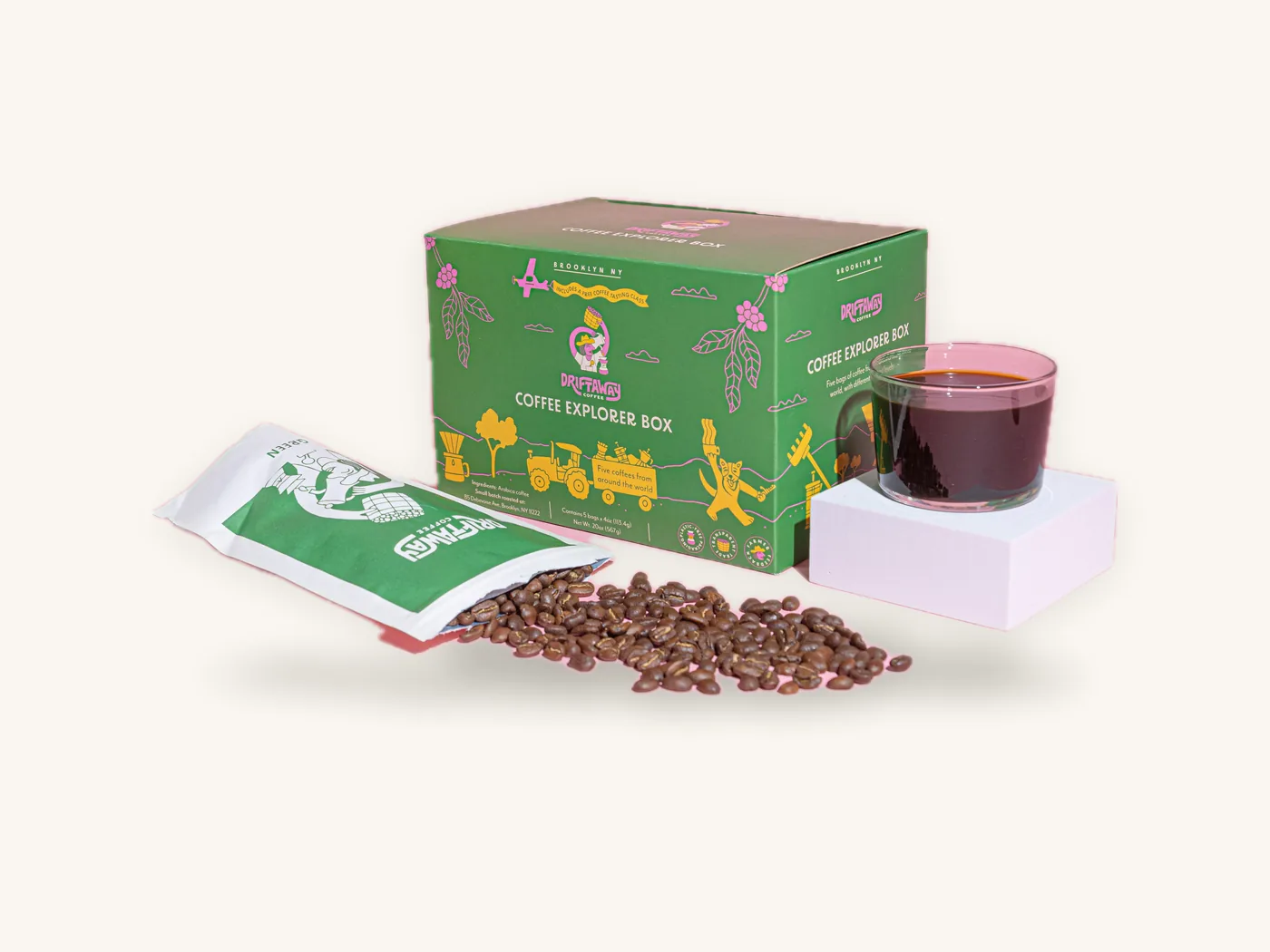
- Tuck end cartons and [custom product boxes](/products/product-boxes). Simple structures, low board use and quick assembly.
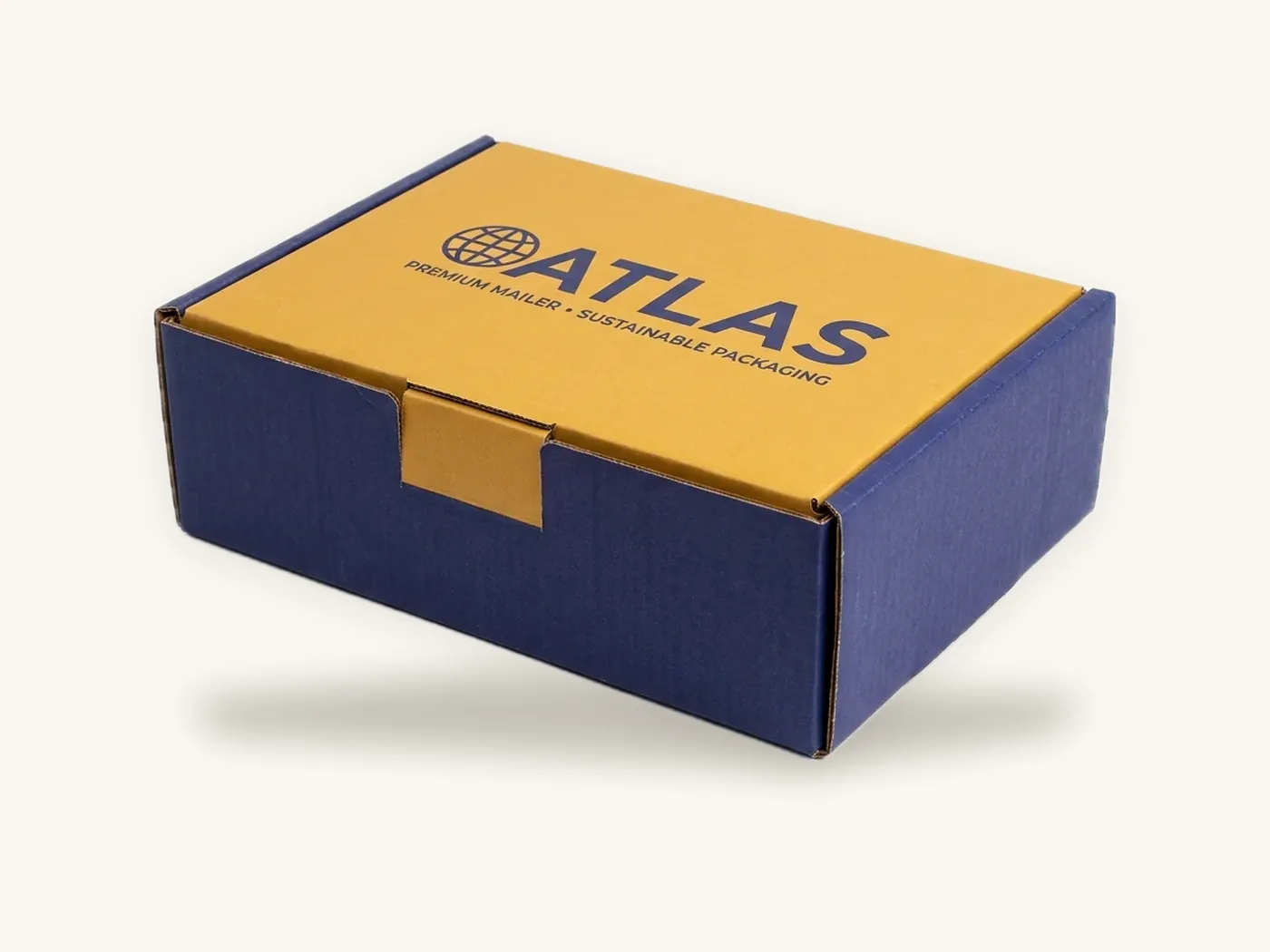
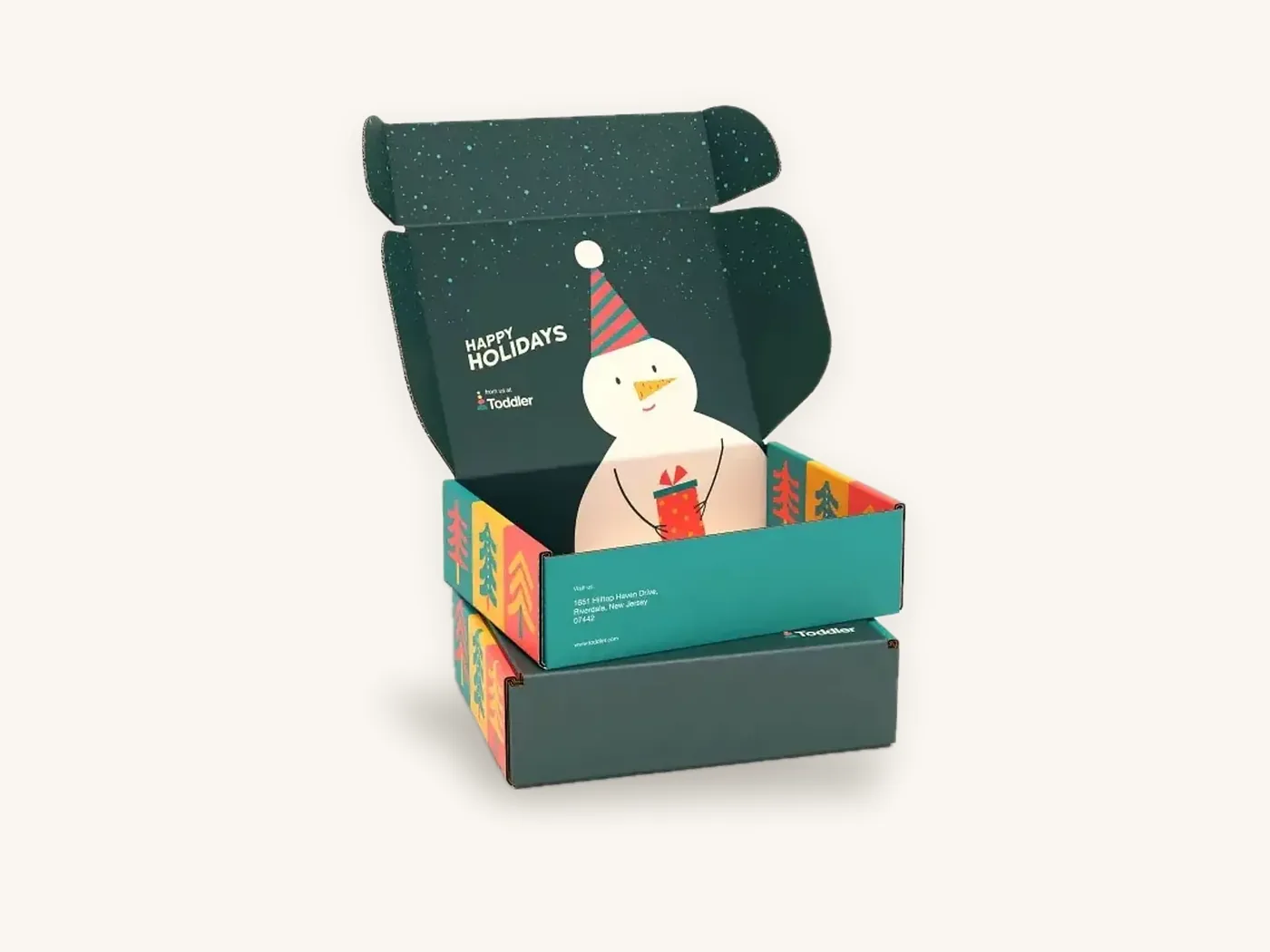
- Printed mailer boxes. Custom mailer boxes need no tape or glue, ship flat and work as both shipper and presentation box.
- Kraft cartons and sleeves. One-color print on kraft is the lowest-cost option, which suits soap, tea and handmade goods. Soap boxes are a common example.
Styles to plan carefully in small runs
- Rigid and magnetic boxes. They work in small batches, but the price per box is higher. A small run of custom gift boxes or corporate kits often justifies it; everyday products usually do not. See the rigid box cost guide for details.
- Boxes with custom inserts. The $45 insert die is best spread across a larger run. For 10 boxes, consider tissue or a simple fold-in card.
- Multiple embellishments. Each tool adds to a small order's total. Choose one, or none, for the first run.
Alternatives when you need fewer than 10 boxes
Sometimes you need a handful of branded boxes for a single event, a gift or a prototype photo. These options fill that gap until a first run makes sense.
- Stock boxes with [custom labels and stickers](/products/custom-labels-stickers). A plain kraft or white box with a well-designed label can look deliberate, especially with a logo seal across the closure.
- Printed tissue or a card inside a plain box. Put the brand on the inside, where customers look on opening.
- A structural sample plus a printed mockup. For investor or buyer meetings, an unprinted sample shows structure and a 3D proof shows artwork.
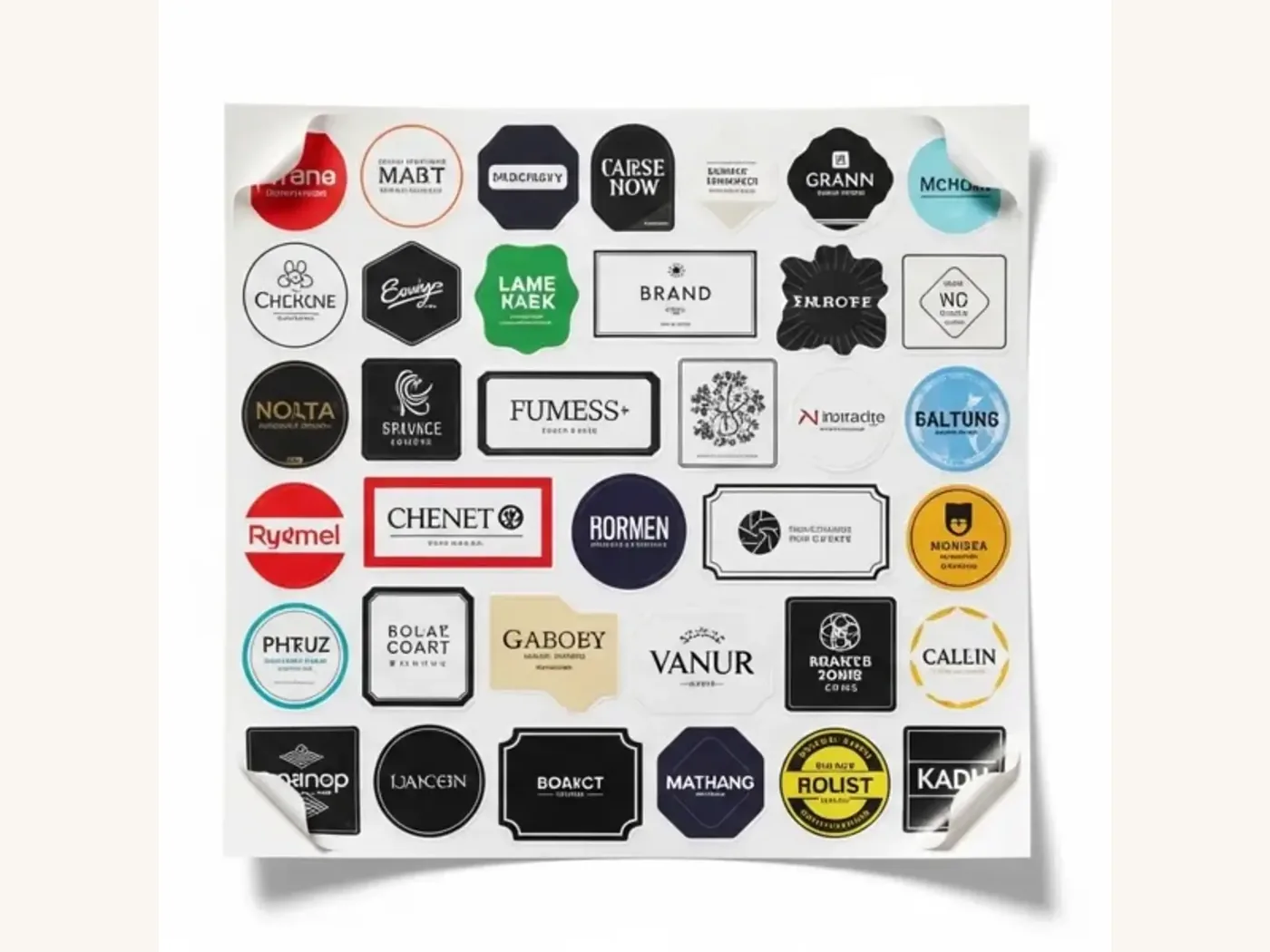
These are stopgaps. A plain box with a sticker does not match the fit or finish of a box made to your dimensions, so plan to move to a real short run once you have a confirmed design. The labels and stickers page shows label formats that pair well with plain boxes.
Small batch mistakes that cost more than they save
Low MOQs remove a big barrier, but a few habits undo the benefit.
Reordering 10 boxes every week
Ten boxes are a test quantity, not an operating quantity. If you ship consistently, repeated micro-orders pay the highest price tier every time. Once you know your monthly usage, consolidate.
Skipping the structural sample
A free unprinted sample catches size problems before you pay for printing. Skipping it to save a few days is the most common and most avoidable small batch mistake.
Adding every finish to the first run
Tooling on a 10-box order can exceed the cost of the boxes. Keep the first run simple and let a larger reorder carry the embellishments.
Printing information that is about to change
Ingredients, net weight, warnings and addresses change during early product development. Keep variable details on a label or insert until they are final. If your product is regulated, confirm current labeling requirements with the relevant agency, such as the FDA for food and cosmetics, before printing them on boxes.
Watch out: a low price per box at a large quantity is not a saving if half the run becomes obsolete. For early-stage products, the cheapest box is the one you actually use.
How to order small batch custom boxes from Box Sense
Our process is the same for 10 boxes as for 10,000, which is the point: small orders get the same structural and design support. The how it works page shows each step.
What to send
- Your product dimensions and weight, or the box size you want
- The box style, or a description of the product so we can recommend one
- Artwork files, or a note that you need help from our design services team
- Print coverage and finish preferences
- Quantities to compare, such as 10, 100 and 500
- Delivery location and the date you need boxes
What you get
- A quote confirmed within 24 hours
- Free design support: dieline, artwork setup and a 3D digital proof with two revision rounds
- Free unprinted structural samples, and a free printed sample of approved artwork on orders of 100 units or more; see samples
- Standard production of 8–12 business days after proof approval, with rush in 5 business days on most paperboard and corrugated styles
- Free shipping on every US order, with international shipping quoted at cost
- Free reprints of defective boxes reported within 14 days
The minimum order is 10 boxes and there are no die or plate charges. When you are ready to scale, the guides to custom boxes wholesale and cheap custom boxes cover volume buying and cost reduction.
Frequently asked questions
Can I order custom boxes with no minimum?
Most custom box makers have some minimum because each run needs file setup, printing and cutting. Box Sense makes custom boxes from 10 units, printed digitally with no die or plate charges, which is as close to no minimum as custom-sized, custom-printed packaging usually gets. For fewer than 10, a stock box with a custom label is a practical stopgap.
How much do 10 custom boxes cost?
It depends on the style and size. At 10 units, a 3x2x5 in full-color tuck end carton is about $1.73 per box, an 8x6x3 in printed mailer about $3.99, and a 3x3x1.5 in jewelry rigid box with foil and an insert about $5.06, with US shipping included. One-time tooling applies only if you choose foil, embossing, spot UV or a custom insert.
Why are small batch custom boxes more expensive per unit?
Every run has fixed work, including file preparation, proofing and press and cutter setup, and a small order shares that work across few boxes. Digital printing removes plates and most makeready waste, which keeps 10-box orders practical, but the price per box is still higher than at volume. The total order cost stays low.
What is a good first order quantity for custom boxes?
For most new brands, start with a free unprinted structural sample, then 10 printed boxes to check artwork and fit. After that, a launch quantity of 50 to 250 covers early sales, photography and retail pitches. Move to 500 or more once the design is final and you know how many boxes you use each month.
Do low minimum custom boxes look as good as large runs?
Digital printing on short runs produces sharp text, full-color artwork, gradients and photography, and the boxes are cut and folded the same way as larger orders. Offset printing on large runs offers the most consistent color from box to box and the lowest unit cost. For exact brand colors, ask about PMS matching for your order size.
Can I get a free sample before ordering a small batch?
Yes. Box Sense provides unprinted structural samples free, so you can test size, closure and protection with your real product before paying for printing. A printed sample of your approved artwork is free on orders of 100 units or more. Samples are the cheapest way to avoid sizing mistakes on any order.
How long do small batch custom boxes take to produce?
Quotes are confirmed within 24 hours. After you approve the 3D digital proof, standard production is 8–12 business days, and rush production in 5 business days is available on most paperboard and corrugated styles. Allow extra time for proof revisions or a physical sample. Shipping within the US is free.
Next steps
Enter your box size and a few small quantities in the instant price estimator to see how 10, 50 and 100 compare. When you are ready, request a quote for small batch custom boxes and we will confirm pricing within 24 hours and send a dieline and 3D proof. For the full picture on price per box, read the custom packaging cost guide, custom box prices by type and custom mailer boxes cost.
Boxes in this guide
Order the packaging we covered
Written by the Box Sense Packaging Team
Our structural designers, prepress technicians and production staff print and convert custom boxes every day for brands in the United States, United Kingdom and UAE. Questions about this guide? Talk to us.