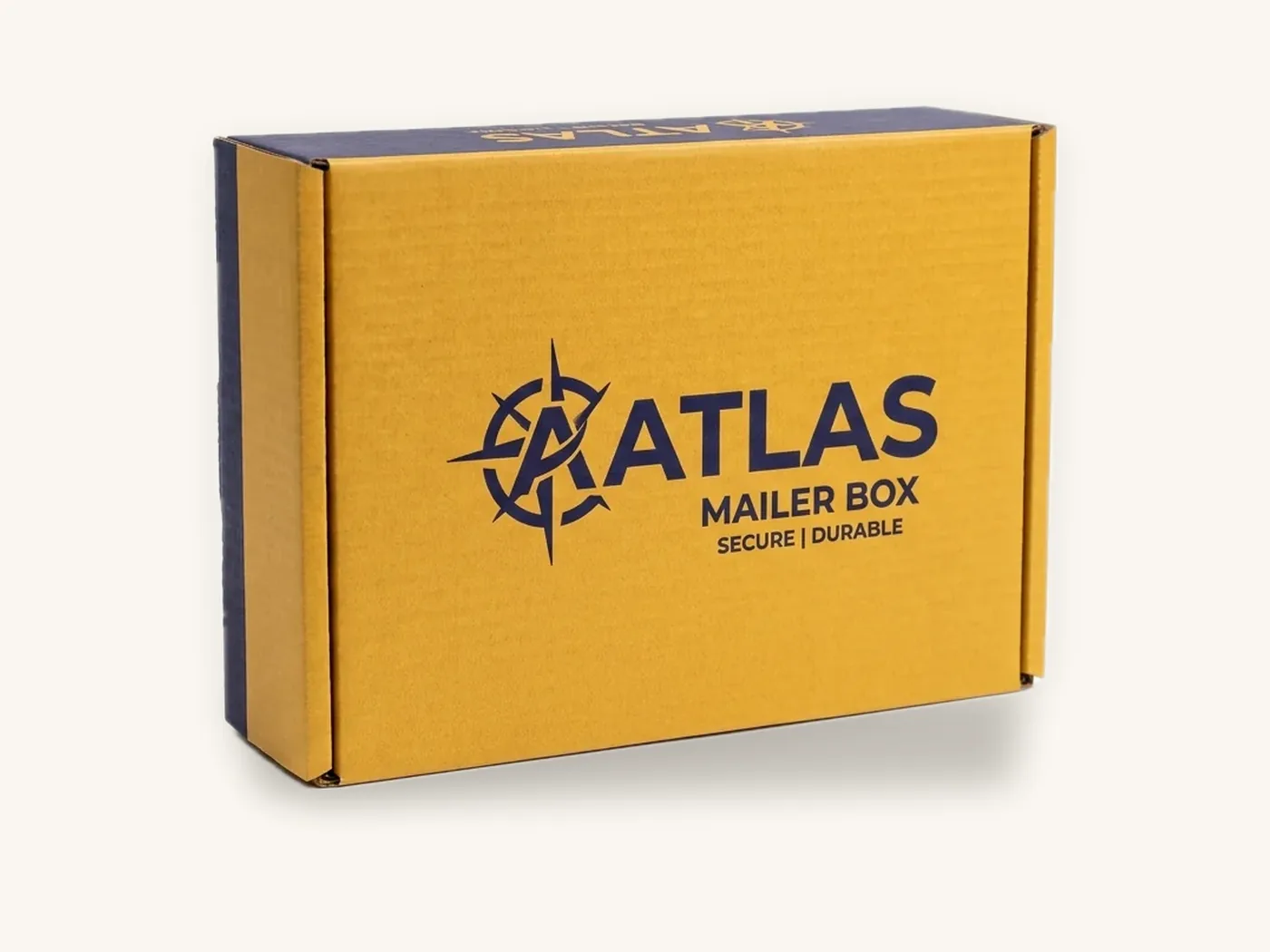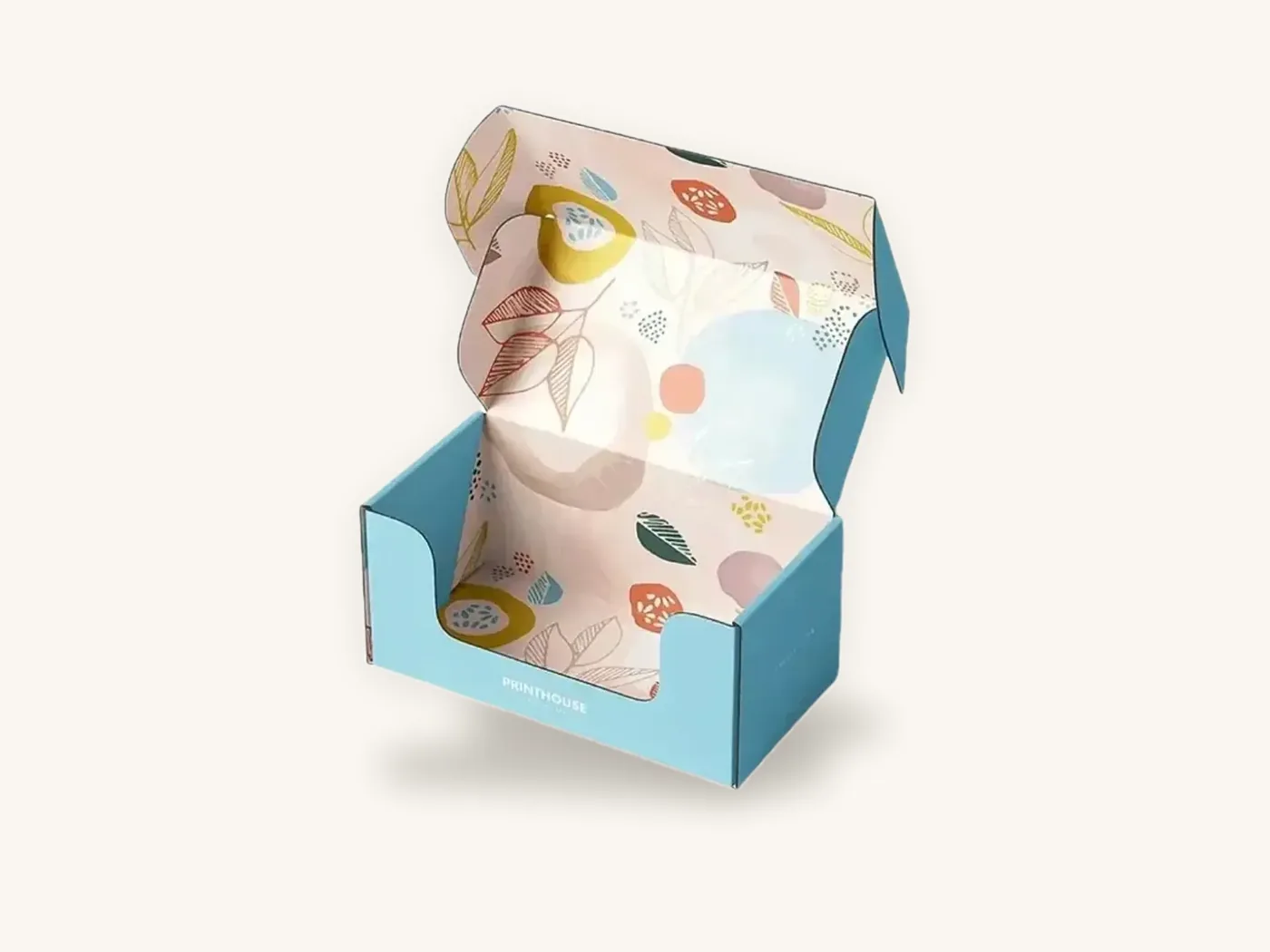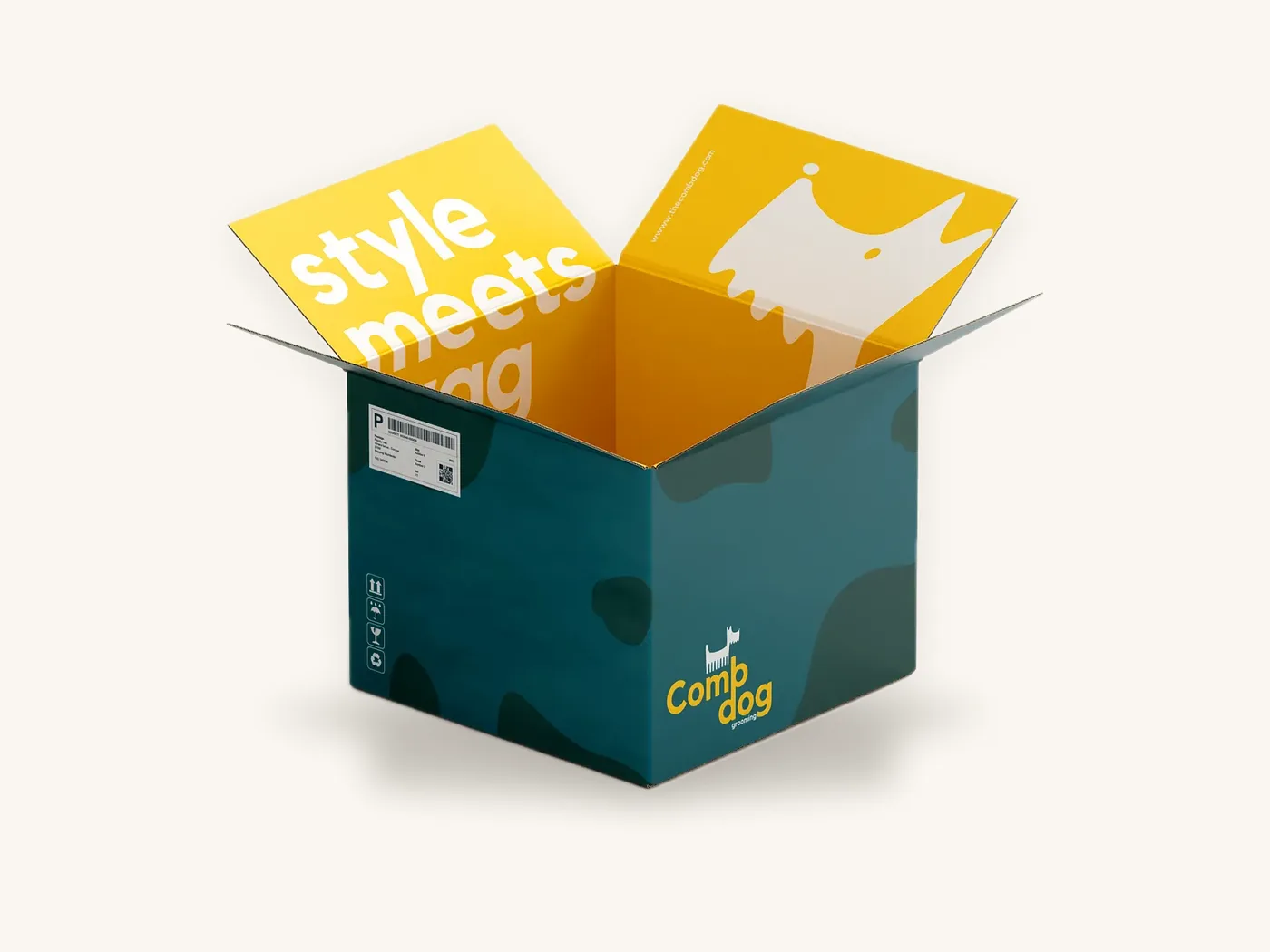
Buying custom boxes wholesale means ordering printed packaging in quantities large enough that setup, press time and freight are spread across thousands of units, so each box costs a fraction of a short run. The savings are real: a printed B-flute shipping box that costs about $4.69 at 100 units drops to roughly $2.08 at 1,000 and about $1.48 at 5,000.
The catch is that bulk only saves money if you actually use the boxes before your product, branding or dimensions change. This guide is about buying wholesale packaging boxes well: finding the quantity that pays off, forecasting it, storing it, splitting deliveries, and making sure a 5,000-unit run arrives the way the approved proof looked.
Key takeaways
- Unit price falls fastest between roughly 100 and 1,000 units; above about 5,000 the curve flattens because board becomes most of the cost.
- The right bulk quantity is the one you can use within about 6 to 12 months without a design or size change, not the one with the lowest unit price.
- Flat corrugated and paperboard take up far less space than people expect, but you still need to plan pallets, humidity and first-in, first-out rotation.
- Lock the spec before a big run: dieline, board grade, color references and finish, all signed off on a physical or 3D proof.
- Consolidating several near-identical SKUs into one box size is often worth more than negotiating a lower price per box.
- Box Sense runs bulk custom boxes on offset presses with no die or plate charges, standard production of 8–12 business days after approval, and free shipping on every US order.
How wholesale pricing on custom boxes actually works
Every custom box order carries two kinds of cost. Fixed costs happen once per run: preparing files, making up the press, setting the die-cutter, running make-ready sheets until color is on target. Variable costs happen per box: board, ink, coating, gluing and packing.
On a 100-unit order, fixed costs dominate, so each box carries a heavy share of setup. On a 5,000-unit order, that same setup is divided fifty times further, and what you mostly pay for is material. That is why the first few quantity steps produce dramatic savings and the later ones produce modest ones.
Where the price breaks fall
The table below shows indicative per-unit prices from our current rates for three common wholesale specs, with free US shipping included. Your exact size and finish will move these numbers, so check the instant price estimator for your spec.
| Spec | 250 | 1,000 | 2,500 | 5,000 | 10,000 |
|---|---|---|---|---|---|
| Shipping box RSC, B-flute, 12x10x6 in, 1-color | $3.33 | $2.08 | $1.77 | $1.48 | $1.33 |
| Shipping box RSC, B-flute, 16x12x8 in, 1-color | $5.31 | $3.32 | $2.82 | $2.36 | $2.13 |
| Straight tuck end carton, 18 pt SBS, 3x2x5 in, full color, aqueous | $0.82 | $0.51 | $0.43 | $0.36 | $0.33 |
Look at the 12x10x6 in shipper. Moving from 250 to 1,000 units cuts the unit price by more than a third. Moving from 5,000 to 10,000 saves roughly a tenth. The second jump doubles your inventory for a much smaller gain.
Digital short runs versus offset bulk runs
Short runs of roughly 10 to 500 boxes are printed digitally, which needs no plates and makes small orders practical. Larger wholesale runs move to offset printing, which has more setup but a lower cost per sheet and very consistent color from the first box to the last. Our guide to digital vs offset printing for boxes explains where the crossover sits and how it affects artwork.

Choosing the right bulk quantity
The most common wholesale mistake is buying the quantity with the best unit price instead of the quantity with the best total outcome. Ten thousand boxes at a lower price are expensive if a rebrand, a new product size or a retailer requirement makes half of them obsolete.
A simple forecasting method
- Pull your real usage. Count boxes shipped per month over the last three to six months, per SKU. Use order data, not gut feel.
- Adjust for the season. If the fourth quarter ships twice your average month, plan for that peak rather than the average.
- Set a coverage window. Most brands target 6 to 12 months of supply. Shorter if the product or branding is still changing; longer only for stable, proven packaging.
- Add a buffer. Allow for damaged boxes, packing errors and samples sent to retailers or influencers. A small percentage is usually enough.
- Subtract what you already hold. Count stock on hand, including boxes at a 3PL.
- Round to the nearest price tier. If your forecast lands at 2,200 units, compare the 2,500 tier; the extra boxes may cost little in total.
- Check storage. Confirm you or your warehouse can hold the run before approving it.
When to buy bigger, and when not to
Say you sell a kitchen gadget and ship about 400 orders a month, rising to about 800 in November and December. A year's supply is roughly 5,600 boxes. If the box, product and logo have been stable for a year, the 5,000 tier plus a small top-up is sensible. If you are about to launch a larger version of the gadget, a 2,500-unit run keeps you flexible.
| Situation | Suggested approach | Why |
|---|---|---|
| New product, first 3 months of sales | 250 to 1,000 units (see our small business packaging guide) | Size and design often change after real customer feedback |
| Stable product, steady monthly demand | 6 to 12 months of supply | Captures most of the price curve with low obsolescence risk |
| Rebrand or new artwork planned within 6 months | Buy only to the change date | Old-logo inventory rarely gets used up cleanly |
| Strong seasonal peak | Bulk run timed 4 to 6 weeks before peak | Avoids rush fees and stockouts at the busiest point |
| Many similar SKUs | Consolidate sizes first, then buy bulk | One larger run beats several small ones |
| Retail or wholesale channel launch | Separate run for retail cartons | Retailer requirements may differ from your DTC box |
Tip: ask for pricing at three quantities, for example 1,000, 2,500 and 5,000, on the same spec. Seeing the total cost at each tier, not just the unit price, makes the real tradeoff obvious.
Standardizing sizes before you buy bulk custom boxes
Bulk savings multiply when fewer box sizes do more work. Many growing brands end up with one box per product, each ordered in small quantities. Consolidating to a handful of sizes lets each size reach a better price tier.
How to consolidate
Measure every product as it ships, then group items whose packed dimensions fall within roughly half an inch to an inch of each other. Pick a box that fits the largest item in each group, and use a box insert or divider or paper fill to take up space for the smaller items.
There is a limit. Oversized boxes use more board, let products move in transit, and can push parcels into a higher dimensional weight bracket with carriers. Our guide to right-sized packaging covers how to balance fewer SKUs against empty space.
Keep one print design across sizes
A single artwork system, with a logo on the lid or top panel and consistent side panels, lets you order several sizes at once and keep the brand consistent. Product-specific details, such as variants and barcodes, can go on a label rather than the printed box, which means the same printed box serves several products.

Picking the right board grade for wholesale packaging boxes
On a large run, a small spec change multiplies across thousands of boxes. That works in both directions: over-specifying board wastes money on every unit, and under-specifying it causes damage claims on every unit.
| Box type | Typical board | Good for | Ask about |
|---|---|---|---|
| Regular slotted container (shipper) | B-flute or C-flute single wall | Most e-commerce and warehouse shipments | Edge crush rating for stacking |
| Heavy shipper | BC double wall | Heavy parts, glassware, multi-unit cartons | Whether single wall with an insert would do |
| Mailer box | E-flute | Branded direct-to-consumer delivery | Inside print coverage |
| Folding carton | 14 to 24 pt SBS or kraft paperboard | Retail product packaging, inner boxes | Caliper for product weight |
| Display box | E-flute | Counter and shelf merchandising | Assembly steps for store staff |
For custom shipping boxes, the conversation is usually about stacking strength and edge crush, since cartons in a warehouse or truck carry weight from above for weeks. Our explainer on ECT vs burst strength covers how to read those ratings.
For retail cartons, caliper matters more. An 18 pt SBS custom product box handles most cosmetics, supplements and small electronics; heavier items move up in caliper or switch to an auto-lock bottom. The corrugated board and SBS paperboard pages list the grades we run.
Test the grade before the big run
Ask for an unprinted structural sample and pack it with the real product. Stack a few loaded boxes, leave them overnight, and check for bowing. Ship one or two to a distant address. Fix the spec at sample stage, when changes cost nothing.
Storage, pallets and staged deliveries
A wholesale order has to live somewhere between delivery and use. Flat boxes are compact, but a 10,000-unit run of large shippers is still a meaningful amount of floor space.
How much space bulk boxes take
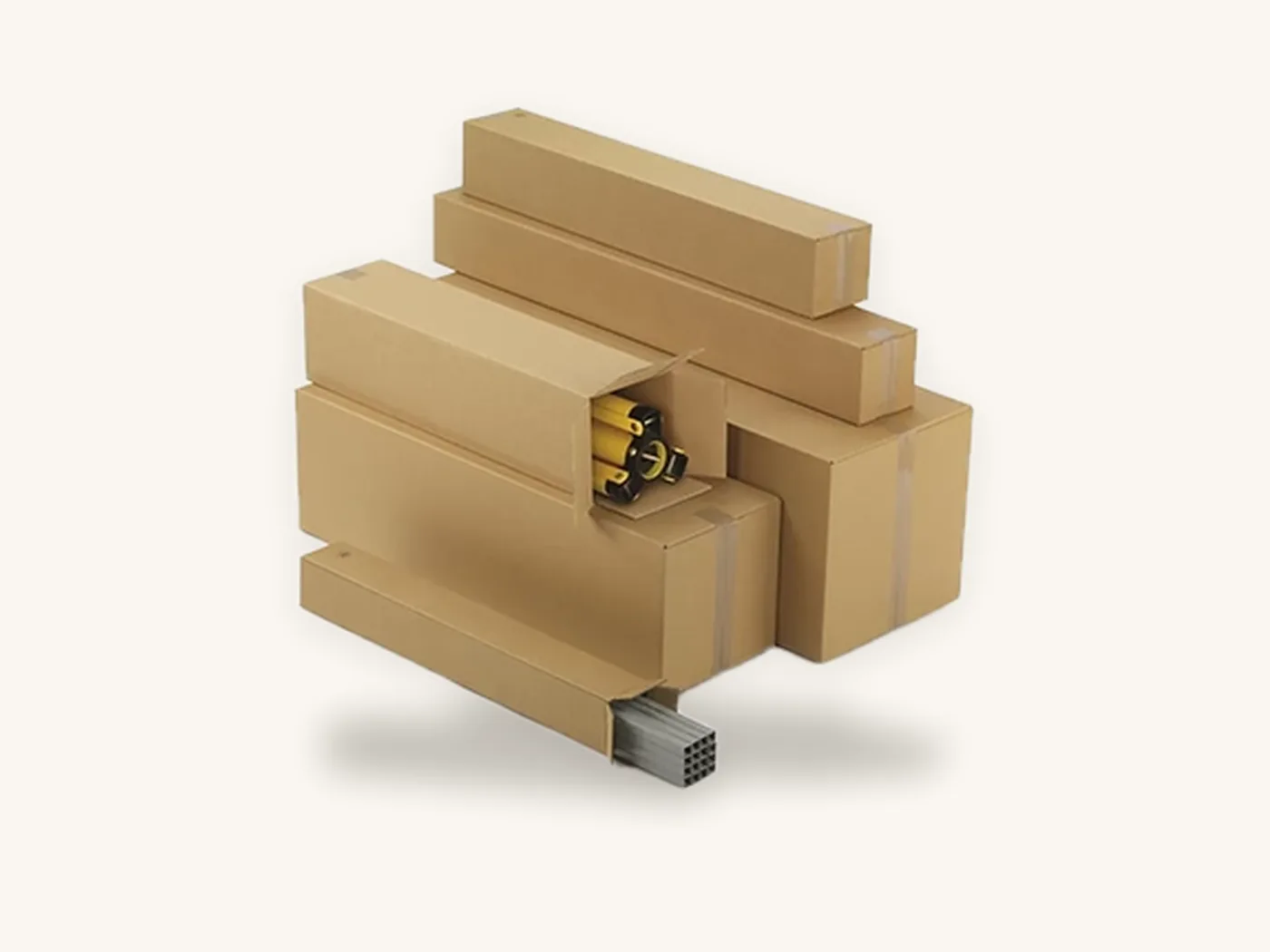
Flat corrugated boxes are stacked and banded into bundles, then stacked on pallets. The footprint depends on the flat size of the box and the flute. E-flute stacks thinner than B-flute, and double wall is thicker still. Folding cartons ship flat or pre-glued flat in cartons and take much less space per unit than any corrugated box.
Before you approve a bulk order, ask your supplier for the estimated number of pallets and the pallet dimensions, then confirm your warehouse or 3PL can receive and hold them. Some 3PLs charge storage per pallet per month, which belongs in your landed cost. Our packaging storage and inventory guide goes deeper on this.
Protecting boxes in storage
- Store off the floor on pallets, away from exterior walls and loading doors.
- Keep humidity stable; corrugated absorbs moisture and loses stacking strength when damp.
- Leave bands on until you need a bundle, which keeps boxes flat.
- Rotate stock first in, first out, especially if you hold several print versions.
- Label pallets with the SKU, print version and delivery date.
Split deliveries
If storage is tight, ask whether a single production run can be delivered in stages. Printing everything at once captures the bulk price and consistent color, while staged delivery keeps only a few months of stock in your space at a time. Agree the schedule, and where the balance is held, before production starts.
Quality control on a bulk run
A defect on a 100-box order is an annoyance. The same defect across 5,000 boxes is a real problem. Bulk buying needs a slightly more formal approval process.
Approve against a reference, not a screen
Screens do not show color the way ink on board does. For a large run, sign off on a 3D digital proof for layout, and on a printed sample when color matters. If brand colors must match exactly across reorders, specify PMS spot colors and keep a physical reference sample for future runs. See CMYK vs Pantone for packaging for how that choice affects consistency.
What to inspect on delivery
- Count bundles and pallets against the packing list.
- Pull boxes from several bundles on different pallets, not just the top of one.
- Check dimensions against the spec with a tape measure.
- Compare color and registration with your approved sample.
- Fold a few boxes fully and check creases for cracking.
- Pack a real product and close the box.
- Photograph anything that looks wrong, with the bundle label visible.
Watch out: do not wait until you open the last pallet in six months to inspect a wholesale order. At Box Sense, defective boxes reported within 14 days are reprinted free, and most suppliers set some reporting window, so inspect on arrival.
For a fuller process, our packaging quality control guide lists tolerances worth knowing, such as normal variation in cut position and color.
Calculating the real cost of bulk packaging
Unit price is only one line of what bulk boxes cost you. Comparing wholesale offers properly means adding the items that differ between suppliers and between quantities.
| Cost item | Why it matters in bulk | How to handle it |
|---|---|---|
| Unit price at your quantity | The headline number | Compare the same spec at the same quantity |
| Setup, dies and plates | Some suppliers charge separately | Box Sense charges none; only foil, embossing, spot UV and custom inserts carry one-time tooling |
| Freight to your door | Pallets of large boxes are heavy and bulky | Free on US orders from Box Sense; confirm for any quote |
| Storage | Pallet fees add up over 6 to 12 months | Stage deliveries or buy a shorter window |
| Cash tied up in inventory | Money in boxes is not available for stock or marketing | Compare savings with the cost of carrying stock |
| Obsolescence risk | Unused boxes after a change are a total loss | Buy only to a planned change date |
| Damage and defects | Multiplied across the run | Check inspection terms and reprint policy |
Our packaging landed cost guide walks through the full calculation. If bulk volume alone does not bring the unit price where you need it, cheap custom boxes that do not look cheap covers spec changes that lower cost on every run. If you are still deciding what your packaging should cost per order, the custom packaging cost guide and how much custom boxes cost set benchmarks by box type.
Is a lower unit price worth a longer lead time?
Very low quotes for bulk custom boxes sometimes come with long ocean freight, deposits paid weeks ahead and little recourse if the run is wrong. That can still work for some brands, but factor the extra weeks of inventory you must hold. Domestic vs overseas packaging sets out that tradeoff in more detail.
Reorders: keeping bulk runs consistent
The first bulk order is the hard one. Reorders should be simple, but only if the spec is recorded properly.
What to keep on file
- The final approved dieline and artwork files, with version number
- Board grade, flute and liner color
- Print method and PMS references, if any
- Coating or lamination and any finishes
- Insert specs
- The approved physical sample, labeled and stored flat
Set a reorder point
Divide your stock on hand by average monthly usage to see how many months of cover you hold. Add production time, transit and a safety margin, and place the reorder when your cover drops to that level. With standard production of 8–12 business days after approval, plus delivery, many brands reorder when about six to eight weeks of stock remain. Our custom packaging lead times guide explains how to plan around peak seasons.
When your volume grows, revisit the tier. A brand that started at 1,000 units per run may be ready to move to 2,500 once demand is steady, which lowers unit cost without adding much risk. Scaling a packaging program covers that stage.
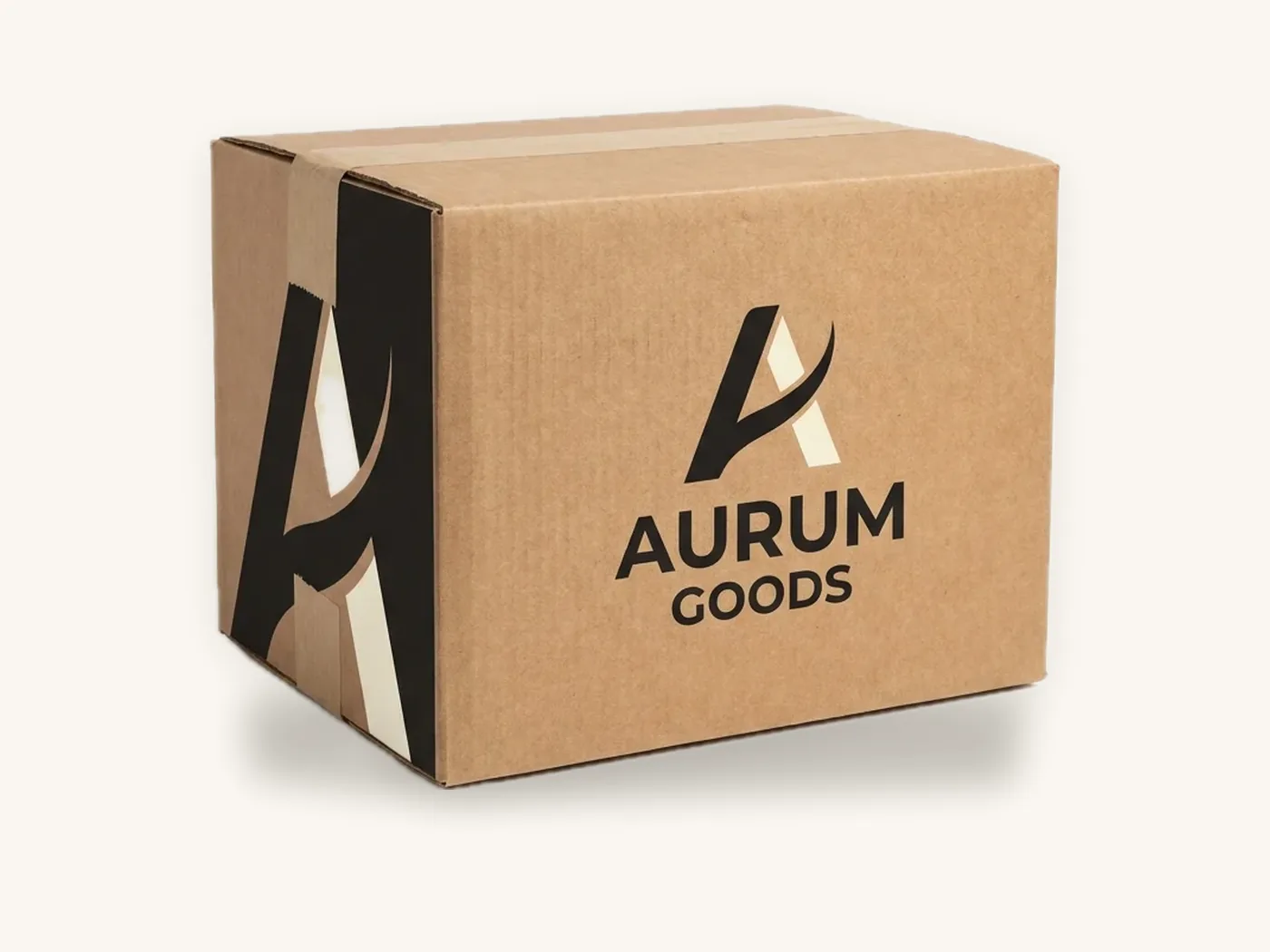
Ordering custom boxes wholesale from Box Sense
Box Sense is a manufacturer with in-house printing, die-cutting, gluing and finishing, so bulk runs are produced under one roof rather than passed between vendors. Here is how a wholesale order works.
What to send for a bulk quote
- Box type, such as shipping box, mailer or retail carton, or ask us to recommend one
- Internal dimensions and packed product weight
- Board preference, or the product's fragility so we can advise
- Print coverage, number of colors and any PMS references
- Finishes: coating, lamination, foil, embossing, spot UV, inserts
- Two or three quantities to compare, for example 1,000, 2,500 and 5,000
- Delivery address, preferred delivery schedule and in-hand date
- Current artwork, or a note that you need our design services team
What happens next
- Quote within 24 hours, confirming unit and total pricing at each quantity.
- Free design support: dieline, artwork setup and a 3D digital proof, with two revision rounds.
- Samples: unprinted structural samples are free, and a printed sample of approved artwork is free on orders of 100 units or more. Details are on the samples page.
- Production: standard 8–12 business days after proof approval, with rush in 5 business days available on most paperboard and corrugated styles.
- Delivery: free shipping on every US order; international shipping is quoted at cost from our US, UK and UAE operations.
There are no die or plate charges on standard runs. The same process applies to a 10-box prototype order, so many brands test a small run before committing to a wholesale quantity. Our how it works page shows the steps in more detail.
Frequently asked questions
What quantity counts as wholesale for custom boxes?
There is no fixed threshold, but pricing usually behaves like wholesale from around 1,000 units, when offset printing becomes economical and setup costs are spread thinly. The biggest savings come between 100 and 1,000 units. Above about 5,000, each additional tier saves less per box because board and ink make up most of the cost.
How much do custom boxes cost wholesale?
It depends on box type, size, board and print. As a reference, a 12x10x6 in B-flute shipping box printed in one color costs about $2.08 each at 1,000 units and roughly $1.48 at 5,000, with US shipping included. A 3x2x5 in printed tuck end carton is about $0.51 at 1,000. Use the pricing estimator for your exact spec.
How many boxes should I order in bulk?
Order enough for roughly 6 to 12 months of use, based on actual shipping data and your seasonal peak, then round to the nearest price tier. Buy less if your product size, branding or retail requirements may change soon. The quantity with the lowest unit price is not the best buy if some of the boxes go unused.
Can I split a bulk box order into several deliveries?
Often, yes. A single production run can be printed at once for consistent color and bulk pricing, then delivered in stages to reduce the storage you need. Agree the delivery schedule and where remaining stock is held before production begins, and confirm whether any storage or extra freight applies to your arrangement.
How do I store wholesale packaging boxes?
Keep boxes flat, banded and on pallets, away from exterior walls, doors and damp areas, because corrugated loses strength when it absorbs moisture. Label pallets by SKU and print version, and use stock in first-in, first-out order. Ask your supplier for the pallet count in advance so your warehouse or 3PL can plan space.
Do wholesale box orders have setup fees?
Many suppliers charge separately for dies, printing plates or setup. Box Sense does not charge die or plate fees. One-time tooling applies only if you choose foil stamping, embossing, spot UV or custom inserts. When comparing wholesale quotes, confirm whether setup, tooling and freight are included, since those can change which offer is actually cheaper.
How long does a bulk custom box order take?
At Box Sense, standard production is 8–12 business days after you approve the proof, and rush production in 5 business days is available on most paperboard and corrugated styles. Add time for artwork revisions, any printed sample and delivery. For large seasonal runs, place the order four to six weeks before you need the boxes.
Next steps
Pull your last few months of shipping data, estimate a 6 to 12 month quantity, and compare two or three tiers in the bulk box price estimator. When the numbers look right, request a wholesale packaging quote with your dimensions, board and delivery plan, and we will confirm pricing within 24 hours.
Boxes in this guide
Order the packaging we covered
Written by the Box Sense Packaging Team
Our structural designers, prepress technicians and production staff print and convert custom boxes every day for brands in the United States, United Kingdom and UAE. Questions about this guide? Talk to us.