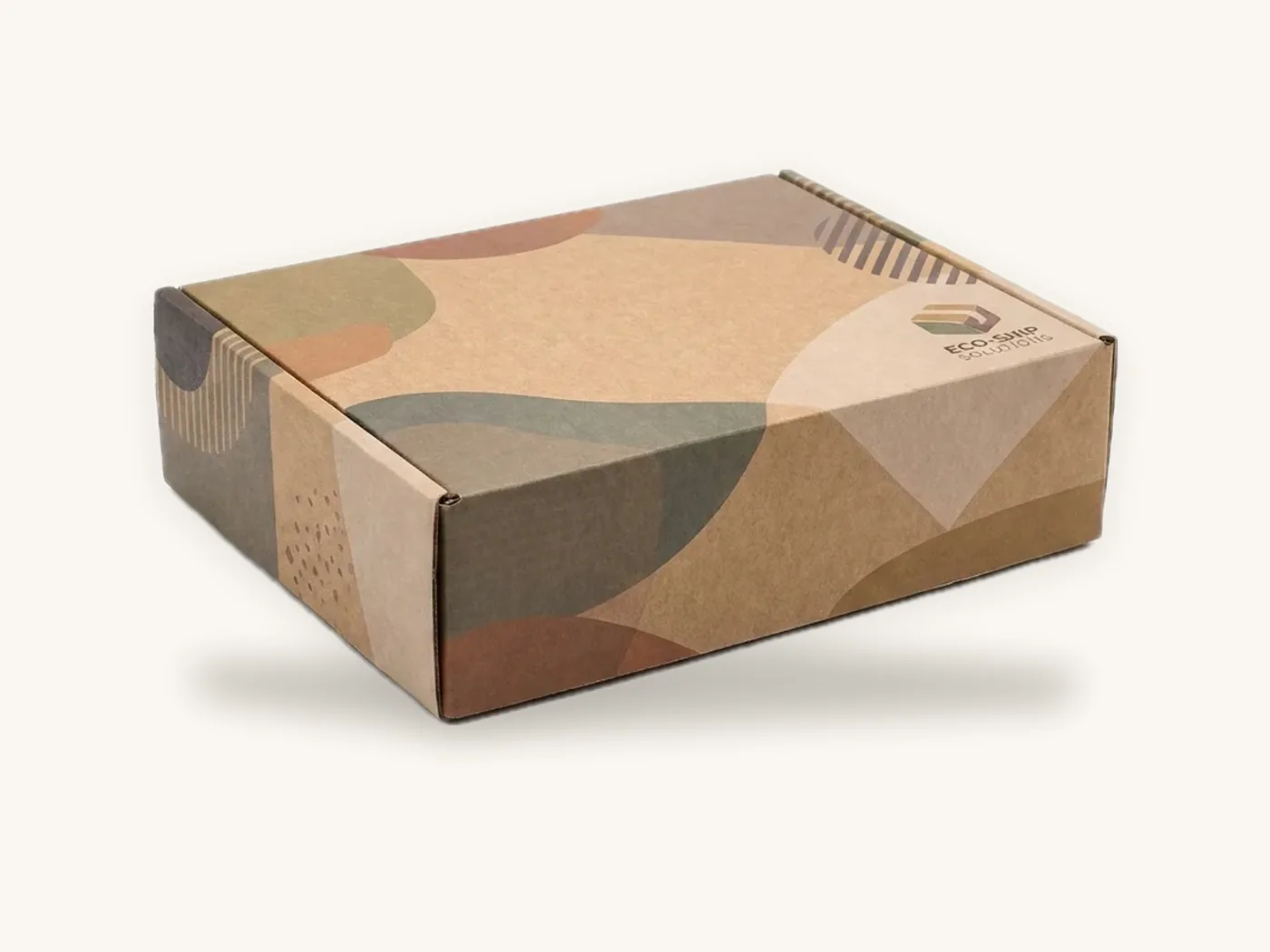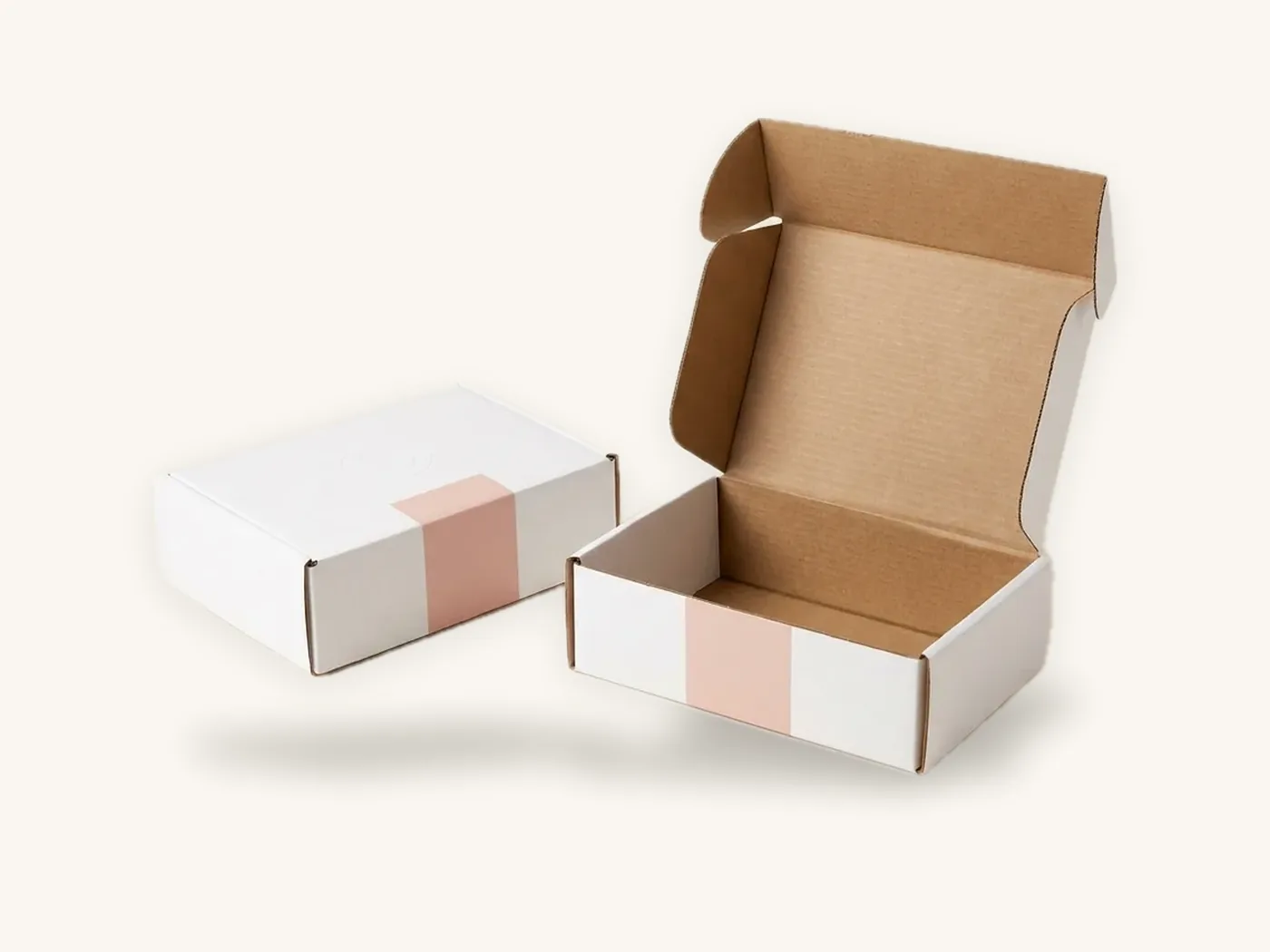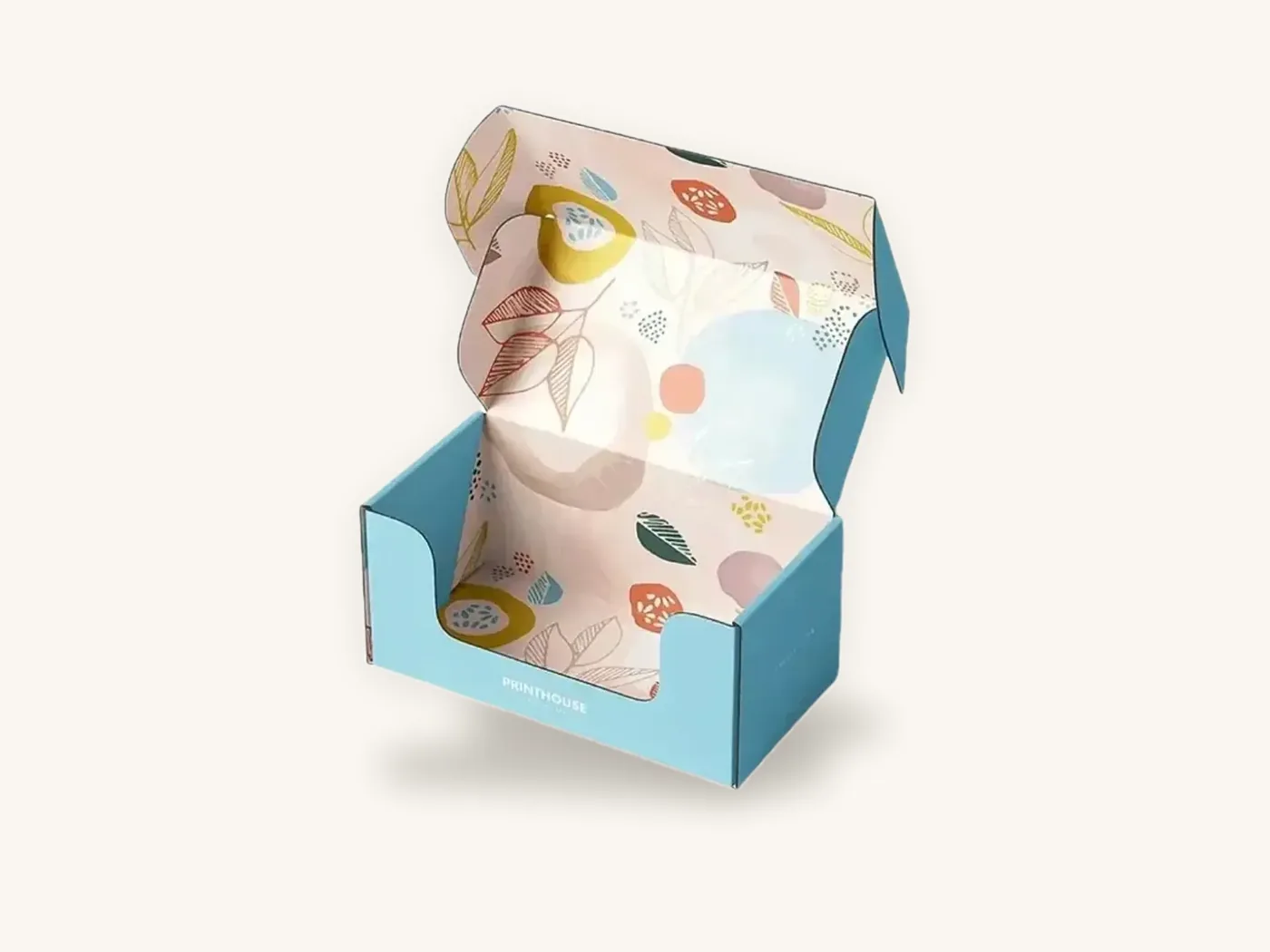
Custom packaging for small business works best when you build it in stages. Start with the one piece of packaging that does the most work, usually a printed mailer box or a retail product box, add inexpensive branded extras like stickers and tissue, and upgrade as order volume and margins grow. You do not need a full packaging system on launch day.
This starter guide is for founders buying packaging for the first time. It covers what each layer of packaging does, how to set a per-order budget, a three-stage plan from first sale to steady growth, how to set up packing so it does not eat your evenings, and exactly what to prepare for your first order.
Key takeaways
- Decide first where your customer meets the product: in the mail, on a shelf, or both. That choice determines which box to buy first.
- Set a packaging budget per order as a share of your average order value, then spend it on the layer the customer sees first.
- Short runs are practical now: digital printing makes 10 to 500 boxes affordable, so you can test before committing.
- Labels, stickers and printed tissue add branding for a few cents and can change as fast as your product line does.
- Standardize on two or three box sizes early; every extra size adds cost, storage and packing mistakes.
- Box Sense makes small business packaging from 10 boxes, with free design help, free structural samples and free US shipping.
Start with one question: where does the customer meet your product?
Small business packaging decisions get easier once you know the moment that matters. There are three common cases.
Online only. Your customer's first physical contact is the parcel on their doorstep. The shipping box is the packaging, so a printed custom mailer box is usually the first thing to invest in.
Retail shelf or market stall. The customer picks your product up next to competitors. The retail carton does the selling, so start with a printed custom product box, and ship in plain cartons.
Both. Many brands sell online and through a few stores. Here a printed product box inside a plain or lightly branded shipper covers both channels with one printed design.
Match the box to the product
| What you sell | First box to buy | Why | Add later |
|---|---|---|---|
| Apparel, accessories | E-flute mailer box | Ships alone, opens like a gift | Printed tissue, thank-you card |
| Skincare, cosmetics | Folding carton (tuck end) | Shelf-ready and protects the bottle | Mailer for online kits |
| Candles, home fragrance | Candle box with insert | Glass needs a snug fit | Gift set mailer |
| Soap, bath products | Kraft sleeve or tuck carton | Low cost, lets scent and texture show | Window box for gift sets |
| Food, baked goods, candy | Food-safe carton or bakery box | Food contact and handling needs | Branded bags, labels |
| Small electronics | Product box with insert | Holds parts in place, carries required info | Branded shipper |
| Jewelry | Small rigid or drawer box | Perceived value matters more than cost | Branded mailer |
If you are unsure which structures exist, the product catalog groups every style, and the e-commerce and subscription page shows how online brands combine them.
The layers of a small business packaging system
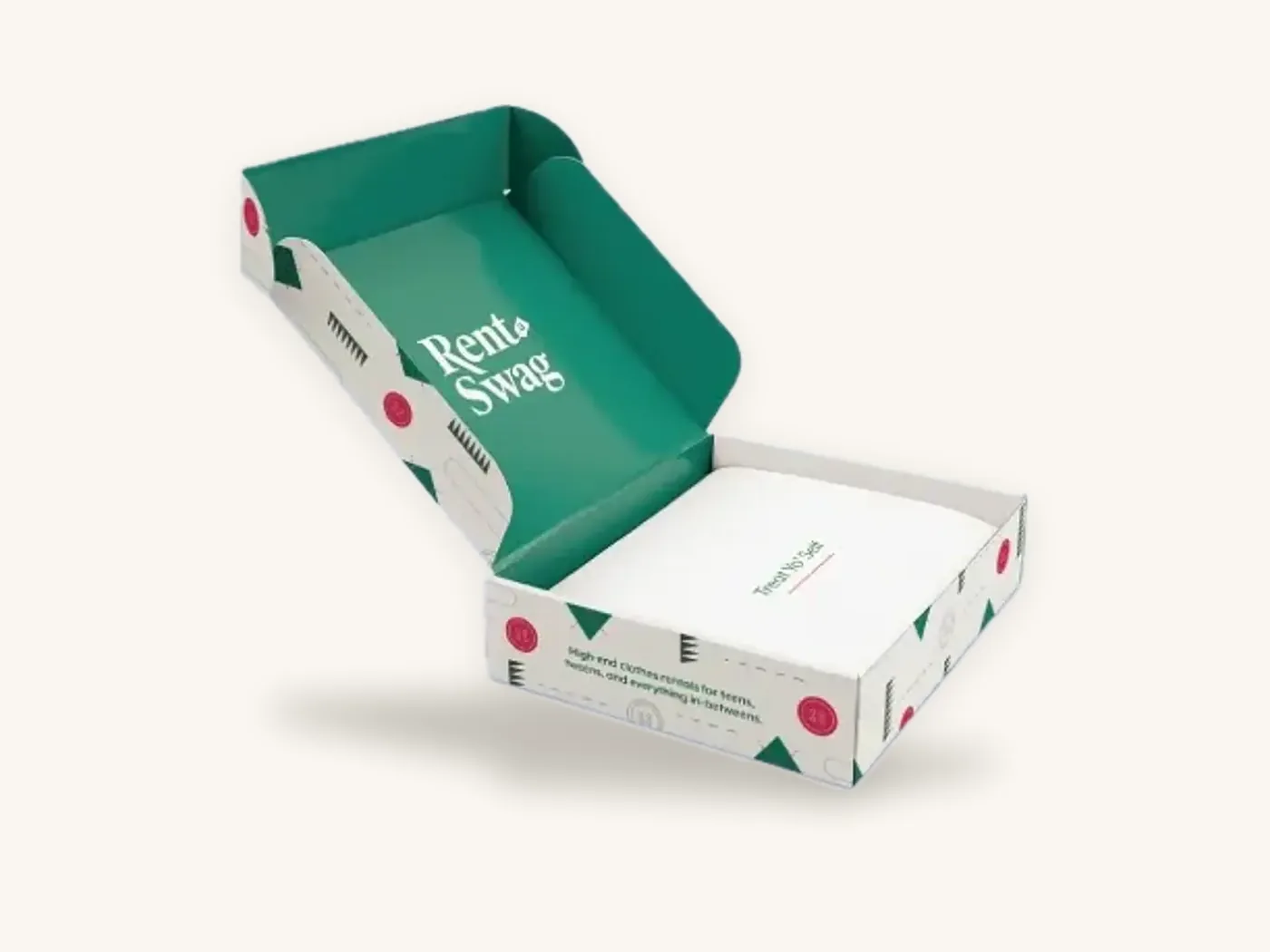
Packaging is not one purchase. It is a set of layers, and each one has a different job and cost. Knowing them helps you spend in the right order.
| Layer | Job | Relative cost | When to add it |
|---|---|---|---|
| Outer shipper or mailer | Protects in transit, first brand impression online | Highest per order | At launch for online brands |
| Retail product box | Sells on shelf, carries product information | Medium | At launch for retail brands |
| Insert or divider | Holds product in place, organizes kits | Low to medium | When items shift or break |
| Tissue or paper fill | Reveal moment, fills small gaps | Low | Once the box is set |
| Stickers and labels | Seals, variant names, branding on stock boxes | Very low | From day one |
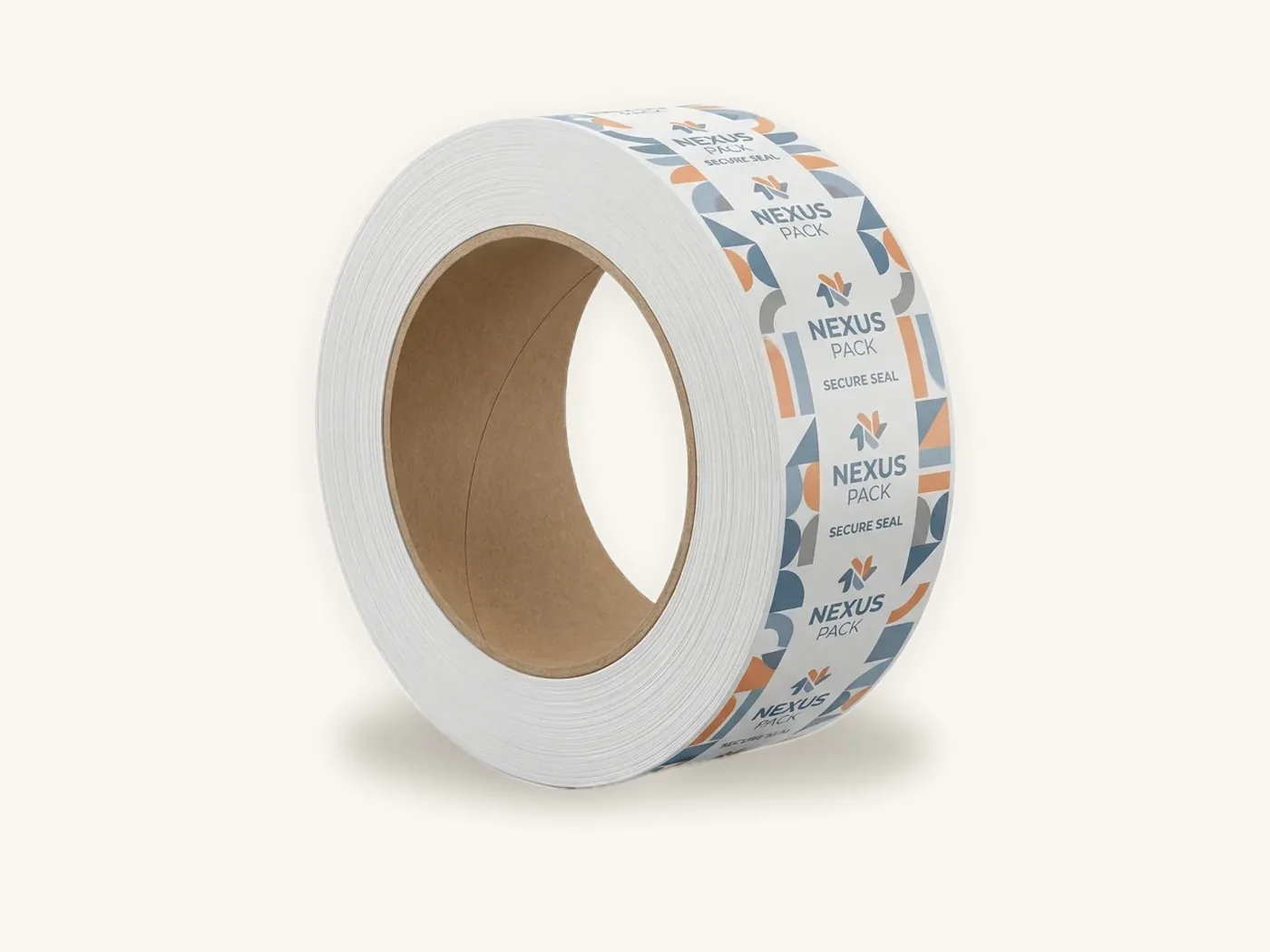
| Printed tape | Brands plain shippers, adds tamper evidence | Low | When using unprinted outer boxes |
| Cards and inserts | Thank-you notes, care instructions, reorder codes | Very low | From day one |
The two cheapest layers are the most flexible
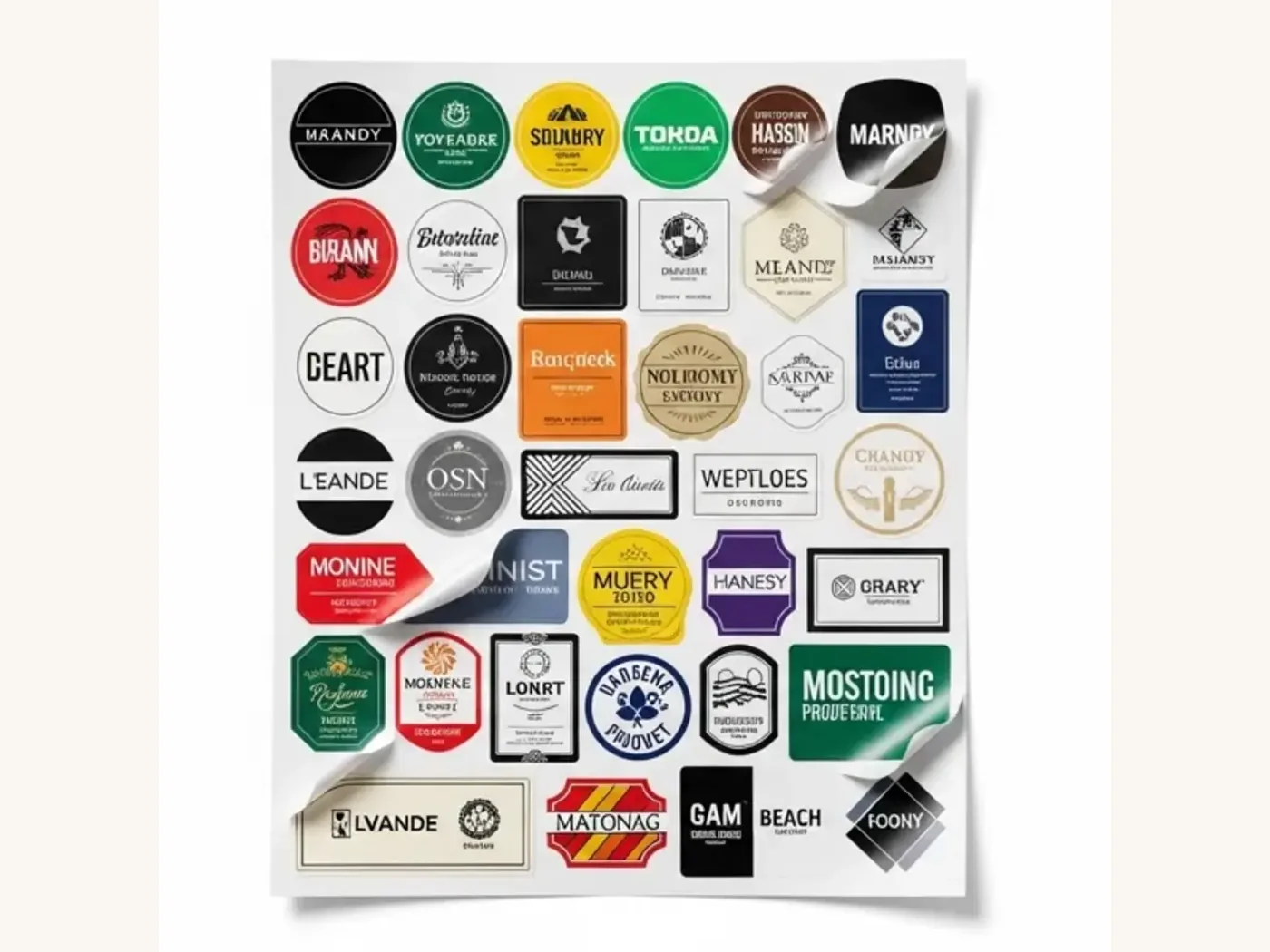
Custom labels and stickers cost little per unit and change without reprinting boxes. A single round logo sticker can seal tissue, brand a stock box and mark a variant. A printed card can carry a discount code you change every month. For a new brand whose product line is still moving, these are the layers to experiment with.
Setting a packaging budget per order
The most useful packaging number for a small business is not the cost per box. It is the total packaging cost per order, compared with what that order earns.
How to work it out
- Find your average order value. Use your store data, not your best-selling product's price.
- Know your gross margin after product cost, payment fees and shipping.
- Pick a packaging share. Many small brands keep all packaging for an order to a modest single-digit share of order value, and go higher only when presentation is part of what customers pay for, such as gifts, jewelry or premium beauty.
- List every layer you plan to use: box, insert, tissue, sticker, card, tape.
- Price each layer at the quantity you will actually order.
- Compare the total with your target share and adjust the layer that costs most.
Two hypothetical examples
Say you sell a skincare serum and ship one or two per order. A 2x2x6 in reverse tuck end carton, 14 pt SBS, full color with gloss lamination, is about $1.17 each at 100 units. If online orders ship in an 8x6x3 in E-flute mailer printed full color outside, add about $2.64 per box at 100 units. At 250 units those two pieces drop to roughly $0.83 and $1.88, a meaningful saving once order volume supports the larger run. Tissue, a sticker and a card add only a small amount on top.
Now say you sell hand-poured soap at markets and online. An 18 pt kraft soap sleeve printed in one color is about $0.66 at 100 units and roughly $0.47 at 250. Here the retail box is so inexpensive that a sticker-sealed kraft sleeve can carry the whole brand.
Current rates for your exact sizes are in the instant price estimator. The custom packaging cost guide and how much custom boxes cost explain what moves those numbers.
Tip: price each layer at 100 and 500 units before you decide anything. The gap tells you how much you save by committing to one design instead of changing it every batch.
A three-stage packaging plan for startups
Packaging for startups should grow with the business. Buying a luxury setup before you have product-market fit ties up cash; staying on blank boxes too long leaves repeat orders on the table. Here is a practical progression.
Stage 1: first sales (roughly the first few hundred orders)
- One printed box in one size, ordered in a short digital run of 50 to 250
- Or plain boxes branded with a logo sticker and printed tape
- A printed thank-you card
- No custom inserts yet; use paper fill while you learn how products ship
The goal is to look intentional and learn. Pay attention to damage, packing time and what customers photograph.
Stage 2: steady monthly orders
- Printed mailer or product box in two or three standard sizes
- Inside print or an inside-lid message
- Printed tissue paper or a simple paperboard insert
- Runs of 250 to 1,000, reordered on a schedule
At this stage the design should be stable enough to buy larger runs. Our custom boxes wholesale guide explains how to size those orders.
Stage 3: growth and retail
- Retail-ready cartons for stores, with barcodes and required information
- A finish on the hero product, such as a foil logo or soft-touch lamination
- Seasonal or gift editions
- Larger offset runs for consistent color
Guides for this stage include packaging for wholesale and retail and scaling a packaging program.
Designing your first custom box
You do not need a design agency to get a good first box. You need a clear logo file, a small number of decisions and a supplier who provides a dieline.
Keep the design simple
A logo placed confidently on the lid, one brand color and one short line of copy usually look better than a crowded panel. Simple designs also survive printing on corrugated board, scuffs in transit and small color shifts between runs. If you want inspiration on putting a logo on a box, our guide to custom boxes with logo compares print, stamp, foil and label approaches.
Files you will need
- Logo as a vector file (AI, EPS, SVG or PDF with vector content)
- Brand colors as CMYK values, or PMS references if you have them
- Any required text: product name, contents, ingredients or warnings, website
- Barcode, if you sell through retailers or marketplaces
If you are not sure how to set up files, the artwork preparation guide covers bleed, safe zones and resolution. Box Sense design services will set up artwork on the dieline for free, including a 3D digital proof and two revision rounds.
Test with a sample before launch
A structural sample answers questions a screen cannot. Does the lid close with the product and tissue inside? Does the bottle rattle? Does the box fit your packing table and your shipping label? Pack the sample exactly as a real order, mail it to someone a few states away, and ask them to photograph it on arrival. If anything is off, change the dimensions or add an insert now, while the change costs nothing.
Check any rules that apply to your product
Food, cosmetics, supplements and children's products carry labeling requirements from US agencies such as the FDA and the Consumer Product Safety Commission. If you plan to print environmental claims, such as "recyclable", the Federal Trade Commission's Green Guides describe how to qualify them. Confirm current requirements with the agency or counsel before finalizing panels.
Setting up packing so it scales
Packaging that looks great but takes eight minutes per order will not survive your busy season. Plan the physical process at the same time as the box.
Choose structures that pack fast
Mailer boxes fold together without tape. Auto-lock bottom cartons snap into shape. Tuck end boxes close in one motion. Two-piece rigid boxes, ribbons and multi-part inserts look lovely but add minutes. For a small team packing by hand, fewer parts and fewer steps matter.
A simple packing station
- Flat boxes within arm's reach, stored off the floor and dry
- A pre-folded stack of your busiest box size for peak days
- Tissue, stickers and cards in labeled trays in the order they are used
- A scale and label printer at the end of the table
- A photo of a correctly packed order on the wall for anyone helping
Limit box sizes
Every extra box size adds a storage slot, a reorder, and a chance of choosing the wrong one. Two or three sizes cover most small catalogs; use an insert or fill to adapt. Our right-sized packaging guide explains how to pick them without wasting board or paying for dimensional weight.
Mistakes first-time packaging buyers make
These come up again and again with new brands, and each is avoidable.
- Ordering before measuring the packed product. Measure with the pouch, tissue or insert in place, not the bare item.
- Buying a year of boxes before the design settles. Start with a short run, then scale.
- Designing on screen only. Colors and small type look different on board; ask for a proof and a sample.
- Forgetting the inside of the box. A plain interior is fine, but decide on purpose.
- Choosing the heaviest board "to be safe." Test a lighter grade first; it may protect just as well for less.
- Ignoring storage. Know where 500 flat boxes will live before they arrive.
- Skipping the shipping test. Mail a packed sample to a friend in another state before a large run.
More examples are in packaging mistakes to avoid, and if cost is the main constraint, cheap custom boxes that do not look cheap lists 15 ways to save.
Ordering small business packaging from Box Sense
Box Sense is a packaging manufacturer with in-house printing and finishing, and our process is built so a first-time buyer can order confidently.
Before you request a quote
- Measure the packed product (length, width, height) and weigh it
- Decide the channel: shipping, retail or both
- Choose a box type, or ask us to recommend one
- Note print preferences: outside only, inside too, number of colors
- Pick two or three quantities, such as 50, 250 and 500
- Gather your logo file and any required text
- Set an in-hand date, including time for a sample if you want one
How it works
- Quote within 24 hours. Or get an immediate estimate on the pricing page.
- Free design support. We send a dieline, set up your artwork and share a 3D digital proof, with two revision rounds.
- Samples. Unprinted structural samples are free so you can test fit. A printed sample of approved artwork is free on orders of 100 or more. See samples.
- Production. Standard production is 8–12 business days after proof approval. Rush production in 5 business days is available on most paperboard and corrugated styles.
- Delivery. Shipping is free on every US order.
The minimum order is 10 boxes, printed digitally, with no die or plate charges. Defective boxes reported within 14 days are reprinted free. If you want to compare suppliers first, our guide on choosing a custom packaging company lists the questions worth asking anyone.
Frequently asked questions
What packaging should a small business buy first?
Buy the piece your customer sees first. For online brands that is usually a printed mailer box; for retail or market sellers it is the product box. Add low-cost extras such as logo stickers, a printed card and tissue paper. Leave custom inserts, special finishes and multiple box sizes until you have steady orders and know how products ship.
How much should a small business spend on packaging?
Work it out per order, not per box. Add up every layer, including box, insert, tissue, sticker and card, and compare the total with your average order value and margin. Most small brands keep packaging to a modest share of order value, spending more only when presentation is central to the product, such as gifts or jewelry.
Can small businesses order custom boxes in low quantities?
Yes. Digital printing makes short runs practical because it needs no printing plates. Box Sense produces custom boxes from a minimum order of 10, which is useful for launches, samples for stores or testing a design. The unit price falls as quantity rises, so compare a few tiers once you know your monthly usage.
Is custom packaging worth it for a new business?
It usually is once you have repeat customers or sell through retail, because the box carries your brand into the customer's home or onto the shelf. On day one, a simple branded setup such as a stock box with a logo sticker, printed tape and a card can be enough. Upgrade to fully printed boxes as order volume becomes steady.
What files do I need to design a custom box?
You need your logo as a vector file, brand colors as CMYK or PMS values, and any text that must appear, such as product name, contents, website and barcode. The supplier provides a dieline showing panels, folds and bleed. Box Sense sets up artwork on the dieline for free and sends a 3D digital proof.
How long does it take to get custom packaging for a small business?
At Box Sense, quotes are confirmed within 24 hours, and standard production takes 8–12 business days after you approve the proof. Rush production in 5 business days is available on most paperboard and corrugated styles. Allow a few extra days for artwork revisions and a sample, especially before a launch date or holiday season.
Should I use mailer boxes or poly mailers for my small business?
Poly mailers are light and cheap for soft goods such as clothing, but they offer little protection or presentation. Mailer boxes protect fragile or rigid items, stack neatly and give a branded opening experience. Many brands use poly mailers for basic apparel and mailer boxes for gifts, bundles and breakable products. Our poly mailer comparison covers the tradeoffs.
Next steps
Measure your packed product, choose the one box that matters most for your channel, and try a few quantities in the small business packaging estimator. When you are ready, request a custom packaging quote and we will send a dieline and pricing within 24 hours. For more on the mail-versus-box question, see poly mailer vs mailer box.
Boxes in this guide
Order the packaging we covered
Written by the Box Sense Packaging Team
Our structural designers, prepress technicians and production staff print and convert custom boxes every day for brands in the United States, United Kingdom and UAE. Questions about this guide? Talk to us.