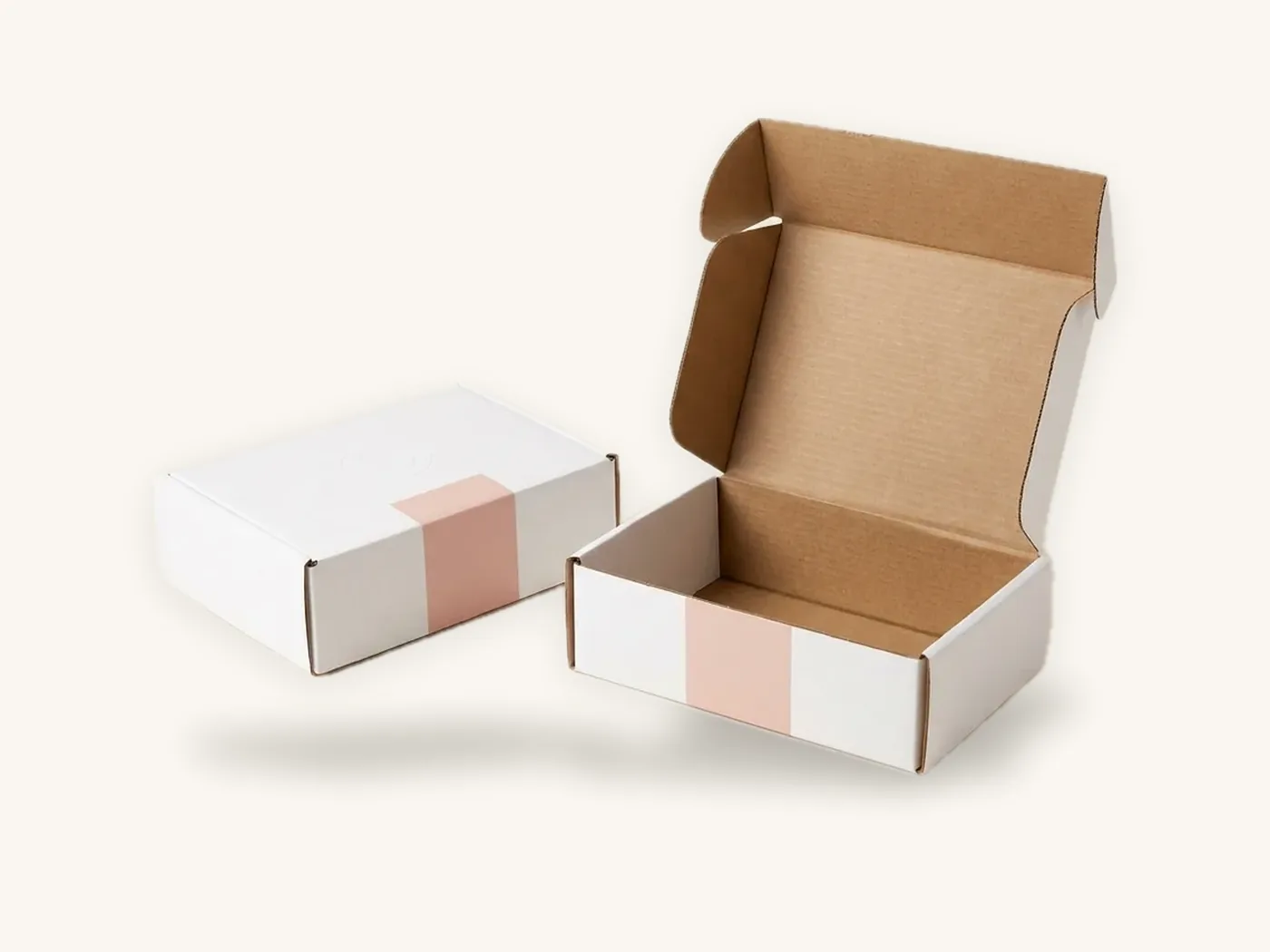
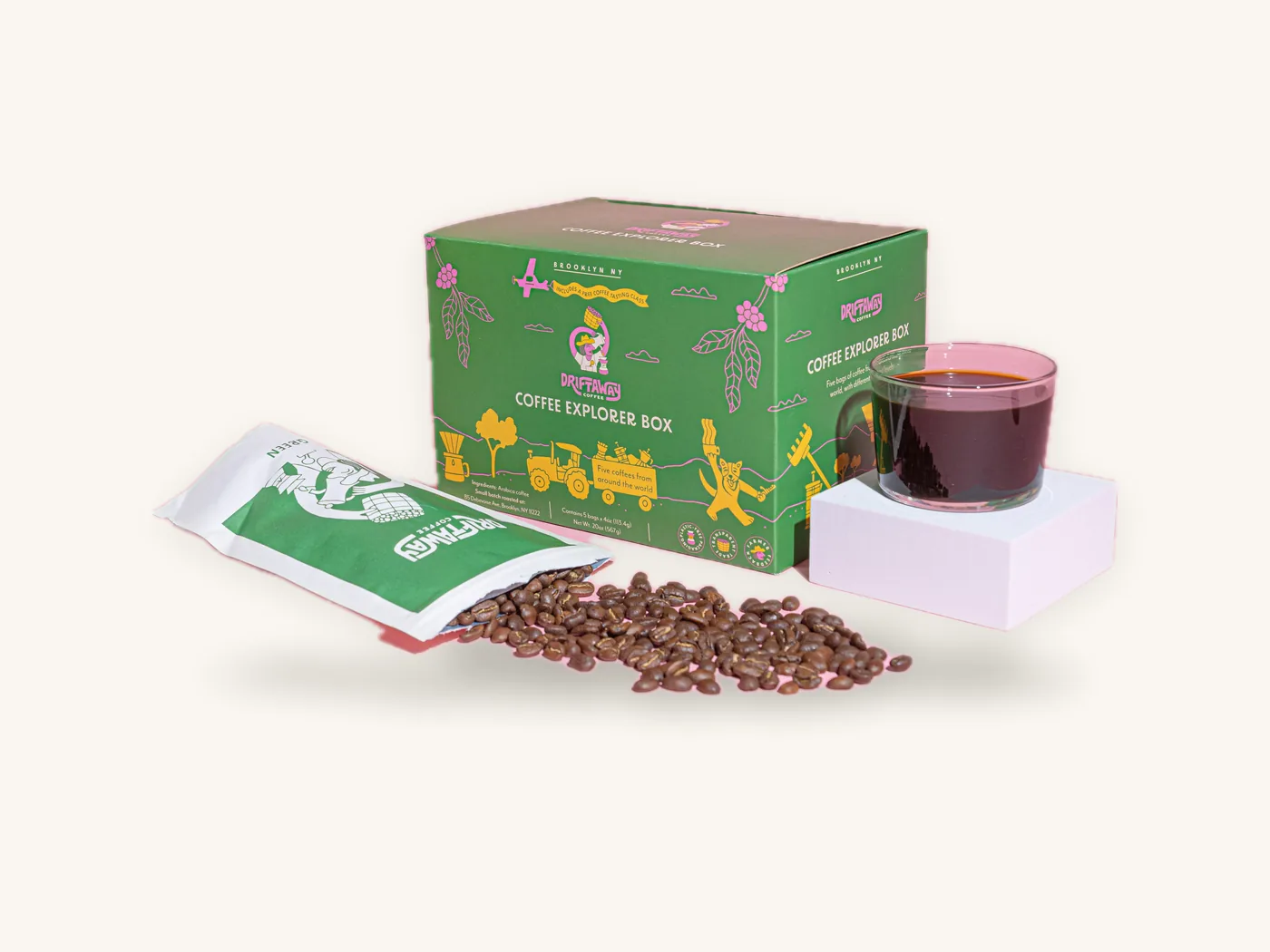
Custom boxes with logo come in two basic forms: boxes where the logo is printed or stamped into the board during production, and plain boxes branded afterwards with stickers, tape or sleeves. Printed and stamped logos look more permanent and cost less per unit at volume; applied branding costs less upfront and changes easily. Most brands end up using a mix.
What actually works depends on the box type, your quantity and how the logo is drawn. This guide compares every common way to put a logo on a box, shows what each costs at real quantities, explains where to place the logo on different structures, and covers the file setup that keeps it sharp.
Key takeaways
- Printing the logo is the most flexible method; foil, embossing and spot UV add texture and shine but each needs one-time tooling.
- Stickers, printed tape and sleeves brand stock boxes for very little upfront, which suits very small or changing product lines.
- Put the logo where the customer looks at the key moment: the lid on a mailer, the front panel on a retail carton, the inside lid for an unboxing.
- Simple, bold logos reproduce well on corrugated and kraft; thin lines and tiny details need smooth board or a different method.
- Tooling cost matters most on short runs; spread over 1,000 boxes it becomes a few cents each.
- Supply the logo as a vector file with exact color references, and ask for a 3D proof to check placement on the folded box.
Seven ways to put a logo on a box
Each method has a different look, cost structure and best use. This overview helps you narrow the choice before going into detail.
| Method | Look | Upfront cost | Per-box cost | Best for |
|---|---|---|---|---|
| Full-color print | Any color, gradients, photos | None at Box Sense | Medium, falls with quantity | Mailers and cartons with full brand artwork |
| One or two color print | Bold, graphic | None at Box Sense | Low | Kraft boxes, shipping boxes, minimal brands |
| Foil stamping | Metallic shine | One-time tooling | Low to medium | Premium cartons, rigid boxes, gift packaging |
| Embossing or debossing | Raised or recessed texture | One-time tooling | Low to medium | Rigid boxes, thick paperboard, tactile brands |
| Spot UV | Glossy highlight on matte | One-time tooling | Low | Logos on laminated cartons |
| Stickers and labels | Applied graphic | Low | Low, plus labor | Stock boxes, variants, seasonal editions |
| Printed tape | Branded seal | Low | Low, plus labor | Plain shipping boxes |
Printed logo boxes are the default for most brands once order volumes settle. Applied methods are the fastest way to start. The finishes sit on top of either, usually on a smaller logo mark.
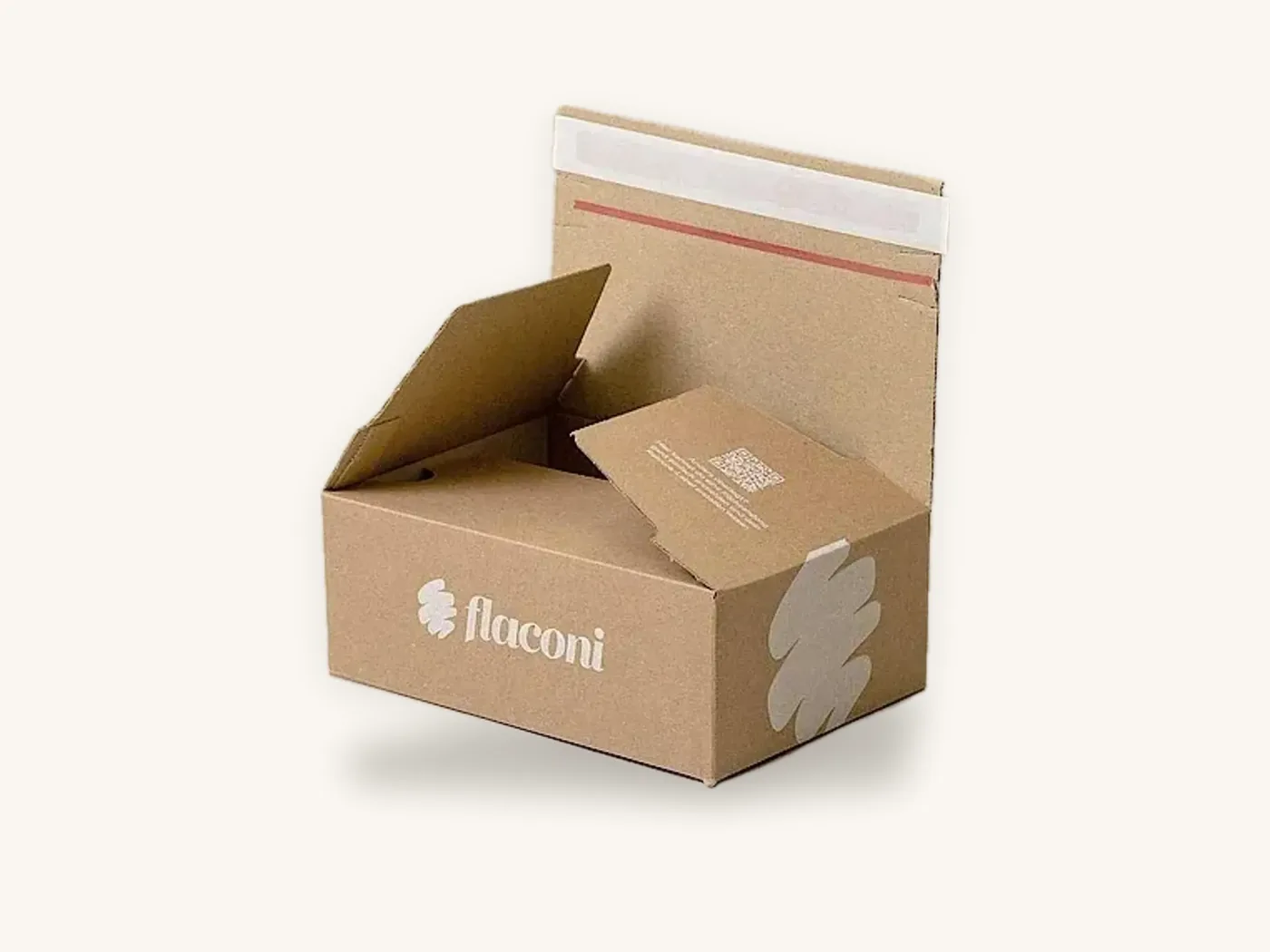
Printed logos: full color and spot color
Full-color printing
Full-color printing builds the logo and any surrounding artwork from cyan, magenta, yellow and black. It suits logos with gradients or multiple colors, and lets you print patterns, photography and copy on the same pass.
Short runs of roughly 10 to 500 boxes are printed digitally, so a full-color logo costs nothing extra to set up. Larger runs move to offset printing, which gives consistent color and a lower unit price. Our printing and finishes page shows both.
Spot colors for exact brand matching
If your logo uses a specific brand color, CMYK can get close but may shift slightly between runs and between board types. Specifying a PMS spot color gives the most consistent match on reorders. The CMYK vs Pantone guide explains when the difference is visible.
One-color logos on kraft and corrugated
A single dark color, or opaque white ink, on kraft board is one of the most economical and recognizable ways to brand a box. It works especially well on custom shipping boxes, where the board is textured and busy artwork gets lost. Light colors printed directly on kraft fade into the brown, so ask for a white underlayer if your logo is pale. See white ink on kraft for examples.
Stamped and textured logos: foil, embossing and spot UV
These finishes turn a logo into something customers notice by touch or light. They cost more than print alone, mainly because each needs its own tooling.
Foil stamping
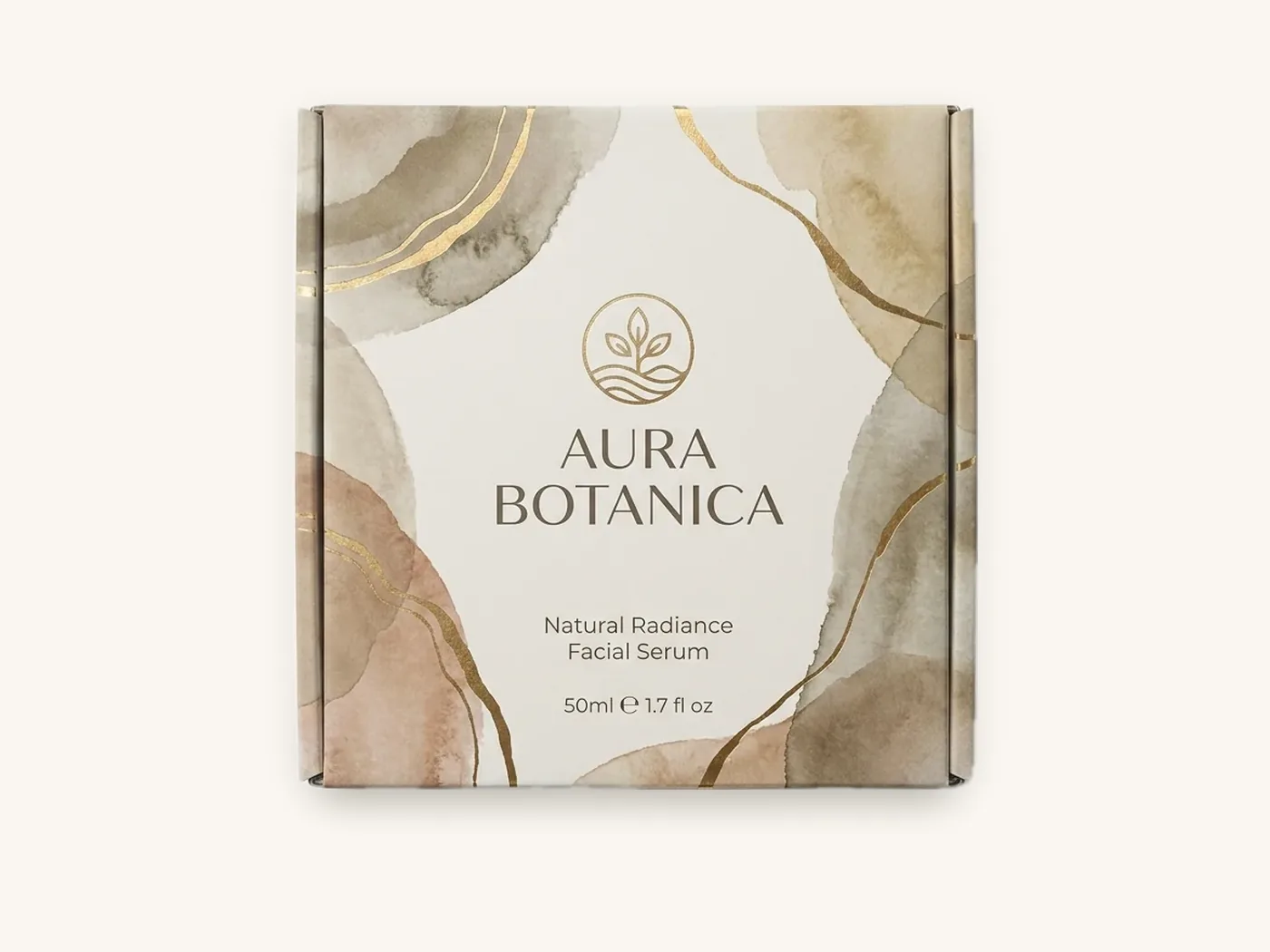
A heated die presses metallic or colored foil onto the board in the shape of your logo. Gold, silver, rose gold, holographic and colored foils are available. Foil looks best on smooth surfaces such as SBS paperboard, laminated cartons and the wrap paper on rigid boxes. The foil stamping guide covers foil types and design limits.
Embossing and debossing
Embossing raises the logo from the surface; debossing presses it in. They work best on thicker paperboard and on rigid boxes, where the wrap paper holds a crisp edge. Combining foil with embossing gives a raised metallic logo, a common choice for fragrance and gift packaging. Our embossing and debossing guide explains depth and material choices.
Spot UV
Spot UV adds a clear, glossy coating only where the logo sits, usually on top of matte or soft-touch lamination. The contrast between matte background and glossy logo is subtle in photos and striking in hand. The spot UV guide covers placement and minimum line widths.
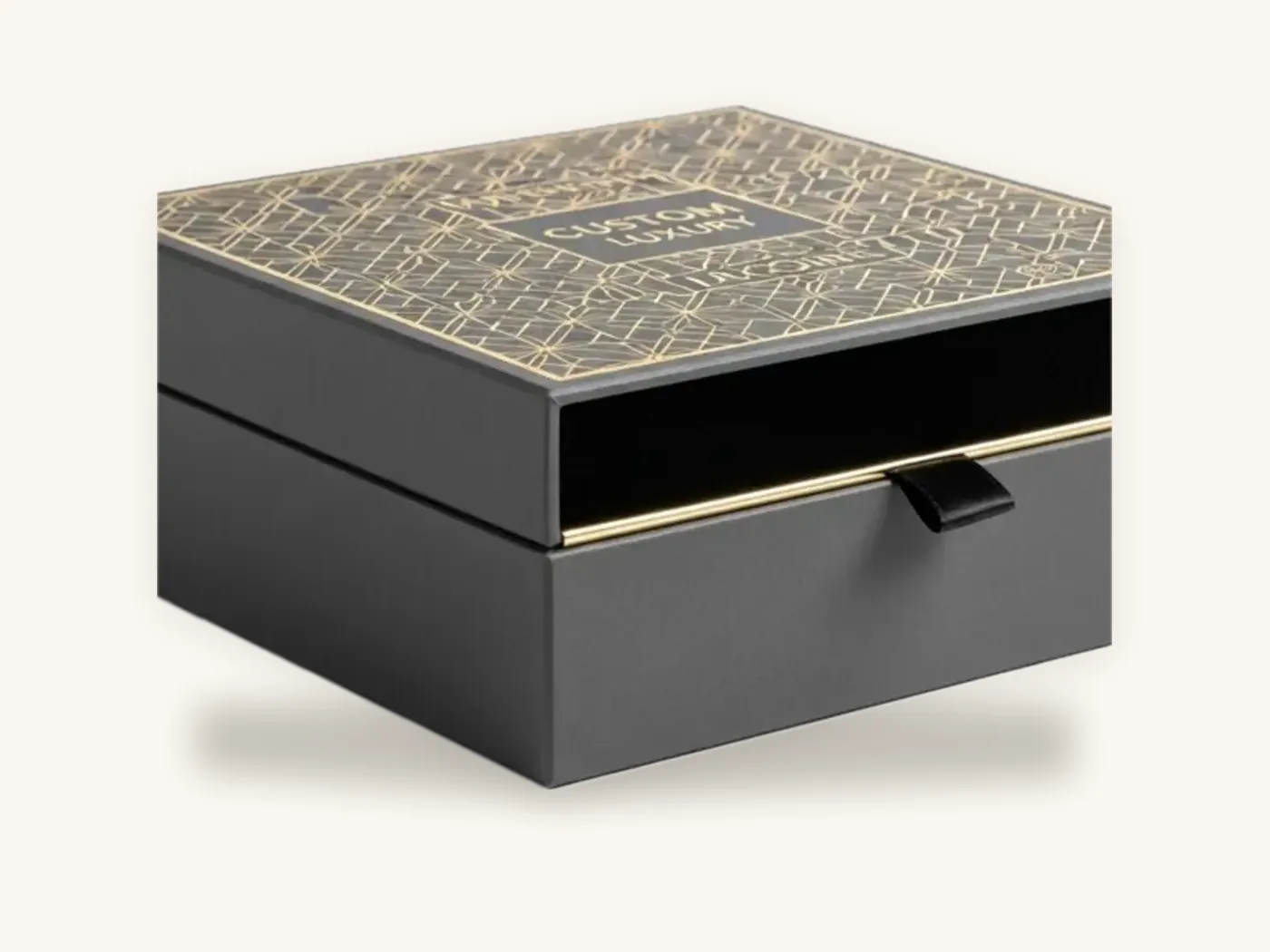
Tip: use one hero finish on the logo rather than several finishes spread across the box. A single foil or embossed mark on the lid gives most of the premium effect and keeps tooling to one charge.
Logos without a custom-printed box
Not every brand needs printed boxes on day one. Applied branding lets you put a logo on a box you already stock.
Stickers and labels
A round or die-cut logo sticker on a plain mailer, sealing tissue or closing a bag is inexpensive and fast to change. Labels also carry variant names or seasonal messages on top of a printed box. Custom labels and stickers are available on paper, BOPP and vinyl.
Printed tape
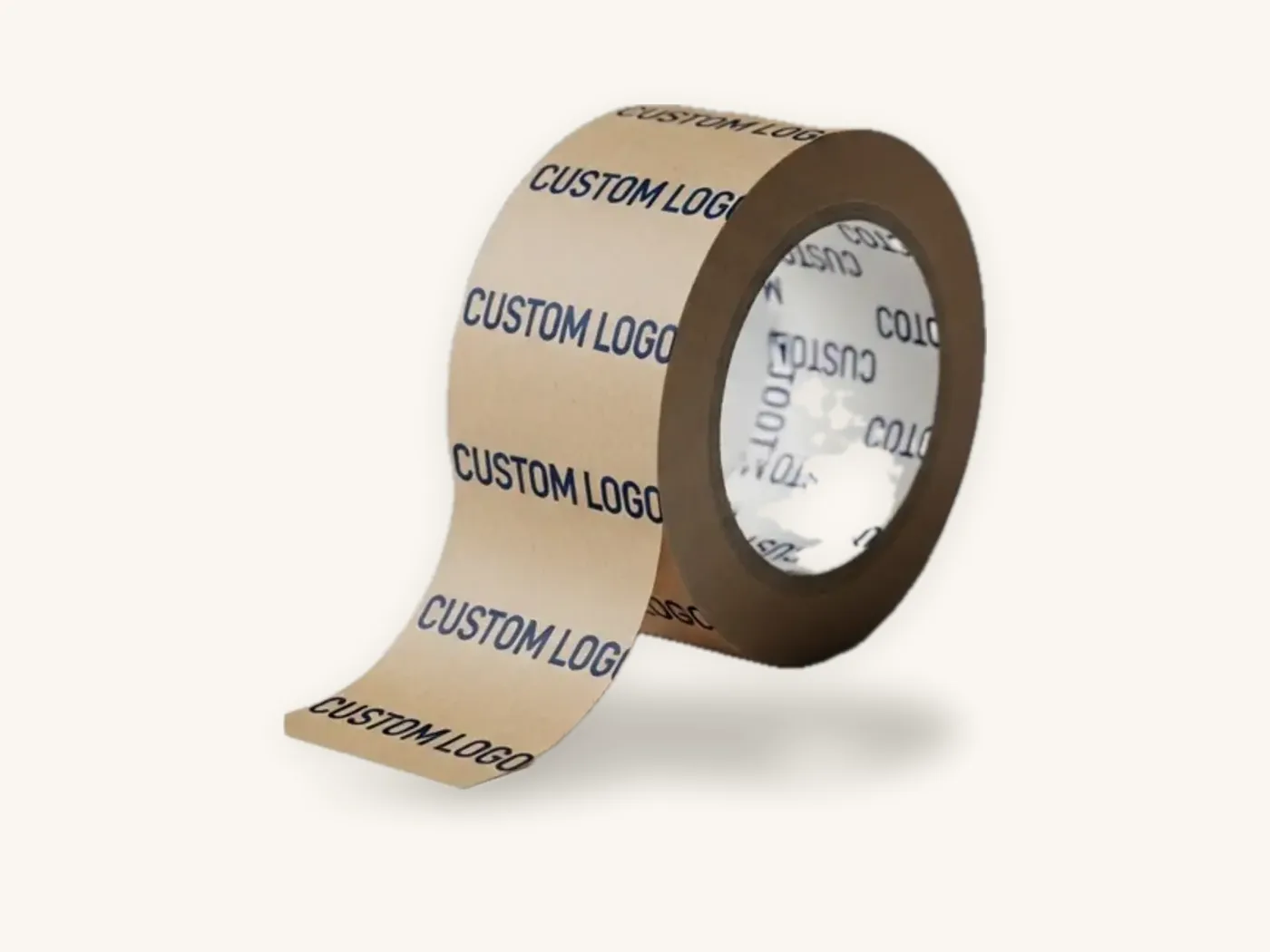
Custom packaging tape puts a repeating logo across the seal of every shipping box. It brands plain cartons, shows if a box has been opened, and costs far less upfront than printed boxes. Paper tape keeps the box easier to recycle.
Sleeves, tags and inserts
A printed paper sleeve slides over a plain box to add a logo band. Hang tags put a logo on apparel and bags. A printed card or insert places the logo inside a plain box, where it is seen at opening.
| Situation | Applied branding | Printed box |
|---|---|---|
| Under about 50 orders a month | Usually better value | Worth it if presentation drives sales |
| Many SKUs, low volume each | Labels on one shared box | One shared printed design plus variant labels |
| Seasonal or limited edition | Sticker or sleeve | Only if the run is large |
| Steady volume, stable design | Adds packing labor per order | Usually lower total cost |
| Retail shelf presence | Looks improvised on shelf | Strongly preferred |
For more on staging these choices as you grow, see custom packaging for small business.
Where to place a logo on each box type
A great logo in the wrong spot is wasted. The right placement depends on how the box is handled, labeled and opened.
| Box type | Primary logo position | Secondary position | Avoid |
|---|---|---|---|
| Mailer box | Center of the lid | Inside lid, front tuck flap | Across the lid crease or rolled side walls |
| Shipping box (RSC) | Two opposite side panels | Top flaps, repeated pattern | Center of top flaps where the flaps meet and tape goes |
| Tuck end carton | Front panel | Top tuck flap, side panel | Glue flap and fold lines |
| Rigid box | Lid top, often foil or embossed | Inside lid or base wrap | Lid edges where wrap paper folds |
| Display box | Header card or front lip | Sides | Areas covered by product |
| Paper bag | Front face | Gusset | Near the handle patch |
Plan for the shipping label
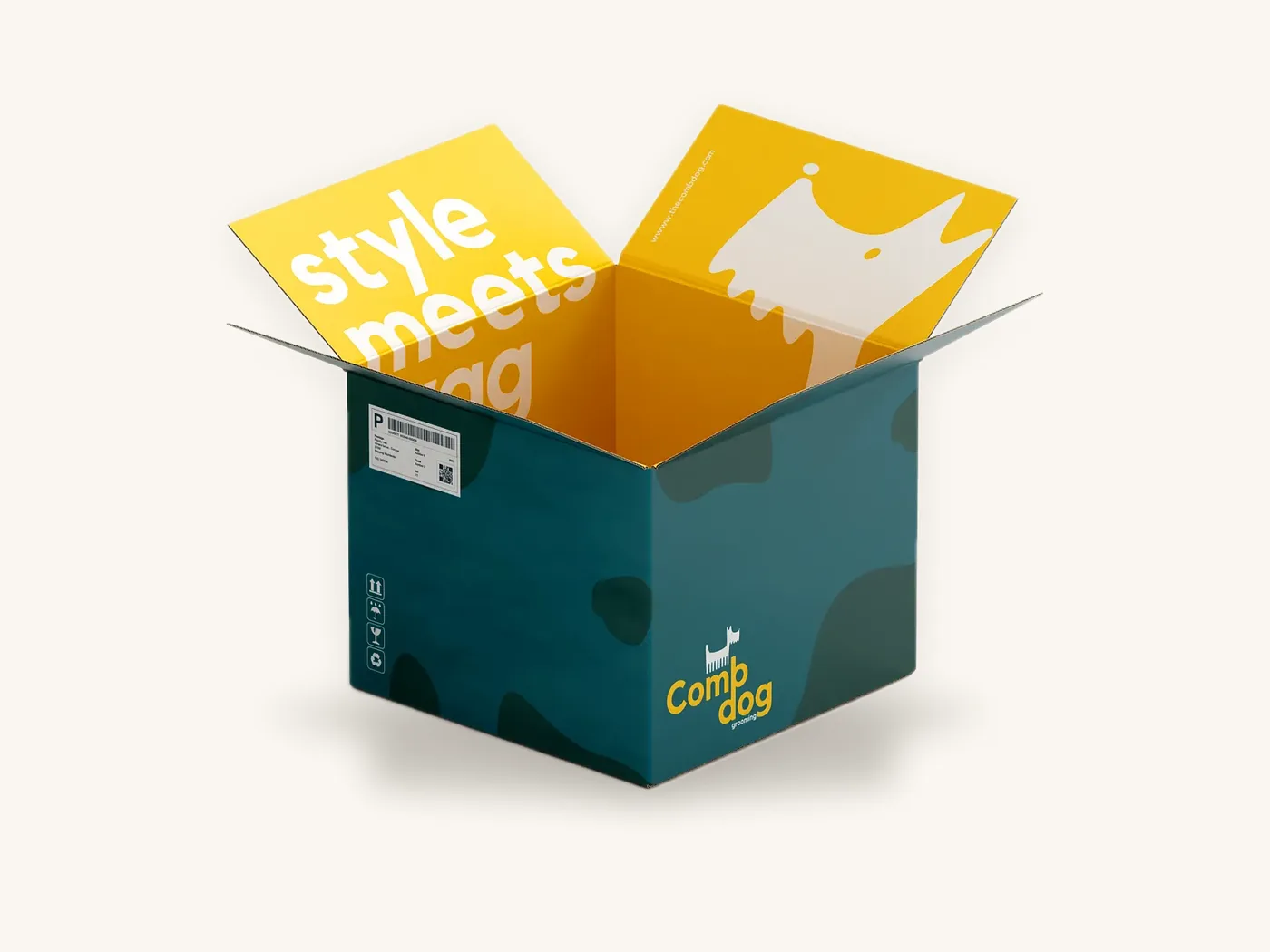
On mailers and shipping boxes, the carrier label usually goes on the largest flat surface, often right where you wanted the logo. Decide where the label will go before finalizing the artwork, and either leave a clear zone or place the main logo on a side panel. Printing the logo on at least two sides means it stays visible however the parcel is stacked.
Use the inside lid
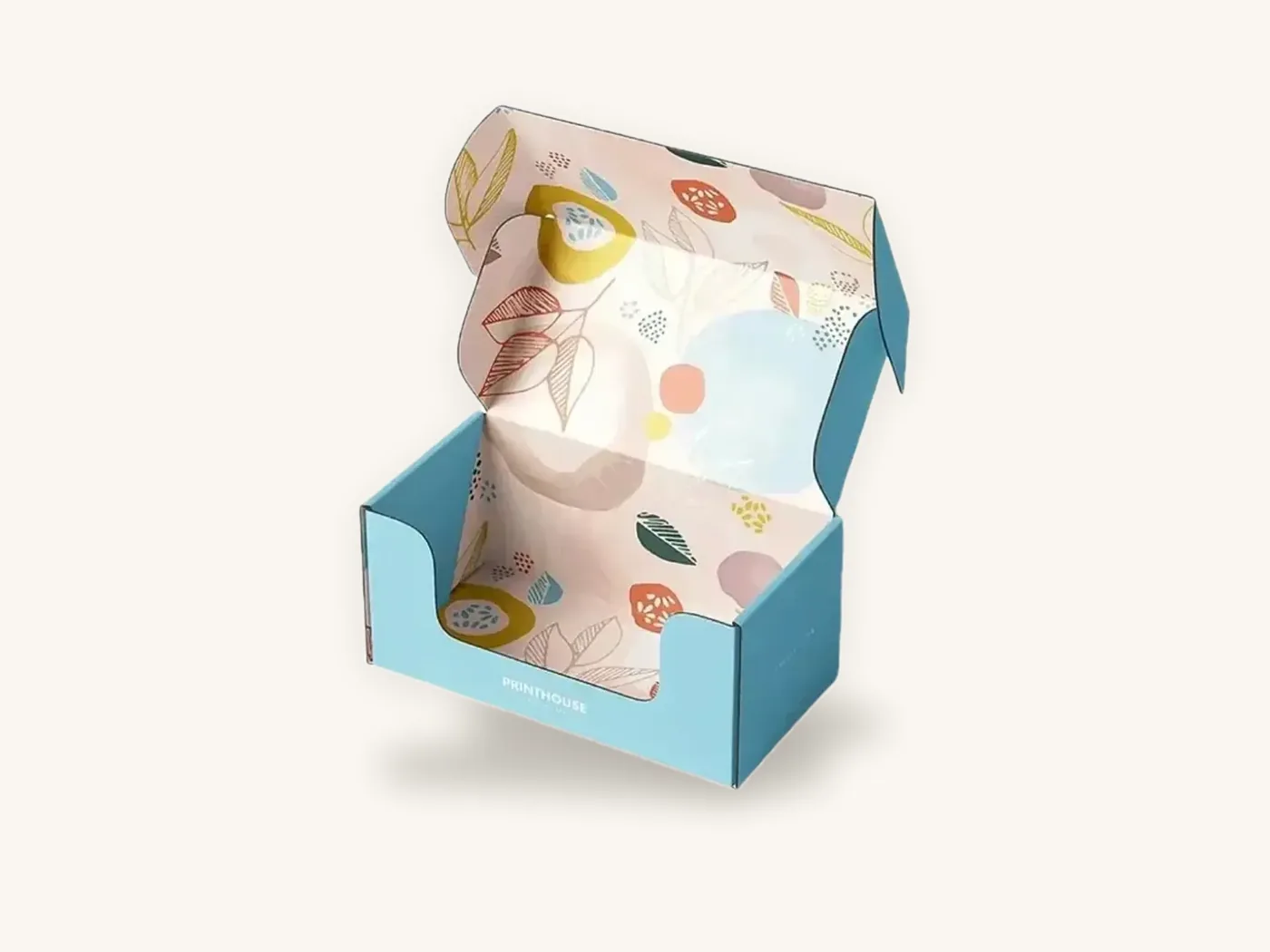
The inside of a mailer lid is the first surface a customer sees when they open the box, and it is never covered by a label or scuffed in transit. A logo or short message there often does more branding work than the outside. The inside printing guide covers how to set it up.
Keep clear of folds and cuts
Logos placed across crease lines crack or fold out of view, and logos too close to a cut edge can be trimmed. Keep the logo at least 1/8 in (3 mm) inside every cut and crease, and further on thick corrugated board.
What logo printed boxes cost
The cost of branded boxes comes mostly from the box itself; the logo method adjusts it. The table below shows indicative per-unit prices from our current rates, with free US shipping included, for specs that use different logo approaches.
| Spec | Logo approach | About per unit at 100 | About per unit at 1,000 |
|---|---|---|---|
| Kraft tuck carton, 18 pt kraft, 4x3x2 in, 1-color | One-color print | $0.81 | $0.36 |
| Straight tuck end carton, 18 pt SBS, 3x2x5 in, full color, aqueous | Full-color print | $1.15 | $0.51 |
| Cosmetic carton, 18 pt SBS, 2.5x2.5x6 in, full color, soft-touch + foil | Print plus foil logo | $1.93 | $0.86 |
| Mailer box, E-flute, 8x6x3 in, full color outside | Full-color print | $2.64 | $1.17 |
| Shipping box RSC, B-flute, 12x10x6 in, 1-color | One-color print | $4.69 | $2.08 |
| Jewelry rigid box, 2 mm, 3x3x1.5 in, matte, foil, insert | Foil logo on rigid wrap | $3.35 | $1.49 |
Get the exact figure for your size and finish in the instant price estimator.
How tooling spreads over a run
At Box Sense there are no die or plate charges. One-time tooling applies only to finishes: foil about $60, embossing about $60, spot UV about $40. On a 100-box order, a foil charge adds roughly sixty cents per box. On 1,000 boxes it adds about six cents, and on a reorder using the same tooling, nothing. That is why foil and embossing make more sense as volumes grow.
The custom packaging cost guide and how much custom boxes cost explain the other drivers, and cheap custom boxes that do not look cheap lists ways to keep branded boxes affordable.
Preparing your logo file for box printing
Most logo problems on packaging trace back to the file, not the press. A few minutes of preparation prevents blurry edges, wrong colors and finishes that fill in.
File checklist
- Supply the logo as a vector file: AI, EPS, SVG or a PDF with vector content
- Convert fonts to outlines so type cannot substitute
- Specify colors as CMYK values, or name PMS references exactly
- Provide a one-color version for kraft, corrugated or foil use
- Provide a reversed version for dark backgrounds
- For foil, emboss or spot UV, supply the finish area as a separate solid layer
- Avoid very thin strokes and tiny gaps inside letters for stamped finishes; they fill in or break up
- Keep the logo at least 1/8 in inside all cuts and creases
Size the logo for the surface
A logo that looks right on screen can be too small on a box. Print the dieline at full size on paper, fold it, and look at it from arm's length. On corrugated board, very fine detail softens, so a slightly larger, simpler version of the mark usually reads better. The artwork preparation guide covers bleed, resolution and dielines in detail.
Make sure you can use the logo
Only print logos, characters or trademarks you own or are licensed to use. A supplier may ask you to confirm this before production. If you are unsure about rights to a design, check with counsel before ordering.
Choosing a logo method: a quick decision guide
Work through these questions in order; the first clear answer usually points to the right method.
- Do you ship fewer than a few dozen orders a month, or change products often? Start with a printed sticker, tape or card on a stock box.
- Is the box mainly a shipper that gets labeled and stacked? Print a bold one-color logo on two or more panels.
- Does the box sit on a retail shelf or serve as the unboxing moment? Print the logo in full color or a spot color on the front panel or lid.
- Is presentation part of what the customer pays for? Add one finish, such as foil on the lid logo.
- Is the box rigid or thick paperboard? Consider embossing or debossing for texture.
- Is the carton laminated matte or soft-touch? Spot UV on the logo gives contrast for modest tooling.
Watch out: a logo finish chosen from a digital mockup can look different in hand. Ask for a printed sample before a large run when foil, embossing or spot UV are part of your spec, especially on textured or dark stocks.
Ordering custom boxes with logo from Box Sense
Box Sense prints, stamps and finishes logos in-house, so structure, print and finish are proofed together.
What to send
- Box type and internal dimensions, or your product size and weight
- Your logo files, including one-color and reversed versions
- Brand colors as CMYK or PMS
- Where you want the logo on the box, or ask us to suggest placement
- Finish preferences: print only, foil, emboss, deboss or spot UV
- Quantities to price, and your in-hand date
What happens next
- Quote within 24 hours, including any one-time tooling for finishes.
- Free design support: we place your logo on the dieline and send a 3D digital proof, with two revision rounds. Our design services team can also adapt a logo for one-color or foil use.
- Samples: unprinted structural samples are free, and a printed sample of approved artwork is free on orders of 100 or more.
- Production: standard production takes 8–12 business days after proof approval; rush in 5 business days is available on most paperboard and corrugated styles.
- Delivery: free shipping on every US order.
The minimum order is 10 boxes. Defective boxes reported within 14 days are reprinted free. For a list of everything to include in a request, use the packaging quote checklist, and if you are weighing minimums with other suppliers, packaging MOQs explained shows why they differ. Our custom mailer boxes page shows the most popular logo box style.
Frequently asked questions
How much do custom boxes with a logo cost?
It depends mainly on box type, size and quantity. As a reference, a 4x3x2 in kraft tuck carton with a one-color logo is about $0.81 each at 100 units, and an 8x6x3 in E-flute mailer printed full color outside is about $2.64 at 100 or roughly $1.17 at 1,000, with US shipping included. Foil or embossing adds one-time tooling.
What is the cheapest way to put a logo on a box?
For very small quantities, a printed logo sticker or custom tape on a stock box has the lowest upfront cost. Once you order around a hundred or more boxes of one design, a one-color printed logo on kraft board is usually the lowest cost per box, because there is no labor to apply stickers and no die or plate charge at Box Sense.
Can I get logo printed boxes in small quantities?
Yes. Digital printing needs no plates, so short runs of printed logo boxes are practical. Box Sense produces custom printed boxes from a minimum of 10 units. Finishes such as foil and embossing are also available on small runs, but their one-time tooling is spread over fewer boxes, so they add more per unit.
Is foil stamping or printing better for a logo?
Printing is more flexible and costs less, and it reproduces any color or gradient. Foil stamping adds metallic shine that print cannot match, which suits premium and gift packaging. Foil needs one-time tooling and works best on smooth board. Many brands print the box and foil only the logo on the lid.
Where should the logo go on a shipping box?
Put the main logo on at least two opposite side panels, where it stays visible however the box is stacked and where the carrier label is less likely to cover it. Avoid the center of the top flaps, where flaps meet and tape is applied. A repeating logo pattern or branded tape is another option.
What file format do I need for a logo on packaging?
Supply a vector file such as AI, EPS, SVG or a vector PDF, with fonts converted to outlines. Include CMYK or PMS color references and a one-color version for kraft or foil. Raster files like JPG or PNG can blur when scaled. Box Sense design support can help prepare the logo on the dieline.
Can you emboss a logo on a corrugated box?
Embossing is possible on E-flute corrugated with a simple, bold logo, but the result is softer than on paperboard or rigid boxes because the fluted board compresses. For crisp raised detail, rigid boxes and thicker paperboard cartons are better choices. A printed sample shows how an embossed logo will look on your chosen board.
Next steps
Pick your logo method and placement, then compare box specs in the branded box price estimator. When you are ready, request a quote for custom boxes with logo and send your logo files; we will reply within 24 hours and set up a 3D proof. If you are still comparing suppliers, see how to choose a custom packaging company.
Boxes in this guide
Order the packaging we covered
Written by the Box Sense Packaging Team
Our structural designers, prepress technicians and production staff print and convert custom boxes every day for brands in the United States, United Kingdom and UAE. Questions about this guide? Talk to us.