Cheap custom boxes do not have to look cheap. Most of what makes printed packaging expensive is structure, board and decoration the customer never notices, while the details that signal quality, such as crisp folds, a snug fit and clean typography, cost very little. Cut the first group and protect the second.
This guide lists 15 specific ways to lower packaging cost, grouped by where the money goes: the box style, the board, the print, the finishes and the way you order. Each one says what you save, what you give up, and when not to do it.
Key takeaways
- The style of box sets the floor on price; a reverse tuck end carton or a sleeve uses far less board than a mailer or rigid box.
- Right-sizing and dropping one flute grade usually save more than any print change.
- One or two strong colors on kraft look deliberate and cost less than weak full-color art on kraft.
- Foil, embossing and spot UV each carry one-time tooling; use one on a logo rather than three across the box.
- Moving from 100 to 500 units roughly halves the unit price on many specs, so order quantity is a cost lever too.
- Cuts that damage fit, protection or legibility end up costing more in returns and reprints.
Where the money in a custom box goes
Before cutting anything, it helps to know what you are paying for. The cost of a printed box comes from five places, and they are not equal.
| Cost driver | Share of price | Easy to cut? | Customer notices if you cut it? |
|---|---|---|---|
| Box style and board used per unit | Large | Yes, at design stage | Rarely, if fit is good |
| Board grade and caliper | Large | Sometimes | Only if the box fails |
| Print coverage and color count | Medium | Yes | Somewhat |
| Finishes, foil, inserts | Medium to large | Yes | Depends on the product |
| Quantity and setup | Large on short runs | Yes | Never |
The biggest savings sit in structure and quantity, which the customer never sees. Print and finishes are where people usually start cutting, and where cuts are most visible. Our custom packaging cost guide breaks these drivers down by box type if you want the full picture first.
Structure: ways 1 to 4
1. Choose the lightest style that does the job
Style determines how much board goes into each unit. For a small retail product, a reverse tuck end box is the most economical carton there is, because both tuck flaps come from a compact layout with little waste on the sheet.
Here is how common styles compare at 100 units, from our current rates with free US shipping included.
| Style and spec | About per unit at 100 | About per unit at 1,000 | Best for |
|---|---|---|---|
| Soap sleeve/box, 18 pt kraft, 3.5x2.5x1.25 in, 1-color | $0.66 | $0.29 | Bars, small flat items |
| Kraft tuck carton, 18 pt kraft, 4x3x2 in, 1-color | $0.81 | $0.36 | Small retail goods |
| Reverse tuck end carton, 14 pt SBS, 2x2x6 in, full color, gloss | $1.17 | $0.52 | Tubes, bottles, cosmetics |
| Window box, 18 pt SBS, 4x4x4 in, full color, window | $1.66 | $0.74 | Products that sell on sight |
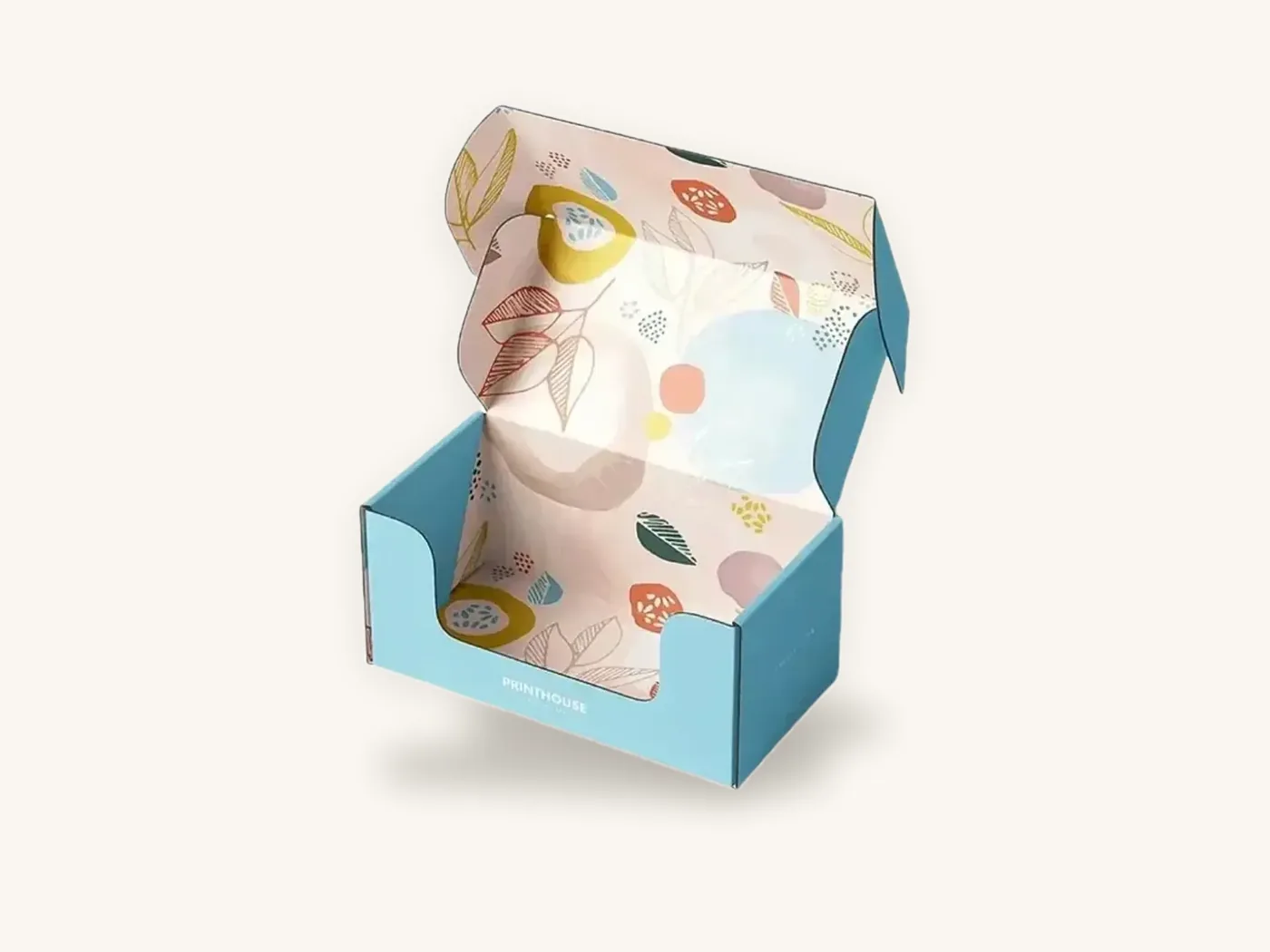
| Mailer box, E-flute, 8x6x3 in, full color outside | $2.64 | $1.17 | Direct-to-consumer shipping |
| Rigid box, 2 mm greyboard, 8x6x3 in, full color, matte | $9.10 | $4.05 | Premium keepsake presentation |
A rigid box is not wrong, but it costs several times more than a folding carton. If the product ships inside a mailer anyway, a printed folding carton inside a plain shipper may deliver the same experience for less. The box styles glossary explains each structure.
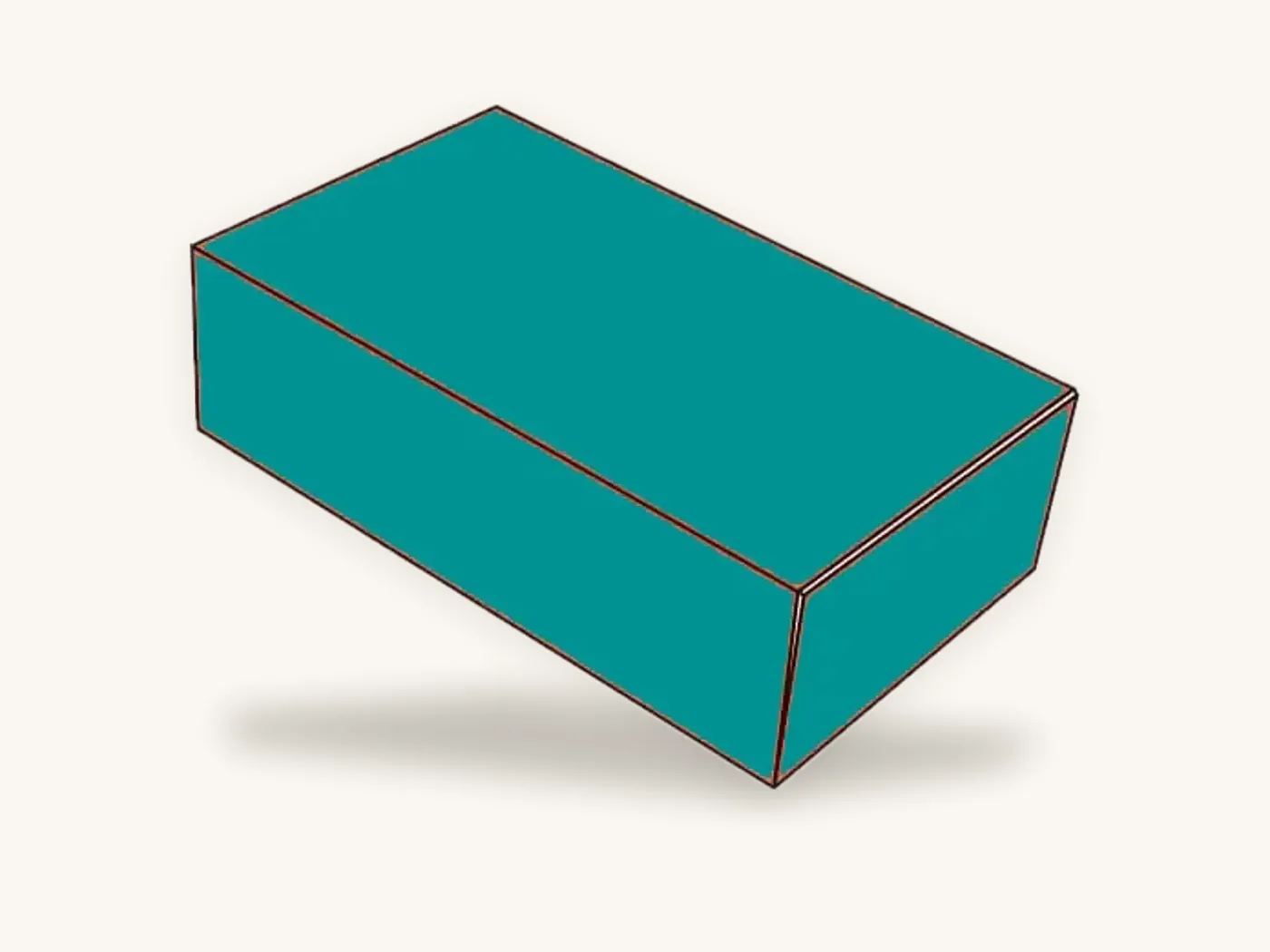
2. Right-size the box
Every extra half inch of length, width or depth adds board on multiple panels. It also lets the product move, which invites damage, and a larger outer box can raise carrier charges calculated on dimensional weight. Measure the product as it is actually packed and add only the clearance it needs. Our right-sized packaging guide covers the method.
3. Pick a standard layout before a custom die-cut shape
Hexagons, handles, cutouts and unusual closures can look great, but they use more board and more complex die-cutting. At Box Sense there are no die charges, so the saving is in material and waste rather than tooling. Save the shape for a hero product and keep everyday SKUs in standard tuck, sleeve or mailer layouts.
4. Replace a two-part box with a one-piece structure
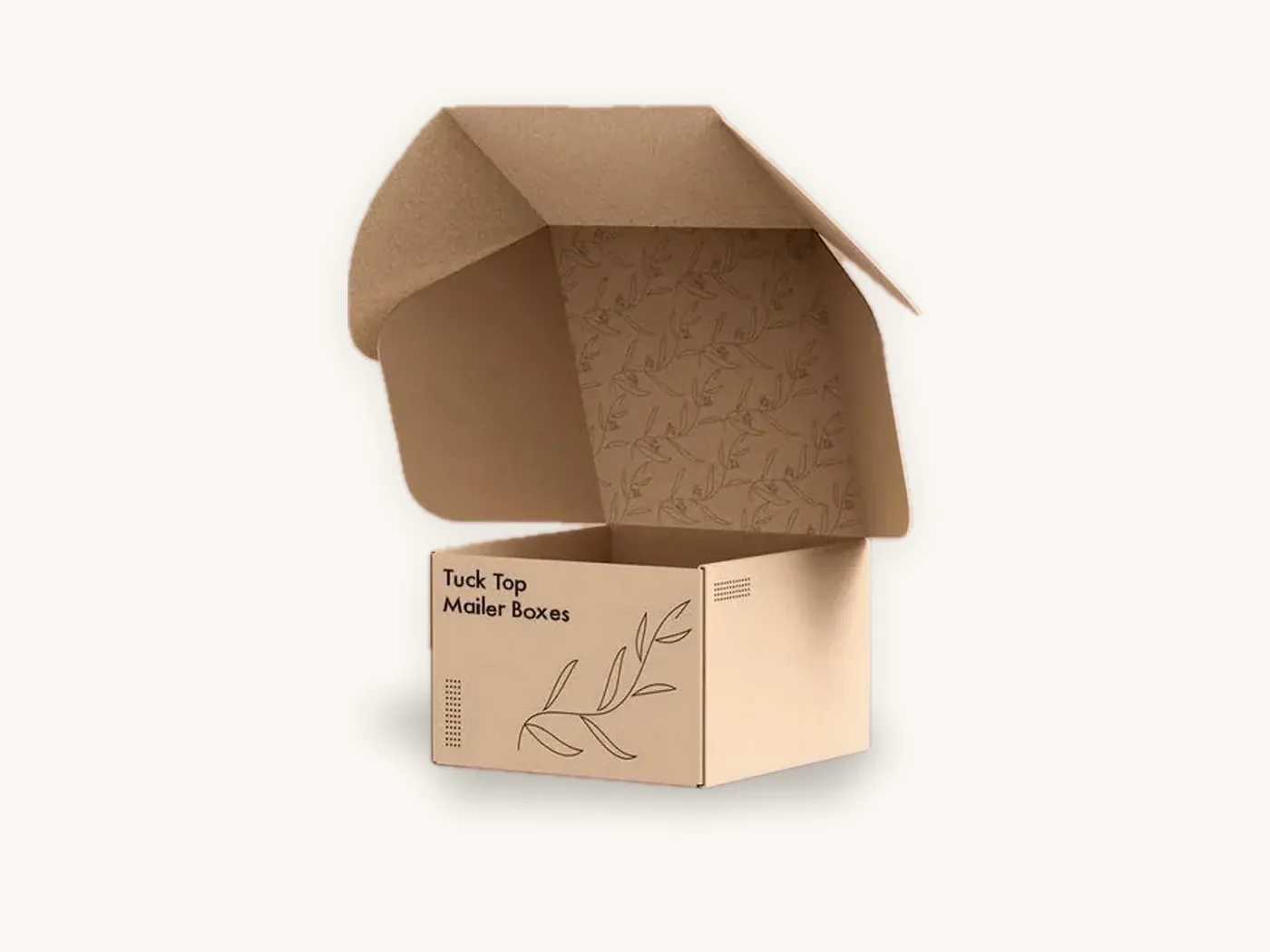
A lid-and-base box or a sleeve-and-tray uses two components, which means two cuts, more board and more packing time. A one-piece tuck top or mailer often gives a similar reveal. If your team packs by hand, fewer parts also means faster packing, which is a labor saving on every order.
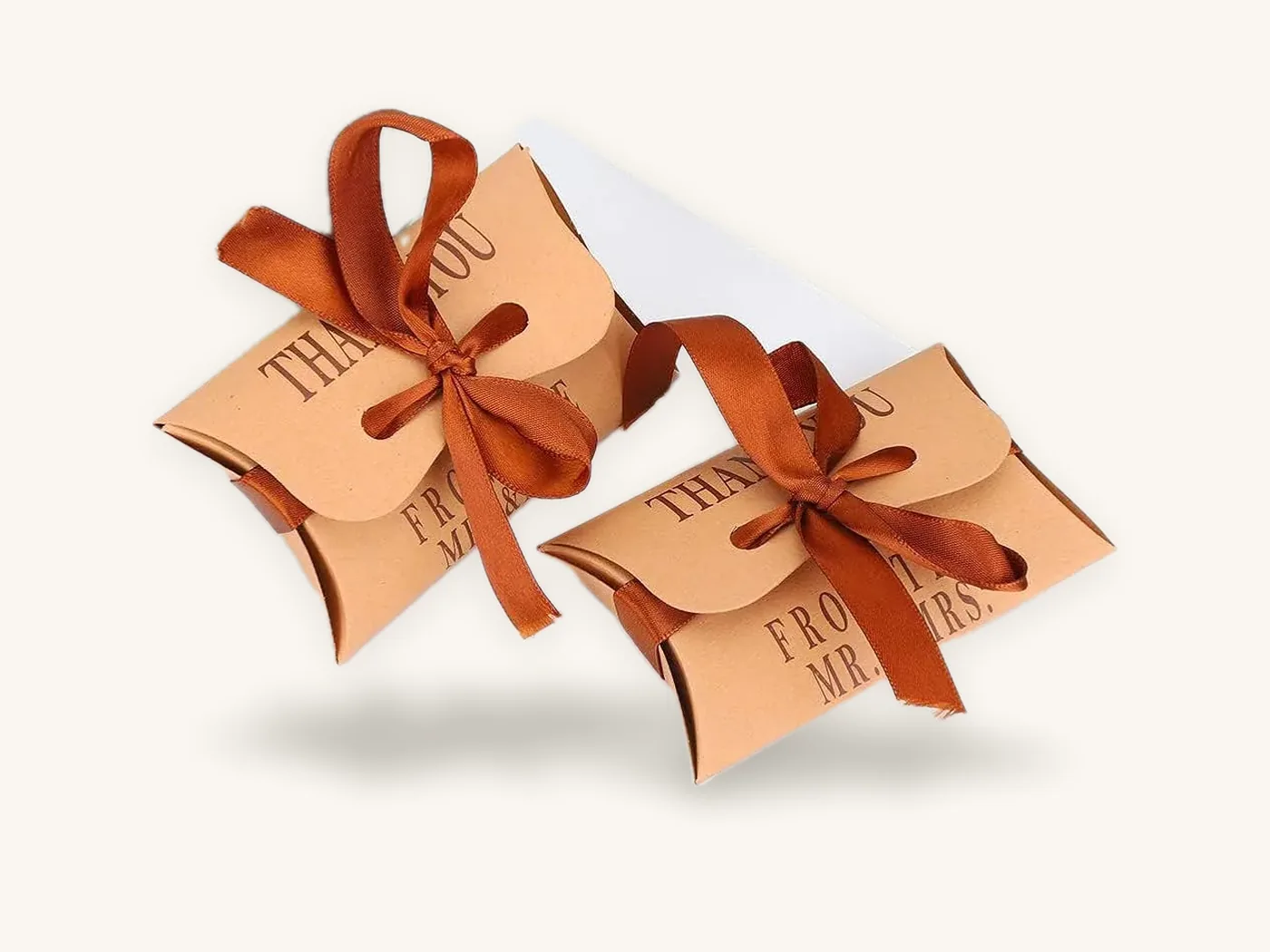
Pillow boxes are a good example of a low-board structure for small, light items such as jewelry, favors or accessories. They fold from one flat piece, close without glue on the ends and use very little material.
Board: ways 5 to 7
5. Drop a flute or caliper grade where the product allows
Board thickness is priced per unit, so over-specifying adds cost to every box. Light apparel, skincare and accessories rarely need B-flute; E-flute is usually enough. A small cosmetic that weighs a few ounces may be fine in 14 pt SBS rather than 18 or 24 pt.
Do not guess. Order a free unprinted structural sample in the lighter board, pack the real product, and shake, stack and drop it. If it survives, the lighter grade is the right one. Paperboard thickness explained lists which calipers suit which product weights.
6. Use kraft board as a design choice
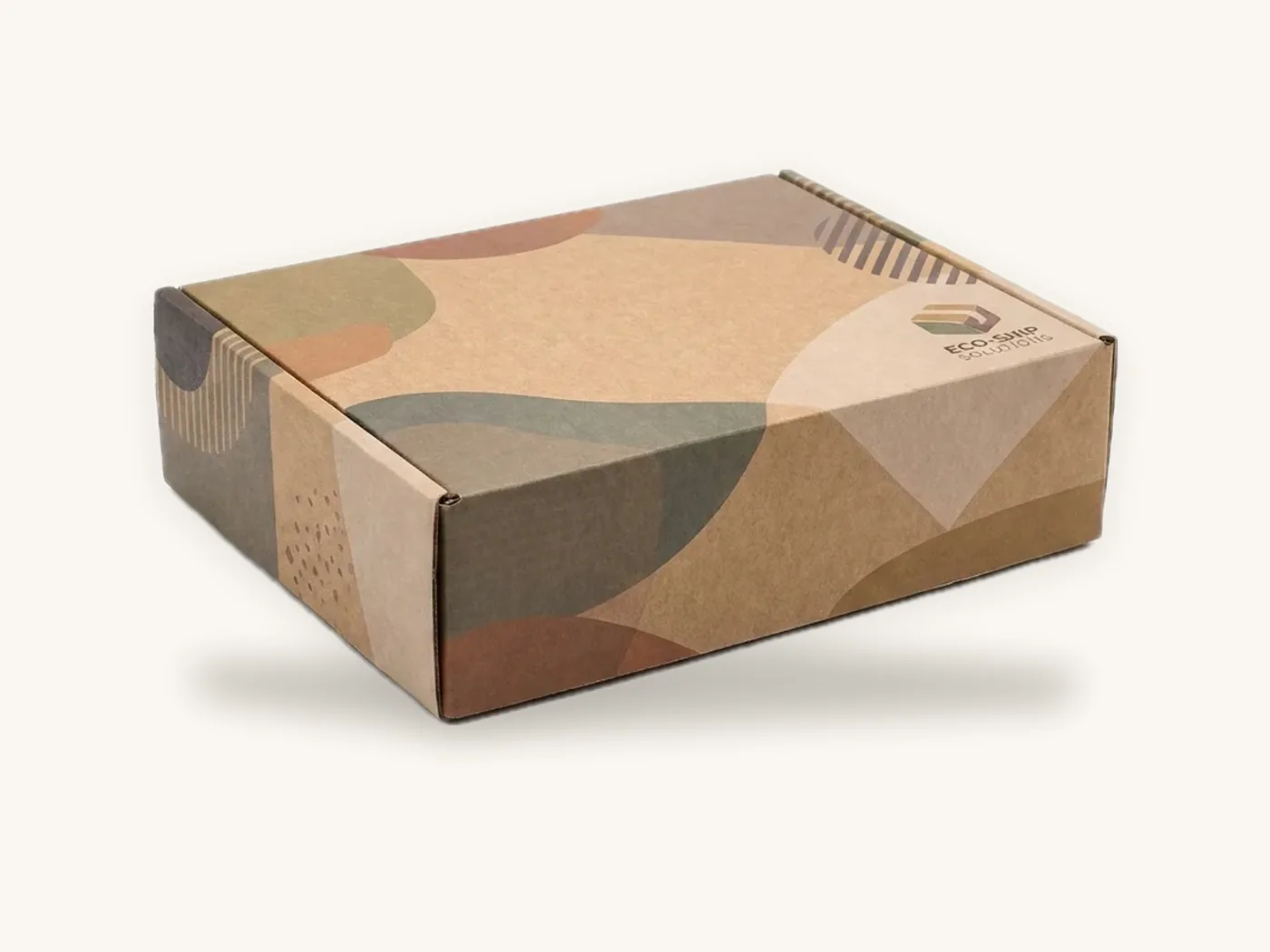
Kraft paperboard and kraft corrugated look natural and intentional, hide scuffs, and suit one-color printing, which is cheaper than full color. The kraft tuck carton in the table above is priced with a one-color print, which is part of why it lands below the full-color SBS cartons.
Kraft works best when you design for it. Full-color art printed on brown board looks muddy because the brown shows through; bold one-color type or a white-ink logo looks clean. Our guide to white ink on kraft shows how it reads.
7. Let a stock outer box do the shipping
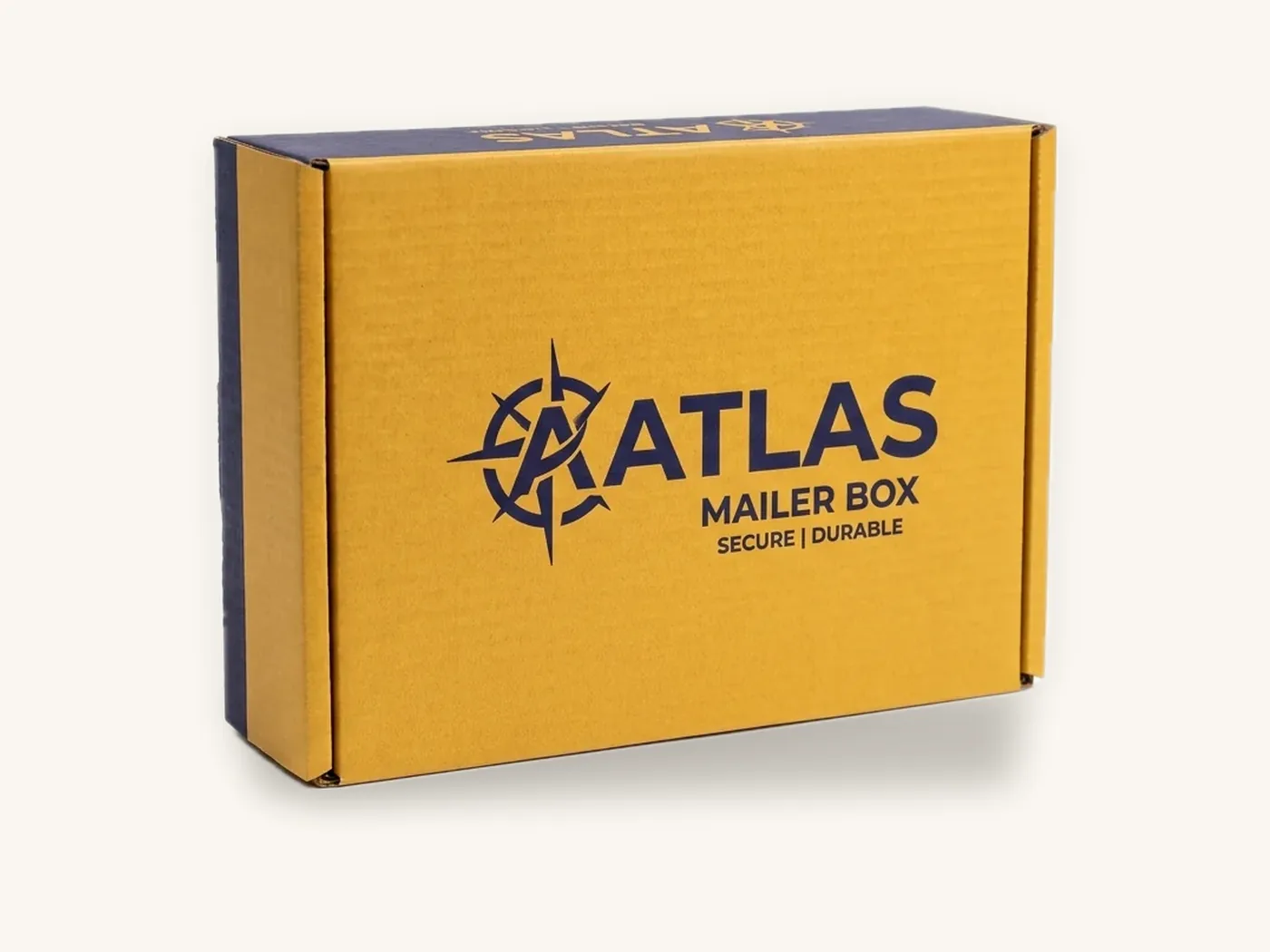
If your product needs a retail carton and a shipper, you do not need both to be custom printed. A printed folding carton inside a plain or one-color kraft mailer box puts the spending where the customer sees it. Add a branded sticker or tape to the outer box and it still looks cohesive.
Print: ways 8 to 10
8. Reduce print coverage, not print quality
Printing every surface in full color, including the inside, adds ink, press time and sometimes a second pass. You can often print the outside and leave the inside plain, or print only the inside lid. Keep the design sharp: a clean logo and one line of copy on a quality board looks better than busy full-bleed artwork that barely registers.
9. Work in one or two colors
A limited palette is one of the most effective ways to get affordable custom packaging that still looks designed. It also reduces the risk of color variation between runs. Many strong brands use black on kraft, or a single brand color on white, as their whole system.
10. Design one box for several products
Instead of a separate printed box for each scent, flavor or shade, print one shared design and apply a small variant label or a colored sticker. One design reaches a higher quantity tier sooner, and adding a new variant does not require a new print run. Custom labels and stickers are much cheaper to change than printed boxes.
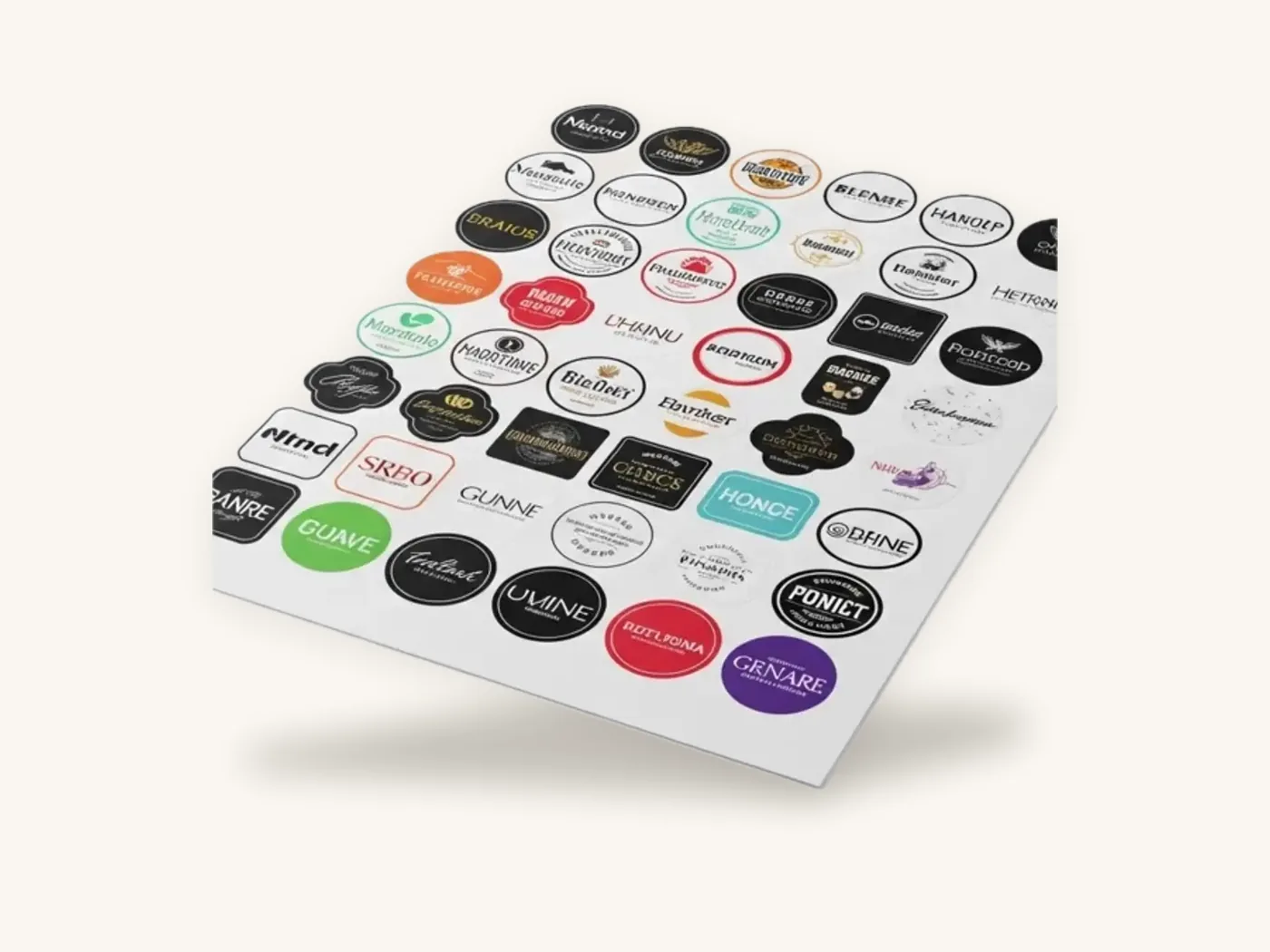
Tip: put anything that changes often, such as batch codes, variant names, promotional messages or prices, on a label. Reserve the printed box for information that stays the same for a year or more.
Finishes and extras: ways 11 to 13
11. Choose aqueous coating over lamination by default
Aqueous coating is a thin water-based layer that protects print from scuffs, keeps the box easy to recycle and costs less than a laminated film. Gloss or matte lamination is worth it when color depth and scuff resistance really matter, for example on a dark flood color. Compare them on the printing and finishes page.
12. Use one hero finish, in one place
Finishes that need tooling each carry a one-time charge: foil about $60, embossing about $60, spot UV about $40. Stacking all three across the box adds tooling and press passes. A single foil logo on the lid often gives most of the premium signal for a fraction of the cost.
Compare two cartons of similar size from the price sheet. A 3x2x5 in 18 pt SBS tuck end carton in full color with aqueous coating runs about $1.15 at 100 units. A 2.5x2.5x6 in cosmetic carton with soft-touch and foil runs about $1.93. The finish upgrade is visible and sometimes worth it, but you should choose it on purpose.
13. Rethink the insert
Custom foam inserts and multi-piece paperboard inserts add material, a cutting step and packing time. A simple folded paperboard insert, a molded pulp tray or even printed tissue may hold the product just as well. An insert die costs about $45 one time at Box Sense, so the ongoing saving is mainly in material and labor. Our foam vs paperboard inserts guide compares options.

Ordering: ways 14 and 15
14. Order at a better quantity tier
Setup is spread over the run, so the unit price falls sharply as quantity rises. The reverse tuck end carton above drops from about $1.17 at 100 units to roughly $0.63 at 500. The kraft tuck carton drops from about $0.81 to roughly $0.43.
That does not mean you should buy a year of stock on day one. It means you should compare two or three tiers and buy the largest you will confidently use before a change. Our custom boxes wholesale guide explains how to forecast that quantity and store it.
15. Compare total cost, not the headline price
The cheapest quote per box is not always the cheapest order. Add setup, dies, plates, freight, sample fees and the cost of a reprint if the run is wrong. At Box Sense there are no die or plate charges, US shipping is free and design support is included, but you should confirm those items with any supplier. Our guide on how to choose a custom packaging company lists what to check.
Cost cuts that backfire
Some savings look good on a quote and cost more later. Avoid these unless you have tested them.
| Tempting cut | What goes wrong | Better alternative |
|---|---|---|
| Thinnest board for a heavy product | Crushed corners, returns, replacement shipping | Test a lighter grade with a sample first |
| Oversized stock box with lots of fill | Product moves, fill costs add up, higher carrier charges | Right-size a simple custom box |
| Low-resolution artwork | Blurry logos that make the brand look amateur | Vector logo, 300 dpi images at final size |
| Skipping the proof | A full run with the wrong barcode or panel orientation | Always approve a 3D or printed proof |
| Removing all protection finish on dark print | Scuffs show on every delivered box | Aqueous coating as a low-cost minimum |
| Tiny text to fit copy | Unreadable, and required information may not be legible | Move secondary copy to an insert card |
Watch out: if your product is regulated, such as food, cosmetics or supplements, cost cutting must not remove or shrink required label information. The FDA sets labeling rules for those categories; confirm current requirements with the agency or your counsel before simplifying a panel.
A quick checklist for low cost printed boxes
Run through this list before you request a quote.
- Is this the lightest box style that protects and presents the product?
- Are the internal dimensions measured from the packed product, with minimal clearance?
- Have you tested the lightest board grade with a structural sample?
- Could the design work in one or two colors, or on kraft?
- Do you need inside printing, or only an inside lid message?
- Can one printed design serve several variants with labels?
- Is there one hero finish rather than several?
- Is the insert as simple as it can be?
- Have you priced at least three quantity tiers?
- Have you compared total cost, including freight and setup?
Getting affordable custom packaging from Box Sense
Box Sense manufactures in-house, so we can suggest cost-saving changes to structure, board and print before production rather than after. Send us your product and your target cost per box, and we will tell you which of these levers fit your packaging.
What to include in your request
- Product dimensions and weight, packed as it will ship
- Where the box is used: retail shelf, shipping, or both
- Your target unit cost, if you have one
- Current spec or a competitor sample you like
- Artwork, or a note that you want help from design services
- Two or three quantities to price
How the order runs
The minimum order is 10 boxes, printed digitally for short runs, so you can test a cheaper spec before committing. Quotes are confirmed within 24 hours. Design support is free and includes a dieline, artwork setup, a 3D digital proof and two revision rounds. Unprinted structural samples are free, which makes testing a lighter board grade cost nothing, and a printed sample of approved artwork is free on orders of 100 or more.
Standard production is 8–12 business days after proof approval, with rush production in 5 business days on most paperboard and corrugated styles. Shipping is free on every US order, and defective boxes reported within 14 days are reprinted free.
Frequently asked questions
What is the cheapest type of custom box?
For small retail products, a paperboard sleeve or reverse tuck end carton is usually cheapest, because it uses little board and a simple layout. At 100 units, an 18 pt kraft soap sleeve printed in one color costs about $0.66 each, and a 4x3x2 in kraft tuck carton is roughly $0.81. Shipping boxes and rigid boxes cost more because they use more material.
How can I make custom boxes cheaper without losing quality?
Start with what customers do not see: choose a lighter style, right-size the box and test a thinner board grade. Then simplify print to one or two colors, use aqueous coating instead of lamination, and pick one finish such as a foil logo. Ordering a higher quantity tier also lowers the unit price significantly.
Are kraft boxes cheaper than white boxes?
Often, mainly because kraft designs usually use one-color or white-ink printing rather than full color. The board itself is not always cheaper. Kraft also hides scuffs well, so it can skip protective lamination. If your artwork depends on bright color or photography, a white SBS or white-liner box will look better and is worth the difference.
Is digital printing cheaper for small box orders?
Yes, for short runs. Digital printing needs no plates, so orders of roughly 10 to 500 boxes avoid the setup that makes offset printing expensive at low volume. Above a few hundred units, offset usually becomes the cheaper process per box. Box Sense chooses the method based on your quantity, and there are no plate charges either way.
Do finishes like foil and spot UV make boxes much more expensive?
They add two kinds of cost: a one-time tooling charge, about $60 for foil or embossing and about $40 for spot UV at Box Sense, plus a small amount per box for the extra press pass. On larger runs the tooling becomes a small share of the total. Using one finish on the logo keeps the cost controlled.
How many boxes should I order to get a low price?
Compare tiers rather than picking a number. On many specs, going from 100 to 500 units roughly halves the unit price, and 1,000 units lowers it further. Buy the largest quantity you will use before your design or product changes, usually within 6 to 12 months, so you do not pay for boxes that end up unused.
Will cheap custom boxes protect my product?
They will if you cut cost in the right places. Reducing print coverage, finishes and quantity-driven setup has no effect on protection. Reducing board grade or fit does, so test any lighter board with a free structural sample and a real shipment before ordering the full run. A snug fit protects as much as thicker board.
Next steps
Pick the three or four cost levers that fit your product, then test them in the custom box price estimator to see the difference at your quantities. When you have a spec, request a low cost packaging quote with your target price, and we will suggest where else to save within 24 hours. If you are just getting started, our custom packaging for small business guide covers what to buy first.
Boxes in this guide
Order the packaging we covered
Written by the Box Sense Packaging Team
Our structural designers, prepress technicians and production staff print and convert custom boxes every day for brands in the United States, United Kingdom and UAE. Questions about this guide? Talk to us.