The short answer to foam vs cardboard inserts: foam absorbs repeated shocks and grips a product on every surface, so it protects dense, fragile or high-value items best; paperboard and corrugated inserts mainly hold a product in position, cost less and recycle with the box. Molded pulp sits between them, crushing to absorb a hard impact while staying plastic-free.
Which one wins for your product is not a matter of opinion. It depends on how heavy and brittle the item is, how far and how rough the shipping route is, and what the customer should see when the lid opens. The reliable way to decide is to build two or three candidate inserts and try to break your own product in them.
This guide explains how each material absorbs energy and how it fails, gives a practical test plan you can run with a few samples, breaks down the cost drivers, and covers the recycling tradeoffs. If you want the full catalog of insert types first, start with our custom box inserts guide.
Key takeaways
- Paperboard holds, foam cushions, molded pulp crushes. Each material manages impact energy in a different way, which is why the same drop gives three different results.
- Foam recovers after compression, so it keeps protecting after the first drop. Paperboard and pulp deform permanently, so they protect best against one or two hard hits.
- Weight and fragility decide the material more than product category. A heavy glass bottle and a light glass ampoule need different inserts.
- Test with the real product in a real outer box: drop it on corners, edges and faces from a consistent height, then inspect both the product and the insert.
- Paperboard and molded pulp go in the recycling or compost stream with the box; foam usually has to be separated by the customer.
- At Box Sense a custom insert die is a one-time charge of about $45, and unprinted structural samples are free, so testing two materials side by side is inexpensive.
How each insert material handles an impact
When a parcel hits the floor, the product keeps moving for a split second after the box stops. The insert's job is to slow the product down over a longer distance so the peak force it feels is lower. The three materials do that job in very different ways.
Foam: compress and recover
Foam is a matrix of tiny gas cells. Under impact the cells compress, turning the energy into heat and deformation, and then spring back. That recovery is the reason foam keeps protecting through the multiple drops a parcel meets on a conveyor route.
Two foams dominate custom inserts. EVA foam (ethylene-vinyl acetate) is a closed-cell foam that is fairly firm, cuts with crisp vertical walls and holds a precise cavity shape, which is why an EVA foam insert is common in watch, jewelry and electronics presentation. PU foam (polyurethane) is softer and more open-celled, conforms around irregular shapes and cushions light items gently, but it holds a less crisp edge. Denser foams resist bottoming out under heavy items; softer foams suit light, delicate ones.
Paperboard and corrugated: position and brace
A die-cut paperboard insert does very little cushioning. It is a frame that keeps the product away from the box walls and stops it from moving. Its protective value comes from geometry: the product cannot build up speed inside the box, and it cannot hit the outer wall directly.
Corrugated inserts add a real, if one-time, cushion. The fluted medium crushes under a hard hit and absorbs energy as it collapses. Thicker flutes crush over a longer distance, which is why a B-flute partition protects glass better than E-flute. Our explainer on corrugated flutes covers the calipers and how each behaves.
Molded pulp: crush at the ribs
Molded pulp packaging is formed from wet recycled paper fiber on a shaped mold and then dried. Its protection comes from ribs, cones and walls molded into the tray. Under a hard impact those features buckle and crush, spreading the force out.
Molded pulp is excellent against one or two severe drops, especially for heavier items like bottles and small appliances. Once a rib has crushed, though, it does not recover, so repeated hits in the same spot get progressively less protection.
Foam vs cardboard inserts at a glance
This comparison table summarizes the behavior described above. Treat it as a starting shortlist, then confirm the choice with a physical test.
| Factor | Paperboard insert | Corrugated insert | Molded pulp tray | EVA or PU foam insert |
|---|---|---|---|---|
| How it protects | Holds position, prevents contact with walls | Holds position plus one-time flute crush | Ribs buckle to absorb hard impacts | Cells compress and recover |
| Repeated drops | Weak after deformation | Weakens as flutes crush | Weakens where ribs crushed | Consistent across many drops |
| Best product weight | Light | Light to medium | Medium to heavy | Light to heavy, depending on density |
| Cavity precision | Good for simple shapes | Moderate | Moderate, soft radii | Very high, sharp detail |
| Printable surface | Yes, full color | Yes | Limited, natural fiber look | No; can be covered with fabric or flocking |
| Look when opened | Clean, branded | Functional | Natural, textured | Premium, jewel-case |
| Curbside recyclable | Yes, with the box | Yes, with the box | Yes, and often compostable | Usually no |
| Setup | One-time insert die | One-time insert die | Mold tooling | Cutting program or die |
Which failure mode matters for your product
Before choosing, work out how your product is most likely to be damaged. Different products fail in different ways, and each insert material is good at preventing some failures and poor at others.
Breakage from a single hard drop
Glass bottles, ceramic mugs and candle jars usually break from one impact on a corner or edge. The insert needs to lengthen that deceleration. Molded pulp and corrugated partitions do this well for heavier items. Foam does it best when the product is small and very brittle. A plain paperboard frame alone is rarely enough for heavy glass.
Scuffing and cosmetic damage
Polished metal, lacquered finishes, screens and printed surfaces are ruined by rubbing rather than breaking. Here movement is the enemy. A snug EVA foam cavity or a paperboard frame with a tight tolerance stops the rub. Molded pulp's fibrous surface can mark very glossy finishes unless the product sits in a sleeve or pouch.
Crushing and compression
Heavy stacked parcels press down on the box. If the product is itself load-bearing, like a solid device, the insert mostly needs to keep it centered. If the product is hollow or thin-walled, a corrugated frame or pulp tray with vertical walls carries the load around it. Compression strength of the outer box also matters; see ECT vs burst strength for how board is rated.
Component separation and rattling
Kits with several parts, such as a device with a charger and cable, fail when pieces knock into each other. Separate cavities matter more than cushioning here. Paperboard with fitted compartments usually solves it at the lowest cost.
A simple protection test you can run yourself
You do not need a lab to make a confident choice. A consistent, repeatable home test with real samples catches most problems. For formal certification, carriers and retailers reference procedures from the International Safe Transit Association; our ISTA drop testing guide explains when that is worth doing.
What you need
- Two or three insert candidates in the actual outer box, for example a paperboard frame, a molded pulp tray and an EVA foam insert
- Several units of the real product, not a dummy of similar size
- A hard floor, a tape measure and a phone to film each drop in slow motion
- A notebook or spreadsheet to record the result of every drop
The drop sequence
- Pack each box exactly as it will ship, including tissue, cards and the outer mailer or shipper if one is used.
- Pick a drop height and keep it constant. Parcel handling often involves drops from roughly waist height, so start around 30 in and increase if the product survives easily.
- Number the box faces, edges and corners so you can drop in the same order every time.
- Drop onto one corner first, then the three edges that meet at that corner, then each of the six faces. That is ten drops per box.
- Shake the box after each drop and listen. New rattling means the insert has deformed or the product has shifted.
- Open the box after the sequence. Inspect the product for cracks, chips, scuffs and loose parts, and inspect the insert for crushed ribs, torn tabs or compressed foam.
- Repeat with a second box of each type to rule out a lucky result.
- Ship one packed sample of the winner through a real carrier to a distant address and inspect it on arrival.
Tip: film the drops at slow-motion frame rate and watch what the product does inside a box with the lid removed on one practice run. You will see whether it slides, pivots or bounces, and that tells you which cavity wall needs reinforcing.
How to read the results
If the product survives in all three candidates, choose on cost, look and recyclability. If only foam passes, check whether a tighter paperboard cavity or a deeper pulp tray gets close enough before accepting foam. If nothing passes, the outer box or the size is usually the problem, not the insert. Our guide to shipping fragile items covers double-boxing and void control.
What drives the cost of each insert type
Insert prices depend on material volume, how complicated the cavity is, how many components must be assembled, and whether any one-time tooling applies. The material itself is only part of the story.
| Cost driver | Paperboard | Corrugated | Molded pulp | Foam |
|---|---|---|---|---|
| Material volume | Low; thin sheet | Low to moderate | Moderate; fiber weight scales with depth | Moderate to high; thick blocks |
| Tooling | One-time insert die | One-time insert die | Mold, highest upfront | Die or cutting program |
| Complexity penalty | Folds and glue points add labor | Partitions add assembly | Deep draws and undercuts add cost | Multi-layer and fabric covering add labor |
| Printing | Cheap to add | Possible | Rarely printed | Not printable |
| Freight and storage | Ships flat | Ships flat | Nests, but bulkier | Bulky, does not nest |
| Short-run economics | Very good | Very good | Weaker at low volumes | Good for small premium runs |
Reference prices for boxes that include an insert
The price sheet does not split out insert material, but it shows what complete boxes with inserts cost at common specs. These figures include free US shipping; your exact spec will differ, so use the instant price estimator.
| Spec | 100 units | 1,000 units |
|---|---|---|
| Candle box, 18 pt SBS, 3.5x3.5x4 in, full color, matte + foil + insert | about $2.33 each | about $1.03 each |
| Jewelry rigid box, 2 mm, 3x3x1.5 in, matte, foil, insert | about $3.35 each | about $1.49 each |
| Subscription mailer, E-flute, 12x9x4 in, full color both sides, insert + tear strip | about $5.85 each | about $2.60 each |
| Rigid magnetic box, 2 mm, 10x8x3 in, soft-touch, foil, insert | about $14.23 each | about $6.32 each |
A custom insert die is a one-time charge of about $45. If you are adding a foil logo to the lid as well, that is a separate one-time foil charge of about $60; the foil stamping guide explains when it is worth it.
Hidden costs to include
- Packing time. A foam insert that the product presses into is fast to pack. A paperboard insert with several folds is slower, and that labor repeats on every unit.
- Storage. Flat paperboard inserts take little space; foam blocks and deep pulp trays take much more.
- Damage and returns. A cheaper insert that lets a few units break can cost more than a better one once replacements and reshipping are counted.
- Outer box size. Thick foam walls push the outer box larger, which uses more board and can move the parcel into a higher dimensional weight bracket.
Sustainability and end-of-life tradeoffs
The protective winner and the sustainable winner are not always the same insert, so it helps to be clear about what happens after the customer opens the box.
Paperboard and corrugated
Paper-based inserts go in the recycling bin with the box, with no separation needed. FSC-certified board and soy or water-based inks are available if sourcing matters to your brand. Avoid plastic lamination on inserts you want to keep easily recyclable; aqueous coating protects print without adding film.
Molded pulp
Molded pulp is made from recycled fiber and is widely recyclable with paper, and some formulations are also compostable. It gives brands a plastic-free option that still protects glass and heavier goods. Our eco-friendly boxes and sustainability pages list the materials we run.
Foam
EVA and PU foam are plastics, and most curbside programs do not accept them. That does not make foam wrong. For a watch or headphones kept in their box for years, the insert is part of the product and is rarely discarded. For a single-use shipper, foam is harder to justify.
Watch out: if you print "recyclable", "compostable" or "plastic-free" on the box, the claim has to be true of the whole package, insert included, and qualified properly. The FTC's Green Guides describe how environmental claims should be substantiated in the US, so check current guidance or ask counsel before adding one.
Choosing by product: a decision matrix
Use this as a first pass. Always confirm with the test plan above, because shape, finish and shipping route can change the answer.
| Product | Typical risk | First choice | Strong alternative |
|---|---|---|---|
| Wireless earbuds, phones, small devices | Scuffs, component rattle | EVA foam insert | Paperboard frame with fitted cavities |
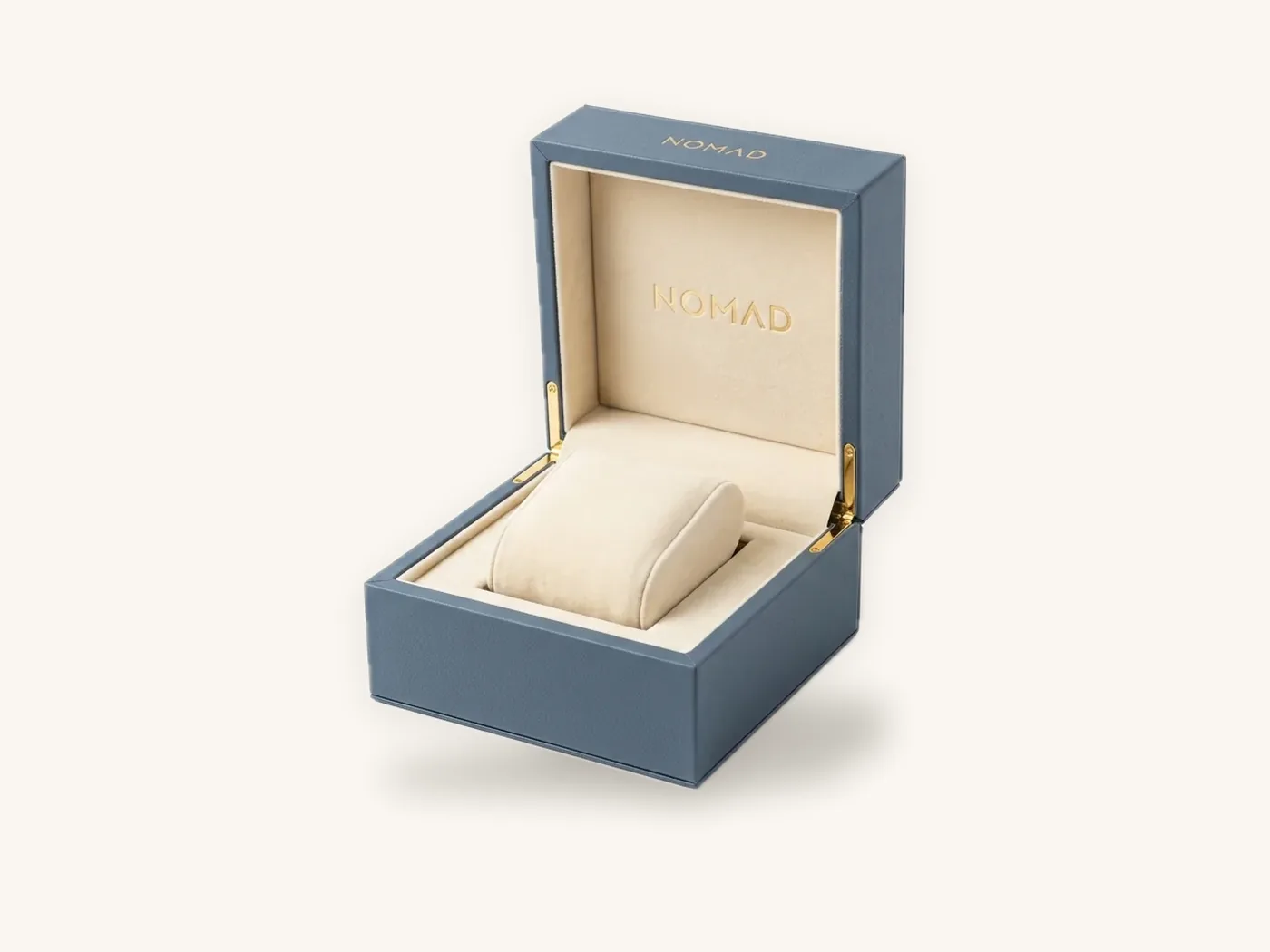
| Watches and fine jewelry | Scratches, presentation | EVA foam with fabric covering | Rigid paperboard platform |
| Glass bottles, 750 ml range | Hard drop breakage | Molded pulp or corrugated partition | Foam for premium gift sets |
| Candle jars and ceramic mugs | Corner breakage | Molded pulp tray | Corrugated insert |
| Skincare jars and droppers | Rattle, cap loosening | Paperboard insert | Molded pulp |
| Multi-item subscription kits | Items colliding | Paperboard compartments | Corrugated dividers |
| Heavy tools or auto parts | Crush and puncture | Corrugated or molded pulp | High-density foam |
For electronics specifically, electronics boxes and headphone boxes pair well with either foam or fitted paperboard. For premium keepsakes, watch boxes and jewelry boxes usually carry a foam or covered insert inside a rigid box.
Hybrid inserts: combining materials
Many of the best-performing inserts use two materials. A common pattern is a printed paperboard top layer with cavities, sitting on a strip of foam at the base. The customer sees a clean, branded surface, and the product gets cushioning where it takes the hit.
Other combinations work too. A molded pulp tray under a printed paperboard card gives a natural look with a branded message. A corrugated frame with small foam pads only at the corners cuts foam volume sharply while still protecting the most vulnerable points.
The tradeoff is separation at end of life. If you combine foam with paper, make the foam easy to pull out, and say so on the insert if you want customers to recycle the paper part.

How to order and test inserts with Box Sense
The fastest route to the right insert is to send the real product details and ask for two candidates at once, then test them side by side.
What to send
- Product dimensions and weight for every item in the box, measured at the widest points
- Photos of the product, especially any fragile edges, glossy faces or protruding parts
- How it ships: in a retail carton, a custom mailer or inside a shipping box
- The outer box style, if chosen, or a note that you want a recommendation
- The insert materials you want to compare, for example paperboard vs EVA foam
- Quantities to price and your target in-hand date
What happens next
- Quote within 24 hours. We confirm pricing for each insert option at your quantities.
- Free design support. We draw the insert and outer box dieline together and send a 3D digital proof, with two revision rounds included.
- Structural samples. Unprinted structural samples are free, so you can run the drop test on each candidate. A printed sample of approved artwork is free on orders of 100 or more. See samples.
- Production. Standard production takes 8–12 business days after proof approval, with rush in 5 business days on most paperboard and corrugated styles.
- Delivery. Shipping is free on every US order.
The minimum order is 10 boxes. There are no die or plate charges on the box itself; one-time tooling applies only to custom inserts, foil, embossing and spot UV. Browse all box inserts and dividers or the inserts and packaging fillers range for reference.
Frequently asked questions
Are foam inserts better than cardboard inserts?
Foam is better at absorbing repeated impacts and holding a precise shape, so it suits fragile, dense or high-value products. Cardboard and paperboard inserts are better at low cost, printing and recyclability, and they protect well when the job is mainly holding a product still. Neither is better in general; test both with your real product in the real outer box before deciding.
What is an EVA foam insert?
An EVA foam insert is a block of ethylene-vinyl acetate foam cut with cavities shaped to your product. EVA is a closed-cell foam that is firm, cuts with clean vertical walls and recovers after compression. It is common in watch, jewelry, electronics and tool cases. It can be covered with fabric or flocking for a premium look but is not printable.
Are molded pulp inserts strong enough for glass?
Often, yes. Molded pulp protects glass bottles, jars and ceramics by crushing at its ribs and walls during a hard impact. It performs best against one or two severe drops and for medium to heavy items. Very thin or brittle glass may still need foam. Test a packed sample with drops on corners and edges before a full run.
Can foam packaging inserts be recycled?
Most curbside recycling programs do not accept EVA or polyurethane foam, so foam inserts usually go in the trash unless the customer finds a specialist drop-off. For single-use shipping packaging, paperboard, corrugated or molded pulp keeps the package recyclable. For keepsake boxes that customers keep, foam is a more reasonable choice because it is rarely discarded.
How do I test packaging inserts at home?
Pack the real product exactly as it ships, then drop the box from a consistent height, around waist height to start, onto a hard floor. Hit one corner, the three edges meeting it, and all six faces. Shake after each drop, then inspect the product and the insert. Repeat with a second box, and ship one sample through a carrier.
Why is my product still breaking with an insert?
The usual causes are a cavity that is too loose, an outer box too thin or oversized, or an insert material that crushes after the first hit. Check whether the product moves when you shake the box, whether ribs or flutes are flattened after drops, and whether the box corners are collapsing. Fixing fit often matters more than switching material.
How much does a custom insert add to box cost?
It depends on material, cavity complexity, assembly and quantity. At Box Sense, a custom insert die is a one-time charge of about $45. As a reference, a candle box in 18 pt SBS with foil and an insert is about $2.33 each at 100 units and about $1.03 at 1,000, including US shipping. Use the pricing page for your exact spec.
Next steps
Pick the two insert materials that best match your product's main failure risk, then request free structural samples and run the drop sequence above. When you know which one survives, check the numbers in the price estimator and request a quote for your box and insert. We confirm pricing within 24 hours and draw the insert and outer box together so they fit the first time.
Boxes in this guide
Order the packaging we covered
Written by the Box Sense Packaging Team
Our structural designers, prepress technicians and production staff print and convert custom boxes every day for brands in the United States, United Kingdom and UAE. Questions about this guide? Talk to us.