If you are working out how to ship fragile items, the short answer is to build three layers of protection that each do one job: wrap or house the product so its surface is protected, hold it in place with an insert or cushioning so it cannot move, and put all of that in a corrugated outer box strong enough for its weight. Keep the product away from the box walls and corners, and never let two hard items touch.
What changes from product to product is how you build each layer. A glass candle jar, a ceramic mug, a perfume bottle and a set of earbuds all break in different ways. This guide starts with how to judge fragility, then gives a practical packaging recipe for the most common fragile product types, and finishes with a packing process your team can repeat on every order.
Key takeaways
- Fragile shipments need three layers: primary protection on the product, an interior that immobilizes and cushions, and an outer box sized and graded for the load.
- A common carrier recommendation is roughly 2 in of cushioning between a fragile product and every outer wall. Check your carrier's current packaging guidelines for your service.
- Die-cut inserts beat loose fill for repeat products because every order is packed identically; loose fill suits one-off or irregular items.
- Double boxing (a product box inside a larger shipper with cushioning between them) is the most reliable method for glass, ceramics and high-value items.
- Glass shipping boxes and bottle shippers work best with partitions that separate each item, plus a top and bottom pad.
- Test packed samples before launch, and design the packaging for the longest, roughest route you ship.
What makes a product fragile, and why it matters for packaging
"Fragile" covers several different weaknesses. Identifying which one your product has tells you where to spend on protection.
| Fragility factor | Example products | How it fails | Packaging response |
|---|---|---|---|
| Brittle material | Glass jars, ceramics, porcelain | Cracks or shatters on sharp impact | Immobilize fully; cushion on all sides; separate items |
| Thin walls or delicate edges | Wine glasses, thin-rim mugs, lamp shades | Chips at rims and handles | Suspend the product; protect rims with a collar or cavity |
| Protrusions | Mug handles, reed diffuser stems, figurines | Snaps at the weakest point | Cavity inserts that support the protrusion; do not let it bear load |
| High mass in a small package | Stone coasters, glass candle vessels | Momentum carries through light packaging | Stronger board; snug insert; top and bottom pads |
| Liquids | Perfume, oils, sauces, spirits | Leaks after cap loosens or glass cracks | Sealed caps, inner bag, absorbent layer, upright orientation where possible |
| Sensitive internals | Electronics, instruments, watches | Internal damage with no visible outer marks | Energy-absorbing insert (foam or molded pulp); anti-static bag where relevant |
| Surface finish | Lacquered items, polished metals, printed boxes | Scuffs from vibration | Sleeves, tissue or bags; dividers between items |
Most real products combine two or three of these. A glass candle is brittle, heavy for its size and heat-sensitive. A boxed perfume is brittle, liquid and has a premium surface. Design for every factor, not just the most obvious one.
The three-layer method for packaging fragile products
Think of packaging fragile products as a system. Each layer should be specified, not improvised at the packing bench.
Layer 1: primary protection
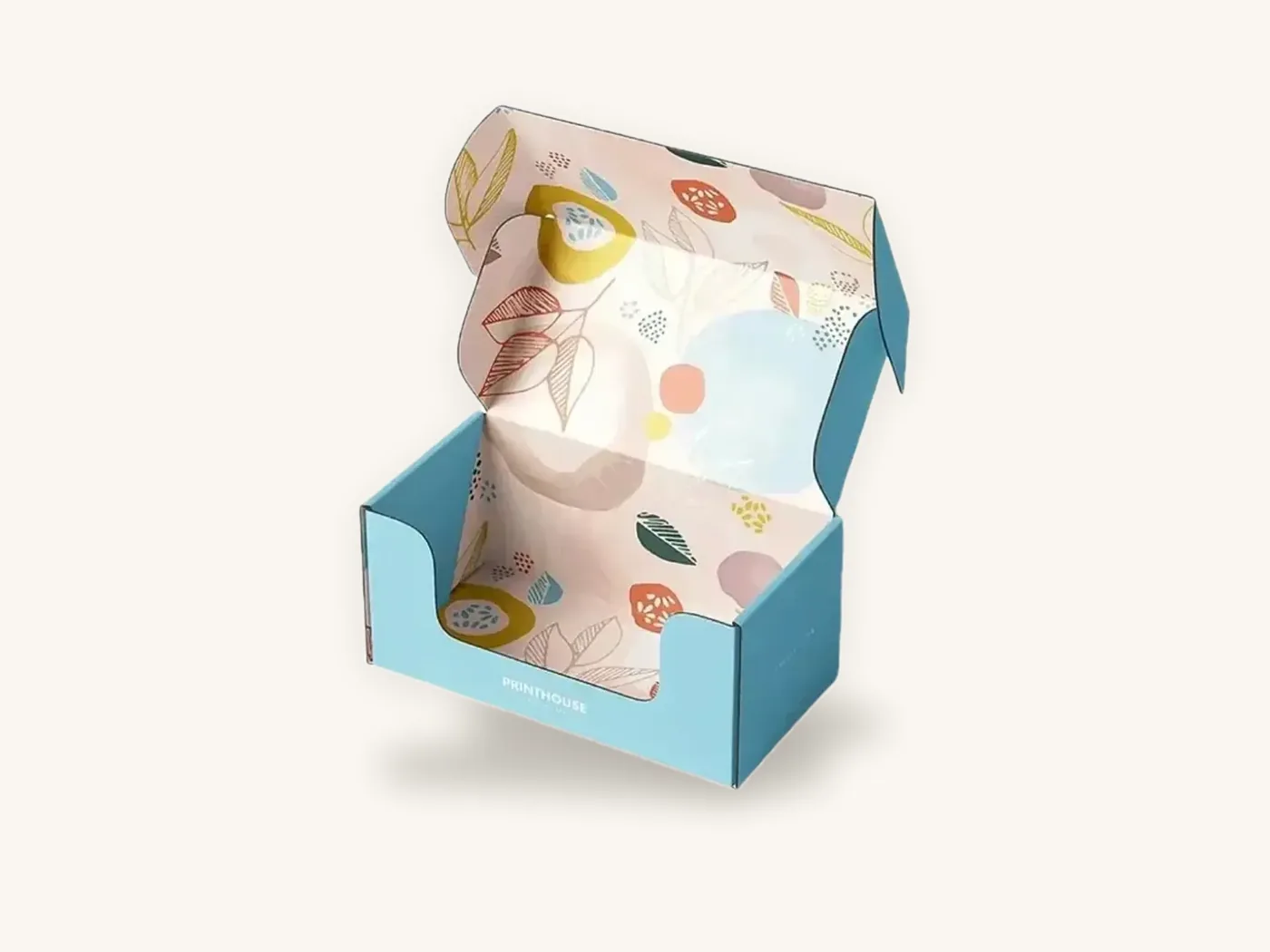
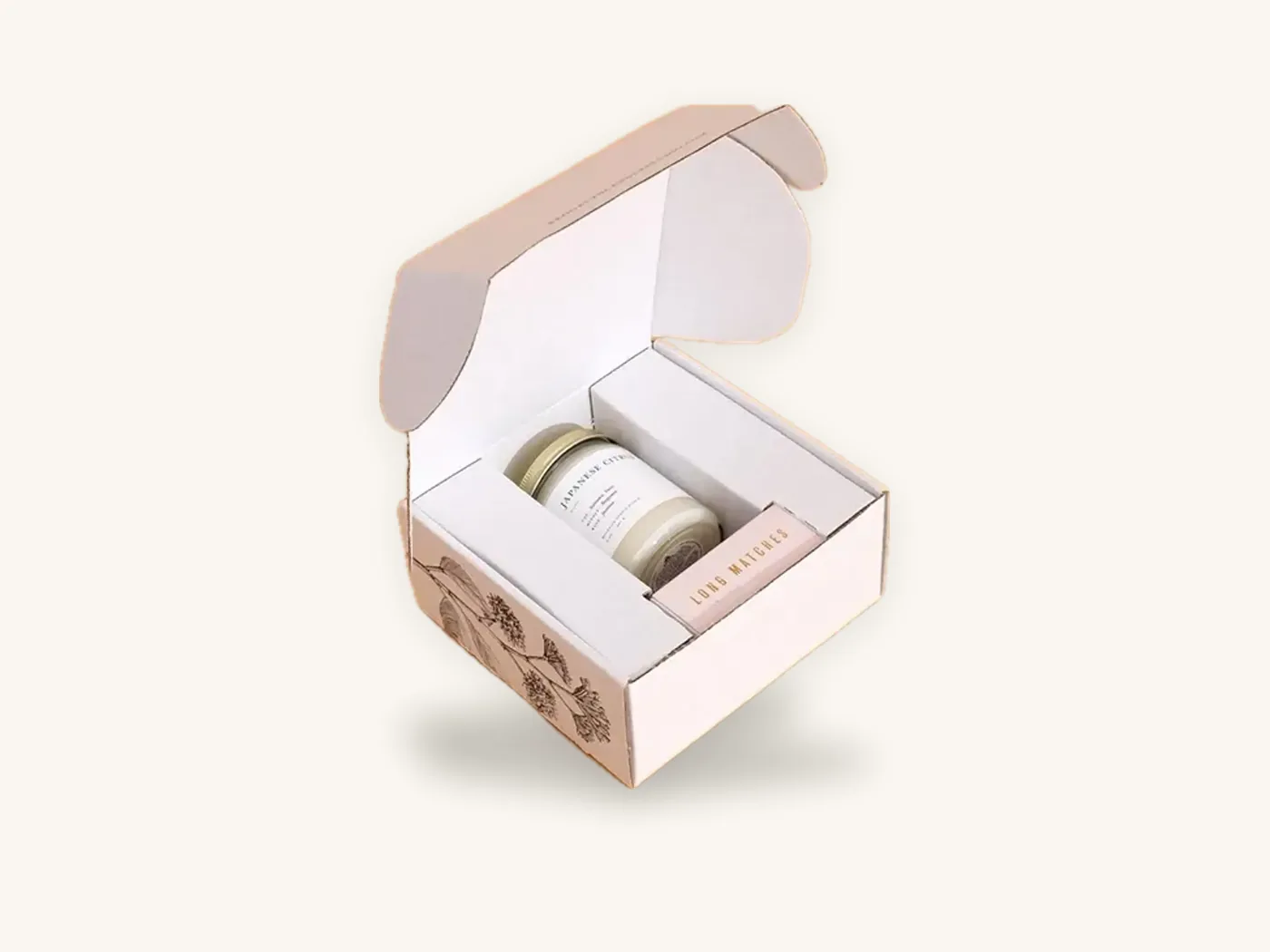
This is what touches the product: a retail carton, a sleeve, a bag, tissue or a wrap. Its main jobs are surface protection and, for retail products, presentation. A well-fitted retail box also adds stiffness around the product. Candle boxes and kitchenware and mug boxes are examples of primary packaging that can include a fitted insert.
Layer 2: the interior
The interior holds the product still and absorbs energy when the parcel is dropped. Options range from die-cut paperboard to corrugated partitions, molded pulp trays, foam and paper fill. The next section compares them by product type.
Layer 3: the outer box
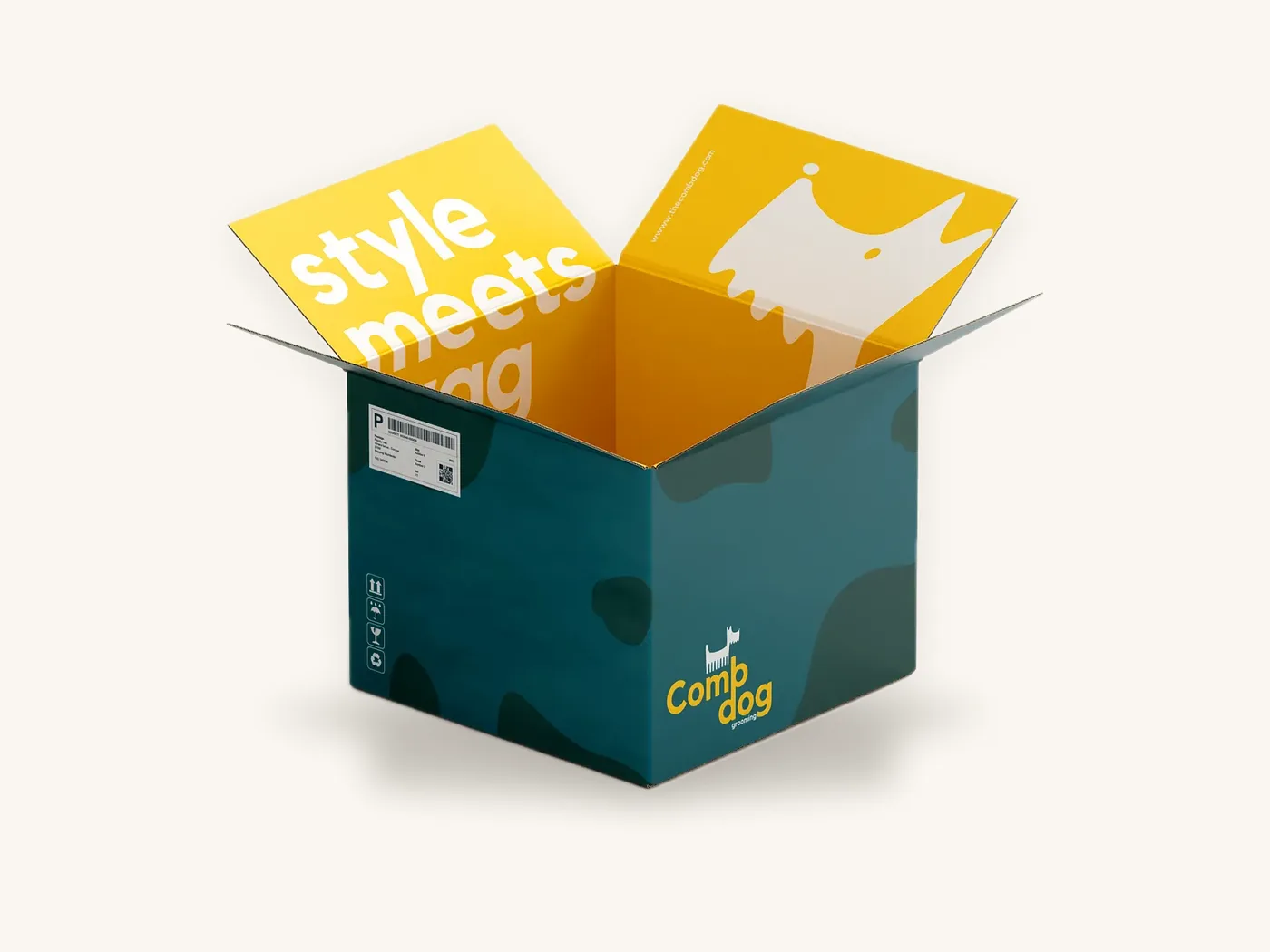
The shipper carries the load, resists crushing from parcels stacked on top and takes the first hit on corners and edges. For single fragile items under a few pounds, a single-wall B-flute box usually works when the interior is right. For heavy, multi-item or high-value shipments, heavy duty double wall boxes add compression and puncture resistance.

Choosing inserts and fill by product type
The right interior depends on the product's weight, shape and value, and on how many units you ship. For repeat SKUs, invest in a designed insert; for mixed or irregular orders, use a cushioning system your packers can apply consistently.
| Product type | Primary layer | Interior | Outer box | Notes |
|---|---|---|---|---|
| Glass candle jar (single) | SBS candle box with insert | Snug carton inside a shipper with top and bottom pads, or corrugated insert | E-flute mailer or B-flute RSC | Keep lids secured; watch heat in summer |
| Wine or spirits bottles | Bottle box or tube | Corrugated partition or molded pulp bottle cradle | B-flute or double wall with dividers | Bottles should not touch each other or the floor panel directly |
| Ceramic mugs and tableware | Retail carton | Die-cut corrugated insert with handle cavity, or molded pulp | B-flute RSC; double box for sets | Protect handles and rims specifically |
| Perfume and cosmetics in glass | Rigid or folding carton with cavity insert | Paperboard or foam insert; inner mailer | E-flute mailer | Bag liquids; check carrier rules for flammable contents |
| Electronics and earbuds | Retail box with molded or foam tray | Foam or molded pulp end caps | B-flute RSC or mailer | Anti-static bag where relevant |
| Framed art and mirrors | Corner protectors, face protection | Corrugated pads both sides, edge rails | Double wall or telescoping box | Glass faces should never be the load-bearing surface |
| Mixed fragile gift set | Individual sleeves or wraps | Multi-cavity insert or partitions | Mailer or RSC sized to the insert | Design the layout before sizing the box |
Insert materials in practice
Die-cut paperboard is light, printable and precise, and it works well for small glass bottles and cosmetic sets. Corrugated inserts and partitions add cushioning and are the workhorse for bottles, jars and mugs. Molded pulp wraps around irregular shapes and absorbs impact without plastic. EVA or PU foam gives the most precise cavity and strongest cushioning for electronics and high-value goods, though it is not curbside recyclable.
Box inserts and dividers can be made in any of these materials to fit your product, and the foam vs paperboard inserts guide compares them in more depth.
When loose fill is the right answer
Paper void fill, crinkle paper and air pillows suit shops with many different products and order combinations, where a custom insert for every combination is impractical. The rule is to fill completely: pack a layer on the bottom, place the product in the center, fill every side and the top, and close the box so the fill is lightly compressed. If you can shake the box and feel movement, add more.
Watch out: loose fill settles on long journeys. A box that feels solid when packed can develop a gap at the top after a few days of vibration, letting a heavy item drift upward and hit the lid. For heavier fragile products shipped long distances, use a designed insert or a double box instead.
Glass shipping boxes: bottles, jars and candles
Glass is the most common fragile material in e-commerce, and it rewards careful design.
Single bottles and jars
The goal is to stop the glass from touching any hard surface. For a single jar, a snug retail carton plus a shipper with a pad above and below is often enough when the shipper is sized so the carton cannot slide. For taller bottles, a molded pulp cradle or a corrugated insert that grips the neck and base keeps the bottle from pivoting.
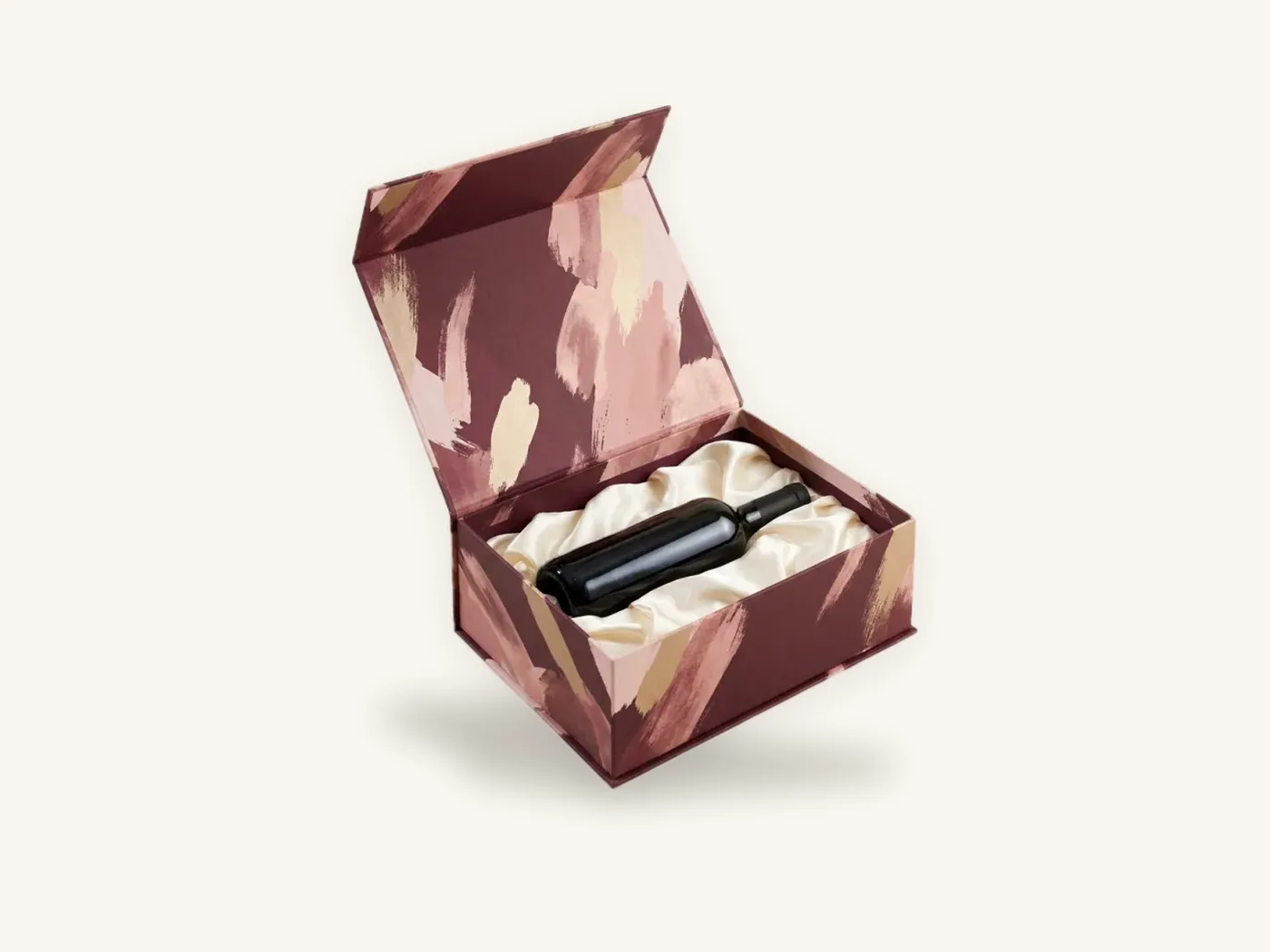
Wine and spirits boxes can include partitions and neck supports, and the same principles apply to olive oil, sauces and glass supplement bottles.
Multi-bottle shippers
Use a partition grid so each bottle sits in its own cell, with a pad under the grid and another on top. The partition should reach at least the shoulder of the bottle. Orient bottles upright where you can; a bottle lying on its side puts more stress on the cap and closure.
Candles
Candles combine glass, weight and heat. Secure the lid or add a protective disc on the wax surface, use a fitted candle box with an insert, and put that inside a right-sized shipper. In hot months, consider shipping-day rules to avoid parcels sitting in warm vehicles over weekends. The candles and home fragrance industry page shows packaging options for vessels, diffusers and gift sets.
Ceramics, tableware and home goods
Ceramics fail at rims, handles and bases, and they are often shipped in sets.
Mugs and cups
Choose an insert with a dedicated cavity for the handle, so the handle never takes an impact on its own. A corrugated insert or molded pulp tray that grips the body works well. For sets, give each mug its own cell rather than nesting them.
Plates and bowls
Stack plates vertically in slotted dividers rather than flat in a pile. A vertical plate spreads a drop impact along its edge, which is much stronger than its face. Bowls can nest with a pad between each one, but only if the pads fully separate the surfaces.
Heavier home goods
Vases, lamps and planters are often heavy and awkwardly shaped. Use end caps or a suspension insert to keep the item centered, and move to double wall board when the packed weight climbs. The kitchenware and home goods industry page covers gift and retail packaging in this category.
Electronics and precision products
Electronics can be damaged internally without any visible outer marks, so energy absorption matters more than it does for a solid glass jar.
- Use an energy-absorbing interior. Foam end caps or molded pulp trays decelerate the product more gradually than a hard paperboard cradle.
- Protect screens and ports. A film or sleeve protects glass faces; the insert should not press directly on buttons or connectors.
- Separate accessories. Chargers and cables loose in the box can strike the device. Give them their own compartment.
- Consider static. Bare circuit boards and some components need anti-static bags.
Electronics boxes often combine a printed retail box with a fitted tray. For retail-ready units, that box then ships inside a corrugated mailer or RSC.
How to double box fragile items, step by step
Double boxing places a fully packed inner box inside a larger outer box, with cushioning between them. The outer box takes the impact and the gap absorbs it before it reaches the product.
- Prepare the product. Wrap or sleeve the item and place it in its retail box or inner carton with its insert. Tape the inner box closed.
- Shake test the inner box. If the product moves, fix the insert or add fill inside the inner box before continuing.
- Choose the outer box. It should allow roughly 2 in of cushioning on every side of the inner box, in line with common carrier guidance. Oversizing beyond that wastes board and raises dimensional weight charges.
- Line the bottom. Add a corrugated pad or a compressed layer of cushioning to the floor of the outer box.
- Center the inner box. Place it so the gap is even on all sides.
- Fill the sides and top. Use corrugated end caps, molded pulp corners or firmly packed fill until the inner box cannot move in any direction.
- Add a top pad and close. The flaps should close flat without bulging or leaving a gap.
- Seal with an H-tape pattern. Tape the center seam and both edge seams on the top and bottom.
- Label on the largest flat panel. Keep the label away from seams so it scans cleanly.
- Record the pack. Photograph a finished pack as the reference standard for your packing team.
Tip: if you ship a fragile product repeatedly, ask for the inner box and outer box to be designed together as a set. A custom-sized shipper with corrugated end caps replaces loose fill, packs faster and gives the same result every time.
Liquids, long routes and international shipments
Keeping liquids contained
Tighten caps and consider shrink bands or cap tape. Place bottles in a sealed bag with an absorbent pad, so one cracked bottle does not ruin an entire order. Fragrances, alcohol and some oils can be restricted by carriers because they are flammable, so check your carrier's rules before shipping and refer to the hazmat shipping packaging guide for general guidance.
Designing for the longest route
Every extra handoff adds drops and vibration. If you ship nationally or internationally, design for your longest and most complex route rather than your average one. International parcels pass through more sort points and often longer storage, so the international shipping packaging guide recommends heavier board and more robust closures for export orders.
Balancing protection with shipping cost
More cushioning means a bigger box, and bigger boxes cost more to ship because carriers bill large parcels by dimensional weight. The most efficient fragile packaging holds the product tightly with a designed insert instead of surrounding it with a large volume of fill. The dimensional weight guide explains the math, and the right-sized packaging guide shows how to trim dimensions safely.
Testing fragile packaging before launch
Pack several samples exactly as production will, then drop them from about waist height on faces, edges and corners, and ship a few through your real carrier to distant addresses. Inspect the product and the insert: crushed insert walls tell you where the energy went. The reduce shipping damage guide explains how to categorize failures, and the ISTA drop testing guide explains when certified testing at an accredited lab is worth it.
Ordering fragile-item packaging from Box Sense
Box Sense designs and manufactures the retail box, the insert and the shipper in-house, so all three layers can be sized together.
Information that speeds up your quote
- Product dimensions, weight and material (glass, ceramic, electronics)
- How many units ship per order, and common order combinations
- Whether you need a retail box, a shipper, or both
- Insert preference (paperboard, corrugated, molded pulp, foam) or a request for a recommendation
- Print and finish needs; options are shown on the printing and finishes page
- Quantities and target delivery date
What to expect
Quotes are confirmed within 24 hours. Design support is free and includes the dieline, artwork setup and a 3D digital proof with two revision rounds. Unprinted structural samples are free, so you can test the full three-layer pack before ordering; a printed sample of approved artwork is free on orders of 100 or more, as explained on our samples page.
Standard production is 8–12 business days after proof approval, with rush in 5 business days on most paperboard and corrugated styles. The minimum order is 10 boxes, with no die or plate charges; custom inserts carry a one-time tooling charge. Shipping is free on every US order.
For reference, a 3.5x3.5x4 in candle box in 18 pt SBS, printed full color with matte finish, foil and an insert, is about $2.33 at 100 units and about $1.03 at 1,000. Get figures for your spec from the price estimator.
Frequently asked questions
What is the best way to ship fragile items?
Use three layers: primary protection on the product, an interior that holds it still and cushions it, and a strong outer box. Keep roughly 2 in of cushioning between the product and every outer wall, separate multiple items, and seal with an H-tape pattern. For glass, ceramics and high-value goods, double boxing is the most reliable approach.
How much padding do fragile items need?
A common carrier recommendation is about 2 in of cushioning on all sides between a fragile product and the outer box. A designed insert can often achieve the same protection in less space because it holds the product firmly. Check your carrier's current packaging guidelines, and test packed samples to confirm the result.
What boxes are best for shipping glass?
Corrugated boxes with partitions or fitted inserts work best. Single jars can ship in a snug retail carton inside a right-sized shipper with pads above and below. Bottles need individual cells, a pad under the grid and one on top. Heavier multi-bottle orders benefit from B-flute or double wall board.
Is bubble wrap or paper fill better for fragile items?
Both cushion, but neither holds a product in place as reliably as a designed insert. Bubble wrap protects surfaces; paper fill is curbside recyclable in most areas but settles over long journeys. For repeat products, a corrugated, paperboard or molded pulp insert gives consistent results and packs faster. Use loose fill for irregular items.
Should I double box fragile items?
Double box glass, ceramics, electronics and anything expensive to replace. The inner box holds the product tightly, and the gap between inner and outer boxes absorbs impacts before they reach it. For light, sturdy products in fitted inserts, a single well-sized box is often enough. Testing tells you which your product needs.
How do I ship ceramic mugs without breaking them?
Give each mug its own cavity in a corrugated or molded pulp insert, with space for the handle so it never takes a direct hit. Do not nest mugs inside each other. Place the insert in a right-sized B-flute box with pads above and below, and double box sets or heavier pieces.
Does writing fragile on a box help?
It may prompt more careful manual handling, but automated sorting equipment does not read labels, and parcels spend much of their journey on conveyors. Treat a fragile label as a secondary measure. Protection comes from the insert, cushioning, board strength and sealing inside and around the product.
Next steps
Pick your most fragile best-selling product and map its three layers: what protects the surface, what holds it still, and what box carries the load. Then price the retail box, insert and shipper together in the packaging price estimator, and request a quote with product dimensions and weight so we can recommend an insert and send free structural samples for testing.
Boxes in this guide
Order the packaging we covered
Written by the Box Sense Packaging Team
Our structural designers, prepress technicians and production staff print and convert custom boxes every day for brands in the United States, United Kingdom and UAE. Questions about this guide? Talk to us.