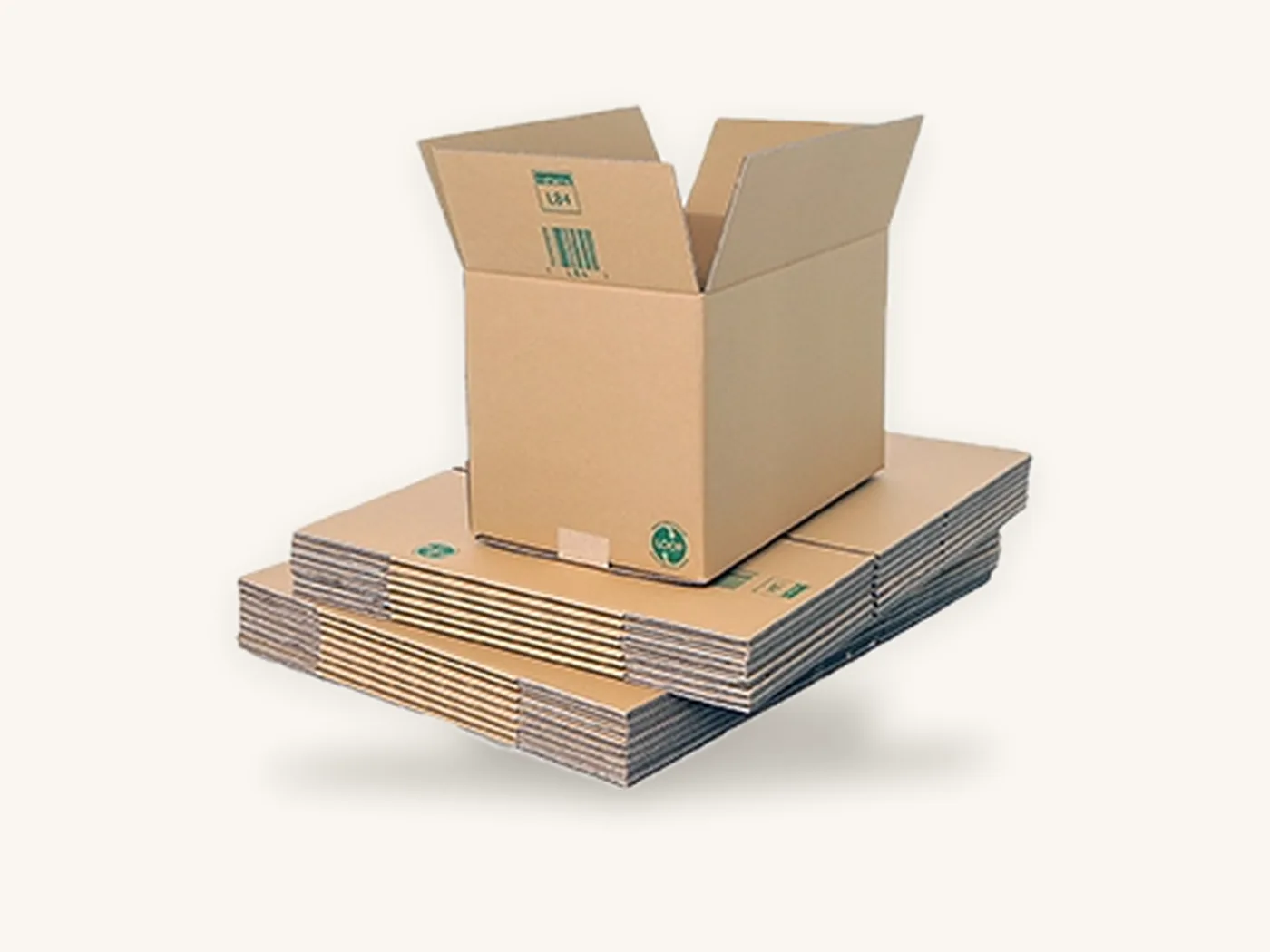
The fastest way to reduce shipping damage is to stop treating it as one problem. Parcels fail in a handful of distinct ways: the box crushes under stacked weight, a corner takes a hard hit, the product shifts and breaks itself, something sharp punctures a panel, or moisture softens the board. Each failure has a different fix, and the wrong fix (usually "add more bubble wrap") costs money without solving anything.
This guide shows how to read damaged returns like evidence, match each failure mode to a packaging change, and test the change before you reorder thousands of boxes. It focuses on the three levers you control: the outer box, what happens inside it, and how it is closed.
Key takeaways
- Most items damaged in transit fail in one of five ways: compression, corner and edge impact, internal movement, puncture, or moisture. Diagnose the mode before changing anything.
- Internal movement causes more breakage than weak board. If a packed box rattles, fix the fit or add an insert before upgrading to heavier corrugated.
- Upgrade board grade for compression and puncture problems: single-wall B-flute for most parcels, BC double wall for heavy, dense or high-value shipments.
- Keep a simple damage log (photo, failure mode, product, carrier, zone) so you change one variable at a time and know whether the fix worked.
- Protective packaging should be sized with the product, not added afterward; an oversized box with fill is often weaker and costs more to ship than a right-sized box with an insert.
Start with a damage audit, not a new box
Before you redesign anything, collect evidence. Customer complaints tell you that something broke; photos of the outer box and the broken product tell you how. A crushed top panel and a cracked jar mean something very different from a pristine box with a shattered jar inside.
A five-step damage audit
- Ask for two photos with every claim. One of the outer box on all visible sides, one of the product and inner packaging as it arrived. Make it part of your replacement process.
- Tag each claim with a failure mode. Use the categories in the next section. If two modes are visible, record both.
- Record the variables. Product SKU, box size, board grade, carrier and service, shipping zone or distance, and packing station or packer if you have more than one.
- Look for clusters after 20 to 30 claims. Damage that clusters on one SKU points to fit or insert problems. Damage that clusters on one carrier or long-zone shipments points to board strength or handling.
- Change one variable, then measure again. If you switch board grade, insert design and carrier at once, you will never know which change mattered.
This does not need software. A shared spreadsheet with a photo link column is enough for most brands shipping a few hundred to a few thousand orders a month.
Tip: keep a few damaged boxes rather than discarding them. Holding a crushed corner in your hand and comparing it with a new box tells your packaging supplier far more than a written description.
The five ways parcels get damaged in transit
Parcels move through trucks, sort centers, conveyors, chutes and delivery vans. Along the way they are stacked, dropped, pushed against other parcels and sometimes left on a wet porch. The table below links what you see on arrival to the likely cause and the first fix to try.
| Failure mode | What you see on arrival | Likely cause | First fix to try |
|---|---|---|---|
| Compression (crush) | Top panel caved in, bulging sides, product cracked from above | Stacked under heavier parcels; board too light for the load; box oversized so the top panel spans empty space | Right-size the box; upgrade flute or to double wall; add a top pad |
| Corner and edge impact | Crushed corner, split edge, product damaged at one end | Drops onto corners from sorting equipment or handling | Corner or end-cap inserts; keep product away from walls; stronger board |
| Internal movement | Box looks fine, product broken or scuffed, loose items inside | Product rattling against walls or other items | Snug die-cut insert; dividers between items; eliminate voids |
| Puncture | Hole or tear in a panel | Sharp corners of neighboring parcels, forklift or cage edges | Higher-strength liner or B-flute; avoid thin E-flute on large panels |
| Moisture | Soft, warped or delaminated board; smeared print | Rain, porch delivery, humid storage, cold-to-warm condensation | Coated or laminated exterior; inner bag for sensitive products; dry storage |
Two further patterns are worth separating out. Closure failure (flaps popped open, tape lifted) is usually a sealing issue, not a box strength issue. Cosmetic damage (scuffed print, dented but intact) matters for gifts and premium goods even when the product survives.
Why internal movement deserves the most attention
A box that arrives looking perfect with a broken product inside almost always had room for the product to move. Every time the parcel is dropped or stopped abruptly, the product accelerates toward a wall and hits it. Heavier board does not change that; the product still hits something.
That is why fit and inserts come before board upgrades. The box inserts guide covers insert types in detail, and the sections below explain how to choose between them for damage control.

Fix the fit: right-sizing as damage prevention
Oversized boxes are a damage problem as much as a cost problem. When the top panel spans a large empty space, it has nothing to support it, so a heavy parcel stacked on top pushes it straight down. When the product has room to slide, it builds momentum before it hits a wall.
Right-sizing means the inside dimensions of the box match the packed product with a small, deliberate clearance, and any remaining space is filled by a designed insert rather than loose fill. The right-sized packaging guide walks through the measurement process in detail.
Clearance rules of thumb
- Rigid products in an insert: size the insert to the product with roughly 1/16 to 1/8 in of clearance, then size the box to the insert.
- Rigid products without an insert: roughly 1/8 in on length and width for a drop-in fit, with a pad or divider taking up any depth.
- Soft goods: apparel and textiles can go close to zero clearance; they protect themselves and fill the box.
- Multiple items: never let two hard items touch. A divider or insert wall between them costs little and removes a common breakage source.
Right-sizing also lowers carrier charges, because large parcels are billed by dimensional weight. The dimensional weight guide explains how carriers calculate it, and the USPS, UPS and FedEx box sizes guide covers common size breakpoints.
Choose protective packaging inside the box
Once the box fits, decide how the product will be held. Protective packaging does two jobs: it immobilizes the product so it cannot build momentum, and it absorbs energy when the parcel is dropped. Different materials do those two jobs in different proportions.
| Interior method | Immobilizes | Absorbs impact | Best for | Tradeoffs |
|---|---|---|---|---|
| Die-cut paperboard insert | Strong | Low to moderate | Cosmetics, small bottles, multi-item kits under a few pounds | Needs accurate product dimensions; limited cushioning for glass |
| Corrugated insert or partition | Strong | Moderate | Glass bottles, jars, candles, ceramics | Takes more space; adds board weight |
| Molded pulp tray | Strong | Moderate to good | Fragile items, electronics, plastic-free programs | Tooling and longer development; less crisp look |
| EVA or PU foam insert | Very strong | Good | Electronics, instruments, high-value items | Not curbside recyclable; higher unit cost |
| Paper void fill | Weak to moderate | Moderate | Irregular items, mixed orders | Settles over a long journey; packer-dependent |
| Top and bottom pads | Moderate (vertical only) | Moderate | Heavy items prone to compression damage | Does not stop sideways movement |
Matching the interior to the failure mode
If your audit shows internal movement, the fix is an insert that locks position: die-cut paperboard or a corrugated partition. If it shows corner impact, keep the product away from the corners with end caps, a suspended insert or a box-in-box. If it shows compression, a corrugated top pad spreads the load and gives the top panel support.
Box inserts and dividers are made alongside the box, so the insert and box dimensions are set together. For a deeper comparison of cushioning materials, see foam vs paperboard inserts.
Watch out: loose void fill depends on the person packing. Two packers can fill the same box with very different amounts, and fill settles during a long trip. If breakage varies by packing station or shift, replace loose fill with a designed insert so every box is packed the same way.
Upgrade the outer box when the board is the problem
If the fit is right, the interior is right, and boxes still arrive crushed or punctured, the board is too light for the journey. That is when a stronger custom shipping box or a double wall construction earns its cost.
How corrugated strength is described
Corrugated board is a fluted medium glued between flat liners. Flute size sets thickness and cushioning; liner weight and quality set puncture and burst resistance; the combination sets stacking strength. Carriers and suppliers usually describe board by Edge Crush Test (ECT), which relates to stacking strength, or by burst strength (Mullen), which relates to puncture and rough handling. The ECT vs burst strength guide explains which to specify.
| Board | Approximate thickness | Where it performs | Choose it when |
|---|---|---|---|
| E-flute single wall | about 1.5 mm | Light products, mailers, crisp print | Items roughly under 5 lb that fit snugly |
| B-flute single wall | about 3 mm | General parcel shipping, better crush and puncture resistance | Most shippers from roughly 5 to 30 lb |
| C-flute single wall | about 4 mm | More cushioning and stacking strength | Bulkier items, pallet stacking, longer transit |
| BC double wall | about 7 mm | High compression and puncture resistance | Heavy parts, glassware sets, high-value or long-distance parcels |
The corrugated flutes guide shows cross-sections of each flute and how they print.
When double wall is worth it
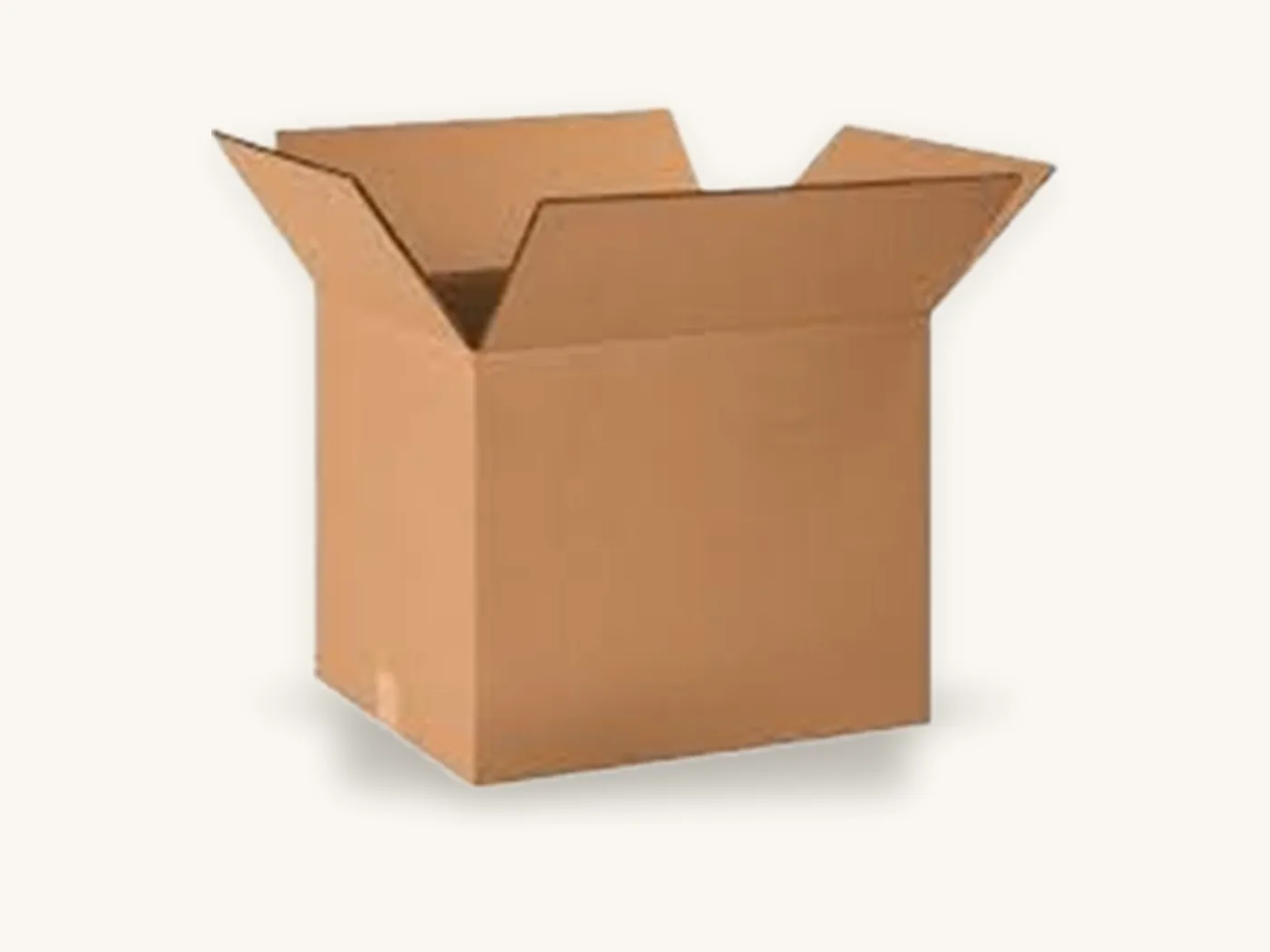
Heavy duty double wall boxes cost more per unit and weigh more, so they are not a default. They are worth it when your audit shows compression or puncture damage on heavy or dense shipments, when parcels travel long distances through many sort points, or when a single failure is expensive, such as a set of glassware or a replacement part.
As a reference from our current rates, a 12x10x6 in B-flute RSC printed one color is about $4.69 per box at 100 units and about $2.08 at 1,000. A much larger 18x14x12 in BC double wall shipper printed one color is roughly $7.98 at 1,000. Size drives most of that gap, so compare like-for-like dimensions in the price estimator.
Box style matters too
A regular slotted container (RSC) is the workhorse shipper; its flaps meet in the center and are taped. A mailer box has rolled, double-thickness end walls that resist corner impact well for its weight, but it uses lighter board. For heavy items, an RSC in B-flute or double wall is usually stronger. The shipping boxes style page shows the constructions, and the mailer vs shipping box comparison explains where each belongs.
Seal and label so the box stays closed
A strong box can still fail if it pops open. Closure failures show up as lifted tape, open flaps and missing items, and they are often mistaken for rough handling.
Sealing that holds
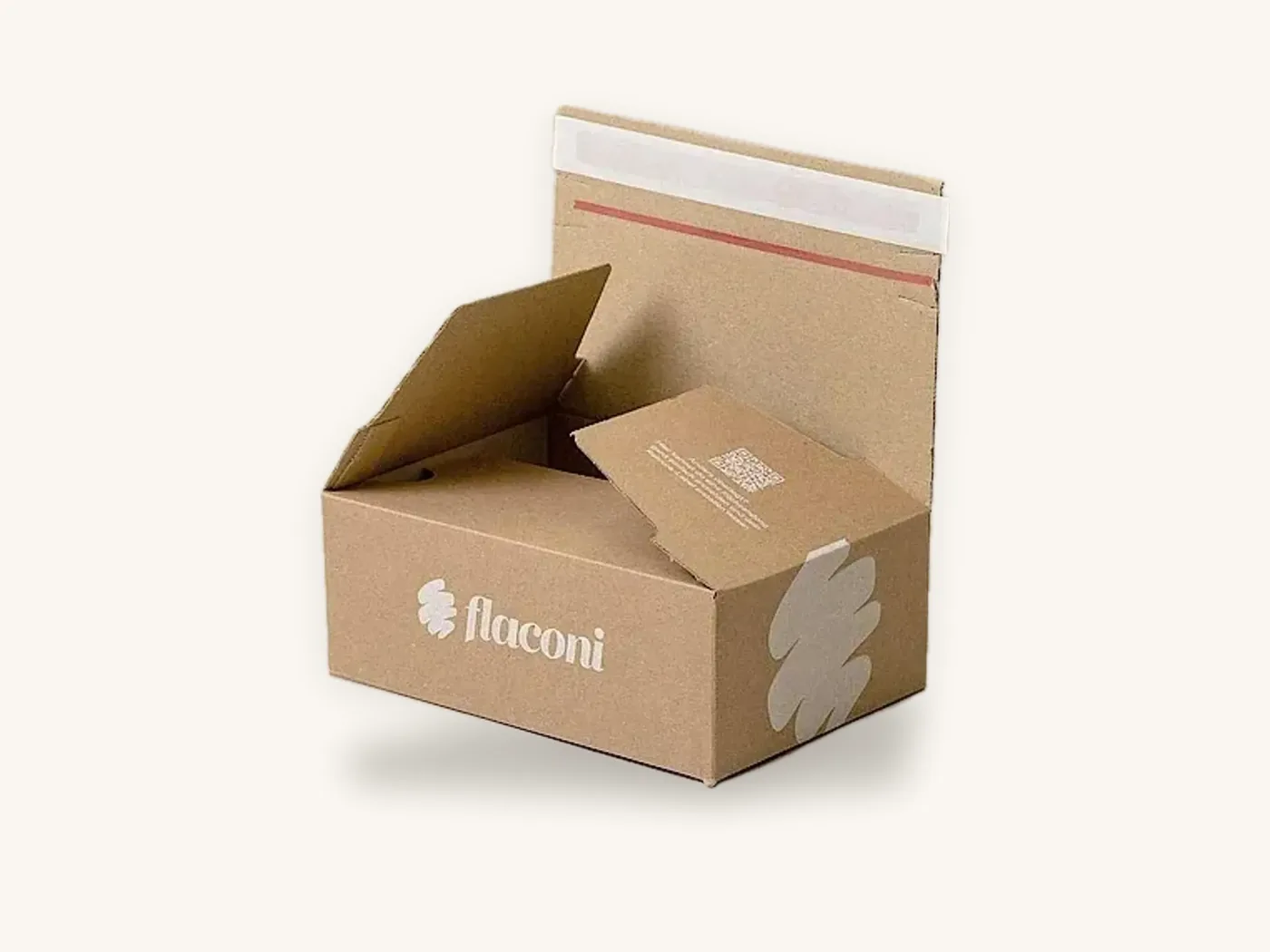
- Use enough tape. On an RSC, tape the center seam and extend the tape a few inches down each end panel. The H-tape pattern (center seam plus both edge seams) adds security on heavier boxes.
- Choose tape for the board and climate. Water-activated paper tape bonds into the board fibers and holds well on recycled corrugated. Some pressure-sensitive tapes lose grip in cold or dusty warehouses.
- Do not overload the closure. A box packed so tightly that the flaps bow has constant stress on the tape. Resize or reduce depth instead.
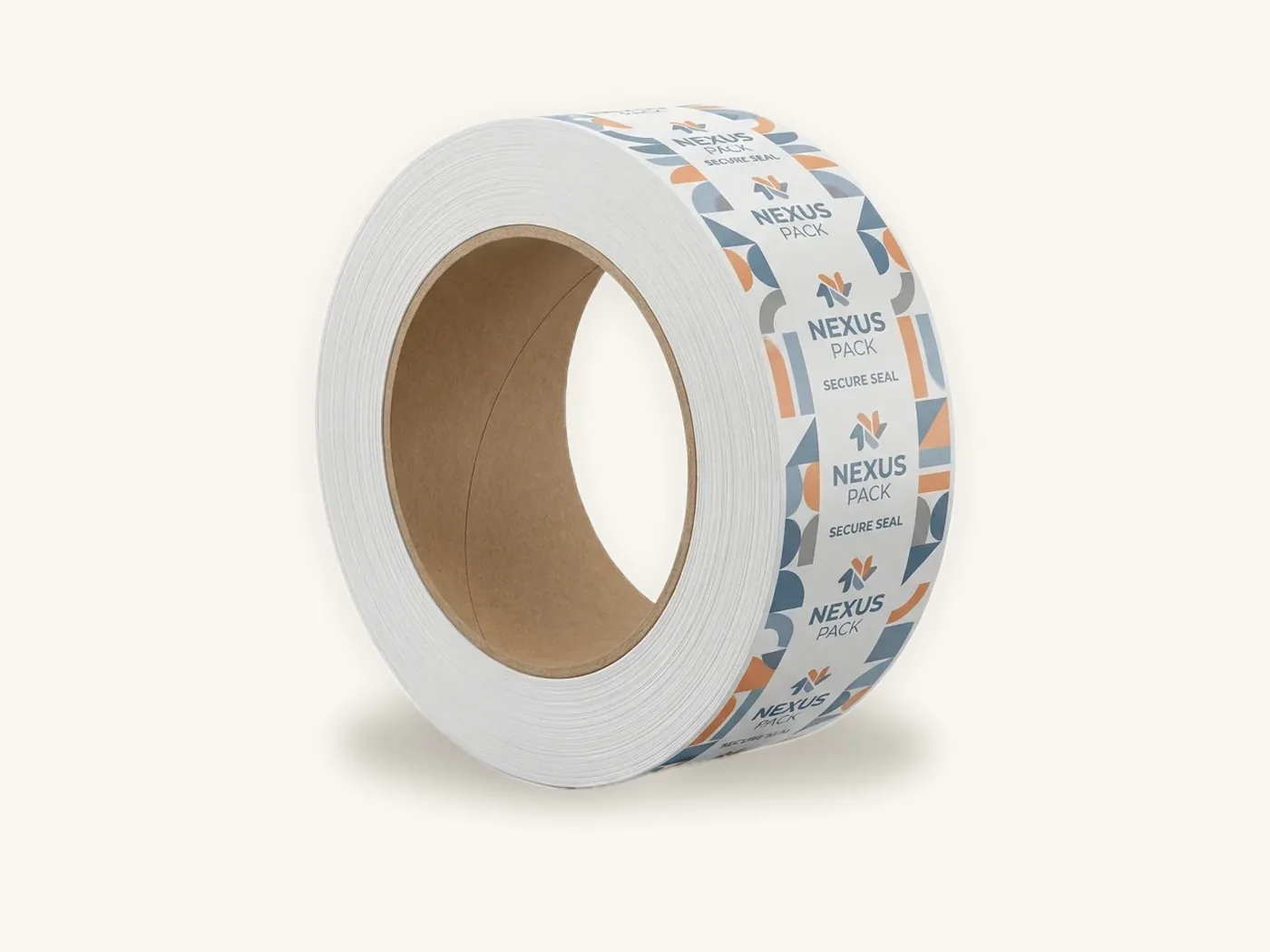
Custom packaging tape also acts as a tamper indicator: branded tape that has been cut and replaced with plain tape is easy to spot.
Labels and handling marks
"Fragile" and orientation arrows can help in some manual handling, but automated sort equipment does not read them, so never rely on a label in place of protection. Place the shipping label flat on the largest panel, away from seams and edges, so it scans cleanly and is not torn when the box is opened.
Protect against moisture and temperature
Corrugated board loses a meaningful share of its stacking strength as it absorbs moisture, which is why boxes stored in a humid warehouse or left on a wet porch can crush under loads they would normally handle.
Practical moisture defenses
- Store flat boxes dry and off the floor. Keep them on pallets, away from exterior doors and loading bays, and let cold stock reach room temperature before packing to avoid condensation.
- Add an exterior coating. Aqueous coating resists light scuffing and splashes; matte or gloss lamination gives more water resistance on printed boxes. Details are on the printing and finishes page.
- Bag moisture-sensitive products. Paper goods, textiles and powders benefit from an inner bag even when the box is well built.
- Consider seasonal specs. Some brands move to heavier board or add a liner bag for winter and monsoon months, then revert.
Heat matters for candles, chocolate, cosmetics and adhesives. Packaging alone cannot stop melting in a hot truck, so pair it with shipping-day and carrier-service rules. The candle packaging guide covers heat-sensitive products specifically.
Test changes before you reorder
Every change should be tested in a way that resembles real shipping. You do not need a lab for early decisions, but you do need consistency.
A simple pre-shipment test routine
- Pack three to five samples exactly as production will. Same insert, fill, tape and label placement.
- Drop test by hand. From about waist height onto a hard floor, drop each sample on its bottom, top, a long side, a short side, one edge and one corner. Inspect after each drop.
- Compression check. Stack a realistic weight on the packed box for a few hours and look for bowing or crushed corners.
- Shake test. If you can hear or feel the product move, the fit is not finished.
- Ship real parcels. Send packed samples to friends or team members in distant zones using the carrier service you actually use, and ask for photos on arrival.
For products that must meet a formal standard, or when a retailer requires it, certified testing is carried out by accredited laboratories to published procedures. The ISTA drop testing guide explains how those test series work and when they are worth paying for.
How to order damage-resistant packaging from Box Sense
Box Sense manufactures shipping boxes, mailers and inserts in-house, so the box and insert can be designed together around your product. You can start with rough information and refine it with our structural team.
What to send
- Product dimensions and weight, and how many items ship together
- What is going wrong today: photos of damaged boxes and products are very helpful
- Current box size and board, if you know them
- Carrier and service, and whether parcels ship individually or on pallets
- Print needs (one color, full color, inside print) and finish
- Quantities to compare, such as 100, 500 and 1,000
- Your target in-hand date
How the process works
- Quote within 24 hours, with a recommendation on board grade and insert type for your product.
- Free design support: dieline, artwork setup and a 3D digital proof, with two revision rounds.
- Free structural samples so you can run the drop, shake and ship tests above before committing. A printed sample of approved artwork is free on orders of 100 or more; see samples.
- Production in 8–12 business days after proof approval, with rush in 5 business days available on most corrugated styles.
- Free shipping on every US order. International shipping is quoted at cost.
The minimum order is 10 boxes, and there are no die or plate charges; custom inserts carry a one-time tooling charge. Defective boxes reported within 14 days are reprinted free. Our how it works page walks through each stage.
Frequently asked questions
What is the most common cause of products damaged in transit?
Internal movement is the most frequent cause when the box itself arrives intact. The product has room to shift, so every drop or sudden stop sends it into a wall or another item. The fix is a snug fit and an insert that holds the product in place. Upgrade board strength when boxes arrive visibly crushed, punctured or split.
Does double wall corrugated stop shipping damage?
Double wall board resists crushing and puncture much better than single wall, so it helps when damage shows up as caved-in panels, holes or split corners on heavy parcels. It does not stop a loose product from breaking inside the box. Fix the fit and interior first, then move to double wall if compression or puncture damage continues.
Is bubble wrap enough to protect fragile items?
Bubble wrap cushions surfaces but does not reliably stop movement, and its performance varies with how much a packer uses. For consistent results, combine a right-sized box with a designed insert, partition or molded pulp tray that locks the product in position. That makes every parcel packed the same way and usually uses less material overall.
How do I know if my box is too big?
Pack the product and close the box. If you can hear or feel it move, or if you need a lot of fill to stop it, the box is too big. A top panel that flexes easily when pressed also indicates too much empty space. Oversized boxes crush more easily and often cost more to ship because of dimensional weight.
Should I write fragile on my shipping boxes?
It does no harm, but automated sorting equipment does not read it, so it cannot replace protection. Most parcels are handled by conveyors, chutes and scanners for much of the journey. Put your effort into fit, inserts, board grade and sealing, then add a fragile or orientation mark only as a secondary measure.
Can moisture really weaken a corrugated box?
Yes. Corrugated board absorbs moisture from humid storage, rain and condensation, and it loses stacking strength as it does. Boxes that hold up in a dry warehouse can crush when damp. Store flat stock dry and off the floor, let cold boxes warm before packing, and consider a coated exterior or inner bag for sensitive products.
How can I test packaging before placing a large order?
Order free structural samples, pack them exactly as production will, and drop them from waist height on faces, edges and a corner. Stack weight on one for a few hours, shake each to check for movement, then ship several to distant addresses using your normal carrier. For formal certification, use an accredited testing laboratory.
Next steps
Pull your last month of damage claims and tag each one with a failure mode. That tells you whether you need a better fit, an insert, stronger board or better sealing. Then compare board grades and quantities in the shipping box price estimator, and request a quote with photos of your damaged parcels so we can recommend a box and insert combination and send structural samples to test.
Boxes in this guide
Order the packaging we covered


Written by the Box Sense Packaging Team
Our structural designers, prepress technicians and production staff print and convert custom boxes every day for brands in the United States, United Kingdom and UAE. Questions about this guide? Talk to us.