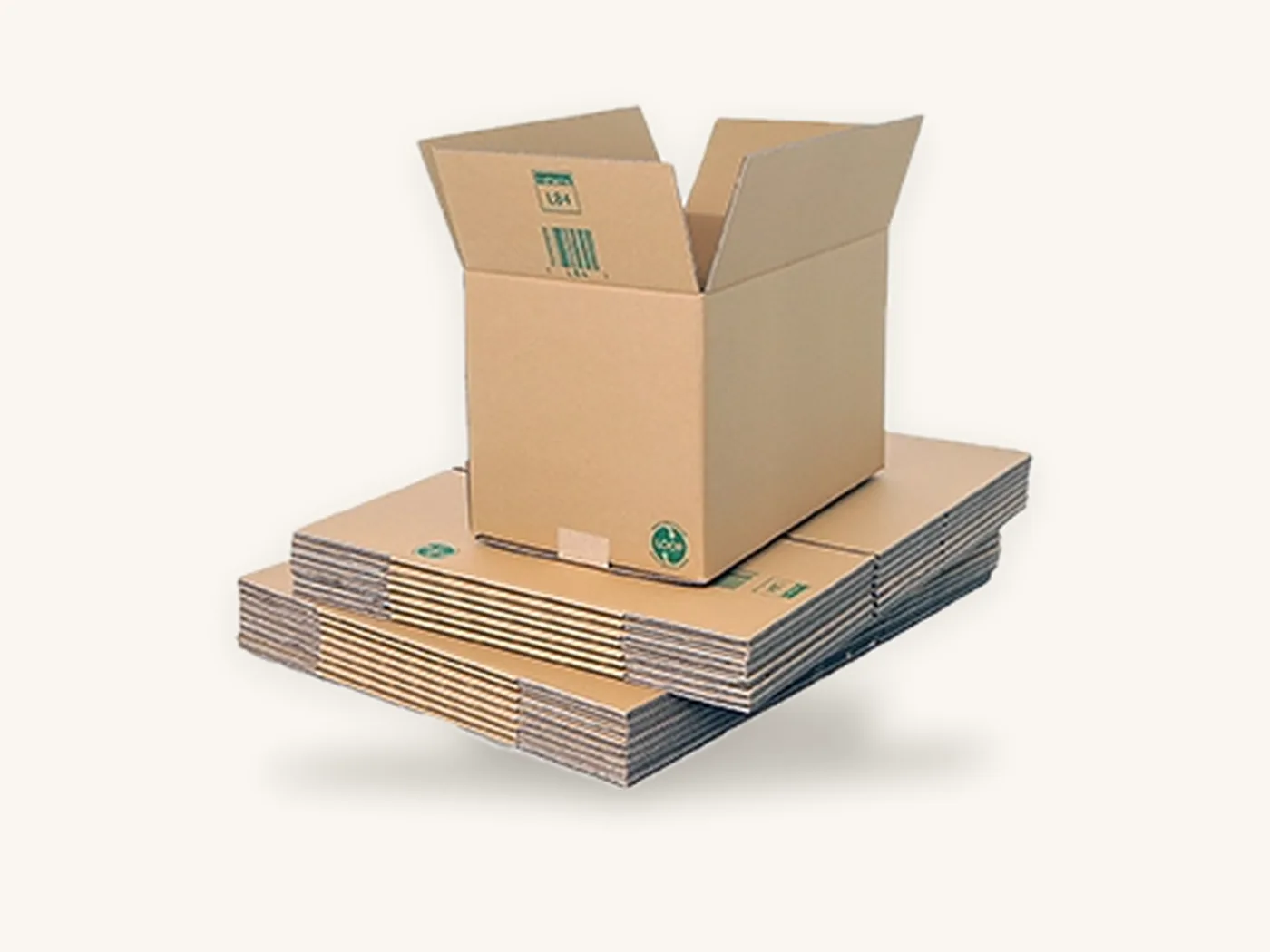
Dimensional weight shipping is the pricing method carriers use to charge for the space a parcel occupies, not just what it weighs. The carrier multiplies the box's length, width and height, divides by a number called the divisor, and bills you for whichever is greater: that dimensional weight or the actual scale weight.
For light, bulky products, the box size often sets the price. A pillow in an oversized carton can be billed like a parcel several times heavier. This guide explains the formula, the rounding rules that catch people out, and a series of worked examples that show how choosing a different box changes the billable weight.
Key takeaways
- Dimensional weight = (L x W x H) ÷ divisor, using the outside dimensions of the parcel in inches for US domestic rates.
- Carriers bill the greater of actual weight or dimensional weight, called the billable weight.
- Divisors such as 139 and 166 are commonly used examples, but carriers set and change divisors, thresholds and rounding rules by service, so check the current UPS, FedEx and USPS rate guides.
- Rounding matters: dimensions are typically rounded to whole inches and the result rounded up to the next pound, so a fraction of an inch can add a billed pound.
- Light, low-density products gain the most from a smaller box; dense, heavy products usually bill on actual weight anyway.
- A custom-sized box costs less board as well: a 1-color B-flute RSC is about $2.08 at 12x10x6 in versus about $3.32 at 16x12x8 in, both at 1,000 units.
What dimensional weight is and why carriers use it
A delivery truck fills up by volume long before it hits its weight limit. If carriers charged on scale weight alone, a box of paper towels would pay almost nothing to take up the same space as a box of books. Dimensional weight, often shortened to dim weight or DIM, solves that by converting volume into an equivalent weight.
The conversion assumes a minimum density. The divisor is effectively the number of cubic inches the carrier treats as one pound. Any parcel less dense than that assumption gets billed as if it were heavier.
Who it affects most
Dim weight matters most to brands shipping products that are large for their weight: bedding, apparel in rigid boxes, lampshades, plush toys, gift sets with lots of fill, and kits with a presentation box inside a shipper. It matters least for dense goods such as supplements in glass, tools, books and liquids, which usually weigh more than their dimensional weight.
It also matters to anyone who picks box sizes by habit. A warehouse that keeps three stock sizes will ship many products in more box than they need, and dim weight turns that extra air into a line item on every invoice.
The dimensional weight formula, step by step
The math is simple. The details, which dimensions, how to round and which divisor, are where estimates go wrong.
How to calculate dimensional weight
- Measure the outside of the packed, sealed parcel. Carriers measure the outside, including board thickness and any bulge from tape or overfilling.
- Round each dimension as your carrier specifies. Many US services round each measurement to the nearest whole inch.
- Multiply length x width x height to get cubic inches.
- Divide by the divisor for your carrier, service and account.
- Round the result up to the next whole pound, which is the common practice.
- Weigh the parcel and round actual weight up to the next pound as well.
- Compare the two. The larger number is the billable weight used with the zone to price the shipment.
A first worked example
Say you ship a candle gift set that weighs 2.2 lb packed, in a box that measures 12 x 10 x 6 in outside.
- Volume: 12 x 10 x 6 = 720 cubic inches
- Dimensional weight at a divisor of 139: 720 ÷ 139 = 5.18, rounded up to 6 lb
- Actual weight: 2.2 lb, rounded up to 3 lb
- Billable weight: 6 lb
Now move the same set into a box that measures 10 x 8 x 4 in outside. The volume drops to 320 cubic inches, which is 2.30 at the same divisor, rounded up to 3 lb. Actual weight is also 3 lb, so the billable weight is 3 lb. The product did not change. The box halved the billable weight.
Watch out: always measure the finished parcel, not the box spec. An overstuffed box that bows a quarter inch, or a label pouch on a panel edge, can round a dimension up to the next inch.
Common dimensional weight divisors and why you must check them
Divisors are set by each carrier and can differ by service, by whether you use retail or negotiated rates, and by whether the shipment is domestic or international. Carriers revise them, and they also change thresholds such as the minimum parcel size where dim weight applies.
The table shows divisors commonly cited as examples. Treat it as a way to understand the math, not as current tariff data.
| Divisor (example) | Where it is commonly seen | What it implies | What to check |
|---|---|---|---|
| 139 | Many UPS and FedEx daily and account rates, US domestic | Parcels less dense than about 1 lb per 139 cubic inches bill on dimensions | Your contract may specify a different divisor |
| 166 | USPS for larger parcels on some services, and some retail counter rates | A more lenient conversion; the same box bills lighter | USPS has applied dim weight only above a size threshold, such as one cubic foot |
| 5,000 (cm³ per kg) | Common metric convention for international express | Dimensions in centimeters, result in kilograms | Some services use 6,000; confirm per lane |
| Negotiated | High-volume shipper contracts | A higher divisor lowers dim weight | Read the contract terms, not the public rate guide |
Before you build a pricing model around any of these numbers, pull the current rate guide or service guide from UPS, FedEx or USPS, or ask your account representative. If you use a 3PL or shipping platform, ask which divisor it applies to your account, since that is what shows up on the invoice.
Why a higher divisor is better for you
A divisor is the denominator, so a larger divisor makes dimensional weight smaller. At 139, a 720 cubic inch box bills at 6 lb; at 166, the same box is 4.34, rounded up to 5 lb. Negotiated divisor increases are one of the few shipping contract terms that reward good packaging automatically.
Worked examples: the same product in different boxes
Because dimensional weight scales with volume, small changes in each dimension multiply. Here is how common box sizes compare at the two example divisors, using outside dimensions and rounding up to the next pound.
| Outside box size (in) | Cubic inches | Dim weight at 139 | Dim weight at 166 |
|---|---|---|---|
| 8 x 6 x 3 | 144 | 2 lb (1.04) | 1 lb (0.87) |
| 10 x 8 x 4 | 320 | 3 lb (2.30) | 2 lb (1.93) |
| 10 x 8 x 6 | 480 | 4 lb (3.45) | 3 lb (2.89) |
| 12 x 9 x 4 | 432 | 4 lb (3.11) | 3 lb (2.60) |
| 12 x 10 x 6 | 720 | 6 lb (5.18) | 5 lb (4.34) |
| 14 x 10 x 6 | 840 | 7 lb (6.04) | 6 lb (5.06) |
| 16 x 12 x 8 | 1,536 | 12 lb (11.05) | 10 lb (9.25) |
| 18 x 14 x 12 | 3,024 | 22 lb (21.76) | 19 lb (18.22) |
Remember that some services only apply dim weight above a size threshold, so a smaller box may simply bill on actual weight. The table is for comparing boxes, not predicting a specific invoice.
Example: a lightweight throw pillow
Say a decorative pillow weighs 1.4 lb and ships loose in a stock 16 x 12 x 8 in carton. At a divisor of 139, it bills at 12 lb. Compressed and rolled into a 12 x 10 x 6 in box, it bills at 6 lb. Packed flat in a padded mailer bag it may bill closer to its actual weight, which is why soft goods often leave boxes altogether. Our poly mailer vs mailer box guide covers that trade-off.
Example: a dense cast-iron trivet
Say a trivet weighs 4.3 lb and ships in a 10 x 8 x 4 in box. Dimensional weight at 139 is 3 lb, but actual weight rounds up to 5 lb, so it bills at 5 lb. Shrinking the box further would not lower the bill at all. For dense products, spend packaging effort on protection, not on shaving inches.
Example: the rounding threshold
Say a mailer measures 12.4 x 9.4 x 4.4 in outside. Rounded to the nearest inch, that is 12 x 9 x 4, or 432 cubic inches, which is 4 lb at 139. A slightly larger mailer at 12.6 x 9.6 x 4.6 in rounds to 13 x 10 x 5, or 650 cubic inches, which is 4.68 and bills at 5 lb. Two-tenths of an inch per side added a full billed pound.
Why low-density products pay the most
A useful way to think about dim weight is density. Divide the parcel's actual weight by its volume. If it weighs less than one pound for every divisor's worth of cubic inches, dimensional weight wins and you pay for air.
A quick density check
- Take the actual packed weight in pounds.
- Multiply by the divisor, for example 139.
- Compare that number to the parcel's cubic inches.
- If the cubic inches are larger, the parcel will usually bill on dimensional weight.
For the candle set above, 2.2 lb x 139 = 306 cubic inches. The original 720 cubic inch box was far larger, so it billed on dimensions. The 320 cubic inch box was close, so actual and dim weight landed on the same rounded pound.
Products that tend to cross the line
Apparel, bedding, plush toys, lighting, baskets, party supplies and gift sets with rigid presentation boxes are usually lighter than their packed volume. Supplements, candles in thick glass, cookware and books are usually heavier. Many brands have both in the catalog, which is why one standard shipper size rarely serves every SKU well. The right-sized packaging guide explains how to build a small family of box sizes around a mixed catalog.
Packaging decisions that change dimensional weight
Once you understand the formula, packaging becomes a shipping lever. These are the decisions that move the number most.
Box inside dimensions and clearance
Every quarter inch of clearance on each side adds half an inch to the outside dimension. Size the box to the packed product, leaving only the clearance protection requires. The box measuring guide shows how to calculate inside dimensions and how much clearance each product type needs.
Board thickness
Carriers measure outside dimensions, so board counts. E-flute adds roughly 3 mm across each dimension compared with the inside size, B-flute roughly 6 mm, and BC double wall roughly 13 mm. On a box right at a rounding threshold, moving from B-flute to E-flute can drop an inch after rounding. On heavy or fragile products, protection wins; check the corrugated board options before downgrading.
Style of box
A roll-end tuck-front mailer box closes flat and adds little beyond the rolled walls. A regular slotted shipping box can bulge at the flaps when overfilled. A presentation box packed inside a shipper adds two sets of walls and a cushioning gap. Where the product allows, a printed mailer that ships on its own avoids the overbox entirely.
Inserts instead of void fill
Loose fill needs room around the product to work. A die-cut box insert holds the product in place with far less space, so the outer box can shrink. Inserts also reduce movement, which lowers damage, covered in the shipping damage guide.
Product and kit layout
Laying items side by side versus stacking them changes the box proportions. A flatter, wider box and a taller, narrower box of the same volume bill identically, but after rounding one may land lower. Try two or three layouts before you lock a size.
Build a simple dim weight calculator for your catalog
You do not need special software to model dimensional weight. A spreadsheet with one row per SKU and box combination shows where the savings are.
Columns to set up
- SKU and packed product weight
- Current box outside dimensions (L, W, H)
- Rounded dimensions, following your carrier's rounding rule
- Cubic inches
- Dimensional weight (cubic inches ÷ your divisor, rounded up)
- Actual weight rounded up
- Billable weight (the larger of the two)
- Proposed box outside dimensions and the same calculations
- Billed pounds saved per shipment
- Monthly shipment volume, so you can rank SKUs by total pounds saved
How to use the results
Sort by total billed pounds saved per month. The top handful of SKUs usually justify a custom size first. Then apply your actual rate card by zone to convert pounds into money, since rates differ by zone and service. Keep the divisor in its own cell so you can update the whole sheet when a carrier changes it.
Tip: add a column for the box cost at your order quantity. A smaller custom box usually costs less board, so the packaging line and the shipping line often improve together.
Weighing box cost against shipping savings
Right-sizing is not free if it means buying a new box, so compare the whole picture. Here are indicative per-unit prices from our current rates, with free US shipping on the boxes themselves. Price your own sizes in the packaging price estimator.
| Box spec | Dim weight at 139 | About per box at 100 | About per box at 1,000 |
|---|---|---|---|
| Mailer box, E-flute, 8x6x3 in, full color outside | 2 lb | $2.64 | $1.17 |
| Mailer box, E-flute, 10x8x4 in, full color inside+outside | 3 lb | $4.33 | $1.92 |
| Shipping box RSC, B-flute, 12x10x6 in, 1-color | 6 lb | $4.69 | $2.08 |
| Shipping box RSC, B-flute, 16x12x8 in, 1-color | 12 lb | $7.47 | $3.32 |
Dim weights here use the listed sizes as outside dimensions for simplicity; actual outside dimensions will be slightly larger than the inside spec.
Where the trade-off flips
A smaller box saves money only if the product still arrives intact. If cutting clearance means cutting cushioning for a fragile item, damage and replacement costs can erase the savings. Test a packed sample through real transit before switching a high-volume SKU. The storage and inventory guide also covers how adding box sizes affects warehouse space and reorder planning.
How to order right-sized boxes from Box Sense
We make every box to your dimensions, so you can size boxes to billable weight thresholds rather than to whatever stock sizes a warehouse carries.
What to send
- The packed product dimensions and weight for each SKU
- Your current box size and, if known, the divisor your carrier or 3PL applies
- Any outside-dimension target, for example staying at or under a rounding threshold
- Style preference: printed custom mailer boxes, plain or printed custom shipping boxes, or corrugated boxes in a specific flute
- Whether you need inserts to hold the product in a smaller box
- Quantities per size and your target delivery date
What to expect
- A quote confirmed within 24 hours
- A free dieline, artwork setup and 3D digital proof with two revision rounds
- Free unprinted structural samples so you can measure the sealed outside and test-ship before committing; a printed sample of approved artwork is free on orders of 100 or more, as described on the samples page
- A minimum order of 10 boxes, so you can trial new sizes on a few SKUs first
- Standard production of 8–12 business days after proof approval, or rush in 5 business days on most corrugated styles
- Free shipping on every US order, and defective boxes reported within 14 days reprinted free
If you sell on marketplaces, Amazon FBA boxes and our e-commerce and subscription packaging page cover sizes built for fulfillment networks.

Frequently asked questions
How do you calculate dimensional weight?
Measure the outside of the sealed parcel in inches, round each dimension as your carrier specifies, and multiply length by width by height. Divide that volume by the carrier's divisor, such as 139 or 166 as common examples, and round up to the next pound. The carrier bills the greater of that figure and the actual weight.
What is the dimensional weight divisor for UPS, FedEx and USPS?
Each carrier sets its own divisors, and they vary by service, account and destination. A divisor of 139 is commonly used for many UPS and FedEx domestic rates, and 166 has been used by USPS for larger parcels. Carriers change these rules, so confirm the current figure in each carrier's rate guide or with your account representative.
Does dimensional weight apply to every package?
Not always. Some services apply dimensional weight to every parcel, while others only apply it above a size threshold, such as packages larger than one cubic foot. Negotiated contracts can also change how it applies. Check the current service guide for each carrier and service you use, since thresholds and rules are revised periodically.
Will a smaller box always lower my shipping cost?
No. A smaller box lowers the bill only when dimensional weight exceeds actual weight. Dense products, like tools, glassware or books, often bill on actual weight regardless of box size. Also consider protection: a box too small for proper cushioning can raise damage and replacement costs. Model both weights before switching.
Do carriers use inside or outside box dimensions?
Carriers use the outside dimensions of the finished parcel, measured at the longest points, including board thickness and any bulge. That is why a B-flute box bills slightly larger than an E-flute box with the same inside dimensions, and why overfilled boxes that bow outward can round up to a larger size.
How do I reduce dimensional weight shipping costs?
Size boxes closely to the packed product, use inserts instead of bulky loose fill, choose thinner board where protection allows, and avoid overboxing products that can ship in a printed mailer. Consider padded mailer bags for soft goods. Then review your divisor in carrier contracts, since a higher negotiated divisor lowers dimensional weight on every parcel.
How is dimensional weight calculated in centimeters?
For metric shipments, multiply length, width and height in centimeters to get cubic centimeters, then divide by the carrier's metric divisor, commonly 5,000 for many international express services, to get kilograms. Some carriers and services use 6,000 or other values. Confirm the divisor for your specific service and destination before quoting.
Next steps
Pull your top-shipping SKUs, measure the sealed parcels, and run them through a simple dim weight calculator using your carrier's current divisor. Then compare box costs for tighter sizes in our custom box price estimator, and request a quote for right-sized boxes with your product dimensions. We will confirm pricing within 24 hours and send free structural samples to test.
Boxes in this guide
Order the packaging we covered


Written by the Box Sense Packaging Team
Our structural designers, prepress technicians and production staff print and convert custom boxes every day for brands in the United States, United Kingdom and UAE. Questions about this guide? Talk to us.