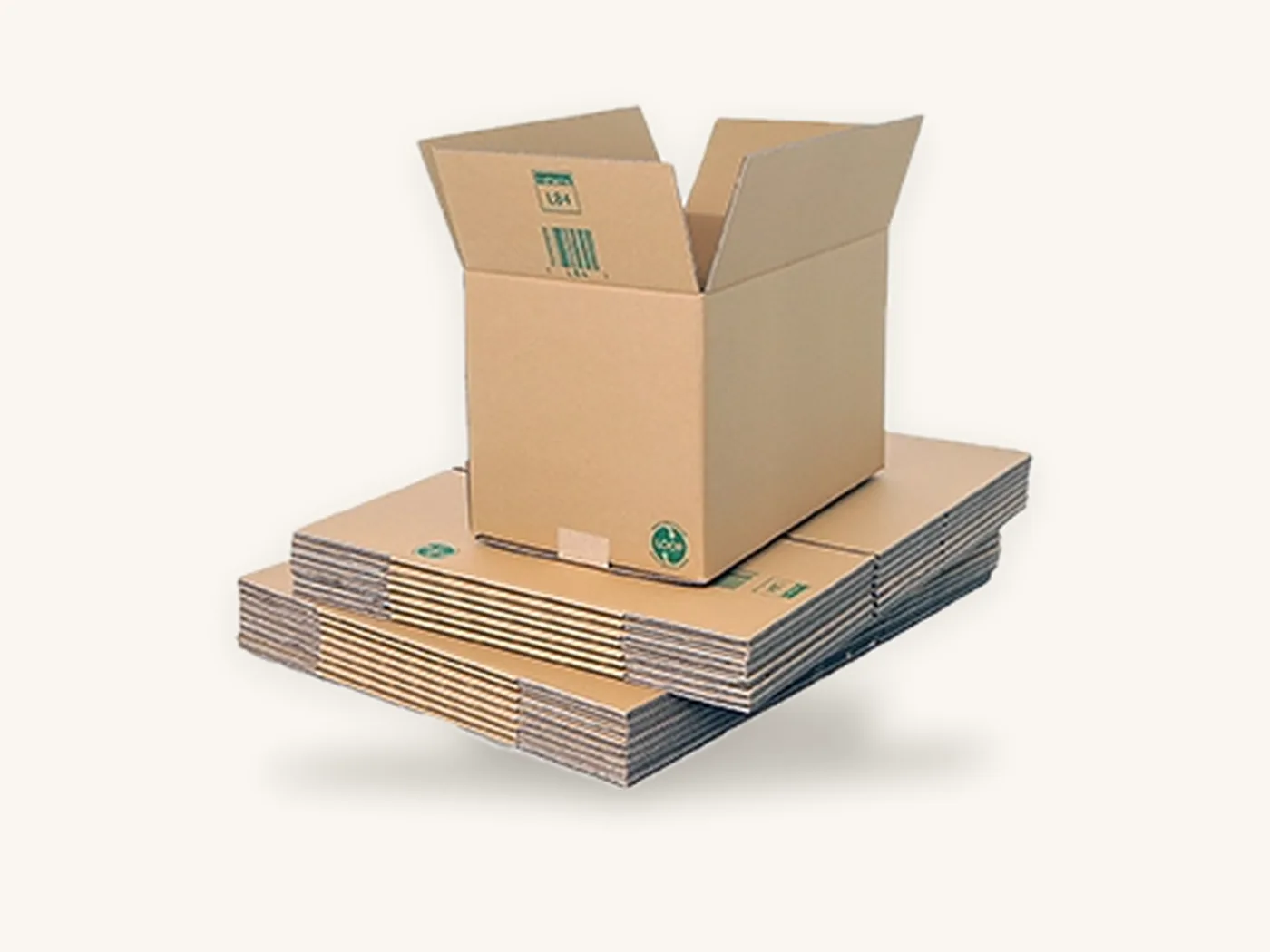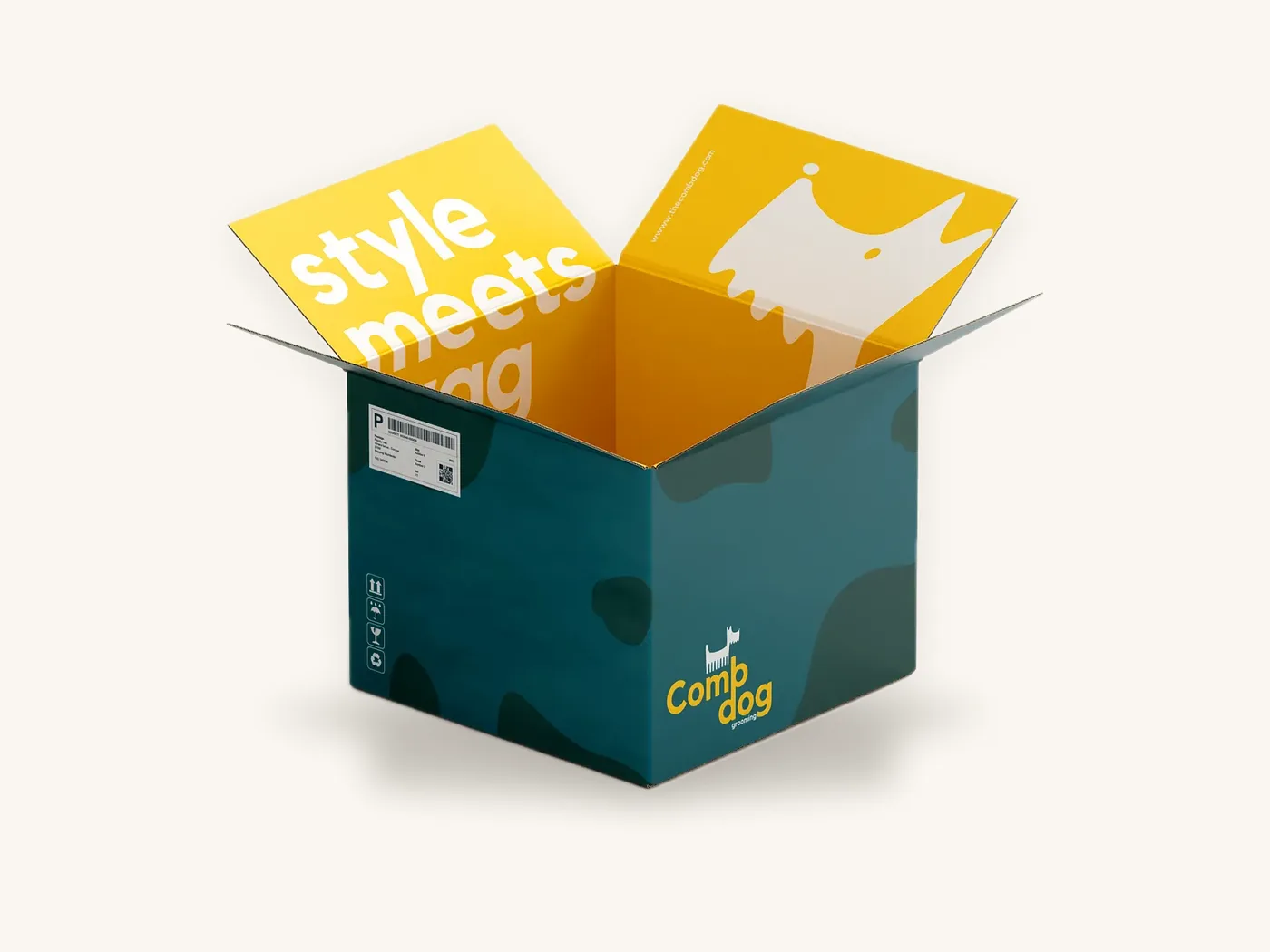
Right sized packaging means the box is built around the product as it ships, with just enough clearance for packing and protection and no empty space that has to be filled, paid for in freight or crushed in transit. Done well, it lowers three costs at once: void fill, damage and the dimensional weight that carriers charge on bulky parcels.
It is not the same as "the smallest possible box." A box that is too tight splits at the corners, bows its lid and transmits every impact straight into the product. The goal is a deliberate fit: a known clearance, a known cushioning method and a known outer size you can rate before you order.
This guide walks through how to measure for that fit, how many sizes a catalog really needs, when inserts beat loose fill, how to test a right-sized pack and what it costs to move from stock cartons to custom dimensions.
Key takeaways
- Right-sizing starts from the packed product, not the bare item: measure it with its pouch, tissue, card and any insert in place.
- Clearance should match the product: roughly 0 to 1/8 in for soft goods, about 1/8 in for rigid items in an insert, and about 1 to 2 in on every side when you rely on cushioning for fragile goods.
- Most catalogs do not need a box per SKU. A size family of three to eight boxes, chosen from your order data, usually covers the bulk of shipments.
- A snug die-cut insert often replaces loose void fill entirely and holds the product away from the walls where impacts land.
- Carriers price large parcels on outer volume, so every inch trimmed from the longest sides counts. Our dimensional weight guide covers the math.
- Box Sense makes custom sizes from 10 boxes with no die or plate charges, so testing a new size costs little more than the boxes themselves.
What right sized packaging actually means
Packaging optimization is often reduced to a single slogan: ship less air. That is a useful starting point, but a right-sized pack has four measurable properties, and you should be able to name each one for every box you use.
- Fit. The internal dimensions are derived from the packed product plus a stated clearance.
- Restraint. Something stops the product from moving: the walls themselves, an insert, a wrap or a controlled amount of cushioning.
- Strength. The board grade matches the weight and the handling the parcel will see, which may change once the box gets smaller.
- Outer size. The external dimensions have been rated against your carriers so you know the billable weight before you commit.
Where oversized boxes quietly cost you money
An oversized box does not show up as a single line item. Its cost is spread across your packing bench, your carrier invoice and your customer service queue, which is why it often goes unnoticed until someone audits a week of shipments.
| Cost area | What an oversized box does | What right-sizing changes |
|---|---|---|
| Void fill | Needs air pillows, paper or peanuts to stop movement | Little or no fill, or a single insert that goes in with the product |
| Packing labor | Packers judge how much fill to add, which varies by person | A repeatable pack: product in, insert in, close |
| Damage | Product builds speed across the empty space before hitting a wall | Product moves very little, so impacts are absorbed by the board and insert |
| Freight | Larger outer volume can push billable weight above actual weight | Smaller outer dimensions keep more parcels billed on actual weight |
| Storage | Bigger flat boxes and fill take more shelf and floor space | Fewer, smaller SKUs and less bulky fill to store |
| Customer perception | A small item rattling in a large box reads as wasteful | The package looks intentional and uses visibly less material |
Why loose space causes damage
A product sitting in a loose box is not stationary during a drop. When the parcel lands, the product keeps moving until it hits a wall or a corner, and the longer that travel, the harder the hit. Loose fill can slow it down, but fill settles and shifts in transit, especially on long routes with lots of handling.
In a well-fitted pack, the product and its insert behave like one unit. The box takes the impact and spreads it, and the product has nowhere to go. For a deeper look at failure modes, see our guide on how to reduce shipping damage.
How to measure for right sized packaging
Measuring is where most right-sizing projects succeed or fail. A tape measure and ten minutes per SKU are enough if you follow the same method every time.
A repeatable measuring process
- Assemble the ship-ready bundle. Put the product in its retail carton, pouch, sleeve or wrap. Add the packing slip, card or sample that ships with it.
- Measure the three longest dimensions. Measure at the widest point, including caps, handles, bulging closures and hang tabs.
- Record weight. Weigh the bundle, not the product alone. Weight drives board grade.
- Decide the restraint method. Snug walls, a die-cut insert, a wrap or cushioning. The clearance you add depends on this choice.
- Add clearance by method. Use the table below as a starting point, then confirm with a sample.
- Allow for the insert itself. Board thickness adds to every side the insert touches, so add it before you finalize internal size.
- Convert to outer dimensions. Add the board caliper on each side. For E-flute that is roughly 1/8 in total per dimension; for B-flute, roughly 1/4 in.
- Rate the outer size. Check the billable weight with your carriers before you order.
Clearance by product type
| Product type | Restraint method | Suggested clearance per dimension |
|---|---|---|
| Folded apparel, textiles | Snug walls, tissue wrap | 0 to 1/8 in |
| Boxed retail product (carton inside shipper) | Snug walls | About 1/8 in |
| Rigid, non-fragile items (books, tools, tins) | Walls or a simple divider | About 1/8 in |
| Jars, bottles, small glass | Die-cut insert with cavities | About 1/8 in around the insert |
| Fragile or high-value items | Cushioning or suspension | About 1 to 2 in on every side |
| Multi-item kits | Divider or platform insert | Sized to the insert footprint plus about 1/8 in |
These are working ranges, not rules. A heavy glass item needs more cushion than a light one, and a product that ships through several hubs deserves more margin than one that goes local.
Watch out: always size from internal dimensions. A supplier quoting "12x10x6" may mean inside or outside, and the difference on B-flute is about a quarter inch per dimension. State "internal L x W x D" on every request.
Building a box size family instead of one box per SKU
Custom sizes for every product sound ideal, but managing dozens of box SKUs creates its own waste: more stock to track, more partially used pallets and more chances that packers grab the wrong carton. Most brands do better with a planned family of sizes.
Using order data to pick sizes
Start with a few weeks or months of order history. For each order, note which products shipped together. You will usually find that a handful of combinations make up most of the volume: single hero products, common pairs and a few larger bundles.
Size one box for each of those clusters. Then check how the less common orders fit into the family. If an order only fits the next size up with a lot of spare room, consider a divider or an insert rather than a new box.
An example size family
Say you run a home fragrance brand selling a single candle, a candle plus a diffuser, and a three-candle gift set. A family could look like this:
| Box | Typical contents | Structure | Why it works |
|---|---|---|---|
| Small mailer | One boxed candle | E-flute mailer with a simple insert | Snug fit, branded opening, low outer volume |
| Medium mailer | Candle and diffuser, or two candles | E-flute mailer with a two-cavity insert | Keeps glass items apart without fill |
| Large shipper | Three-candle set or wholesale restock | B-flute shipping box with a divider | Stronger walls for heavier, denser loads |
| Overflow shipper | Rare larger orders | Stock or custom RSC with cushioning | Covers edge cases without adding a custom SKU |
Three custom sizes plus one overflow box cover most orders. Our guide to packaging storage and inventory explains how to set reorder points for a family like this so no size runs out mid-season.
Choosing the structure: mailer box, shipping box or both
Right-sizing is not only about dimensions. The structure changes how much board you use, how the parcel handles impacts and how the product presents on arrival.
Mailer boxes for direct-to-consumer orders
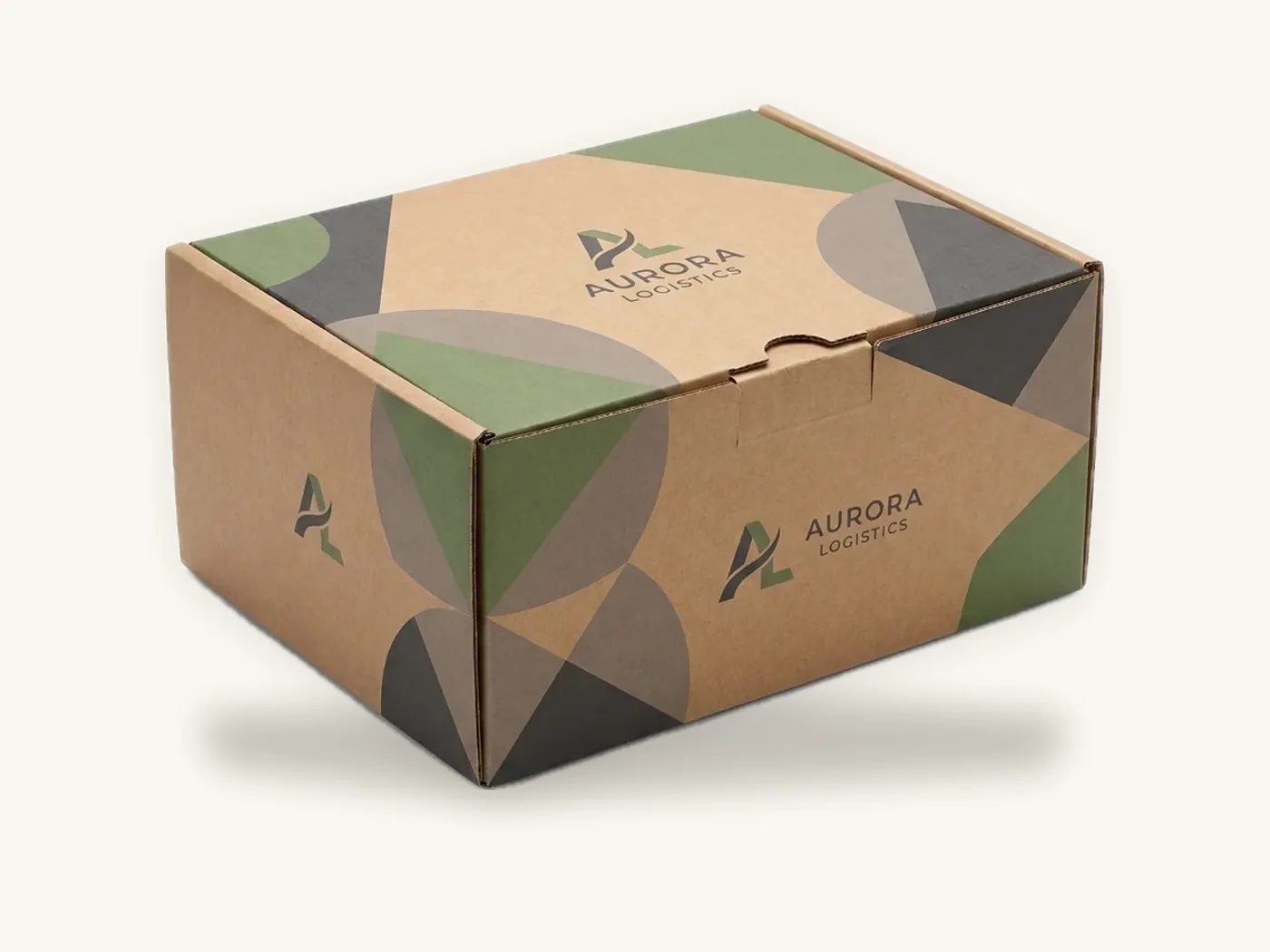
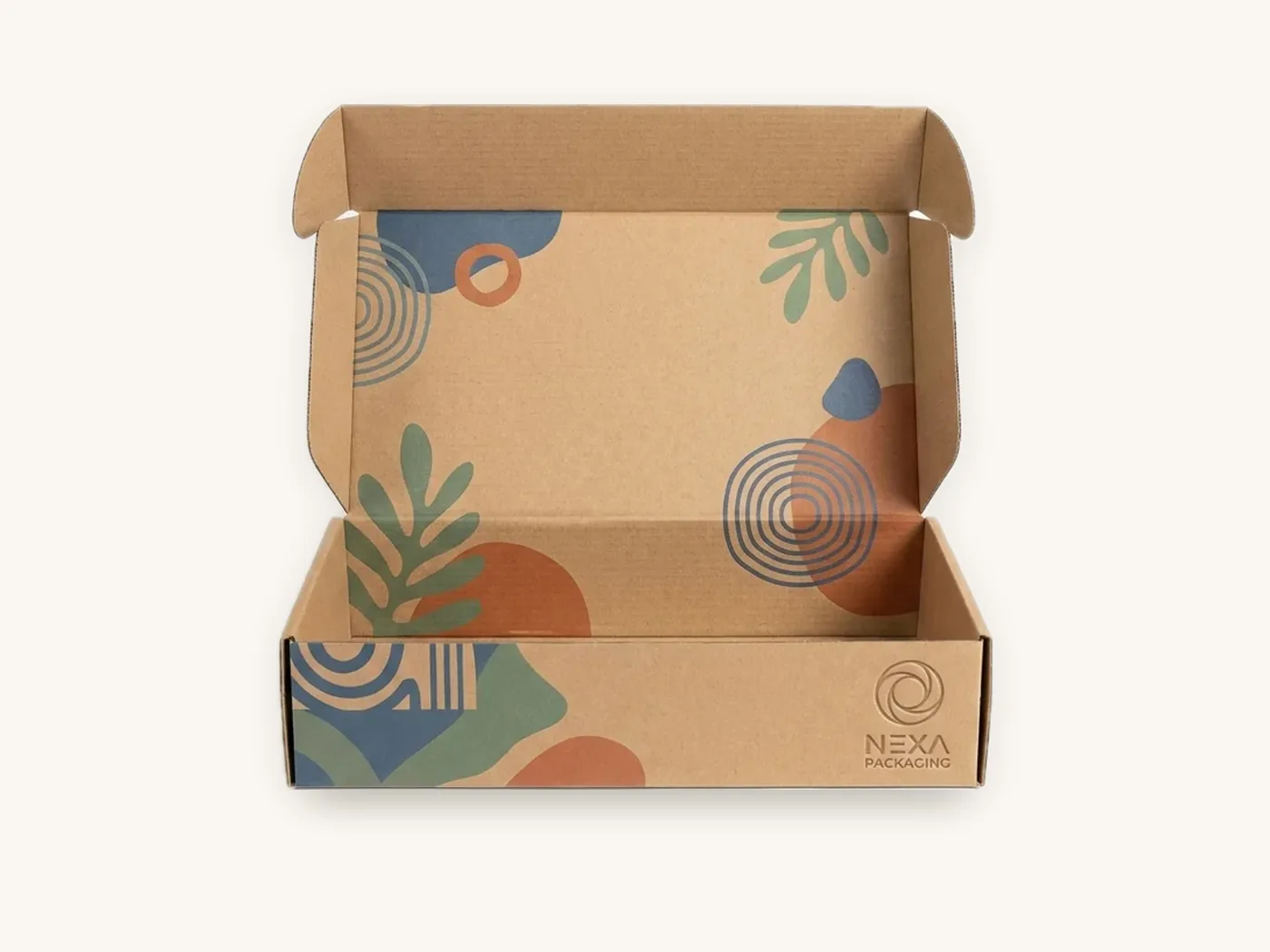
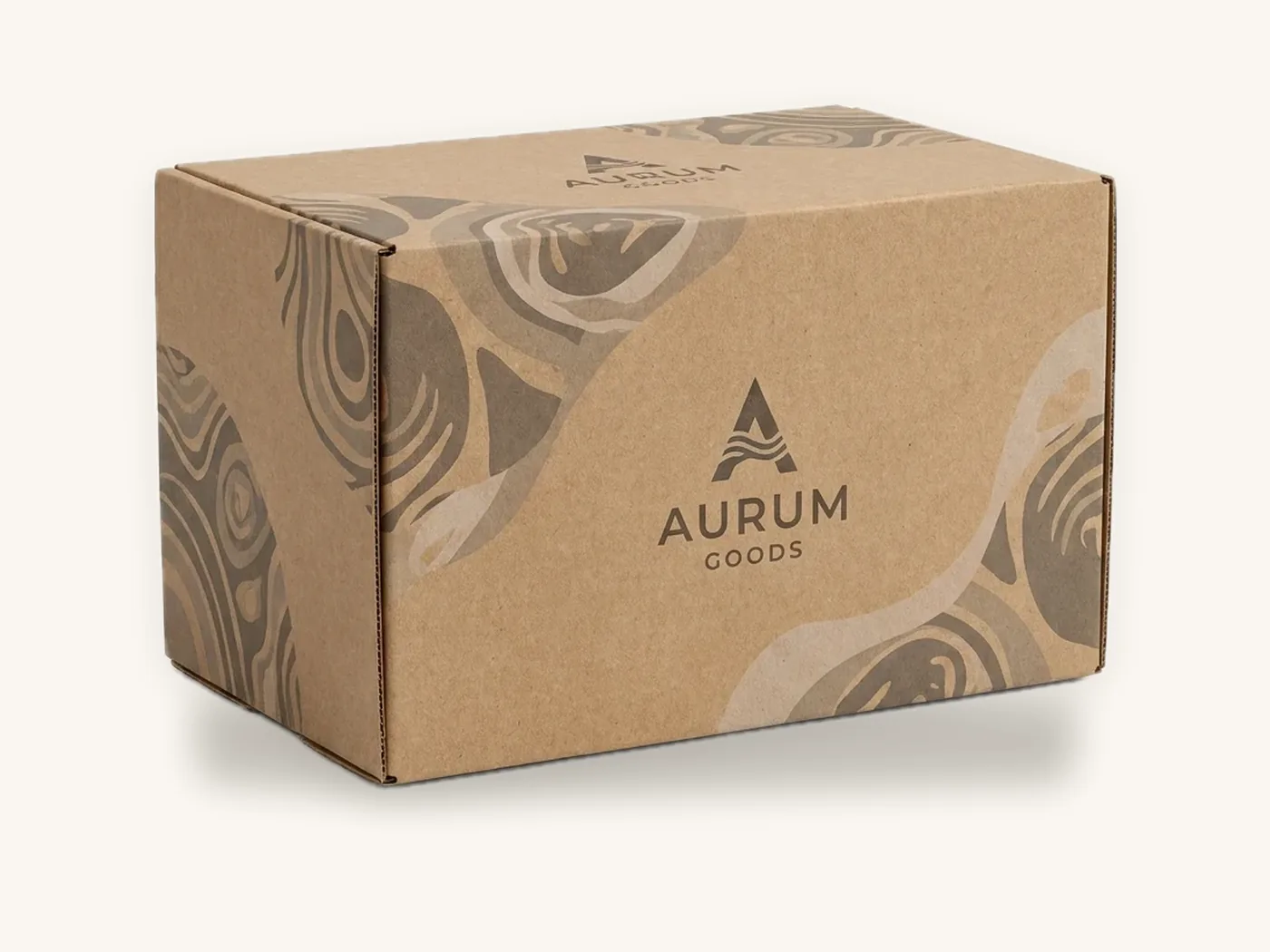
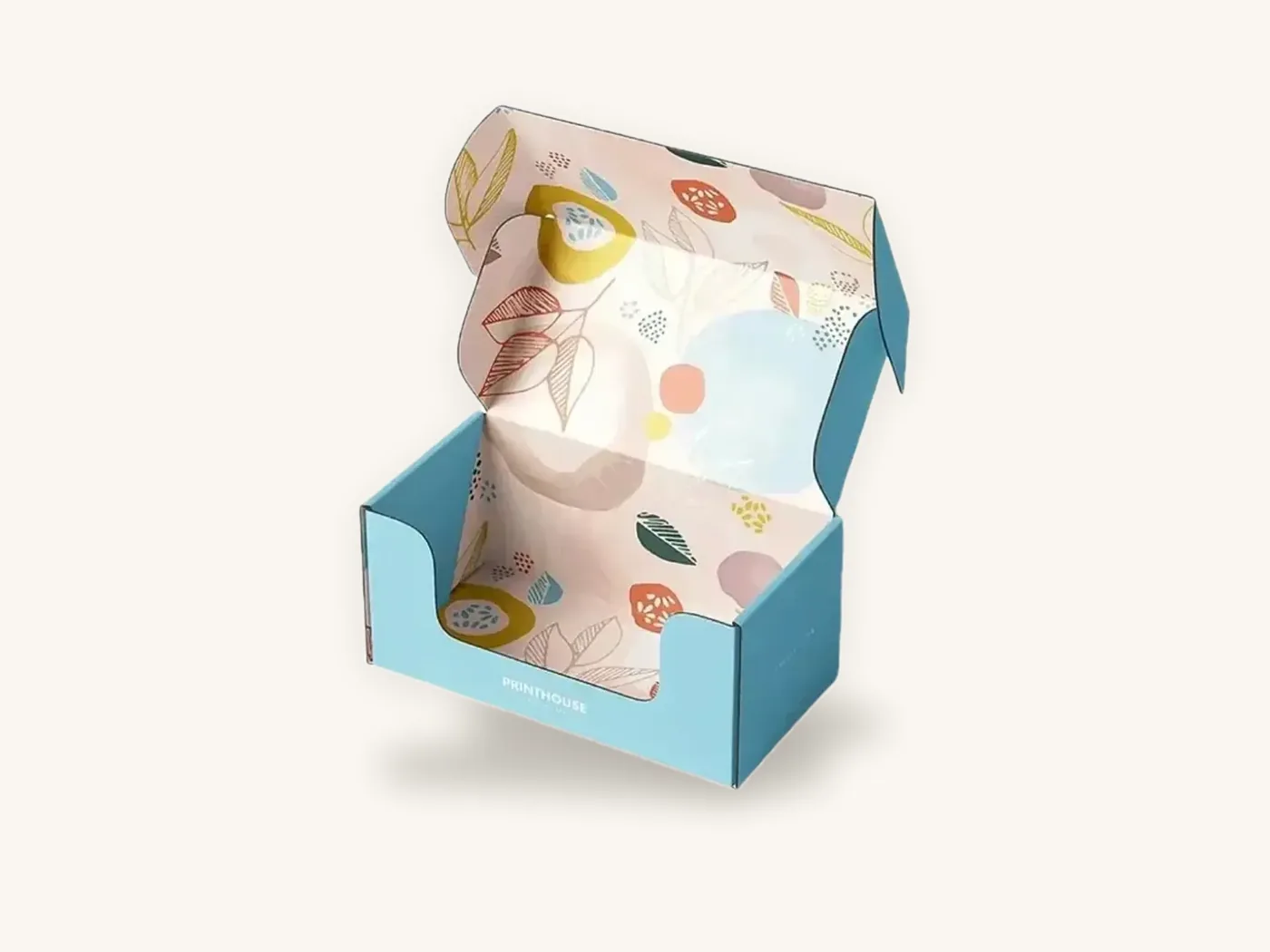
Custom mailer boxes are die-cut, one-piece boxes with rolled side walls and a hinged lid. Because they are made to a specific internal size, they are the natural fit for right-sized DTC orders of light and mid-weight products. They also close without tape and double as the presentation box.
Shipping boxes for heavier and multi-unit orders
Custom shipping boxes are regular slotted containers with flaps that meet at the center. They use board efficiently for their volume and come in heavier grades, so they suit dense products, bulk orders and wholesale restocks. The shipping boxes style page shows the variations.
Board grade after right-sizing
A smaller box often needs less board, but do not assume the grade can drop at the same time. Weight is concentrated in a smaller footprint, and a snug pack means the walls take impacts directly. Our corrugated board page compares flute sizes.
| Packed weight (roughly) | Typical structure | Typical board |
|---|---|---|
| Under 3 lb | Mailer box | E-flute |
| 3 to 10 lb | Mailer or shipping box | E-flute for compact items, B-flute for dense or sharp items |
| 10 to 30 lb | Shipping box | B-flute or C-flute |
| Over 30 lb, or fragile heavy goods | Double-wall shipper | BC-flute |
For very heavy or high-value contents, heavy duty double wall boxes add a second fluted layer without a big jump in outer size.
Replacing void fill with inserts
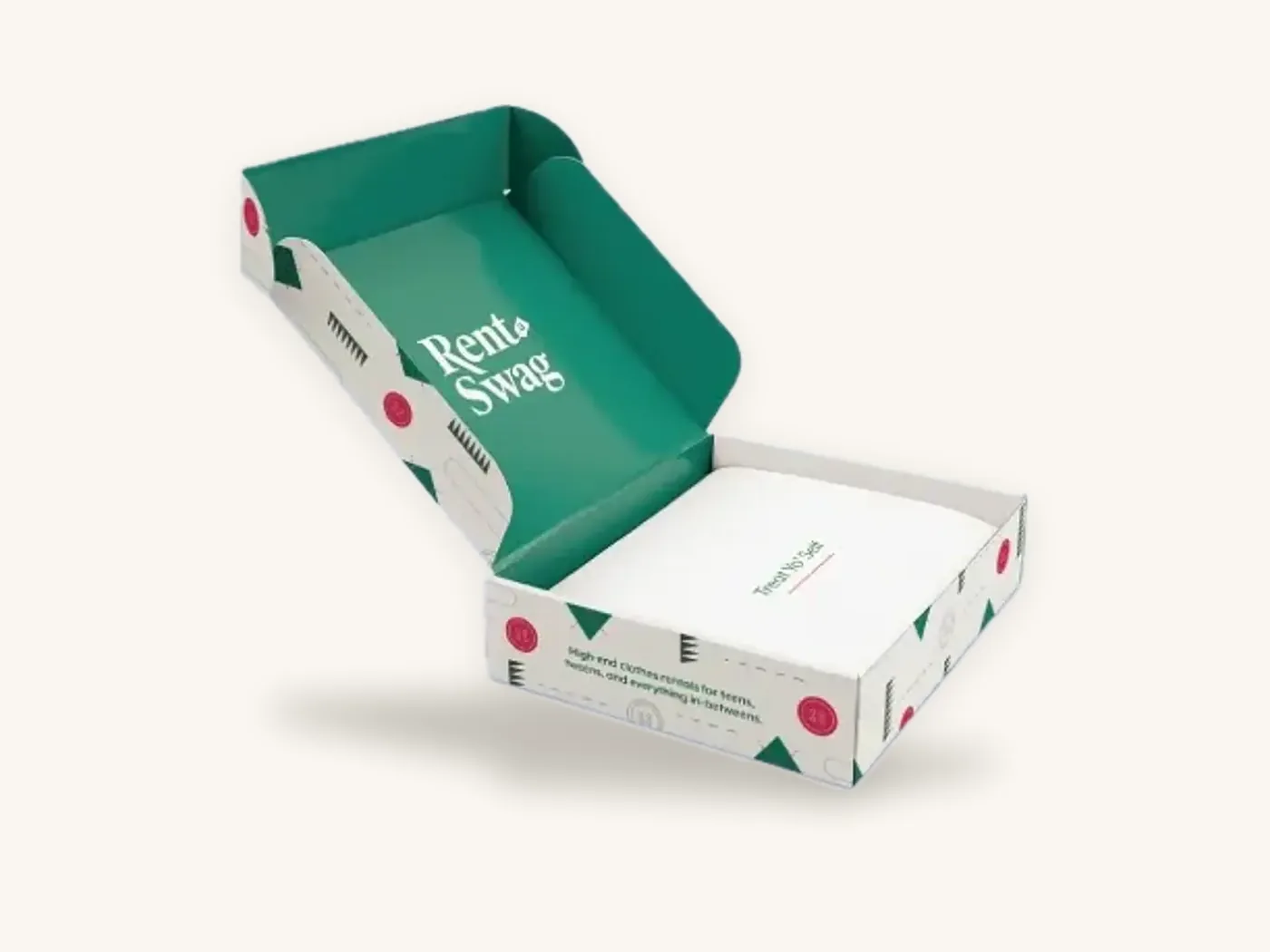
Void fill is a symptom. If a box needs a lot of it, the box is usually too big or the product has no fixed position. Inserts solve both problems, and they are often cheaper per pack than they look once you add up fill, labor and damage.
Insert options and when to use them
Box inserts and dividers come in several forms, and each suits a different product:
- Paperboard inserts: light, printable and flat-packed. Best for cosmetics, small bottles and kits where the product is not very heavy.
- Corrugated inserts and dividers: more crush resistance and cushioning. Best for glass, ceramics and heavier multi-item packs.
- Molded pulp trays: plastic-free cushioning for fragile shapes. Best for electronics accessories, bottles and irregular items.
- Foam inserts: precise cavities for high-value or delicate products where exact positioning matters most.
The inserts and packaging fillers page shows each type in more detail.
Suspension and platform designs
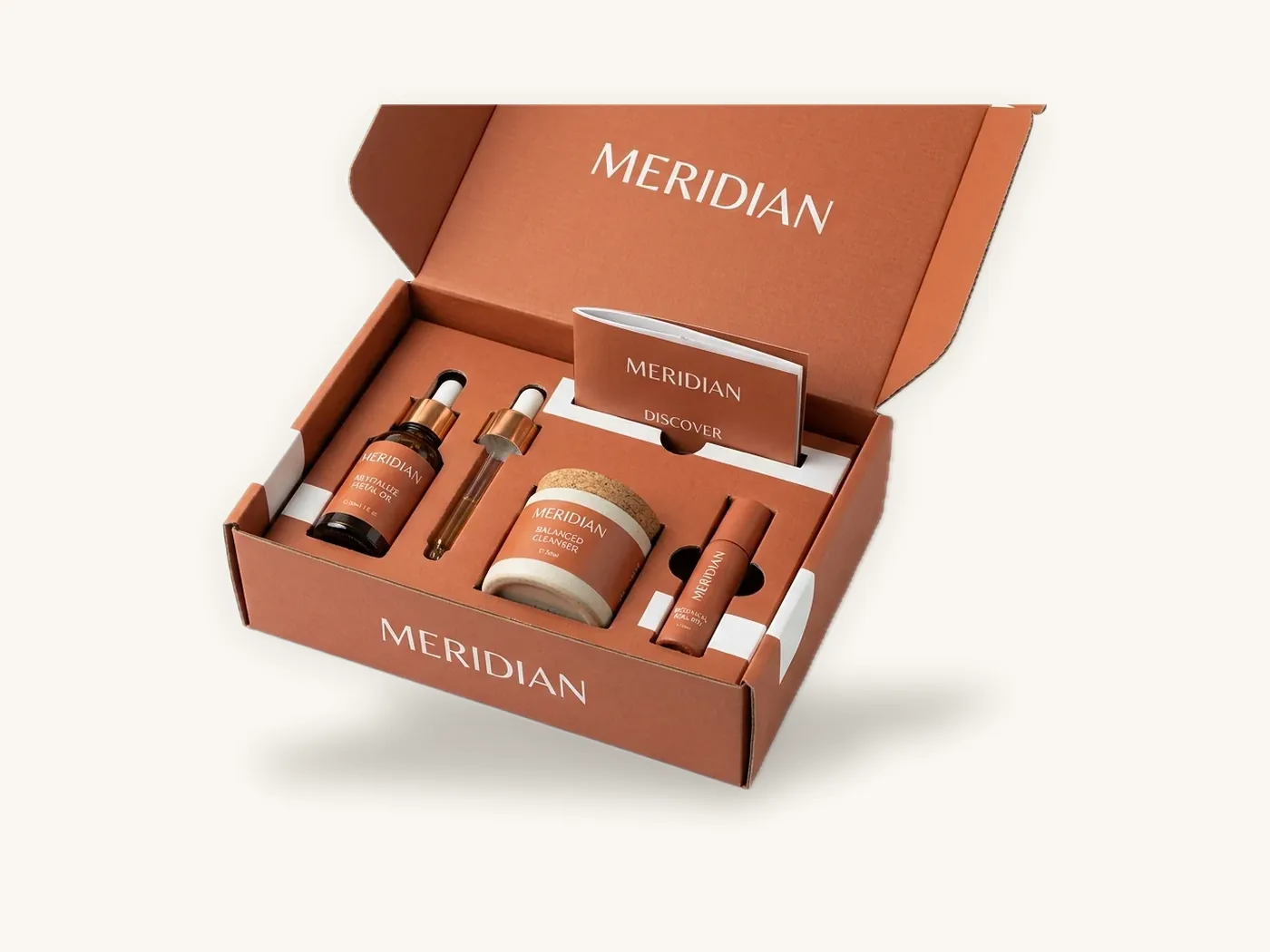
An insert does not have to wrap the whole product. A raised platform holds a product off the floor of the box, so a drop on the bottom face lands on the platform's folded legs rather than the product. A suspension design holds the item in the center with die-cut arms. Both keep clearance where it matters, between the product and the outer walls, without filling the entire box.
Tip: design the insert and the box at the same time, from the same measurements. An insert added after the box is ordered almost always forces either a loose fit or a lid that will not close.
How right-sizing affects freight and dimensional weight
Parcel carriers bill larger packages on whichever is greater: the actual weight or a dimensional weight calculated from the outer volume. The calculation multiplies length, width and height, then divides by a carrier-set divisor. Divisors, thresholds and rounding rules differ by carrier and service and change over time.
The practical effect is simple: a light product in a big box can be billed as if it weighed much more. Reducing the outer dimensions, especially the longest two, lowers the volume and can bring billable weight back down to actual weight.
Where to focus first
- Lightweight, bulky products: pillows, apparel bundles and gift sets are the most sensitive to box size, because their actual weight is low.
- Boxes just over a size break: carriers round dimensions, so a box that measures slightly over a whole inch can be billed on the next inch up.
- Your highest-volume SKUs: a small saving per parcel matters most where you ship the most parcels.
For the formulas, examples and how to compare carriers, read the full dimensional weight packaging guide. For standard outer sizes and carrier limits, see our overview of shipping box sizes for USPS, UPS and FedEx. Always confirm current rules directly with each carrier.
Testing a right-sized pack before a full run
A new box size should prove itself before you order in volume. Testing does not require a lab; a methodical in-house check catches most problems.
Right-sizing test checklist
- Pack the product exactly as it will ship, including insert, tissue, card and seal
- Confirm the lid or flaps close flat without bulging or gaps
- Shake the closed box: nothing should rattle or shift
- Drop the packed box from about waist height onto a hard floor on each face, each long edge and at least one corner
- Open and inspect the product, insert and inner walls for scuffs, dents or shifted parts
- Measure the closed outer box and rate it with each carrier you use
- Time a packer assembling and packing ten boxes; note any fiddly steps
- Ship a few packed boxes to addresses in different regions and inspect them on arrival
- Record results, then adjust clearance or insert design and repeat if needed
What custom-sized boxes cost compared with oversized stock
Custom dimensions used to mean die charges and high minimums. Digital printing and in-house die-cutting have changed that, so the real cost question is what the box costs per unit at your quantity, and what it saves elsewhere.
Box size itself affects unit price because larger boxes use more board. Here are indicative per-unit figures from our current rates, with free US shipping included:
| Spec | 100 | 500 | 1,000 |
|---|---|---|---|
| Shipping box RSC, B-flute, 12x10x6 in, 1-color | $4.69 | $2.50 | $2.08 |
| Shipping box RSC, B-flute, 16x12x8 in, 1-color | $7.47 | $3.99 | $3.32 |
| Mailer box, E-flute, 8x6x3 in, full color outside | $2.64 | $1.41 | $1.17 |
At 500 units, a 12x10x6 in shipper is about $2.50 each, while a 16x12x8 in shipper in the same grade and print is about $3.99. So if your product genuinely fits the smaller box, the box itself costs less, before you count any savings on fill or freight. Prices for your exact dimensions are in the instant price estimator.
Cost drivers to weigh
- Board area: smaller boxes use less board per unit.
- Print coverage: one color on a shipper is far cheaper than full color on both sides.
- Inserts: add a per-unit cost and one-time insert die tooling, but can remove fill and packing time.
- Number of sizes: each extra size is a separate run, so a tight size family keeps quantities per size higher and unit prices lower.
We have not put a figure on fill, labor or freight savings because they depend entirely on your products, carriers and contracts. Measure them in your own operation before and after the change.
How to order right-sized boxes from Box Sense
We make custom sizes as a normal part of production, so you do not need to pick from a stock list. The more you tell us about how the product ships, the better we can advise on fit.
What to send
- The packed product dimensions (L x W x D) and packed weight for each SKU or bundle
- How the product is restrained today, and any damage or fill problems you see
- Whether you want mailer boxes, shipping boxes or a recommendation
- Whether you need inserts or dividers, and how many items each box holds
- Print needs: plain, one color, full color, inside printing
- Quantities to price for each size, for example 100, 500 and 1,000
- Your carriers and service levels if dimensional weight is a concern
- Target in-hand date and delivery location
What happens next
- Quote within 24 hours. We confirm pricing for each size and quantity.
- Structural design. Our design services team supplies dielines and a 3D digital proof, with two revision rounds included free.
- Free samples. Unprinted structural samples are free, which is the best way to test fit and drop performance before printing. Printed samples of approved artwork are free on orders of 100+. See samples for details.
- Production. Standard production takes 8–12 business days after proof approval; rush in 5 business days is available on most paperboard and corrugated styles.
- Delivery. Free shipping on every US order; international shipping is quoted at cost.
The minimum order is 10 boxes per design, with no die or plate charges. One-time tooling applies only to foil, embossing, spot UV and custom inserts. Brands selling online can also browse our e-commerce and subscription packaging page for common DTC setups.
Frequently asked questions
What is right sized packaging?
Right sized packaging is a box designed around the product as it actually ships, with a planned clearance and restraint method and no unnecessary empty space. It reduces the need for void fill, limits how far the product can move during drops and keeps the outer dimensions small enough to control dimensional weight charges. It is a deliberate fit, not simply the smallest box available.
How much space should I leave around a product in a box?
It depends on how the product is protected. Soft goods can go almost flush with the walls. Rigid items in a snug carton or insert need about 1/8 in per dimension so they drop in cleanly. Fragile items protected by cushioning typically need about 1 to 2 in on every side for the cushioning to work. Confirm with a drop test on a sample.
Does a smaller box always reduce shipping costs?
Not always. Carriers bill larger parcels on the greater of actual weight and dimensional weight, so a smaller box helps most when the product is light for its size. For dense, heavy items, actual weight usually decides the charge regardless of box size. Rate your packed outer dimensions with each carrier to see whether a size change affects your bill.
How many box sizes does an e-commerce brand need?
Most brands can cover the majority of orders with three to eight sizes. Review your order history, group the most common product combinations and size one box per group. Handle rare combinations with an overflow box or a divider rather than adding a new custom size. Fewer sizes also keep order quantities per size higher, which lowers unit prices.
Can inserts replace void fill completely?
Often, yes. A die-cut paperboard, corrugated or molded pulp insert holds each item in a fixed position, which is the job void fill does less reliably. Inserts also make packing faster and more consistent. Very fragile or high-value items may still need cushioning around the insert, so test the complete pack with drops before removing fill entirely.
Will a tighter box make my product more likely to break?
It can if the fit is too tight or the product relies on cushioning. A box with zero clearance transmits impacts straight to the product and can split at corners. The fix is to match clearance to the protection method: snug for sturdy items, an insert for positioned items, and deliberate cushioning space for fragile ones. Drop test before ordering in volume.
Is it expensive to order custom box sizes?
Custom sizes do not have to cost more than stock cartons. Box Sense has no die or plate charges and produces from 10 boxes, so the unit price mostly reflects board, print and quantity. A smaller custom box also uses less board than an oversized stock box. Check your exact dimensions in the pricing estimator and compare against what you use today.
Next steps
Pick your three highest-volume orders, measure them packed, and compare their current box against a right-sized alternative on fit, fill and billable weight. Then price the new sizes in the instant price estimator and request a quote with your measurements. We will send free structural samples so you can drop test the fit before committing to a run.
Boxes in this guide
Order the packaging we covered
Written by the Box Sense Packaging Team
Our structural designers, prepress technicians and production staff print and convert custom boxes every day for brands in the United States, United Kingdom and UAE. Questions about this guide? Talk to us.