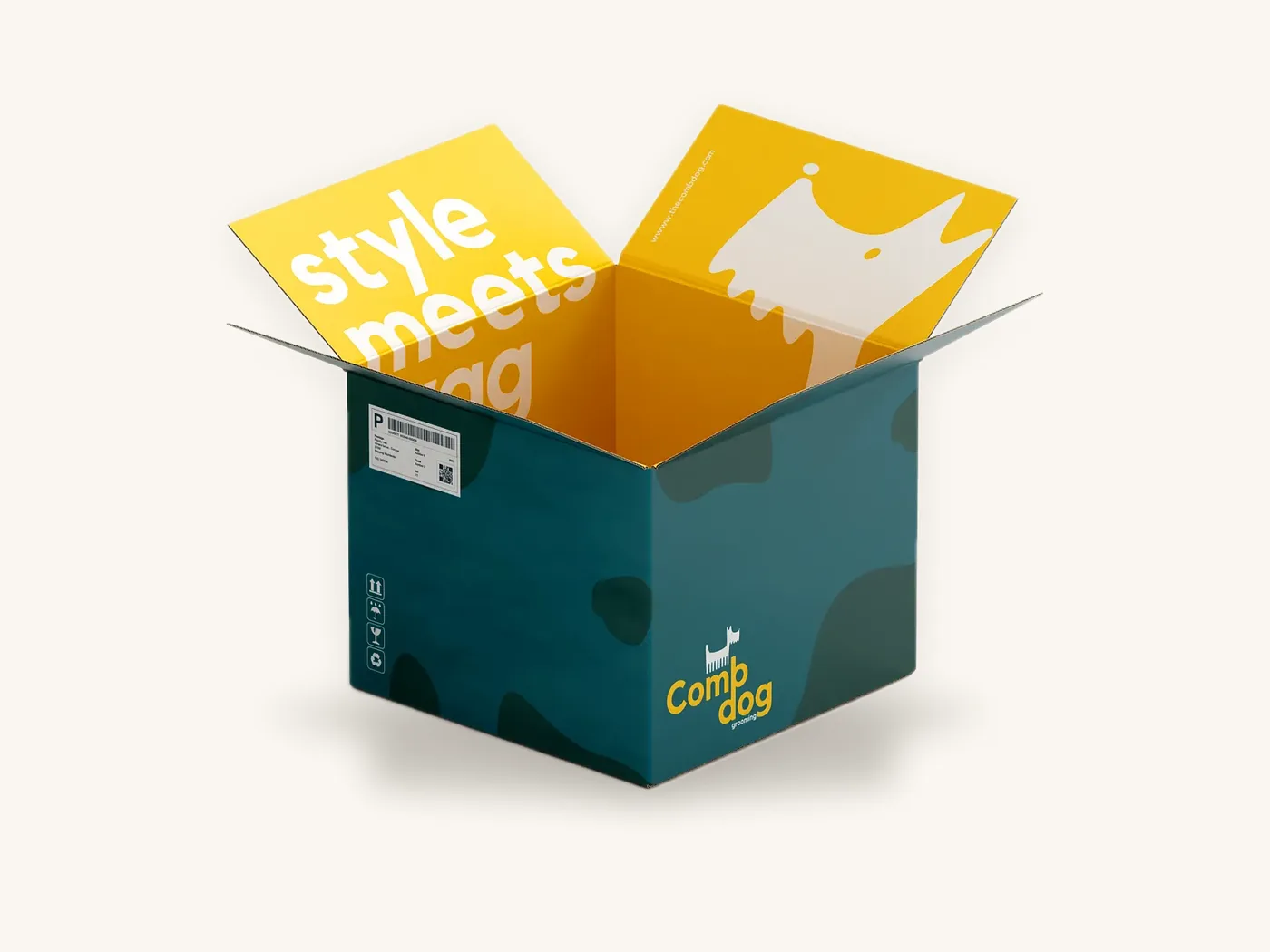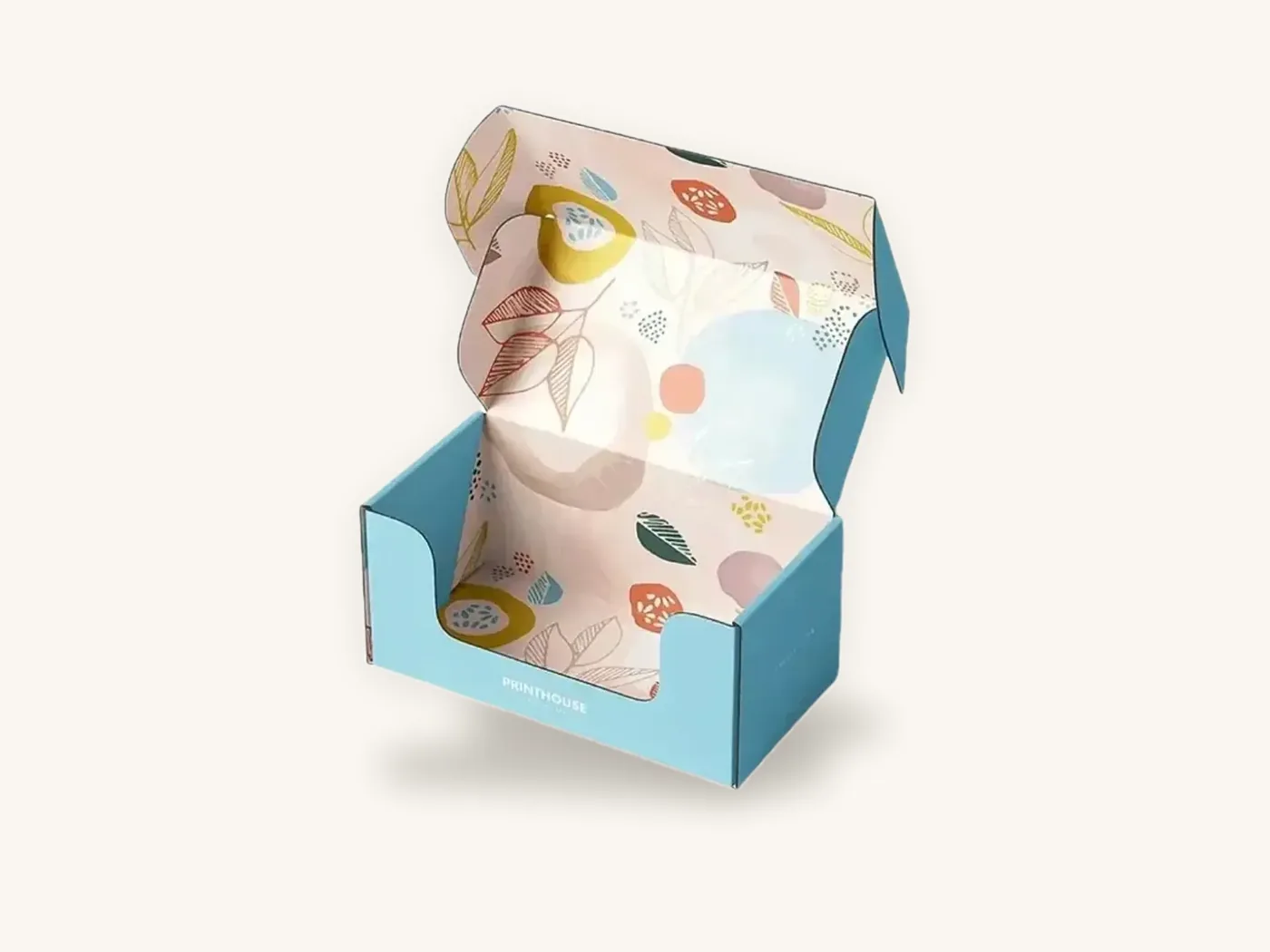
When you weigh a poly mailer vs box, the short answer is this: a poly mailer is the cheaper, lighter option for soft goods that cannot break or crush, and a mailer box is the better option for anything rigid, fragile, giftable or brand-led. The bag wins on material cost and parcel size. The box wins on protection, presentation and curbside recyclability.
Most brands do not have to pick one format forever. The right choice depends on what you ship, how much a damaged or returned order costs you, and how much of your customer relationship happens at the doorstep.
In the interest of transparency, Box Sense makes mailer boxes, not poly mailers. We have laid out where a bag is genuinely the better tool, because packaging that does not fit the product costs you more than it saves.
Key takeaways
- Poly mailers are thin, flexible plastic bags with a self-seal strip. They suit folded apparel, textiles and other soft, unbreakable items.
- Mailer boxes are die-cut corrugated boxes with a hinged lid. They resist crushing and corner impacts, stack cleanly and present the product on arrival.
- Compare cost per delivered order, not cost per unit: add fill, packing time, postage and the cost of damage and returns to the packaging price.
- A flat bag almost always has a smaller parcel size, which can matter for dimensional weight. A right-sized box narrows that gap.
- Corrugated is widely accepted in curbside recycling. Most plastic film is not, so check local programs and any labeling claims.
- Many brands use both: boxes for first orders, gifts and fragile goods, bags for repeat orders of soft items.
Poly mailers and mailer boxes: what you are actually comparing
The two formats solve the same problem, getting a product to a customer's door, with opposite approaches. One wraps tightly and relies on the product's own resilience. The other builds a rigid shell around it.
What a poly mailer is
A poly mailer is a flat envelope made from polyethylene film, often co-extruded so the outside is white or colored and the inside is opaque for privacy. It closes with a peel-and-seal adhesive strip and is tamper-evident once sealed. Some versions add a second adhesive strip for returns, and bubble-lined versions add a thin cushioning layer.
Poly mailers are waterproof, very light and take up almost no space before use. They conform to the product, so the finished parcel is often barely larger than the item itself. Their weakness is structure: there is none. Anything inside takes the full force of a crush or a point impact.
What a mailer box is
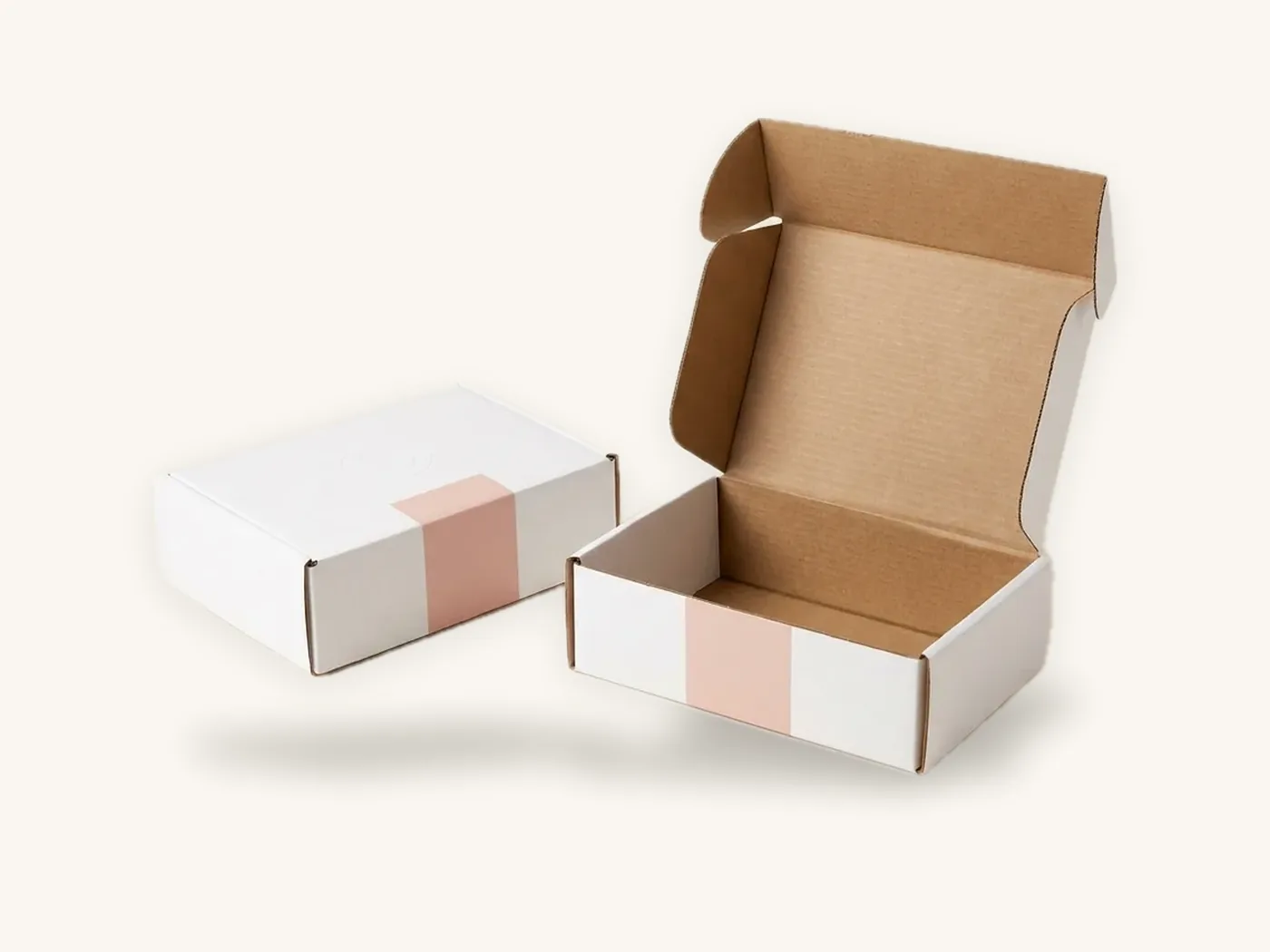
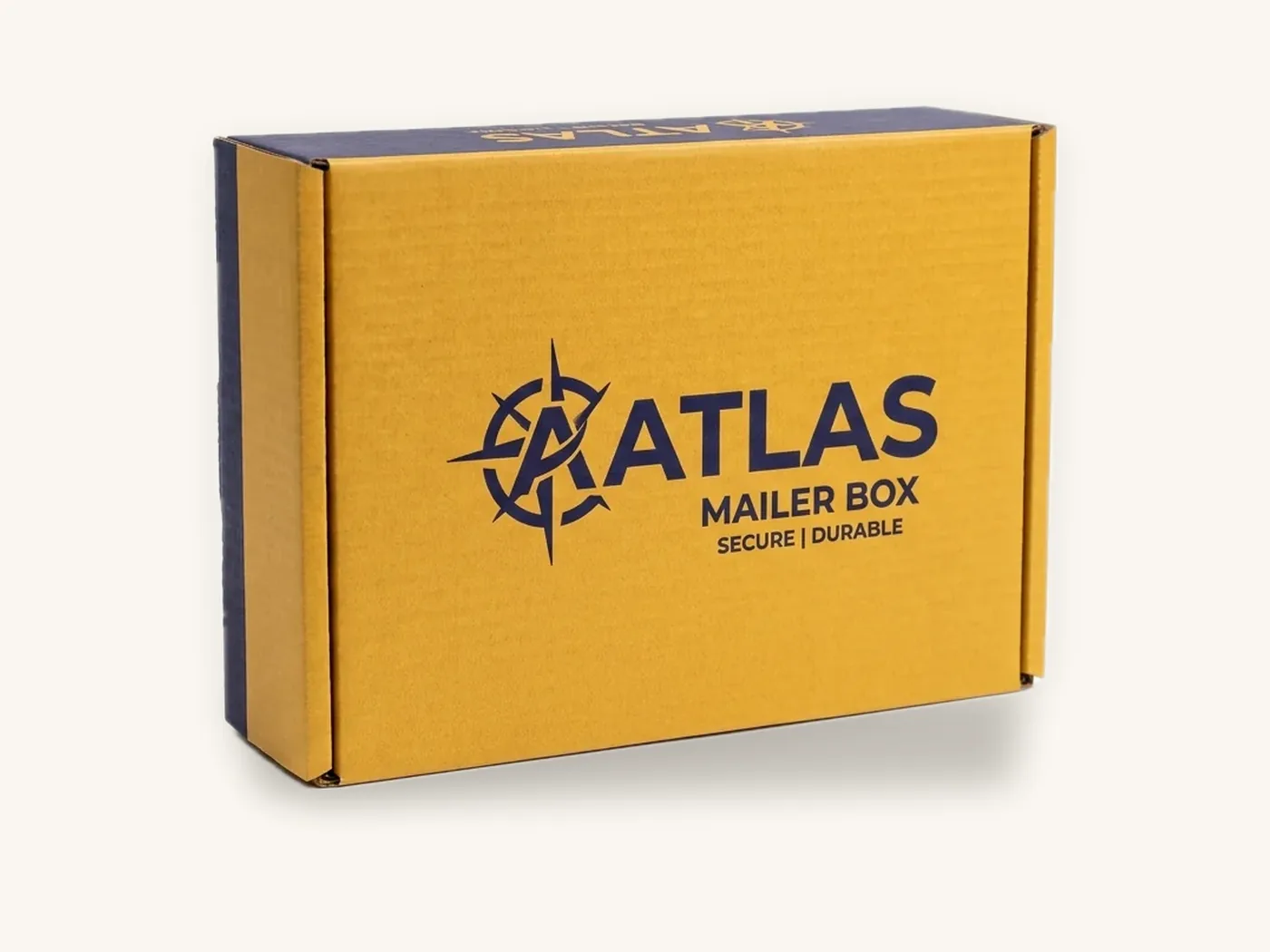
A mailer box is a one-piece corrugated structure, usually in E-flute board about 1.5 mm thick, that folds into a box with a hinged lid, rolled double-thickness side walls and locking tabs. It assembles without tape and can be printed inside and out. The mailer boxes style page shows the common variations.
Because corrugated board is a fluted core between two liners, it resists crushing and spreads impacts across the panel. Custom mailer boxes are made to a specific internal size, so the product can sit snugly, sometimes in an insert, without loose fill.
Protection: how each format handles real transit
Parcels go through conveyors, chutes, sorting machines and delivery vans, and they get stacked under heavier boxes along the way. Each hazard affects bags and boxes differently.
| Hazard in transit | Poly mailer | Mailer box |
|---|---|---|
| Crushing from stacked parcels | No resistance; contents bear the load | Corrugated walls carry the load |
| Corner and edge drops | Contents take the impact directly | Board absorbs and spreads the impact |
| Puncture from sharp objects | Film can tear or puncture | Board resists moderate puncture |
| Rain and wet surfaces | Waterproof film sheds water | Board can soften if soaked; coatings help |
| Snagging in sorting equipment | Loose bags can catch or tear | Rigid shape runs smoothly |
| Product shifting | Bag conforms tightly, little movement | Depends on fit; snug size or insert needed |
| Tampering and opening | Tamper-evident seal | Tear strip or tape shows tampering |
Where poly mailers perform well
For folded T-shirts, leggings, socks, scarves, soft toys and similar goods, a poly mailer offers enough protection. The product cannot break, a little compression does no harm and the waterproof film keeps it dry on a porch. Many apparel brands ship this way for good reason.
Where they fall short
Anything with a shape to protect is at risk in a bag: boxed products whose retail cartons get crushed, glass and ceramics, cosmetics with pumps and caps, books whose corners dent, electronics and anything with a printed retail box that must arrive in resellable condition. Bubble-lined bags help against scuffs but do little against crushing.
Watch out: a retail carton shipped inside a poly mailer often arrives with dented corners even if the product inside is fine. If customers keep that carton, gift it or resell it, the dents count as damage.
The true cost of a poly mailer vs a mailer box
On a unit price basis, a plain poly mailer costs a small fraction of a printed corrugated box. That comparison is real, but it is not the whole picture. The fair way to compare is cost per delivered order.
Cost drivers side by side
| Cost driver | Poly mailer | Mailer box |
|---|---|---|
| Packaging unit price | Very low, especially for stock bags | Higher; falls steeply with quantity |
| Printing | Custom print usually needs large runs | Digital print from small runs |
| Void fill and inserts | Rarely needed | Not needed if right-sized; optional insert |
| Packing time | Fast: insert, peel, seal | Fast once practiced: fold, insert, close |
| Storage | Flat bags need very little space | Flat boxes need more shelf space |
| Postage | Small, light parcel | Larger parcel; may trigger dimensional weight if oversized |
| Damage and replacements | Higher for fragile or rigid goods | Lower for fragile or rigid goods |
| Returns | Some bags have a second seal strip | Box can be reused with tape or a second strip |
What a mailer box costs
For reference, an E-flute mailer box at 8x6x3 in, printed full color outside, is about $2.64 each at 100 units, about $1.41 at 500 and about $1.17 at 1,000, with free US shipping included. Size, print coverage and finishes change those numbers, so check your exact spec in the instant price estimator.
How to run your own comparison
- Pick one representative product and pack it both ways.
- Weigh and measure each packed parcel.
- Rate both with your carrier to get the actual postage for each.
- Add packaging cost, any fill and an estimate of packing time.
- Look at your damage and return records for that product and assign a cost per incident: replacement item, second shipment and support time.
- Compare the total per delivered order, not the packaging price alone.
For light, bulky parcels, the dimensional weight rules explained in our dimensional weight packaging guide can decide the result. A box sized closely to the product, as described in our guide to right-sized packaging, usually keeps postage much closer to the bag.
Brand impact and the unboxing moment
A poly mailer is primarily a transport wrapper. Customers usually tear it open and throw it away within seconds. A mailer box is also the presentation piece: it has a lid that opens, an inside that can be printed and a structure that holds the product in a chosen position.
What a box lets you do that a bag does not
- Print the inside lid with a message the customer sees at the moment of opening
- Stage the reveal with tissue, a card and the product in a planned order
- Hold the product in place with an insert so it looks arranged, not tumbled
- Create a keepable object that customers reuse for storage or gifting
- Arrive looking sharp, because a rigid shell does not wrinkle or scuff the way film does
Where a branded bag is enough
If your customers buy basics on repeat and care mainly about speed and price, the unboxing moment carries less weight. A well-printed poly mailer with your logo still identifies the brand at the door. The more the purchase is a gift, a first impression or a premium price point, the more the box earns its cost.
Apparel brands in particular often split the difference: poly mailers for standard orders, and apparel boxes or mailers for launches, gift orders and bundles. The apparel and fashion packaging page shows typical formats.
Recyclability and sustainability: an honest comparison
Neither format is automatically the greener choice. Material weight, transport efficiency, recycled content and what actually happens after delivery all matter, and those factors pull in different directions.
The case for poly mailers
A poly mailer uses very little material by weight and makes a compact parcel, which means less material produced and potentially more parcels per truck. Many bags now include recycled plastic content.
The case for mailer boxes
Corrugated board is made from paper fiber, frequently with recycled content, and it is widely accepted in curbside recycling programs across the US. Most plastic film, by contrast, is generally not accepted in curbside bins and relies on separate drop-off programs where they exist. Whether a customer actually recycles a package depends heavily on how easy it is.
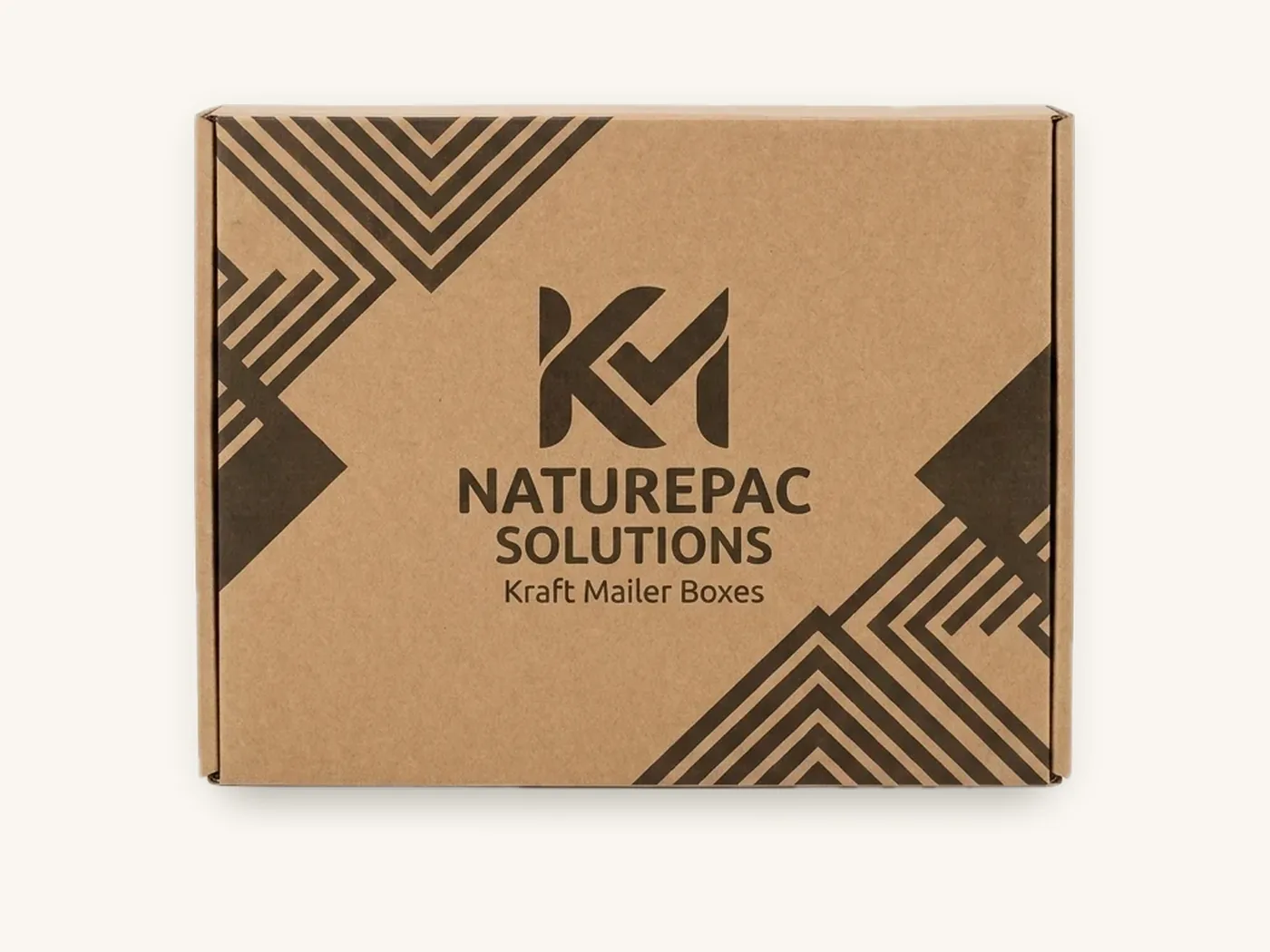
A box also stays recyclable only if the add-ons are compatible. Aqueous coating instead of plastic lamination, paper tape or a tear strip instead of plastic tape, and paper-based inserts keep the whole package in the paper stream. Kraft mailer boxes with aqueous coating are a common choice for this reason, and FSC-certified board and soy or water-based inks are available.
Be careful with claims
Printing "recyclable," "compostable" or "eco-friendly" on either a bag or a box is an environmental marketing claim. In the US, the Federal Trade Commission's Green Guides explain how such claims should be qualified and substantiated, and some states set their own rules. Review the FTC's Green Guides and confirm current requirements with counsel before printing a claim.
Returns, reuse and security
Returns are part of the cost of apparel and many DTC categories, so the outbound package's ability to go back matters.
Poly mailers and returns
Dual-seal poly mailers include a second adhesive strip so the customer can tear the first seal and reuse the bag. That works well when customers open the bag carefully. When they rip it, they need another bag or box, which slows returns.
Mailer boxes and returns
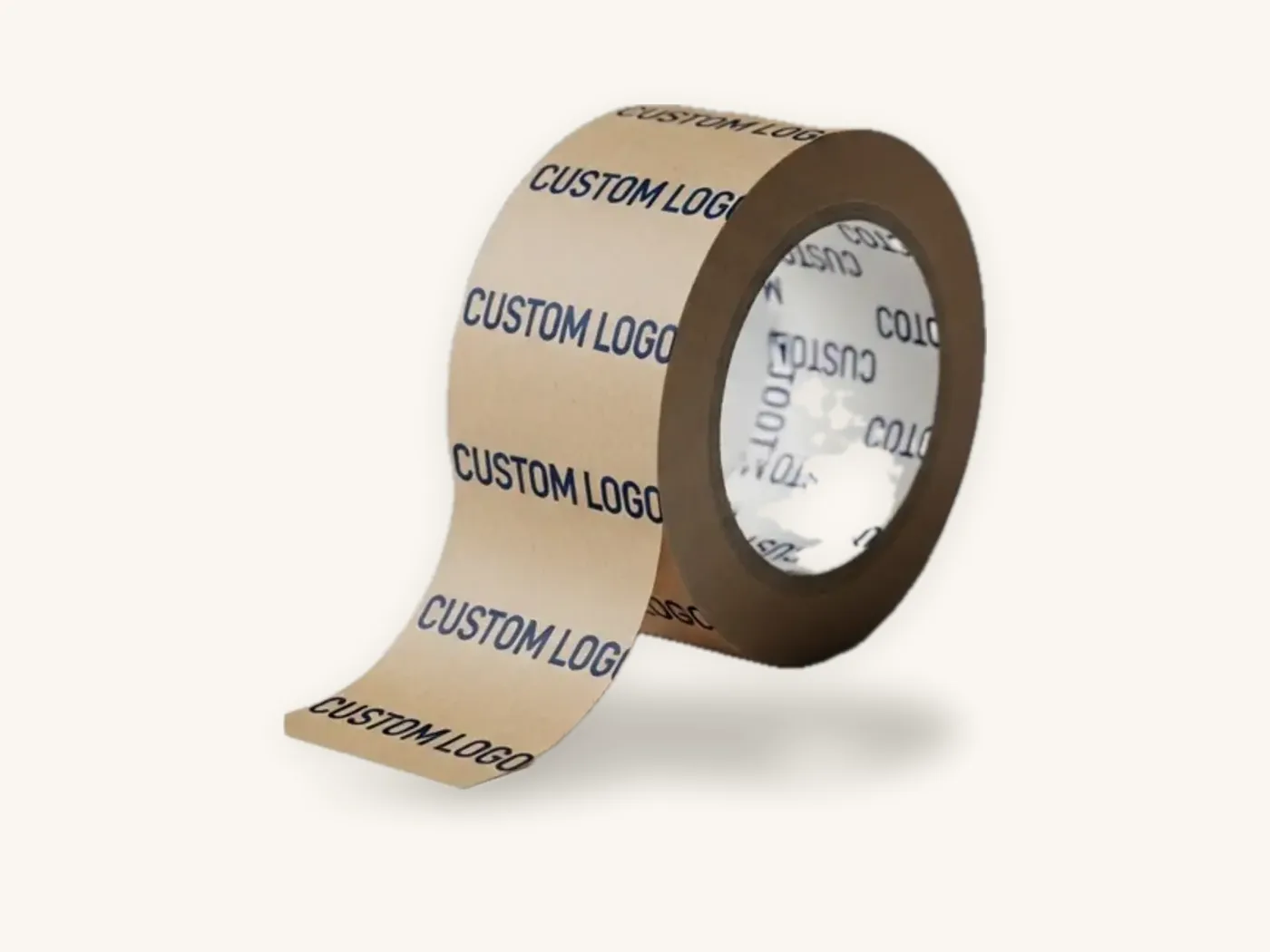
A mailer box survives opening intact, so the customer can close it and send it back. A second tear strip, a strip of custom packaging tape included in the box, or instructions on the inside flap make the return straightforward. The same tape also shows tampering on outbound orders and looks intentional rather than improvised.
Security at the door
Both formats show evidence of opening. Opaque film hides contents, while a box printed only on the inside keeps a plain exterior that does not advertise what is inside. If porch theft is a concern for high-value goods, consider a plain outer print and branding on the inside.
Decision matrix: which format for which product
Use this table as a starting point, then test your specific products.
| Product type | Better choice | Why |
|---|---|---|
| Folded T-shirts, basics, socks | Poly mailer | Soft, unbreakable, light; lowest cost per order |
| Premium apparel, gift orders | Mailer box | Presentation matters; tissue and inside print add value |
| Boxed retail products | Mailer box | Protects the retail carton from crushing |
| Cosmetics, skincare, fragrance | Mailer box | Pumps, caps and glass need a rigid shell |
| Books, prints, planners | Mailer box | Stops corner crush and bending |
| Candles, ceramics, glass | Mailer box with insert | Needs structure and fixed positioning |
| Soft accessories, scarves, textiles | Either | Bag for cost; box for gifting |
| Subscription kits | Mailer box | Multiple items, planned unboxing, stacking in fulfillment |
| Electronics and accessories | Mailer box with insert | Impact protection and a resellable condition |
| Perishable or temperature-sensitive food | Neither alone | Needs an insulated system; see our cold chain food packaging guide |
Using both formats
A two-format program is common and sensible. Ship first orders, gift orders and fragile goods in a box, and ship repeat orders of soft goods in a bag. If you work with a fulfillment partner, give them simple rules per SKU so the right format is picked every time. Our guide to packaging for 3PL fulfillment covers how to set those rules.
Choosing and ordering mailer boxes from Box Sense
If your comparison points to a box for some or all of your products, the fastest route is to size the box around the packed product and test a sample before printing.
Pick the structure and board
- Standard mailer: a roll-end tuck-front mailer is the default for most DTC products.
- Tuck top mailer: tuck top mailer boxes close over the front wall and can include a tear strip for tamper evidence.
- Board: E-flute for most products; B-flute for heavier or denser items. Our corrugated board page compares grades.
- Liner: kraft for a natural look, white for the brightest full-color print.
What to send with your request
- Packed product dimensions and weight
- Current packaging, and any damage or return problems you want to fix
- Print: outside only, or inside and outside; full color or one color
- Extras: tear strip, insert, printed tissue or tape
- Quantities to price, such as 100, 500 and 1,000
- Target in-hand date and delivery address
How the order runs
- Quote within 24 hours. We confirm pricing for your sizes and quantities.
- Free design support. Dieline, artwork setup and a 3D digital proof, with two revision rounds included.
- Free samples. Unprinted structural samples are free so you can test fit and compare against your current bag. See samples for details.
- Production. 8–12 business days after proof approval; rush in 5 business days on most corrugated styles.
- Delivery. Free shipping on every US order; international shipping quoted at cost.
The minimum order is 10 boxes, and there are no die or plate charges, so testing a box on a subset of orders is practical.
Frequently asked questions
Is a poly mailer or a box cheaper to ship?
A poly mailer usually makes a smaller, lighter parcel, so postage is often lower, especially when carriers bill large parcels by dimensional weight. The gap shrinks when the box is sized closely to the product. Rate both packed formats with your carrier, then add packaging, fill and damage costs to compare the full cost per delivered order.
Are poly mailers strong enough for shipping?
For soft, unbreakable items such as folded clothing and textiles, yes. Poly mailers resist moisture and tear reasonably well. They offer no crush resistance, though, so boxed retail products, glass, cosmetics, books and electronics are at risk of dents, cracks or breakage. Bubble-lined bags help with scuffs, not crushing. Use a box whenever the product has a shape to protect.
What is the difference between a mailer bag and a mailer box?
A mailer bag is a flexible plastic or paper envelope that seals with an adhesive strip and conforms to the product. A mailer box is a rigid, die-cut corrugated box with a hinged lid and locking tabs. The bag is lighter and cheaper; the box protects against crushing and impacts, can be printed inside and serves as the presentation packaging.
Are poly mailers recyclable?
Polyethylene film is technically recyclable, but most US curbside programs do not accept it, so it usually depends on separate drop-off programs where they exist. Corrugated mailer boxes are widely accepted curbside. If you print a recyclability claim on any packaging, follow the FTC Green Guides and qualify the claim accurately for where your customers live.
When should I switch from poly mailers to boxes?
Consider switching when damage or return rates rise for certain products, when you add rigid, fragile or boxed items to your range, when customers buy as gifts, or when your price point makes presentation part of the value. Many brands switch only some SKUs or order types, such as first orders and bundles, rather than all shipments at once.
Do mailer boxes need void fill?
Not if they are sized correctly. A mailer box made to the packed product's internal dimensions holds the item snugly, and a die-cut insert can position multiple items without loose fill. Printed tissue paper adds presentation and takes up small gaps. If a box needs a lot of fill, it is probably too big for the product.
What is the best shipping packaging for a small business?
The best shipping packaging matches the product. Soft goods ship well and cheaply in poly mailers. Rigid, fragile, giftable and premium products are better in corrugated mailer boxes, which protect the item and present the brand. Start by testing both formats on your top sellers and comparing damage, postage and customer feedback before committing to a large order.
Next steps
Pack your two or three best sellers in both a bag and a box, rate them with your carrier and add up the full cost per delivered order. For the products where a box comes out ahead, price your size in the mailer box estimator, then request a quote and ask for a free structural sample to test against your current poly mailer.
Boxes in this guide
Order the packaging we covered
Written by the Box Sense Packaging Team
Our structural designers, prepress technicians and production staff print and convert custom boxes every day for brands in the United States, United Kingdom and UAE. Questions about this guide? Talk to us.