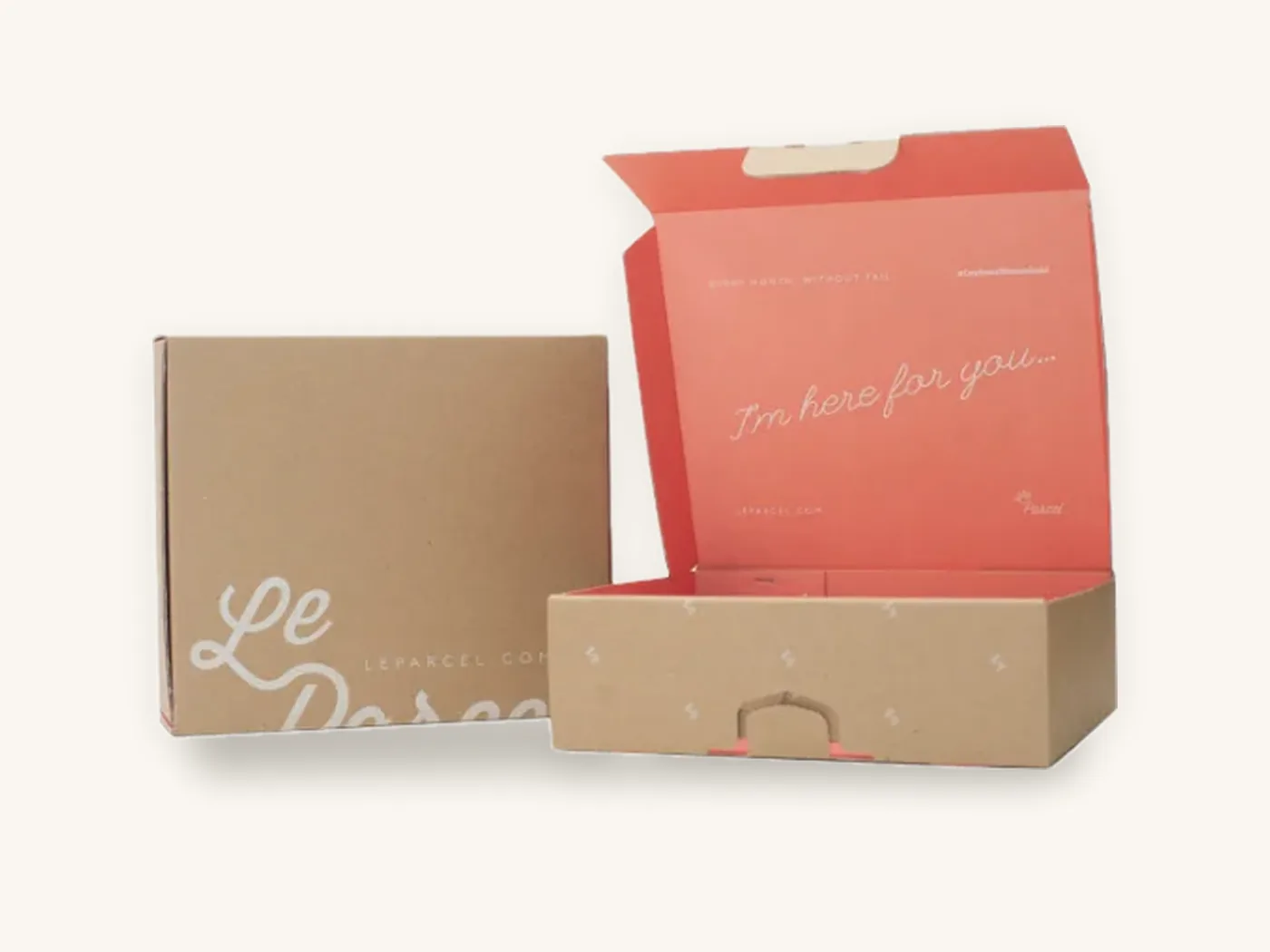
Perishable food shipping packaging is a system, not a single box: a corrugated outer shipper for strength, an insulated liner to slow heat transfer, and a coolant such as gel packs or dry ice to absorb the heat that gets through. Get all three matched to your product, your transit time and the season, and chilled or frozen food arrives inside its safe range. Get one wrong and the best insulation in the world cannot save the shipment.
This guide walks through how cold chain packaging works, how to choose each layer, how to size the outer carton so you are not paying to ship air, and how to test a pack-out before you launch. It is written for food founders, meal kit operators and specialty producers shipping direct to consumers by parcel carrier.
One point up front: Box Sense makes the printed outer shipper and any paperboard inner cartons. Insulated liners, gel packs and dry ice typically come from specialist cold chain suppliers, and we design the box around the liner you choose.
Key takeaways
- A cold chain shipper has three layers that must be sized together: the outer corrugated box, the insulated liner and the coolant.
- Coolant does the cooling; insulation only slows warming. Transit time and outside temperature decide how much of each you need.
- Size the outer box to the outside dimensions of the liner, not the food. A loose liner loses cold air and gets crushed at the corners.
- Condensation is the enemy of corrugated board. Specify a stronger grade than the weight alone suggests, and consider a double wall shipper for heavy or long-haul packs.
- Dry ice is a regulated hazardous material in air transport. Follow your carrier's current marking, venting and quantity rules.
- Always run a pack-out test in realistic summer and winter conditions before launching, and repeat it when you change any layer.
How cold chain packaging actually works
Heat moves from warm to cold. Inside a parcel, the food and coolant are cold; the truck, the sorting hub and the customer's porch are warm. Every hour in transit, heat leaks inward through the walls, seams and any gaps.
Each layer tackles that leak differently:
- The coolant is a heat sink. Gel packs absorb heat as they thaw, and dry ice absorbs heat as it turns to gas. When the coolant is spent, the food starts warming.
- The insulated liner slows how fast heat reaches the coolant, which stretches the coolant's working life. Thicker or more efficient insulation buys time.
- The outer box holds everything together, protects the liner from crushing and puncture, and carries your brand, labels and handling marks.
This is why "how long will it stay cold?" has no single answer: a pack-out that holds in a mild October may fail on a July route through a hot hub.
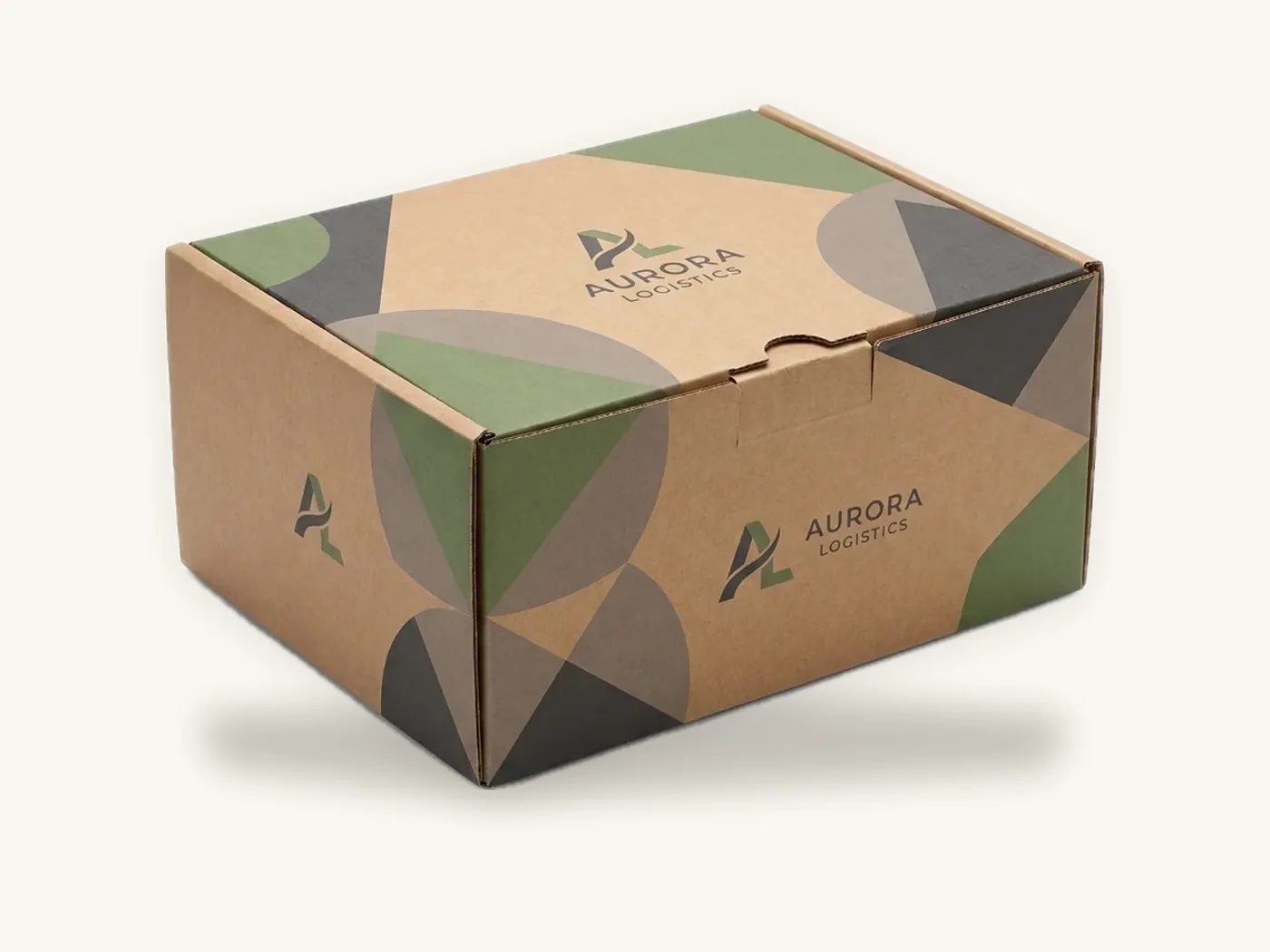
The weak points in a typical pack-out
Heat rarely enters evenly. The usual failure points are the liner's lid seam, empty headspace above the food, and corners where the liner has been crushed. Most "not cold enough" complaints trace back to one of these, not to the insulation material.
Match the pack-out to your product's temperature needs
Start with what the product needs, then work outward. Your food safety plan, supplier guidance or process authority defines the acceptable range; the packaging's job is to keep the product in that range for the full transit window plus a buffer.
| Product category | Typical goal in transit | Common coolant | Packaging notes |
|---|---|---|---|
| Frozen (ice cream, frozen meals, raw frozen meat) | Stay frozen solid on arrival | Dry ice, sometimes with frozen gel packs | Needs the most insulation; dry ice rules apply; vented outer box |
| Refrigerated (fresh meat, seafood, dairy, meal kits) | Stay chilled, never frozen or warm | Frozen gel packs or ice-and-water packs | Keep coolant from touching delicate produce to avoid freeze damage |
| Cool, not cold (chocolate, cheese, some baked goods) | Avoid melting or sweating | Refrigerated gel packs, lighter insulation | Summer only for many brands; paperboard inner cartons help with presentation |
| Ambient but heat-sensitive (candy, supplements, sauces) | Avoid heat spikes | Often none, or a small gel pack in summer | Insulated pouch or liner in a standard shipper |
| Shelf-stable (dried goods, coffee, snacks) | No temperature control | None | A standard printed shipping box or mailer |
Transit time sets the budget
Most DTC perishable programs plan around one- or two-day ground or express shipping. As transit time doubles, coolant and insulation needs rise sharply, and so do weight and box size. Many brands limit perishable shipping to zones they can reach in two days rather than paying for a pack-out that survives four.
Watch out: a shipment that leaves on Thursday can easily sit in a warm facility over the weekend. Most perishable shippers dispatch early in the week and pause shipping ahead of carrier holidays.
Choosing the outer shipping box
The outer box is the part most brands underspecify, because it looks like "just a cardboard box." In a cold chain pack it is carrying a heavy, dense load, it sits on top of a cold liner that sweats, and it gets stacked in trailers with other parcels.
Board grade: why cold packs need more than the weight suggests
Corrugated board loses a meaningful amount of its stacking strength as it absorbs moisture. A cold liner pulls warm, humid air toward it, and condensation forms on the inside of the carton. Over a day or two, the board softens. That is why a pack that would ship fine in 32 ECT single wall when dry can arrive with crushed corners when cold.
Our ECT vs burst strength guide explains the ratings. For perishable packs, these starting points work for most programs:
| Packed weight (box, liner, coolant, food) | Starting board | When to upgrade |
|---|---|---|
| Under roughly 10 lb | Single wall B-flute, 32 ECT | Long transit, humid summer routes, soft EPS corners |
| Roughly 10 to 25 lb | Single wall B or C flute, 44 ECT | Dry ice packs, multi-day zones, heavy liquids |
| Roughly 25 to 50 lb | Double wall BC flute | Glass jars, dense meat boxes, stacked pallet shipping |
| Heavier or high-value | Double wall BC flute with inner partitions or a second carton | Talk to your carrier about weight and handling limits |
Choose single wall when the pack is light and transit is short. Choose heavy duty double wall boxes when the pack is heavy, when it carries dry ice for more than a day, or when crushed corners have already shown up in testing.
Coatings and moisture
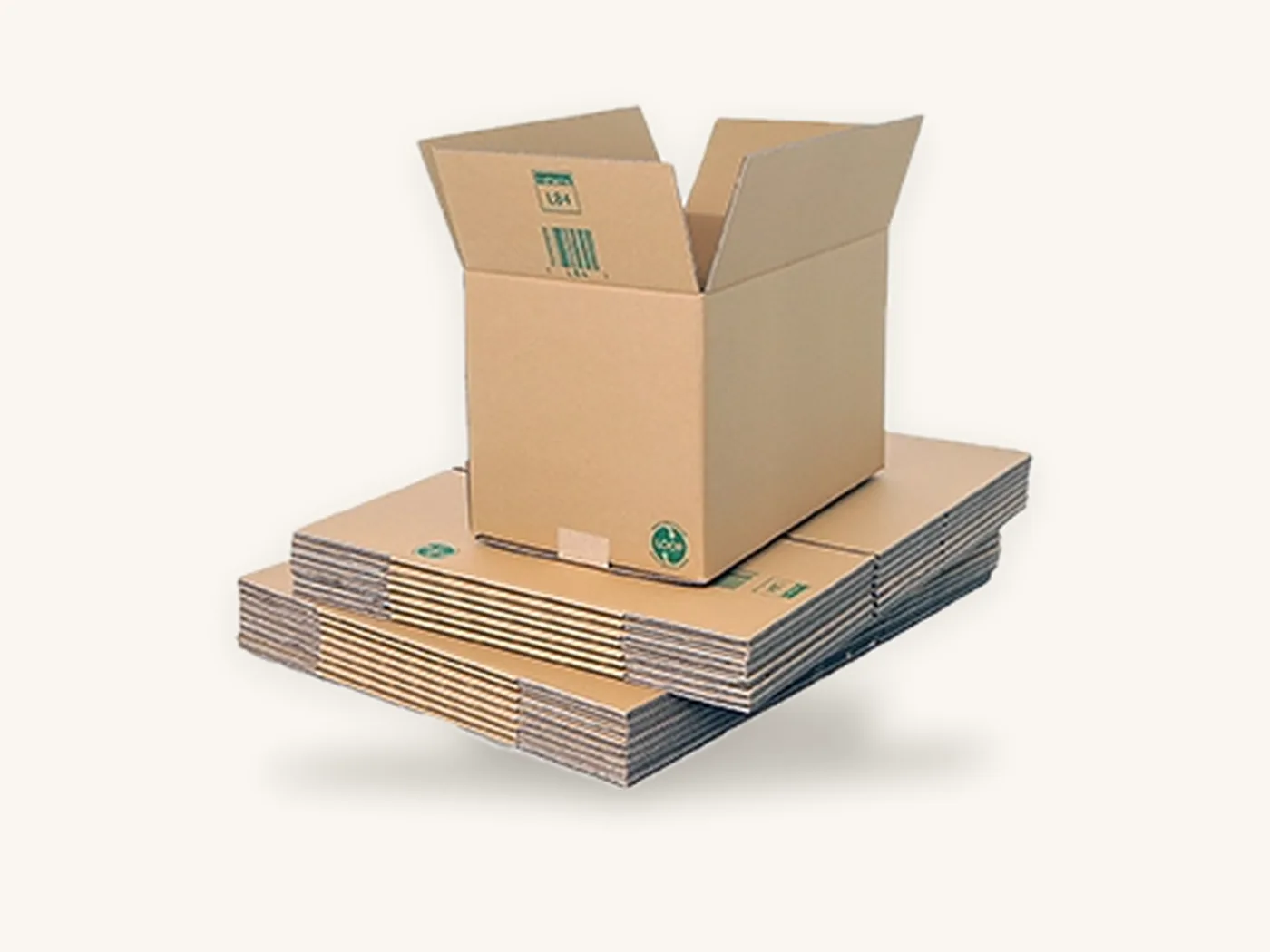
Plain kraft corrugated is the most recyclable outer. If condensation is a problem, first fix the source: seal the liner better, and add an absorbent pad or bag around ice-and-water packs. A water-based coating on the printed surface helps the outside resist scuffing and light moisture. Heavy wax or plastic coatings work against recyclability and are rarely needed for parcel shipments when the liner is sealed properly.
Printing the outer shipper
Cold chain boxes are a strong branding surface because the customer handles the box straight away, often in front of family. They also need to carry practical information:
- "Perishable" and "keep refrigerated" or "keep frozen" handling marks on at least two sides
- Orientation arrows if the liner has a lid that must stay up
- A clear label panel with no dark flood color underneath, so carrier labels scan
- Opening instructions telling customers to unpack and refrigerate immediately
- Liner disposal guidance once you know what the liner is made of
One-color print on kraft is the most common choice and keeps unit cost down. Full color on white board suits gift and premium food brands.
Insulated liners: what they do and how to choose
The liner is usually bought from a cold chain supplier and dropped inside the outer box. Your choice changes the outer box size, weight and disposal story, so pick it before you finalize the carton dimensions.
| Liner type | How it works | Strengths | Tradeoffs |
|---|---|---|---|
| Molded EPS foam cooler | Rigid foam walls and lid | Strong thermal performance, reusable, rigid support | Bulky to store, hard for customers to recycle curbside |
| Foil-faced bubble or foam pouch | Reflective film with air or foam layer | Light, compact flat, cheap | Less protection; tears; plastic film |
| Plant or textile fiber panels (paper-wrapped cotton, denim, starch foam) | Fiber batting in a paper or film envelope | Better disposal story, flexible | Check thickness and moisture handling; disposal depends on the envelope |
| Paper-based corrugated insulation | Layers of paper or corrugated with trapped air | Paper stream recyclability where accepted | Usually suited to shorter transit or cooler seasons |
Ask your liner supplier for the tested duration at a stated external temperature profile, the internal and external dimensions, and disposal guidance you can repeat to customers. Any recyclability or compostability claim you print needs to be accurate for the liner as delivered; the green claims guide covers how to qualify them.
Fit between liner and box
A liner should drop into the outer box with only a few millimeters of clearance. Too loose and it shifts, letting the corners take impacts and letting air circulate. Too tight and the flaps bulge, which weakens the tape seal. Get the liner's outer dimensions from the supplier, then ask for a structural sample of the outer box before you commit.
Coolants: gel packs, ice packs and dry ice
Coolant choice is mostly decided by whether the food ships chilled or frozen.
Gel packs and ice-and-water packs
Gel packs are frozen or refrigerated before packing. Frozen gel packs keep refrigerated goods cold; refrigerated (not frozen) packs protect cool-not-cold products like chocolate without freezing them. Place coolant above the food as well as below, because cold air sinks and headspace warms first.
Packs that turn to water can leak if punctured. Double-bag them or choose packs with a sturdy outer film, and keep an absorbent layer between coolant and any paperboard carton inside the liner.
Dry ice
Dry ice is frozen carbon dioxide at roughly minus 109 °F. It keeps frozen food frozen and leaves no liquid behind, but it comes with rules:
- It releases CO2 gas as it sublimates, so the package must be able to vent. Never seal dry ice in an airtight container.
- In air transport it is regulated as a hazardous material (UN1845). Carriers require specific markings, the net weight of dry ice on the outer box, and sometimes a shipping agreement.
- It burns skin on contact, so include handling instructions for customers.
Rules differ between USPS, UPS and FedEx, and by service level. Confirm current requirements with your carrier and the relevant transport regulations before your first shipment; our hazmat shipping packaging guide covers marking in more depth.
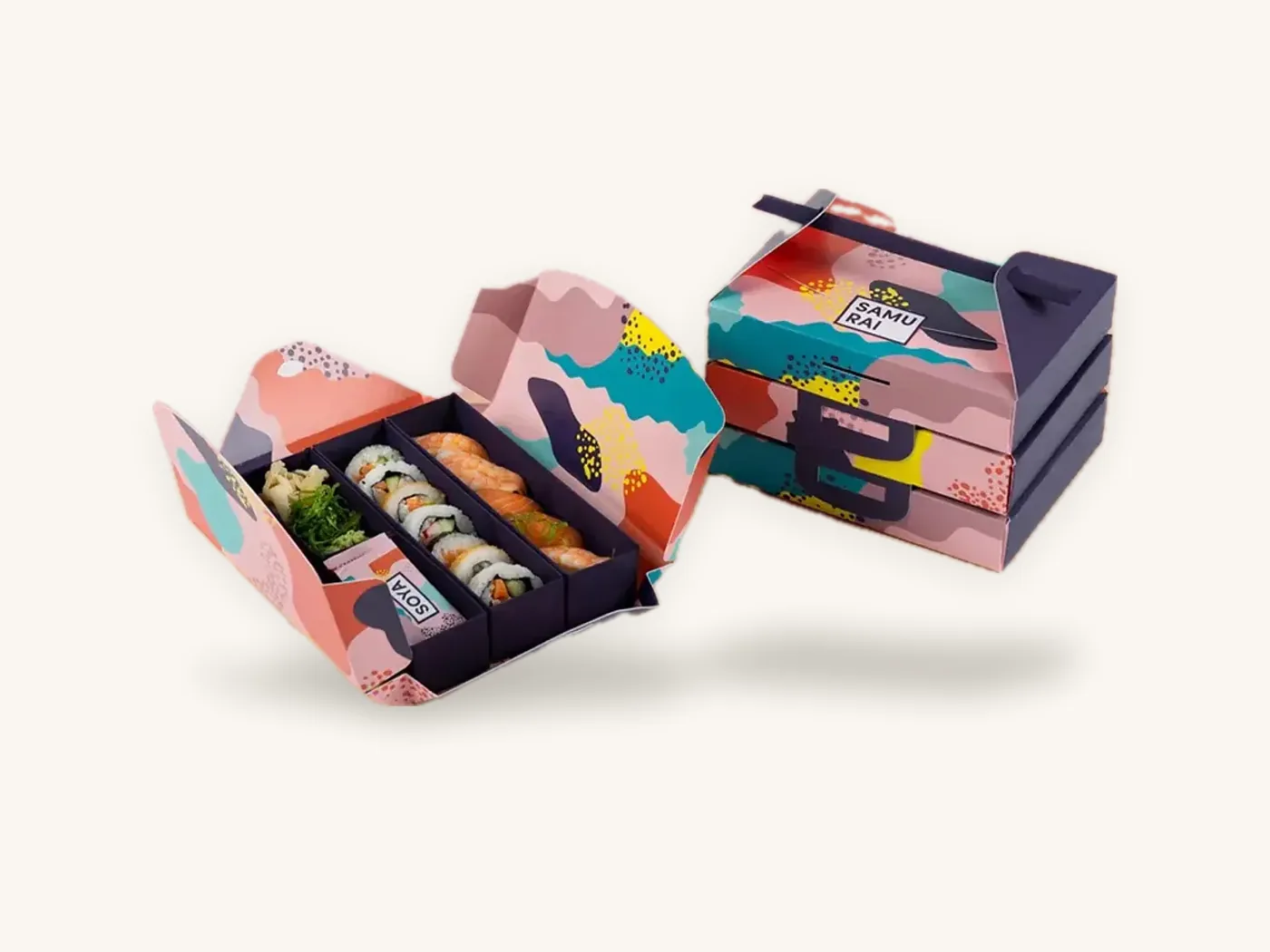
Sizing the outer box without paying to ship air
Cold chain packs are big for what they contain. Parcel carriers bill larger boxes on dimensional weight, calculated from the carton's outer volume, whenever it exceeds actual weight, so every extra inch multiplies across the whole volume. Our dimensional weight guide explains the formula.
A sizing process for perishable shippers
- Define the payload. List every item in its inner packaging, plus the coolant at its maximum count for summer.
- Arrange it in the liner. Build a physical test pack. Aim for food surrounded by coolant, with headspace filled.
- Choose the smallest liner that fits. Headspace is warm air you are paying to ship and paying to cool.
- Take the liner's outside dimensions. Measure length, width and depth at the widest points, including any lid lip.
- Add minimal clearance. Roughly 1/8 to 1/4 in on length and width lets the liner drop in; depth should let flaps close flat.
- Check the outer dimensions. Board thickness adds to the outside. B-flute adds about 1/8 in per wall and double wall about 1/4 in, so confirm the finished outside size against carrier thresholds.
- Plan a seasonal variant if needed. Many brands run a larger winter-to-summer pack or a second box size rather than shipping the summer size all year.
Our right-sized packaging guide shows how to build a small set of box sizes that covers most orders.
Tip: if you ship both a small and a large order size, consider two outer boxes built around two liner sizes. A single oversized box for every order often costs more in dimensional weight over a year than a second box size costs to stock.
Testing a pack-out before you launch
A pack-out that has never been tested is a guess. Testing does not have to be elaborate for a small brand, but it does have to be realistic.
A practical testing routine
- Pre-condition components the way you will in production: freeze gel packs for the same number of hours, chill food to its normal packing temperature.
- Place a temperature data logger or probe thermometer in the warmest spot, usually the top corner under the lid.
- Pack, tape and label exactly as production will, including any handling marks and inserts.
- Expose the box to a realistic profile. Leave it somewhere warm for a day, or ship test boxes to friends or staff in hot and distant zones.
- Record the time the product leaves its safe range, and compare that to your longest planned transit plus a buffer.
- Inspect the outer box. Look for softened corners, bulging flaps, lifted tape and condensation stains.
- Repeat for winter. Frozen gel packs can freeze delicate refrigerated items in cold weather, so winter packs sometimes use less coolant.
Formal lab testing to published temperature profiles is available from packaging test labs if your risk justifies it. The shipping fragile items guide covers drop testing, which matters just as much for glass jars and bottles in a cold pack.
Food safety and labeling, in general terms
Packaging is one control in a larger food safety plan, not a substitute for it. In the US, the FDA oversees most food and USDA's Food Safety and Inspection Service oversees most meat, poultry and egg products, and both expect you to keep food at safe temperatures throughout distribution. Some states and local health departments also regulate direct shipping of certain foods.
For packaging specifically:
- Materials that touch food directly, such as inner cartons, liners and pouches, should be suitable for food contact. Ask suppliers for documentation; our food-safe inks and coatings guide explains what to look for.
- The outer corrugated shipper normally does not touch unwrapped food. Keep food in its primary packaging.
- Required food labeling usually belongs on the primary package the customer keeps, not only on the shipper that gets recycled.
Confirm current requirements with the FDA, USDA or your state regulator, or ask a food safety consultant or counsel for your specific products.
Inner cartons and presentation inside the cooler
Many food brands add printed paperboard cartons inside the liner, such as a box of steaks or a sleeve around a cheese selection.
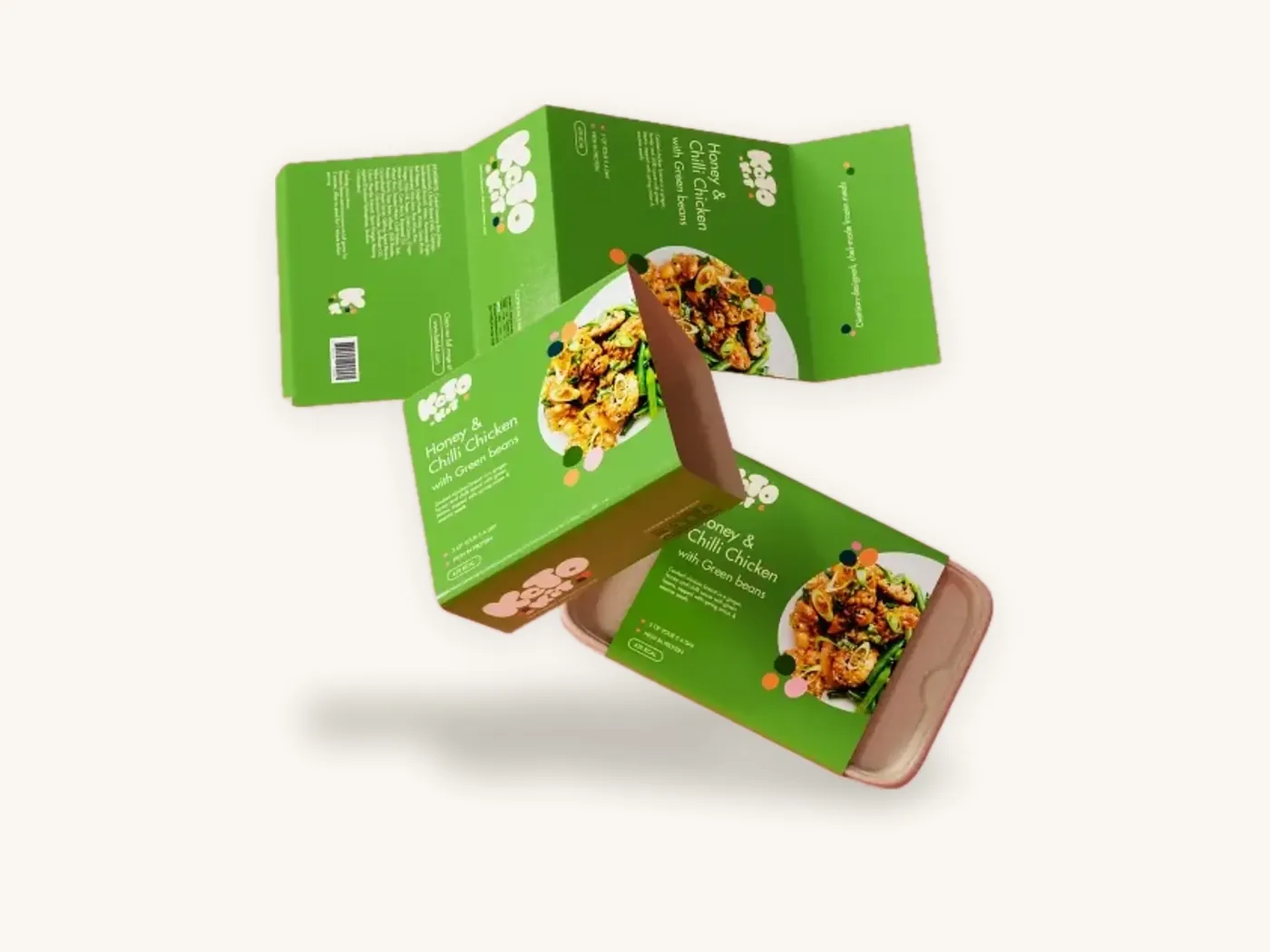
Choose coated or grease-resistant board for anything near condensation, and avoid tight friction fits that get harder to open when board swells. Custom food boxes and the food and beverage packaging page show the structures we make, and the subscription box fulfillment guide covers pack line planning for recurring meal or snack boxes.
What the outer shipper costs
Liners and coolant are priced by your cold chain supplier. The corrugated outer box is usually a smaller share of the total pack cost, but it adds up across a year of shipments. These indicative per-unit prices come from our current rates with free US shipping included:
| Outer box spec | 100 | 500 | 1,000 | 5,000 |
|---|---|---|---|---|
| Shipping box RSC, B-flute, 12x10x6 in, 1-color | $4.69 | $2.50 | $2.08 | $1.48 |
| Shipping box RSC, B-flute, 16x12x8 in, 1-color | $7.47 | $3.99 | $3.32 | $2.36 |
| Double wall shipper, BC flute, 18x14x12 in, 1-color | $17.97 | $9.58 | $7.98 | $5.67 |
A 16x12x8 in B-flute shipper printed one color is about $3.32 at 1,000 units, while an 18x14x12 in double wall shipper is roughly $7.98 at the same quantity. Your liner dimensions set the box size, so use the price estimator once you have them.
How to order a cold chain outer box from Box Sense
You bring the liner and coolant plan; we design the corrugated shipper around it and print it.
What to send
- Liner make, model or outside dimensions (length, width, depth including lid)
- Packed weight at maximum load, including coolant
- Coolant type, and whether you ship dry ice
- Transit profile: service level, zones and whether you ship year-round
- Board preference, or a note asking us to recommend single or double wall
- Print: one color on kraft, full color, handling marks, label panel location
- Inner cartons, if any, with food item sizes
- Quantities to price, for example 250, 1,000 and 5,000
From quote to delivery
- Quote within 24 hours for your spec and quantities.
- Free design support: dieline, artwork setup and a 3D digital proof, with two revision rounds.
- Structural sample: unprinted samples are free, so you can test the liner fit and run a pack-out before printing. A printed sample of approved artwork is free on orders of 100 or more; see samples.
- Production: 8–12 business days after proof approval, or rush in 5 business days on most corrugated styles.
- Delivery: free shipping on every US order; international shipping quoted at cost.
The minimum order is 10 boxes, which is enough to run a proper summer test before committing to volume. There are no die or plate charges, and defective boxes reported within 14 days are reprinted free.
Frequently asked questions
How long does an insulated shipping box keep food cold?
It depends on the liner, the amount and type of coolant, the outside temperature and how long the parcel is in transit. A well-matched pack can hold chilled food through one to two days of ground shipping, but the same pack may fail on a hot route or a weekend delay. Test your exact pack-out in realistic conditions and plan transit around the result.
Should I use gel packs or dry ice?
Use gel packs for refrigerated items that must stay cold but not freeze, such as fresh meat, seafood, dairy or meal kits. Use dry ice for frozen foods that must arrive frozen solid. Dry ice is regulated for air transport and needs venting, specific markings and the net dry ice weight on the box, so confirm your carrier's current rules first.
What box do I need for shipping frozen food?
Frozen food usually ships in a rigid insulated liner with dry ice, inside a corrugated outer box. Size the outer box to the liner's outside dimensions with minimal clearance. For packs under roughly 25 lb, a strong single wall box often works; heavier packs or long transits usually need a double wall BC flute shipper. Test for softened corners from condensation.
Can corrugated boxes handle condensation from cold packs?
Corrugated board loses strength as it absorbs moisture, so condensation from a cold liner can soften corners over a day or two. Seal the liner well, bag ice-and-water packs, add an absorbent layer and choose a stronger board grade than the weight alone would suggest. A double wall shipper is the usual upgrade when softening shows up in testing.
Is cold chain packaging recyclable?
The corrugated outer box is widely recyclable where curbside programs accept cardboard. The liner is the harder part. Foam coolers and foil bubble pouches are rarely accepted curbside, while some fiber or paper-based liners have better disposal options. Gel packs vary. Only print recycling guidance you can substantiate for each component, and tell customers how to separate them.
Does Box Sense supply insulated liners and gel packs?
Box Sense makes the printed corrugated outer shipper and paperboard inner cartons. Insulated liners, gel packs and dry ice typically come from specialist cold chain suppliers. Send us your liner's outside dimensions and packed weight, and we will engineer and print an outer box that fits it, with a free unprinted structural sample to test before production.
What day of the week should I ship perishable food?
Most perishable shippers send packages early in the week, typically Monday to Wednesday, so a one- or two-day delay does not leave the parcel sitting in a warm facility over the weekend. Check carrier holiday schedules and pause shipping ahead of them. For longer zones, consider faster service rather than adding more coolant and a bigger box.
Next steps
Pick your liner and coolant plan first, then send us the liner's outside dimensions and packed weight. Run the numbers in the price estimator for single and double wall options, and request a quote for your outer shipper. We will confirm pricing within 24 hours and send a free structural sample so you can test your pack-out before printing.
Boxes in this guide
Order the packaging we covered
Written by the Box Sense Packaging Team
Our structural designers, prepress technicians and production staff print and convert custom boxes every day for brands in the United States, United Kingdom and UAE. Questions about this guide? Talk to us.