Food safe packaging inks are inks, and the coatings and adhesives around them, whose components are permitted for their intended food-contact use and are applied so that nothing migrates into food at levels that break the rules. In the US, there is no FDA "approval" stamp for a finished box. Instead, each substance that could reasonably transfer to food must be authorized under the food additive regulations, or fall under another recognized pathway, for the type of food and conditions involved.
For a brand, that means the practical questions are: does the ink touch the food, can anything migrate through the board, what does the food contain (fat, moisture, alcohol), and what temperature does it see. Answer those, and the right combination of ink, coating and barrier usually follows. This guide explains the framework in plain terms and shows how to specify packaging that holds up. It is general information, not legal advice, so confirm current requirements with FDA or qualified counsel for your product.
Key takeaways
- The FDA regulates packaging components as food contact substances, mainly through indirect food additive rules in Title 21 of the Code of Federal Regulations, parts 170 to 189.
- Direct contact (ink or coating touching food) is held to a much stricter standard than indirect contact (print on the outside of a carton with board between it and the food).
- Ink on the outside can still reach food through migration, set-off in stacks or a porous board, which is why functional barriers and low-migration inks exist.
- "Soy-based" or "water-based" describes the ink vehicle; it does not by itself make an ink suitable for food contact.
- Grease resistance is moving away from PFAS chemistry. Several states now restrict PFAS in food packaging, so verify current rules in every state you sell into.
- Box Sense prints food packaging with soy and water-based inks and aqueous coatings; ask for the documentation available for your exact spec before you order.
What "food safe" means for packaging inks and coatings
"Food safe" is marketing shorthand, not a regulatory category. What regulators care about is whether substances from the packaging become components of food, and if so, whether that use is authorized.
Three ideas carry most of the weight:
- Intended use. A substance can be authorized for dry foods at room temperature but not for fatty foods or hot fill. Authorization is tied to conditions.
- Migration. The concern is not what is in the ink, but what moves from the package into the food, and how much.
- The whole package. Board, coating, ink, adhesive and any window film all contribute. A compliant ink on a board with a non-compliant coating does not make a compliant package.
That is why a supplier telling you an ink is "food safe" is only the start of the conversation. The useful follow-up is: food safe for what food, what contact type, and what temperature?
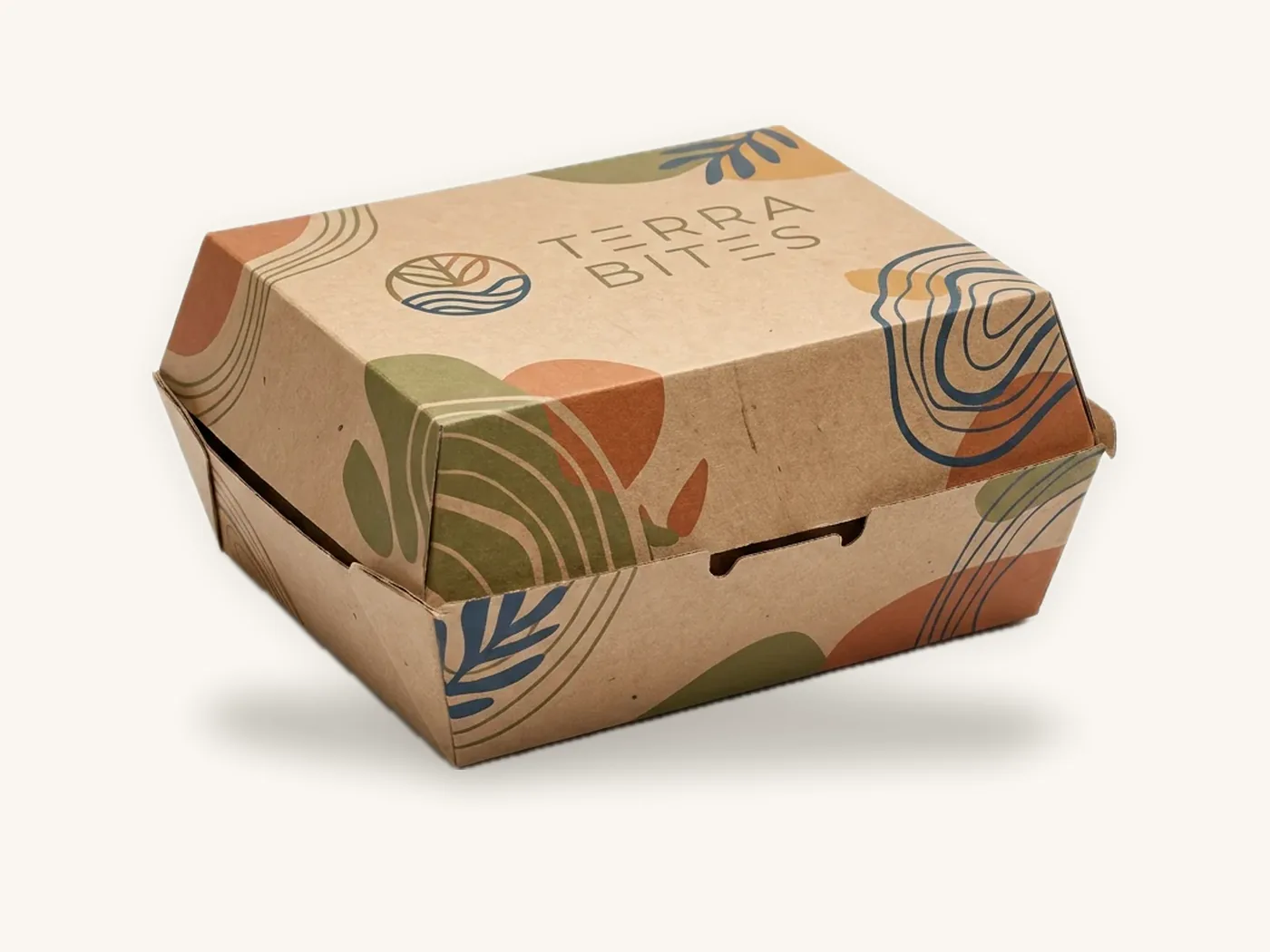
How the FDA regulates food contact packaging
In the US, the Federal Food, Drug, and Cosmetic Act treats substances that can migrate from packaging into food as potential food additives. The detailed rules sit in Title 21 of the Code of Federal Regulations. Here is the structure in plain terms.
The 21 CFR 170–189 framework
- Parts 170 and 171 set general food additive principles and petition procedures, including the threshold of regulation process for substances that migrate at extremely low levels.
- Parts 174 to 178 are the indirect food additive regulations. They list substances permitted in packaging and the conditions of use. Part 175 covers adhesives and coatings, part 176 covers paper and paperboard components, part 177 covers polymers and part 178 covers adjuvants and production aids.
- Part 176 is the section most relevant to printed boxes. It includes separate provisions for paper and paperboard in contact with aqueous and fatty foods and for paperboard in contact with dry food, which is one reason the food type matters so much.
- Parts 180 to 189 cover interim listings, prior-sanctioned substances and substances prohibited from use.
You can read part 176 directly in the Electronic Code of Federal Regulations.
Other pathways
Not every compliant substance is listed in those parts. Some are generally recognized as safe (GRAS) for their intended use, some have prior sanctions from before the 1958 food additive amendments, and many newer substances are cleared through the Food Contact Notification (FCN) program. An effective FCN applies to the specific manufacturer and use described in it. The FDA explains these routes on its food contact substances page.
What this means for you
Brand owners are responsible for the safety of their food, including its packaging. In practice, the chain of assurance runs from raw material makers to ink and board suppliers to the converter, usually through written compliance statements. Your job is to describe the use accurately and collect that documentation.
Direct, indirect and incidental food contact
The single biggest factor in choosing inks and coatings is how close they sit to the food. Packaging engineers usually think in these tiers.
| Contact type | What it looks like | Examples | What it demands |
|---|---|---|---|
| Direct contact | Printed or coated surface touches food | Printed inside of a pastry box, printed sandwich wrap, cup interior | Every layer on that surface must be authorized for the food and conditions; printing on the food side is usually avoided |
| Indirect contact, no barrier | Print on the outside, porous board between print and food | Unlined cereal-style carton with loose food, bakery box with unwrapped goods | Board and inside surface must suit the food; migration through or set-off from the outside ink must be controlled |
| Indirect contact with functional barrier | A layer between print and food blocks migration | Carton with a sealed inner bag, foil or film lining | Barrier does the heavy lifting; exterior ink choice is less constrained |
| Secondary or tertiary packaging | Food is already fully sealed in primary packaging | Shipper holding sealed jars, gift box around wrapped chocolates | Ordinary packaging inks generally suffice; primary pack carries the compliance |
Where most brands actually sit
Say you sell cookies. If each cookie is individually sealed in a film wrapper, the printed cookie box is secondary packaging. If loose cookies sit on the bare board of the box, the inside surface is in direct contact, and the outside print is indirect contact without a barrier. Same box shape, very different specification.
Tip: the cheapest way to simplify compliance is often a liner, not a special ink. A glassine or greaseproof sheet, a sealed inner bag or a food-grade tray between the product and the box turns a direct-contact problem into a barrier-protected one. Check that the liner itself is suitable for the food.
How inks and coatings migrate into food
Understanding migration explains why some rules exist. There are four routes worth knowing.
1. Diffusion through the material
Small molecules in ink, such as residual solvents, photoinitiators from UV-cured inks or low-molecular-weight components, can move through paperboard toward the food, especially over long shelf life or at higher temperatures. Paperboard is porous, so it is a weak barrier on its own.
2. Set-off in stacks and reels
When printed sheets are stacked, or printed material is wound on a reel, the printed outside of one sheet presses against the unprinted inside of the next. Ink components can transfer, called set-off, and then sit directly on the food-contact surface. Low-migration ink systems and proper curing reduce this.
3. Gas-phase transfer
Volatile components can evaporate inside a closed package and condense on food, particularly fatty foods that absorb them readily. This is one reason odor and taint testing is used for sensitive products like chocolate.
4. Contaminants from recycled fiber
Recycled paperboard can carry residues from its previous life, such as mineral oils from newspaper inks. For dry, fatty or long-shelf-life foods in direct contact with recycled board, a barrier layer or a virgin-fiber board is often chosen. This is a live topic in European regulation and is worth raising with your supplier for any direct-contact use.
Functional barriers: the layer that changes the rules
A functional barrier is a layer that prevents migration from the outer layers of packaging into the food at meaningful levels under the conditions of use. If a genuine functional barrier sits between the print and the food, the exterior ink is largely isolated from the food.
Common barriers include aluminum foil, many plastic films, sealed inner bags and some coatings. Paperboard alone, and most aqueous coatings on their own, are not considered effective barriers against every migrant.
Whether a layer actually functions as a barrier depends on the migrating substance, the barrier's thickness, the food type, temperature and time. That is a technical judgment, so rely on supplier data and testing rather than assumptions.
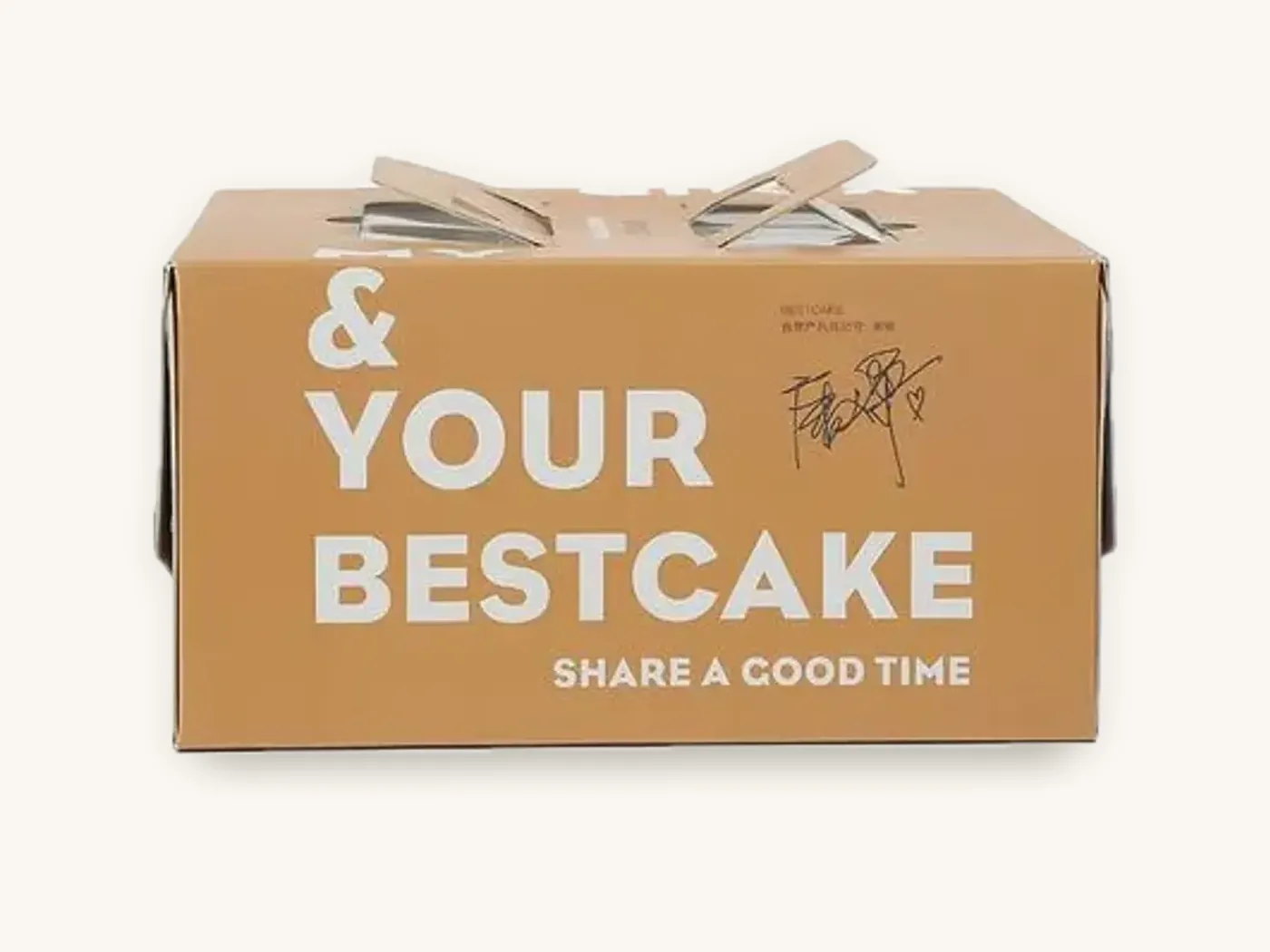
Choosing inks for food packaging
Ink systems differ in chemistry, migration behavior and print quality. This table summarizes how they are generally used in food packaging. Suitability always depends on the specific formulation and documentation.
| Ink system | How it dries | Typical food packaging role | Things to know |
|---|---|---|---|
| Conventional offset (oil-based, including soy-based) | Absorption and oxidation | Exterior of cartons for wrapped or barrier-protected foods | Soy replaces part of the petroleum oil; pigments and other components still determine suitability |
| Low-migration offset | Specially formulated oxidation or energy curing | Exterior of cartons for sensitive or unwrapped foods | Formulated with components selected and tested for low migration; costs more |
| Water-based flexo | Evaporation of water | Corrugated, bags, cups, wraps | Low odor; common on food-service items |
| UV or EB cured | Cured instantly by light or electron beam | Labels, cartons, special effects | Photoinitiator migration must be controlled; low-migration UV systems exist |
| Digital (toner or inkjet) | Fused or cured | Short-run cartons and labels | Food packaging suitability varies widely by press and ink set; ask specifically |
Soy and water-based inks: what they do and do not mean
Soy-based inks replace some petroleum-derived oils with soybean oil. Water-based inks use water as the main carrier instead of solvents. Both can reduce volatile organic compounds and are good environmental choices. Neither label, by itself, means an ink is suitable for direct food contact. The pigments, resins and additives decide that, together with how the ink is used.
Keep print off the food side
The most common rule in food carton design is simple: print the outside, leave the food-contact inside unprinted, and keep glue flaps and coatings on the inside compatible with the food. If you want inside printing on a food box, add a barrier or use a liner.
Grease resistant coatings and the shift away from PFAS
Fatty, oily and buttery foods soak into untreated paperboard, leaving stains and weakening the box. Packaging has traditionally solved this with grease-resistant treatments.
How grease resistance is achieved
- Dense or refined fiber: papers like glassine and greaseproof are made by refining pulp until fibers pack tightly, which slows oil penetration without added chemistry.
- Barrier coatings: water-based dispersion coatings form a continuous film on the board that resists grease and moisture.
- Extruded polymer coatings: polyethylene or bio-based polymer layers are highly resistant, but they can complicate recycling or composting.
- Liners and inserts: a separate greaseproof sheet or tray keeps oil off the box entirely.
Grease resistance is often measured with the kit test (TAPPI T 559), which rates how well a surface resists a series of oil-and-solvent mixtures on a 1 to 12 scale. Water absorption is commonly measured with a Cobb test. Ask for these values when grease performance matters.
Why PFAS is being phased out
For decades, some grease-resistant paper used per- and polyfluoroalkyl substances (PFAS). Because of concerns about their persistence in the environment and the body, their use in food packaging has come under heavy scrutiny. The FDA has reported that PFAS-containing grease-proofing substances are no longer being sold by manufacturers for food contact use in the US market.
At the same time, several states, including California, New York, Washington and Maine, have passed laws restricting intentionally added PFAS in some or all food packaging. The scope, definitions and effective dates differ from state to state and continue to change. Verify the current rules in every state where your packaging is sold or distributed, and ask your supplier to confirm in writing that the grease-resistant treatment on your boxes does not use intentionally added PFAS.
Watch out: a "compostable" or "natural" fiber box is not automatically PFAS-free. Older molded fiber and bakery papers sometimes relied on fluorinated treatments for grease resistance. Get written confirmation for the specific material rather than assuming.
Matching the specification to the food
Food type and conditions change what the package needs. Use this as a starting framework, then confirm with supplier documentation.
| Food situation | Key risk | Common approach |
|---|---|---|
| Dry, wrapped goods (sealed candy, bagged tea) | Minimal; primary wrap is the barrier | Standard exterior inks, aqueous coating |
| Dry, unwrapped goods (loose crackers, dry pasta) | Migration and set-off onto food-contact side | Unprinted interior, suitable board, low-migration exterior ink or inner bag |
| Fatty or buttery bakery (croissants, cakes, donuts) | Grease staining, fat-soluble migration | Grease-resistant board or liner, unprinted interior, PFAS-free treatment |
| Hot takeout and fried food | Heat, steam and grease | Grease and moisture barrier, vented structure, food-service grade materials |
| Chocolate and confectionery | Odor and taint, fat migration | Low-odor inks and coatings, inner tray or wrap |
| Frozen and chilled | Condensation, softening board | Moisture-resistant coating, appropriate board strength |
For structures, see custom food boxes, cake boxes, donut boxes, takeout boxes and burger boxes. The food and beverage packaging page shows the full range, and our takeout packaging guide covers food-service formats.
Finishes on food packaging
Exterior finishes such as matte or gloss lamination and spot UV are generally placed on the outside of cartons and should be kept off food-contact surfaces. If you are considering one, our guides to matte vs gloss lamination and spot UV explain how they are applied. Aqueous coating is the most common exterior protection on food cartons.
Compliance documentation checklist
Before you approve a food packaging order, collect or confirm the following:
- Food and use description in writing: food type (dry, aqueous, fatty, alcoholic), temperature range, shelf life and whether food touches the board.
- Board compliance statement for the paperboard or corrugated grade, covering the intended food type.
- Ink statement confirming the ink system is suitable for the contact type (for example, exterior print on indirect-contact packaging).
- Coating and adhesive statements for anything on the food-contact side or glue flaps.
- Window film and liner statements where used; see our window film guide.
- PFAS confirmation for grease-resistant treatments.
- State-specific requirements for each state you sell into, checked with counsel.
- Label compliance for printed food information; our FDA food labeling guide covers the text requirements.
Keep these records on file. Buyers, retailers and auditors increasingly ask for them.
How to order food packaging from Box Sense
We manufacture paperboard and corrugated food packaging at our own facility, with soy and water-based inks, aqueous coatings and FSC-certified board available. The more precisely you describe the food and how it contacts the box, the better we can match materials.
What to send
- Food product, whether it is wrapped or unwrapped, and whether it is fatty, moist, hot or frozen
- Box style, such as a bakery box, tuck carton, gable box or takeout box, or product dimensions
- Whether you need a window, liner or insert
- Exterior print, coating and any finishes
- Sustainability or state requirements you need to meet
- Quantities and target in-hand date
- Artwork, or a request for our design services team
What happens next
- Quote within 24 hours, with materials matched to your food and contact type.
- Free design support: dieline, artwork setup and a 3D digital proof, with two revision rounds. Tell us which panels touch food so artwork stays off them.
- Samples: unprinted structural samples are free, so you can test grease and fit with real product. Printed samples of approved artwork are free on orders of 100 or more.
- Production: standard production takes 8–12 business days after proof approval, with rush production in 5 business days on most paperboard and corrugated styles.
- Delivery: free US shipping; international shipping quoted at cost.
For reference, a bakery or cake box with a window in 18 pt SBS at 10x10x5 in, printed full color, is about $4.09 each at 100 units and about $1.82 at 1,000, including US shipping. Check your spec with the price estimator. The minimum order is 10 boxes, and bakeries can see more on our bakery and confectionery page.
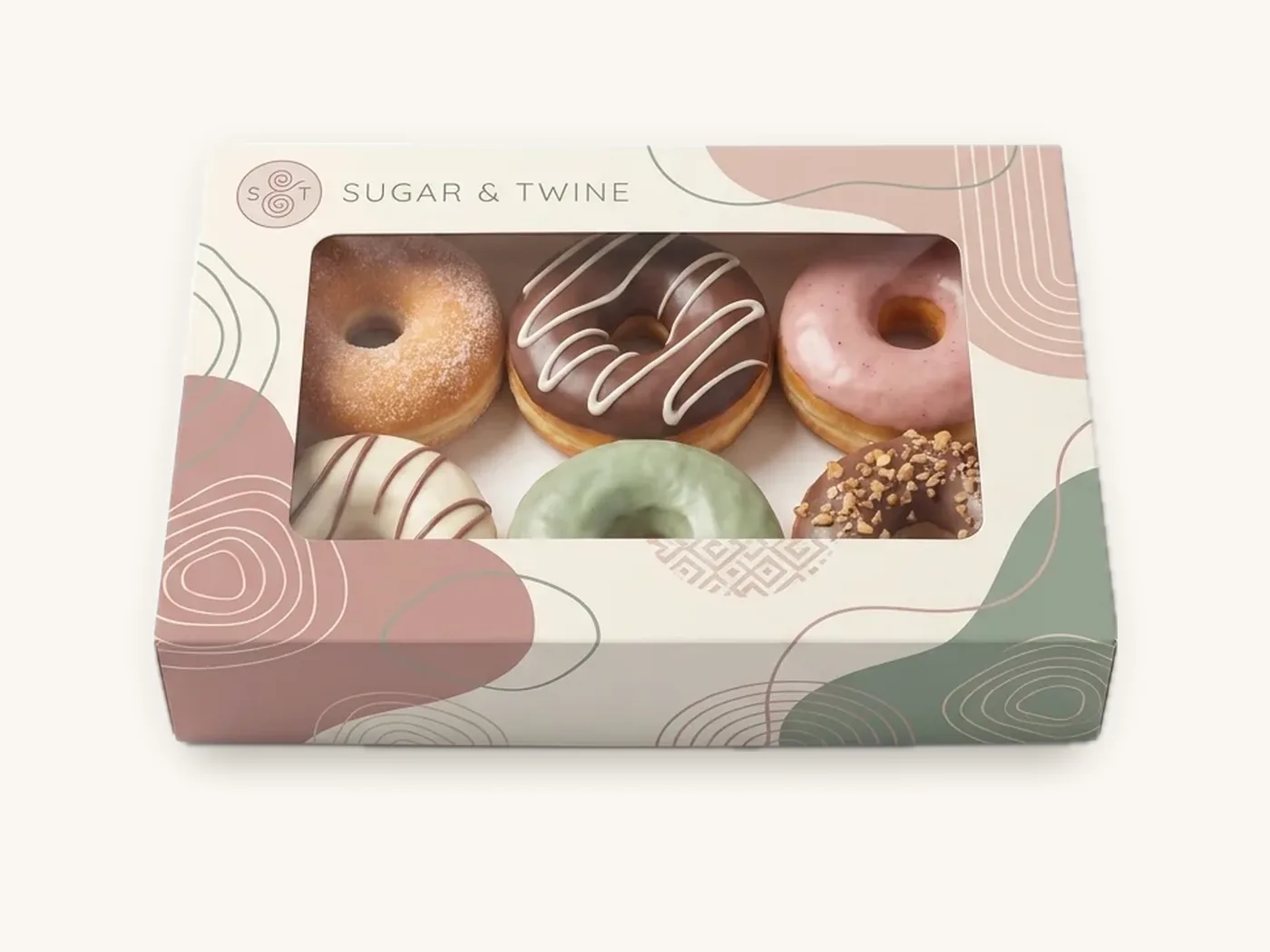
Frequently asked questions
Are soy-based inks food safe?
Not automatically. Soy-based inks replace part of the petroleum oil in the ink with soybean oil, which is an environmental improvement, but the pigments, resins and additives determine whether an ink suits food packaging. Soy inks are commonly used on the outside of cartons for wrapped or barrier-protected foods. For direct contact or unwrapped food, confirm suitability for your specific use with the supplier.
Does the FDA approve food packaging?
The FDA does not approve finished boxes. It regulates the substances used in packaging that may migrate into food, mainly through the indirect food additive regulations in 21 CFR, along with GRAS status, prior sanctions and the Food Contact Notification program. Manufacturers and brands are responsible for using compliant substances under their authorized conditions. Confirm current requirements with FDA or counsel.
What is the difference between direct and indirect food contact?
Direct contact means the printed or coated surface touches the food, such as the inside of an unlined pastry box. Indirect contact means there is material between the ink and the food, such as print on the outside of a carton. Direct contact carries stricter requirements, which is why food boxes are usually printed only on the outside.
What is a functional barrier in food packaging?
A functional barrier is a layer that prevents substances in outer packaging layers, such as ink, from migrating into food at meaningful levels under the conditions of use. Aluminum foil, many plastic films and sealed inner bags often act as barriers. Plain paperboard generally does not. Whether a layer works as a barrier depends on the substance, food, temperature and time.
What are low-migration inks?
Low-migration inks are formulated with raw materials selected and tested to minimize transfer into food through the package, by set-off or through the air inside a closed pack. They are commonly used on the outside of primary food packaging where no full barrier exists, such as cartons holding unwrapped dry foods. They cost more than conventional inks and require careful curing and handling.
Is PFAS still used in food packaging?
Its use is being phased out in the US. The FDA has reported that manufacturers are no longer selling PFAS-containing grease-proofing substances for food contact use in the US market, and several states have passed laws restricting intentionally added PFAS in food packaging. Rules and effective dates vary, so verify current state requirements and get written PFAS-free confirmation from suppliers.
What is the best grease resistant coating for food boxes?
It depends on the food and the end-of-life goal. Water-based dispersion barrier coatings resist grease and moisture while keeping boxes paper-based. Glassine and greaseproof liners avoid coating the box itself. Polyethylene coatings are highly resistant but complicate recycling. Ask for kit test ratings and PFAS-free confirmation, then test samples with your actual food.
Can I print on the inside of a food box?
You can, but printing on a surface that touches food requires materials suitable for direct contact, which narrows choices and adds cost. Most brands leave food-contact panels unprinted, or put the food in a liner, bag or tray so the printed inside is no longer in direct contact. If inside printing matters, discuss the food and contact type with your supplier first.
Next steps
Write down your food type, contact type and temperature range, then check box costs with the food packaging price estimator. When you are ready, request a food packaging quote and we will match board, ink and coating to your product and confirm pricing within 24 hours.
Boxes in this guide
Order the packaging we covered
Written by the Box Sense Packaging Team
Our structural designers, prepress technicians and production staff print and convert custom boxes every day for brands in the United States, United Kingdom and UAE. Questions about this guide? Talk to us.