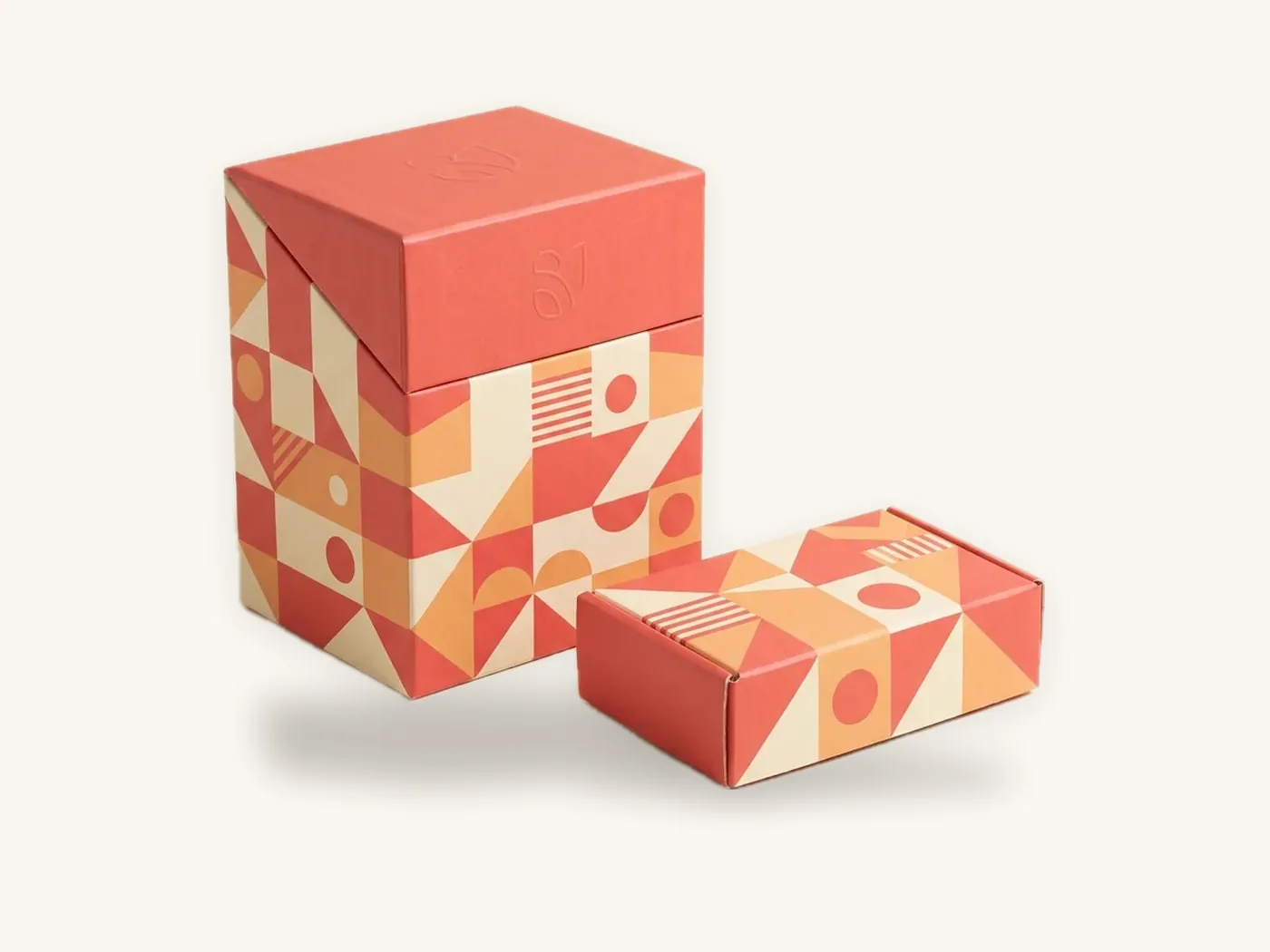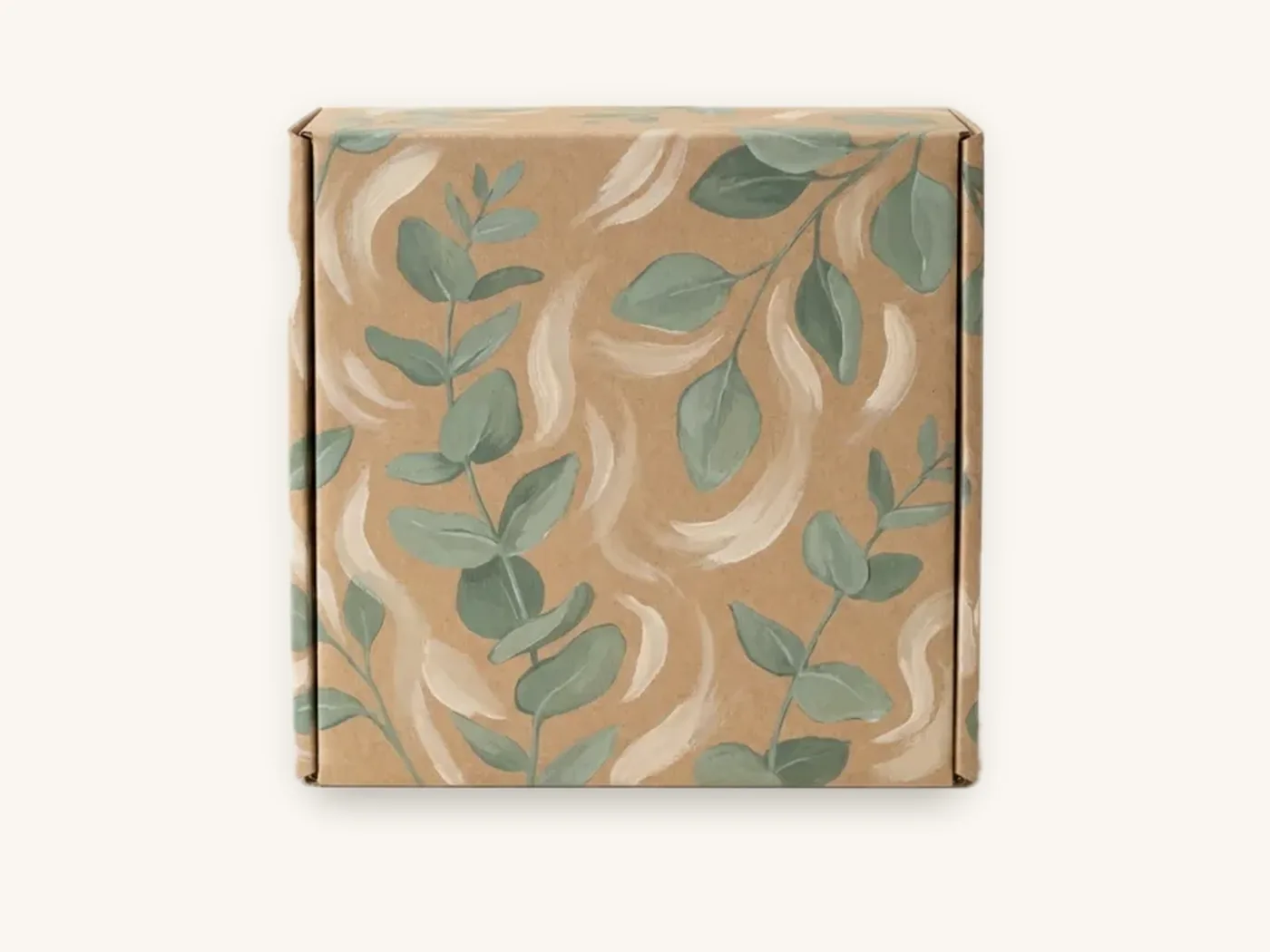
Aqueous coating is a clear, water-based finish applied over printed packaging to protect the ink from scuffing and rub-off while keeping the box easy to recycle. It dries by evaporation, adds almost no thickness and comes in gloss, satin and matte sheens. For most everyday folding cartons, product boxes and mailers, it is the sensible default finish.
It is not a waterproof barrier, and it will not match the scratch resistance of a laminated film or the mirror shine of UV coating. What it does offer is a clean, protective finish at a low per-unit cost, with no plastic film to complicate recycling. This guide explains what aqueous coating is, how it compares with UV coating and lamination, where its limits are, and how to specify it on your boxes.
Key takeaways
- Aqueous coating is a thin, water-based polymer layer applied over ink, usually on press, that dries quickly and protects print from scuffs and ink rub.
- It comes in gloss, satin and matte sheens; gloss aqueous is noticeably less shiny than UV coating or gloss lamination.
- Water based coating boxes remain compatible with paper recycling in many programs because there is no plastic film to separate, though local acceptance varies.
- Choose aqueous for everyday retail cartons, food boxes and shipping-facing boxes; upgrade to lamination for dark floods, heavy handling or a soft-touch feel.
- In our pricing, aqueous is the lowest-cost coating option: an 18 pt straight tuck end carton with full color and aqueous is about $1.15 each at 100 units and $0.51 at 1,000.
What aqueous coating is and how it is applied
Aqueous coatings are dispersions of acrylic or similar polymers in water, with small amounts of waxes and additives that control slip, rub resistance and sheen. Once the water leaves the film, the polymer particles fuse into a continuous, clear layer that sits on top of the ink.
On an offset press, the coating is applied in a dedicated coating unit after the last ink station. An engraved anilox roller meters a precise, thin film onto a blanket or plate, which transfers it to the sheet. Infrared lamps and hot air then drive off the water before the sheet reaches the delivery pile. The same coating can be applied to digitally printed sheets on a separate coater.
Why printers like it
Because aqueous coating dries fast and seals the ink, sheets can move to die-cutting and gluing sooner than with oil-based varnish. It also reduces set-off, where wet ink transfers from one sheet to the back of the next in the stack. That speed and consistency is part of why it is the standard protective finish on high-volume cartons.
What it looks and feels like
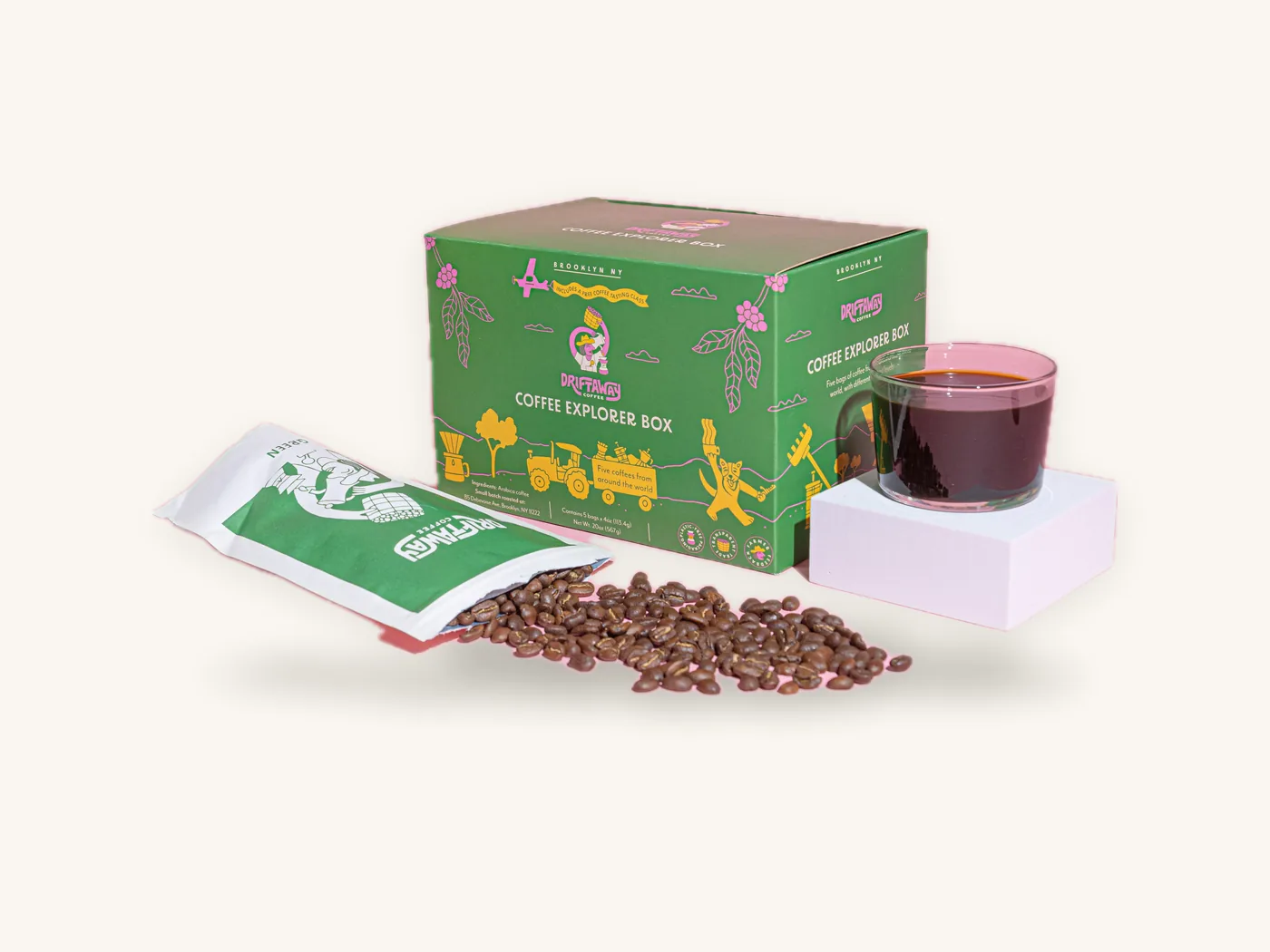
A coated box feels smooth and slightly slicker than bare printed board. Colors look a touch richer, because the clear film evens out how light reflects from the ink. Matte aqueous tones down glare; gloss aqueous adds a moderate sheen that is closer to a satin than to a mirror.
What aqueous coating protects against, and what it does not
Setting honest expectations avoids disappointment. Aqueous coating is a light-duty protective layer, not an armor coat.
| Threat | Aqueous coating | Why |
|---|---|---|
| Ink rub and scuffing in packing and transit | Good protection | The film shields ink from friction against other boxes and cartons |
| Fingerprints and handling marks | Moderate | Helps on light colors; dark matte floods can still show marks |
| Set-off and marking in the stack | Good | Seals ink quickly after printing |
| Light moisture, condensation, a damp hand | Limited | Resists brief contact but is not a waterproof barrier |
| Standing water or wet shipping conditions | Poor | Water eventually reaches and softens the board |
| Grease and oils from food | Poor with standard coatings | Specialty barrier formulations exist but are a separate spec |
| Deep scratches and scoring | Limited | The film is very thin; lamination resists scratches far better |
| Cracking at folds | Very good | Thin, flexible film bends with the board |
The dark flood problem
Large solid areas of black, navy or deep brand colors show every scuff, because any abrasion reveals lighter board fibers. Aqueous coating reduces that, but it does not eliminate it on boxes that rub together in a shipper. If your design relies on a big dark flood, consider matte lamination, which our matte vs gloss lamination guide compares in detail.
Watch out: a matte aqueous coating can look slightly different on each run because sheen depends on coating weight and drying. If a consistent low-glare look is central to the brand, ask for a printed sample and keep it as the reference for reorders.
Aqueous vs UV coating vs varnish vs lamination
"Coating" gets used loosely. These are the four finishes buyers most often compare, and they behave very differently.
| Finish | What it is | Sheen range | Scuff resistance | Recyclability | Relative cost |
|---|---|---|---|---|---|
| Aqueous coating | Water-based polymer film, dries by evaporation | Matte, satin, moderate gloss | Good | Generally compatible with paper recycling | Lowest |
| UV coating | Liquid coating cured instantly by ultraviolet light | Very high gloss, also matte | Very good, harder surface | Usually accepted, adds more coating material | Moderate |
| Oil-based varnish | Ink-like clear layer printed on an ink unit | Low to moderate gloss | Fair | Generally compatible | Low |
| Film lamination | Thin plastic film bonded to the sheet | Matte, gloss, soft-touch | Excellent, also adds tear resistance | Film complicates recycling in many programs | Highest |
Aqueous vs UV coating: the practical differences
The aqueous vs UV coating decision usually comes down to shine and hardness. UV coating produces a thicker, harder, glass-like gloss that resists chemicals and scratching better. It also cures instantly, so it can be applied as a full flood or as selective spot areas.
That hardness has costs. A thick UV flood can crack along scores and folds on paperboard, and it is less forgiving for glue areas. Aqueous is thinner and more flexible, so it folds cleanly and suits boxes with many creases. Spot UV, where clear gloss is applied only to a logo or pattern, is a different finish from a UV flood; the spot UV guide covers it.
Aqueous vs lamination
Lamination bonds a thin film to the sheet. It is the right step up when a box sees heavy handling, when dark solid colors must stay pristine, or when you want soft-touch texture. For a side-by-side view of every coating and film, the packaging finishes guide is the hub.
The trade-off is sustainability. Plastic film adds a separate material to the box, and many recycling programs treat laminated paperboard less favorably. Aqueous coating keeps the package paper-based.
Choosing a sheen: gloss, satin or matte aqueous
The sheen changes how color and type read more than most buyers expect. Choose it deliberately rather than leaving the default.
Gloss aqueous
Gloss makes colors look more saturated and photographs look sharper. It suits food boxes, cereal and snack cartons, toys and products with bright, photographic artwork. It is a moderate gloss, so if you want a high-shine look, UV coating or gloss lamination is the tool.
Satin aqueous
Satin sits between gloss and matte. It gives color some pop without harsh reflections under store lighting, and it is a safe choice when artwork mixes photography and a lot of small text, such as supplement or household product cartons.
Matte aqueous
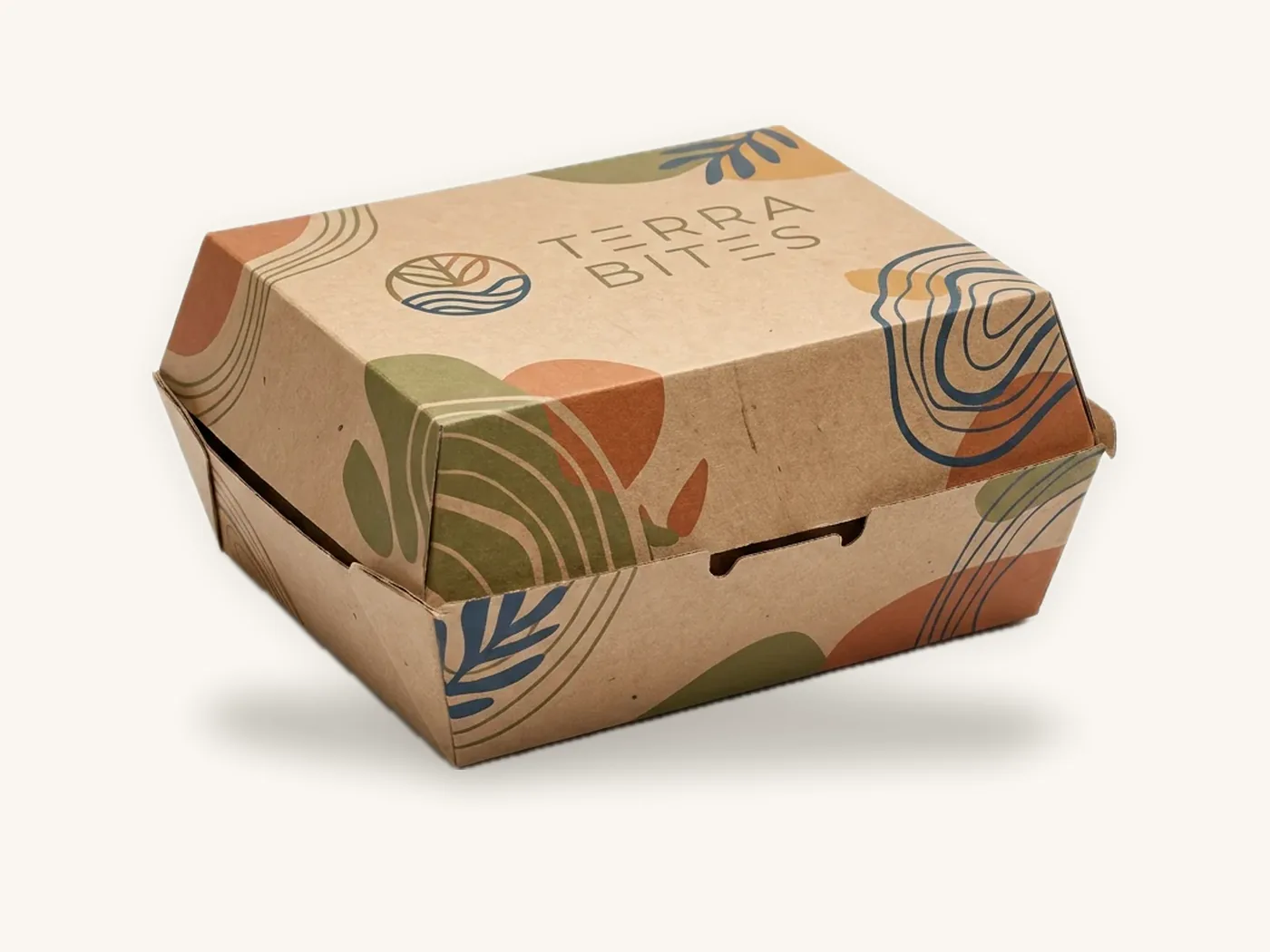
Matte reduces glare, makes typography calm and readable, and gives a natural, uncoated look that suits eco-positioned brands. On uncoated or recycled boards, matte aqueous can look almost invisible while still protecting the print. It pairs especially well with eco-friendly boxes where a plastic-free finish is part of the message.
Water based coating boxes and recyclability
Aqueous coating is popular with sustainability-minded brands for a straightforward reason: it is a very thin, water-based layer on paper rather than a separate plastic film. In the repulping process used to recycle paperboard, a thin coating like this generally breaks up with the fibers and is screened out, rather than needing to be peeled away.
What that means in practice
- Coated paperboard stays a paper package. An aqueous-coated carton is generally handled like other printed paperboard in programs that accept cartons.
- Board choice still matters more. Recycled-content or FSC-certified boards and soy or water-based inks shape the environmental profile far more than the coating. Our eco-friendly materials page lists options, and the SBS vs kraft vs CUK guide explains how the boards differ.
- Add-ons can undo the benefit. A laminated window, heavy plastic tape or a foam insert can make a box harder to recycle even when the coating is not a problem.
- Local programs decide. Acceptance depends on the local recycling program, and food-soiled boxes may be excluded regardless of coating.
Environmental claims on the box
If you print "recyclable" or similar claims, they need to be accurate for the people who will receive the package. In the US, the Federal Trade Commission's Green Guides set out how environmental marketing claims should be qualified. Review current FTC guidance or ask counsel before adding a claim, and read our sustainability page for the options Box Sense offers.
Aqueous coating on food packaging
Food brands often ask whether aqueous coating is "food safe". The honest answer is that it depends on whether the coating will touch food and on the specific formulation.
Outside of the box versus direct contact
Most printed food cartons are coated on the outside, with the food in an inner bag, tray or wrapper. In that setup the coating's job is protecting the print, and it does not contact the food.
When paperboard does touch food directly, such as a bakery tray or a box holding unwrapped pastries, materials in contact with food are subject to US Food and Drug Administration rules on food contact substances. Coating suppliers formulate specific products for those uses, and brands should request compliance documentation for the exact coating and board. Confirm current requirements with the FDA or regulatory counsel for your product. The food-safe inks and coatings guide goes deeper into those questions.
Grease and moisture
Standard aqueous coating is not a grease barrier. Oily foods like pastries, fried snacks or pizza need a barrier board, a specialty barrier coating or a liner. For dry goods such as cereal, tea, crackers and packaged confectionery, a standard aqueous coating over the print is usually all that is needed. The food and beverage packaging page shows the structures commonly used.
Combining aqueous coating with other finishes
Aqueous coating often acts as the base layer for decorative finishes, and it needs to be planned around glue, windows and variable data.
Spot UV over aqueous
Spot UV can be applied over an aqueous-coated sheet when the coating is formulated to accept it. This is a common way to create a matte-and-gloss contrast without laminating: matte aqueous on the whole sheet, spot UV on the logo.
Foil and embossing
Hot foil generally stamps well onto aqueous-coated board, though every foil and coating pair is tested at proofing. Embossing and debossing are unaffected by the thin coating. Our foil stamping guide covers foil selection.
Knockouts for glue, windows and codes
Coating is typically kept off, or "knocked out" of, certain areas:
- Glue flaps and the manufacturer's joint, so adhesive bonds directly to board.
- Window patch areas, where film is glued around a die-cut opening on window boxes.
- Areas for lot codes, dates or handwriting, since some coatings resist inkjet coding and pens.
- Areas that will receive a label, if the label adhesive is known to struggle on coated surfaces.
Your dieline should show these knockouts. If you are unsure where they belong, we mark them on the proof for you.
Which boxes should use aqueous coating?
Aqueous is a strong default, but not the right answer for every box. Use this matrix as a starting point.
| Box type | Recommended finish | Reasoning |
|---|---|---|
| Retail folding cartons with light or photographic artwork | Gloss or satin aqueous | Protects print at low cost, folds cleanly |
| Dry food, tea, cereal and snack cartons | Gloss or satin aqueous | Scuff protection on shelf; add an inner bag for freshness |
| Eco-positioned brands on kraft or recycled board | Matte aqueous or uncoated | Keeps a natural look and a paper-only package |
| Printed corrugated mailers | Aqueous | Reduces rub in the parcel network |
| Boxes with large dark solid floods | Matte lamination | Aqueous may not prevent visible scuffs |
| Premium cosmetics and gift cartons | Soft-touch or matte lamination | Tactile feel and scratch resistance justify film |
| Oily or wet foods in direct contact | Barrier board or specialty coating | Standard aqueous is not a grease barrier |
For custom product boxes and most custom food boxes, gloss or satin aqueous is where we usually start.
What aqueous coating costs
Aqueous coating adds very little to unit price. In our instant estimator, it is the lowest-cost coating option: matte or gloss lamination adds roughly three times as much per unit, and soft-touch lamination roughly five times as much. There is no tooling charge for a full aqueous coat.
| Spec (indicative, US shipping included) | 100 units | 500 units | 1,000 units | 5,000 units |
|---|---|---|---|---|
| Straight tuck end carton, 18 pt SBS, 3x2x5 in, full color outside, aqueous | $1.15 | $0.61 | $0.51 | $0.36 |
| Window box, 18 pt SBS, 4x4x4 in, full color, aqueous, window | $1.66 | $0.89 | $0.74 | $0.53 |
Quantity, box size and board still drive price far more than the coating does. If you are choosing board caliper at the same time, the paperboard thickness guide explains when 14, 18 or 24 pt board makes sense. For your exact spec, use the box price estimator.
How to specify aqueous coating on a Box Sense order
A clear coating spec avoids surprises at proof stage. Include these details when you request a quote.
Your coating checklist
- Box style, internal dimensions and board, for example 18 pt SBS paperboard
- Print: full color or PMS, outside only or inside and outside
- Coating: aqueous, and the sheen you want (gloss, satin or matte)
- Coating on the inside surfaces too, or outside only
- Any spot UV, foil or embossing to be added on top
- Known knockout areas: glue flaps, window, codes or labels
- Whether the box touches food directly, and what the food is
- Quantities and target delivery date
From quote to delivery
We confirm quotes within 24 hours. Free design support includes the dieline, artwork setup and a 3D digital proof, with two revision rounds. Unprinted structural samples are free, and a printed sample of approved artwork is free on orders of 100 or more, which is useful for judging sheen.
Standard production is 8–12 business days after proof approval, with rush in 5 business days on most paperboard and corrugated styles. Shipping is free on every US order, and international shipping is quoted at cost. The minimum order is 10 boxes, and defective boxes reported within 14 days are reprinted free.
Tip: if you are unsure between aqueous and lamination, order the same carton both ways as a short run. At 10 or 25 units, a side-by-side test in your real packing and shipping process costs little and settles the question.
Frequently asked questions
What is aqueous coating on packaging?
Aqueous coating is a clear, water-based finish applied over printed ink on boxes and cartons. It dries as the water evaporates, leaving a thin polymer film that protects the print from scuffing, rub-off and set-off. It is available in gloss, satin and matte sheens and adds very little cost or thickness, which makes it the everyday default for many retail and shipping boxes.
What is the difference between aqueous and UV coating?
Aqueous coating is water-based and dries by evaporation into a thin, flexible film with moderate sheen. UV coating is cured instantly by ultraviolet light into a thicker, harder, higher-gloss layer that resists scratches and chemicals better. UV floods can crack on folds and cost more; aqueous folds cleanly, costs less and keeps a lighter coating on the board.
Is aqueous coating waterproof?
No. Aqueous coating resists brief contact with moisture, such as a damp hand or light condensation, but it is not a waterproof barrier. Prolonged exposure to water will eventually soften the paperboard underneath. For packaging that faces wet conditions, consider lamination, a moisture-resistant board or an outer shipper, and test samples in your real storage and shipping conditions.
Is aqueous coated paperboard recyclable?
Aqueous-coated paperboard is generally compatible with paper recycling because the coating is a thin, water-based layer that breaks up during repulping, with no plastic film to separate. Acceptance ultimately depends on the local program, and food soiling or plastic add-ons can change the outcome. Check local guidance and FTC Green Guides before printing recyclability claims.
Is aqueous coating food safe?
It depends on the formulation and use. Most food cartons are coated only on the outside, with food in an inner bag or wrapper, so the coating does not touch the food. For direct food contact, the coating and board must meet US FDA food contact requirements, and you should request compliance documentation for the exact materials and confirm requirements with the FDA or counsel.
Does aqueous coating prevent scuffs on dark boxes?
It helps, but it may not be enough. Aqueous coating reduces rub and light scuffing, yet large solid areas of black or deep colors can still show marks when boxes rub together in transit. For dark floods on boxes that see heavy handling, matte lamination is usually the better choice. A short test run shows how your design holds up.
Can you add spot UV or foil over aqueous coating?
Yes, in most cases. Spot UV can be applied over an aqueous coating formulated to accept it, creating a matte-and-gloss contrast without lamination. Hot foil generally stamps well onto aqueous-coated board, and embossing is unaffected by the thin film. Every coating and finish combination is checked at proofing before production.
Next steps
If your boxes need everyday protection without a plastic film, start with aqueous coating in the sheen that suits your artwork, and compare it against lamination in the instant price estimator. When your spec is ready, request a quote for coated boxes and we will confirm pricing within 24 hours and mark coating knockouts on your dieline.
Boxes in this guide
Order the packaging we covered
Written by the Box Sense Packaging Team
Our structural designers, prepress technicians and production staff print and convert custom boxes every day for brands in the United States, United Kingdom and UAE. Questions about this guide? Talk to us.