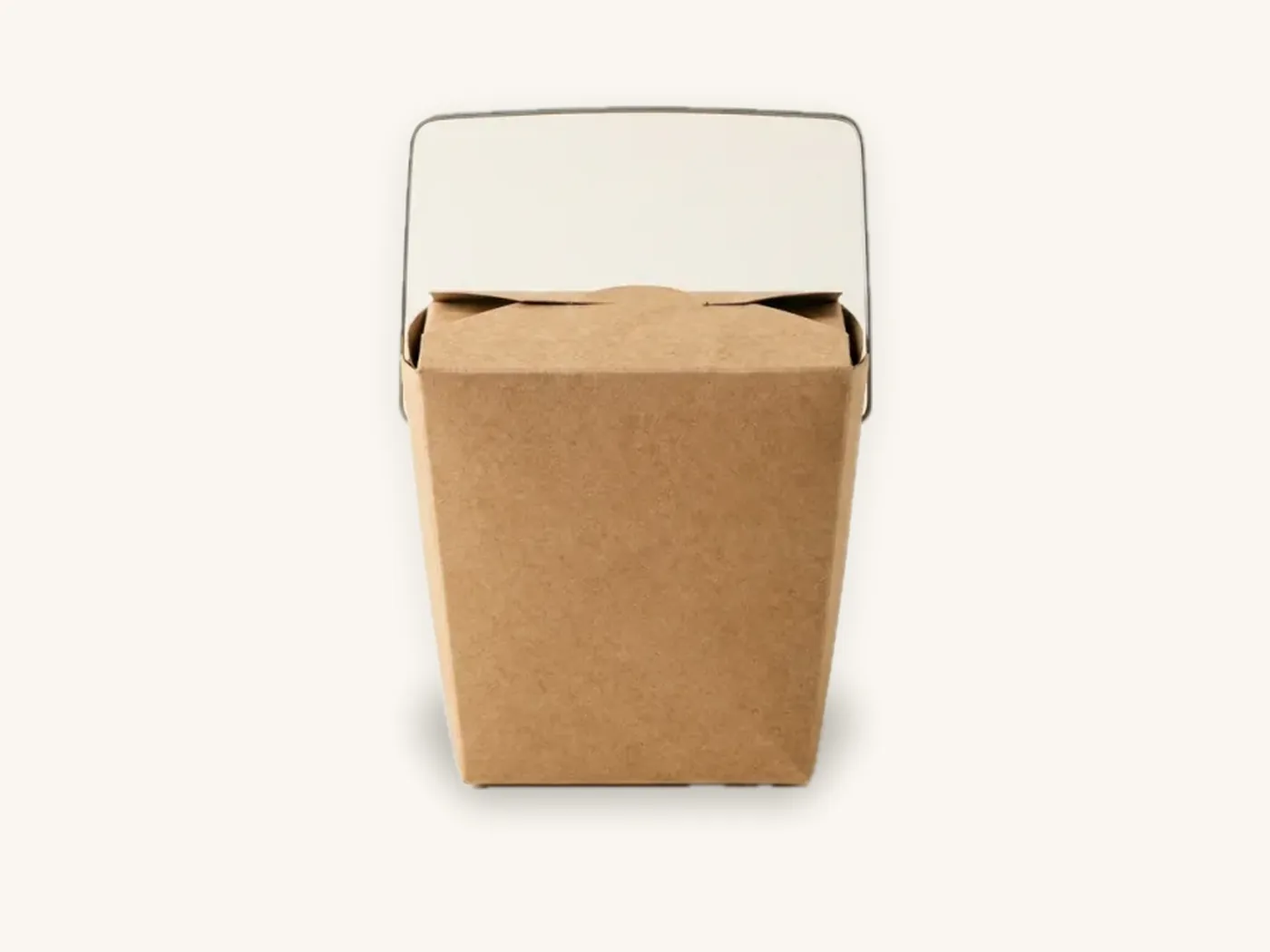
Good takeout packaging is chosen dish by dish, not as one generic container for the whole menu. Crispy food needs venting, saucy food needs a leak-resistant fold, hot food needs insulation, and everything needs to survive 20 to 40 minutes in a bag, a car and a customer's hallway. The container that works for a noodle bowl is usually wrong for fried chicken.
For most restaurants, a short list of paperboard formats covers the menu: folded noodle pails, clamshell burger boxes, scoop-style fry cartons, gable boxes for family portions, and a branded bag or sleeve to carry it all. This guide shows how to match each format to each dish, what coatings and venting do, how to design restaurant takeout boxes for delivery apps, and how to build a standard kit that keeps both cost and storage under control.
Key takeaways
- Audit your menu by texture and moisture: crispy, saucy, layered, cold and liquid dishes each need a different container behavior.
- Folded paperboard pails and clamshells handle most hot entrées; vents and grease-resistant surfaces decide whether food arrives crisp or soggy.
- Standardize on as few footprints as possible. Four to six container types usually cover a full menu and simplify ordering and storage.
- Delivery changes the brief: containers must stack, stay closed and show tampering, and the bag or seal is often the most visible branded surface.
- Rules on foam containers and certain grease-resistant chemicals vary by state and city; confirm local requirements before switching materials.
- Box Sense makes custom takeout, burger and fry boxes from 10 units, with free design support and standard production of 8–12 business days.
What happens to food after it leaves the pass
Before choosing any container, it helps to understand the four things that damage takeout food in transit. Each one points to a specific packaging feature.
Steam
Hot food releases water vapor. In a sealed container, that vapor condenses on the lid and drips back onto the food, which is why fries go limp and breaded items lose their crunch. Vents, breathable paperboard and leaving crisp items uncovered in a separate compartment all help.
Grease and sauce
Oil and liquid soak into untreated paper, weakening the base and leaking onto bags and car seats. Grease-resistant board, coated interiors and leak-resistant folded corners, like those on a classic pail, keep them contained.
Heat loss
Food cools quickly in thin containers with a lot of headspace. Snug sizing reduces air around the food, and thicker board or a double layer slows heat loss. Insulated delivery bags do most of the work, but the container still matters.
Movement
Cars brake, riders lean and bags get set down hard. Containers that tip, open or slide spill sauces and mix components. Flat bases, secure locking tabs and consistent footprints that stack cleanly all reduce spills.
Match to go boxes to every menu item
The quickest way to fix complaints is to map each dish to the container behavior it needs. Use this table as a starting point for your own menu audit.
| Menu item | What goes wrong | Container behavior needed | Format that fits |
|---|---|---|---|
| Noodles, fried rice, stir-fry | Sauce leaks, food cools | Leak-resistant folded corners, snug fit | Folded paperboard pail or noodle box |
| Burgers and sandwiches | Bun goes soggy, stack collapses | Venting, locking lid, rigid base | Clamshell burger box or sandwich wedge |
| Fries, tots, onion rings | Steam softens crunch | Open top or vented, grease resistant | Scoop fry carton or snack cup |
| Fried chicken and wings | Breading steams, grease soaks through | Vents plus grease-resistant base | Vented clamshell or gable box |
| Salads and bowls | Dressing leaks, greens wilt near hot food | Sealed lid, separate from hot items | Lidded bowl or folded pail with liner |
| Family meals and sides | Multiple items shift in one bag | Stackable, carry handle | Gable box or divided tray inside a carrier |
| Desserts and pastries | Crushing, frosting smears | Rigid walls, headroom, window optional | Window box or cake-style carton |
| Soups and liquid sauces | Spills | Sealed, liquid-tight container | Lidded cup or tub, not a folded box |
Folded paperboard boxes are excellent for most solid and semi-moist foods, but true liquids belong in a sealed cup or tub. Mixing formats is normal. The custom paper cups guide covers cups and lids for soups, drinks and sauces.
Takeout and noodle boxes
The folded pail with a closing top is the classic container for noodles, rice and stir-fry dishes. It is made from a single die-cut sheet of paperboard folded so that the corners overlap without seams at the base, which is why it resists leaks better than a glued carton.
Pails versus flat-bottom noodle boxes
- Traditional pails taper toward the base and close with interlocking top flaps. They hold heat well and stand upright in a bag.
- Flat-bottom noodle boxes have a wider base and straighter walls, which makes them more stable on a table and easier to eat from directly.
- Handles can be wire or paperboard. Metal handles should not go in a microwave, so if customers reheat in the container, choose a handle-free or paper-handle design and confirm microwave suitability of the board and coating.
Board and coating
Takeout boxes are usually made from food-service paperboard with a grease- and moisture-resistant interior. White board gives the brightest print; kraft gives a natural look that hides minor stains. Common sizes range from small side portions to large entrée pails, often described by fluid-ounce capacity, so measure a full portion of your largest dish before choosing.
The takeout and noodle boxes product page shows the pail and noodle box formats we produce.
Burger and sandwich boxes
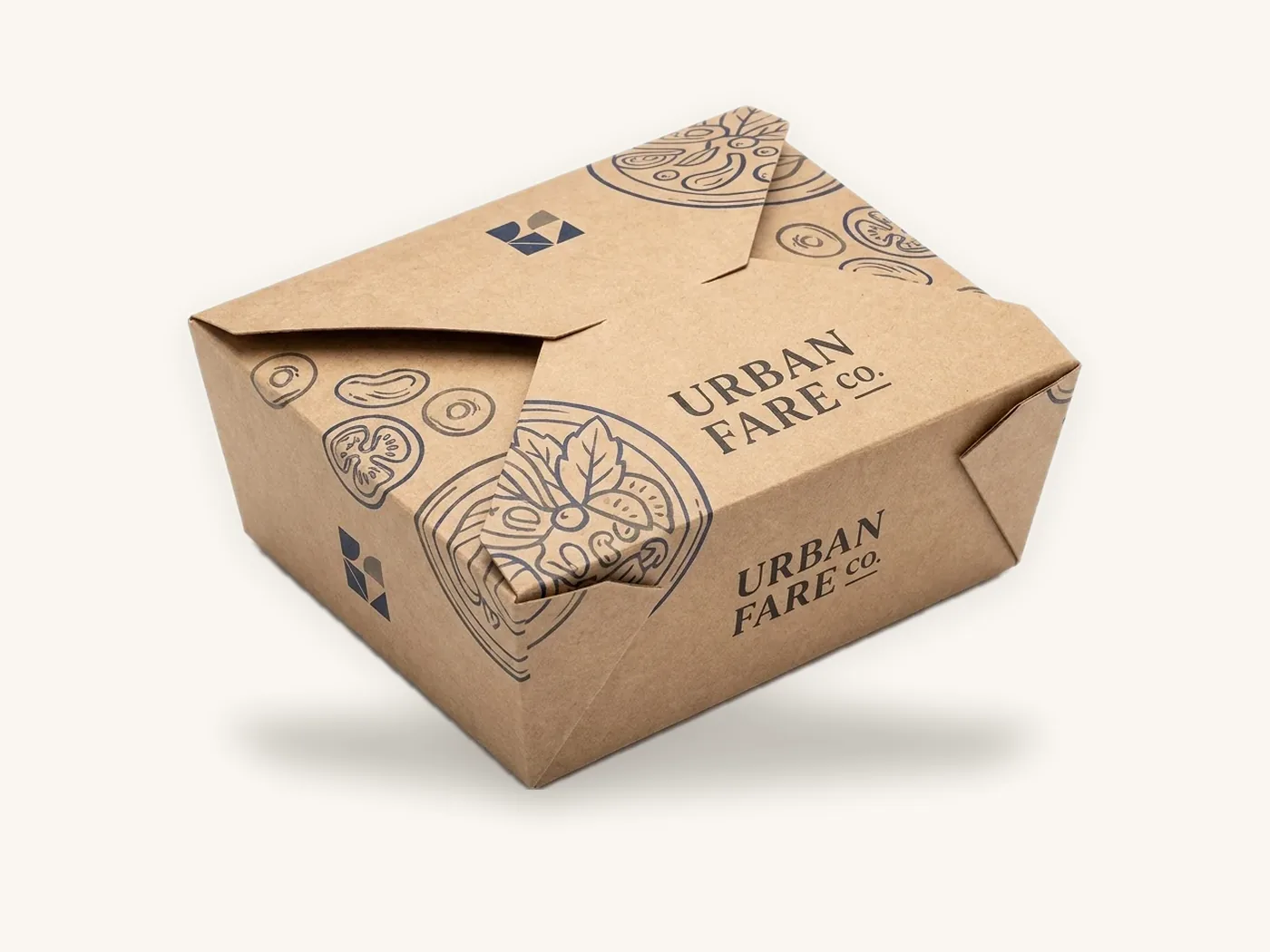
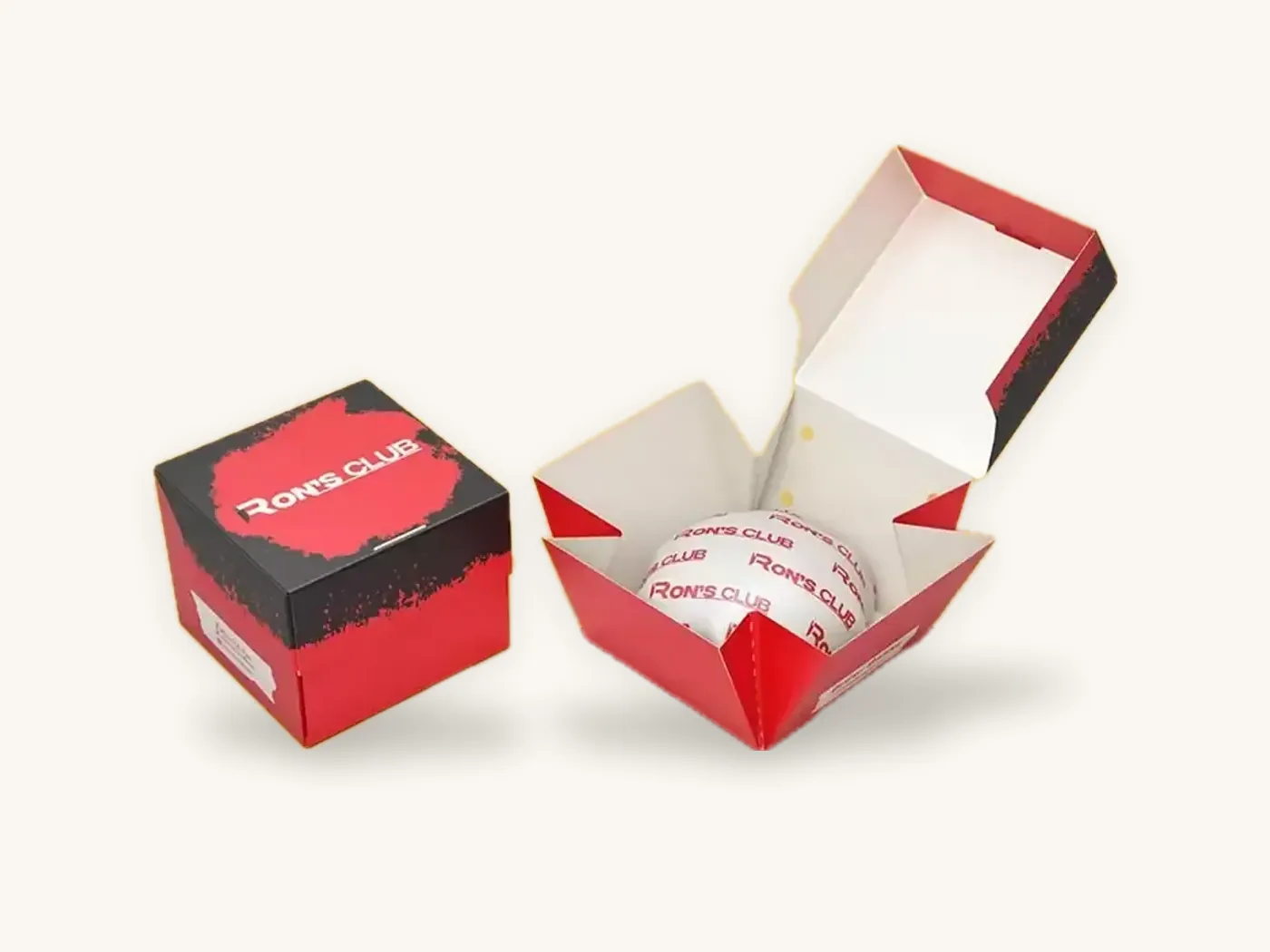
Clamshell burger boxes fold from one sheet with a hinged lid and a front locking tab. They protect stacked burgers from crushing and keep toppings contained.
What makes a good burger box
- Snug but not tight: a box roughly 1/2 in larger than the burger's widest point in each direction stops sliding without squashing the bun.
- Vents: small die-cut vents in the lid let steam out, which helps prevent a soggy bun on the way home.
- A secure lock: a front tab that clicks into a slot keeps the lid closed when boxes are stacked in a bag.
- Grease resistance: burgers with sauces and cheese need an interior that resists oil, especially on longer delivery routes.
Sandwich wedges and wrap boxes
Triangular wedge boxes suit cut sandwiches and show the fillings through a window. Longer rectangular boxes suit subs and wraps. For wraps cut in half, an upright tray keeps both halves standing and prevents fillings from spilling.
Browse burger and sandwich boxes for clamshell and wedge formats.
Fry boxes, snack cups and sides
Sides are where most crispness complaints happen, because fries and fried snacks are the most steam-sensitive items on the menu.
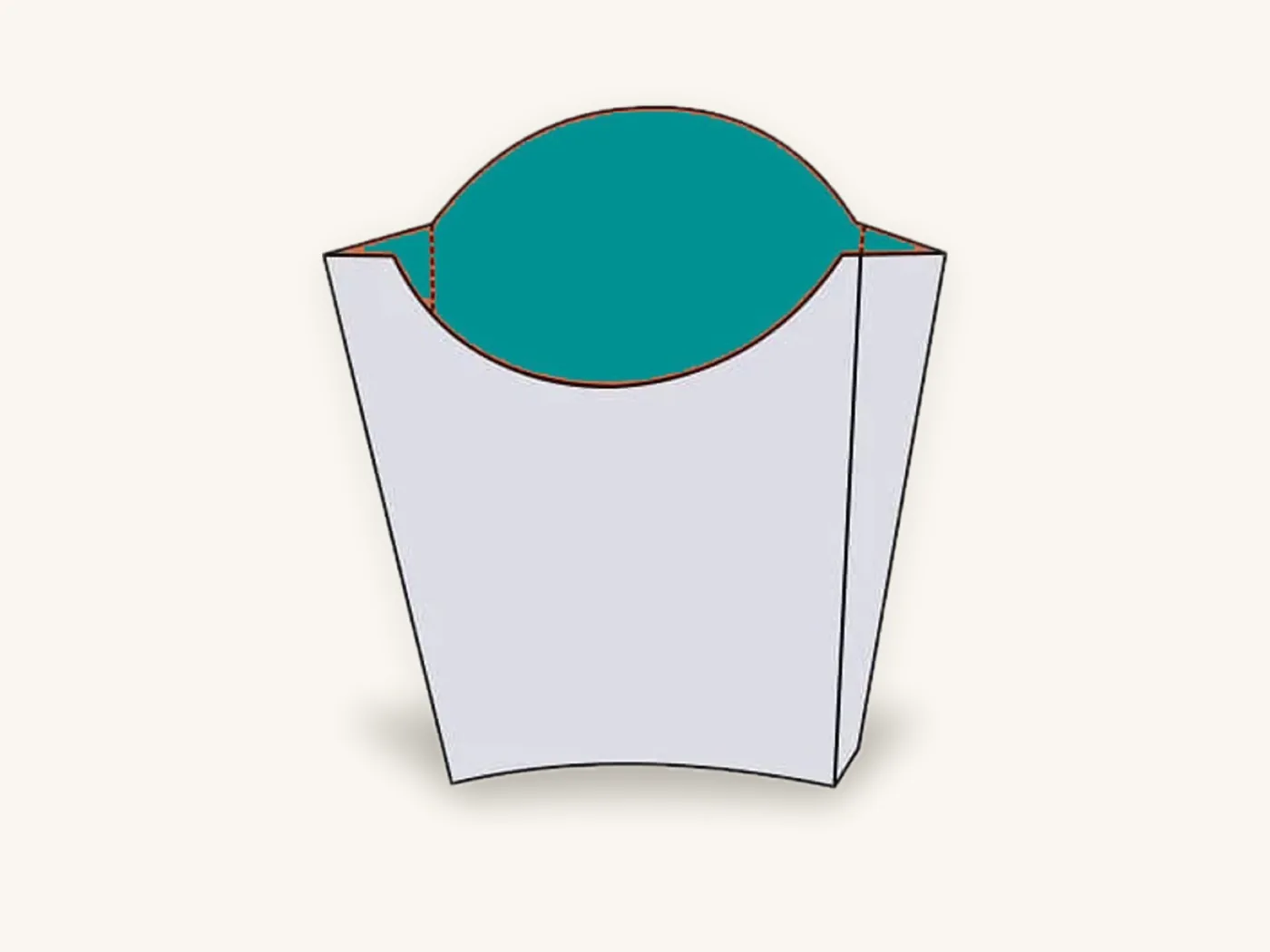
Scoop-style fry cartons
Open-top fry cartons with a raised back panel let steam escape while holding fries upright. They fill quickly at a fry station and give a large printed surface facing the customer. For delivery, many restaurants place the fry carton inside a vented bag or a larger clamshell rather than closing it tightly.
Snack cups and trays
Cone-style cups, popcorn boxes and shallow boat trays handle tots, onion rings, loaded fries and snacks. Trays suit dine-in and pickup; closed or lidded formats suit delivery.
Keep crisp and saucy apart
Pack dipping sauces and gravies in separate lidded containers, and avoid placing a steaming entrée directly on top of a fry carton in the bag. Both habits do more for texture than any single container feature.
See French fry and snack boxes for scoop cartons and snack cups.
Tip: test your fries in the actual container, in an actual bag, for your average delivery time. Set a timer, open the box and taste. Adjusting vent placement or switching to an open-top carton is cheaper than a menu change.
Coatings, barriers and food-contact rules
Takeout packaging touches hot, oily and acidic food directly, so the materials and treatments involved matter to both performance and compliance.
How grease resistance is achieved
Paperboard can resist grease through dense, tightly formed fibers, aqueous barrier coatings, clay coatings, or thin film layers. Each performs differently with heat, oil and time. Ask your supplier which approach a container uses and whether it is intended for direct contact with hot, fatty foods.
State and local rules
A number of US states and municipalities have restricted expanded polystyrene foam food containers, and several states have enacted limits on intentionally added PFAS in food packaging. Rules and effective dates differ by location and change over time, so confirm current requirements with your state environmental agency, local health department or counsel before choosing or changing materials.
Food contact in general terms
In the US, the FDA regulates substances that contact food, including components of paper, coatings and inks. For food-service containers, inks are normally printed on the outside and the food-contact interior is left unprinted or uses materials intended for that purpose. Our food-safe inks and coatings guide explains the terms, and the FDA provides an overview of packaging and food contact substances.
Designing restaurant takeout boxes for delivery
Delivery apps changed the job of packaging. The container no longer goes straight from counter to customer; it passes through a driver's hands, sometimes a locker, and often a doorstep.
Tamper evidence
Customers want to know their food was not opened in transit. A branded sticker across the bag opening, a tear-away seal on the container, or a folded bag stapled with a printed label all show tampering at a glance. Some jurisdictions have rules about tamper-evident delivery packaging, so check local requirements. Custom labels and stickers are the simplest way to add a branded seal.
Stackability
Drivers put multiple orders in one insulated bag. Containers with flat lids and consistent footprints stack without tipping. Tapered pails stand upright but do not stack on top of each other, so plan how a full order sits in the bag.
Where branding pays off
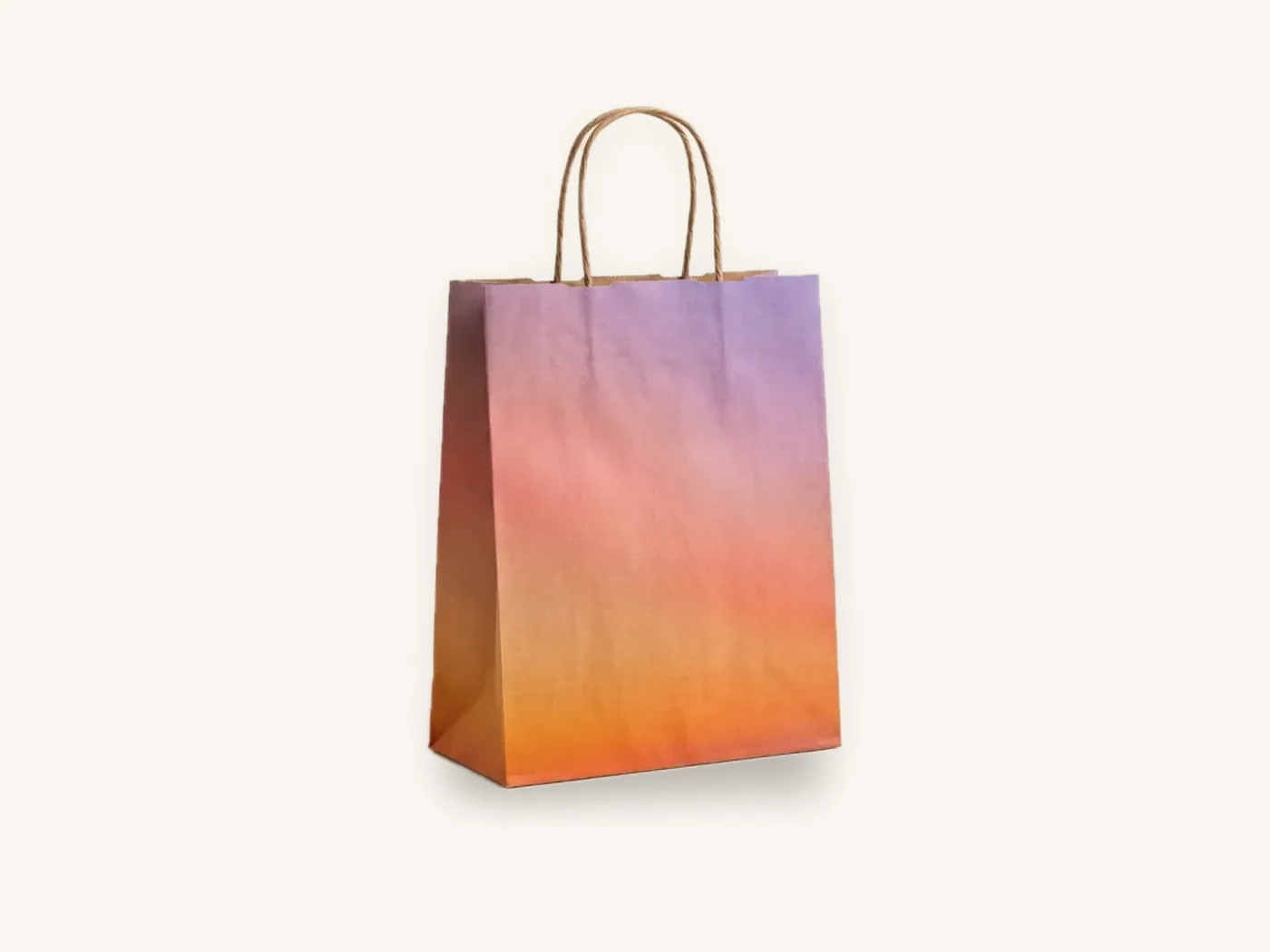
On delivery orders, the bag and outer seal are what the customer sees first, and the inside of the lid is what they see while eating. Put your logo and ordering link on the bag or seal, and keep container print simple. A QR code linking to direct ordering can move repeat customers away from third-party fees; our QR codes on packaging guide covers placement.
Order accuracy
Leave a clear panel on each container for a handwritten mark or order sticker, and consider printing item names or check boxes on the lid of multi-item containers. Accurate orders reduce refunds more than any packaging upgrade.
For a broader view beyond boxes, the packaging for restaurants guide covers cups, bags, napkins and dine-in items, and custom paper bags lists carry-out bag formats.
Build a standard takeout packaging kit
Most restaurants accumulate too many container types over time: one for each new dish, a different supplier for sides, a leftover size nobody remembers ordering. A standard kit fixes storage, reordering and staff training at the same time.
Kit-building process
- List every menu item that goes out as takeout or delivery, including sides, sauces and desserts.
- Group items by behavior: crispy, saucy, layered, liquid, cold and fragile.
- Weigh and measure a full portion of the largest item in each group.
- Pick one container per group, sized for the largest portion. Smaller portions can often share it.
- Check stacking and bag fit. Pack a large family order and see how it sits in your delivery bag.
- Trial for a week. Order small quantities of each format, collect staff and customer feedback, and time how long packing takes.
- Lock the kit and set reorder points based on weekly usage per container.
- Review quarterly when the menu changes.
A sample kit for a fast-casual restaurant
| Container | Used for | Notes |
|---|---|---|
| Large folded pail | Noodle and rice entrées | Paper handle for microwave reheating |
| Small folded pail | Sides and half portions | Same print design as large pail |
| Clamshell burger box | Burgers, sandwiches, fried chicken | Vented lid, front lock |
| Scoop fry carton | Fries and snack sides | Open top, printed back panel |
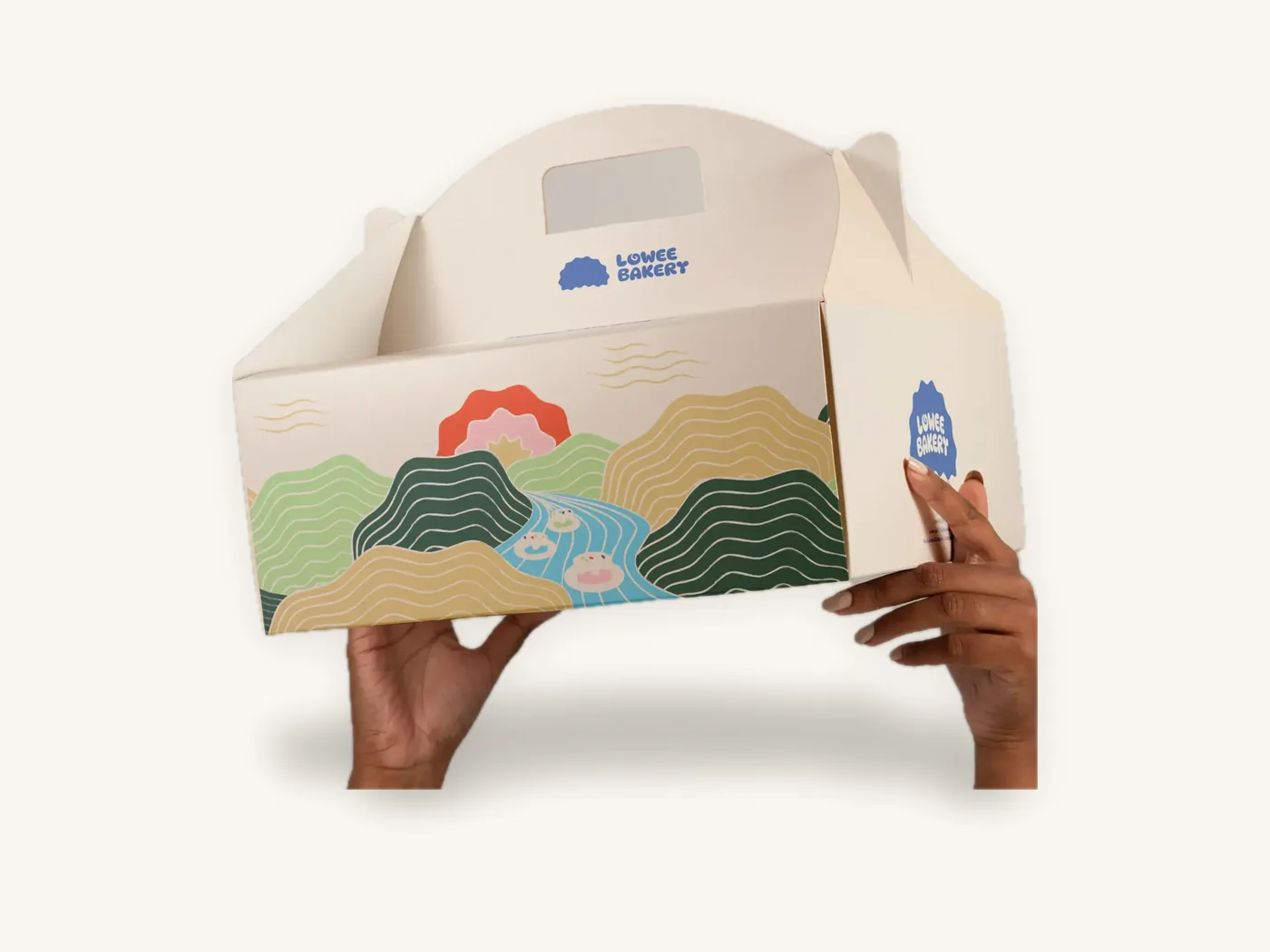
| Gable box | Family meals and combo packs | Carry handle, fits in delivery bag |
| Branded paper bag with seal | Every order | Tamper-evident sticker |
Six containers cover a broad menu. If a new dish does not fit one of them, test it before adding a seventh. The gable boxes page shows handle options for family-size orders.
What drives the cost of takeout packaging
Food-service containers are priced by size, board, coating and quantity, so we do not publish fixed per-unit figures for them. Use the instant price estimator or request a quote. These are the factors that move the number.
| Cost driver | Why it matters | How to manage it |
|---|---|---|
| Container size | Larger formats use more board | Size for the largest portion, not a generous guess |
| Board and coating | Grease and moisture barriers add material cost | Match barrier level to the dish; dry items need less |
| Print coverage | Full-color flood print costs more than a one-color logo | Brand the bag and seal; keep containers simple |
| Number of SKUs | Each container type is a separate setup and stock item | Standardize on a short kit |
| Special features | Windows, handles, dividers and vents add converting steps | Use features only where the dish needs them |
| Quantity | Setup spreads over more units | Order high-volume containers in larger runs |
| Storage | Bulky formats take shelf space and may be damaged by humidity | Order in cycles that match your storage |
Where branding delivers the most per dollar
A plain container with a printed seal and a branded bag often gives most of the brand impact of fully printed containers at a lower total cost. For signature items or high-volume containers, full print can make sense because the unit cost falls with quantity. Short runs of roughly 10 to 500 are printed digitally, so testing a printed design before committing is practical.
Watch out: ordering a year of printed containers to get a lower unit price can backfire if the menu, logo or phone number changes. Keep printed runs to a few months of usage until your branding is settled.
How to order takeout boxes from Box Sense
Specs to send
- The menu items each container will hold, with portion weights or volumes
- Preferred formats: folded pail, noodle box, clamshell, wedge, fry carton, gable box
- Board color (white or kraft) and whether you need grease or moisture resistance
- Handles, vents, windows or dividers
- Print: one color, several colors or full color, and which panels to print
- Estimated monthly usage and quantities to price for each container
- Delivery location and any storage limits
- Artwork, or a note that you would like help from our design services team
The process
- Quote within 24 hours for each container and quantity.
- Free design support: dieline, artwork setup and a 3D digital proof, with two revision rounds.
- Samples: unprinted structural samples are free, so you can test your dishes before printing. A printed sample of approved artwork is free on orders of 100 or more. See samples.
- Production: standard production takes 8–12 business days after proof approval; rush in 5 business days is available on most paperboard and corrugated styles.
- Delivery: free shipping on every US order; international shipping quoted at cost.
The minimum order is 10 boxes, with no die or plate charges. Defective boxes reported within 14 days are reprinted free. The food and beverage industry page shows related formats, and the pizza box guide covers pizza boxes if they are on your menu.
Frequently asked questions
What is the best takeout packaging for fries?
Open-top scoop cartons or vented containers keep fries crispest because steam can escape. For delivery, place the fry carton loosely in a vented bag or a larger clamshell rather than sealing it, and keep hot entrées and sauces from sitting on top. Test your fries in the real container for your average delivery time before settling on a format.
Are paper takeout boxes microwave safe?
Many plain paperboard takeout boxes can be reheated briefly, but boxes with wire handles, foil layers or some film coatings should not go in a microwave. If customers are likely to reheat in the container, choose paper handles or handle-free designs and confirm microwave suitability with your supplier. Printing a short reheating note can help.
How do I keep takeout food from getting soggy?
Let steam out and keep moisture away from crisp items. Use vented clamshells or open-top cartons for fried food, pack sauces separately, avoid stacking hot entrées on crispy sides, and size containers snugly so food does not sit in a pool of condensation. Short, direct delivery routes and insulated bags help too.
What are to go boxes made of?
Most paper to go boxes are made from food-service paperboard with a grease- and moisture-resistant interior. Treatments range from dense fiber structures to aqueous or clay coatings and thin film layers. Liquids usually go in lidded cups or tubs instead. Some states restrict foam containers and certain chemicals, so check local rules.
How much do custom takeout boxes cost?
Pricing depends on container size, board type, coating, print coverage, special features and quantity. Larger containers and stronger barriers cost more, while higher quantities lower the unit price. Standardizing on fewer container types also reduces total cost. Use the Box Sense instant estimator or request a quote, which is confirmed within 24 hours.
Do restaurant takeout boxes need to be tamper evident?
Requirements vary by location, and some jurisdictions have rules for delivery orders. Even where it is not required, tamper evidence reassures customers. A branded sticker across the bag or container opening is the simplest method, and tear-away seals or stapled labels also work. Confirm local rules with your health department or counsel.
Can I order small quantities of printed restaurant takeout boxes?
Yes. Box Sense produces custom takeout, burger and fry boxes from 10 units, printed digitally for short runs of roughly 10 to 500. That makes it practical to test a container with real dishes, run a limited promotion or brand a pop-up before placing a larger order at a lower unit price.
Next steps
Audit your menu, group dishes by how they behave in transit and shortlist one container per group. Then check indicative costs in the takeout packaging price estimator and request a quote for restaurant takeout boxes. We will confirm pricing within 24 hours and send free structural samples so you can test real dishes before you print.
Boxes in this guide
Order the packaging we covered
Written by the Box Sense Packaging Team
Our structural designers, prepress technicians and production staff print and convert custom boxes every day for brands in the United States, United Kingdom and UAE. Questions about this guide? Talk to us.