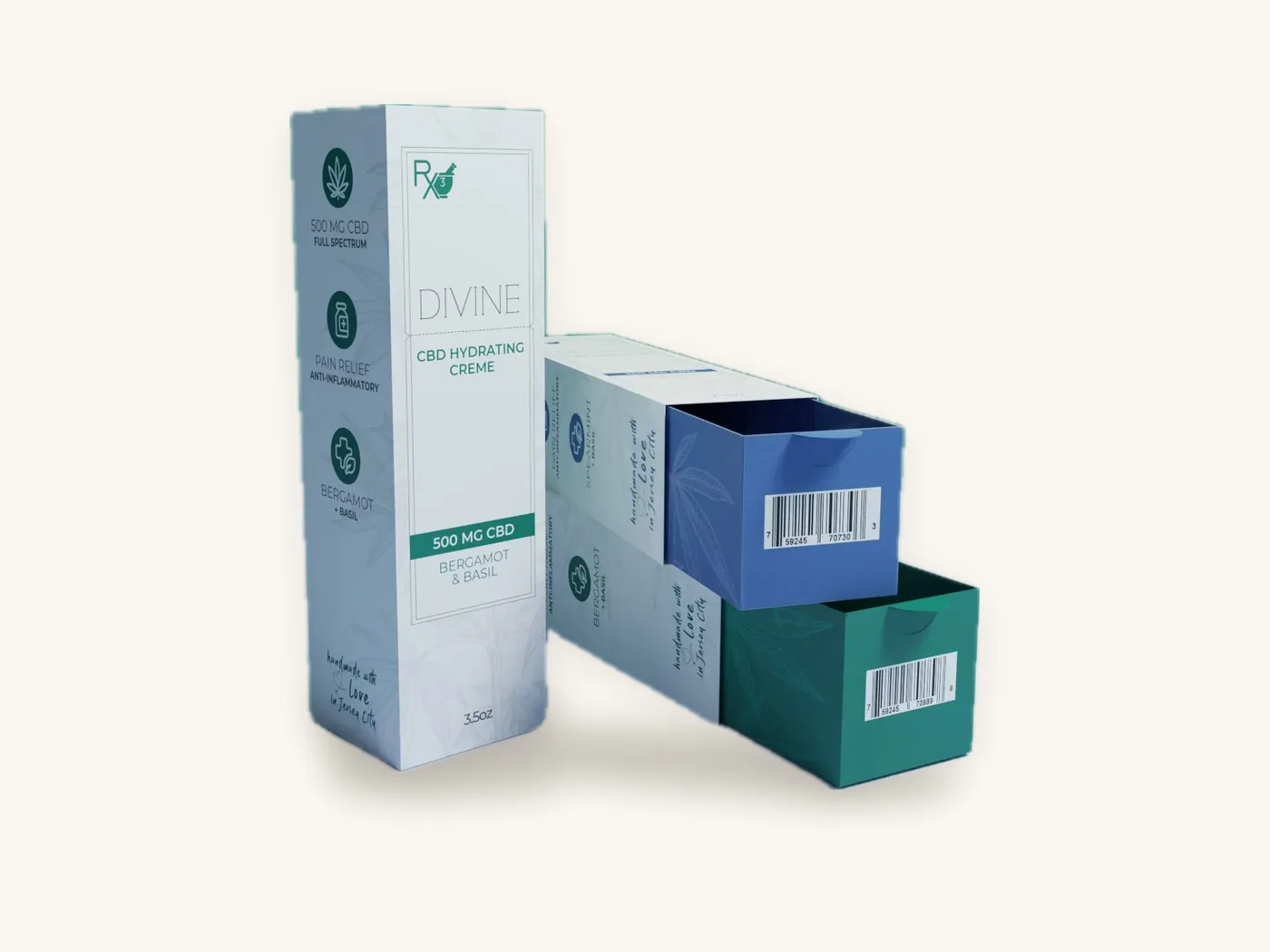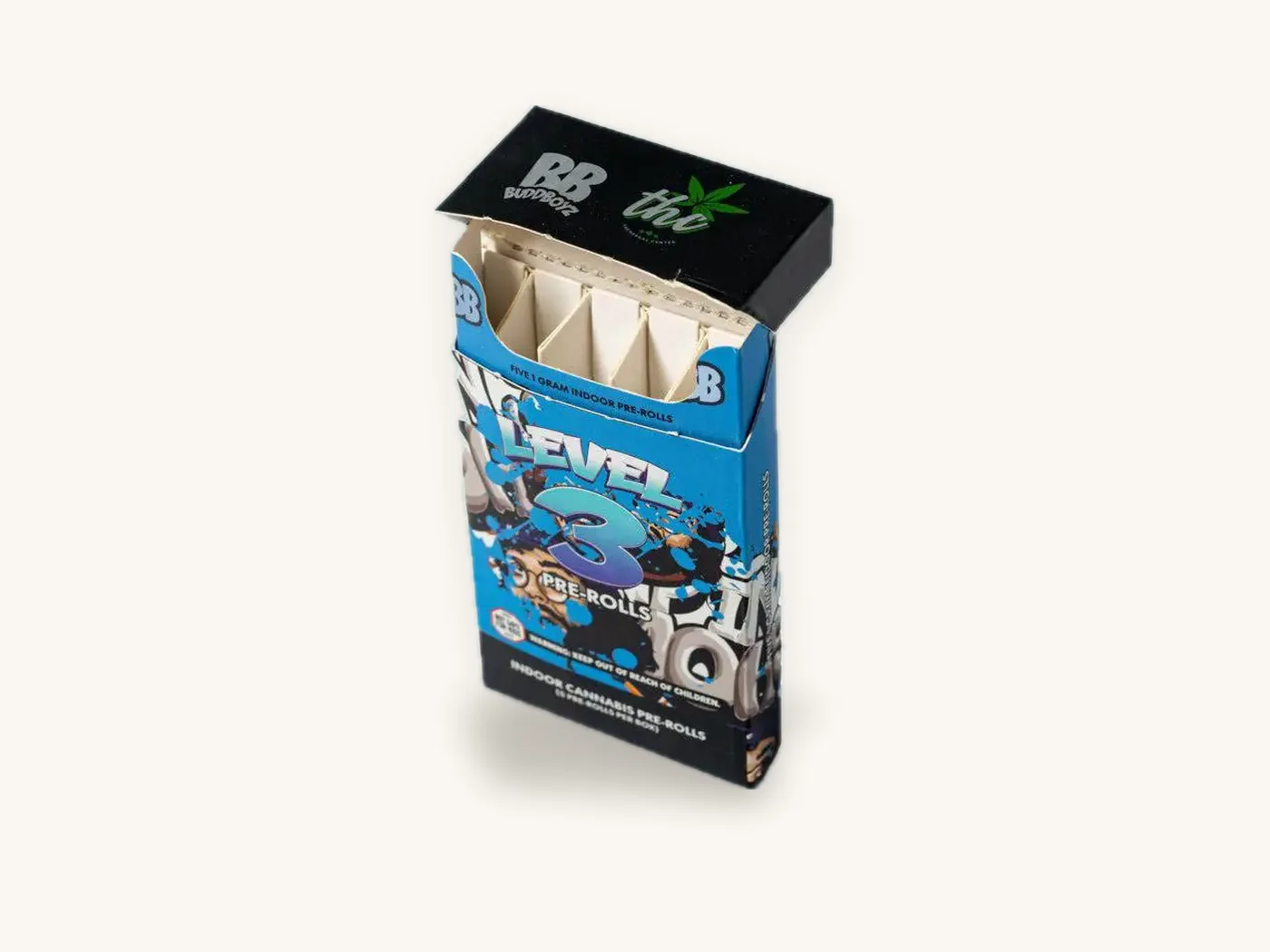
Most pre roll packaging is built in two layers: a primary container that touches the joint and keeps it intact and fresh, such as a tube, tin or glass vial, and a printed secondary box or pouch that carries the brand, the required information and often the child-resistant feature. Which combination you choose depends mostly on how many joints are in the pack and where it will be sold.
A single 1 g pre-roll in a pop-top tube, a five-pack of half-grams in a slide box and a premium infused joint in a glass tube inside a rigid carton are three different engineering problems. This guide starts with pack count, then covers containers, child-resistant structures, freshness, panel planning, retail display, costs and how to order.
Key takeaways
- Pack count drives the format. Singles usually live in a tube with a printed carton or label; multi-packs suit slide, drawer or flip-top boxes with an inner holder.
- Decide early which layer is child-resistant where that is required: the tube, the pouch or the outer box. Doubling up costs money without always adding value.
- Pre-rolls are fragile and dry out. Keep them from rolling loose, protect the twisted tip and use a primary container that limits air exchange.
- Cannabis packaging rules vary by state and change often. Plan for common requirement types such as opaque packaging, child resistance, warning panels, the state THC symbol and batch codes, and confirm current rules with your regulator and counsel.
- A 2x2x6 in reverse tuck carton on 14 pt SBS with full color and gloss lamination runs about $1.17 each at 100 units and about $0.52 at 1,000, with US shipping included.
- Box Sense makes custom pre roll boxes from 10 units, with free dielines and 3D proofs and standard production in 8–12 business days after proof approval.
Start with the pack: singles, multi-packs and infused joints
Before talking materials, write down exactly what goes in the box: number of joints, weight per joint, cone length and whether there is a filter tip. That list determines every dimension that follows.
| Pack type | Typical contents | Primary container | Secondary packaging that fits |
|---|---|---|---|
| Single standard | One 0.5–1 g joint | Pop-top plastic or paper tube | Tube label, or a slim tuck carton |
| Single premium or infused | One 1–1.5 g joint, often coated | Glass tube with cork or screw cap | Rigid box or carton with a cradle insert |
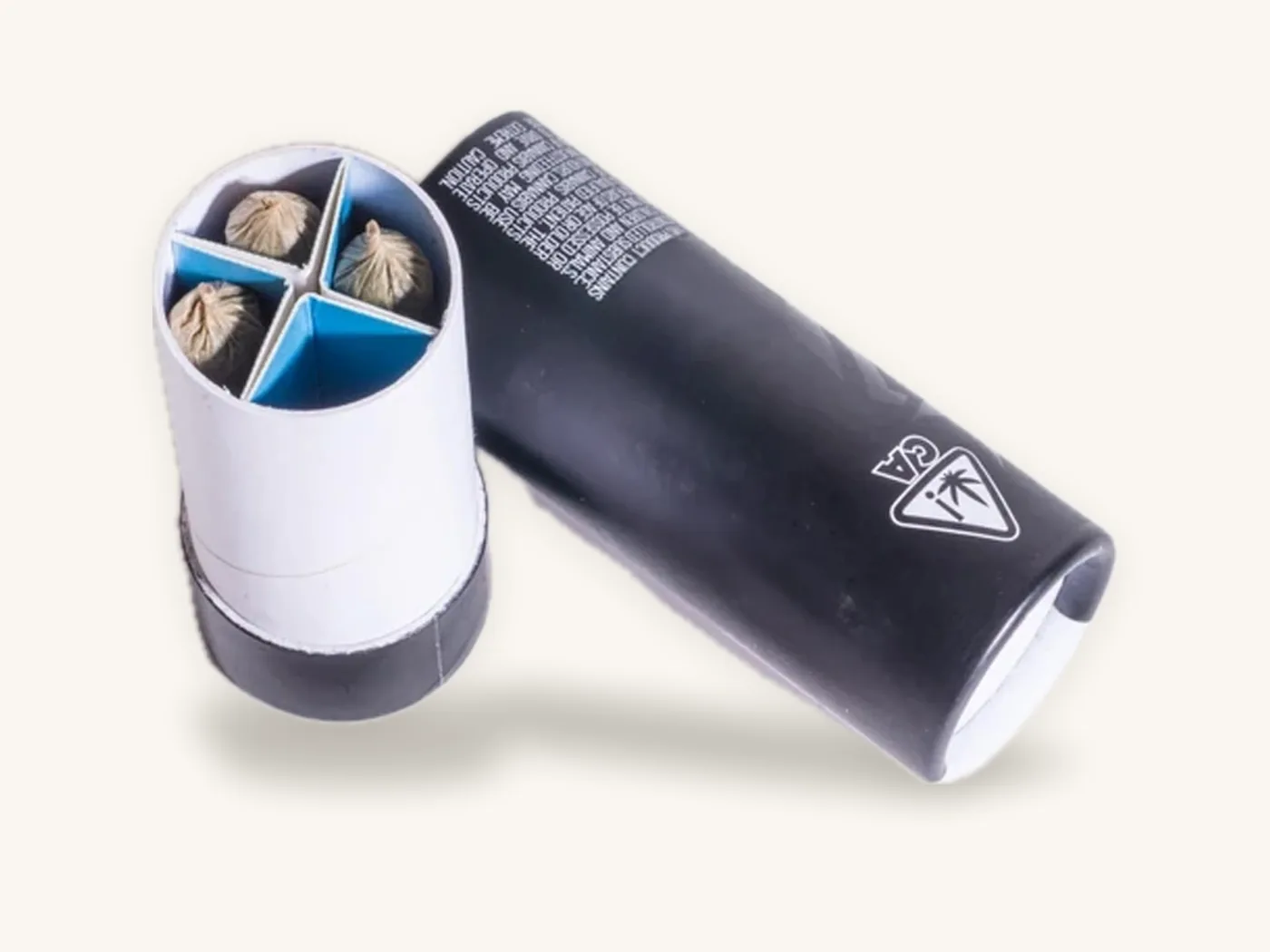
| Mini multi-pack | Three to seven 0.35–0.5 g "dogwalkers" | Tin, or a sleeve with slots | Slide or flip-top box, or a CR pouch |
| Standard multi-pack | Two to five 0.5–1 g joints | Individual tubes or a shared inner tray | Drawer box or tuck carton with a divider |
| Sampler or gift set | Several strains, often with accessories | Tubes or tins | Rigid or magnetic box with a die-cut insert |
| Bulk dispensary pack | Singles packed for back-of-house | Tubes | Corrugated case or counter display |
Know your cone dimensions
Pre-rolled cones come in several standard lengths, commonly around 70 mm, 84 mm, 98 mm and 109 mm, with the finished joint shorter than the cone once packed and twisted. Tubes for a king-size joint are often around 115–120 mm long. Measure your finished product, not the empty cone, and measure the widest point near the open end.
Singles: tube first, box second
A single joint rolls, snaps and loses its tip if it sits loose in a carton, so a tube is almost always the primary container. The question is whether the tube also needs an outer box. Many brands label the tube and skip the carton at a lower price point, then add a slim printed carton for premium strains where shelf presence matters.
Multi-packs: hold each joint in place
In a multi-pack, joints rub against each other and against the box walls. An inner holder, whether a scored paperboard tray, a die-cut card with slots or individual tubes, keeps each one separate. Without it, the first few openings shed paper and flower into the bottom of the box.
Primary containers for joint packaging
The primary container does the protective work. Here is how the common options compare.
Plastic pop-top tubes
Inexpensive, light and widely available in child-resistant versions that squeeze and pop. They seal reasonably well and are easy to label. The tradeoff is perception: plain plastic reads as a commodity, and some buyers look for alternatives to single-use plastic.
Paper and paperboard tubes
A spiral-wound or convolute paper tube with a friction lid looks premium and prints edge to edge. It protects well against crushing. On its own a paper tube is not airtight and not child-resistant, so it pairs with an inner liner, a sealed pouch or an outer CR layer if needed. Our paper tube packaging page shows available sizes and closures.
Glass tubes
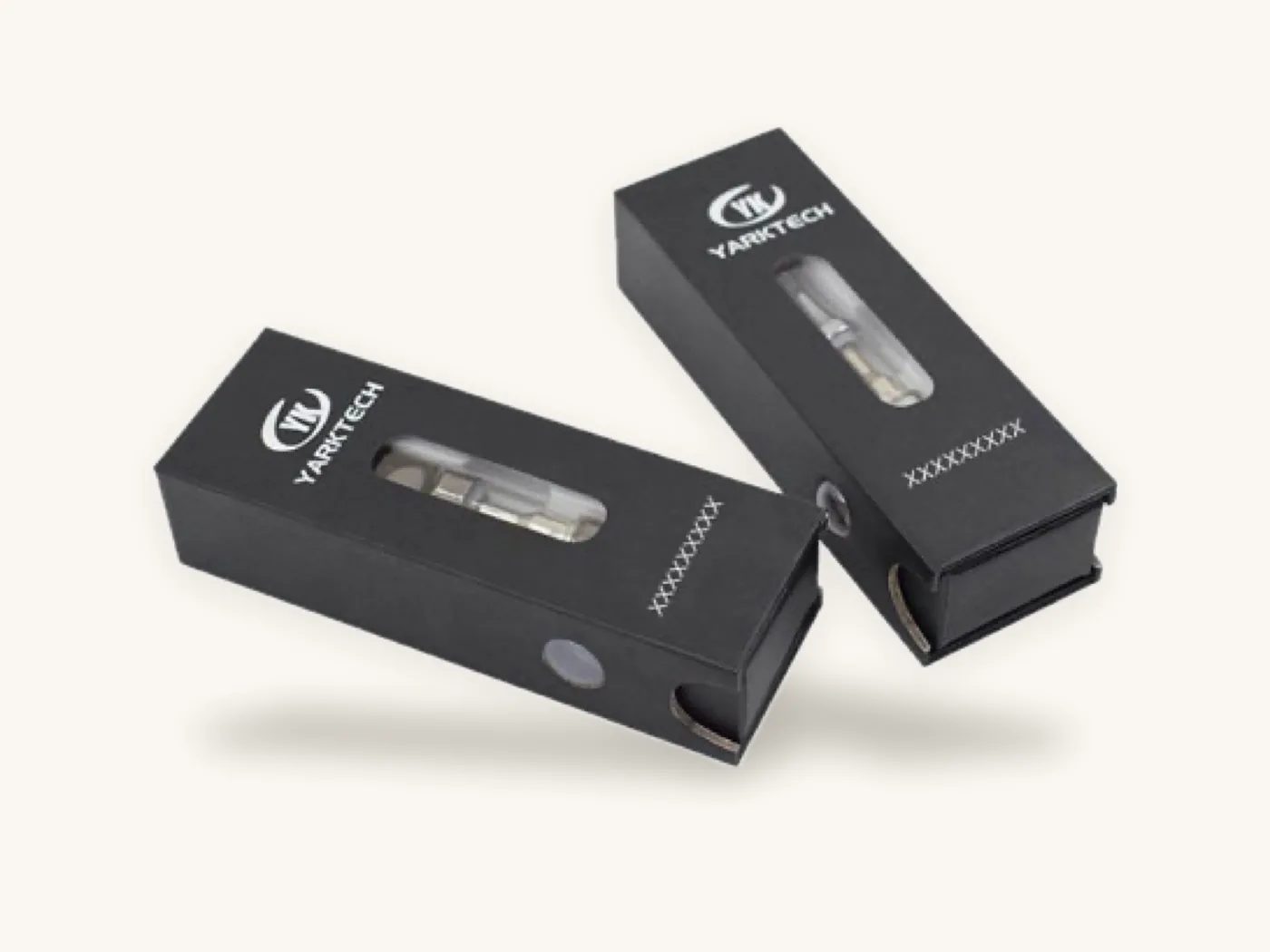
Glass keeps aroma in and looks high-end, which suits infused or top-shelf products. It is heavy and breakable, so it needs a snug carton or insert, and glass tubes with child-resistant caps cost more than plastic.
Tins
Slim metal tins hold three to ten mini joints flat. They crush-protect well and can be reused. Child-resistant tins exist but are a specialty item; many brands put a standard tin inside a CR pouch or box instead.
Mylar and barrier pouches
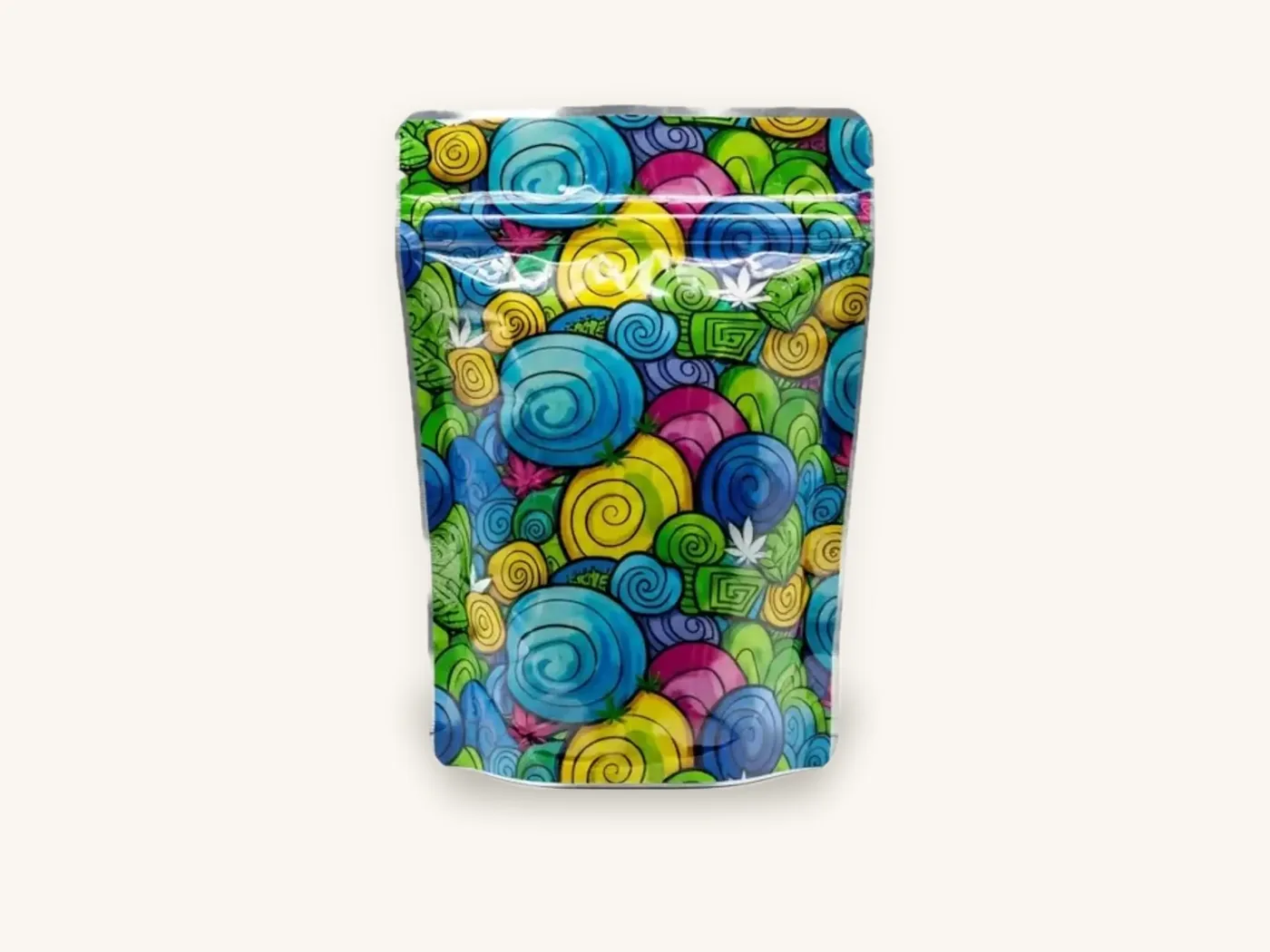
A resealable pouch is the lightest option for multi-packs and is often used as the child-resistant layer. Mylar bags with a child-resistant zipper and a barrier film limit odor and air exchange. Pouches do not protect against crushing, so they suit shorter joints or packs sold over the counter rather than shipped loose. See our custom mylar bags guide for film structures and zipper types.
| Container | Crush protection | Odor and freshness | Child-resistant options | Look and feel |
|---|---|---|---|---|
| Plastic pop-top tube | Good | Good | Common | Functional |
| Paper tube | Very good | Fair unless lined | Rare on its own | Premium, printable |
| Glass tube | Good if cushioned | Very good | Available | Top-shelf |
| Metal tin | Very good | Good | Specialty | Collectible |
| Barrier pouch | Poor | Very good | Common | Flexible, lightweight |
Pre roll boxes: structures that work
The box is where your brand lives. The right structure depends on the pack and on how often the customer opens it.
Slim tuck end cartons
For singles in a tube, a tall reverse tuck end box or straight tuck end carton gives four printable panels at low cost. It opens once and gets discarded, which is fine for a single-use purchase.
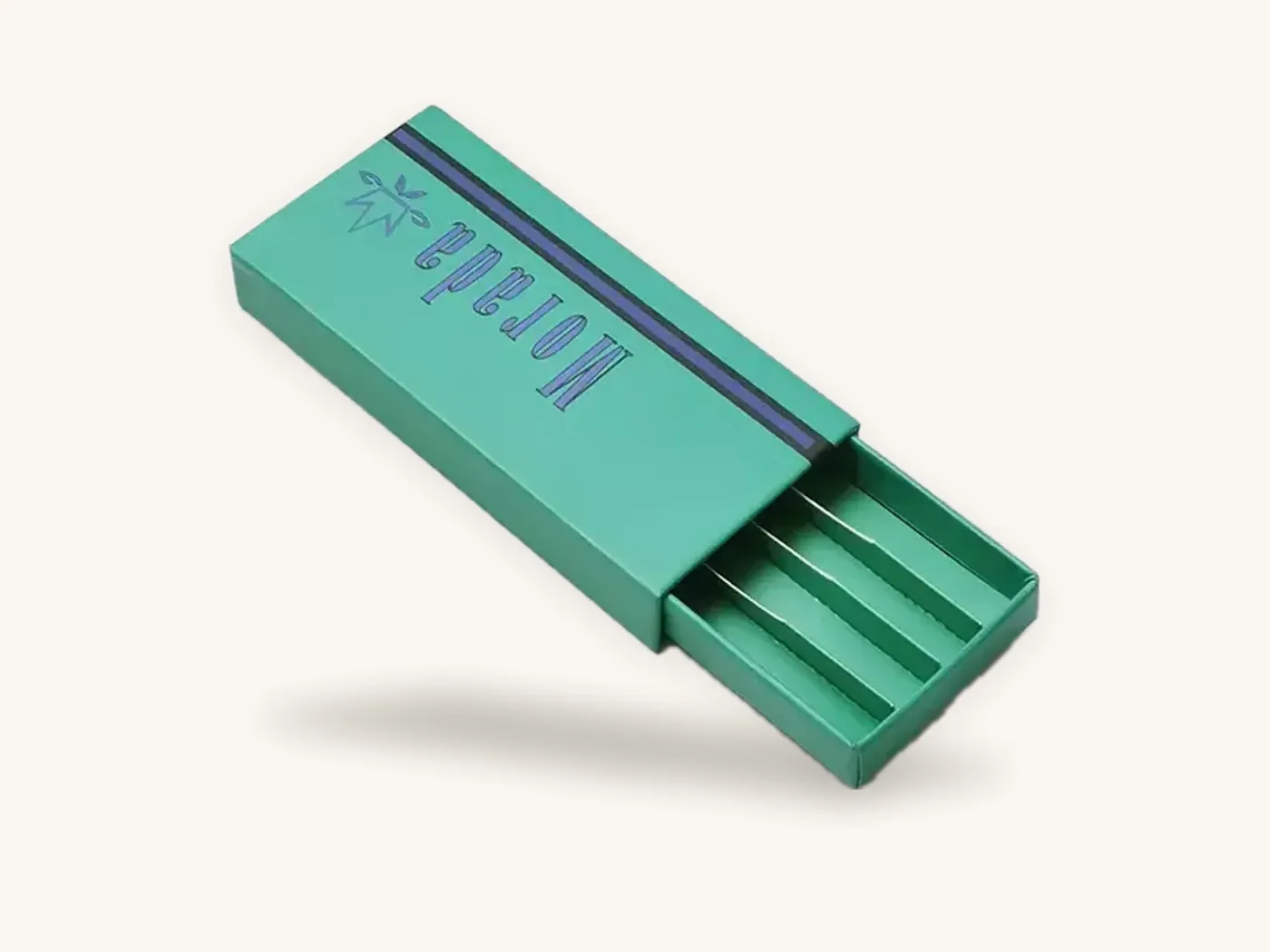
Slide and drawer boxes
A tray that slides out of a sleeve is the most popular structure for multi-packs because it opens and closes repeatedly without wearing out. A drawer can be made child-resistant by adding a locking tab that must be pressed while the tray slides, which is the principle behind many child resistant boxes.
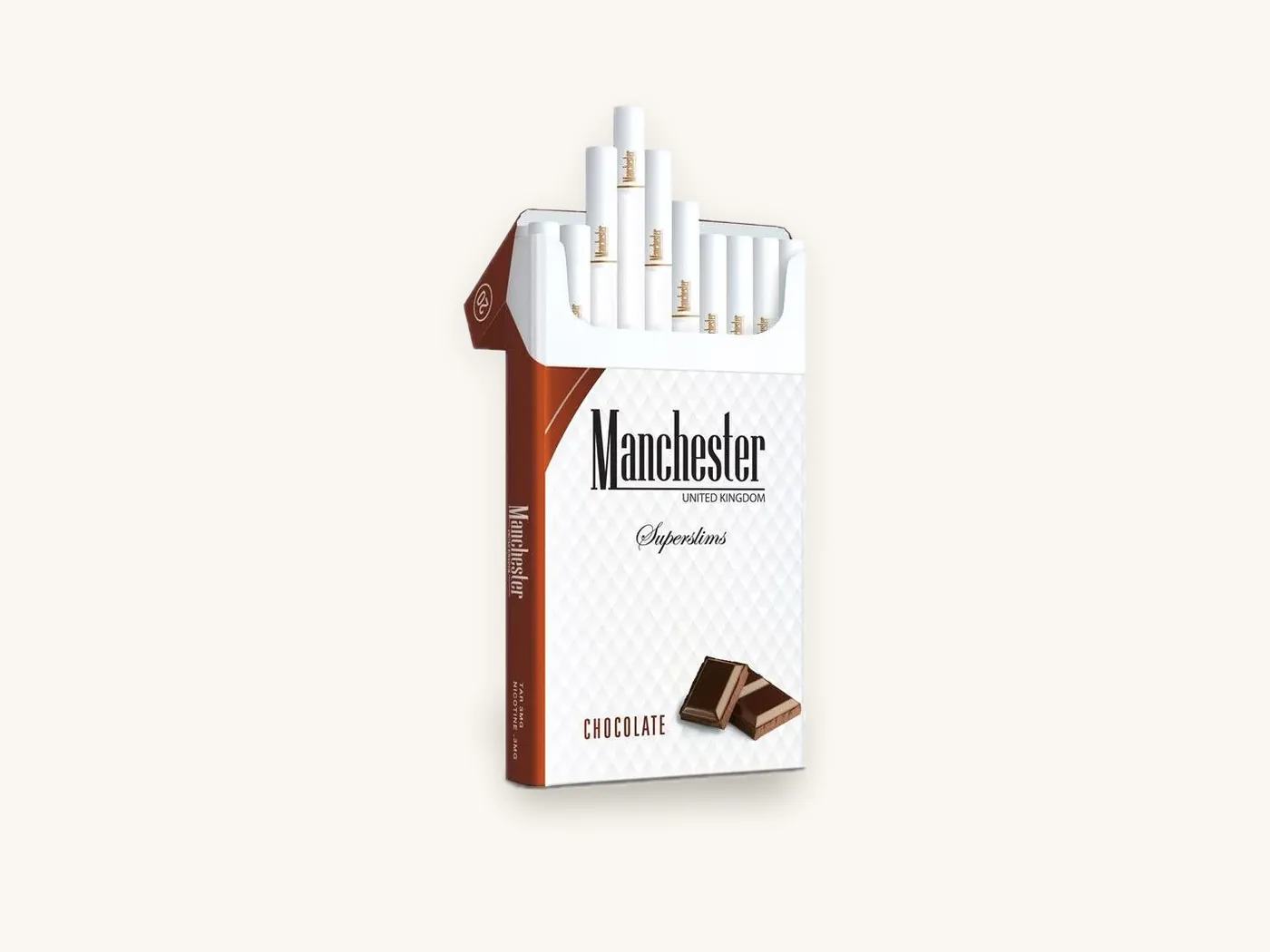
Flip-top boxes
A hinged flip-top with an inner frame, borrowed from cigarette packaging, suits packs of mini joints stored upright. It is quick to open one-handed and holds its shape in a pocket. The flip-top boxes page shows the frame construction.
Rigid and magnetic boxes
For samplers, launch kits and gifting, a rigid box with a foam or paperboard cradle makes a pre-roll set feel like a collectible. These are rarely child-resistant on their own, so the joints inside usually sit in CR tubes.
Tip: if the box will be opened and closed many times, choose a slide or flip-top structure and a laminated board. Tuck flaps crease, tear and stop locking after a handful of openings.
Child-resistant options compared
In markets where child-resistant packaging is required for cannabis products, the requirement is usually about the package as sold, not necessarily every layer. That gives you choices. Typical US test protocols evaluate whether young children can open the package within a set time and whether adults can open and reclose it; our child-resistant packaging guide explains the protocol in plain terms.
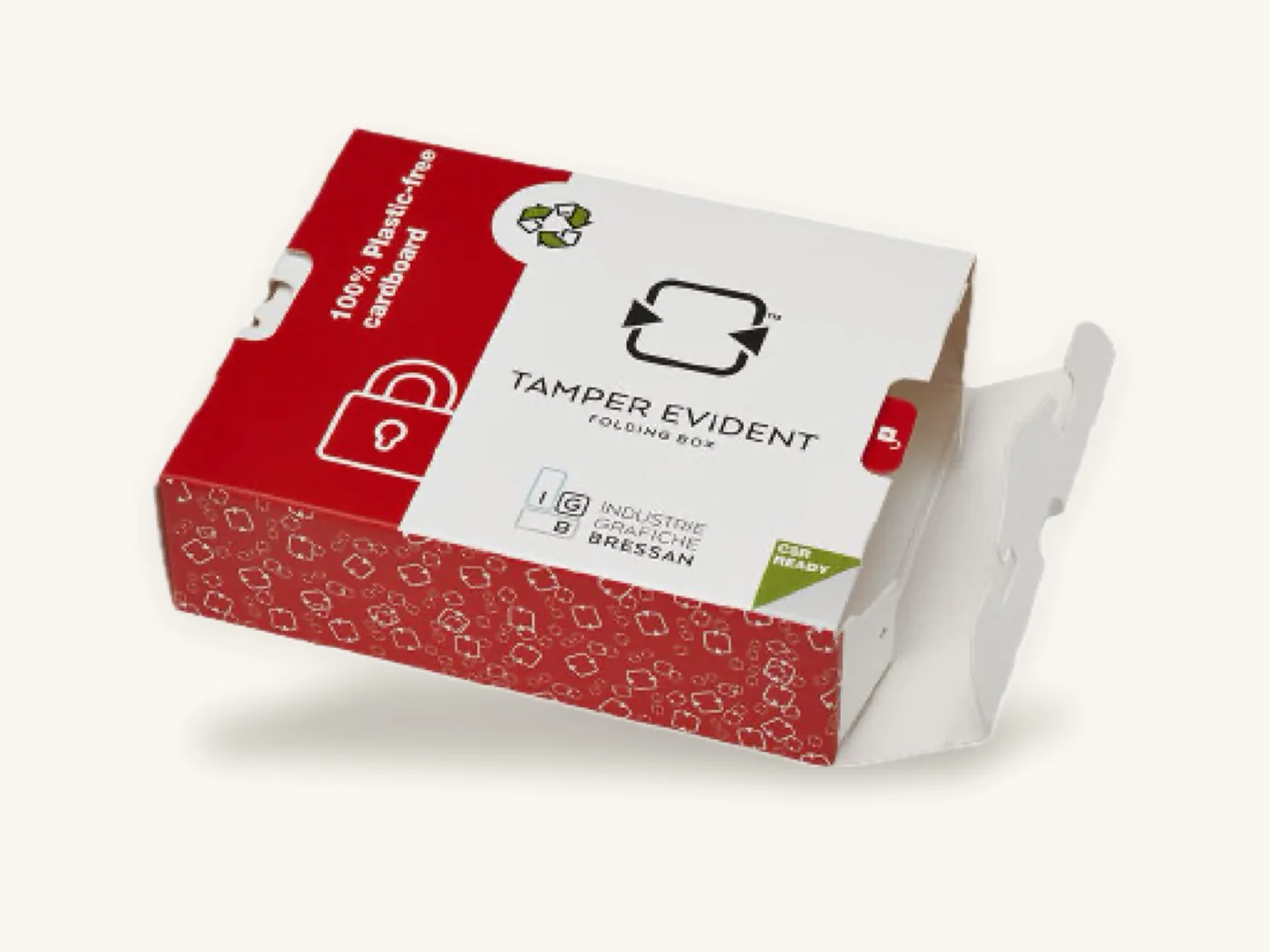
Some programs also distinguish between packaging that must stay child-resistant after opening (resealable) and packaging that only needs to be child-resistant until first opening. That distinction changes whether a single-use tuck box can be the CR layer at all. Confirm which applies to your products in your state.
| CR approach | How it works | Pros | Cons |
|---|---|---|---|
| CR tube inside a standard carton | Squeeze-and-pop or push-and-turn cap | Carton can be any style; cheap | Two components to buy and pack |
| CR pouch as the only layer | Press-to-close zipper that needs two actions | Lightest, lowest cost, resealable | No crush protection, less shelf presence |
| CR slide box | Locking tab pressed while the tray slides | One component, premium, reusable | Higher unit cost; structure must match test documentation |
| Standard box inside a CR exit bag | Retailer places purchase in a CR bag | Lets you use any box | Depends on retailer and state practice |
Whichever route you choose, ask your suppliers for the test documentation that applies to the exact size and structure you are buying, and keep it on file. Changing dimensions or materials can change how a package performs.
Freshness, odor and breakage
A pre-roll that arrives dry, bent or with an empty tip is a complaint waiting to happen, and packaging causes most of those failures.
Freshness
Joints dry out faster than bulk flower because more surface area is exposed. A tube or pouch that limits air exchange is the first defense. Some brands add a small humidity-control pack in larger multi-packs; if you do, size the holder to leave room for it.
Odor
Paperboard is porous, so a box alone does not contain smell. Odor control comes from the primary container, a barrier pouch, or a sealed tube.
Breakage
Tips break when joints slide end to end. Keep internal length tight, roughly 2–3 mm longer than the joint or tube, and use a holder or divider in every multi-pack. For glass tubes, add a cradle insert at both ends so the tube cannot strike the carton wall.
Label and panel planning for skinny packs
Pre-roll packs are small and narrow, and required content can easily outgrow them. A king-size single carton may only have panels around 1 in wide. Plan every block on the flat dieline before you commit to artwork.
Requirement types to design around
Cannabis packaging is regulated state by state, and rules on what must appear and how are updated regularly. The requirement types below appear in many programs; the specifics differ. Our cannabis packaging laws overview covers how states approach them.
- Universal THC symbol: many states mandate their own symbol with minimum size and placement rules
- Warning statements: often with prescribed wording, font size or a bordered box
- Opaque packaging: some programs restrict see-through packaging for certain products
- Cannabinoid content: THC and CBD amounts per joint and per package
- Net weight of flower in the pack
- Batch or lot number, package date and testing information, sometimes via a QR code
- Licensee or producer identification
- Restrictions on design: no imagery that appeals to children, and limits on certain claims
Practical layout moves
- Put the state symbol and warnings on a panel that stays visible on the shelf, not the bottom flap.
- Leave a blank, uncoated area for batch labels or coder printing added at packing.
- If content changes by batch, print a fixed box and apply a small compliance label, rather than reprinting cartons for every lot.
- For multi-strain lines, keep the layout identical and switch only a strain name and color band.
- Have counsel or your compliance lead review the flat proof at actual size before approval.
Watch out: rules that dictate minimum symbol sizes can make a tiny single carton unworkable. If the required elements do not fit legibly, move to a slightly larger carton, a label on the tube, or a hang tag rather than shrinking type below what the rule or legibility allows.
Retail display and dispensary shelves
Most pre-rolls are sold from behind a counter or in a locked case, so the pack is seen at arm's length. Strong front panels with a large strain name and a clear pack count work better than dense artwork.
For singles sold as impulse items near the register, a counter display box holding a row of tubes or cartons makes a small product easy to choose. A printed display also gives budtenders a visual cue for a new strain drop. The display boxes style page shows tray, riser and header-card options.
What pre roll boxes cost
The price of a pre-roll box depends on its size, board, finish, whether it is child-resistant, inserts and quantity. Here are indicative per-unit prices for specs close to common pre-roll formats, with free US shipping included.
| Spec | 10 | 100 | 500 | 1,000 | 5,000 |
|---|---|---|---|---|---|
| Reverse tuck end carton, 14 pt SBS, 2x2x6 in, full color, gloss lamination (single tube carton) | $1.77 | $1.17 | $0.63 | $0.52 | $0.37 |
| Straight tuck end carton, 18 pt SBS, 3x2x5 in, full color outside, aqueous (upright multi-tube pack) | $1.73 | $1.15 | $0.61 | $0.51 | $0.36 |
| Kraft tuck carton, 18 pt kraft, 4x3x2 in, 1-color print (flat pack of short joints) | $1.22 | $0.81 | $0.43 | $0.36 | $0.25 |
| Counter display box, E-flute, 10x8x6 in, full color | $7.68 | $5.08 | $2.71 | $2.26 | $1.60 |
Child-resistant slide boxes, rigid sampler boxes and printed tins cost more; price them in the instant estimator or ask for a quote. Finishes with tooling add a one-time charge, for example about $40 for spot UV and about $60 for foil.
Ways to keep costs in check
- Standardize on one or two carton sizes across strains and change artwork only.
- Put the child-resistant feature in one layer, not two, unless your rules require otherwise.
- Use compliance labels for batch-specific data so printed cartons stay valid across lots.
- Order combined runs of several strains to reach a lower quantity tier.
How to order pre roll boxes from Box Sense
You can order from 10 boxes, which is useful for a strain launch, a trade event or testing a structure before a larger run. We print, die-cut and glue in-house, and the CBD and cannabis industry page shows the formats we make most.
Specs to send
- Finished joint length and diameter, weight and count per pack
- Primary container, with its exact outer dimensions if you already have it
- Structure preference: tuck, slide, flip-top, rigid, or a recommendation
- Which layer must be child-resistant, if any
- Board (SBS, kraft or metallic), print and finishes
- Strain or SKU count and quantities per SKU
- Artwork, or a request for our design services
From quote to delivery
- Quote confirmed within 24 hours.
- Dieline and 3D proof, free, with two revision rounds and flat proofs for compliance review.
- Structural sample free and unprinted, so you can test fit with real tubes; a printed sample of approved artwork is free on orders of 100 or more.
- Production in 8–12 business days after approval, or rush in 5 business days on most paperboard styles.
- Free US shipping; international shipping quoted at cost. Defective boxes reported within 14 days are reprinted free.
Label content and regulatory compliance remain the brand's responsibility; we make sure the structure and layout give that content the space it needs.
Frequently asked questions
What is the best packaging for pre-rolls?
For single joints, a tube, either a child-resistant plastic pop-top or a glass tube for premium products, protects the joint and limits drying, with an optional printed carton for shelf presence. For multi-packs, a slide or flip-top box with an inner holder keeps joints separate and reopens cleanly. A barrier pouch is the lightest choice when crush protection matters less.
Do pre-roll boxes need to be child-resistant?
Many state cannabis programs require child-resistant packaging for products like pre-rolls, but the rules differ on which layer must be child-resistant and whether it must stay resistant after opening. The feature can come from a tube, pouch, box or exit bag. Confirm your state's current requirement with the regulator and counsel before choosing a structure.
How do you keep pre-rolls fresh in packaging?
Use a primary container that limits air exchange, such as a sealed tube, a glass tube with a tight cap or a barrier pouch, since paperboard alone is porous. Keep the internal fit snug so joints do not rattle and shed. For larger multi-packs, some brands add a humidity-control pack and size the insert to leave room for it.
What size box do I need for a king-size pre-roll?
Measure the finished joint or the tube it ships in, not the empty cone. King-size tubes are often around 115–120 mm long, so a carton with an internal length a few millimeters longer usually fits. A 2x2x6 in carton has room for a single tube with an insert. Always test with a free structural sample before ordering the full run.
How much do custom pre roll boxes cost?
As a reference, a 2x2x6 in reverse tuck carton on 14 pt SBS with full color and gloss lamination is about $1.17 per box at 100 units and about $0.52 at 1,000, including US shipping. Child-resistant slide boxes, rigid sampler boxes and extra finishes cost more. Use the pricing estimator for your exact size, structure and quantity.
Can I use one box design for several strains?
Yes, and it is usually the smartest approach. Keep the structure, dieline and layout identical, then change the strain name, cannabinoid content and a color band. Running several strains together helps you reach a lower quantity tier. For batch-specific details, many brands apply a small compliance label at packing instead of reprinting the whole carton.
What is the minimum order for pre-roll boxes?
Box Sense makes custom pre-roll boxes from a minimum of 10 units, printed digitally without plates for short runs. Small orders suit strain launches, events and structural testing. Unit prices fall significantly at higher quantities, so check several tiers in the estimator, particularly if you plan to reorder soon.
Next steps
Measure your finished joints and containers, decide which layer carries the child-resistant feature, and price a few carton sizes in the pre-roll box price estimator. When the spec is settled, request a pre-roll packaging quote and we will confirm pricing within 24 hours and send a dieline ready for your compliance review.
Boxes in this guide
Order the packaging we covered
Written by the Box Sense Packaging Team
Our structural designers, prepress technicians and production staff print and convert custom boxes every day for brands in the United States, United Kingdom and UAE. Questions about this guide? Talk to us.