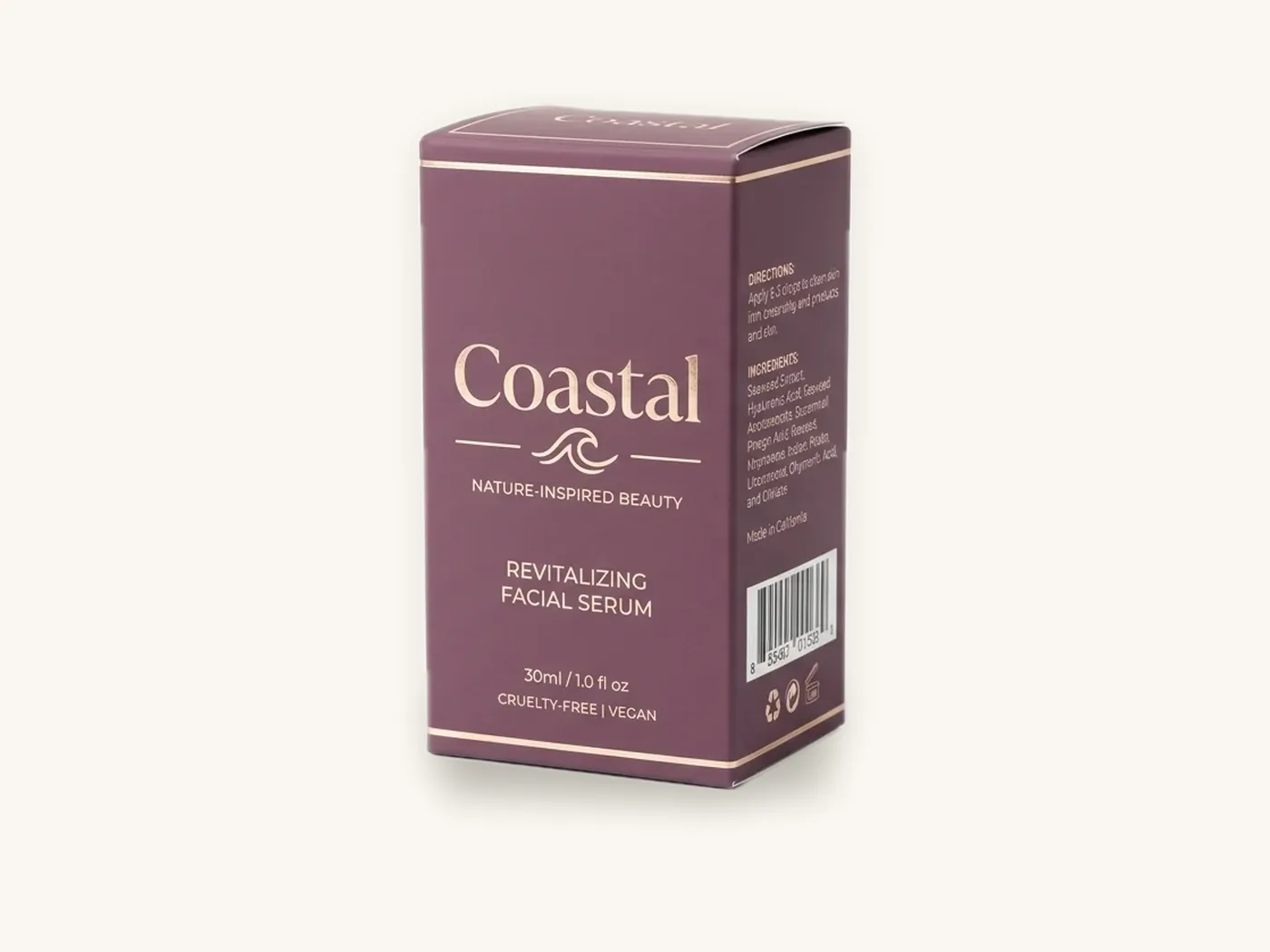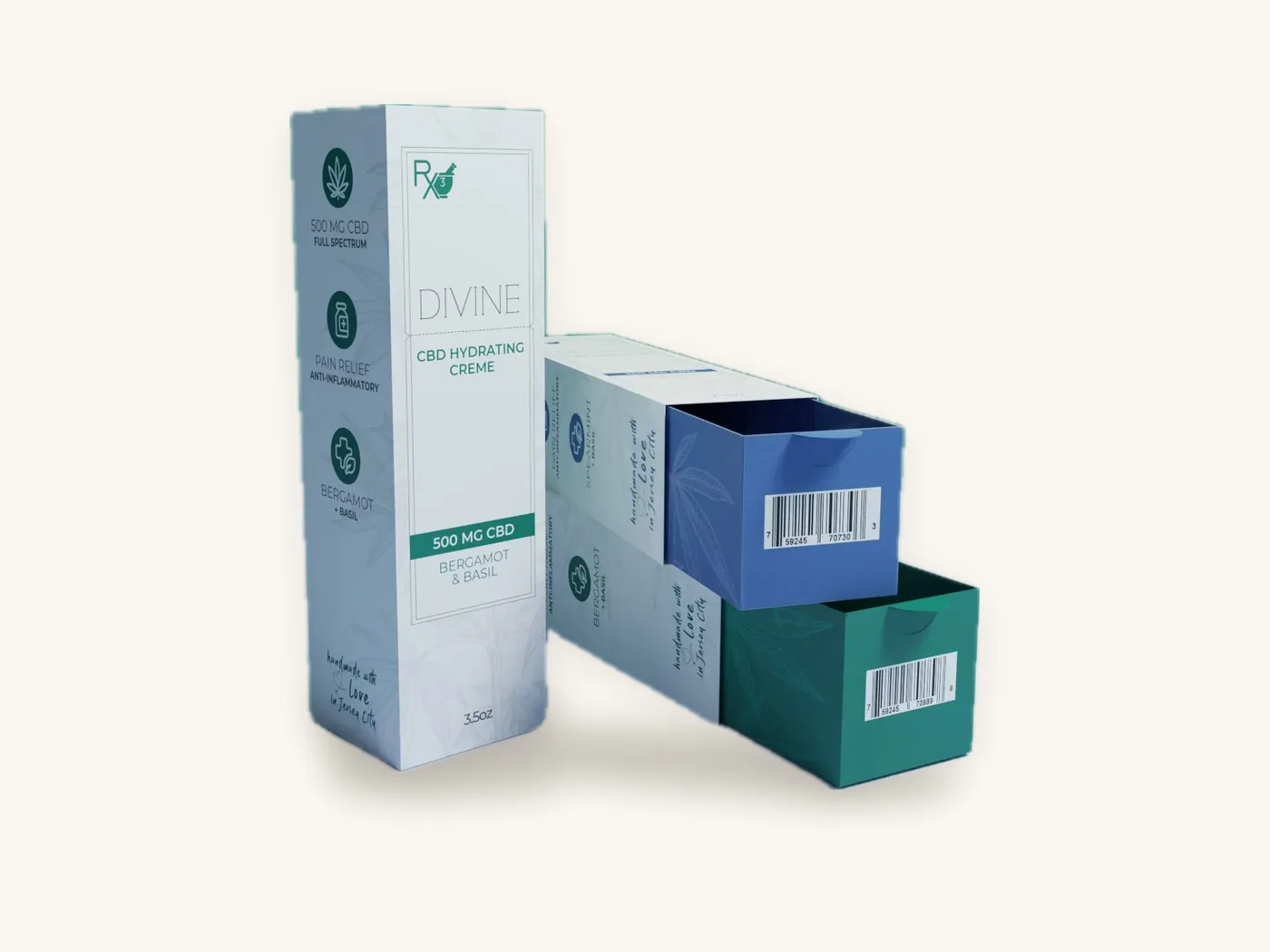
Good CBD packaging does three jobs at once: it protects a product that is often glass, oil or heat-sensitive, it gives you enough flat panel space for the information your state and retailers expect, and it looks credible in a category where shoppers are wary of fly-by-night brands. For most oils, gummies and topicals, that means a printed paperboard folding carton, sized to the primary container, with a planned information panel and a child-resistant option where your product or market calls for one.
The part most brands get wrong is not the artwork. It is building one box at a time instead of a packaging system that works across a whole product line, and discovering too late that the required text does not fit on a 1.5 in wide side panel. This guide works through CBD packaging by product format, then covers panel planning, compliance-readiness, finishes, cost and ordering.
Key takeaways
- Start from the primary container (dropper bottle, gummy jar, pouch, tube, jar of balm) and size the carton around it; the carton is the secondary layer that carries the brand and most of the text.
- Map the information panel before the design. Small cartons run out of flat space fast, and required statements, batch codes and QR codes need clear, unprinted room.
- Requirements for hemp-derived CBD vary by state and are changing. Treat child-resistant closures, warning statements, batch or lot numbers and QR links to lab results as common requirement types, and confirm current rules with your state regulator and counsel.
- Build a family system: one structure and dieline per size, a fixed panel grid, and color or finish changes to separate strengths and SKUs.
- A 1.5x1.5x4.5 in tincture carton on 18 pt SBS with gloss and spot UV runs about $1.31 each at 100 units and about $0.58 at 1,000, with US shipping included.
- Box Sense makes custom CBD boxes from 10 units, with free dielines and 3D proofs and standard production of 8–12 business days after proof approval.
CBD packaging by product format
CBD is not one product, and the packaging that works for a 30 ml oil is the wrong answer for a 30-count gummy jar or a 2 oz muscle balm. Start with the format, because it decides the structure, the insert and how much label space you have to work with.
| Product format | Typical primary container | Secondary packaging that works | Main packaging risk |
|---|---|---|---|
| Oils and tinctures | 15–60 ml glass dropper bottle | Tuck end carton with a bottle insert | Glass breakage, dropper bulb crushing, loose fit |
| Gummies and edibles | PET or glass jar, or a resealable pouch | Tuck carton, window carton, or a child-resistant pouch on its own | Tempting to children; a jar needs a closure plan |
| Softgels and capsules | HDPE or PET bottle with a cap | Straight or reverse tuck carton | Rattling bottle, cap fit, carton crush at the neck |
| Topicals, balms and creams | Tin, jar, tube or pump bottle | Cosmetic-style carton, sleeve or window box | Product damage from heat, scuffed print on shelf |
| Bath and wellness items | Bath bombs, patches, sachets | Window box, dispenser box or sleeve | Moisture, crumbling, many small units |
| Gift and starter sets | Two to four mixed items | Rigid or folding box with a die-cut insert | Items colliding, unclear layout |
Oils and tinctures
Dropper bottles are the category's signature item, and they are fragile in two places: the glass body and the rubber bulb. A snug tuck end carton with a simple paperboard insert that holds the bottle neck handles both. Oils are covered in far more depth, including bottle-by-bottle sizing, in our tincture box guide, and the ready-made structures are on the tincture boxes page.
Gummies and edibles
Gummies look like candy, which is exactly why packaging for them draws the most scrutiny. Many brands choose a child-resistant jar or a child-resistant zip pouch as the primary container, then use a printed carton for retail presence. If the child-resistant feature lives on the jar or pouch, the carton can be a standard tuck design; if you want the carton itself to be the child-resistant layer, it needs a tested locking structure.
Topicals and balms
Topicals sit closest to beauty packaging in how they are shopped. A carton with soft-touch or matte lamination and a foil logo reads as a skincare product, which is often the positioning you want. Our cosmetic packaging guide covers finishes and structures for jars, tubes and pumps that transfer directly to CBD creams.
Choosing a carton structure for custom CBD boxes
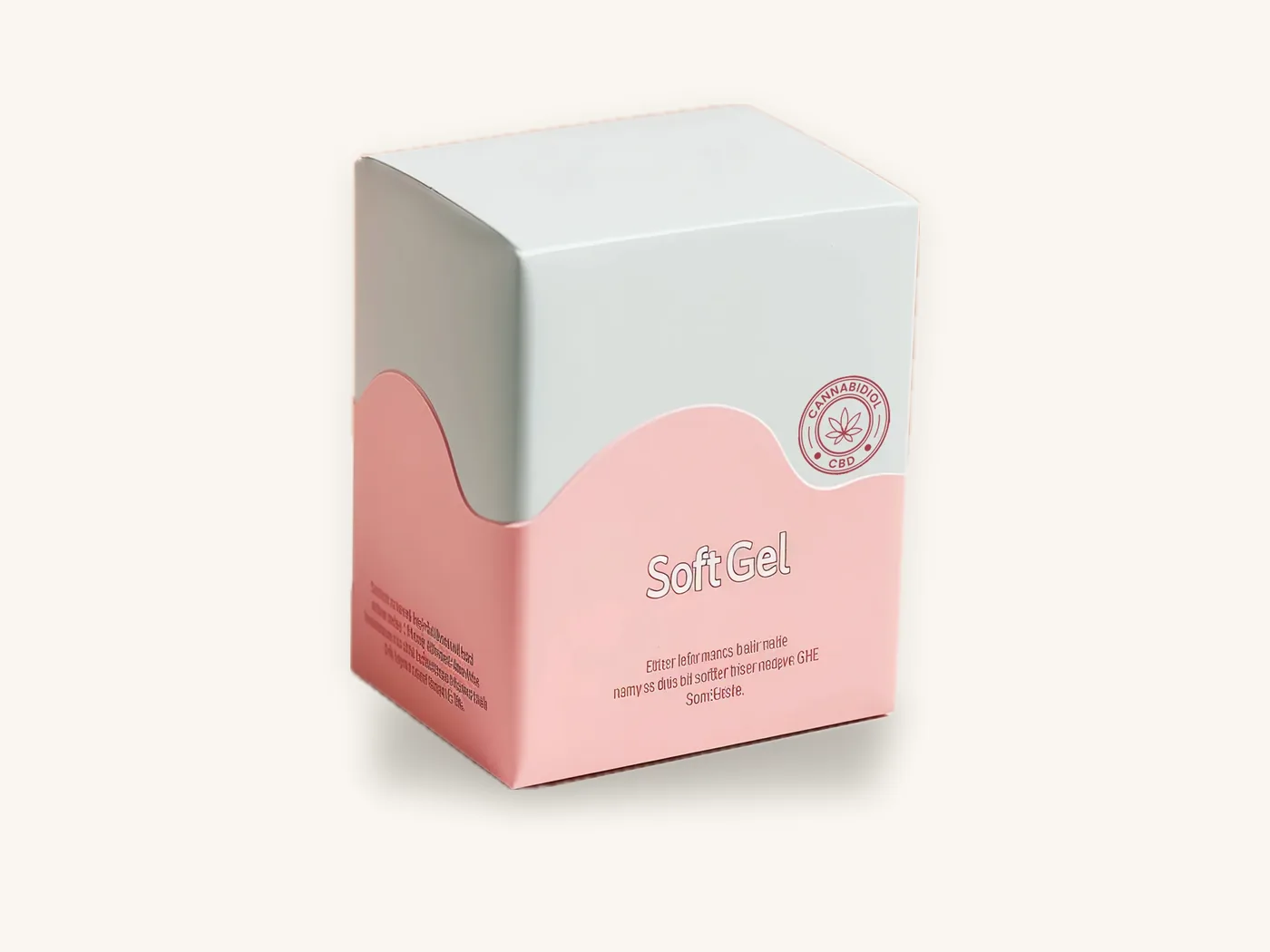
Almost all custom CBD boxes are folding cartons made from paperboard. The difference between them is how they close, how they hold weight and how they present on a shelf or in a shipper.
Straight tuck end and reverse tuck end
A straight tuck end box has top and bottom flaps that tuck in from the same side, so the front panel stays clean and uninterrupted. A reverse tuck end box tucks from opposite sides, which nests more efficiently on the press sheet and usually costs slightly less. For light items such as a single dropper bottle or a small balm tin, either is fine.
Auto lock bottom
When the carton holds heavier items, such as a 60 ml bottle, a glass jar of gummies or a two-bottle set, a crash-lock bottom stops the base from pushing open when the box is lifted from the top. It also speeds up packing because the bottom pops into place.
Window cartons and sleeves
A die-cut window lets shoppers see gummies or a balm tin without opening anything. Windows reduce printable area, though, so they only suit products whose required text fits on the remaining panels. Sleeves over a tray give a two-step reveal for premium sets.
Child-resistant structures
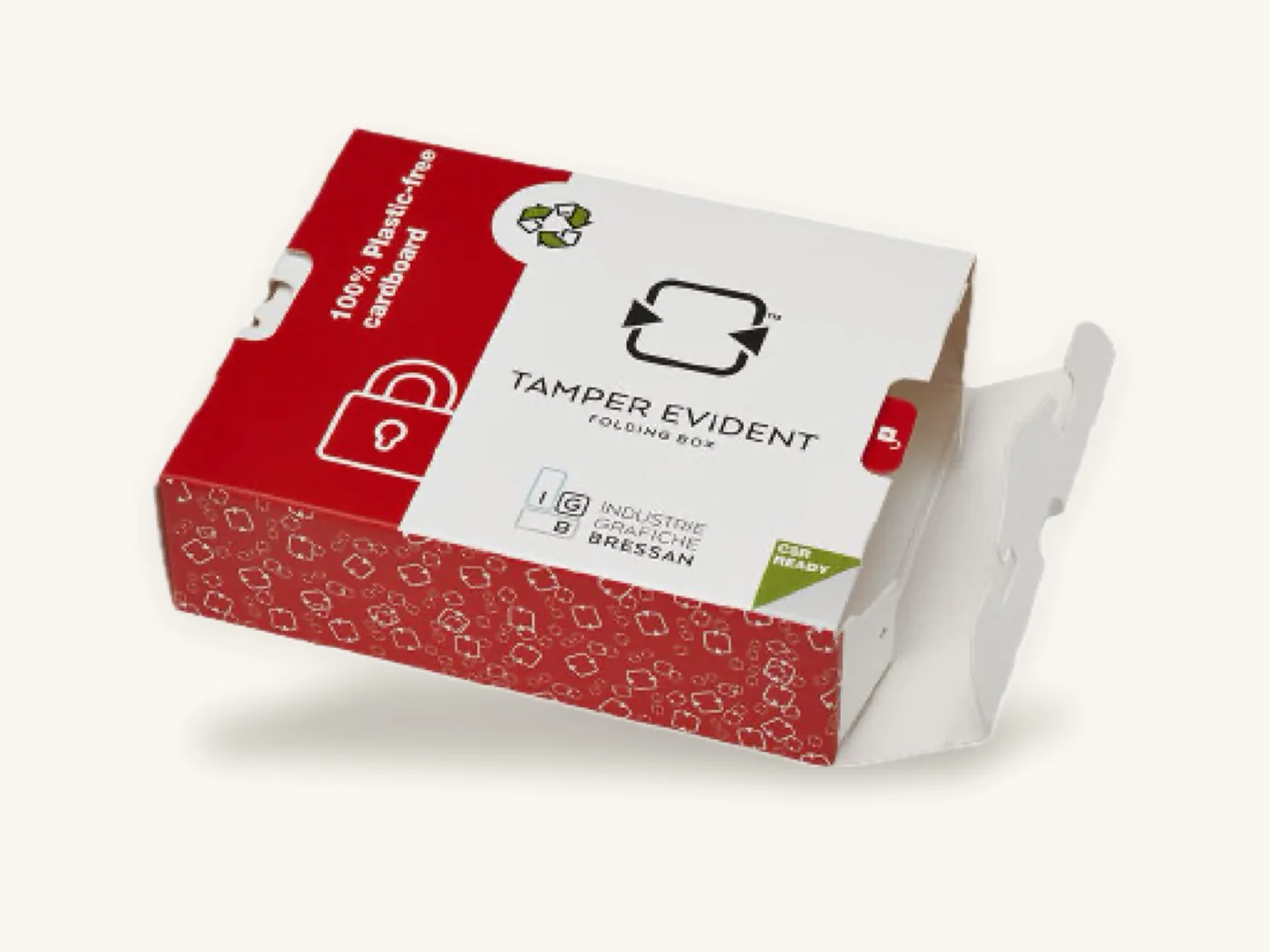
Child resistant boxes use a push-and-slide drawer or a locking tab that takes two coordinated actions to open. They cost more than a standard carton and need to be matched to the product's size and weight. Our child-resistant packaging guide explains how the test protocol works and when a structure needs documented results.
| Structure | Best for | Relative cost | Shelf presence |
|---|---|---|---|
| Straight tuck end | Single bottles, tins, capsules | Low | Clean front panel |
| Reverse tuck end | High-volume single SKUs | Lowest | Good |
| Auto lock bottom | Heavier jars, 60 ml bottles, multi-packs | Medium | Good |
| Window carton | Gummies, balms, colorful product | Medium | Strongest product visibility |
| Sleeve and tray | Gift sets, premium lines | Medium to high | Premium reveal |
| Child-resistant drawer or lock | Edibles and products where CR is expected | Highest | Good, adds perceived safety |
Plan the information panel before you design
In CBD box design, the biggest source of reprints is running out of room. A carton for a 30 ml bottle is about 1.5 in wide, which gives you four narrow tall panels and two small end flaps. Once a logo, product name and strength sit on the front, the remaining space fills up quickly.
Common content blocks to plan for
The exact list depends on your product type, your state and the channels you sell through. The blocks below are the ones most CBD brands end up allocating space for. Treat this as a layout checklist, not a legal checklist.
- Identity: brand, product name and product type (for example, "oil" or "gummies")
- Net contents: volume or count, in the format your regulator expects
- Cannabinoid content: total per package and per serving, if you state it
- Ingredients: full list, often the longest single block
- Directions and serving size: where applicable
- Warning statements: any required or retailer-requested cautions
- Batch or lot number and dates: usually printed or stamped at packing, so they need a blank area
- QR code: often linked to a certificate of analysis for that batch
- Business name and contact details
- Barcode: for retail and marketplace sales
Watch out: reserve an unprinted, uncoated rectangle for anything you add at packing time, such as batch codes and dates. Inkjet and thermal coders struggle on gloss lamination and spot UV, and a smeared lot number can cause more trouble than a scuffed logo.
A layout that fits small cartons
For a tall, narrow carton, a reliable grid is: front panel for brand, product name, strength and net contents; one side panel for ingredients and directions; the other side for warnings; the back for the QR code, batch area, business details and barcode. End flaps work for a short SKU code or strength callout that is visible when cartons are stacked in a drawer.
Say you sell three strengths of the same 30 ml oil. Keep the dieline, the grid and the typography identical, and change only a color band on the front and the strength number. Your regulatory content stays in the same position on every box, which makes proofing faster and reduces the chance of a mismatched panel.
Legibility rules of thumb
Keep required text dark on a light background and off creases and glue flaps. On SBS, roughly 6 pt type and above reproduces cleanly. Check any minimum type size your regulator specifies.
Compliance-readiness for CBD packaging
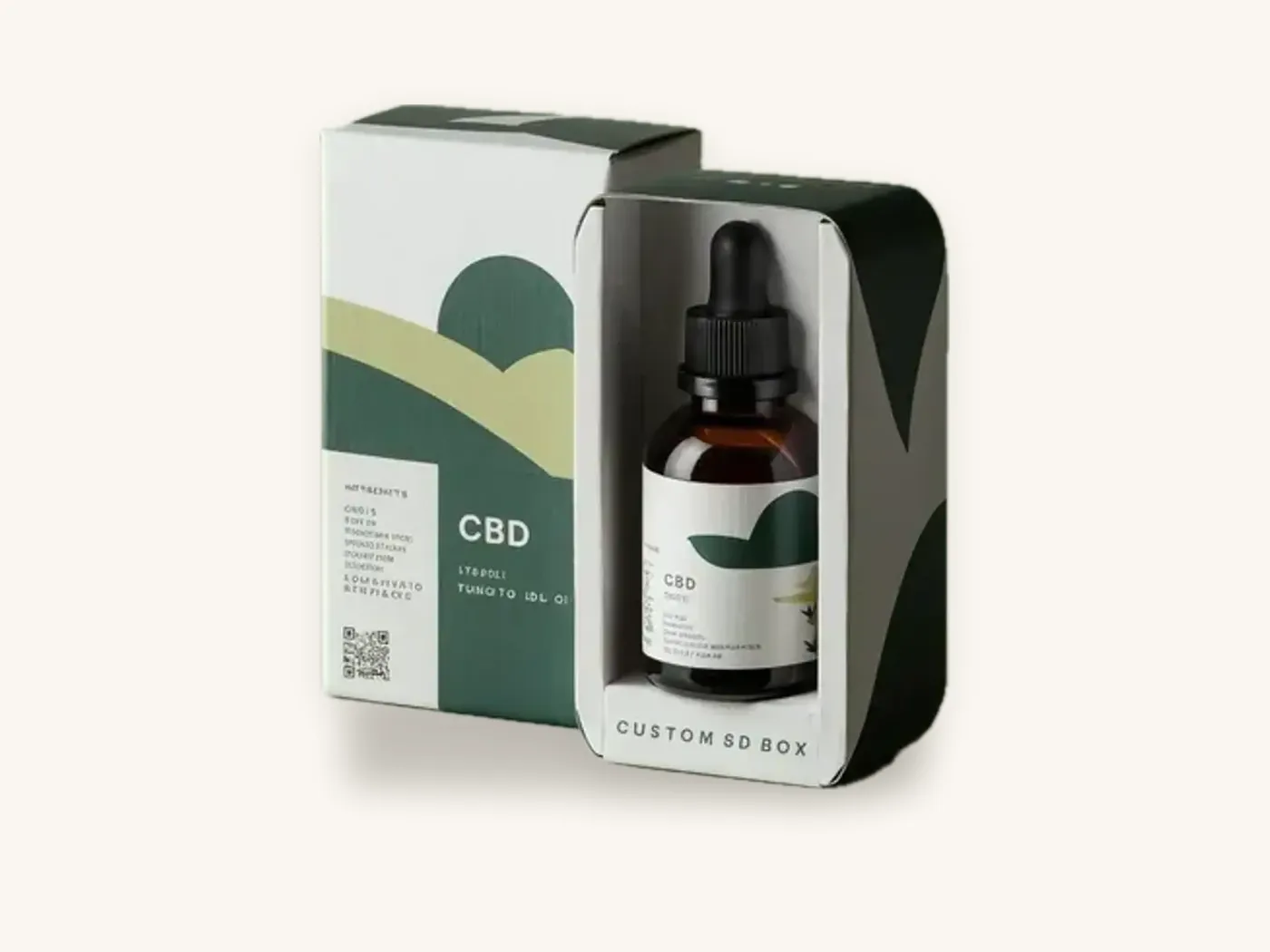
Hemp-derived CBD is regulated through a mix of federal agencies and state departments, and rules differ by state and by product type (ingestible versus topical is a common split). They also change often. Nothing here is legal advice; the goal is packaging that is ready for the most common requirement types, so adapting to a specific rule is an artwork change rather than a new structure.
Requirement types to design around
- Child-resistant packaging. Some jurisdictions expect it for ingestible products, especially edibles. It can be delivered by the bottle cap, the jar, a pouch or the carton.
- Opaque or non-transparent packaging. Some rules restrict windows or clear containers for certain products. If yours might, avoid designing a line around windows.
- Warning panels. Rules and retailers may require specific warnings, sometimes with minimum sizes or boxed borders.
- Batch or lot identification. Nearly universal; plan a blank code area.
- QR codes to lab results. A common expectation that also builds consumer trust. Test that the code scans at its printed size before approving the proof.
- Restrictions on appeal to children. Cartoon characters, candy-like imagery and bright candy styling are frequently discouraged or prohibited for edibles.
- Claims. Avoid health or medical claims on packaging; the FDA and FTC have acted against unsupported claims for CBD products.
Our cannabis packaging laws overview explains how these requirement types show up in state programs and where to find official guidance. Before you approve a proof, have your compliance lead or counsel review the final flat artwork against your state's current rules.
Tip: ask your attorney or compliance consultant to mark up our flat dieline proof, not a 3D render. The flat file shows every panel at actual size, including glue flaps and tuck flaps where text would be hidden once the box is assembled.
Materials and finishes for CBD box design
CBD shoppers read packaging as a quality signal. Small cartons use little material, so upgrades cost cents.
Board
- 18 pt SBS paperboard is the default for printed CBD cartons: bright white, smooth, crisp folds, and stiff enough for a 30 ml glass bottle. See SBS paperboard for calipers.
- Kraft paperboard suits botanical, farm-to-bottle or minimalist positioning. Full-color print looks muted on brown, so plan around one or two dark inks or white ink.
- Rigid greyboard is for gift sets and premium launches, where the box is kept.
Finishes that fit the category
| Finish | Effect | Best use in CBD | Note |
|---|---|---|---|
| Aqueous coating | Light scuff protection, recyclable | Kraft or natural-positioned lines | Most economical |
| Matte lamination | Soft, glare-free, fingerprint resistant | Wellness and topical lines | Makes small text easy to read under store lighting |
| Gloss lamination | Saturated color, shine | Bold, colorful oils and gummies | Can glare over warning text |
| Soft-touch lamination | Velvety feel | Premium topicals, gift sets | Pairs well with foil |
| Spot UV | Glossy highlight on selected areas | Logos, strength numbers | One-time tooling |
| Foil stamping | Metallic logo or accent | Premium lines, strength coding | One-time tooling |
| Embossing | Raised logo | Rigid or heavier cartons | One-time tooling |
The printing and finishes page shows samples of each. A practical rule: put decorative finishes on the brand and product name, and keep the information panels flat, matte or uncoated so they stay legible and codeable.
Selling channel: retail shelf, online store or both
Where the box is sold changes what it needs to survive.
Retail and dispensary shelves
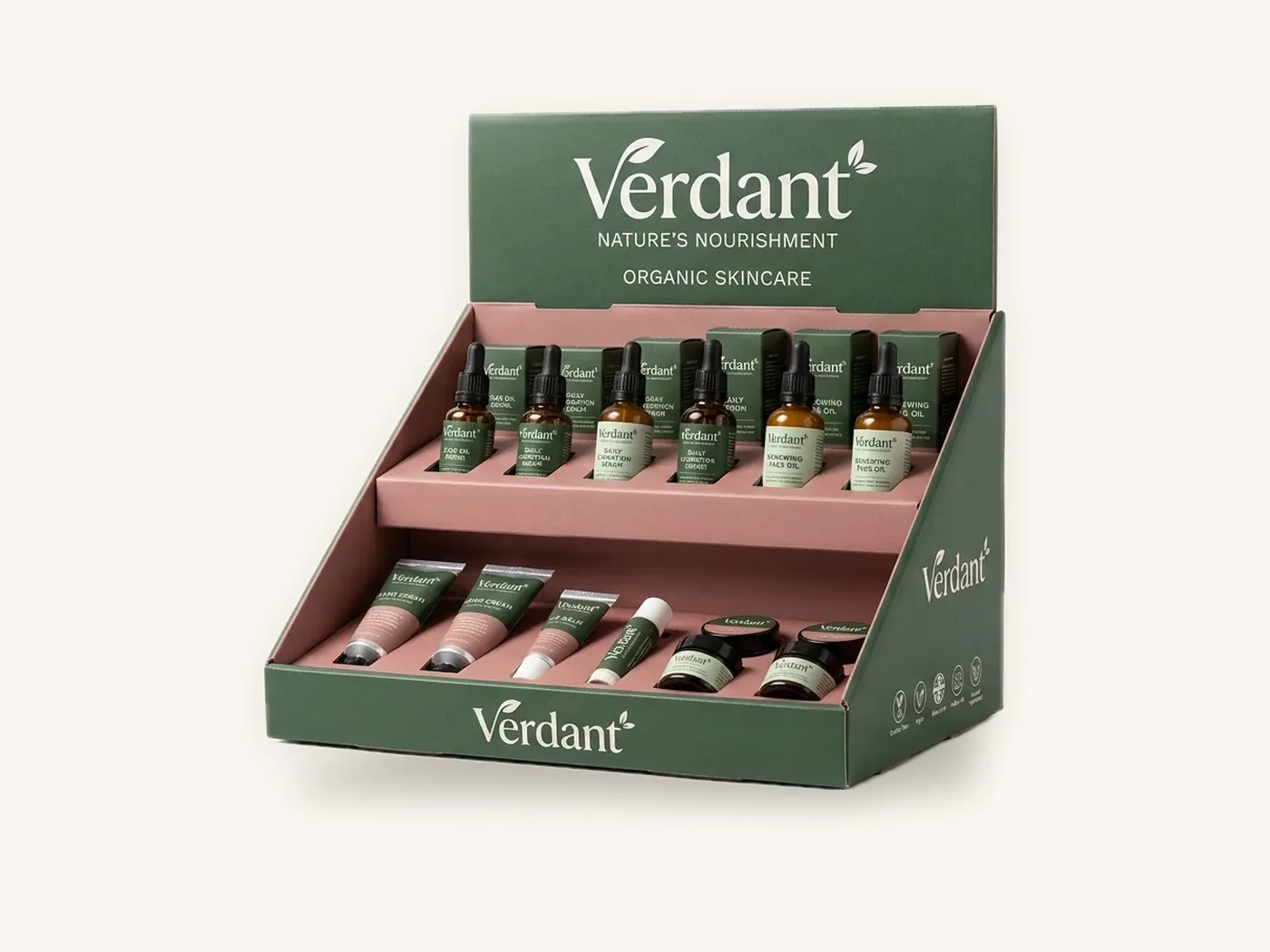
On a shelf, the front panel has a second or two to communicate brand, product type and strength. Cartons get handled, so lamination earns its place. If a store merchandises at the register, a counter display box holding six to 24 cartons turns a small product into a visible block of color. Retailers also often ask for a scannable barcode on a flat panel.
Direct-to-consumer shipping
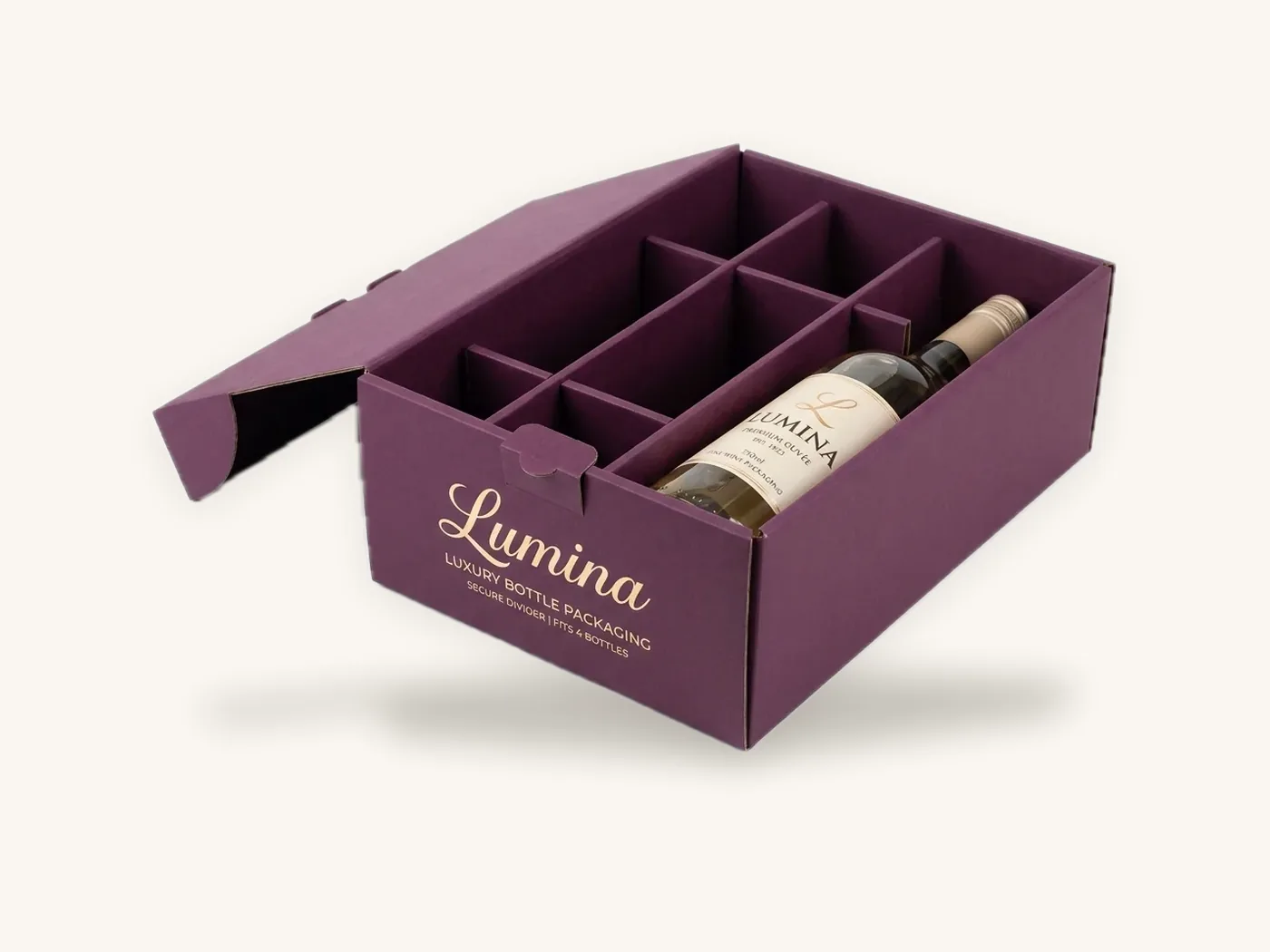
Online orders add a shipping layer. A folding carton is not a shipper, so it goes inside a mailer with enough snugness or fill to stop movement. For subscription or bundle sales, a printed mailer with a die-cut insert can hold several cartons in a planned layout. Shipping rules for hemp products vary by carrier and destination, so confirm current carrier policies before you set up fulfillment.
What CBD packaging costs
Unit cost for CBD packaging is driven by carton size, board, print coverage, finishes, inserts and quantity. Quantity has by far the largest effect. The figures below come from our current rates, with free US shipping included, and they are indicative for the exact spec in each row.
| Spec | 100 | 250 | 500 | 1,000 | 5,000 |
|---|---|---|---|---|---|
| CBD tincture box, 18 pt SBS, 1.5x1.5x4.5 in, full color, gloss, spot UV | $1.31 | $0.93 | $0.70 | $0.58 | $0.41 |
| Straight tuck end carton, 18 pt SBS, 3x2x5 in, full color outside, aqueous | $1.15 | $0.82 | $0.61 | $0.51 | $0.36 |
| Cosmetic carton, 18 pt SBS, 2.5x2.5x6 in, full color, soft-touch and foil | $1.93 | $1.37 | $1.03 | $0.86 | $0.61 |
| Window box, 18 pt SBS, 4x4x4 in, full color, aqueous, window | $1.66 | $1.18 | $0.89 | $0.74 | $0.53 |
| Counter display box, E-flute, 10x8x6 in, full color | $5.08 | $3.61 | $2.71 | $2.26 | $1.60 |
At 10 units, the same tincture box is about $1.98, which makes a short test run or a trade-show batch practical. Finishes with dedicated tooling add a one-time charge: spot UV about $40, foil about $60, embossing about $60 and a custom insert die about $45. There are no die or plate charges otherwise.
Where CBD brands overspend
- A different dieline for every SKU. Standardizing on one or two carton sizes lets you gang artwork and reorder in larger combined runs.
- Foil on every panel. One foil hit on the logo gives most of the premium effect.
- Reprints caused by text changes. Keep frequently updated content, such as lab links, behind a QR code that points to a page you control.
Run your own size and quantities through the instant packaging price estimator to compare options side by side.
A CBD product family system, step by step
A system makes a line look planned and makes each future launch a template job.
- Audit your containers. List every bottle, jar, tin and pouch with exact dimensions and weight.
- Group them into as few carton sizes as possible. Two or three sizes often cover a whole line when inserts take up the slack.
- Fix one panel grid per size. Front, info panel, warning panel, code area and barcode stay in the same place on every SKU.
- Choose a differentiator. Color band, strength numeral size, or a foil color, applied consistently.
- Write text once, in a master document. Every carton pulls from the same approved wording.
- Get a structural sample of each size and test it with the real container, then proof all SKUs together.
- Review compliance on the flat proofs, then approve and schedule production as one batch where possible.
How to order custom CBD boxes from Box Sense
We make custom CBD boxes in-house, from die-cutting to printing and gluing, and you can order as few as 10 boxes to validate a design before committing to a larger run. The CBD and cannabis industry page shows the structures we produce most often.
What to send us
- Exact container dimensions (height including cap or dropper, diameter or width and depth) and weight
- The structure you want, or a note asking us to recommend one
- Whether the carton itself must be child-resistant, or the closure is handled by the container
- Board preference (SBS or kraft) and finishes
- Number of SKUs and whether they share a size
- Quantities to price, for example 100, 500 and 1,000 per SKU
- Artwork, or a request for help from our design services team
What happens next
- Quote within 24 hours, with pricing for each quantity tier.
- Free dieline and artwork setup, a 3D digital proof and flat proofs for compliance review, with two revision rounds included.
- Samples. Unprinted structural samples are free, and a printed sample of approved artwork is free on orders of 100 or more. Details are on the samples page.
- Production in 8–12 business days after proof approval, or rush in 5 business days on most paperboard styles.
- Delivery. US shipping is free; international shipping is quoted at cost. Defective boxes reported within 14 days are reprinted free.
Your brand is responsible for label content and regulatory compliance; our job is to make sure the structure, print and panel layout give that content the room and legibility it needs.
Frequently asked questions
What kind of packaging is best for CBD products?
For most CBD oils, capsules and topicals, a printed paperboard folding carton on 18 pt SBS is the best balance of protection, panel space and cost. Heavier jars and multi-packs benefit from an auto lock bottom. Gummies often use a child-resistant jar or pouch, with an optional carton. Gift sets suit rigid boxes with a die-cut insert that holds each item in place.
Does CBD packaging have to be child-resistant?
It depends on your product type and where you sell it. Some states expect child-resistant packaging for ingestible hemp products, particularly edibles, while topicals are often treated differently. The requirement can be met by the bottle cap, jar, pouch or carton. Rules change often, so confirm the current requirement with your state regulator and counsel before choosing a structure.
What information goes on a CBD box?
Most CBD brands plan space for product identity, net contents, cannabinoid content, ingredients, directions, warnings, a batch or lot number, a QR code linking to lab results, business details and a barcode. The exact required elements vary by state and product type. Map every block on the flat dieline before designing, and have counsel review the final artwork.
How much do custom CBD boxes cost?
As a reference, a 1.5x1.5x4.5 in tincture carton on 18 pt SBS with full color, gloss and spot UV is about $1.31 per box at 100 units and about $0.58 at 1,000, with US shipping included. Larger cartons, soft-touch lamination, foil and inserts add cost. Use the pricing estimator to price your exact size and quantities.
Can I put a window on CBD packaging?
Physically, yes: a die-cut window with PET or compostable PLA film works well for gummies and balm tins. Check first whether any rule in your market restricts transparent packaging for your product type, since some requirements call for opaque packaging. A window also removes printable area, so confirm all required text still fits on the remaining panels.
What is the minimum order for CBD boxes?
Box Sense produces CBD boxes from a minimum of 10 units. Short runs are printed digitally without plates, which makes small quantities practical for new product tests, trade shows or seasonal SKUs. The unit price drops substantially as quantity rises, so compare several quantity tiers in the estimator before ordering, especially if you plan to reorder within a few months.
How long does it take to get custom CBD packaging?
Quotes are confirmed within 24 hours. After you approve the digital proof, standard production takes 8–12 business days, and rush production in 5 business days is available on most paperboard styles. Build in extra time for compliance review of the flat proof and for any structural or printed sample you want to test before the full run.
Next steps
Gather your container dimensions, SKU list and the content blocks your packaging needs to carry, then price a few carton sizes in the CBD box price estimator. When you are ready, request a CBD packaging quote and we will confirm pricing within 24 hours and send dielines you can take straight to your compliance review.
Boxes in this guide
Order the packaging we covered
Written by the Box Sense Packaging Team
Our structural designers, prepress technicians and production staff print and convert custom boxes every day for brands in the United States, United Kingdom and UAE. Questions about this guide? Talk to us.