Cannabis packaging requirements are set by each state that runs a legal program, not by one federal rule, so there is no single national checklist. What you will find instead is a recurring set of requirement categories: child-resistant closures, opaque or tamper-evident containers, a state-mandated cannabis symbol, warning statements, potency and testing information, and restrictions on anything that appeals to children.
The specifics inside each category (exact wording, symbol artwork, type size, which products need resealable closures) differ from state to state and are revised often. That is why this guide does not hand you a table of every state's current rules. It gives you a planning framework, a research checklist for your own market, and a packaging system that lets a multi-state brand change labels without redesigning every box.
Nothing here is legal advice. Before you print, confirm every requirement with your state's cannabis control agency and a cannabis attorney licensed in that state.
Key takeaways
- Marijuana packaging laws are written state by state; federal hemp rules, CPSC child-resistance test methods and FTC advertising principles sit alongside them but do not replace them.
- Almost every adult-use program regulates the same six areas: child resistance, container opacity or tamper evidence, a state cannabis symbol, warnings, product and testing data, and marketing that could attract minors.
- Treat the regulation text and your regulator's published guidance as the source of truth, and re-check before every reprint because rules and symbols change.
- Multi-state brands save money by separating a shared structural and brand layer from a state-specific compliance layer applied by label or short digital print run.
- Child resistance is a property of a tested structure, so request test documentation for the exact box, bag or closure you plan to use.
- Short, versioned runs are safer than a year of inventory; Box Sense prints from 10 units so a rule change does not strand thousands of boxes.
Why cannabis packaging rules differ so much between states
Cannabis remains federally controlled, so each state that legalized medical or adult-use sales built its own rulebook, usually administered by a dedicated cannabis control agency, a department of health or an alcohol and tobacco commission. Each drafted rules at a different time, borrowing from pharmacy law, alcohol labeling and tobacco marketing restrictions in different proportions.
The result is a patchwork. One state may require an opaque container for all products while another only requires opacity for edibles. One may allow child-resistant exit bags at the register while another requires the product container itself to be child-resistant. Symbols also differ: several states use their own mark, and some have adopted a common intoxicating cannabis symbol developed through ASTM International.
Hemp-derived and CBD products are a separate track
Hemp-derived cannabinoid products have been governed by a different mix of federal and state rules, and federal definitions of hemp have been revised. If you sell both licensed cannabis and hemp-derived products, do not assume one package works for both channels. Our CBD packaging guide covers the hemp side, and your counsel should confirm which regime your product falls under today.
Rules move after launch, not just before
Regulators revise packaging rules after enforcement experience: a symbol gets redesigned, a warning is reworded, a type-size minimum is raised, or a transition deadline ends. Build your packaging program on the assumption that at least one label element will change during the life of a SKU.
The six requirement categories that appear across state programs
Use these categories as the skeleton of your research. For each state you sell in, fill in what the rule actually says, where it is written, and when it was last amended.
| Category | What states typically regulate | Packaging decision it drives |
|---|---|---|
| Child resistance | Whether the container, the exit package or both must resist opening by children; whether it must remain child-resistant after first opening | Structure choice: push-and-slide box, locking tab, child-resistant zipper bag, closure on the primary container |
| Opacity and tamper evidence | Whether the product must be hidden from view; whether first opening must leave visible evidence | Board and film choice, no windows, tear strips, seals or shrink bands |
| State cannabis symbol | Required symbol artwork, minimum size, color, placement on the principal display panel | Reserved panel space and artwork files locked to the regulator's version |
| Warning statements | Mandated health, pregnancy, impairment and keep-away-from-children wording; sometimes required type size or a box border | Copy area on a back or side panel sized for the longest required text |
| Product and testing information | Cannabinoid content, serving size, net weight, batch or lot number, license number, testing lab, harvest or packaging dates | Variable data zone for per-batch printing or labeling |
| Marketing and appeal to minors | Bans on cartoons, candy look-alikes, certain colors or imagery, health claims and false or misleading statements | Brand art direction, illustration style and claims review |
Child resistance
Child-resistant packaging is typically tested using the protocol in the Consumer Product Safety Commission's Poison Prevention Packaging regulations, which uses panels of children and adults. Many state cannabis rules reference that protocol directly or indirectly. The federal test method is published in 16 CFR Part 1700.
The key planning point is that child resistance belongs to the structure as tested, not to a material. A push-and-slide box that passed testing at one size and board caliper is not automatically child-resistant if you change the tab design. Our child-resistant packaging guide explains the test and the common structures in detail.
Opacity and tamper evidence
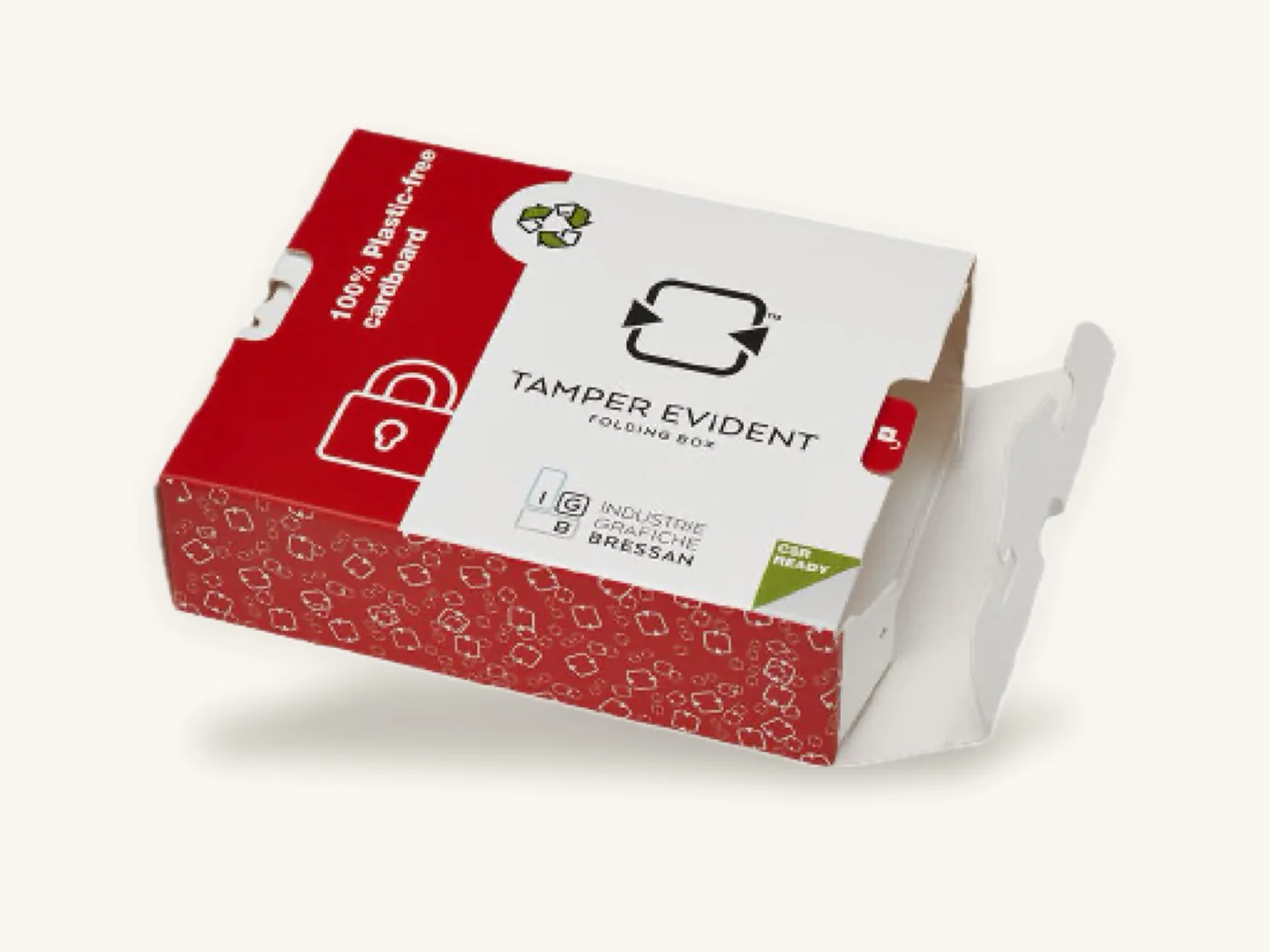
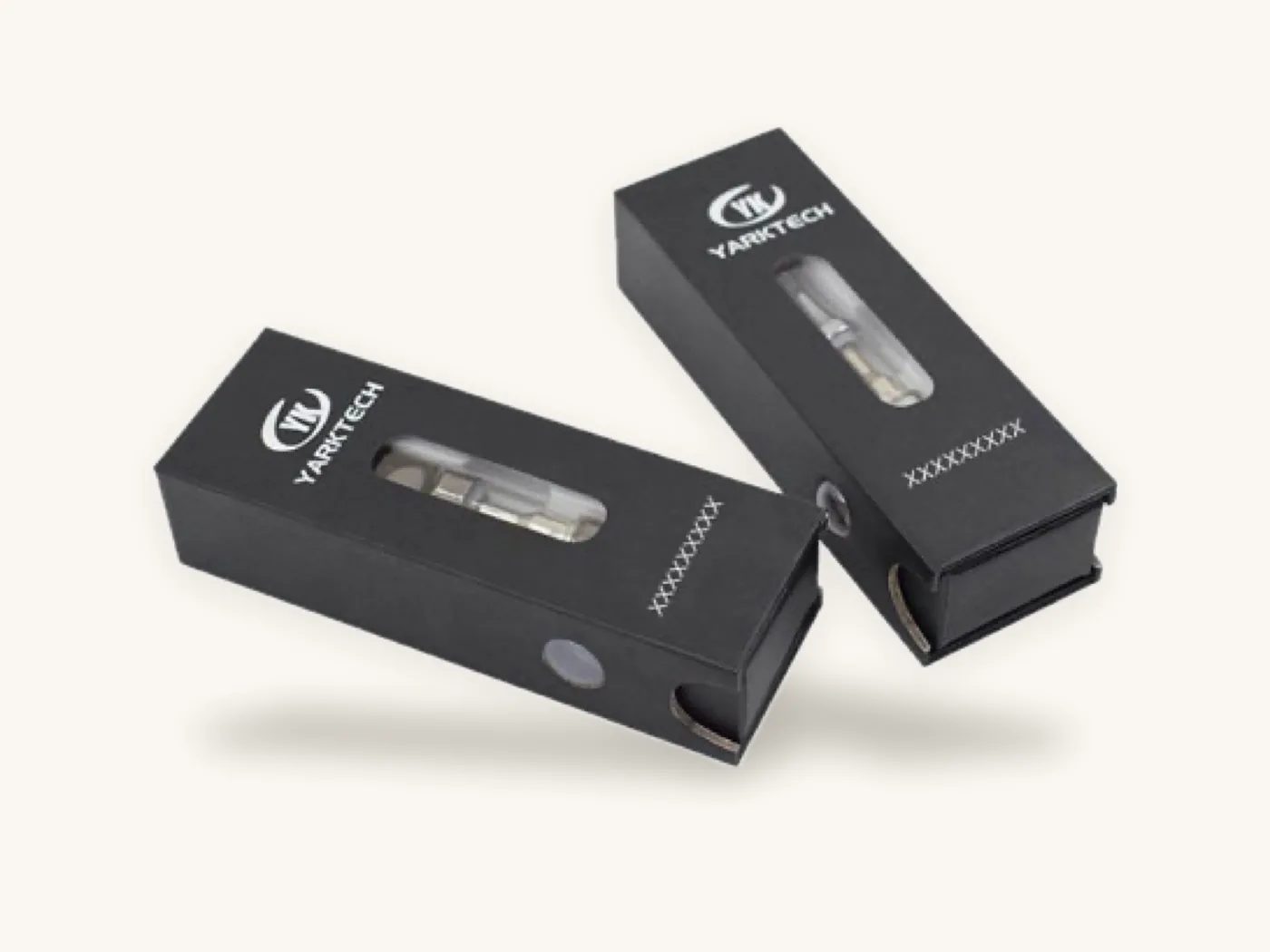
Opacity rules usually aim to keep the product itself out of sight at retail and in transit. That rules out window cutouts for many cannabis SKUs, and it can affect clear films and translucent jars. Tamper evidence is a separate idea: the customer must be able to see that the package has been opened. A printed tear strip, a sticker seal across the opening, or a shrink band on the primary container are common approaches.
The state cannabis symbol
Treat the symbol as regulated artwork. Download it only from the regulator, keep the file version and the download date, and never redraw, recolor or crop it unless the rule explicitly allows a variant. Minimum sizes are often specified, so reserve that panel space at the dieline stage rather than squeezing it in after the brand design is finished.
Warnings and product information
Warnings tend to be long, fixed text blocks. Product information is short but changes with every batch. Plan them as two different zones: a static warning panel printed with the box, and a variable data area that takes a batch label or a short digital print run.
Watch out: the longest part of your compliance copy is often a mandated warning that is not negotiable. Lay out the dieline around the real warning text at its required minimum type size before approving brand graphics. Discovering at proof stage that the warning does not fit forces a larger box or a smaller logo.
A research checklist for your state
Work through this list for each state before you brief a designer. Keep the answers in a shared document with citations, so your legal reviewer can check them quickly and your team can see when each item was last verified.
- Identify the regulator and the rule text. Find your state's cannabis control agency, the current packaging and labeling regulations, and any published guidance documents or FAQs.
- Record the effective date and any transition period. Note whether older packaging can be sold through for a set time after a rule change.
- Split requirements by product category. Flower, pre-rolls, vapes, concentrates, edibles, beverages, topicals and tinctures often carry different rules.
- Distinguish container from exit packaging. Note whether child resistance and opacity apply to the product container, the bag at checkout, or both.
- Download the official symbol and warnings. Save the regulator's files and wording with the date retrieved.
- List every mandatory data element. Include license number, batch or lot, test results or a QR code if allowed, dates, net weight and potency per serving and per package.
- Check type-size and placement rules. Some states specify minimum type sizes, principal display panel content or contrasting backgrounds.
- Review marketing restrictions. List banned imagery, colors, words and claims, and any rules on packaging that resembles commercial candy or snacks.
- Confirm pre-approval or submission requirements. Some programs review labels or packaging before sale.
- Ask your testing lab and distributor. They see enforcement issues first and can flag common rejections.
- Get written sign-off from counsel. Have a cannabis attorney licensed in the state review the proof, not just the plan.
- Set a re-verification date. Put a calendar reminder to re-check the rule before every reprint.
Questions to ask your regulator or attorney
- Does the child-resistance requirement apply to every product type, or only to some?
- Must the package remain child-resistant after the first opening for multi-serving products?
- Is a label applied over a printed box acceptable for required information, or must it be printed?
- Can a QR code carry test results, or must results appear in full on the package?
- Which marketing elements have drawn enforcement attention recently?
Matching packaging formats to cannabis product types
Different formats handle compliance differently. The table below is about practical fit, not legality: it shows which structures give you the panel space, closure options and opacity that cannabis programs commonly ask for. Your state's rule decides which of these is allowed.
| Product type | Common packaging formats | Compliance strengths | Planning notes |
|---|---|---|---|
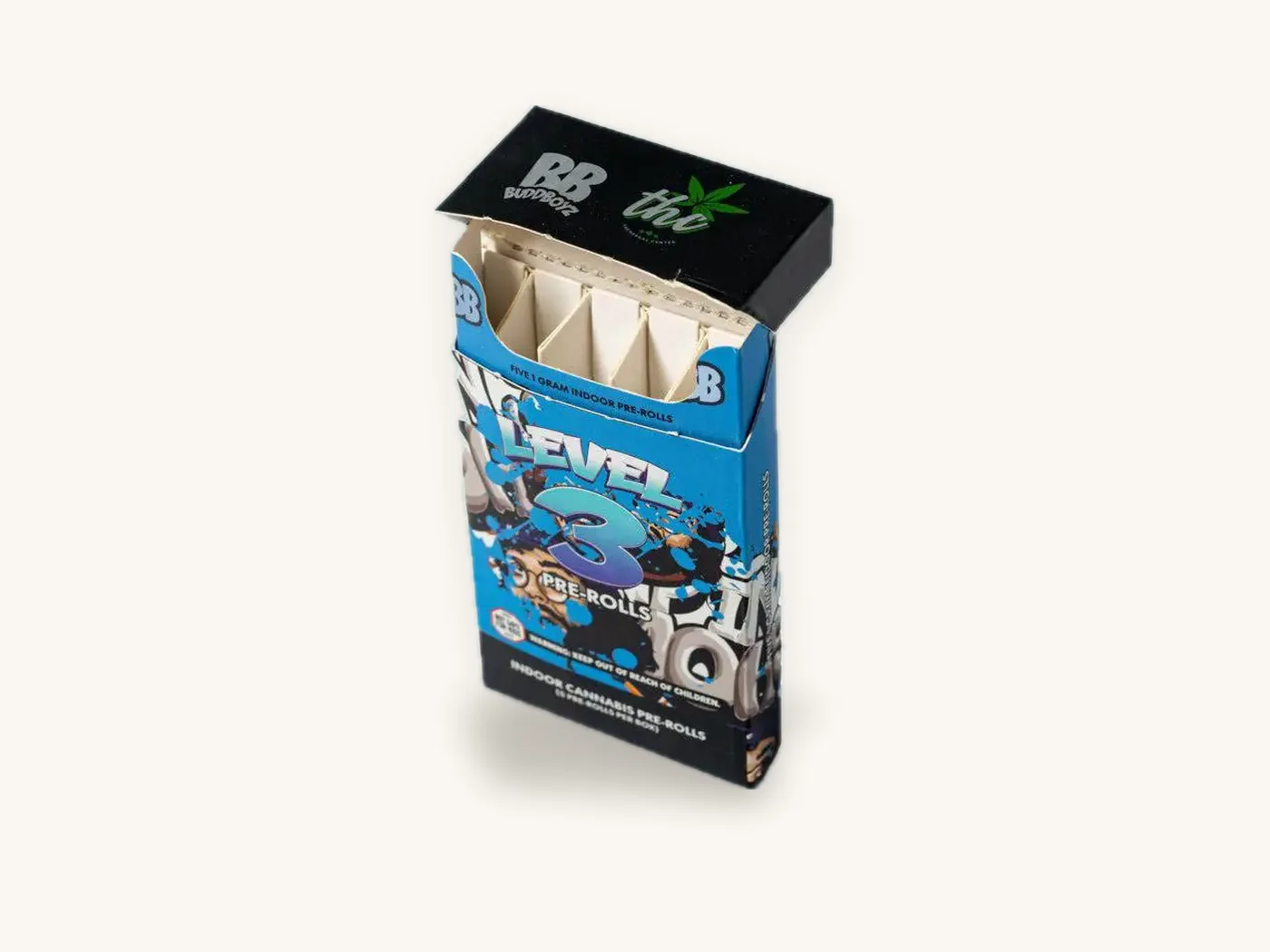
| Pre-rolls | Tube inside a folding carton, drawer-style box, multi-pack tuck box | Carton gives large panels for warnings and batch data | Confirm whether the tube, the carton or both must be child-resistant |
| Flower | Jar inside a carton, child-resistant zipper bag | Bags are opaque and resealable; cartons add print space | Bag panel space is limited, so plan the label zone first |
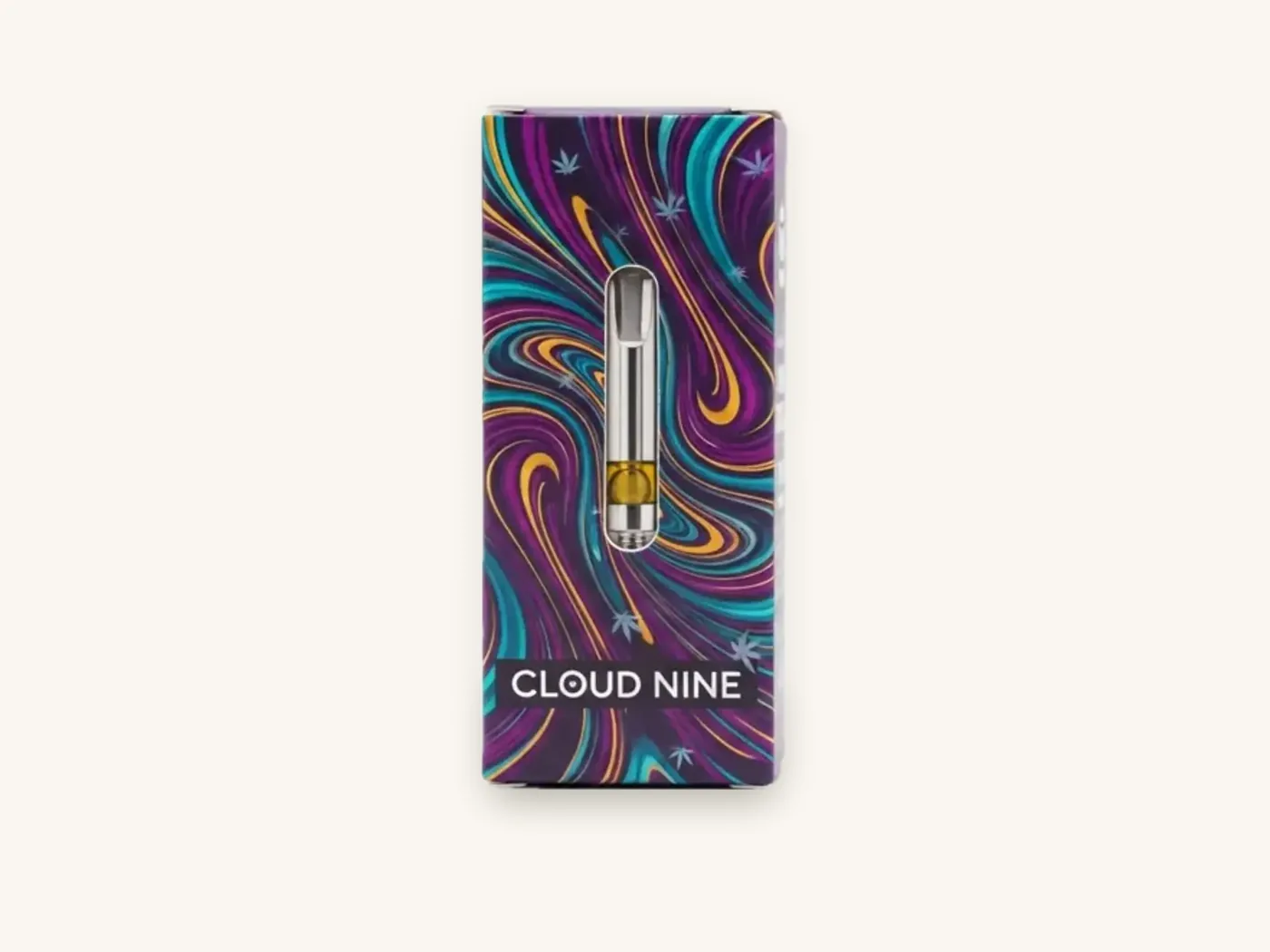
| Vape cartridges and devices | Tuck or drawer box with an insert, blister inside a carton | Inserts stop movement; carton carries warnings | Battery shipping rules apply in transit |
| Edibles | Child-resistant bag, rigid tin, folding carton with a locking tray | Multi-serving products often need resealable child resistance | Imagery restrictions are strictest here |
| Tinctures and oils | Bottle with child-resistant cap inside a folding carton | The cap handles child resistance; the carton carries the text | Keep dosage directions legible at small size |
| Topicals | Jar or tube inside a carton | Fewer states treat topicals as strictly as ingestibles | Still check symbol and warning rules |
Boxes, bags and exit packaging
Pre-roll boxes and vape and cartridge boxes are usually folding cartons, which give the most printable area for the least material. Child resistant boxes use push-and-slide or locking-tab structures, much like the drawer box style, where a tray must be released before it slides out.
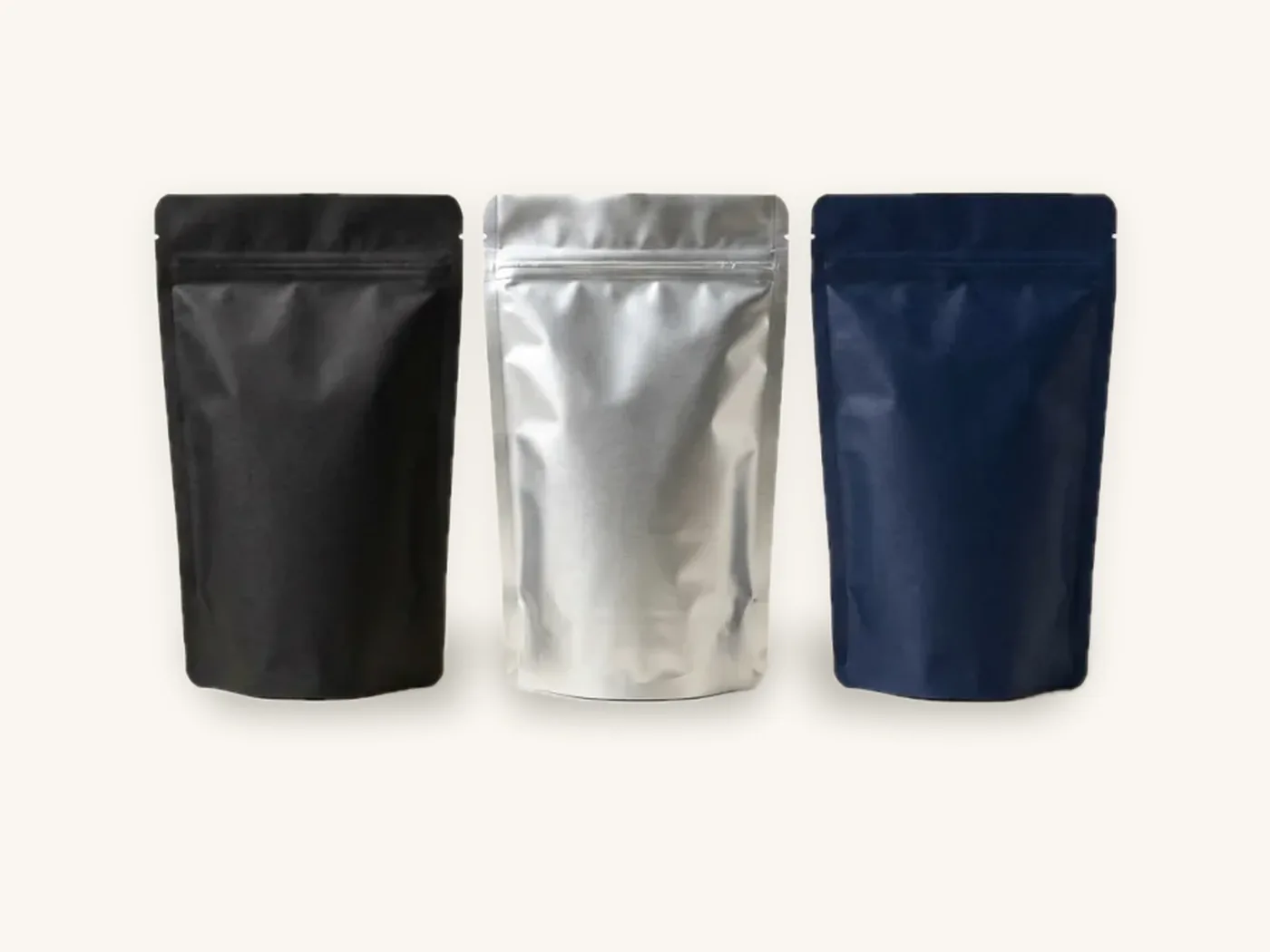
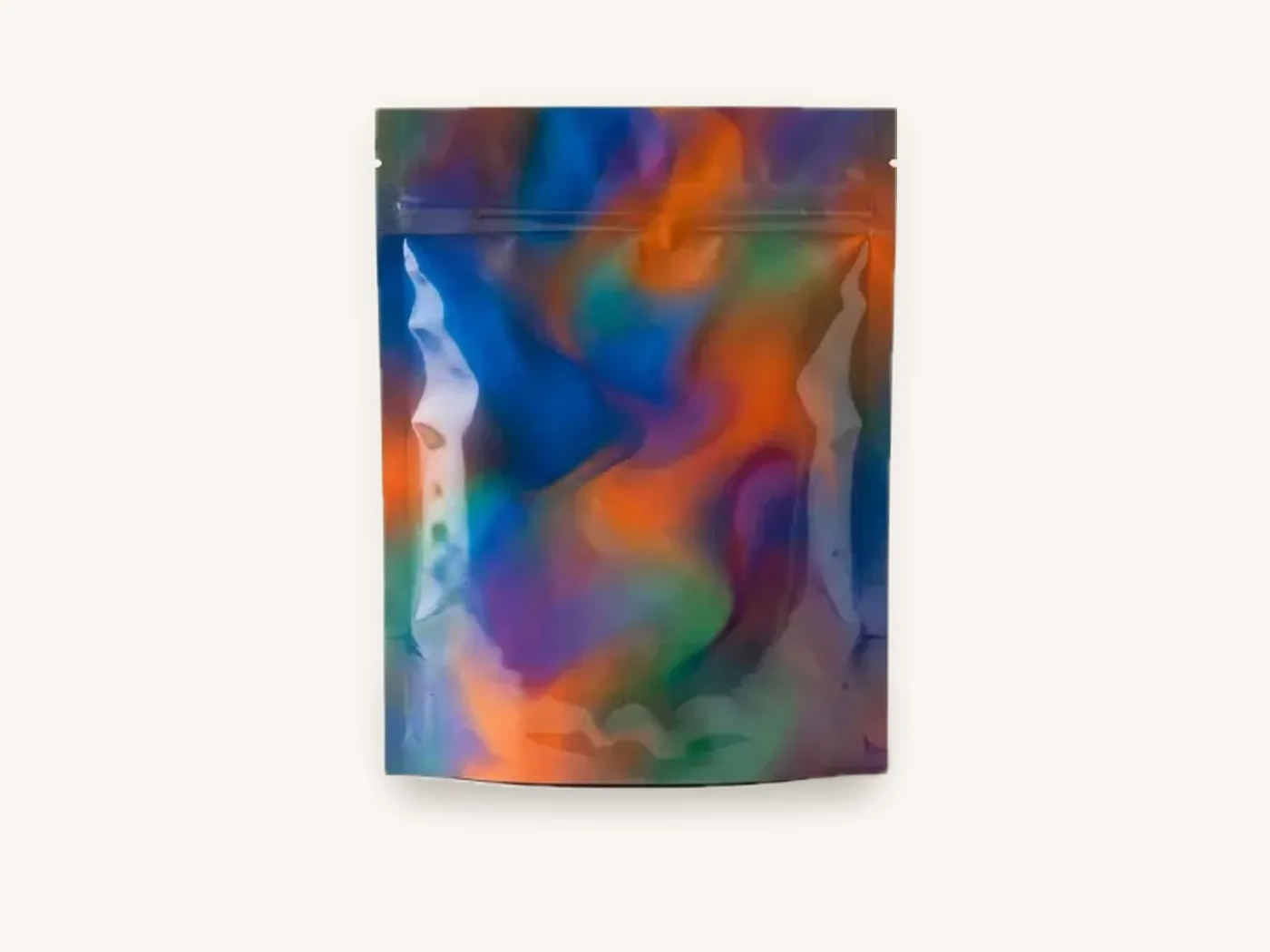
Mylar bags with child-resistant zippers are common for flower and edibles because they are opaque, resealable and light to ship. The stand-up pouches guide explains films, zippers and fill sizes. For a tincture, a tincture box around a bottle with a child-resistant cap is a typical pairing, and the pre-roll packaging guide walks through tube and carton combinations.
A design system for multi-state cannabis brands
If you sell in more than one state, the most expensive mistake is designing a fully printed box per state from scratch. The better approach is a two-layer system.
Layer 1: the shared structure and brand
Keep one dieline per product format across every state. Use the same child-resistant structure, board, dimensions and brand artwork on the front and top panels. This layer should contain nothing that any one of your states regulates tightly, so it can run in larger quantities and carry your best finishes.
Layer 2: the state compliance panel
Reserve a defined area, typically the back and one side panel, for state-specific content: the state symbol, warnings, license number and required data. You can fill that area in two ways:
- Print per state in short runs. Digital printing makes it practical to run a few hundred boxes per state version with identical brand panels.
- Apply a state label. Print the shared box with the compliance area left clear, then apply a state-specific label. Confirm first that your state accepts labels for required content and whether they must be tamper-resistant or non-removable. Custom labels and stickers can be die-cut to the exact reserved area.
Version control that survives audits
Give every printed version a small code on the panel, for example a state abbreviation, a revision number and a date. Keep a log that ties each code to the rule version, the approved proof and the attorney sign-off. When a rule changes, you know exactly which inventory is affected.
Tip: design the compliance panel at the size your strictest state needs, then use that same panel in every other state. You get one dieline, one layout grid and one proofing process, and moving into a new state becomes a copy edit rather than a redesign.
Materials, finishes and artwork choices that support compliance
Compliance is not only text. Material and finish decisions affect opacity, legibility and whether the package reads as aimed at adults.
Board and film
For folding cartons, 18 pt to 24 pt SBS paperboard gives a smooth surface for small warning type and holds a push-and-slide tray firmly. Kraft board reads as natural, but small light-colored type on brown board can lose contrast, which matters when a regulator specifies legibility. Metallized films in bags give full opacity; clear films or windows usually do not.
Legibility of small text
Mandatory warnings are often set near a required minimum type size. Print them in black or a dark color on a light, uncoated or matte area. Avoid reversing small warning text out of a dark background, placing it over gradients or patterns, or running it across a fold. Test readability on a printed sample under store lighting.
Finishes that stay on the right side of the line
Foil, embossing and soft-touch lamination are generally fine on the brand panel, but keep them off the symbol and warnings unless the rule allows it, since glare can obscure required text. Be cautious with bright candy-like color palettes, cartoon characters and food imagery, which many states treat as appealing to minors.
Shipping and storage
Vape hardware with batteries and some concentrates may carry carrier or hazardous materials rules in transit. The hazmat packaging guide covers the shipping side. If you also sell food-adjacent products outside the cannabis channel, the FDA food labeling guide shows how federal food labels are structured, which is a useful contrast when planning panels.
How to order cannabis packaging from Box Sense
Box Sense manufactures folding cartons, drawer-style boxes, labels and bags with in-house printing, die-cutting and finishing. We produce to the structure, artwork and copy you approve; your team and counsel remain responsible for confirming that the content meets your state's rules.
What to send for a quote
- Product type and the states you sell in
- Product and primary container dimensions (tube, jar, bottle, cartridge)
- Structure preference: push-and-slide, locking tab, tuck carton, or bag
- Whether you need test documentation for child resistance on a specific structure
- Board or film preference and whether the package must be fully opaque
- Print plan: fully printed per state, or shared box plus state labels
- Quantities per state version, for example 100, 250 and 500
- Finishes, inserts and any tamper-evident features
- Target in-hand date and ship-to locations
From proof to delivery
- Quote within 24 hours. We confirm pricing for each version and quantity.
- Free design support. We supply the dieline, set up artwork, and send a 3D digital proof with two revision rounds. Share the proof with your attorney before approval.
- Samples. Unprinted structural samples are free, so you can test the fit of tubes, jars and cartridges. A printed sample of approved artwork is free on orders of 100 or more; see samples.
- Production. Standard production takes 8–12 business days after proof approval, with rush in 5 business days on most paperboard and corrugated styles.
- Delivery. US shipping is free on every order.
The minimum order is 10 boxes and there are no die or plate charges, which suits per-state short runs. As a pricing reference for a simple carton, an 18 pt SBS tincture box at 1.5x1.5x4.5 in with full color, gloss and spot UV is about $1.31 each at 100 units and about $0.58 at 1,000. Child-resistant structures and bags are quoted on spec; use the instant pricing estimator for standard cartons and our design services team for layout help. The CBD and cannabis packaging page shows the full range.
Frequently asked questions
Are cannabis packaging requirements the same in every state?
No. Each state with a legal cannabis program writes its own packaging and labeling rules, so requirements for child resistance, opacity, the cannabis symbol, warnings and product data differ. Many states regulate the same categories, which makes a shared planning framework useful, but the exact wording, sizes and applicability vary. Confirm current rules with your state's cannabis control agency and a licensed attorney.
Does all cannabis packaging have to be child-resistant?
Child resistance is one of the most common cannabis packaging requirements, but states differ on what must be child-resistant: the product container, the exit bag at checkout, or both, and whether it must stay child-resistant after first opening. Child resistance is usually shown through testing under the CPSC protocol. Check your state's rule for each product type you sell.
What is the universal cannabis symbol?
There is no single symbol required nationwide. Several states require their own cannabis warning symbol, and some have adopted a common intoxicating cannabis symbol developed through ASTM International. Always download the symbol from your state regulator, use it at the required size and placement, and avoid altering it. Recheck the file before reprinting in case the state has updated it.
Can I use one package design in several states?
Usually you can share the structure and brand artwork, but not the compliance content. A practical approach is one dieline and brand layout for all states, with a reserved panel for state-specific symbols, warnings and license data. That panel is printed per state in short runs or covered with a state label where your regulator allows labels for required information.
Can cannabis packaging have windows?
It depends on the state and product type. Some states require opaque packaging for some or all cannabis products, which rules out windows or clear films on those items. Where opacity is not required, a window may be allowed, but you still need space for warnings and data. Confirm the opacity rule for each product category before choosing a windowed structure.
What information goes on a cannabis label?
States commonly require the state cannabis symbol, health and impairment warnings, cannabinoid content, net weight, batch or lot number, license number, testing information and packaging or harvest dates. Some require serving information for edibles and specific principal display panel content. The exact list varies by state and product category, so build yours from the current regulation text.
How often do marijuana packaging laws change?
Changes are frequent enough that you should re-verify before every reprint. States revise warning text, symbols, type sizes and marketing restrictions, often with transition periods for existing inventory. Keep a log of the rule version behind each printed design, order in quantities you can sell through within a few months, and ask your attorney or regulator newsletter to flag amendments.
Does Box Sense check my packaging for legal compliance?
No. Box Sense manufactures packaging to the structure, artwork and copy you approve, and our team can help lay out required panels and reserve space for symbols and warnings. Confirming that your packaging meets your state's cannabis rules is the responsibility of your business and its legal counsel. Share the 3D proof with your attorney before approving production.
Next steps
Start with the research checklist for your first state, then have a designer lay out a shared dieline with a reserved compliance panel. When you have product dimensions and quantities per state version, check standard carton costs with the packaging price estimator and request a quote for cannabis packaging. We confirm pricing within 24 hours and send a dieline and 3D proof you can put in front of counsel.
Boxes in this guide
Order the packaging we covered
Written by the Box Sense Packaging Team
Our structural designers, prepress technicians and production staff print and convert custom boxes every day for brands in the United States, United Kingdom and UAE. Questions about this guide? Talk to us.