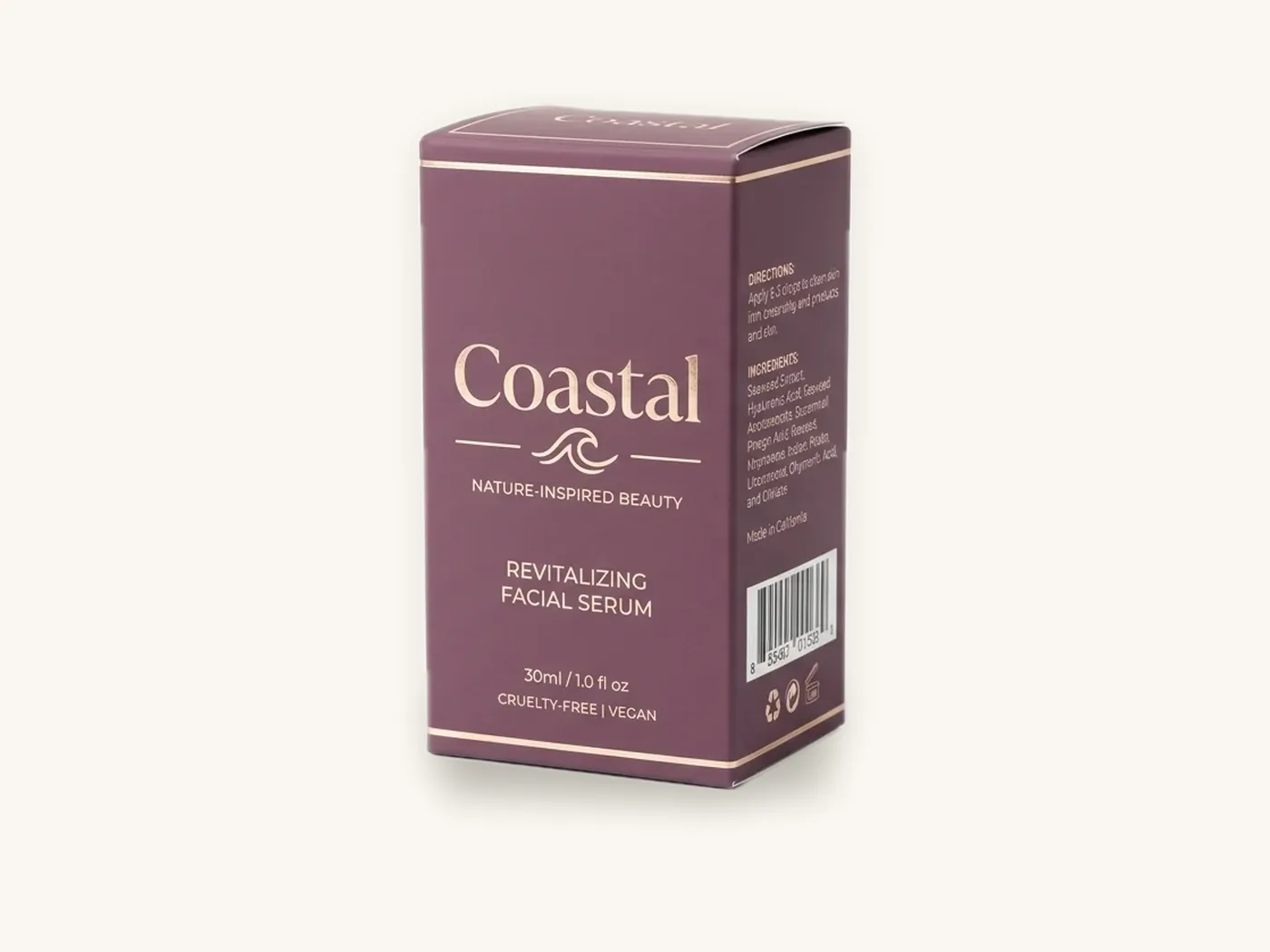
US cosmetic labeling requirements come from two federal laws: the Federal Food, Drug, and Cosmetic Act and the Fair Packaging and Labeling Act, both enforced by the FDA for cosmetics. A cosmetic sold at retail needs an identity statement and net contents on the front, plus an ingredient declaration, any required warnings and the name and place of business of the responsible firm. Since the Modernization of Cosmetics Regulation Act of 2022 (MoCRA), labels also need contact information for reporting adverse events.
The label rules have been stable for decades; MoCRA is what changed the conversation. It gave FDA new authority over facility registration, product listing, safety substantiation and adverse event reporting, and it added a few requirements that show up directly on the box.
This guide starts with the question that decides which rules apply at all, then works through each required element as it lands on a carton. It is an overview for brand and packaging teams, not legal advice. Several MoCRA rules are still being written, so check current FDA guidance and consult regulatory counsel before you finalize artwork.
Key takeaways
- First decide whether your product is a cosmetic, a drug or both; claims such as SPF, acne treatment or antiperspirant make it an over-the-counter drug with a Drug Facts panel.
- The principal display panel needs the product identity and net contents; the information panel carries ingredients, warnings and the responsible firm's name and address.
- Ingredients are listed in descending order of predominance, with specific flexibility for ingredients at 1% or less, color additives and fragrance.
- If a product ships in an outer carton, the ingredient declaration must appear on that carton, not only on the jar or tube inside.
- MoCRA requires labels to show a domestic address, domestic phone number or electronic contact for adverse event reports.
- Fragrance allergen labeling under MoCRA is still pending; watch FDA announcements rather than guessing at a format.
Step one: cosmetic, drug or both
FDA regulates cosmetics and drugs very differently, and the label format follows the classification. The deciding factor is intended use, which FDA judges from your claims, your marketing, consumer perception and sometimes the ingredients themselves.
A cosmetic is intended to cleanse, beautify, promote attractiveness or alter appearance. A drug is intended to diagnose, treat, mitigate or prevent disease, or to affect the structure or function of the body. A product can be both, and when it is, it must meet the drug labeling rules.
| Product and claim | Likely classification | Label format on the carton |
|---|---|---|
| Moisturizer that "hydrates and softens skin" | Cosmetic | Cosmetic ingredient declaration |
| Moisturizer "with SPF 30" | Cosmetic and OTC drug | Drug Facts panel, including active and inactive ingredients |
| Shampoo that "cleans and adds shine" | Cosmetic | Cosmetic ingredient declaration |
| Anti-dandruff shampoo | Cosmetic and OTC drug | Drug Facts panel |
| Deodorant that controls odor | Cosmetic | Cosmetic ingredient declaration |
| Antiperspirant that reduces sweat | OTC drug (often also cosmetic) | Drug Facts panel |
| Serum that "reduces the look of fine lines" | Usually cosmetic | Cosmetic ingredient declaration |
| Serum that "repairs collagen" or "treats acne" | Drug | Drug labeling applies |
| True soap marketed only for cleansing | Consumer product, not FDA cosmetic | Different rules; check with CPSC |
Why wording on the box matters
A single word can move a product across the line. "Reduces the appearance of redness" describes a cosmetic effect; "relieves eczema" is a disease claim. Review every panel, the inside of the lid and any printed insert, because FDA considers all labeling, not just the front.
If your product is a drug, the carton layout changes substantially. The Drug Facts panel has its own format and type requirements, and our pharmaceutical packaging guide is a better starting point than this one.
The front of the carton: identity and net contents
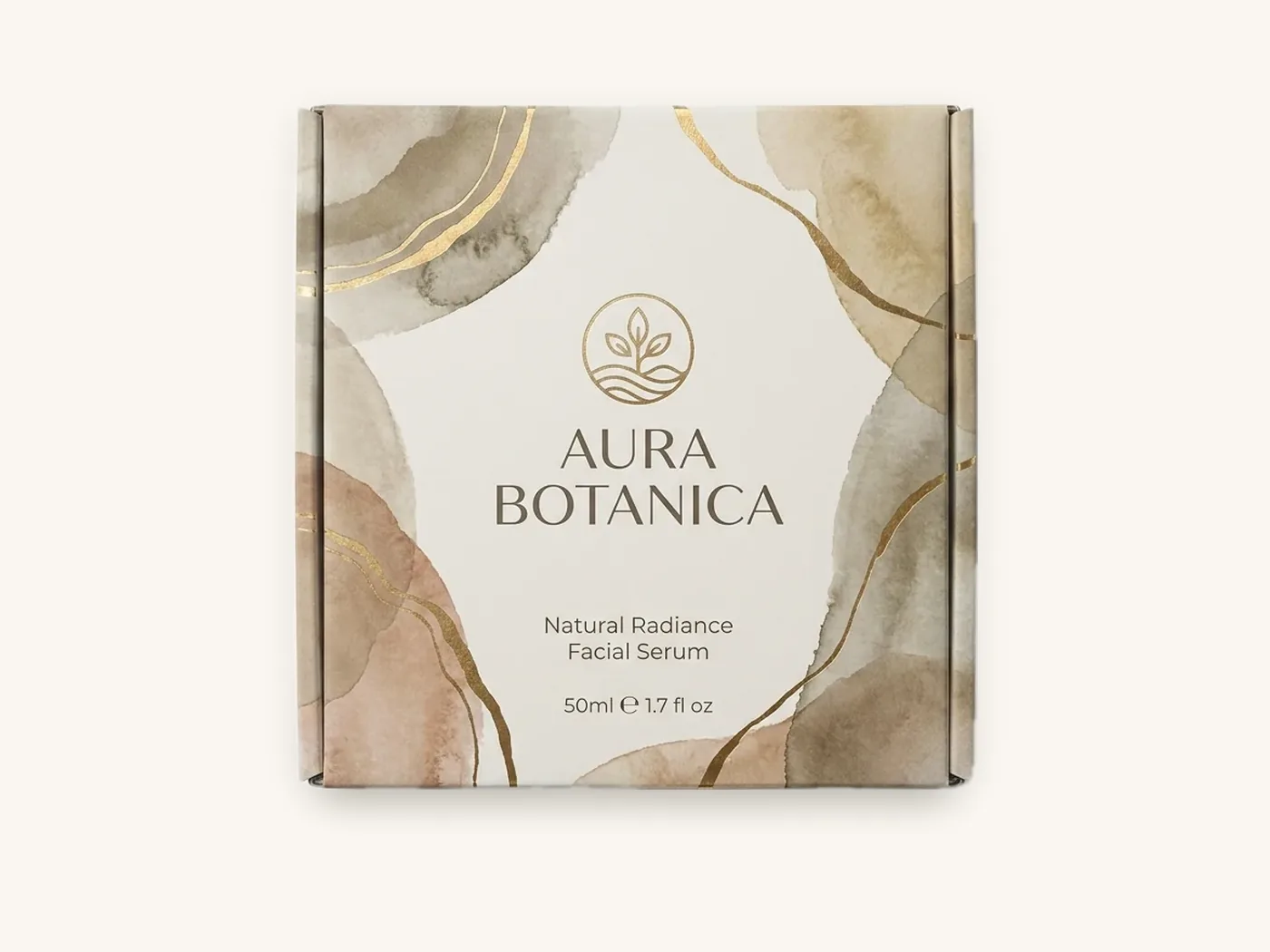
The principal display panel (PDP) is the part of the package most likely to be shown to shoppers at retail. On a tuck end carton that is usually the widest face.
Statement of identity
The identity statement tells shoppers what the product is, using its common or usual name, an appropriately descriptive name, or a fanciful name understood by the public, such as "lipstick." It can be supplemented with an illustration or vignette where the nature of the product is obvious. "Glow Theory" on its own is a brand; "Glow Theory Hydrating Face Serum" is a brand plus an identity statement.
Net quantity of contents
Net contents are declared by weight, measure or numerical count, in both US customary and metric units, in the bottom 30% of the PDP and generally parallel to the base. Creams and solids are usually declared by net weight and liquids by fluid measure. The minimum type height scales with PDP area, just as it does for food; the table in our FDA food labeling guide applies the same way.
Watch out: a slim lipstick or mascara carton can have a PDP of only a few square inches, and the bottom 30% is often where designers put foil logos or embossing. Reserve the band for net contents first, then design around it.
The information panel: ingredients, warnings and the responsible firm
The information panel is any panel other than the PDP that can receive the required copy, such as a side or back panel. On cosmetic cartons the side panels are narrow, so plan the information panel layout before choosing a carton size.
Ingredient declaration rules
The ingredient list is the element brands get wrong most often. The core rules, set out in 21 CFR Part 701, work like this:
- Order: ingredients present above 1% are listed in descending order of predominance.
- At or below 1%: these may follow in any order.
- Color additives: may be listed in any order after the other ingredients.
- Fragrance and flavor: may be declared as "fragrance" or "flavor" rather than broken out, at least until fragrance allergen rules take effect.
- Names: use the names established in FDA regulations, or where none exists, the names adopted in the industry's ingredient dictionary, often called INCI names.
- Trade secrets: an ingredient can be withheld only if FDA has granted trade secret status; otherwise every ingredient is declared.
- Heading: the list is introduced with a heading such as "Ingredients."
Shade lines and "may contain"
A lipstick or nail polish line sold in many shades can use one carton design and declare color additives with a "may contain" statement covering the full shade range. That lets you print one information panel for twenty shades instead of twenty cartons. The shade name still needs to appear somewhere the shopper can see it, often on a sticker or a printed side panel.
Outer carton or inner container
If the product is sold in an outer container, such as a jar inside a folding carton, the ingredient declaration must appear on the outer container so shoppers can read it before buying. Other required information generally belongs on both the outer and inner containers, with some differences, so check the rules for each element.
Warning statements
Some cosmetics must carry specific warning or caution statements, which FDA requires to be prominent and conspicuous and generally in type at least 1/16 in tall. The list of required warnings includes products such as aerosol cosmetics, feminine deodorant sprays, foaming detergent bath products, coal-tar hair dyes and tanning products without sunscreen. A product whose safety has not been adequately substantiated must state that its safety has not been determined, which is a strong reason to substantiate safety instead.
Name and place of business
Show the name and place of business of the manufacturer, packer or distributor. If the firm named did not make the product, add a phrase such as "Distributed by" or "Manufactured for." Under MoCRA, the label also needs adverse event contact information, covered in the next section; many brands combine the two into one block.
Small packages and off-package labeling
When a container is too small to hold the full ingredient declaration, FDA allows the declaration on off-package labeling such as a firmly affixed tag, tape or card, under specific conditions. That is one reason tiny sample vials and lip balms are often sold on a printed card or inside a carton. Confirm the exact conditions before relying on this route.
What MoCRA changed for cosmetic packaging
MoCRA was signed into law in December 2022 and is the largest update to cosmetics regulation since 1938. Most of it happens behind the scenes, but some provisions reach the carton directly. The FDA's MoCRA overview page tracks guidance and rulemaking status.
| MoCRA provision | What it requires, in general terms | Shows up on the label? |
|---|---|---|
| Responsible person | The manufacturer, packer or distributor named on the label is responsible for MoCRA duties | Yes, indirectly: the named firm carries the obligations |
| Adverse event contact | Label bears a domestic address, domestic phone number or electronic contact information, such as a website, for adverse event reports | Yes |
| Serious adverse event reporting | Responsible person reports serious adverse events to FDA within set timeframes and keeps records | No |
| Facility registration | Facilities that manufacture or process cosmetics for US distribution register with FDA | No |
| Product listing | Each marketed cosmetic product is listed with FDA, including its ingredients | No, but listed ingredients should match the label |
| Safety substantiation | Responsible person keeps records supporting the product's safety | No, but lack of it can require a warning |
| Professional-use products | Products for licensed professionals carry a statement saying so, plus standard label elements | Yes |
| Fragrance allergens | FDA must issue rules requiring labeling of certain fragrance allergens | Pending; not yet in effect as of this writing |
| Good manufacturing practices | FDA must establish GMP regulations | No, but affects production |
Adverse event contact information in practice
The contact line needs to work. A phone number that rings through to a voicemail no one checks, or a website with no clear route for reporting a reaction, defeats the purpose. Many brands add a short line such as "Questions or to report a reaction:" followed by a US phone number or web address.
Small businesses
MoCRA exempts certain small businesses from some requirements, such as facility registration and product listing, based on sales and other criteria. The exemptions do not cover everything, and they do not remove the adverse event contact requirement or the traditional labeling rules. Check the current criteria with FDA before assuming you qualify.
Tip: build your carton artwork in layers, with ingredients, warnings and the contact block on their own locked layer. When fragrance allergen rules or an ingredient change arrive, you can update one layer and send us a clean file without reworking the whole design.
Claims, symbols and state rules
FDA does not define many of the words beauty brands like to print, which means they are judged under general truthfulness standards.
Undefined marketing terms
"Natural," "clean," "hypoallergenic," "dermatologist tested" and "non-comedogenic" have no FDA definition for cosmetics. That does not make them free to use. The FTC can act against claims that are unsubstantiated or misleading, so keep test data behind any performance or testing claim and avoid implying approval that does not exist. Environmental claims such as "recyclable carton" follow the FTC Green Guides; see our green claims packaging guide.
Cruelty-free and origin claims
"Cruelty-free" and leaping bunny style logos are private certification marks with their own license rules, and some states restrict the sale of cosmetics developed with animal testing. "Made in USA" claims fall under FTC rules that require all or virtually all of the product to be made domestically for an unqualified claim.
State requirements
California's Proposition 65 can require a warning for products that expose consumers to listed chemicals, explained in our Prop 65 packaging guide. Several states have also restricted specific cosmetic ingredients or required ingredient disclosure to state agencies. None of these replace federal labeling, so layer them on top.
A labeling workflow for a new cosmetic launch
Use this sequence to get from formula to approved carton without last-minute reprints.
- Lock the claims. Decide every claim for the carton, website and insert, and confirm the product is a cosmetic and not a drug.
- Finalize the formula. Get the full ingredient list with percentages from your formulator, including fragrance and colorants.
- Choose the packaging structure. Pick the primary container and carton together, so you know which surfaces hold which information.
- Measure the panels. Calculate PDP area from the flat dieline and confirm the information panel can hold the ingredient list at legible size.
- Write the label copy. Identity statement, net contents, ingredients in the correct order and names, warnings, responsible firm and adverse event contact.
- Check consistency. Make sure the ingredients match your MoCRA product listing and your website.
- Regulatory review. Have counsel or a cosmetic regulatory consultant approve the copy.
- Proof and sample. Review a 3D proof and a printed sample for type size, contrast and fold placement.
- Keep the file. Store approved copy, formula version and review date together so updates are traceable.
Printing cosmetic cartons so required copy stays legible
Beauty packaging leans on finishes that can make small type hard to read. The regulatory copy has to survive them.
| Design choice | Effect on required text | Better approach |
|---|---|---|
| Soft-touch lamination | Slightly softens fine type and reduces contrast on dark grounds | Keep ingredients in solid dark ink on a light panel |
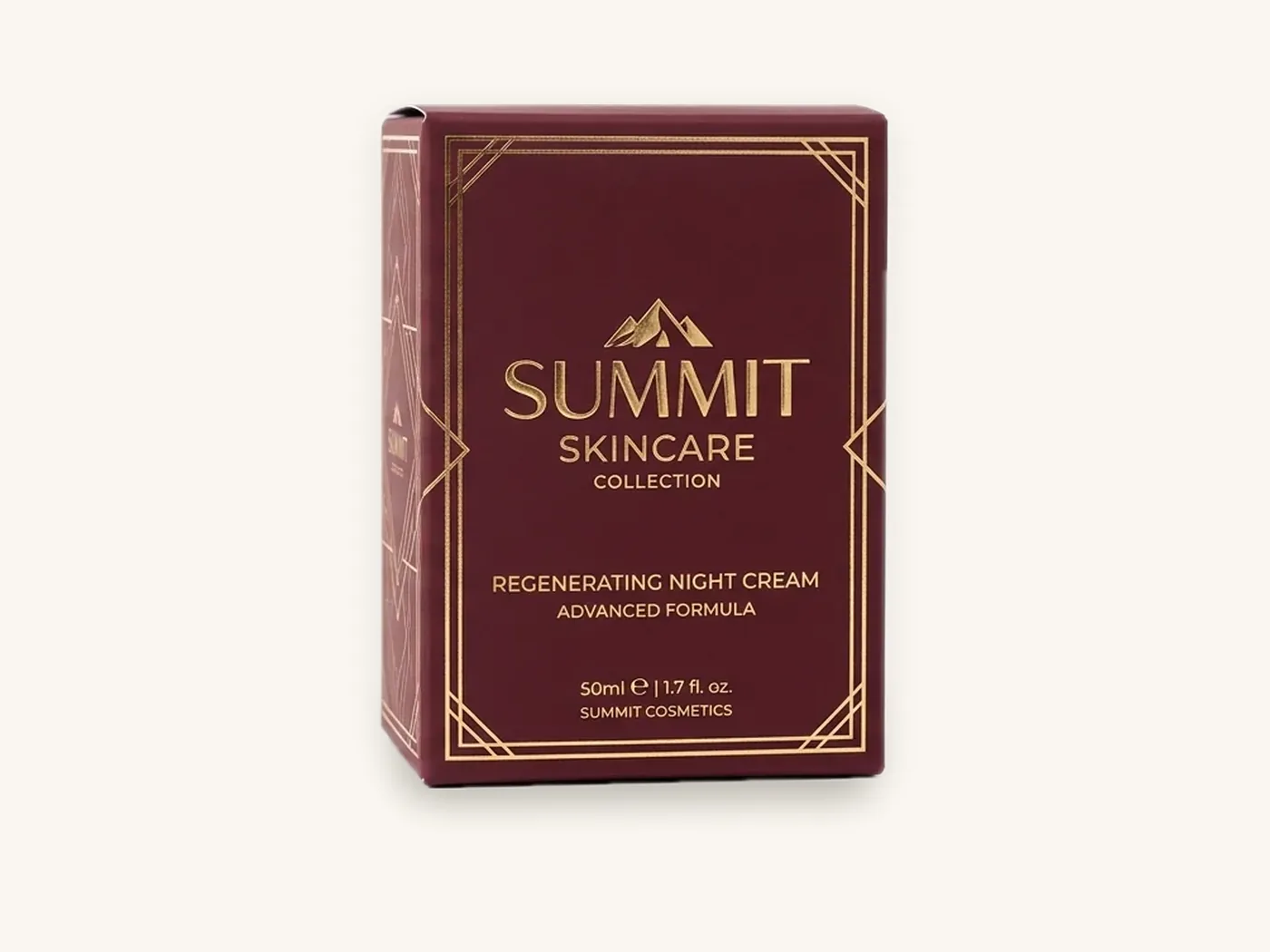
| Foil stamping | Reflective glare can hide small copy | Use foil for the logo, not for required statements |
| Reversed white type on dark ink | Thin strokes fill in at small sizes | Increase weight, or print the information panel light |
| Holographic or metallic board | Busy background reduces legibility | Add an opaque white panel behind required copy |
| Embossing near text | Distorts letters near the raised area | Keep 1/8 in or more between emboss and copy |
| Very light pastel inks | Low contrast for ingredient lists | Use a darker tint for the information panel |
Our printing and finishes page shows each option, and the cosmetic packaging guide covers structure and finish choices in more depth.
Ordering cosmetic packaging from Box Sense
Box Sense manufactures cosmetic boxes, skincare boxes, lipstick boxes and other beauty cartons for brands in the cosmetics and beauty industry. We print and structure the artwork your team supplies and make sure required panels land where they should on the dieline. We do not review or approve label content for FDA or MoCRA compliance; that stays with your regulatory reviewer.
What to send
- Primary container dimensions, such as bottle, jar or tube, and whether you need an insert
- Carton style preference, or ask us to recommend one
- Final label copy for each panel, with the ingredient list as live text or outlined vector artwork
- Finish choices, such as soft-touch, foil or spot UV, and which panels they cover
- Shade or variant list if one carton covers several products
- Quantities, target in-hand date and ship-to location
Proofing, samples and timeline
We supply a dieline, help set up artwork through our design services team and send a 3D digital proof with two revision rounds. Unprinted structural samples are free, and a printed sample of approved artwork is free on orders of 100 or more; see samples.
The minimum order is 10 boxes, with no die or plate charges; foil, embossing and spot UV carry one-time tooling. Standard production is 8–12 business days after proof approval, and US shipping is free. As a reference, an 18 pt SBS cosmetic carton at 2.5x2.5x6 in with full color, soft-touch and foil is about $1.93 each at 100 units and about $0.86 at 1,000.
If an ingredient changes while you still hold printed cartons, custom labels and stickers can cover the old information panel until the next run.
Frequently asked questions
What must be on a cosmetic label in the US?
A cosmetic label generally needs a statement of identity and net quantity of contents on the principal display panel, plus an ingredient declaration, any required warnings, and the name and place of business of the manufacturer, packer or distributor on the information panel. Under MoCRA, it also needs a domestic address, domestic phone number or electronic contact for adverse event reports. Confirm details with FDA guidance or counsel.
What does MoCRA require on cosmetic labels?
MoCRA's main label addition is contact information through which the responsible person can receive adverse event reports: a domestic address, domestic phone number or electronic contact such as a website. Products intended only for licensed professionals also need a statement saying so. Fragrance allergen labeling is required by the law but depends on FDA rulemaking that has not taken effect as of this writing.
Does FDA approve cosmetic labels before sale?
No. FDA does not approve cosmetic products or their labels before they go on sale, with the exception of color additives, which must be approved for their intended use. Brands are responsible for making sure labels are truthful and meet requirements. MoCRA added registration, listing and reporting duties, but those are not pre-market approval of the label.
Does the ingredient list have to be on the outer box?
Yes, if the product is sold in an outer container. The ingredient declaration must appear on the outer carton so shoppers can read it before purchase. Very small packages may use off-package labeling, such as a firmly attached tag or card, under specific FDA conditions. Check those conditions before designing a package that relies on them.
Can I list "fragrance" instead of each fragrance ingredient?
Currently, yes. Fragrance and flavor may be declared as "fragrance" or "flavor" in a cosmetic ingredient list. MoCRA directs FDA to issue rules requiring certain fragrance allergens to be identified on labels, and those rules may change what you must disclose. Build your artwork so the ingredient block can be updated easily once FDA finalizes the requirement.
Is my sunscreen moisturizer a cosmetic or a drug?
A moisturizer that claims sun protection, such as an SPF value, is regulated as an over-the-counter drug as well as a cosmetic. It needs a Drug Facts panel with active and inactive ingredients in the format FDA requires for OTC drugs, and it must meet the applicable sunscreen requirements. The carton layout differs from a standard cosmetic label, so plan for it early.
Does Box Sense check cosmetic labels for compliance?
No. Box Sense manufactures and prints cosmetic packaging from the artwork you supply, and our team makes sure required panels fit the dieline with legible type and clearance from folds and finishes. Label content, claims and MoCRA obligations remain your brand's responsibility, so have a cosmetic regulatory consultant or counsel approve the final copy before proof approval.
Next steps
Confirm your product's classification, finalize the ingredient list and contact block, and have the copy reviewed. Then price your carton in the cosmetic box price estimator and request a quote with your label files and finish choices. For wellness lines that sit next to your beauty range, compare the rules in our supplement label requirements guide.
Boxes in this guide
Order the packaging we covered
Written by the Box Sense Packaging Team
Our structural designers, prepress technicians and production staff print and convert custom boxes every day for brands in the United States, United Kingdom and UAE. Questions about this guide? Talk to us.