California's Proposition 65 requires businesses to give a "clear and reasonable" warning before knowingly and intentionally exposing people in California to chemicals on the state's list of substances known to cause cancer or reproductive harm. For consumer products, that warning most often lives on the package. Prop 65 warning packaging is about three decisions: whether a warning is needed, which warning content to use, and where it goes on the box or label so it is actually seen.
The regulations include "safe harbor" warning methods and content that the state considers clear and reasonable, including a full-length warning and a shorter version for product labels. This guide explains those options in general terms and how to build them into cartons and labels. It is not legal advice. Prop 65 decisions depend on exposure assessments and specific facts, so verify requirements with the Office of Environmental Health Hazard Assessment (OEHHA) and counsel.
Key takeaways
- Prop 65 applies to exposures in California to chemicals on OEHHA's list, unless an exemption applies or the exposure is below the applicable safe harbor level.
- Businesses with fewer than 10 employees are exempt from the warning requirement, but their distributors and retailers may still ask for warnings.
- Safe-harbor warnings follow set content and methods. Using them is optional, but other warnings must still be clear and reasonable.
- The full-length warning names at least one listed chemical and the type of harm and points to www.P65Warnings.ca.gov; a short-form warning can be used on product labels.
- On-product warnings need to be legible and conspicuous, with type size tied to the other consumer information on the label.
- Box Sense prints the warning artwork you supply. Whether a warning is needed, and what it says, is for the brand and its counsel to decide.
What Prop 65 requires and who it applies to
Proposition 65, formally the Safe Drinking Water and Toxic Enforcement Act of 1986, is a California law with two main parts: a restriction on discharging listed chemicals into drinking water sources, and a requirement to warn before exposing people to listed chemicals. The warning requirement is what affects packaging.
The chemical list
OEHHA maintains the list of chemicals known to the state to cause cancer, birth defects or other reproductive harm. It includes hundreds of substances, from industrial chemicals to naturally occurring compounds and substances formed during cooking or processing. The list is updated over time, so a product that did not need a warning when launched might need one later. The OEHHA Proposition 65 pages publish the current list and regulations.
When a warning is needed
A warning is generally required when a business knowingly and intentionally causes an exposure to a listed chemical, unless:
- The business has fewer than 10 employees
- The exposure is below the "no significant risk level" for carcinogens or the "maximum allowable dose level" for reproductive toxicants, which the business must be able to show
- Another exemption applies, such as certain exposures governed by federal law that preempts the warning
Whether an exposure crosses a safe harbor level depends on testing, how the product is used and how much a person is exposed to. That analysis is technical, and it is usually done with a testing lab and counsel.
Who enforces it
The California Attorney General, district attorneys and certain city attorneys can enforce Prop 65. Private parties can also bring actions after serving a 60-day notice of violation. Many cases end in settlements that specify warning language, so some companies use wording required by a settlement rather than the standard safe-harbor text.

Who in the supply chain is responsible for the warning
The regulations assign primary responsibility for consumer product warnings upstream, to the companies that make or bring the product into the market, with retailers responsible in more limited situations.
| Party | General role under the safe-harbor rules |
|---|---|
| Manufacturer, producer or packager | Primary responsibility; can put the warning on the product or its label |
| Importer | Shares primary responsibility, especially for foreign-made goods |
| Distributor or supplier | Can comply by labeling or by giving written notice and warning materials to the next business in the chain |
| Retail seller | Responsible in specific situations, such as when it receives warning materials or controls the product's labeling |
| Online seller | Must provide the warning in the online sales process as well as with the product, under the safe-harbor rules |
In practice, most brands selling through retailers and marketplaces put the warning on the package. It travels with the product, it does not depend on a store posting a sign, and it satisfies retailer vendor agreements that often require on-pack warnings.
Why brands without a California store still warn
A product sold online, through a national distributor or by a retailer with California locations can reach California consumers even if the brand never ships there directly. That is why many national brands decide whether a product needs a warning based on the product itself, not their own sales footprint.
Watch out: retailers and marketplaces often have Prop 65 terms in their vendor agreements. They may require warnings, test results or indemnities regardless of your own conclusion. Read those terms before finalizing artwork so you do not print cartons twice.
Safe-harbor warning content: full-length and short-form
The safe-harbor regulations are in Title 27 of the California Code of Regulations, Article 6. They set out the content and methods for warnings that are deemed clear and reasonable. OEHHA's P65Warnings.ca.gov site explains them for businesses and consumers.
The full-length consumer product warning
The standard safe-harbor warning for a consumer product typically includes:
- The warning symbol: a black exclamation point inside a yellow equilateral triangle with a bold black outline. It may be printed in black and white when the label is not printed in yellow.
- The word "WARNING:" in capital letters and bold type.
- A statement naming at least one listed chemical and the type of harm, such as cancer, reproductive harm or both, in the format the regulation provides.
- The website reference: www.P65Warnings.ca.gov.
For example, the cancer version follows this pattern: "This product can expose you to chemicals including [name of chemical], which is known to the State of California to cause cancer. For more information go to www.P65Warnings.ca.gov." Use the exact wording from the current regulation for your situation, since reproductive harm and combined warnings use different sentences.
The short-form warning
The short-form warning was created for product labels where space is limited. It uses the symbol, "WARNING:" and a much shorter statement of the harm with the website reference. It can only be used on the product label itself, not on shelf signs or other methods.
OEHHA has amended the short-form rules, including a requirement that the short-form warning name at least one listed chemical, with a transition period for existing labels. Check the current regulation text for the exact wording and dates that apply to your products rather than copying a short-form from an older package.
Comparing the warning options
| Feature | Full-length warning | Short-form warning |
|---|---|---|
| Symbol | Required, yellow triangle or black and white version | Required |
| Signal word | "WARNING:" in bold capitals | "WARNING:" in bold capitals |
| Chemical named | At least one listed chemical | Required under the amended rules; confirm current wording |
| Website reference | www.P65Warnings.ca.gov | www.P65Warnings.ca.gov |
| Where it can be used | Product label, labeling, signs and other safe-harbor methods | On the product label only |
| Typical use on packaging | Cartons with room on a side or back panel | Small labels, tubes, jars and compact cartons |
Categories with tailored warnings
Some products and exposure settings have their own safe-harbor warnings, including food, alcoholic beverages, furniture, certain vehicle parts, cannabis products and others. Food warnings, for example, have different formatting requirements. If your product falls into one of these categories, use the category-specific provisions. For cannabis, see our cannabis packaging laws guide, and for food boxes, our FDA food labeling guide covers the federal panels the warning will sit beside.

How to place a California warning label on packaging
A warning that meets the content rules can still fail if nobody can find or read it. The regulations require warnings to be prominently displayed with such conspicuousness, compared with other words and designs, as to make them likely to be seen, read and understood under customary conditions of purchase or use.
Type size and legibility
Under the safe-harbor rules for on-product warnings, the warning should be in a type size no smaller than the largest type used for other consumer information on the product, and never smaller than 6-point type. "Consumer information" generally means things like directions, ingredients and warnings, not the brand name or marketing headline.
On a carton, that means your warning should match or exceed the size of the directions and ingredient text. A warning squeezed below the ingredients in smaller type is a common mistake.
Placement rules of thumb
- Choose a panel shoppers see before buying, such as the back or a side panel of a retail carton, rather than an inside flap.
- Keep it on a flat panel, away from folds, tucks, glue areas and the edge of a window cutout.
- Print it on a plain, light background with high contrast. Avoid placing it over photography, patterns or metallic foil.
- Keep the symbol with the text, at a size that is recognizable, not a tiny icon.
- Avoid finishes that obscure it, such as spot UV or glitter coatings across the warning area.
- If you use a non-English language for other consumer information on the label, provide the warning in that language as well.
Outer carton versus inner container
When a product is sold in a retail carton, the warning is typically placed on the carton so it is seen before purchase. Whether the inner container also needs one depends on the product, how it is used and whether the carton is discarded before exposure occurs. Discuss this with counsel, especially for products used over a long time, such as cosmetics, tools or kitchenware.
Labels, cartons and packaging design strategies
Brands handle Prop 65 on packaging in one of three ways. Each has tradeoffs in cost, inventory and consistency.
Strategy 1: print the warning on every carton
Printing the warning into the carton artwork is the most reliable approach. It cannot fall off, it cannot be forgotten on a packing line, and it looks intentional. The tradeoff is that the warning appears on units sold outside California, and changing it later means reprinting.
Strategy 2: apply a warning label
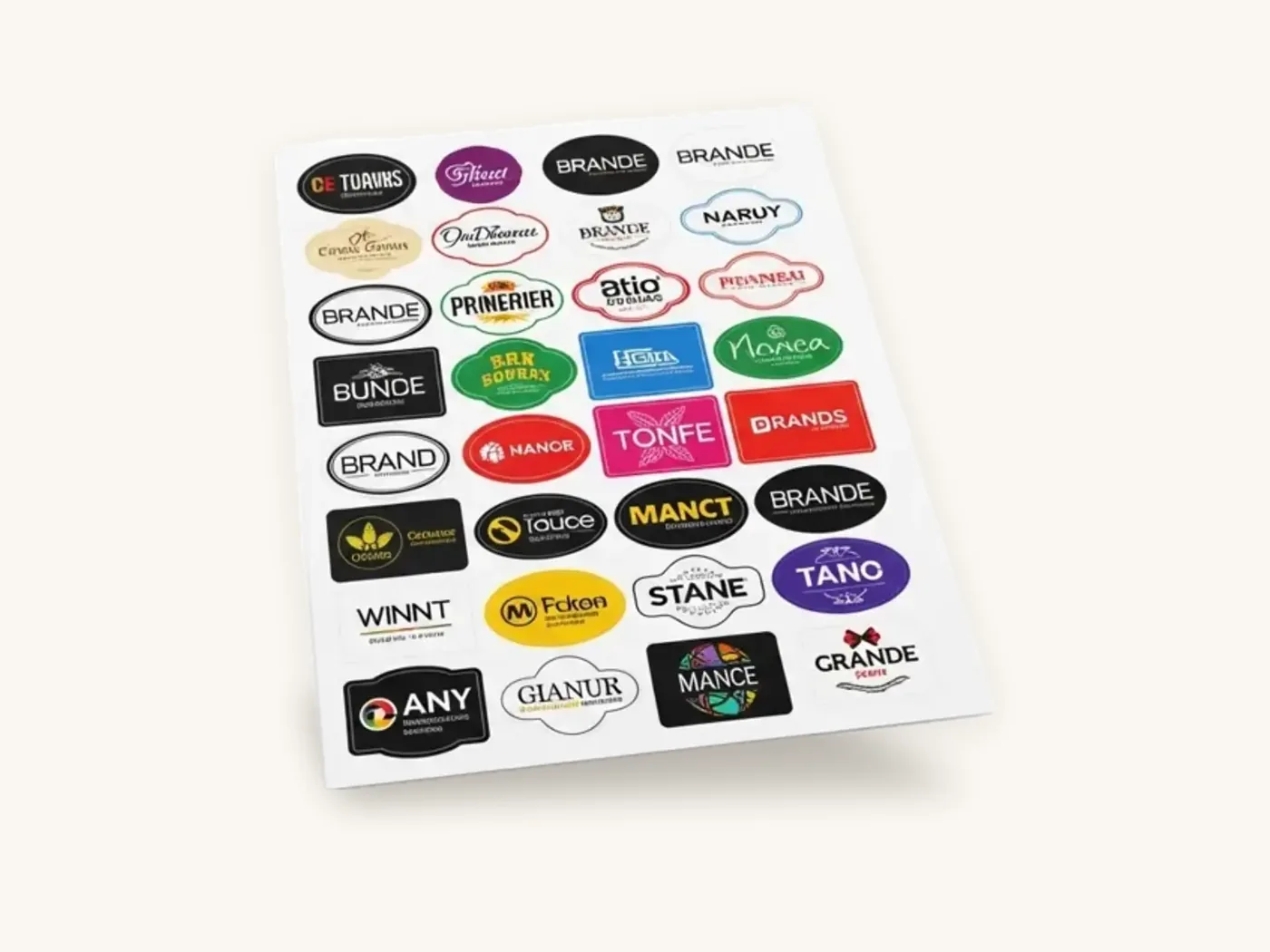
A printed warning label applied to the carton or container gives flexibility. You can add a warning when the chemical list changes, when a formula changes or when a retailer requests it, without scrapping printed cartons. Custom labels and stickers on paper or BOPP can carry the symbol and text at legible sizes.
Labels need control: a designated position on the dieline, an application step in your packing SOP and adhesive that holds on your carton coating. A label that peels off in transit does not provide a warning.
Strategy 3: California-specific packaging
Some brands produce separate California SKUs. This keeps other packaging free of the warning but splits inventory, complicates marketplace fulfillment and risks the wrong version reaching California. It is usually practical only for large brands with tight distribution control.
Avoid unnecessary warnings
Adding a Prop 65 warning "just in case" can seem safe, but it has costs. It can alarm customers, dilute the meaning of genuine warnings and conflict with marketing claims such as "clean" or "non-toxic". OEHHA has said that over-warning undermines the purpose of the law. Make the decision based on an exposure assessment with counsel rather than by default.
Packaging materials themselves can be a source of exposure
Most Prop 65 discussions focus on what is inside the box, but packaging components can contribute exposures too, especially where the package touches food, skin or the mouth, or is handled repeatedly.
- Plastic components, such as certain PVC films or closures, may contain listed plasticizers.
- Coatings and linings, such as some can linings, have been the subject of warnings in the past.
- Inks, pigments and metallic decorations can raise questions depending on formulation and use.
- Reused or decorative packaging, such as a keepsake tin or a box designed to store jewelry, may be handled far longer than a carton that is thrown away.
If exposure from packaging is a concern for your product, ask your suppliers for material declarations and include packaging in your testing plan. Paper-based packaging, such as cartons on SBS paperboard with water-based coatings, is one area to discuss with your testing lab, but do not assume any material is automatically free of listed chemicals.

A Prop 65 packaging checklist
- Confirm whether Prop 65 applies, including the 10-employee exemption and your distribution into California.
- Identify listed chemicals that may be in the product or its packaging, using formula data, supplier declarations and testing.
- Assess exposure against safe harbor levels with a lab and counsel.
- Check retailer and marketplace terms for their warning requirements.
- Check for settlements or category-specific rules that prescribe different wording.
- Choose content: full-length, short-form or a category-specific warning, using the current regulation text.
- Choose the method: printed into the carton, applied label or both.
- Place and size it: flat, visible panel, type no smaller than other consumer information and at least 6-point.
- Add the warning online where the product is sold, in line with the safe-harbor rules for internet sales.
- Approve a physical proof and read the warning at arm's length.
- Set a review date to recheck the chemical list and regulations.
Ordering packaging with Prop 65 warnings from Box Sense
Box Sense manufactures and prints cartons, labels and other packaging to the artwork you approve. We check that warning text will reproduce legibly, that it sits clear of folds and cuts, and that the symbol prints cleanly. We do not determine whether a warning is required or approve its wording, so finalize content with counsel first.
What to send
- Product dimensions and the carton style, such as a tuck end box or cosmetic box
- Final warning content and symbol artwork, plus any other language versions
- Whether you want the warning printed into the carton, on a label or both
- Finishes, noting that the warning area should stay free of foil, spot UV and heavy textures
- Quantities per SKU, including any California-specific versions
- Artwork files, or a request for help from our design services team to place the warning on the dieline
Timeline and pricing
We confirm quotes within 24 hours and provide a free dieline, artwork setup and 3D digital proof with two revision rounds. Standard production is 8–12 business days after proof approval, rush is 5 business days on most paperboard styles, and shipping is free on every US order.
For reference, a cosmetic carton on 18 pt SBS at 2.5x2.5x6 in, printed full color with soft-touch lamination and foil, is about $1.37 per unit at 250 and about $0.86 at 1,000, with a one-time foil tooling charge of about $60. The minimum order is 10 boxes. Compare specs in the price estimator, browse finishes that work around warning panels, and see our cosmetics and beauty packaging page. For related requirements, read our cosmetic labeling requirements and child-resistant packaging guide.
Frequently asked questions
What is a Prop 65 warning on packaging?
It is a warning required by California's Proposition 65 when a product exposes people in California to a listed chemical known to cause cancer or reproductive harm, unless an exemption applies. On packaging, the safe-harbor version includes a yellow triangle warning symbol, the word "WARNING:", a statement naming at least one listed chemical and the harm, and a reference to www.P65Warnings.ca.gov.
Does every product sold in California need a Prop 65 label?
No. A warning is needed only when a product causes a knowing and intentional exposure to a listed chemical above the applicable safe harbor level and no exemption applies. Businesses with fewer than 10 employees are exempt. Retailers may still require warnings through their vendor agreements, so check those terms and confirm your situation with counsel.
What is a Prop 65 short-form warning?
The short-form warning is a condensed safe-harbor warning for use on product labels, where space is limited. It includes the warning symbol, the word "WARNING:", a brief statement of the harm and the P65Warnings.ca.gov website. OEHHA amended the short-form rules to require naming at least one listed chemical, with a transition period, so check the current regulation before printing.
How big does a Prop 65 warning need to be?
Under the safe-harbor rules for warnings on a product label, the warning should be in type no smaller than the largest type size used for other consumer information on the product, such as directions or ingredients, and never smaller than 6-point type. It must also be conspicuous enough to be seen and understood under normal conditions of purchase or use.
Who is responsible for providing a Prop 65 warning?
The regulations place primary responsibility on manufacturers, producers, packagers, importers, suppliers and distributors. They can comply by labeling the product or by giving written notice and warning materials to the business they sell to. Retailers are responsible in more limited situations. Most brands put the warning on the package so it reaches California consumers wherever the product is sold.
Can I use a sticker for a Prop 65 warning?
Yes, an applied label can carry a Prop 65 warning, and many brands use one so they can add or update warnings without reprinting cartons. The label must meet the same content, size and conspicuousness standards as a printed warning and must stay attached through shipping and use. Plan a designated label area on the dieline and a packing step to apply it.
Should I add a Prop 65 warning just to be safe?
Not by default. Unnecessary warnings can confuse customers, weaken the impact of genuine warnings and conflict with product claims, and OEHHA has discouraged over-warning. Decide based on the product's actual chemical content and exposure, assessed with a testing lab and counsel. If a retailer requires a warning, discuss the basis for it with them and your counsel.
Next steps
Work with counsel to confirm whether your products need a warning and which content applies, then reserve a flat, visible panel on the dieline or plan a label area. When your artwork is ready, check costs in the instant price estimator and request a quote for cartons or warning labels, and we will send a 3D proof so you can confirm the warning is legible before production.
Boxes in this guide
Order the packaging we covered
Written by the Box Sense Packaging Team
Our structural designers, prepress technicians and production staff print and convert custom boxes every day for brands in the United States, United Kingdom and UAE. Questions about this guide? Talk to us.