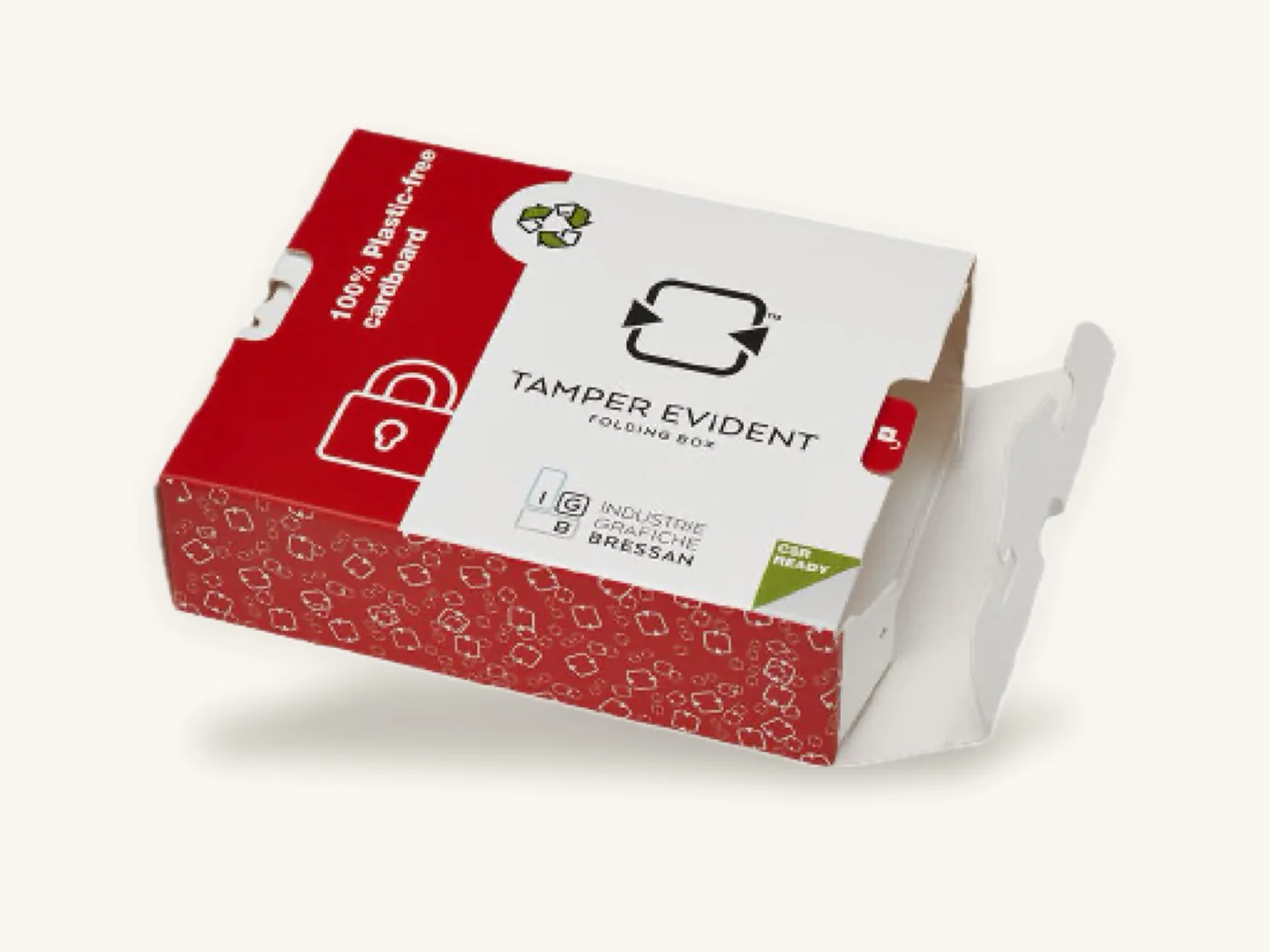
Child resistant packaging is packaging that young children find significantly difficult to open within a reasonable time, while adults, including older adults, can still open and close it properly. In the US, the benchmark is the protocol in 16 CFR 1700, written under the Poison Prevention Packaging Act (PPPA): a package design is tested with panels of young children and adults aged 50 to 70, and it has to meet set pass rates with both groups.
There is no government stamp that makes a box "certified". What brands call CR certification is a test report from a qualified laboratory showing that a specific package design passed the protocol. This guide explains what that testing involves, which box, bag and tube styles are used, and why state cannabis rules add another layer. It is general information, not legal advice.
Key takeaways
- The PPPA and 16 CFR 1700 require special packaging for listed household substances, such as many oral prescription drugs, certain over-the-counter drugs, some household chemicals and liquid nicotine.
- Child resistance is proven by testing a specific package design with a child panel and a senior adult panel under 16 CFR 1700.20.
- ASTM D3475 classifies child-resistant package types by how they open; it helps buyers describe and compare designs but does not replace testing.
- A test report covers the design as tested. Changing size, board, closure or insert can mean the report no longer represents your package.
- State cannabis programs set their own CR rules, including whether packaging must be resealable after opening. Rules vary and change.
- Box Sense manufactures child-resistant box styles and prints the artwork you supply. Ask any supplier for the test documentation that covers the exact structure you are buying.
What child resistant packaging means under federal law
The Poison Prevention Packaging Act of 1970 gives the Consumer Product Safety Commission (CPSC) authority to require special packaging for household substances that could seriously injure a young child who gets into them. The regulations are in 16 CFR Part 1700, which you can read on the Electronic Code of Federal Regulations.
Which products require special packaging
16 CFR 1700.14 lists the substances that require it. Broadly, the list includes:
- Many oral prescription drugs, with specific exemptions
- Certain over-the-counter drugs, such as aspirin, acetaminophen and ibuprofen products
- Iron-containing drugs and dietary supplements above a specified amount of elemental iron
- Some household chemicals, such as certain drain cleaners, solvents and fuels
- Liquid nicotine containers, under the Child Nicotine Poisoning Prevention Act
The list is specific, with concentrations and forms spelled out, so check the current text for your product rather than assuming. If you sell a supplement with iron, for example, our supplement label requirements guide covers the separate labeling warning.
Two standards in one test
The effectiveness standard in 16 CFR 1700.15 has two halves. The package must be significantly difficult for children under five to open or to access a harmful amount of the contents within a reasonable time. It must also not be difficult for normal adults to use properly. A package that stops children but defeats a 65-year-old fails the standard just as surely as one a four-year-old opens.
Reclosable packages must keep working across the number of openings and closings typical for the product. A box that locks well out of the carton but wears loose after a week of use is not doing the job.
Products outside the federal list
Cannabis, hemp-derived products and many CBD items are not addressed as such in the federal list, but states that regulate them often require child-resistant packaging and point to the 16 CFR 1700 test method. Some brands of edibles, tinctures and topicals also choose CR packaging voluntarily because of the risk to children in the home.
How 16 CFR 1700 testing works
The test protocol is described in 16 CFR 1700.20. Labs that run it follow the procedure closely, and the details matter when you review a report.
The child panel
Children aged 42 to 51 months are tested in pairs, in familiar settings such as their preschool, under the supervision of a trained tester. The protocol sets age and sex distribution requirements for each panel of 50 children, and a design can be tested with up to four panels, 200 children in total.
- The tester shows the children the closed package and asks them to try to open it.
- The children have 5 minutes to try, using whatever approach they come up with.
- Children who have not opened it see a single, non-verbal demonstration of how to open it.
- They then have another 5 minutes to try.
As written in the regulation, a package passes the child portion when at least 85% of children could not open it in the first 5 minutes and at least 80% could not open it over the full 10 minutes. For unit-dose packages, such as blister cards, "opening" means reaching more than a set number of units or a harmful amount, whichever is lower.
The senior adult panel
Adults aged 50 to 70 then test whether the package is usable. They work from the package and any instructions printed on it, and the protocol times how many can open it and, for reclosable designs, properly close it again. It includes a 5-minute familiarization period, a shorter timed test and screening steps set out in the regulation. The design needs a senior adult use effectiveness rate of at least 90%.
What a test report should include
| Item in the report | Why it matters |
|---|---|
| Package description, dimensions and materials | Confirms the tested design matches what you are buying |
| Closure or locking mechanism described | Different locks are different designs |
| Product or placebo contents used | Contents can affect how the package behaves |
| Child panel results before and after demonstration | Shows the margin against the pass rates |
| Senior adult panel results | Confirms adult usability, often the harder half |
| Test dates, lab name and protocol reference | Lets a regulator or retailer verify the report |
| Photos of the tested package | Visual proof of the exact structure |
Watch out: a report for "a child-resistant drawer box" is not a report for your box. Ask whether the tested sample used the same dimensions, board caliper, lock design, insert and coating as your order. If any of those changed, ask the supplier or lab whether the result still applies before you rely on it.
What CR packaging certification really means
The phrase "CR packaging certification" gets used loosely. Knowing what sits behind it helps you ask better questions.
No federal certification mark
CPSC does not approve individual package designs or issue certificates for them. Testing is done by independent laboratories, and the package or product manufacturer keeps the results. When a supplier says a design is "certified", they usually mean they hold a lab report showing the design passed the 16 CFR 1700.20 protocol, sometimes supported by an ASTM D3475 classification.
Where ASTM D3475 fits
ASTM D3475 is the Standard Classification of Child-Resistant Packages published by ASTM International. It groups CR packages into types by how they open, such as reclosable threaded closures, lug closures, unit-dose packaging and non-closure mechanisms. A classification tells a buyer what kind of mechanism a package uses and gives a common vocabulary for specifications. It does not, by itself, demonstrate that your specific package passed testing.
Who holds the documentation
In practice there are three common arrangements:
- The packaging manufacturer tests a stock design and shares the report with customers who buy that exact design.
- The brand commissions testing of a custom design, often because the structure, size or graphics are unique.
- A component supplier tests the closure on a specified container, such as a cap on a particular bottle, and the brand relies on that pairing.
Whichever applies, keep a copy of the report with your product records. State regulators, retailers and distributors may ask for it.
Child-resistant styles for boxes, bags and tubes
CR mechanisms work by requiring two actions at once, or an action that small hands find hard to coordinate, such as pressing two points while sliding.
| Style | How it opens | Typical products | Reclosable |
|---|---|---|---|
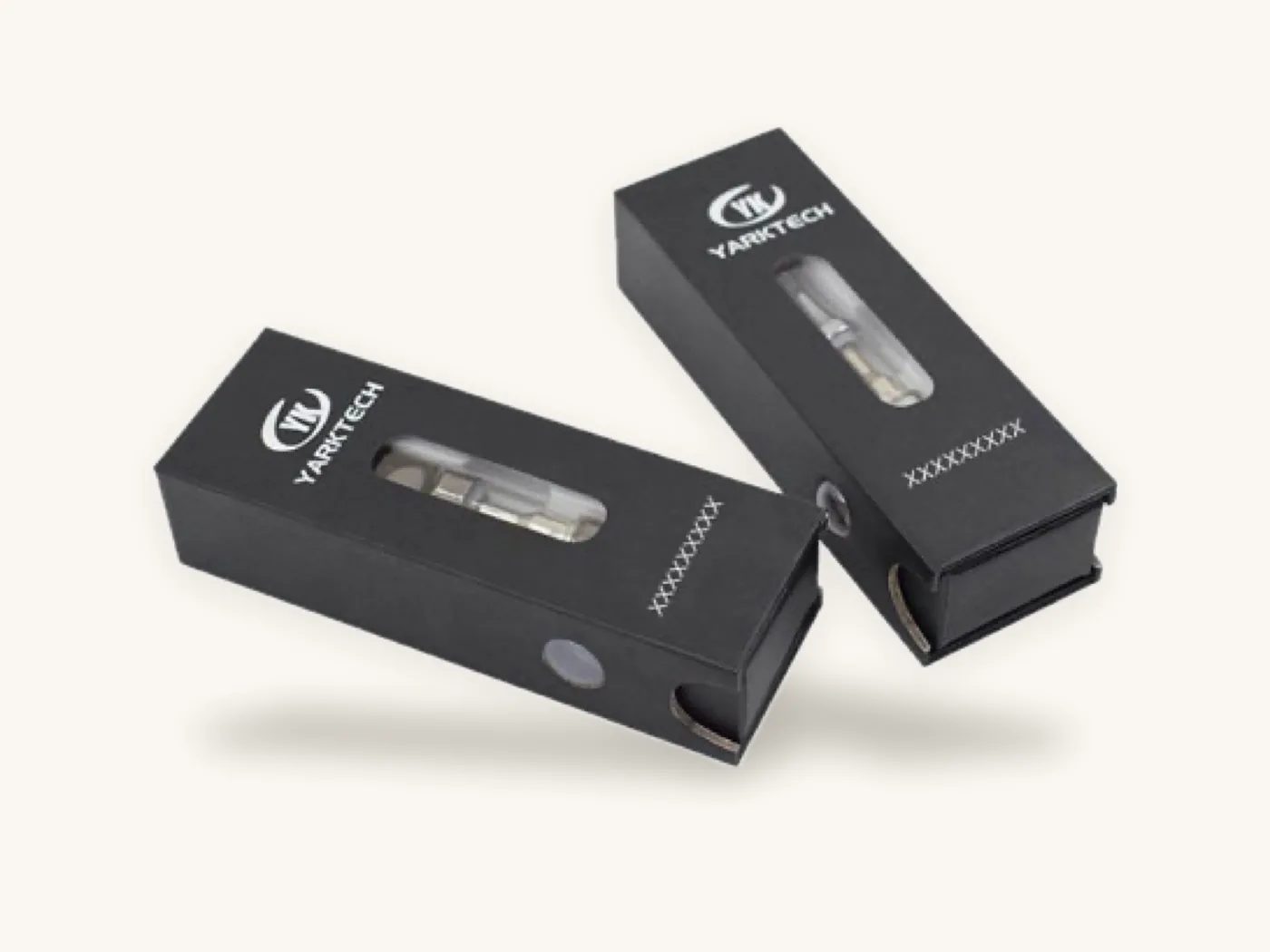
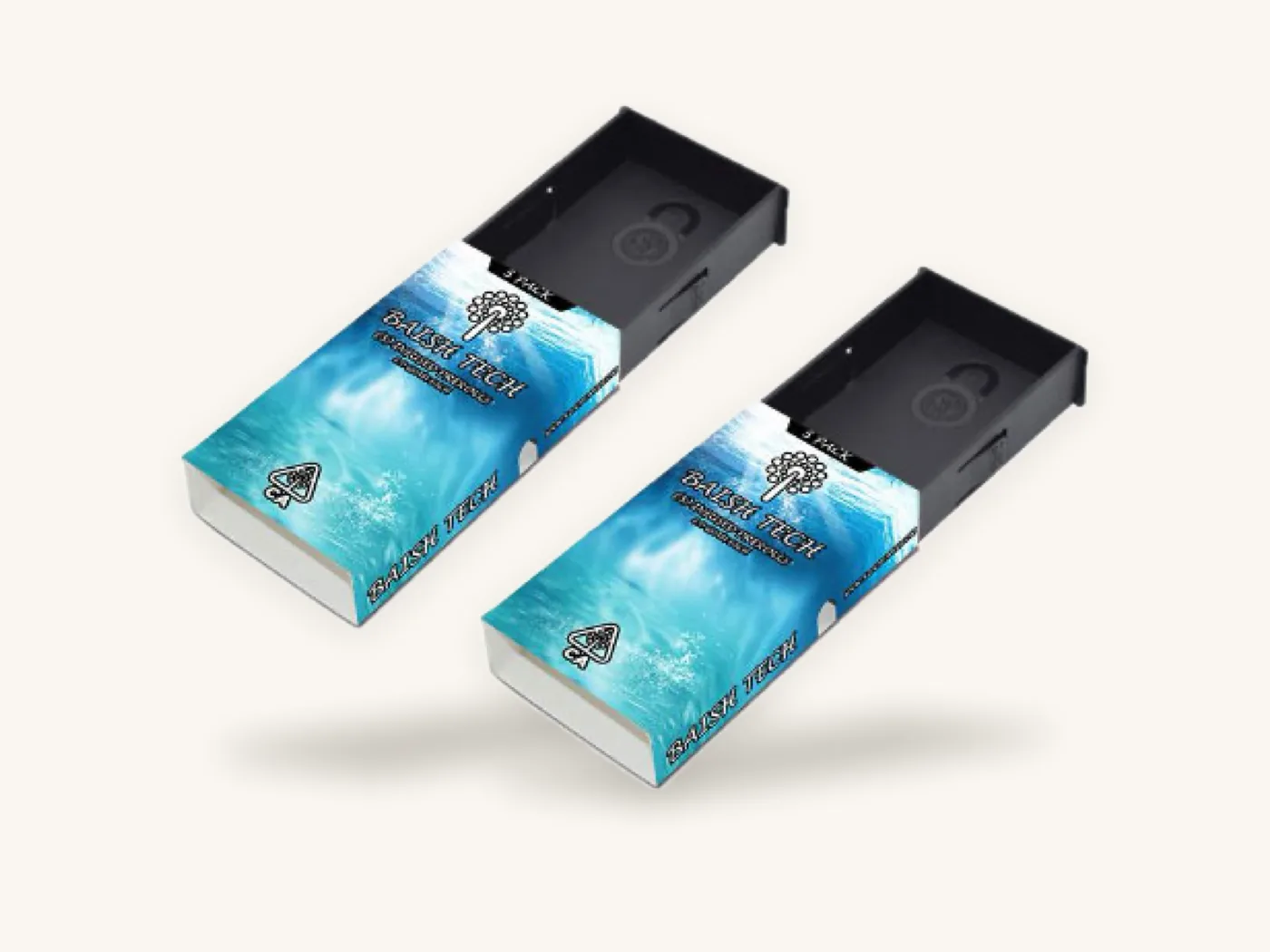
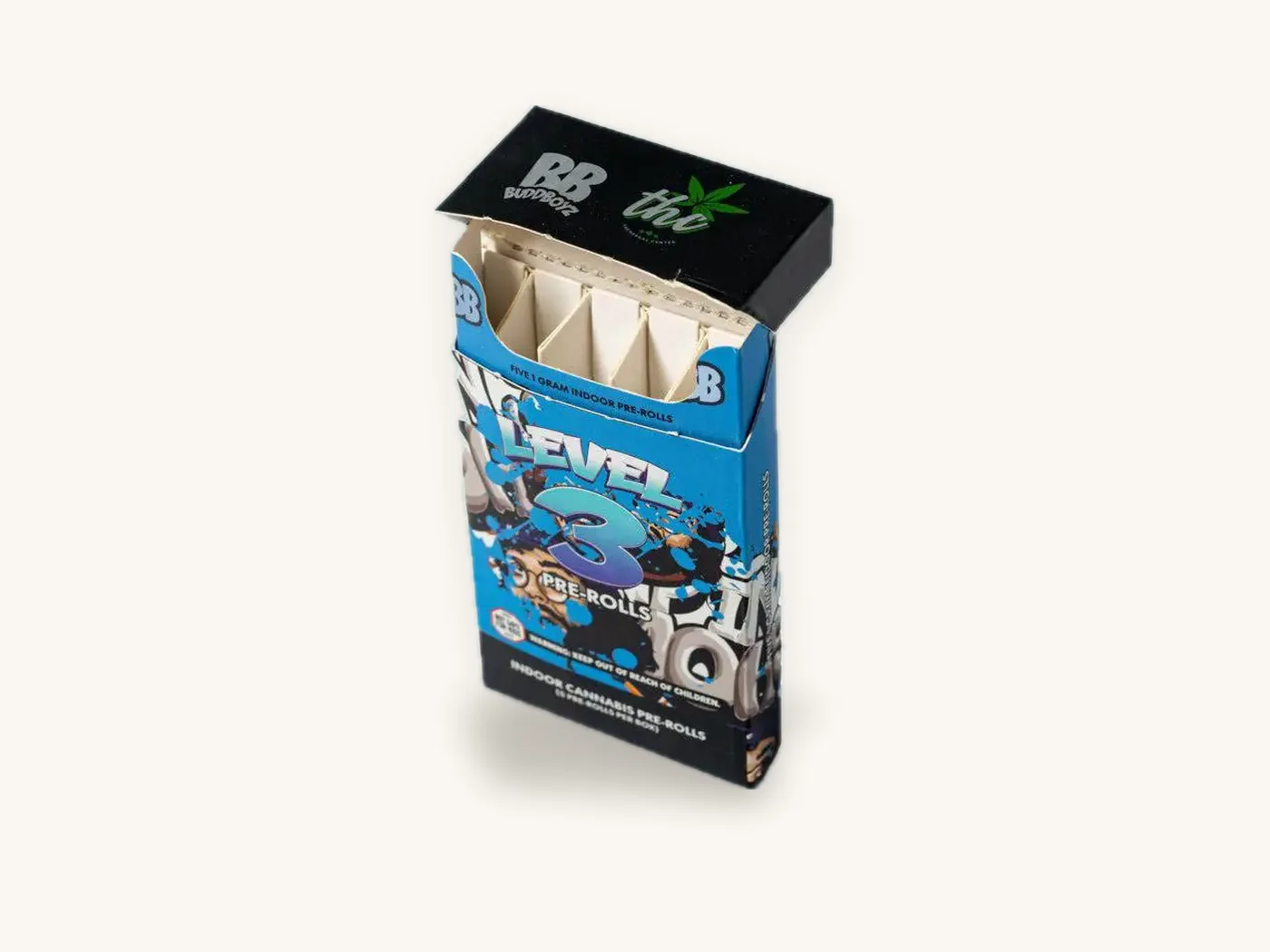
| Push-and-slide drawer box | Press release points on the sleeve while sliding the tray out | Pre-rolls, vape cartridges, edibles, blister cards | Yes |
| Locking-tab carton | Press a tab or panel while lifting a lid | Tinctures, topicals, small jars | Yes |
| CR blister wallet | Peel then push, or push through a reinforced backing, inside a locking card | Tablets, capsules, gummies in unit doses | Unit dose |
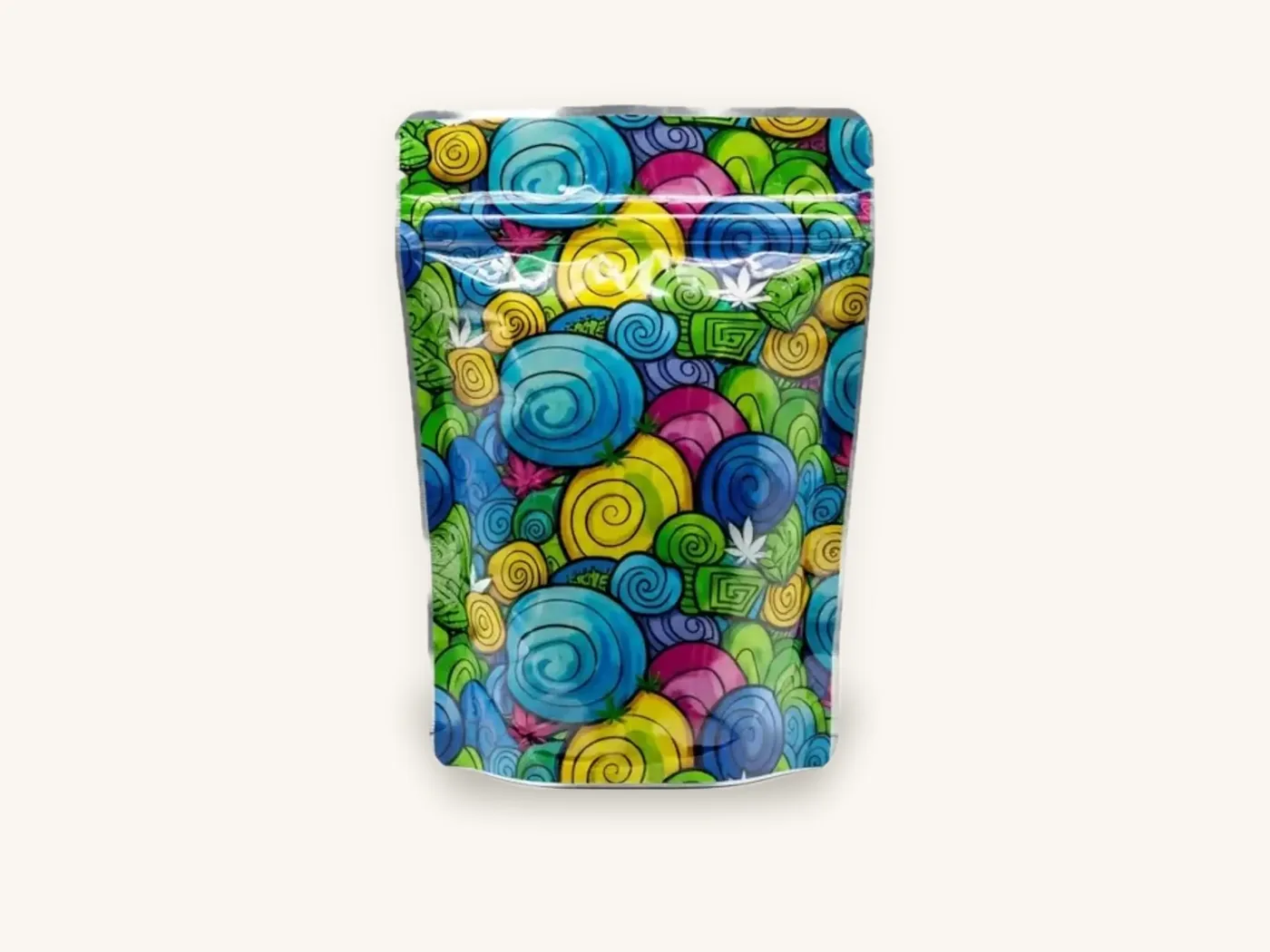
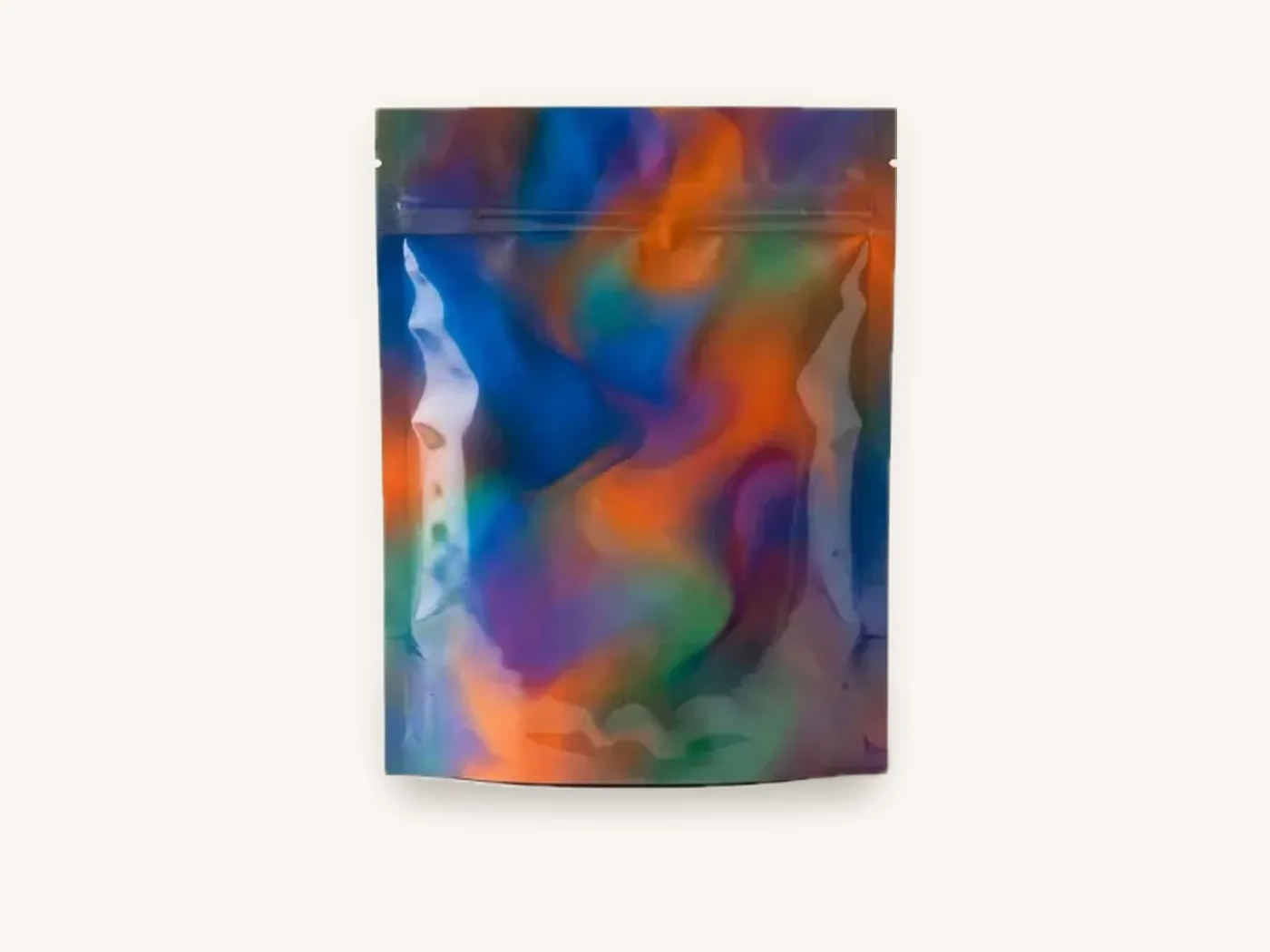
| CR zipper bag | Pinch a feature while sliding or pulling the zipper open | Flower, edibles, gummies, dried goods | Yes |
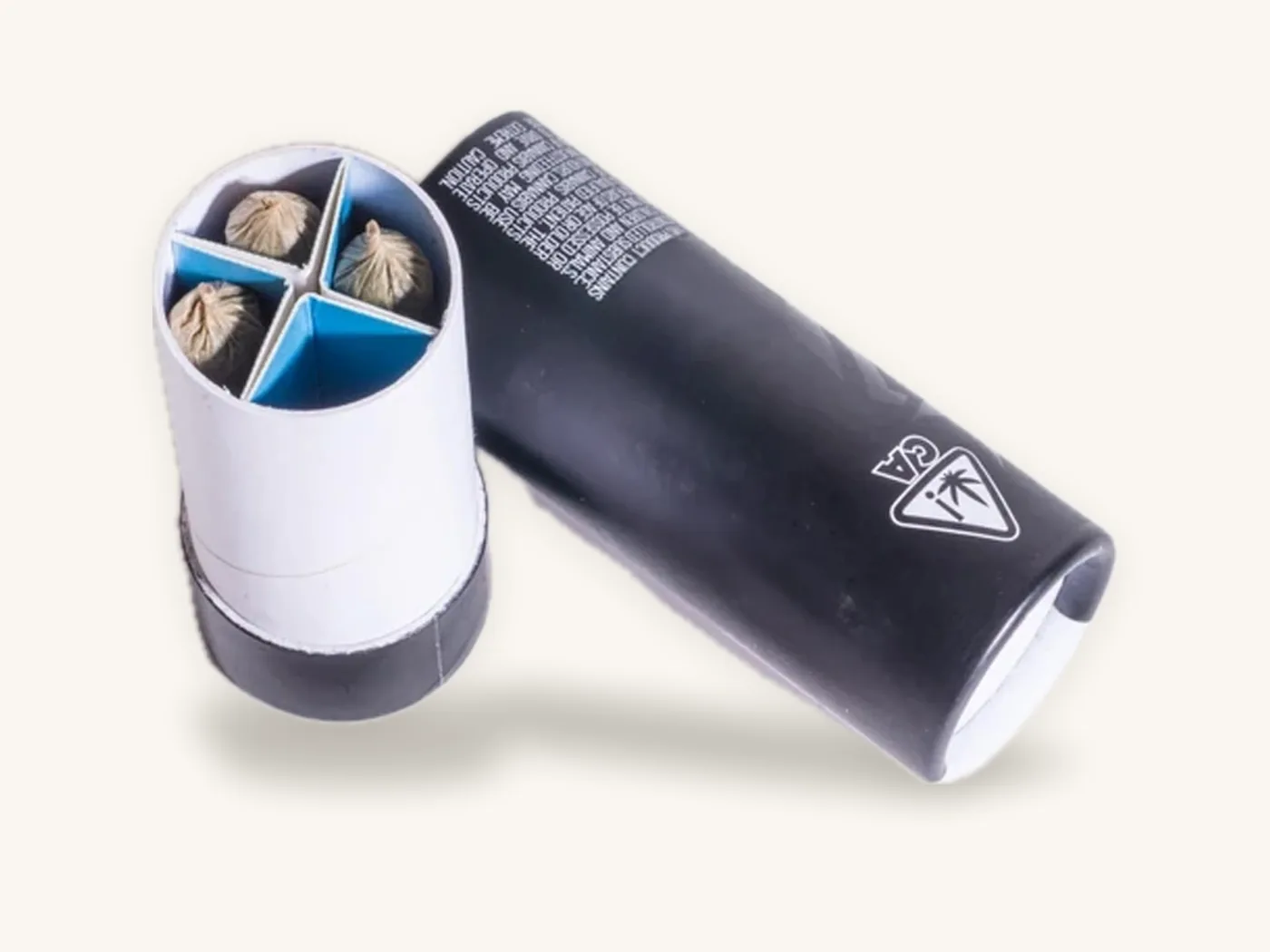
| Pop-top or squeeze tube | Squeeze the sides of the lid while pushing it off | Single pre-rolls, cartridges | Yes |
| Push-and-turn or squeeze-and-turn cap | Press down or squeeze while turning | Bottles and jars | Yes |
Paperboard CR boxes
Child resistant boxes are usually built on a drawer box structure, with a tray inside a sleeve that locks until the release points are pressed. Board strength matters, because a lock that flexes or tears defeats the design. Heavy SBS paperboard with a strong coating is common, and some designs add a laminated layer for tear resistance.
These boxes suit pre-roll boxes, vape and cartridge boxes and tincture boxes, and they carry full-color print, foil and spot UV like any retail carton.
CR bags
Mylar bags with CR zippers are a flexible alternative. They are light, stack flat, can block light and odor, and print edge to edge. The CR function lives in the zipper, so the zipper component and the way it is sealed into the bag are what the test has to cover.
Choosing between them
- Choose a paperboard CR box when shelf presence, a rigid feel and a large print area matter, or when the primary package, such as a glass jar or cartridge, needs protection.
- Choose a CR bag when weight, cost per unit and storage space matter more, or for products like flower and gummies that sit well in a pouch.
- Choose a CR closure on the primary container when your state rules or product type expect the container itself to be child resistant, such as a tincture bottle.
State rules for cannabis child-resistant packaging
Cannabis packaging rules are written state by state, and child resistance is one of the areas where they differ most. Our cannabis packaging laws guide covers the full set of requirements; here is how CR rules tend to vary.
Where the CR requirement sits
Some states require the product's own package to be child resistant. Others have allowed CR "exit packaging", such as a CR bag that the retailer puts the purchase into at checkout. Several states have changed approach over time, so a packaging plan that worked at launch may not match today's rules.
Resealable or single-use
States commonly distinguish between products consumed in one use and products with multiple servings. Multi-serving items, such as edibles with several doses or tinctures, are often required to be in packaging that stays child resistant after it is first opened. A single pre-roll may be treated differently. Check the current rule for each product type you sell.
Proof of compliance
Some states ask licensees to hold documentation that packaging meets the 16 CFR 1700.20 standard, and some reference ASTM classification. Others may ask for proof during inspections or product registration. Confirm with your state cannabis regulator what documentation it expects and whether it must come from the package manufacturer or a lab.
Tip: build a one-page CR file for every SKU: the package style, supplier, test report reference, the state rules you relied on and the date you last checked them. When a regulator updates its rules, you can see instantly which SKUs to review.
Selling outside the US
The UK and EU use their own standards, such as ISO 8317 for reclosable packages and EN 862 for non-reclosable packages of non-pharmaceutical products. A design tested to 16 CFR 1700 may need separate testing for those markets. For shipping regulated products, see our guide to shipping hazmat packaging.
Designing child-resistant packaging that passes and sells
A CR design can pass its test and still fail in the field if manufacturing drifts, instructions are unclear or graphics hide the mechanism.
Make the opening instructions part of the artwork
Adults in the senior panel get whatever instructions are printed on the package, so clear instructions help usability. Print short, icon-supported instructions such as "press both sides and slide" right at the release points. Keep them on a plain background and in legible type, and avoid placing foil or spot UV where it hides the pressure points.
Keep the structure consistent
- Hold the same board grade and caliper from run to run.
- Keep dimensions within tight tolerances, since a slightly loose tray may slide without pressing the lock.
- Do not change the insert or the product fill without checking the effect on the lock.
- Approve a physical sample of every new size before full production.
Layer child resistance with tamper evidence
Child resistance and tamper evidence solve different problems. A CR box can be reopened by an adult without a trace; a tamper-evident seal shows whether it was opened before purchase. Many regulated products need both. Our tamper-evident packaging guide explains seals, tear strips and labels.
A buyer's checklist for child-resistant packaging
- Confirm the requirement. Check whether your product is on the 16 CFR 1700.14 list or covered by your state's rules, with counsel if needed.
- Decide the level. Resealable CR, single-use CR, CR exit bag, or CR primary container plus a printed carton.
- Pick candidate styles that fit the product dimensions and your sales channel.
- Request test documentation for the exact design, including dimensions and materials.
- Compare the tested design to your spec and resolve any differences before ordering.
- Order structural samples and test fit with the real product and insert.
- Add opening instructions and required state warnings to the artwork.
- Approve a physical proof and check the lock action on printed stock.
- File the documentation with your SKU records and set a date to recheck state rules.
Ordering child-resistant boxes from Box Sense
Box Sense manufactures child-resistant box styles, including push-and-slide drawer boxes, alongside CR mylar bags for flexible formats. We print the artwork you supply and build the structure to the agreed specification. We do not determine which rules apply to your product or approve regulatory content, so confirm requirements with your state regulator or counsel.
What to send
- Product type and the primary container, with exact dimensions
- The state or states where the product will be sold
- Whether you need a resealable CR package, a CR bag or a printed carton over a CR primary container
- Quantities per SKU and per strain or flavor variant
- Artwork, required warnings and symbols, or a request for help from our design services team
- Any test documentation requirements from your regulator, so we can discuss which structures fit
How it works
- Quote within 24 hours, with structure, board and finish confirmed.
- Free dieline, artwork setup and 3D proof, with two revision rounds.
- Free unprinted structural samples, so you can check the lock action and fit before printing. A printed sample of approved artwork is free on orders of 100 or more; see samples.
- Production in 8–12 business days after proof approval as standard, with rush in 5 business days on most paperboard styles.
- Free shipping on every US order.
The minimum order is 10 boxes, with no die or plate charges; custom inserts carry a one-time insert die charge of about $45. Browse our CBD and cannabis packaging and pharma and healthcare packaging pages for related formats, and use the price estimator to compare structures.
Frequently asked questions
What is child resistant packaging?
Child resistant packaging is designed to be significantly difficult for children under five to open, or to reach a harmful amount of the contents, within a reasonable time, while remaining usable by adults. In the US, a design demonstrates this by passing the test protocol in 16 CFR 1700.20, which uses a panel of young children and a panel of adults aged 50 to 70.
How do you get child-resistant packaging certified?
There is no federal certificate. Instead, the package design is tested by an independent laboratory under the 16 CFR 1700.20 protocol, and the lab issues a report showing the results. Packaging manufacturers often test stock designs and share reports with customers, while brands with custom structures may commission their own testing. Keep the report with your product records.
What is 16 CFR 1700?
16 CFR Part 1700 contains the Consumer Product Safety Commission's regulations under the Poison Prevention Packaging Act. It lists substances that require special packaging, sets the effectiveness standards child-resistant packages must meet and describes the test procedure with child and senior adult panels. State cannabis programs frequently reference it as the benchmark for child-resistant packaging.
What is ASTM D3475?
ASTM D3475 is ASTM International's standard classification of child-resistant packages. It groups packages into types according to their opening mechanism, such as reclosable closures or unit-dose packaging, giving buyers and suppliers a shared vocabulary. The classification describes the kind of package; it does not replace testing a specific design under the 16 CFR 1700.20 protocol.
Are mylar bags child resistant?
Some are. Mylar bags become child resistant through a special zipper that requires a coordinated action, such as pinching while sliding, to open. Only bags whose zipper and construction have been tested under the 16 CFR 1700.20 protocol should be described as child resistant. Ask the supplier for the test documentation that covers the specific bag and zipper you are buying.
Do cannabis products need child-resistant packaging?
Most states with legal cannabis programs require child-resistant packaging for at least some products, but the details vary. States differ on whether the product package or an exit bag must be child resistant and whether multi-serving products need packaging that stays resistant after opening. Check your state cannabis regulator's current rules and confirm with counsel.
Does changing the box size affect CR testing?
It can. A test report applies to the design that was tested, including its dimensions, materials, locking mechanism and contents. A larger tray, thinner board or different insert can change how the lock behaves for both children and adults. Ask the supplier or testing lab whether the existing report still represents your version before relying on it.
Next steps
Confirm which federal or state requirements apply to your product, then shortlist CR styles that fit it and request the test documentation for each. When you are ready to compare costs, use the instant price estimator, and request a quote for child-resistant boxes or bags with free structural samples and a 3D proof of your artwork.
Boxes in this guide
Order the packaging we covered
Written by the Box Sense Packaging Team
Our structural designers, prepress technicians and production staff print and convert custom boxes every day for brands in the United States, United Kingdom and UAE. Questions about this guide? Talk to us.