Hazmat shipping packaging is the combination of inner containers, cushioning, outer boxes, marks and paperwork required to move dangerous goods such as alcohol-based perfume, aerosol sprays and lithium batteries. In the US, ground and air shipments are regulated by the Department of Transportation's Pipeline and Hazardous Materials Safety Administration (PHMSA), air shipments also follow the IATA Dangerous Goods Regulations, and every carrier, including USPS, adds its own rules on top.
Many everyday consumer products fall into these rules, which surprises brands that think of hazmat as industrial chemicals. The good news is that small consumer quantities often qualify for simplified provisions, such as limited quantity shipping by ground. The catch is that the shipper is responsible for classifying the product, packing and marking it correctly, and being trained where the rules require it. This guide gives you the general picture and shows where branded packaging fits. It is not a substitute for the regulations, your carrier's rules or a qualified dangerous goods professional.
Key takeaways
- Alcohol-based perfume is typically a flammable liquid, aerosols are compressed gases, and lithium batteries are their own hazard class, so all three are regulated for transport.
- The shipper, not the box maker or the carrier, is responsible for classifying, packaging, marking, labeling and documenting a hazmat shipment, and employees who do this generally need hazmat training.
- Many small consumer packages move under limited quantity provisions by ground, with a specific mark and strong outer packaging, but air transport is much more restricted.
- USPS limits how flammable liquids and batteries can be mailed; perfume containing alcohol is generally restricted to ground service domestically. Always check the current USPS Publication 52.
- Branded retail boxes can sit inside a compliant shipment, but they are not UN specification packaging, and Box Sense does not certify packaging for hazmat.
- Designing outer shippers with clear space for marks, and avoiding graphics that look like hazard labels, prevents rejected parcels.
Why everyday products count as hazmat
Transport rules focus on what could go wrong in a truck, sorting facility or aircraft hold: fire, pressure release, leaks and heat. Plenty of consumer goods carry those risks in small amounts.
| Product | Why it is regulated | Typical hazard class | Common transport issues |
|---|---|---|---|
| Perfume, cologne, body mist with alcohol | Flash point low enough to ignite | Class 3, flammable liquid | Leakage, vapor in heat, glass breakage |
| Nail polish and remover | Flammable solvents | Class 3, flammable liquid | Same as perfume; small bottles break easily |
| Aerosol sprays (dry shampoo, deodorant, spray paint) | Pressurized container, often flammable propellant | Class 2, gases | Valve actuation, rupture in heat |
| Lithium-ion batteries sold alone | Thermal runaway, short circuit | Class 9, miscellaneous | Short circuits, damaged cells, state of charge by air |
| Devices containing lithium batteries | Same, reduced by protection in the device | Class 9, miscellaneous | Accidental activation, damage in transit |
| Hand sanitizer with alcohol | Flammable liquid | Class 3, flammable liquid | Leakage, heat |
Classification depends on the actual formulation and container, not the product name. A fragrance oil without alcohol, for example, may not be regulated the same way as an alcohol-based spray. Your product's Safety Data Sheet (SDS), especially the transport information section, is the starting point, and your supplier or a dangerous goods consultant can confirm it.
What happens when hazmat is shipped undeclared
Undeclared hazmat means dangerous goods sent without the required marks, labels or paperwork. Carriers treat it seriously, because handlers and aircraft crews cannot manage a risk they do not know about. Consequences can include rejected or destroyed parcels, loss of shipping accounts and civil penalties from regulators. PHMSA's hazardous materials safety resources explain shipper responsibilities and training.
Who regulates what: PHMSA, IATA and carriers
Hazmat rules come in layers. A shipment has to satisfy every layer that applies to its route and service.
The DOT and PHMSA layer
PHMSA writes the Hazardous Materials Regulations, found in 49 CFR parts 171 to 180. They cover classification, packaging, hazard communication (marks, labels, placards and shipping papers), handling and training for shipments by ground, air, rail and water within the US. Employers must train "hazmat employees", meaning anyone who prepares, packs, marks or offers hazmat for transport, with recurrent training at set intervals.
The air layer: IATA and ICAO
Air shipments follow the ICAO Technical Instructions, which airlines apply through the IATA Dangerous Goods Regulations. Air rules are stricter than ground. Some materials are forbidden on passenger aircraft, some are allowed only on cargo aircraft, and lithium batteries shipped by air face specific packing sections, quantity limits and, for batteries shipped alone, state-of-charge limits.
The carrier layer
Each carrier publishes its own acceptance rules, which can be stricter than the regulations. Some services do not accept certain hazmat at all, some need a dangerous goods agreement or contract, and some accept only limited quantities by ground. USPS is the most restrictive for consumer brands, and its Publication 52 on hazardous, restricted and perishable mail is the rulebook to check before mailing perfume, aerosols or batteries.
| Layer | Who sets it | Applies to | What it controls |
|---|---|---|---|
| Federal transport law | DOT, PHMSA | All US hazmat shipments | Classification, packaging, marks, papers, training |
| International air | ICAO, IATA | Air shipments, including domestic air carriers | Forbidden items, packing instructions, quantity and charge limits |
| Carrier rules | USPS, UPS, FedEx, regional carriers | Their services | Accepted classes, services, agreements, extra marks |
| Marketplace rules | Amazon and other platforms | Listings and fulfillment | Dangerous goods review, SDS, storage and prep |
If you sell through Amazon, dangerous goods review happens before inventory is accepted. Our Amazon FBA packaging requirements guide covers the prep side.
How to ship perfume, including by USPS
Perfume is the hazmat product Box Sense customers ask about most, because perfume boxes are a core product and fragrance brands often sell direct to consumers.
Ground versus air
Alcohol-based perfume is generally a Class 3 flammable liquid. In small retail bottles it often qualifies for limited quantity provisions when shipped by ground, which relieve some requirements such as UN specification packaging and shipping papers, but still require strong outer packaging, secure closures and the limited quantity mark. By air, the rules tighten considerably, and many carriers restrict or refuse it.
What USPS generally allows
In general terms, USPS allows perfume containing alcohol to be mailed domestically only by ground transportation, in limited quantities, with specific packaging and marking, and it generally does not accept these items in international mail. The details, including which mail classes qualify and what must appear on the parcel, change periodically. Check the current Publication 52 before you set up your fulfillment process, and ask your local post office if anything is unclear.

Packing perfume so it survives and does not leak
- Make sure the bottle's spray pump or cap is tightened and, where possible, secured with a collar or cap so it cannot actuate.
- Place the bottle in a sealed bag or with absorbent material if your chosen provision requires it or leakage is a risk.
- Use a fitted insert inside the retail box so the bottle cannot move, then cushion the retail box inside a strong outer shipper.
- Keep the package upright where orientation arrows are required, and do not rely on "this side up" alone to prevent leaks.
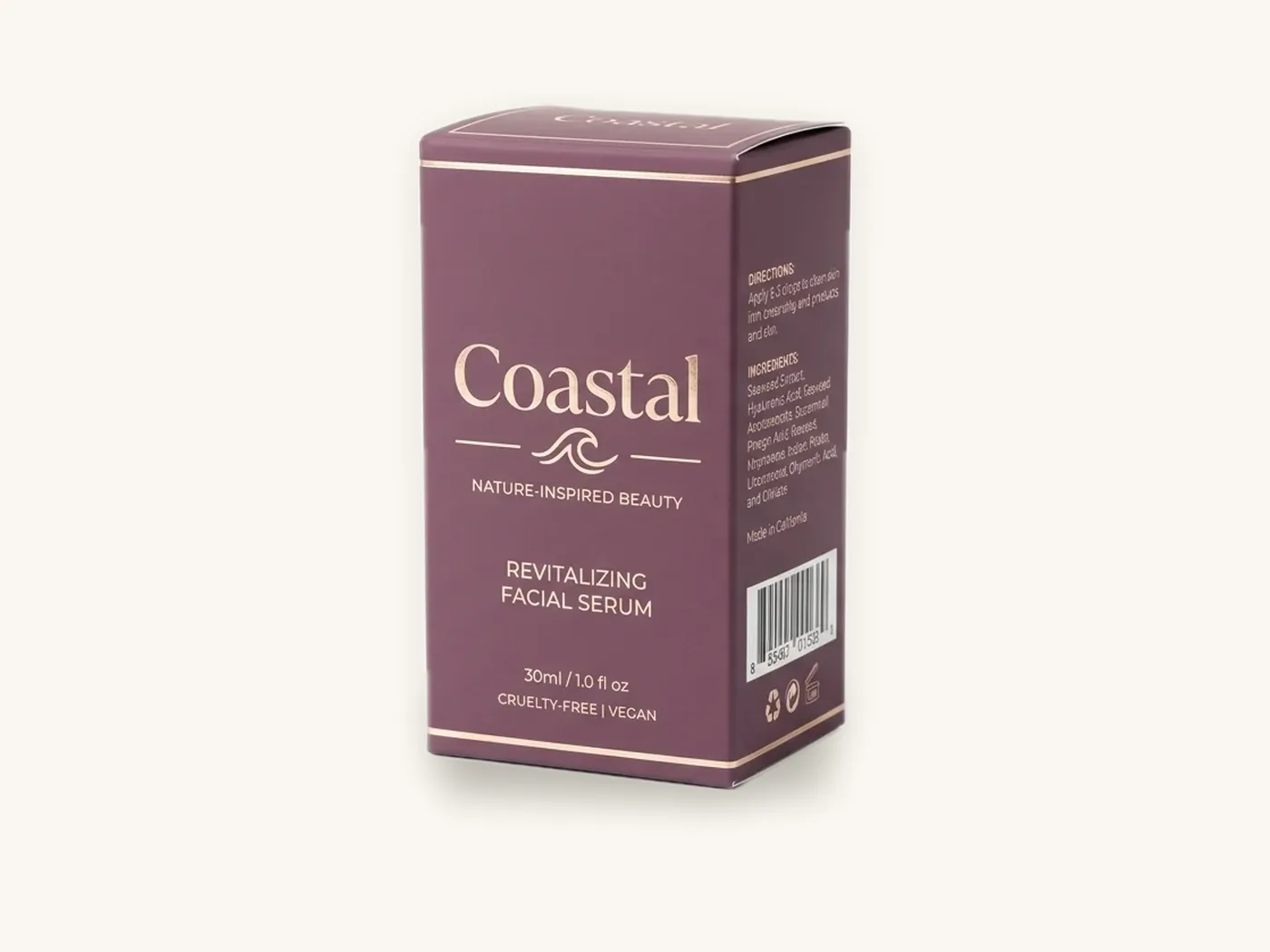
For the retail box itself, our perfume packaging guide covers rigid and folding carton options, and box inserts explains insert materials for glass.
Watch out: a retail perfume box is decoration and protection for the bottle, not the outer packaging for a hazmat shipment. Ship it inside a separate outer carton that carries the required marks, rather than putting a shipping label directly on a printed gift box.
Shipping lithium batteries: the general framework
Lithium battery rules are among the most detailed in transport regulation, and they vary by battery chemistry, size, packing configuration and mode. What follows is the general framework, not the numbers.
Three configurations
Rules differ depending on whether batteries are:
- Shipped alone, such as spare power banks or replacement cells
- Packed with equipment, such as a device with a spare battery in the same box
- Contained in equipment, such as a speaker or headphones with a built-in battery
Batteries shipped alone face the strictest rules, especially by air. Batteries contained in equipment are the most lightly regulated but still require protection against short circuits and accidental activation.
Common requirements across configurations
- Cells and batteries must be of a type that has passed the UN 38.3 test series, and shippers are generally expected to have the test summary available.
- Terminals must be protected against short circuit, for example by insulating caps, individual bags or inner packaging.
- Devices must be protected from switching on in transit.
- Packages must be strong enough to withstand normal handling, with the battery or device secured inside.
- Depending on size and quantity, the package may need the lithium battery mark, a Class 9 hazard label and shipping documents.
- Damaged, defective or recalled batteries are subject to special rules and are often forbidden by air.
USPS, UPS and FedEx each set their own acceptance rules for batteries, particularly for international and air services. Confirm with your carrier before launching.

Where the retail box helps
For devices with built-in batteries, the retail box does real protective work. A fitted insert that stops the device moving and keeps buttons from being pressed supports the requirement to prevent activation. Our electronics boxes are usually rigid or folding carton structures with die-cut paperboard or foam inserts. The electronics and tech industry page shows typical formats.
Aerosols and other pressurized products
Aerosols are regulated because they contain gas under pressure, often with a flammable propellant. Consumer aerosols in small sizes frequently ship as limited quantities by ground.
The packaging priorities are straightforward: protect the valve from being pressed, keep cans from rubbing or denting, and avoid heat. Caps should be secure, and multi-can shipments need dividers. Many carriers restrict aerosols by air, and USPS limits them to ground service domestically in most cases. As with perfume, check Publication 52 and your carrier's rules for the exact conditions.
The layers of a hazmat package and who provides each
A compliant consumer hazmat shipment is usually built in layers. Knowing who is responsible for each one avoids gaps.
| Layer | Purpose | Usually supplied by |
|---|---|---|
| Primary container (bottle, can, cell) | Holds the product; must be closed and compatible | Product or component manufacturer |
| Closure protection (cap, collar, terminal cap) | Prevents leaks, actuation or short circuit | Component supplier or packer |
| Absorbent or sealed bag | Contains leaks where required or prudent | Packaging distributor or packer |
| Retail box with insert | Presents and immobilizes the product | Branded packaging maker, such as Box Sense |
| Outer shipper | Strong outer packaging; carries marks and labels | Packaging maker or shipping supplier |
| UN specification packaging, when required | Performance-tested and certified for fully regulated shipments | Certified UN packaging suppliers |
| Marks, labels and documents | Communicate the hazard to handlers | Trained shipper |
What Box Sense does and does not provide
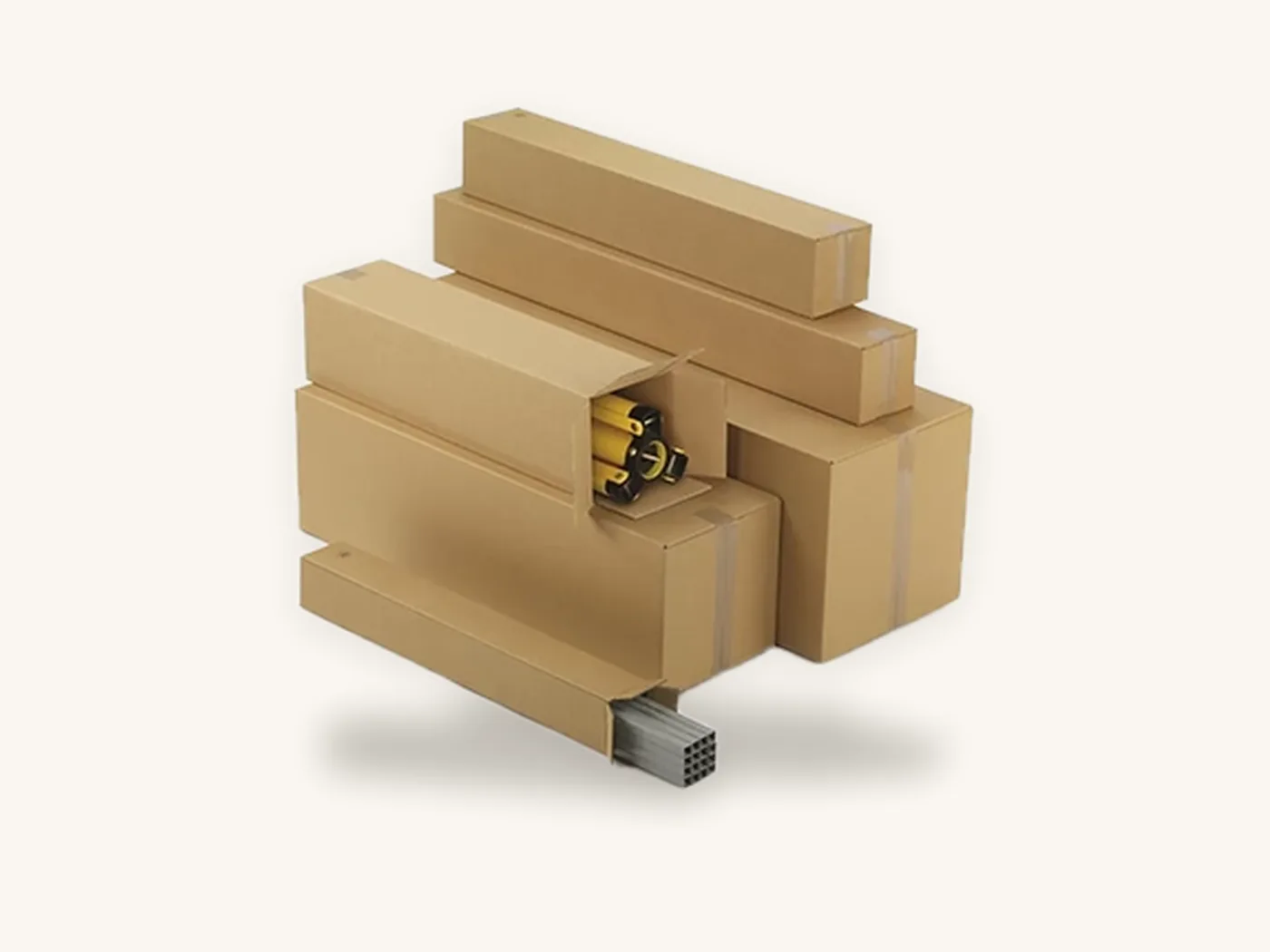
We manufacture printed retail boxes, inserts and outer corrugated shippers. Our heavy duty double wall boxes and custom shipping boxes are strong outer cartons suitable for general shipping. We do not manufacture or certify UN specification packaging, and we do not classify products, prepare dangerous goods paperwork or advise on hazmat compliance. When your shipment needs UN-marked packaging, buy it from a supplier that provides the certification and closure instructions, and put your branded box inside if the packing instructions allow it.
Designing outer shippers that carry marks cleanly
Branded outer shippers are common in fragrance and beauty e-commerce. They can work alongside hazmat marking if you plan for it.
Design rules for marked shippers
- Leave clear space on at least one side panel, and ideally the top, for the limited quantity mark, lithium battery mark, orientation arrows and shipping label. A plain area roughly the size of a shipping label plus the marks is a practical target.
- Do not print diamonds, flame icons or symbols that resemble hazard labels or marks. DOT rules prohibit markings that could be confused with hazmat labels, and look-alike graphics can get parcels pulled for inspection.
- Keep marks on a light background. Hazard marks need contrast; printing a dark flood color on every panel forces you to add white label stock.
- Use one-color print on shippers and keep full-color branding for the retail box inside. It is cheaper and leaves the outside readable.
- Remove old marks. If boxes are reused or overprinted, obliterate outdated hazmat marks completely so the package does not misdeclare its contents.
Board strength
Outer packaging for hazmat must be strong enough for normal transport. For small consumer parcels, a single-wall B-flute RSC with a clearly stated strength grade is common; heavier or multi-bottle shipments often use double wall. Our corrugated board page lists grades, and the ECT vs burst strength guide explains how to read box certificates. For protection strategy, see shipping fragile items.
A pre-launch checklist for regulated products
Work through these steps before your first order ships. Most require input from your supplier, carrier or a dangerous goods specialist.
- Get the SDS for each product and read the transport section.
- Confirm classification with your supplier or a qualified consultant, including whether limited quantity or other exceptions apply.
- Choose your modes and services. Decide ground only, air, or international, and confirm each carrier accepts the product on that service.
- Arrange training for anyone who packs, marks or offers the shipments, as required by 49 CFR.
- Specify packaging for each layer: primary container, closure protection, retail box, insert and outer shipper, plus UN specification packaging if required.
- Design the outer shipper with clear panels for marks and no look-alike symbols.
- Create written packing instructions with photos, so every packer builds the package the same way.
- Test pack and ship samples to yourself through the intended service, then inspect for leaks, movement and damage.
- Set up marketplace and 3PL approvals, including dangerous goods review where required.
- Recheck rules annually. Regulations, IATA editions and carrier policies are updated regularly.
International shipping adds customs and destination rules; our international shipping packaging guide covers the non-hazmat side.
What the packaging costs
Hazmat compliance adds costs in training, marks, UN packaging where required and carrier fees, which vary by provider. The branded packaging layers are priced like any other box.
As reference points with US shipping included: a cosmetic carton in 18 pt SBS, 2.5x2.5x6 in, full color with soft-touch and foil is about $1.93 per unit at 100 and $0.86 at 1,000, plus one-time foil tooling. A B-flute RSC shipping box, 12x10x6 in, printed one color, is about $4.69 at 100 and $2.08 at 1,000. A BC-flute double wall shipper, 18x14x12 in, one color, is about $17.97 at 100 and $7.98 at 1,000. Rigid perfume boxes and custom inserts cost more; price your spec in the estimator.

Ordering retail boxes and shippers from Box Sense
Send us the finished product dimensions, your packing plan and a note of which layers you need from us. It helps to include:
- Bottle, can or device dimensions, including caps and pumps
- Retail box style and insert material, such as paperboard, corrugated or foam
- Outer shipper size, board grade and the panels to keep clear for marks
- Print coverage for each item; one color on shippers is usually enough
- Quantities and target in-hand date
Quotes are confirmed within 24 hours. Free design support includes the dieline, artwork setup and a 3D digital proof with two revision rounds, and our team will mark clear zones on shipper artwork when you tell us where marks go. Unprinted structural samples are free for fit and drop testing; printed samples of approved artwork are free on orders of 100 or more. See the fragrance and perfume industry page for retail formats.
Standard production is 8–12 business days after proof approval, with rush in 5 business days on most paperboard and corrugated styles. The minimum order is 10 boxes, and US shipping is free. Compliance decisions, marks and documents remain with your trained shipper.
Frequently asked questions
Is perfume considered hazmat for shipping?
Perfume, cologne and body sprays that contain alcohol are generally classified as flammable liquids for transport, so they are regulated as hazardous materials. Small retail bottles often qualify for limited quantity provisions by ground, with specific packaging and marks. Air shipping is far more restricted. Check the product's Safety Data Sheet and confirm classification with your supplier or a dangerous goods professional.
Can I ship perfume through USPS?
In general, USPS allows perfume containing alcohol to be mailed domestically only by ground transportation, in limited quantities, with specific packaging and marking, and generally does not accept it in international mail. Requirements change, so read the current USPS Publication 52 before shipping. Perfume without alcohol may be treated differently, which is another reason to check the SDS.
What do I need for shipping lithium batteries?
Requirements depend on whether batteries ship alone, packed with equipment or contained in equipment, and on the mode. Common elements include UN 38.3 tested cells, short-circuit protection, protection against device activation, strong outer packaging, and sometimes a lithium battery mark, hazard label and documents. Air rules are strictest. Confirm with PHMSA, IATA and your carrier.
Does hazmat shipping packaging have to be UN certified?
Not always. Fully regulated shipments generally require UN specification packaging that has passed performance tests and carries a UN mark. Many consumer shipments under limited quantity or other exceptions do not need UN specification packaging, but must still use strong outer packaging and meet general requirements. Your classification and chosen provision decide which applies, so confirm before buying boxes.
Can I use my branded box to ship hazmat products?
A branded retail box can usually sit inside a compliant shipment as inner packaging. Whether it can serve as the outer packaging depends on the provision you use and its packaging requirements. Box Sense boxes are not UN specification packaging. Keep panels clear for marks, avoid graphics that resemble hazard labels, and have a trained shipper confirm the package is compliant.
Who needs hazmat training?
Under DOT regulations, employers must train hazmat employees, which broadly means anyone who classifies, packs, marks, labels or prepares hazardous materials for transport, or is responsible for their safety in transport. Training covers general awareness, function-specific duties, safety and security, and must be refreshed periodically. Small brands packing their own perfume or battery orders are not automatically exempt.
Are aerosols allowed in the mail?
Many consumer aerosols can be mailed domestically by USPS under ground transportation with limited quantity packaging and marking, while air and international mail are generally restricted. Flammable and non-flammable aerosols can be treated differently. Protect valves from actuation, keep cans from denting, and check the current USPS Publication 52 and your carrier's rules for exact conditions.
Next steps
Start with your SDS and a carrier conversation, then plan each packaging layer. When you know what the retail box and outer shipper need to do, price them in the instant estimator and request a quote for perfume boxes, inserts or shippers. We will confirm pricing within 24 hours and set up artwork with clear space for your marks.
Boxes in this guide
Order the packaging we covered

Written by the Box Sense Packaging Team
Our structural designers, prepress technicians and production staff print and convert custom boxes every day for brands in the United States, United Kingdom and UAE. Questions about this guide? Talk to us.