Two separate sets of rules decide what your packaging can say about where a product comes from. US Customs and Border Protection (CBP) requires most imported goods, or their containers, to be marked with their country of origin so the final buyer knows where they were made. The Federal Trade Commission (FTC) governs voluntary Made in USA labeling, and an unqualified "Made in USA" claim must meet its "all or virtually all" standard.
Most packaging problems happen where the two meet: an imported product in a box printed with a US brand address, a kit that mixes domestic and imported parts, or a flag graphic that implies more than the brand can support. This guide explains both regimes in general terms and shows how to handle origin statements on cartons, labels and shipping boxes. It is not legal advice; confirm your product's situation with CBP guidance, the FTC or trade counsel.
Key takeaways
- CBP marking rules require most imported articles, or their containers, to show the English name of the country of origin to the ultimate purchaser, legibly, indelibly and in a conspicuous place.
- FTC rules require unqualified "Made in USA" claims to be true for all or virtually all of the product: final assembly or processing in the US, all significant processing in the US, and all or virtually all ingredients or components made and sourced in the US.
- Implied claims count. Flags, maps and phrases like "American-made" can create an origin claim without the words "Made in USA".
- A US city or "USA" printed on an imported product's package can require the foreign origin to appear nearby and in comparable size.
- Qualified claims, such as "Made in USA with imported components", can be truthful where an unqualified claim would not be.
- Box Sense prints the origin statements you supply. Deciding which statement is accurate for your product is the brand's responsibility.
Two regimes: CBP origin marking and FTC Made in USA claims
It helps to separate these clearly before looking at artwork.
| Question | CBP country of origin marking | FTC Made in USA claims |
|---|---|---|
| What triggers it | Importing a foreign-origin article into the US | Choosing to claim or imply US origin |
| Mandatory or voluntary | Generally mandatory for imports, with exceptions | Voluntary, but claims must be truthful |
| Main legal source | 19 U.S.C. 1304 and 19 CFR Part 134 | FTC Act, Made in USA Labeling Rule (16 CFR Part 323) and FTC policy |
| Core test | Where the article was made or last substantially transformed | All or virtually all of the product is of US origin |
| Who enforces | CBP at import | FTC, plus some states |
| Typical packaging impact | "Made in [country]" on the product or container | Wording, qualifiers, flags and origin icons |
The two regimes use different tests. A product can be considered of US origin for customs purposes because it was substantially transformed in the US, yet still not qualify for an unqualified "Made in USA" claim under the FTC standard, because significant components were imported.
Other rules that overlap
Some product categories carry their own origin rules. Textile, wool and fur products have FTC labeling requirements that include origin. Certain food commodities fall under USDA country of origin labeling, and USDA also regulates "Product of USA" claims on meat and poultry. Goods from Canada and Mexico use specific origin rules for marking purposes. If your product falls into one of these groups, the general guidance below is only a starting point.
CBP country of origin label rules for imported goods
Under 19 U.S.C. 1304, every article of foreign origin imported into the US must be marked with its country of origin, unless an exception applies. The regulations in 19 CFR Part 134 set out the details.
What the marking must look like
The marking must be:
- In English, using the name of the country, such as "Made in Vietnam" or "Product of Mexico"
- Legible, so a buyer can read it without strain
- Conspicuous, placed where a buyer can find it with reasonable handling
- As permanent as the article allows, so it stays with the product until it reaches the ultimate purchaser
Accepted abbreviations and variants exist for some countries, but spelling out the full name avoids questions.
Who the ultimate purchaser is
The marking must reach the ultimate purchaser, generally the last person in the US who receives the article in the form in which it was imported. For a retail product, that is the consumer. If a US manufacturer uses an imported part to make a new and different article, that manufacturer may be the ultimate purchaser of the part, and the part may not need marking for the consumer.
The concept that decides this is substantial transformation: processing that turns an article into a new article with a different name, character or use. Minor assembly, repacking, labeling or simple combining usually does not count. Whether a particular process qualifies is a legal question, and CBP issues rulings on specific facts.
When the container carries the marking
Some articles cannot practically be marked themselves, or fall into exceptions listed in the regulations. In many of those cases, the container that reaches the ultimate purchaser must be marked instead. This is where a printed carton, label or bag becomes the compliance surface.
If you import products in bulk and repack them into retail boxes in the US, the retail package typically needs to carry the marking, and the importer may have obligations to make sure the repacker keeps it. Build the origin statement into the carton artwork rather than relying on a sticker added later.
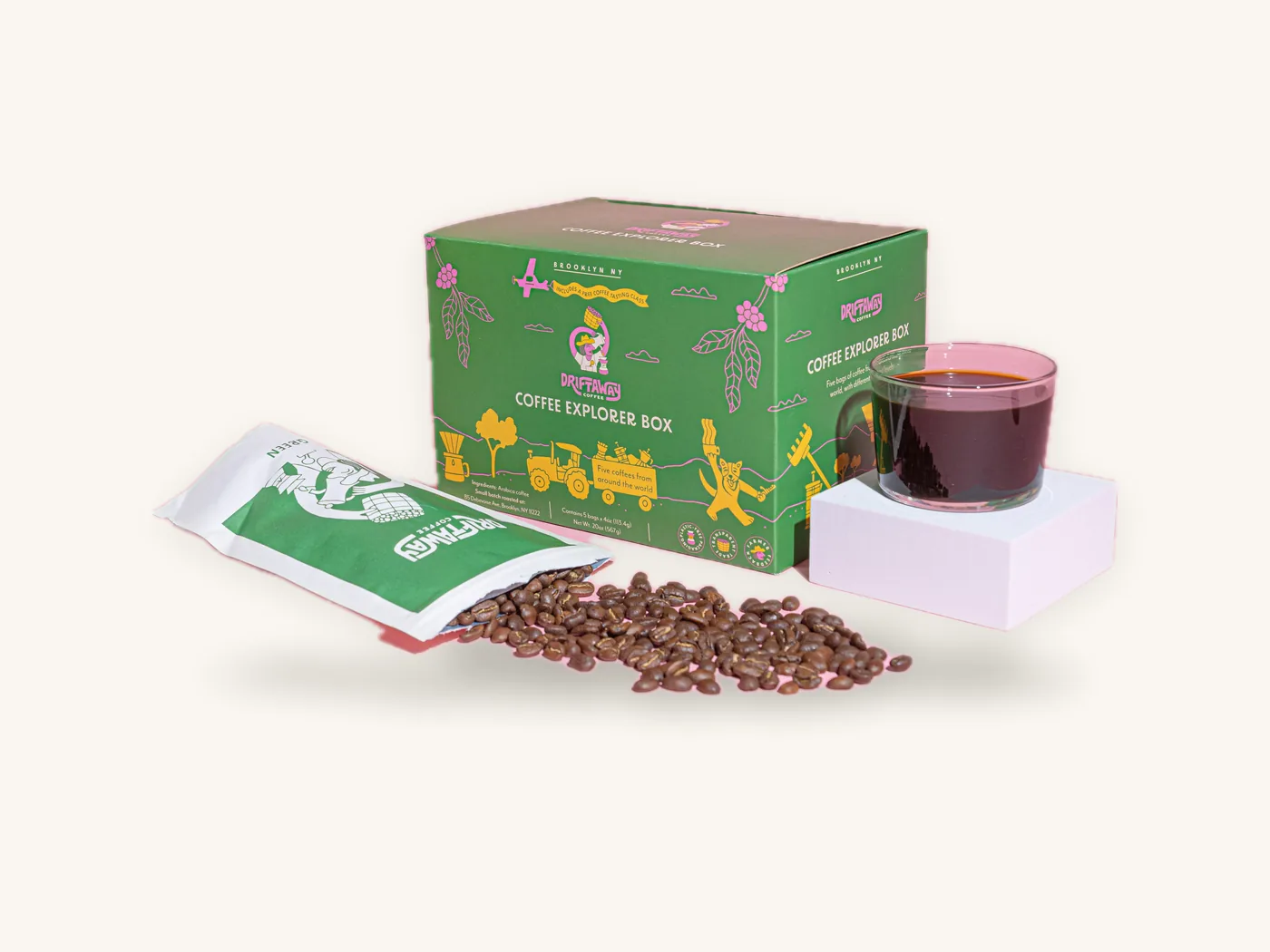
Watch out: 19 CFR 134.46 addresses packages that show "USA", "America" or the name of a US city or state, such as your brand's Austin or Brooklyn address. When that could mislead a buyer about origin, the country of origin must appear in close proximity to those words and in at least comparable size, preceded by "Made in", "Product of" or similar wording. A tiny "Made in China" on the bottom flap beside a large "Brooklyn, NY" on the front can be a problem.
The FTC Made in USA standard
The FTC treats any claim that a product is of US origin as a marketing claim that must be truthful and substantiated. Its guide for businesses, Complying with the Made in USA Standard, is the clearest plain-language source.
All or virtually all
For an unqualified "Made in USA" claim, the product should be all or virtually all made in the US. The Made in USA Labeling Rule, which applies to labels on products and to certain mail-order and online promotional materials, describes this as:
- Final assembly or processing takes place in the US.
- All significant processing that goes into the product takes place in the US.
- All or virtually all ingredients or components are made and sourced in the US.
The FTC looks at how far back to trace components, what share of total manufacturing cost is foreign and how important the foreign content is to the product. A negligible foreign input, such as a small generic part far back in the supply chain, may be acceptable. A significant imported component, such as the movement in a watch or the fabric in a garment, generally is not.
Express and implied claims
An express claim uses words such as "Made in USA", "Made in America" or "Produced in the USA". An implied claim creates the same impression without the exact words. Packaging can imply US origin through:
- US flags, eagles or map outlines used prominently
- Phrases like "American-made", "Built in America" or "true American quality"
- Statements such as "Proudly American" next to the product name
- Imagery of US landmarks tied to manufacturing language
Context matters. A small flag in a brand's "proudly veteran-owned" message may not imply the product is made in the US, while a large flag next to the product name might. When in doubt, add a clear, accurate origin statement.
Qualified claims
If your product does not meet the all or virtually all standard, a qualified claim can still communicate genuine US content. Examples of the type of wording the FTC discusses:
- "Made in USA of US and imported parts"
- "Made in USA with 60% US content" (only if the percentage is accurate and substantiated)
- "Assembled in USA", when the principal assembly in the US is substantial and the product was last substantially transformed here
- "Designed in USA, made in [country]"
A qualification must be clear and near the claim. A "Made in USA" headline with a qualifier hidden on a side panel is likely to be read as the unqualified claim.
State laws
States can have their own origin laws. California, for example, has a statute that governs "Made in USA" claims with its own conditions on foreign content. If you sell nationally, check the state rules that apply and have counsel review your wording.
Made in USA labeling decisions for common product situations
Real products rarely fit a textbook. Here is how the most common situations tend to play out on packaging, in general terms.
| Situation | Unqualified "Made in USA" | Likely direction for the package |
|---|---|---|
| Made start to finish in the US from US materials | Often supportable | Document your supply chain before printing the claim |
| US-made product with a minor imported input | Possibly, depending on significance | Assess the input's value and importance; consider a qualifier |
| Assembled in US from significant imported parts | Generally no | Consider "Assembled in USA" or "Made in USA of imported parts" if accurate |
| Made abroad, designed by a US brand | No | Show foreign origin; "Designed in USA" only with clear country of manufacture |
| Imported, repacked into US-printed retail boxes | No | Carton shows country of origin; watch US address placement |
| Gift set mixing US and imported items | Not for the whole set | Mark origin by item or use a qualified statement |
Kits, bundles and subscription boxes
A curated box that mixes a US-made candle with an imported ceramic mug cannot be called "Made in USA" as a whole. If you want to highlight the domestic items, name them specifically: "Candle made in USA." Imported items in their own retail packaging usually keep their origin marking; unpackaged imported items may need it shown on a card, label or the outer box.
The box versus the product
The origin of your packaging and the origin of your product are separate facts. A US-made product can ship in an imported box, and an imported product can ship in a US-made box. If you want to make a claim about the packaging itself, such as "box made in USA", confirm where your packaging was actually produced. Box Sense has locations in the United States, the United Kingdom and the UAE, so ask us to confirm the production location for your order before printing any claim about the box.
Where to put origin statements on boxes and labels
The legal rules set the outcome; the artwork decides whether you meet it. Good placement also prevents reprints when a supplier changes.
Placement guidelines
- Keep origin statements on a flat panel, not across a fold, glue flap or tuck where they can be hidden.
- Put foreign origin near any US address or US place name, at a comparable size.
- Avoid the bottom flap alone for retail cartons if the product is displayed so the bottom is never seen, since conspicuousness is part of the test.
- Use the same type weight and contrast as the other required information. Light gray on kraft or a reversed-out line on a dark flood color is easy to miss.
- Keep "Made in USA" and its qualifier together, on the same panel and in the same line or the line directly below.
Plan for supply changes
Origin is one of the facts most likely to change during a product's life. You might move production, add a second factory or switch a key component.
- Separate the origin line from the main design so it can be updated on the next print without redesigning the carton.
- Use a label from our custom labels and stickers range for products whose origin varies by batch, placed in a designated area of the carton.
- Match cartons to supply batches by keeping a version code on the dieline near the origin statement.
- Update online listings at the same time, because the FTC rule also reaches certain online and mail-order promotional materials.
For retail cartons, our custom product boxes and folding cartons give you flat side panels suited to required statements. For hang-tagged goods such as apparel, hang tags often carry origin information alongside care and fiber details.
Shipping boxes and master cartons
Import marking rules focus on what reaches the ultimate purchaser, but importers also commonly mark outer shipping cartons for customs clearance and warehouse handling. If you print custom shipping boxes that double as the consumer package, treat them like a retail box and include the marking where the recipient will see it. Retailers and marketplaces may also have their own carton marking requirements.
A preflight checklist for origin claims on packaging
Before you approve a proof, work through these steps.
- Identify the country of origin of the product as it will be sold, using CBP principles and, where needed, a customs ruling or broker advice.
- List every component with its origin and approximate share of manufacturing cost if you intend to make a US origin claim.
- Choose the statement: unqualified, qualified or foreign origin marking.
- Scan the whole package for implied claims, including flags, maps, slogans and inside printing.
- Check US place names on the package and position foreign origin nearby at comparable size if needed.
- Confirm placement on a flat, visible panel with legible type and contrast.
- Keep substantiation such as supplier certifications and bills of materials on file.
- Align online listings, inserts and marketing with the package statement.
- Have counsel review new or changed claims, especially unqualified "Made in USA".
- Approve a physical proof to confirm size and legibility on the printed stock.
How the rules connect to your other label requirements
Origin statements share panel space with other mandatory information, so plan them together.
Food, supplements and cosmetics
Food, dietary supplement and cosmetic labels already require a name and place of business. That address is exactly the kind of US place name that can trigger the close-proximity rule for imported goods. Our guides to FDA food labeling, supplement label requirements and cosmetic labeling requirements show where the address typically sits, so you can place the origin statement next to it.
Regulated and safety packaging
Products that need warnings or special packaging, such as the items covered in our child-resistant packaging guide, carry dense information panels. Reserve space for origin early in the dieline rather than squeezing it in after safety text is final.
Environmental claims
"Made in USA" is often paired with sustainability messaging. Environmental claims have their own FTC guidance, which our green claims guide explains. Treat each claim separately and substantiate each one.
Ordering packaging with origin statements from Box Sense
Box Sense manufactures and prints custom boxes, labels and shipping cartons to the artwork you approve. We check files for print quality, such as type size, bleed and placement near folds. We do not determine the origin of your product or whether a claim is permitted, so settle the wording with your broker or counsel first.
What to send
- Product dimensions and the box style you want, or a request for a recommendation
- Final copy for origin statements, addresses and any qualifiers
- Whether origin varies by batch, so we can plan a label area or version code
- Quantities per version, such as 250 per country of manufacture
- Artwork files, or a request for our design services team to set them up on the dieline
Timeline and pricing
We confirm quotes within 24 hours and include a dieline, artwork setup and a 3D digital proof with two revision rounds at no charge. Standard production is 8–12 business days after proof approval, rush is 5 business days on most paperboard and corrugated styles, and shipping is free on every US order.
For reference, a straight tuck end carton on 18 pt SBS at 3x2x5 in, printed full color with aqueous coating, is about $0.82 per unit at 250 and about $0.61 at 500. A 10-box minimum and digital printing make it practical to print separate short runs when origin changes between batches. Check your spec in the price estimator, and see our retail and consumer goods packaging page for related formats.
Frequently asked questions
What does Made in USA labeling require?
An unqualified Made in USA claim must be true for all or virtually all of the product. Under the FTC standard, final assembly or processing and all significant processing must happen in the US, and all or virtually all ingredients or components must be made and sourced in the US. Products that do not meet this can use accurate qualified claims instead.
Do imported products need a country of origin label?
Generally, yes. Under 19 U.S.C. 1304 and CBP regulations, most imported articles or their containers must be marked in English with the country of origin, legibly, conspicuously and as permanently as the article allows, so the ultimate purchaser can see it. Some exceptions exist, and in many of those cases the container must carry the marking instead.
Can I say Assembled in USA on my packaging?
"Assembled in USA" is generally appropriate when the product's principal assembly takes place in the US, the assembly is substantial and the product was last substantially transformed in the US. Simple steps like attaching a few parts or packing imported goods usually do not qualify. Review the FTC's Made in USA guidance and confirm your process with counsel.
Does a US address on the box require a country of origin statement nearby?
It can. CBP rules address imported goods whose packaging shows "USA", "America" or a US city or state in a way that could mislead buyers about origin. In those cases, the country of origin generally must appear in close proximity to that wording and in comparable size, preceded by words such as "Made in" or "Product of".
Is a US flag on packaging a Made in USA claim?
It can be. The FTC treats symbols and imagery such as flags, maps and eagles as potential implied origin claims, depending on context. A prominent flag beside the product name is more likely to suggest US manufacture than a small flag in a company history note. If your product is not all or virtually all US-made, add a clear, accurate origin statement.
Can I say Designed in USA on an imported product?
A "Designed in USA" statement can be accurate for an imported product, but it should not create the impression that the product was made in the US. Pair it with a clear statement of the country of manufacture, such as "Designed in USA, made in Vietnam", and keep both together on the same panel with comparable prominence.
Where should the country of origin go on a box?
Place it where the buyer can find it with normal handling: a flat side or back panel, away from folds, glue flaps and tucks, in type with good contrast. If the package shows a US address or place name, put the foreign origin close to it and at a comparable size. Avoid hiding it on a bottom flap for displayed products.
Next steps
Confirm your product's origin and the exact wording with your customs broker or counsel, then reserve a flat, visible panel for it on the dieline. When your artwork is ready, estimate costs in the instant price estimator and request a quote for product boxes, labels or shipping cartons, and we will send a 3D proof so you can check every statement before production.
Boxes in this guide
Order the packaging we covered
Written by the Box Sense Packaging Team
Our structural designers, prepress technicians and production staff print and convert custom boxes every day for brands in the United States, United Kingdom and UAE. Questions about this guide? Talk to us.