Getting green claims packaging right means every environmental word, symbol and seal on your box must be true, specific and backed by evidence you hold before the box prints. In the US, the Federal Trade Commission's Green Guides explain how regulators read claims like "recyclable," "compostable," "eco-friendly" and "made with recycled content," and the core rule is simple: a claim is judged by what a reasonable shopper takes from it, not by what you meant.
Most greenwashing on packaging is not deliberate. It comes from a broad word chosen for the front panel, a recycling symbol pulled from a stock file, or a claim that describes the carton but ignores the window, the tape or the insert. This guide walks through the claims brands most often print, how to qualify each one, the state and UK rules that sit alongside the federal guidance, and a practical audit you can run on your artwork before approving a proof.
This is a practical explainer, not legal advice. These rules are under review in several places, so confirm current requirements with the FTC, your state regulators and counsel before you finalize copy.
Key takeaways
- The FTC Green Guides (16 CFR Part 260) describe how the FTC applies its authority over deceptive advertising to environmental claims, including claims printed on packaging.
- Broad claims such as "eco-friendly," "green" or "sustainable" are the hardest to substantiate; replace them with specific, qualified statements about a named attribute.
- A recyclable claim needs recycling programs available to a substantial majority of the people who buy the product; otherwise it must be qualified.
- Compostable and biodegradable claims carry their own tests about timing and disposal conditions, and "biodegradable" is rarely a safe choice for a box.
- The claim must match the whole package, or say clearly which component it covers.
- The FTC has been reviewing the Guides since late 2022, and some states, including California, add their own rules on recycling symbols and claims.
Why green claims on packaging draw scrutiny
Packaging is where a sustainability message is closest to the purchase decision. A shopper holding two similar products may choose the one that says "plastic-free" or "100% recyclable," which is exactly why regulators treat those words as material claims that must be accurate.
The FTC's authority comes from Section 5 of the FTC Act, which prohibits deceptive acts and practices. The Green Guides are not a standalone regulation with their own penalties; they are the agency's published interpretation of how that general rule applies to environmental marketing. In practice they function as the rulebook, because the FTC uses them to decide what counts as deceptive, and some states have written them into their own laws.
What "substantiation" means for a box
Substantiation means you have competent and reliable evidence for the claim at the time you make it. For packaging, that usually means supplier documentation (recycled content certificates, FSC chain-of-custody records), test reports (compostability certification against a recognized standard) and a written record of how you reached any percentage printed on the box.
The evidence must support every reasonable interpretation of the claim. If "recyclable" on the front panel leads shoppers to believe the whole package goes in the curbside bin, your evidence has to cover the whole package, not just the paperboard.
Implied claims count too
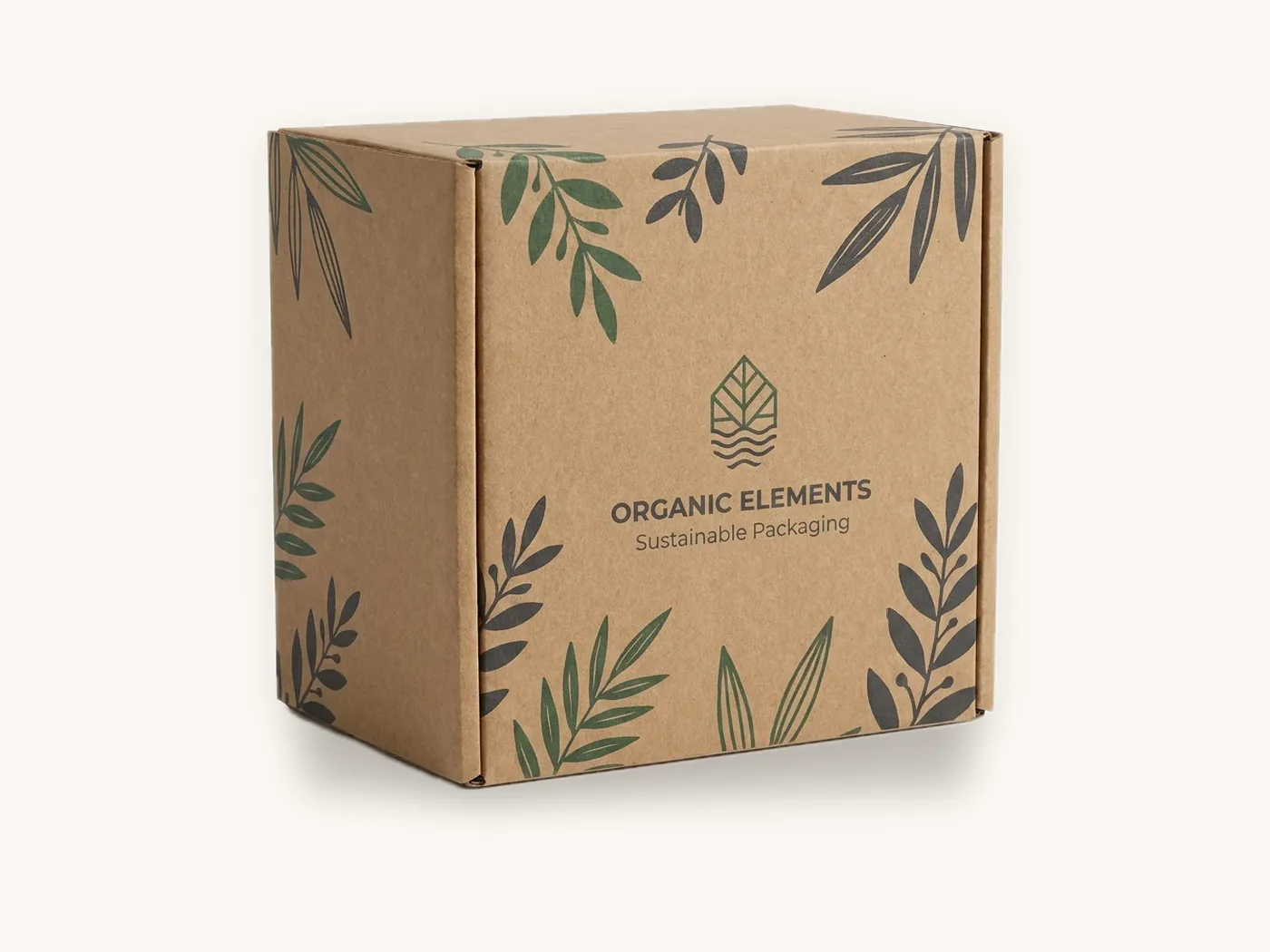
You do not need to use the word "green" to make an environmental claim. A leaf illustration next to the product name, a planet icon, a shade of green paired with the word "natural," or a made-up seal can all imply an environmental benefit. The Guides treat implied claims the same way as express ones, so review imagery as carefully as copy.
The claims brands print most, and how each is judged
The table below summarizes how the Green Guides approach the environmental claims that show up most often on retail boxes, mailers and labels. Treat it as a map, then read the relevant section of the Guides for the full text.
| Claim on the box | What shoppers tend to take from it | What you need | Safer way to say it |
|---|---|---|---|
| "Eco-friendly," "green," "sustainable" | The whole product and package have no net environmental harm | Very hard to substantiate as a broad claim | Name the attribute: "Box made with 70% recycled fiber" |
| "Recyclable" | Every part can go in the recycling bin where I live | Programs available to a substantial majority of buyers, for every component | "Carton recyclable; remove window film" |
| "Recycled" or "made with recycled content" | All of it is recycled material | Records showing recovered or diverted material, and the percentage | "Made with 50% post-consumer recycled paperboard" |
| "Compostable" | It breaks down safely in a compost program or home pile in a normal timeframe | Evidence it becomes usable compost in a timely way, plus qualification on facility access | "Commercially compostable where facilities exist; not suitable for home composting" |
| "Biodegradable" | It fully breaks down quickly wherever I throw it away | Complete breakdown within a short period after customary disposal | Usually avoid on packaging headed to landfill |
| "Plastic-free," "free of" | No trace of the named material | The item contains none of it, and the claim does not imply a false benefit | "Plastic-free packaging: paperboard box, paper tape, pulp insert" |
| "Non-toxic" | Safe for people and the environment | Evidence covering both human and environmental effects | State the specific attribute instead |
| Third-party seal or logo | An independent body verified a broad benefit | A real certification, disclosure of any material connection, and qualification of what it covers | Seal plus a line naming the certified attribute |
General environmental benefit claims
This is the category most brands should cut first. The Guides warn that unqualified general claims like "eco-friendly" suggest wide-ranging benefits that almost no product can prove. Adding a qualifier helps only if the qualifier is specific and prominent, and if the named benefit does not create a misleading overall impression.
"Eco-friendly box" on a front panel is risky. "Box made from FSC-certified paperboard" on the same panel is a narrower claim you can document through your supplier's chain-of-custody records.
Recyclable claims
The Guides say a marketer can make an unqualified recyclable claim when recycling facilities are available to a substantial majority of consumers or communities where the item is sold, and they define substantial majority as at least 60 percent. Below that level, the claim needs a qualification, and the lower the availability, the stronger the qualification must be.
Two details trip up packaging buyers. First, components matter: if a plastic window, a foil lamination or a magnet makes the package unrecyclable in practice, an unqualified claim is deceptive. Second, collection alone is not enough; the item needs to be collected and actually used in making another product. Our recyclable packaging guide goes deeper on which board, coating and adhesive choices keep a box in the recycling stream.
Recycled content claims
Recycled content means material recovered or otherwise diverted from the waste stream. Scrap that a mill reuses in its own original process does not count as recycled content under the Guides. If a box is not made entirely of recycled material, state the percentage, and consider whether "post-consumer" or "pre-consumer" is accurate for your fiber.
Get the number from your board supplier in writing. If recycled content varies from lot to lot, either use the lowest figure you can document or use a qualified range you can defend.
Compostable and degradable claims
A compostable claim requires competent evidence that all the materials break down into, or become part of, usable compost in a safe and timely manner in an appropriate composting program or home pile. If the item cannot be composted safely at home, say so. If municipal or commercial composting facilities are not available to a substantial majority of buyers, qualify that too.
Degradable and biodegradable claims have a stricter test: the item must completely break down and return to nature within a reasonably short period after customary disposal, which the Guides describe as no more than one year. Because most discarded packaging goes to landfills or recycling, where that breakdown does not happen on that timeline, an unqualified "biodegradable" on a box is a claim to avoid. The compostable packaging guide covers certification standards and what commercial composting actually requires.
Watch out: "compostable" on a kraft box does not cover a PET window, a gloss laminate or plastic tape. If any component would contaminate a compost stream, the claim must name the parts it covers or the package must change.
Matching the claim to every part of the package
A package is rarely one material. A typical retail carton has paperboard, ink, a coating, glue and sometimes a window, insert or label. Before you write a claim, list every component and decide whether the claim is true for each one.

A component-by-component review
| Component | Common options | Effect on recyclable or compostable claims |
|---|---|---|
| Board | SBS, kraft paperboard, corrugated, rigid greyboard | Paper-based boards are widely collected; rigid boxes with wrapped paper and magnets are harder to claim |
| Coating | Aqueous coating, varnish, lamination film | Aqueous coating is generally compatible with paper recycling; plastic film laminations complicate claims |
| Window | PET film, PLA film, no window | PET is a separate material; PLA is plant-based but needs commercial composting to break down |
| Insert | Paperboard, molded pulp, EVA foam | Pulp and paperboard support paper-based claims; foam usually breaks them |
| Closure and extras | Paper tape, plastic tape, magnets, ribbons | Non-paper extras need to be removable or disclosed |
| Label or sticker | Paper label, BOPP film label | A film label on a paper box is a minor component but can matter for "plastic-free" claims |
Simplify the package, then simplify the claim
The cleanest way to avoid qualifications is to reduce the number of materials. A folding carton in kraft paperboard with aqueous coating and a die-cut paperboard insert is far easier to describe accurately than a laminated rigid box with a foam cradle and a magnetic closure.
Our eco-friendly boxes are built around that idea, using recycled or FSC-certified board, soy or water-based inks and aqueous coatings. The eco-friendly materials and kraft paperboard pages describe the board options, and our guide to PET vs PLA window film explains what each window does to a sustainability story.
Symbols, seals and certifications
Visual marks carry as much weight as words. A shopper who sees chasing arrows reads "recyclable," whether or not that is what the brand intended.
Recycling symbols and resin codes
The Resin Identification Code, the number inside a triangle used on plastics, identifies the resin type. The Guides say placing it inconspicuously is not in itself a recyclable claim, but a prominent chasing-arrows mark on a plastic component that is rarely recycled can be deceptive. For paper-based boxes, avoid dropping a generic recycling symbol into artwork without checking what it implies for every component.
Voluntary on-pack labeling programs exist that pair a symbol with disposal instructions based on recycling access data. If you use one, follow the program's rules exactly, because the mark carries the program's representation, not just yours.
Third-party certifications and the FSC logo
A certification seal is treated as an endorsement. The Guides say you should disclose any material connection to the certifier, such as membership or payment beyond ordinary fees, and qualify seals that do not describe the specific benefit, since a bare logo can imply a general environmental benefit.
FSC on-product labels have their own trademark rules. The claim depends on a certified chain of custody from forest to finished box, and label artwork generally needs approval through a certificate holder before it prints. Tell us early if you want an FSC mark so the board, the paperwork and the label approval line up with the production schedule.
The Green Guides review and state rules
The Green Guides were last revised in 2012. In December 2022 the FTC requested public comment on whether and how to update them, and it held a public workshop on recyclable claims in 2023. As of this writing, revised Guides have not been finalized, and the scope and timing of any changes are unknown. Check the FTC's Green Guides page for the current status before a large print run.
California and other states
Some states go further than the federal guidance. California's environmental marketing law makes it unlawful to make environmental claims that do not conform to the Green Guides. California's SB 343 restricts use of the chasing-arrows symbol and other recyclability claims unless the material meets statewide collection and sorting criteria set through CalRecycle, with the restrictions phasing in on a timeline tied to the state's material characterization work. If you sell nationally, that effectively makes California's standard your standard.
Several states have also passed extended producer responsibility laws for packaging. They are separate from claims rules, but the material data they require is the same data you need to substantiate a claim.
Selling into the UK
The UK Competition and Markets Authority publishes a Green Claims Code built on similar principles: claims must be truthful, clear, not omit important information, compare fairly, consider the full life cycle and be substantiated. The Digital Markets, Competition and Consumers Act 2024 gave the CMA power to fine businesses directly for consumer law breaches. If the same box ships to both markets, write the claim to satisfy the stricter reading.
Tip: keep a one-page "claim file" for each SKU with the exact wording, the components covered, the supporting documents and the date you last checked them. When a supplier changes board or a regulator updates guidance, you will know which boxes to review.
A pre-press audit for environmental claims
Run this process on every dieline before you approve a proof, while changes are still free.
- List every claim. Highlight every environmental word, number, symbol, seal and image on every panel, including the inside of the lid and any insert card.
- Translate each into plain language. Write down what a reasonable shopper would believe from it, including implied meanings.
- List every component. Board, coating, ink, glue, window, insert, label, tape and closure.
- Test scope. For each claim, confirm it is true for every component it appears to cover, or rewrite it to name the component.
- Collect evidence. Attach certificates, supplier letters, test reports and recycling access data to the claim file.
- Check qualifiers. Make sure qualifications sit close to the claim, in readable type, and are not buried on the bottom flap.
- Remove vague terms. Replace "eco-friendly," "green" and "sustainable" with the specific attribute you can prove.
- Check state and export markets. Review California rules for US sales and the CMA's code for UK sales.
- Get sign-off. Have the person responsible for regulatory review, or counsel, approve the final wording before artwork is released.
Before-and-after examples
Say you sell a candle in a kraft tuck carton with a PET window and a paperboard insert. "100% recyclable eco box" overstates on three counts: the window, the broad term and the percentage. A defensible rewrite reads "Carton and insert made with recycled paperboard. Remove window film before recycling the carton."
Say you ship plastic skincare jars in a corrugated mailer with a pulp insert. "Plastic-free packaging" could be read as covering the jars; "Plastic-free shipping box, tape and insert" removes the ambiguity. The broader sustainable packaging guide shows how to pick materials that make short, accurate claims possible.
How Box Sense fits into a compliant claim
Box Sense manufactures and prints the packaging; your brand owns the claim. We can tell you what each board, coating, window and insert is made of, provide the supplier documentation we hold for those materials, and help you choose structures that are easier to describe accurately. We do not review or approve environmental claims for legal compliance, so the final wording should be signed off by your own regulatory reviewer or counsel.
What to send when you request a quote
- Product dimensions, weight and the style you want, such as a tuck carton, mailer or custom product box
- Material preferences: recycled content, FSC-certified board, kraft or white, and any finishes you want to avoid
- The exact environmental claims you plan to print, so we can confirm which materials they describe
- Whether you need windows, inserts, labels or tape, and which materials those should be
- Quantities, target in-hand date and ship-to location
- Artwork, or a note that you want help from our design services team to lay out claim and disposal copy on the dieline
Proofing, samples and timeline
We supply a dieline, set up artwork and send a 3D digital proof with two revision rounds included, which is the right moment to check claim placement and type size. Unprinted structural samples are free, and a printed sample of approved artwork is free on orders of 100 or more; see samples for details.
The minimum order is 10 boxes, with no die or plate charges. Standard production is 8–12 business days after proof approval, rush in 5 business days on most paperboard and corrugated styles, and US shipping is free. As a reference point, a kraft tuck carton in 18 pt board at 4x3x2 in with one-color print runs about $0.81 per box at 100 units and about $0.36 at 1,000. Check your own spec in the packaging price estimator.
If you need to add disposal instructions to stock you already hold, custom labels and stickers are a practical stopgap until the next box run.
Frequently asked questions
Are the FTC Green Guides legally binding?
The Green Guides are not a regulation with their own penalties. They are the FTC's interpretation of how Section 5 of the FTC Act, which bans deceptive practices, applies to environmental claims. The FTC relies on them in enforcement, and some states, including California, have incorporated them into state law. In practice, brands should treat them as the standard their packaging claims will be measured against.
Can I print "eco-friendly" on my box?
You can, but it is one of the riskiest claims to make. The Green Guides caution that broad terms like "eco-friendly" suggest wide-ranging benefits that are very hard to substantiate. A specific, qualified claim such as "made with 60% recycled paperboard" communicates a real benefit, is easier to prove with supplier records, and gives a shopper more useful information than a general label.
When can I call packaging recyclable?
Under the Green Guides, an unqualified recyclable claim is appropriate when recycling programs that accept the item are available to a substantial majority, at least 60 percent, of the consumers or communities where it is sold. Every significant component must also be recyclable. If not, qualify the claim. California and other states may impose stricter conditions, so check state rules before printing.
What is the difference between compostable and biodegradable?
Compostable means the material breaks down into usable compost in a safe, timely way in a composting program or home pile, and the claim should say if only commercial facilities work. Biodegradable means it completely breaks down after customary disposal within a short time, described as about a year. Because most packaging goes to landfill or recycling, biodegradable claims on boxes are rarely supportable.
Does the recycling symbol on my box count as a claim?
Often, yes. Shoppers read chasing arrows as a statement that the package is recyclable. The Guides say a small, inconspicuous resin code on plastic is not itself a recyclable claim, but a prominent symbol can be. California's SB 343 further restricts recycling symbols on products sold there. Only add a symbol after confirming it is accurate for every component.
Does Box Sense check whether my green claims are compliant?
No. Box Sense prints and structures the packaging and can document what each material is, including FSC-certified boards, recycled fiber, aqueous coatings and PLA windows where you choose them. The claim itself belongs to your brand, so have your regulatory reviewer or counsel approve the final wording. We will help place claim and disposal copy clearly on the dieline.
What documentation should I keep for an environmental claim?
Keep the exact claim wording, a list of the components it covers, supplier certificates or letters for recycled content and certified fiber, any compostability test reports, recycling access data behind recyclable claims, and the date each document was last checked. Update the file whenever you change suppliers, materials or artwork, and review it when regulators publish new guidance.
Next steps
Start by listing every environmental word and symbol on your current packaging, then check each against the components it covers. When you are ready to move to a simpler, easier-to-describe structure, price it in the instant packaging estimator and request a quote with your planned claims included, so we can confirm the materials behind them and send a dieline for your review.
Boxes in this guide
Order the packaging we covered
Written by the Box Sense Packaging Team
Our structural designers, prepress technicians and production staff print and convert custom boxes every day for brands in the United States, United Kingdom and UAE. Questions about this guide? Talk to us.