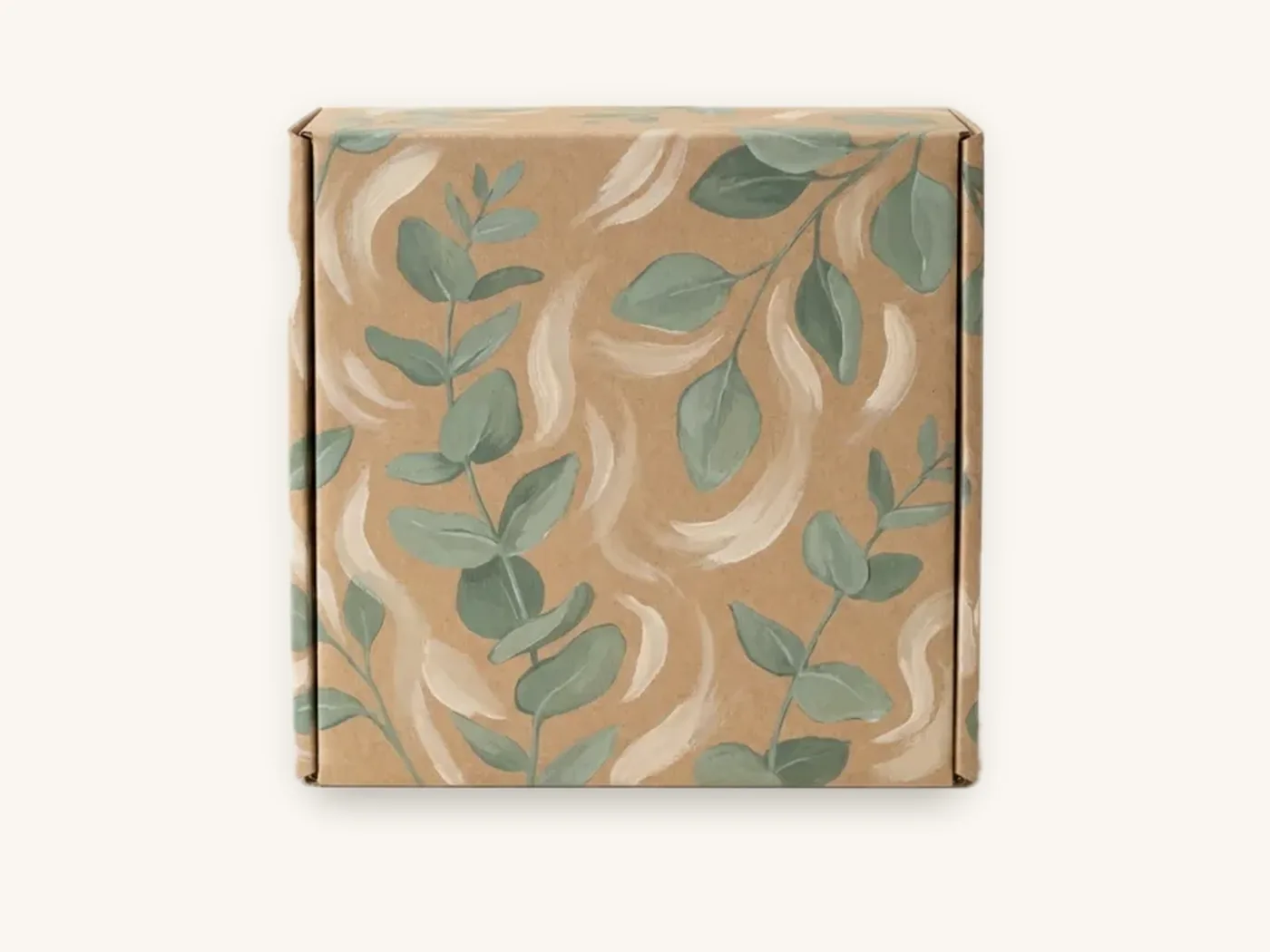
Compostable packaging is packaging that breaks down into usable compost, without leaving harmful residues, within the time and conditions of a real composting process. For a claim to hold up, the whole package has to meet that bar, not just its main material, and there must be credible evidence, typically testing to a recognized standard such as ASTM D6400 or ASTM D6868 and often third-party certification.
That is a narrower definition than most marketing suggests. A paper box is made from plant fiber, but add a plastic lamination, a foil logo or a PET window and the package no longer composts cleanly. And "compostable" usually means compostable in an industrial facility, which many customers cannot access.
This guide explains what the standards and certifications require, how industrial and home compostable differ, which packaging components qualify and which do not, and how to describe your packaging honestly under the FTC Green Guides and state labeling laws.
Key takeaways
- Compostable means the material breaks down into compost in a defined composting environment and timeframe with no toxic residue. Biodegradable alone has no timeframe or conditions and is a risky label.
- ASTM D6400 covers plastics designed to compost in industrial facilities; ASTM D6868 covers compostable coatings and laminates on paper and other substrates. EN 13432 is the European counterpart.
- Industrial compostable products need the heat and management of a commercial facility. Home compostable products must break down in a cooler, less controlled backyard pile, which is a harder test.
- Plain paperboard and corrugated are fiber-based, but inks, coatings, windows, foils, glues and labels determine whether the finished box can be called compostable.
- For most shipping and retail boxes, curbside recycling is more accessible to customers than composting. Compostable designs make most sense for food-soiled packaging and places with food-waste collection.
- Only make a compostable claim you can substantiate, qualify it for access to facilities, and check state laws that restrict these terms.
What compostable packaging actually means
The words compostable, biodegradable, degradable and recyclable are often used interchangeably. They describe very different end-of-life outcomes, and regulators treat them differently.
| Term | What it means | What to watch |
|---|---|---|
| Compostable | Breaks down into humus-like compost in a composting environment within a set period, leaving no harmful residue | Must specify industrial or home; needs evidence and, increasingly, certification |
| Biodegradable | Broken down by microorganisms at some point, under some conditions | No timeframe; nearly everything biodegrades eventually. Unqualified claims are risky |
| Degradable or oxo-degradable | Breaks into smaller pieces, often through additives | Fragmentation is not composting; several states restrict these terms |
| Recyclable | Can be collected, sorted and reprocessed into new material | Depends on whether local programs accept the item |
| Made with renewable or plant-based material | Describes the input, not the end of life | Plant-based plastics are not automatically compostable |
Why biodegradable is not enough
Almost any organic material biodegrades given enough time, and landfills are designed to limit the oxygen and moisture that decomposition needs. That is why the FTC Green Guides caution against unqualified biodegradable claims unless the item will completely break down within a reasonably short time after customary disposal. For packaging, that bar is rarely met, so most brands avoid the word.
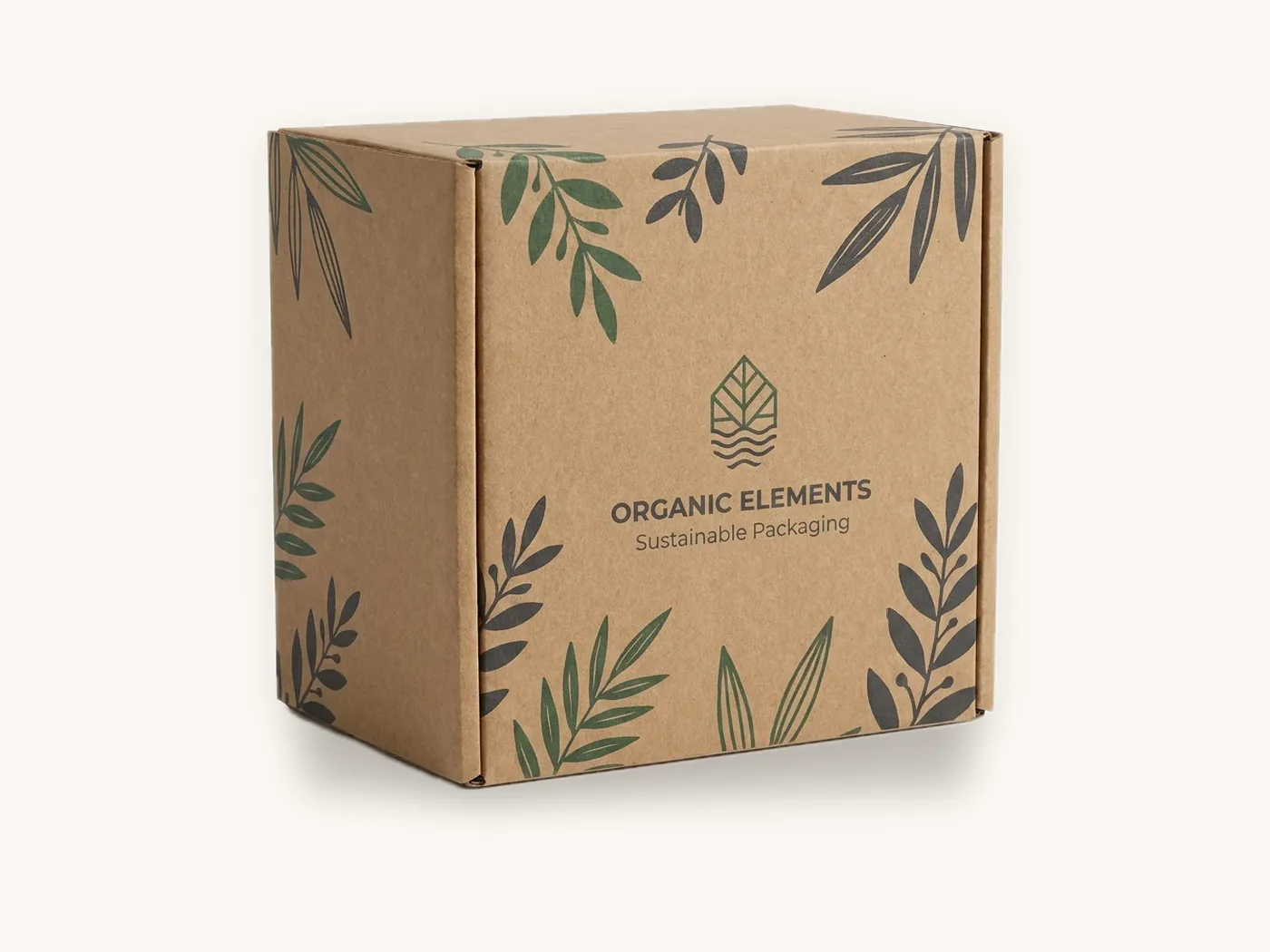
Industrial vs home compostable
The single most important qualifier on any compostable claim is where the item can be composted. The difference comes down to temperature, time and management.
Industrial composting
Commercial composting facilities build large, managed piles or vessels that are turned, watered and monitored. Microbial activity keeps the material hot, often in a thermophilic range well above what a backyard pile reaches, for weeks at a time. Standards for industrial compostability are designed around those conditions.
Industrial composting accepts materials that would persist in a garden pile, including many certified compostable bioplastics such as PLA. The catch is access: not every community has a facility, and those that do may not accept packaging at all, only yard trimmings or food scraps.
Home composting
A backyard bin or pile runs cooler and less consistently, depending on the mix of materials, moisture, turning and season. Home compostable certifications therefore test breakdown at lower temperatures over longer periods. There is no ASTM home composting specification equivalent to D6400; home compostable claims are usually supported by certification schemes built on other standards.
Comparison
| Factor | Industrial compostable | Home compostable |
|---|---|---|
| Where it breaks down | Commercial composting facility | Backyard bin, pile or community garden |
| Conditions | Hot, managed, turned and monitored | Cooler, variable, lightly managed |
| Typical standards | ASTM D6400, ASTM D6868, EN 13432 | Home compostability certification schemes |
| Common materials | PLA films and windows, certified bioplastic coatings, fiber products | Uncoated paper and board, some certified films |
| Customer access | Only where a facility accepts packaging | Any customer who composts at home |
| Claim to print | "Commercially compostable where facilities exist" or similar | "Home compostable," with certification details |
Watch out: a PLA window or bioplastic film certified for industrial composting may persist for a long time in a home compost pile. Do not describe an industrially compostable package as simply "compostable" without explaining where it composts.
Standards and certifications: ASTM D6400, D6868 and BPI
Standards define how compostability is tested. Certification programs check that a specific product passed those tests and meets any additional program rules. They are related but not the same thing.
ASTM D6400
ASTM D6400 is the US specification for plastics designed to be aerobically composted in municipal or industrial facilities. In general terms, it requires that the material disintegrates so it is not visually distinguishable in finished compost, that it biodegrades to a set level within a set period, and that the resulting compost does not harm plant growth or contain excessive regulated metals.
ASTM D6868
ASTM D6868 applies the same compostability principles to biodegradable plastics used as coatings or laminates on paper and other compostable substrates. It is the standard most relevant to packaging such as coated paperboard cups, food boxes with barrier coatings and laminated paper products, because the coating and the substrate are tested as a finished item.
EN 13432 and international standards
In Europe, EN 13432 sets comparable requirements for packaging recoverable through composting. If you sell in the UK or EU, customers and retailers may look for certification to that standard rather than, or in addition to, ASTM.
BPI certification
The Biodegradable Products Institute (BPI) runs a widely recognized North American certification program for products and packaging that meet ASTM D6400 or D6868. Certification involves testing by approved laboratories and review of the materials, and BPI also sets its own program requirements, including a restriction on intentionally added fluorinated chemicals. Certified products can carry the BPI mark under its licensing rules.
What certification does and does not tell you
- It does show that a specific product or material passed recognized compostability tests.
- It does not guarantee that a local composting facility accepts that product.
- It does not transfer automatically: certification for a coating or film does not certify a finished box that adds other inks, adhesives or components.
- It does not replace the need to qualify your claim for your customers' access to composting.
Check each program's current rules directly, because requirements are updated over time.
Which packaging components qualify and which do not
A box is a system of materials. The compostability of the finished package depends on its least compostable component, so review every element on the spec sheet.
| Component | Compostability outlook | Notes |
|---|---|---|
| Uncoated paperboard or kraft board | Generally good | Fiber-based; confirm inks, glues and additives |
| Corrugated board | Generally good | Often accepted in composting where facilities take paper; recycling is usually easier |
| Soy or water-based inks | Often compatible | Confirm ink documentation; heavy coverage adds more material |
| Aqueous coating | Often compatible | Water-based; confirm specific product documentation |
| Plastic lamination (gloss, matte, soft-touch) | Does not qualify | Film does not compost; remove it for any compostable design |
| Foil stamping | Problematic | Metallized foil leaves residue; skip or keep to a minimum and qualify |
| PLA window | Industrial only, if certified | Will not reliably break down at home |
| PET window | Does not qualify | Conventional plastic |
| Water-based adhesives | Often compatible | Confirm with supplier documentation |
| Plastic tape and standard labels | Do not qualify | Use paper tape and paper labels designed for composting |
| Grease or moisture barrier coatings | Varies widely | Some certified compostable barriers exist; fluorinated barriers are a concern |
| Molded pulp inserts | Generally good | Fiber-based; check additives and coatings |
Windows
Windows are a common sticking point. A PLA film window can be certified compostable in industrial conditions, while a PET window cannot. Our comparison of PET vs PLA window film covers clarity, stiffness and end-of-life in more detail. Window boxes can be made with either film, so specify PLA if composting is part of your claim.
Finishes
Most premium finishes, such as soft-touch lamination, holographic board and heavy foil, work against compostability. If a luxury feel matters, consider embossing, textured uncoated paper or a strong one-color print instead. The printing and finishes page shows which options add film or metal.
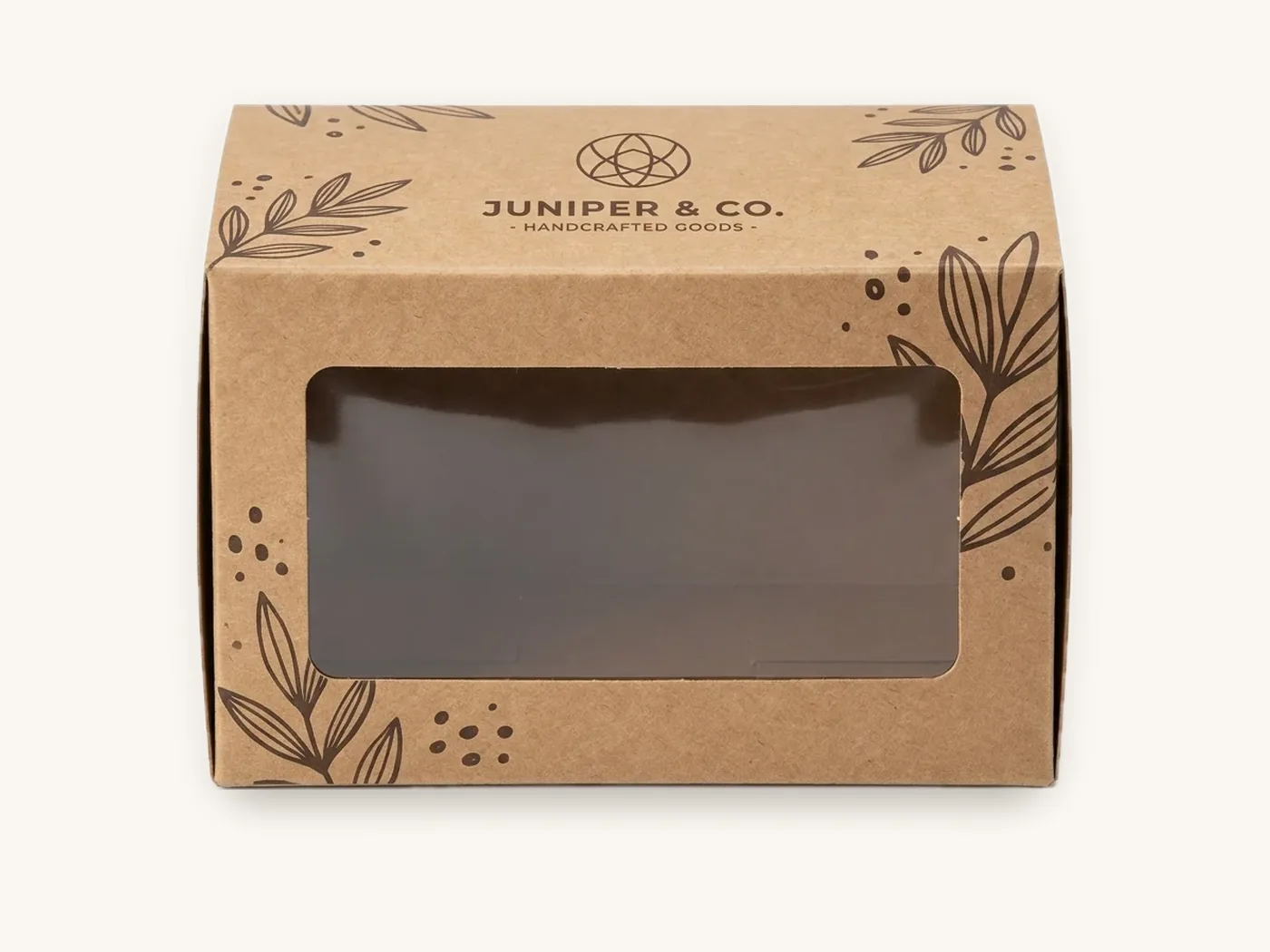
Compostable vs recyclable: which is right for your box
Compostable is not automatically better than recyclable. The best end of life is the one your customers can actually use, for the material that is actually left after use.
When recycling is the better path
Clean paper and corrugated boxes are widely accepted in US curbside recycling, and recycled fiber goes back into new board. For most shipping boxes, mailers, retail cartons and gift boxes that arrive clean, designing for recycling reaches far more customers than designing for composting. Our sustainable packaging guide explains how to weigh these trade-offs across a whole range.
When compostable makes sense
- Food-soiled packaging: grease and food residue can make paper unsuitable for recycling, while composting can accept it where facilities take food-service packaging.
- Food service and events: venues with food-waste collection can send packaging and scraps to the same stream.
- Small components that recycling misses: some items are too small or mixed to sort for recycling.
- Markets with good composting access: some cities have well-developed food-waste programs.
A simple decision guide
| Your packaging | Usually best end-of-life design |
|---|---|
| Clean shipping or mailer box | Recyclable corrugated, paper tape, no plastic film |
| Retail carton for a dry product | Recyclable paperboard, aqueous coating |
| Bakery, takeout or greasy food box | Compostable-compatible board and barrier, where collection exists |
| Box with a window | Recyclable board with PLA window, or no window |
| Premium gift box | Recyclable board with minimal finishes; avoid laminations |
| Product in contact with food scraps at an event | Certified compostable items matched to the venue's collection |
For clean boxes, many brands choose recycled or FSC-certified board and describe the package as recyclable. Our guide to FSC-certified packaging explains what that certification covers.
Designing compostable boxes: a practical checklist
If you have decided that a compostable design fits your product and customers, work through the spec one component at a time.
Compostable box design checklist
- Choose uncoated or minimally coated fiber board, such as kraft paperboard or plain corrugated.
- Use soy or water-based inks and keep ink coverage moderate; natural kraft with one or two colors needs less ink than full flood coverage.
- Skip plastic laminations. Use an aqueous coating only if you need scuff resistance, and confirm its documentation.
- Avoid foil, holographic board and metallic inks, or accept that they limit your claim.
- Specify a PLA window or remove the window, and state that PLA composts only in industrial facilities.
- Use fiber-based inserts such as paperboard or molded pulp instead of foam.
- Choose paper tape and paper labels that are suitable for composting.
- Check food-contact needs. If the box touches food, confirm the board and any barrier are suitable for food contact.
- Collect documentation for every component: board, inks, coatings, adhesives and films.
- Decide on certification. If you want to use a certification mark, work with the program before finalizing the design.
- Write the claim last, based on what the documentation and certification actually support.
Kraft mailer boxes and eco-friendly boxes are natural starting points, and the eco-friendly and compostable materials page lists the boards and finishes we offer.
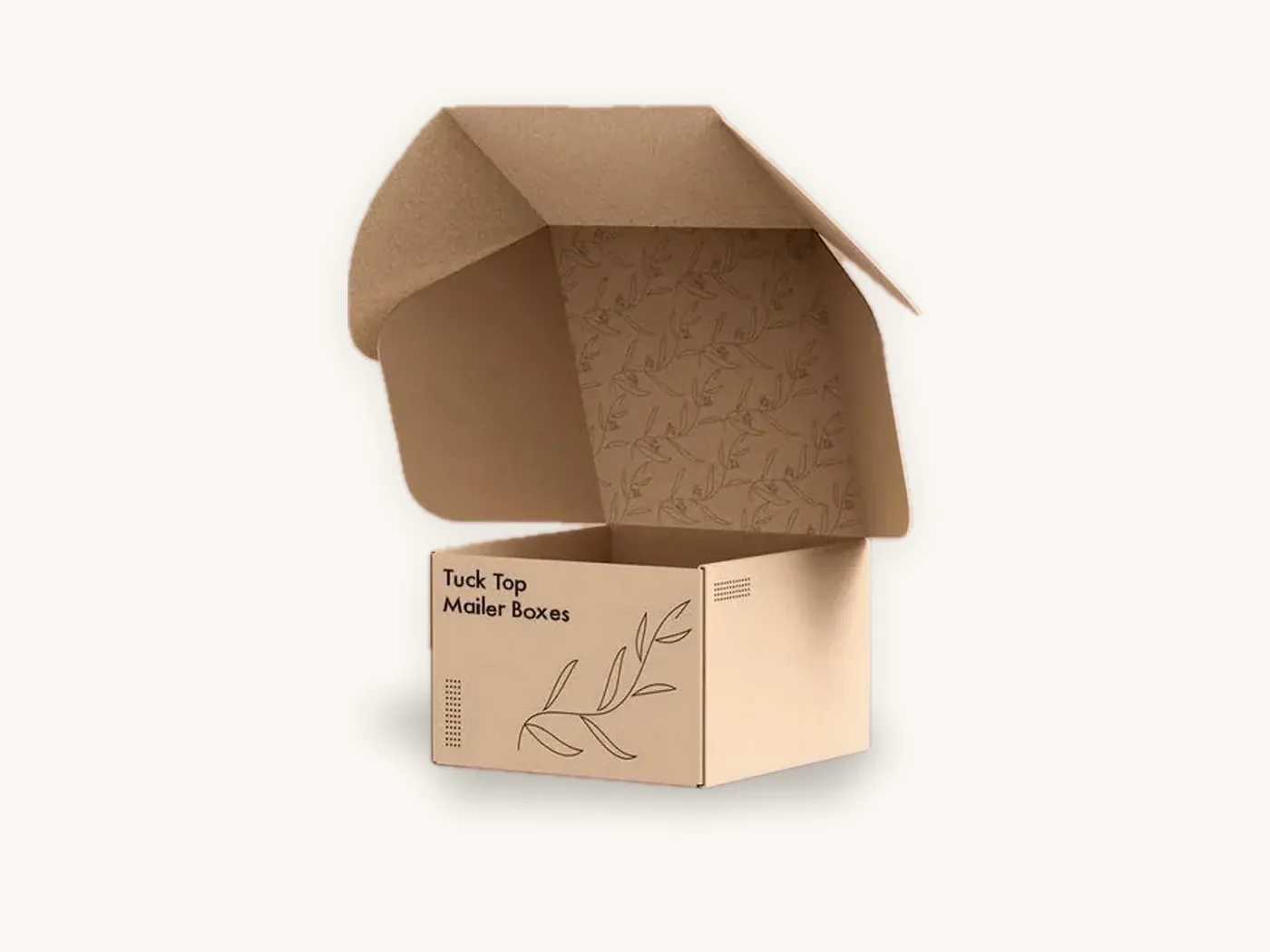
Avoiding greenwashing: how to label compostable packaging
Environmental claims are marketing claims, and they are regulated. In the US, the Federal Trade Commission's Green Guides explain how the FTC applies its authority over deceptive advertising to environmental claims, including compostable, degradable and recyclable. Several states add their own rules. Our guide to green claims on packaging covers the wider topic.
What the Green Guides expect
In general terms, a marketer claiming a product or package is compostable should have competent and reliable scientific evidence that all the materials will break down into usable compost in a safe and timely way in an appropriate composting program or home pile. If composting facilities are not available to a substantial majority of the consumers or communities where the product is sold, the claim should be qualified.
The FTC has been reviewing the Green Guides, so read the current version on the FTC Green Guides page before finalizing any label.
State labeling laws
Some states regulate these terms directly. California and Washington, for example, have laws limiting how products can be labeled compostable, requiring products labeled that way to meet recognized standards, and restricting terms such as biodegradable on certain products. Requirements and effective dates differ by state and product type. Extended producer responsibility laws may also treat compostable packaging in specific ways; see our overview of EPR packaging laws in the US. Confirm current rules with counsel before printing.
Claims compared
| Claim on the box | Risk | Better approach |
|---|---|---|
| "100% biodegradable" | Unqualified, no timeframe; restricted in some states | Avoid the term; describe material and disposal instead |
| "Compostable" on a box with a plastic window | Not all components compost | Remove the window or qualify which parts compost |
| "Compostable" for an industrially compostable item | Most customers may lack access | "Commercially compostable. Check if facilities exist in your area." |
| "Eco-friendly" alone | Broad and hard to substantiate | Name the specific attribute, such as recycled content or FSC certification |
| "Home compostable" without testing | Unsubstantiated | Only use with supporting certification or test evidence |
| "Plastic-free" on a box with a PLA window | PLA is a plastic | "Plastic-free except PLA window" or remove the window |
Tip: tell customers what to do, not just what the box is. "Recycle the box with paper. Remove the PLA window and compost it where commercial composting is available" is clearer, more honest and more useful than a single green word.
Compostable food packaging: extra considerations
Food packaging is where compostable designs make the most sense, and where the requirements are strictest.
Food contact
Materials that touch food must be suitable for food contact under FDA rules. That applies to the board, any barrier coating and inks or adhesives that could migrate. Our guide to food-safe inks and coatings explains the basics; confirm specific materials with your supplier and, where needed, regulatory counsel.
Grease resistance without fluorinated chemicals
Takeout, bakery and fried-food boxes need grease resistance. Some barriers historically relied on fluorinated chemicals, which several states now restrict in food packaging, and which certification programs such as BPI do not accept when intentionally added. Look for barrier coatings with documentation showing they are free of intentionally added fluorinated chemicals and, if a compostable claim matters, that they are certified or tested for compostability.
Matching the format to the use
Custom food boxes cover cartons, gable boxes and takeout formats. For events and restaurants with food-waste collection, a compostable-compatible box can go into the same bin as the leftovers. For packaged dry goods sold at retail, a recyclable carton may be the better choice. The food and beverage packaging page shows common formats.
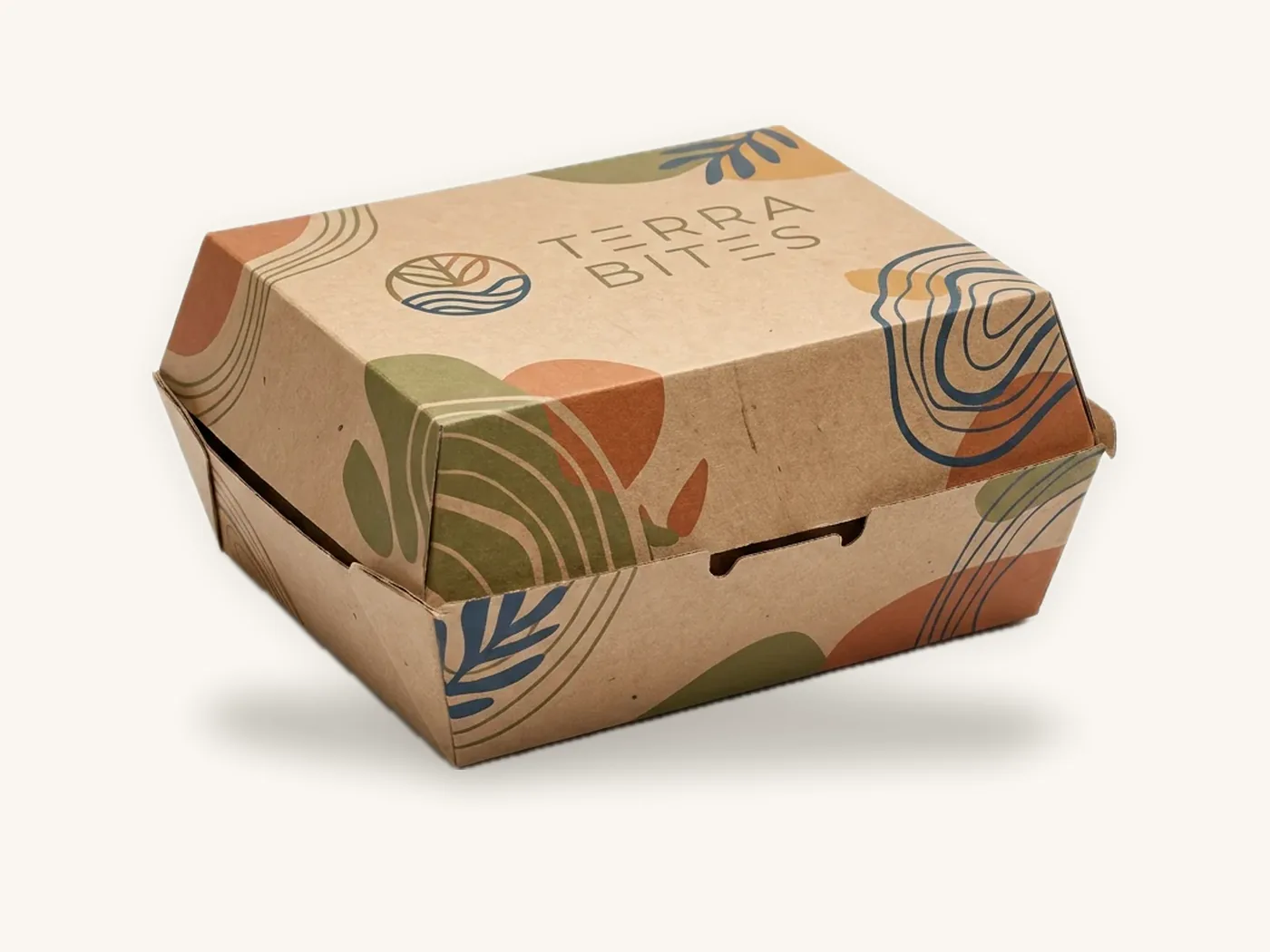
Ordering lower-impact boxes from Box Sense
Box Sense offers FSC-certified boards, soy and water-based inks, aqueous coatings and PLA windows, which are the building blocks of recyclable and compostable-compatible designs. We do not print certification marks or compostability claims on your behalf; any claim should be based on documentation and, where needed, certification that you review with counsel.
What to include in your request
- The product, and whether the box contacts food
- The end-of-life goal: recyclable, industrial compostable, home compostable, or a recommendation
- Box style and internal dimensions
- Board preference: kraft paperboard, SBS, corrugated or FSC-certified
- Print: number of colors and ink coverage
- Window needs, and whether PLA film is required
- Inserts needed, such as paperboard or molded pulp
- Quantities and target in-hand date
- Any documentation you need for certification or claim review
Indicative pricing for simple fiber boxes
Plain kraft designs with light print are among the most affordable custom boxes. A kraft tuck carton in 18 pt kraft at 4x3x2 in with one-color print is about $0.43 each at 500 units and about $0.36 at 1,000. A 4x4x4 in window box in 18 pt SBS with full color and aqueous coating is about $0.89 at 500. Your exact spec is in the instant price estimator.
Timeline
- Quote within 24 hours.
- Free design support with dieline, artwork setup and a 3D digital proof, including two revision rounds.
- Free unprinted structural samples; printed samples free on orders of 100+.
- Production in 8–12 business days after proof approval, with rush in 5 business days on most paperboard and corrugated styles.
- Free shipping on every US order; international shipping quoted at cost.
The minimum order is 10 boxes, and our sustainability page explains the materials in more depth. For a broader look at low-impact box options, read the eco-friendly boxes guide.
Frequently asked questions
What is the difference between compostable and biodegradable packaging?
Compostable packaging breaks down into usable compost within a defined time under composting conditions and leaves no harmful residue, which is tested against standards such as ASTM D6400. Biodegradable only means microorganisms will break a material down eventually, with no timeframe or conditions. Because of that vagueness, unqualified biodegradable claims are discouraged by the FTC and restricted in some states.
What is the difference between home compostable and industrial compostable?
Industrial compostable items break down in commercial facilities that keep piles hot, moist and managed. Home compostable items must break down in a cooler, less controlled backyard pile, which is a tougher test. Many certified compostable plastics, including PLA, are industrial only. Always state which type applies, because many customers do not have access to a commercial composting facility.
Are cardboard boxes compostable?
Plain, uncoated cardboard and paperboard are made of plant fiber and generally break down in composting. The finished box may not, though, if it has plastic lamination, foil, a PET window, plastic tape or certain coatings. For clean shipping boxes, curbside recycling is usually more accessible. Only label a box compostable if every component supports the claim and you have evidence.
What do ASTM D6400 and D6868 cover?
ASTM D6400 is the US specification for plastics designed to compost in municipal or industrial facilities. ASTM D6868 covers biodegradable plastics used as coatings or laminates on paper and other compostable substrates, tested as the finished item. Both address disintegration, biodegradation and whether the resulting compost is safe. They are the standards most US compostability certifications, including BPI, are based on.
Is a PLA window compostable?
A PLA window film can be certified compostable in industrial composting facilities, but it does not reliably break down in a home compost pile. PET windows are conventional plastic and not compostable. If you use PLA, say that it composts only where commercial facilities exist, and remember that PLA is still a plastic if you are making plastic-free claims.
Do I need BPI certification to call packaging compostable?
Federal rules do not name a single required certification, but the FTC expects reliable scientific evidence for compostable claims, and some states require products labeled compostable to meet ASTM standards or carry third-party certification. BPI certification is a common way to substantiate a claim in North America. Check current state laws and program rules with counsel before printing.
Is compostable packaging better than recyclable packaging?
Not automatically. The better choice is the one customers can actually use for the material left after use. Clean paper boxes are widely recyclable at the curb, so recyclable designs reach more people. Compostable designs make most sense for food-soiled packaging and places with food-waste collection. Choose based on your product, your customers' access and what you can substantiate.
Next steps
Start by listing every component in your current box and marking which ones block a compostable or recyclable claim. Then price a simplified fiber-based version in the instant price estimator, and request a quote with your end-of-life goal so we can recommend boards, inks, coatings and window film to match.
Boxes in this guide
Order the packaging we covered
Written by the Box Sense Packaging Team
Our structural designers, prepress technicians and production staff print and convert custom boxes every day for brands in the United States, United Kingdom and UAE. Questions about this guide? Talk to us.