
Packaging EPR laws shift part of the cost of recycling packaging from cities and taxpayers to the companies that put packaged products on the market. Several US states, including Maine, Oregon, Colorado, California and Minnesota, have enacted extended producer responsibility (EPR) laws for packaging, and more are considering them. If you sell a boxed, bagged or labeled product into those states, you may be the "producer" who has to register, report packaging data and pay fees.
The rules differ by state and they are still being phased in, so no single article can tell you exactly what you owe. What this guide can do is explain how these programs are built, what information they ask for, and which packaging decisions tend to matter, so your team is ready when the state program or your counsel asks for numbers. Nothing here is legal advice.
Key takeaways
- Packaging EPR laws make "producers", usually the brand owner, responsible for funding the collection and recycling of the packaging their products ship in.
- Most state programs work through a producer responsibility organization (PRO) that registers producers, collects data, sets fees and funds recycling services.
- Expect to report packaging by material and weight, per state, for every component: carton, mailer, insert, window, label, tape and fill.
- Fees are typically eco-modulated, meaning packaging that is easier to recycle or uses less material may pay less than hard-to-recycle formats. The exact formulas vary and change.
- Deadlines, fee rates, small-business exemptions and covered materials differ state by state. Check each state program directly and confirm your obligations with counsel.
- The work you can start now is data: a clean packaging bill of materials for every SKU, plus design choices that reduce weight and mixed materials.
What packaging EPR laws are and why states passed them
Traditional curbside recycling in the US is paid for mostly by local governments and their residents. The companies that choose the packaging have no direct financial link to what happens to it after the customer opens the box. Extended producer responsibility changes that link.
Under an EPR program, producers of covered packaging collectively fund some or all of the cost of collecting, sorting and processing it. The idea is that when the company choosing a multi-layer pouch pays more to manage it than a company choosing a plain corrugated box, designers get a reason to pick formats the recycling system can handle.
The states brands watch most closely
Maine and Oregon passed the first US packaging EPR laws in 2021. Colorado and California followed in 2022, and Minnesota in 2024. Other states have since passed or debated similar bills. Each law was written separately, so the details below are patterns, not a universal rulebook.
| State | Program shape (general) | Where to confirm current details |
|---|---|---|
| Maine | Producers fund a stewardship program that reimburses municipalities for managing packaging | Maine Department of Environmental Protection |
| Oregon | Producers join a PRO that funds recycling system improvements alongside local governments | Oregon Department of Environmental Quality |
| Colorado | A PRO implements a statewide recycling program funded by producer dues | Colorado Department of Public Health and Environment |
| California | A PRO funds recycling and must work toward source-reduction and recyclability goals for covered material, with a strong focus on plastic | CalRecycle |
| Minnesota | Producers fund packaging and paper recycling through a PRO, with needs assessment and phased obligations | Minnesota Pollution Control Agency |
Treat this table as orientation only. Registration windows, reporting years, fee schedules and exemptions have shifted as agencies write regulations, and they may shift again. Start from the state agencies: CalRecycle, the Oregon Department of Environmental Quality and the Maine Department of Environmental Protection publish program pages and rulemaking updates.

Who counts as a producer under state packaging laws
The first question every brand asks is whether the law applies to it at all. EPR statutes answer that with a producer hierarchy, a ranked list of who is responsible for a given package.
The typical producer hierarchy
While each statute words it differently, the order usually runs like this:
- The brand owner. The company whose brand appears on the product or packaging, if it has a presence in the US or the state.
- The licensee. If the brand owner is not reachable, the company licensed to use the brand.
- The importer or first distributor. If neither of the above can be held responsible, the company that first brings the product into the state or the country.
- Online sellers and retailers. Some programs address packaging used to ship products sold online, and some treat a retailer as the producer of its own private-label goods.
For a typical direct-to-consumer brand that designs its own boxes and sells on its own site, the brand owner is almost always the producer. For a private-label product, it depends on how the law treats the name on the box and the relationship with the manufacturer.
Shipping packaging and e-commerce
A mailer or shipping box that carries an online order to a customer in a covered state is still packaging that ends up in a household bin. Several programs include this "transport" or "e-commerce" packaging, which means your corrugated boxes, tape, void fill and packing slips may be reportable along with the retail carton.
If a marketplace or 3PL packs your orders, do not assume they report for you. Contracts often say nothing about EPR yet, and each program has its own rules on who reports marketplace and fulfillment packaging. Ask the question in writing.
Small producer exemptions
Most laws exempt small producers, typically defined by annual revenue, by the tonnage of packaging supplied into the state, or both. The thresholds differ by state, and some exempt producers still have to register or file a simplified report. Do not rely on a threshold you read in a news article; check the current statute and regulations for each state you sell into.
Watch out: exemptions are usually tested state by state, but revenue tests may count your total sales, not just sales in that state. A small brand with national revenue above a threshold can be in scope even if its shipments into one state are modest.
How producer responsibility organizations work
A PRO is a nonprofit organization, formed by or on behalf of producers, that carries out the program the law requires. In practice, it is the organization you will deal with most.
What a PRO does
- Registers producers and maintains the list of brands in the program.
- Collects packaging data through annual or periodic reports.
- Prepares a program plan for approval by the state agency, covering how collection and recycling will be funded and improved.
- Sets and invoices fees, often with eco-modulation built in.
- Funds services, such as reimbursing local governments, expanding collection, improving sorting facilities or supporting markets for recycled material.
- Reports results back to the state, including recovery rates and progress toward goals.
In several states, a single PRO has been approved to run the program, and the same organization may operate in more than one state. That can simplify registration, but each state program still has its own covered materials list, fee schedule and reporting calendar.
What the state agency does
The environmental agency writes regulations, approves or rejects the PRO's plan, sets or reviews targets, and enforces against producers who do not participate. An advisory board of local governments, recyclers and producers often weighs in. When a PRO document and the state regulation seem to disagree, the regulation controls, which is another reason to read agency materials directly.
What EPR reporting actually asks for
Reporting is where most brands feel the work. The specific categories and units vary, but the questions follow a predictable shape: what packaging did you put into this state, made of what, and how much of it.
The data points to collect for every SKU
Build a packaging bill of materials for each product and each shipping configuration. For each component, record:
- Component name: carton, mailer, shipping box, insert, window film, label, tape, tissue, void fill, bag, pouch, closure.
- Primary material: corrugated, paperboard (SBS, kraft, recycled), rigid greyboard, plastic by resin type, glass, metal, or multi-material.
- Secondary materials bonded to it: plastic lamination, foil, film windows, magnets, adhesives, metallic board.
- Weight per unit in grams, weighed from a production sample, not estimated from a render.
- Recycled content if you can document it.
- Units shipped into each state for the reporting period.
- Supplier and specification, so the record can be updated when a spec changes.
Why multi-material components complicate reporting
A plain product box printed on paperboard with an aqueous coating is straightforward: one material, one weight. A rigid box wrapped in laminated paper with a foam insert, a magnet and a PET window is several materials joined together.
Programs have rules about how to classify these, sometimes by the dominant material by weight, sometimes as a separate multi-material category, and sometimes with a penalty for components that interfere with recycling. The more mixed your packaging, the more time reporting takes and the more likely it lands in a higher fee category.

A reporting-readiness process
- List every SKU and pack-out. Include retail cartons, e-commerce mailers, multipacks, gift sets and sample kits.
- Explode each into components. Treat the tape, the label and the tissue as components too.
- Weigh production samples. Use a scale that reads to at least 0.1 gram for small parts.
- Tag each component by material using the categories the state program publishes, not your own names.
- Pull sales by ship-to state from your order system, marketplace reports and wholesale invoices.
- Assign an owner for each state registration and calendar every deadline.
- Keep the file versioned. When a box spec changes, log the date so the next report uses the right weight.
Eco-modulated fees and how packaging design affects cost
Fees under EPR programs are generally calculated from the amount of each material you report, multiplied by a rate for that material category. Eco-modulation adjusts those rates to reward or penalize design choices.
What eco-modulation usually considers
Programs have discussed or adopted adjustments for factors such as:
- Recyclability in the state's actual collection and sorting system.
- Recycled content, especially post-consumer content.
- Source reduction, meaning less packaging material per unit.
- Problem components, such as materials or additives that contaminate recycling streams.
- Reuse or refill systems, where a program recognizes them.
The formulas are technical and have been changing as PROs publish fee schedules. We deliberately do not quote fee rates here, because any number would go out of date. What stays true is the direction: packaging that is lighter, made of fewer materials and accepted in curbside recycling is designed to pay less than heavy, mixed or hard-to-recycle packaging.
Design choices that tend to move you into a better category
| Packaging choice | Harder to recycle or heavier | Simpler alternative to evaluate |
|---|---|---|
| Surface protection | Plastic film lamination on a carton | Aqueous coating on paperboard |
| Window | PET film window glued into a carton | No window, a die-cut cutout, or a smaller window |
| Insert | EVA or PU foam insert | Die-cut paperboard or molded pulp insert |
| Rigid gift box | Greyboard with laminated wrap and magnets | Folding carton or mailer with inside printing |
| Void fill | Plastic air pillows or foam peanuts | Right-sized box, paper fill or tissue |
| Tape | Plastic tape on a paper mailer | Tear strip, tuck closure or paper tape |
| Shipping format | Retail carton inside an oversized shipper | Right-sized mailer that ships on its own |
None of these swaps is automatically right. A foam insert may prevent breakage that would cost far more than any fee, and a window may be what sells the product on shelf. The point is to make each tradeoff deliberately, with the reporting consequence in view.
Tip: before redesigning for fees, run the numbers on weight first. Right-sizing a shipper or dropping a redundant outer box cuts reported tonnage in every material category at once, and it usually saves freight too. Our guide to right-sized packaging covers the method.
A practical packaging EPR readiness plan
You do not need to rebuild your packaging to prepare. You need a clear picture of what you ship and a plan for the decisions that fees will eventually influence.
Phase 1: map your exposure
- List the states where you sell to consumers, including through wholesale partners and marketplaces.
- Check each state's program page for covered materials, producer definitions and small producer exemptions.
- Decide, with counsel, which entity in your supply chain is the producer for each product line.
- Identify registration deadlines that have already passed and whether late registration is possible.
Phase 2: build the data
- Create the packaging bill of materials described above.
- Weigh samples of every component and store the weights with photos and spec sheets.
- Connect order data to ship-to state so you can total units by state.
- Note any component you cannot classify, and ask the PRO or state program how to report it.
Phase 3: reduce and simplify
- Right-size shippers and remove layers that do not protect or sell.
- Consolidate materials: move toward single-material cartons and paper-based inserts where performance allows.
- Specify board with documented recycled content or FSC certification where sourcing matters to you.
- Review every environmental claim printed on the package, because EPR data and recyclability claims should agree. Our green claims guide explains the FTC Green Guides.
Packaging materials and formats that simplify compliance
Some packaging types are easier to live with under EPR because they are made from a single, widely recycled material. They are not exempt from fees, but they are simpler to classify and generally sit in favorable categories.
Corrugated and paperboard
Corrugated board is one of the most widely collected packaging materials in the US. An unlaminated, one-piece mailer or shipping box made from corrugated board is typically a single-material component. Paperboard cartons, on kraft paperboard or SBS, are similar when finished with aqueous coating rather than plastic film.
Eco-friendly boxes bring these choices together: recycled or FSC-certified board, soy or water-based inks, aqueous coating and paper-based inserts. The eco-friendly materials page compares the options in more detail.

Inserts and fill
A die-cut paperboard or molded pulp insert keeps the whole package paper-based. Box inserts and dividers can be designed to replace loose fill entirely, which removes a component from your report. Where foam is truly needed for protection, keep the cavity tight and document the reason.
What EPR means for your packaging budget
Fees are a new cost, but they are rarely the largest packaging cost. The box itself, freight and damage losses usually matter more. Keeping that perspective prevents redesigns that save a small fee and create a large breakage problem.
Put the fee in context
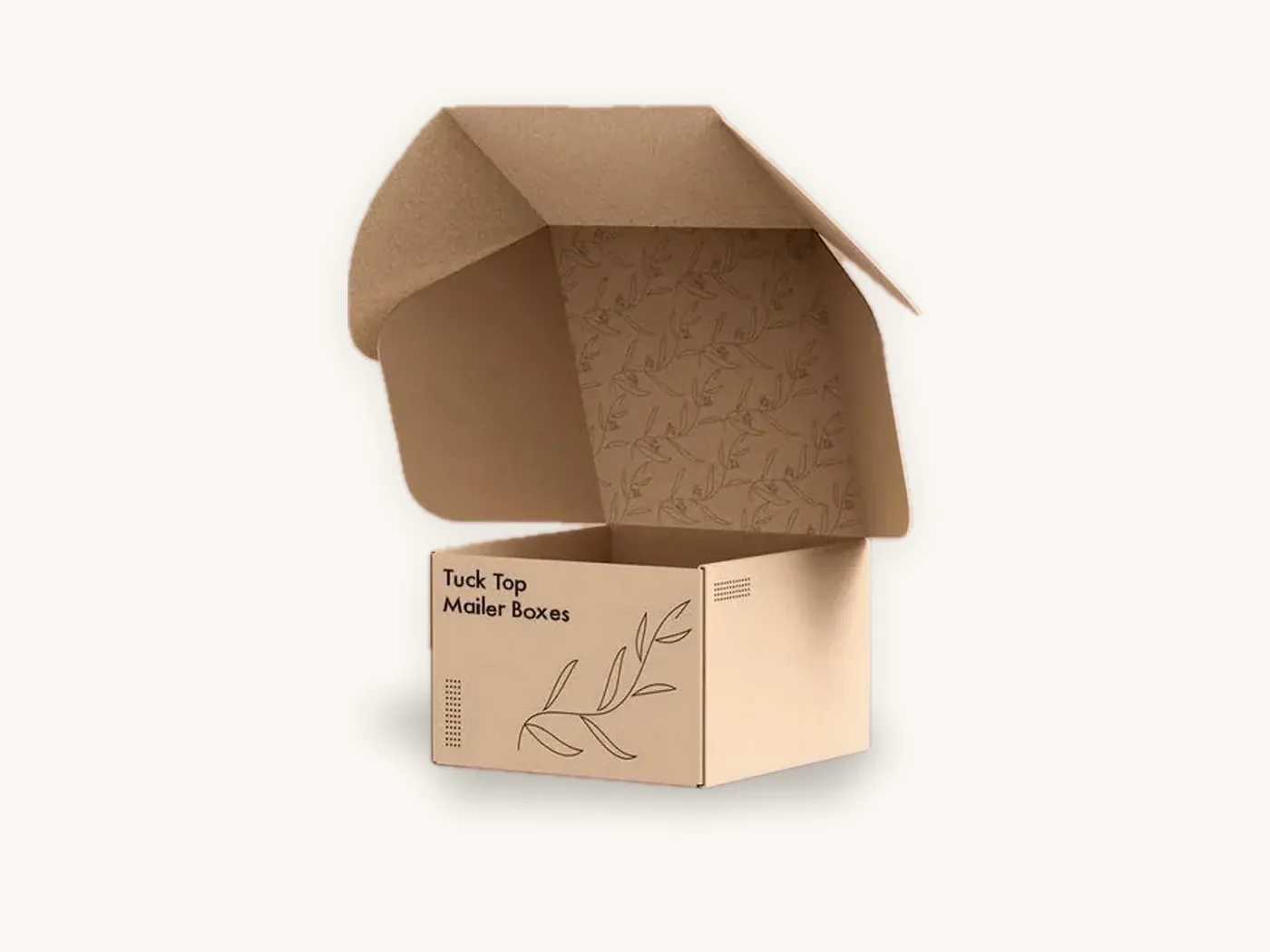
Consider what the box itself costs. From our current price sheet, a straight tuck end carton on 18 pt SBS at 3x2x5 in, printed full color with aqueous coating, is about $0.51 per unit at 1,000. An E-flute mailer at 8x6x3 in, printed full color outside, is about $1.17 at 1,000. Both include US shipping. EPR fees are calculated separately by each program based on material and weight, and your counsel or PRO can help you estimate them once fee schedules apply to you.
Our custom packaging cost guide and how much custom boxes cost break down the main drivers of box pricing, and the price estimator gives unit costs for your exact spec.
Where savings usually come from
- Less board per unit through right-sizing, which reduces both box price and reported weight.
- Fewer components, which cuts purchasing, assembly and reporting time.
- Simpler finishes, such as aqueous coating instead of lamination on everyday cartons.
- Consolidated specs across SKUs, so one well-documented carton size serves several products.
Ordering EPR-conscious packaging from Box Sense
Box Sense manufactures and prints custom boxes to the specification you choose. We do not determine your obligations under any state law or file reports for you, but we can help you specify packaging that is simpler to document and easier to recycle.
What to send us
- Product dimensions and weight, packed as it ships
- Current packaging components you want to replace or simplify
- Material preferences: corrugated or paperboard, kraft or white, FSC-certified board
- Finish preferences, noting where you want to avoid plastic lamination or film windows
- Insert needs, and whether paperboard or molded pulp could replace foam
- Quantities to price, such as 250, 1,000 and 5,000
- Artwork, or a request for help from our design services team
How the process works
- Quote within 24 hours, confirming board, finish and price at each quantity.
- Free design support: dieline, artwork setup and a 3D digital proof with two revision rounds.
- Samples: unprinted structural samples are free, so you can weigh and test the actual structure before committing. A printed sample of approved artwork is free on orders of 100 or more.
- Production: 8–12 business days after proof approval as standard, with rush in 5 business days on most paperboard and corrugated styles.
- Delivery: free shipping on every US order.
The minimum order is 10 boxes, and there are no die or plate charges. Your proof and quote list the board, dimensions and finishes, which gives you a documented spec for your packaging records. Read more about our materials on the sustainability page, and see the sustainable packaging guide and eco-friendly boxes guide for design ideas.
Frequently asked questions
Which US states have packaging EPR laws?
Maine and Oregon passed the first packaging EPR laws in 2021, Colorado and California followed in 2022, and Minnesota in 2024. Additional states have passed or debated similar legislation since. Because programs are phased in and rules keep changing, check each state environmental agency's program page for the current list, covered materials and deadlines, and confirm your obligations with counsel.
Do packaging EPR laws apply to small businesses?
Most state laws include small producer exemptions, usually based on annual revenue, the amount of packaging supplied into the state, or both. The thresholds and conditions differ by state, and some exempt businesses still need to register or file a simplified report. Read the current statute and regulations for each state where you sell, and ask counsel how the tests apply to your company.
What is a producer responsibility organization?
A producer responsibility organization, or PRO, is a nonprofit that runs an EPR program on behalf of producers. It registers brands, collects packaging data, proposes a program plan for state approval, sets and collects fees, and funds recycling services such as municipal reimbursement or sorting upgrades. State agencies oversee the PRO and enforce against producers who do not participate.
What does eco-modulation mean for packaging fees?
Eco-modulation adjusts EPR fee rates based on packaging design. Programs generally aim to charge less for packaging that is recyclable in the local system, uses recycled content or uses less material, and more for components that are hard to recycle or contaminate recycling streams. The formulas vary by state and are updated over time, so check the PRO's current fee schedule.
Do I have to report shipping boxes and mailers?
Often, yes. Several programs treat e-commerce and shipping packaging that reaches households as covered material, which can include mailers, shipping boxes, tape, void fill and packing slips, not just the retail carton. Who reports it, the brand, the retailer or the fulfillment provider, depends on the state law and your contracts, so confirm with the program and your counsel.
How do I get packaging weights for EPR reporting?
Weigh production samples of every component on a scale that reads to at least a tenth of a gram, and record the weight with the material, spec and supplier. Estimates from drawings are unreliable because board caliper, coatings and adhesives all add weight. Update the record whenever a specification changes so each reporting period uses accurate numbers.
Will switching to kraft boxes lower my EPR fees?
Not automatically. Fees usually depend on the material category, weight and recyclability, not the color of the liner. A kraft or white paperboard carton with aqueous coating is generally treated similarly. Bigger reductions tend to come from using less material, removing plastic laminates, windows or foam, and right-sizing shipping boxes. Check your state program's fee schedule for how categories are defined.
Next steps
Start with the data: list every SKU, break its packaging into components, weigh samples and match units to ship-to states. Then check each state program directly and confirm your obligations with counsel. When you are ready to simplify a box, use the instant price estimator to compare materials and finishes, and request a quote for single-material cartons, mailers and paper-based inserts built to your spec.
Boxes in this guide
Order the packaging we covered


Written by the Box Sense Packaging Team
Our structural designers, prepress technicians and production staff print and convert custom boxes every day for brands in the United States, United Kingdom and UAE. Questions about this guide? Talk to us.