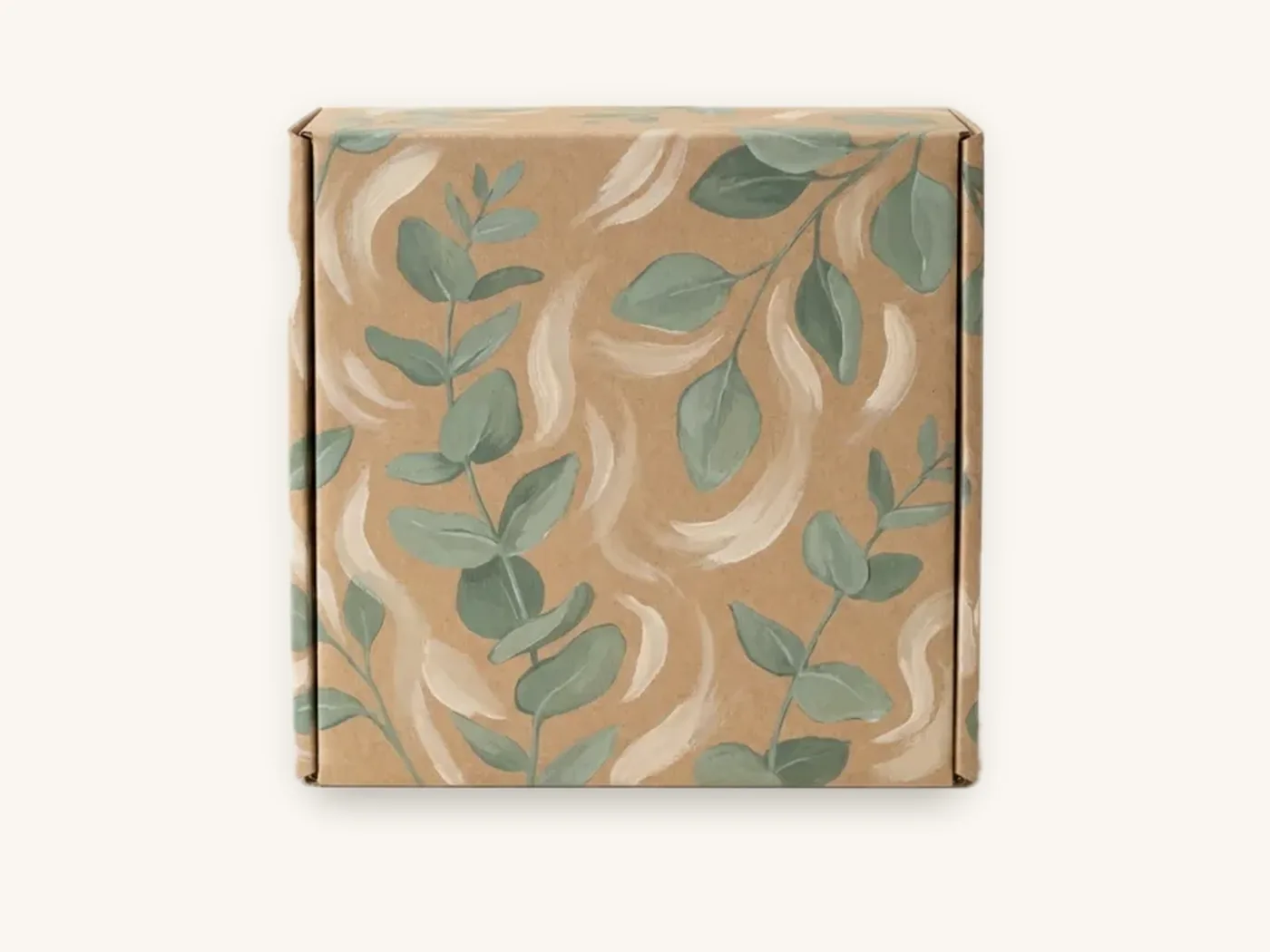
Eco friendly boxes are boxes you can verify: made from recycled or certified fiber, printed with water-based or soy inks, finished without plastic film, free of components that stop them being recycled, and sized so they do not waste board or shipping space. A kraft color on its own proves nothing. What makes a box greener is the specification behind it, and the only way to get that is to ask for it line by line.
This is a buying guide. It lists the exact specs to request for each part of a box, compares board options and box styles, shows the design details that quietly ruin recyclability, and gives you a supplier question list and the red flags to watch for. If you want the bigger picture on strategy, EPR laws and premium finishes, start with our sustainable packaging guide and come back here when you are ready to buy.
Key takeaways
- Judge eco friendly boxes by five checks: fiber source, recycled content, inks and coatings, separability of components, and right-sized structure.
- Ask for specifics in writing: board grade and caliper, FSC certification or recycled content, ink type, coating type, window film and adhesives.
- Aqueous coating instead of plastic lamination is the single most common swap that keeps a printed box recyclable.
- Windows, magnets, foam and plastic tape are the usual recyclability breakers. Remove them or make them easy to separate.
- The greener spec is often not more expensive; a one-color kraft carton can cost less than a laminated full-color one.
- Only print environmental claims you can substantiate, and make them specific.
The five-part test for an eco friendly box
Before comparing suppliers, agree internally on what "eco friendly" has to mean for your brand. These five checks cover what matters for paper-based boxes.
- Where does the fiber come from? Recycled fiber, or virgin fiber from certified responsibly managed forests such as FSC-certified sources.
- How much recycled content is in it? Many corrugated and some paperboards contain significant recycled fiber; ask for the figure and how it is documented.
- What is on the surface? Inks, coatings, laminations and foils all affect recyclability and the story you can tell.
- Can the customer dispose of it in one step? A box with a glued plastic window, a magnet or a foam insert may never get separated.
- Is it the right size? An oversized "eco" box that needs void fill and triggers higher shipping charges is not greener.
A box that passes all five is one you can describe honestly. A box that only passes the first, printed in kraft with a leaf icon, is a marketing choice, not a sustainability improvement.
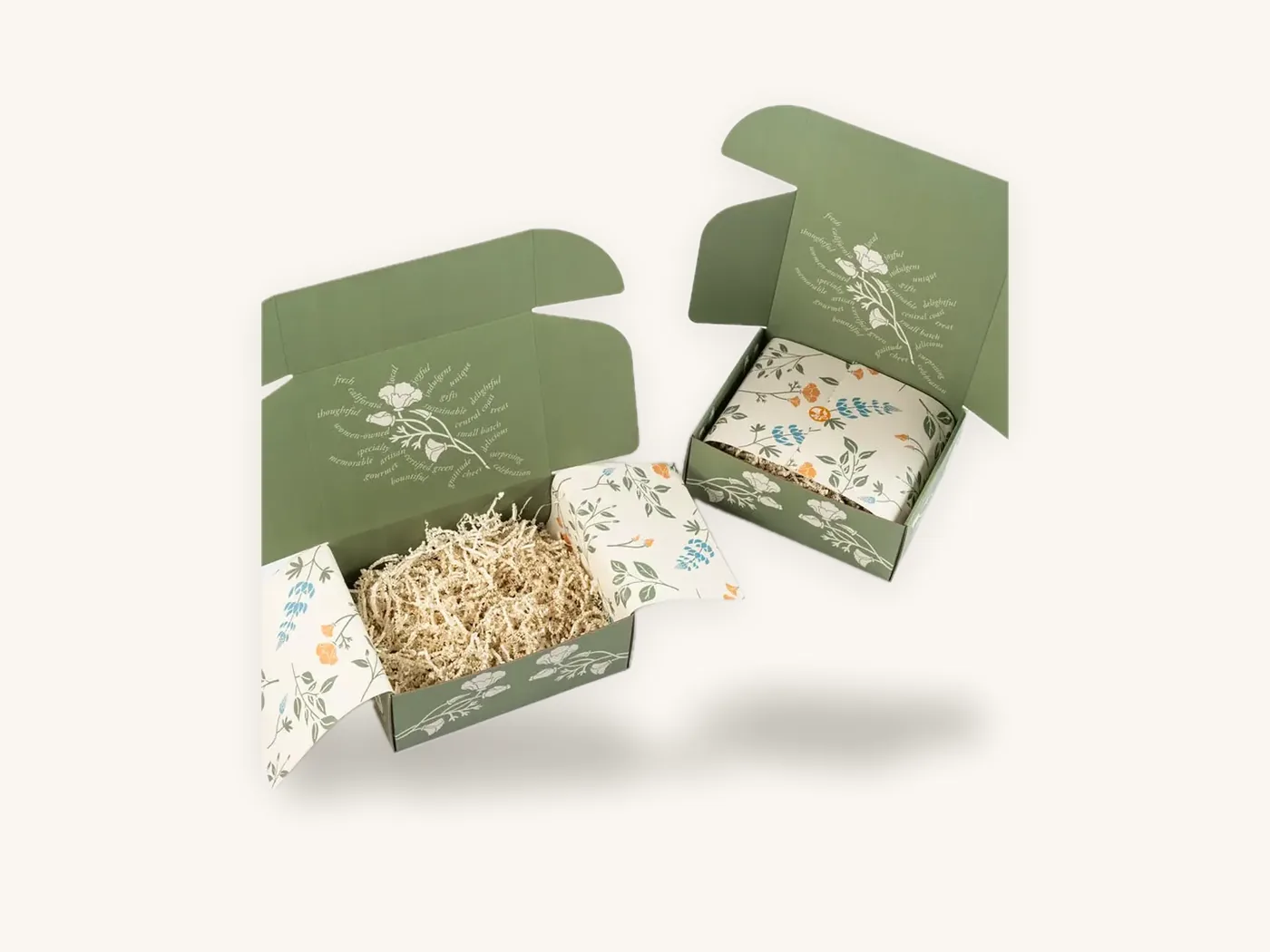
The spec sheet: what to ask for, component by component
This table is the core of the guide. Copy it into your request for quote and ask each supplier to fill in the right-hand columns.
| Component | Greener spec to request | Ask the supplier to confirm | Avoid or question |
|---|---|---|---|
| Board | FSC-certified paperboard or corrugated, or board with stated recycled content | Grade, caliper or flute, certification or recycled content documentation | "Eco board" with no spec behind it |
| Printing ink | Soy- or water-based inks | Ink system used for your print method | Assumptions that all inks are equivalent |
| Coating | Aqueous coating, or uncoated | Coating type and whether it is water-based | Film lamination over the whole box |
| Special finishes | Blind embossing or debossing; small foil accents only | Foil coverage area | Full foil coverage, metallized boards |
| Windows | No window, or a die-cut opening; PLA film where a window is essential | Film type and how it is attached | Glued PET film with no reason for it |
| Adhesives | Water-based glue | Glue type on side seams and inserts | Hot-melt beads that leave plastic residue on large areas |
| Inserts | Paperboard, corrugated or molded pulp | Material and whether it is glued in | EVA or PU foam where paper would protect |
| Closure | Tuck, lock tabs or tear strip | Whether tape is needed | Magnets or plastic closures on everyday boxes |
| Tape | Paper tape, or none | Tape backing material | Plastic tape on a paper box |
| Void fill | Kraft paper or crinkle paper | Paper source | Plastic air pillows and loose foam peanuts |
Why written specs matter
Suppliers describe the same box in very different ways. One calls it "eco-friendly," another "recyclable kraft," another "green packaging." Only a written spec lets you compare like for like, and you need that documentation anyway if you plan to make a claim on pack or answer a retailer's sustainability questionnaire.
Tip: ask for a spec sheet with every quote, not just a price. A supplier that cannot tell you the board grade, ink type and coating on the box they are quoting is guessing, and you will not be able to substantiate a claim about it later.
Choosing board: kraft, recycled and FSC-certified options
Board makes up nearly all of a box's weight, so it is where fiber sourcing matters most. The three terms below overlap; a board can be kraft, recycled and FSC-certified at once.
| Board option | What it is | Looks and prints | Choose it when |
|---|---|---|---|
| Kraft paperboard | Unbleached, brown fiber board for cartons | Natural brown; colors print darker; white ink adds contrast | Minimal, natural branding on small retail boxes |
| Kraft corrugated | Brown liners over fluted medium | Rugged, hides scuffs | Mailers and shippers for DTC |
| Recycled paperboard | Board made mostly from recovered fiber, often with a coated face | Grey or white face depending on grade | Price-sensitive cartons where recycled content is the goal |
| FSC-certified SBS | Bleached virgin board from certified sources | Brightest color reproduction | Beauty and color-heavy brands that need responsible sourcing |
| FSC-certified kraft | Unbleached board from certified sources | Natural brown | Brands wanting both the kraft look and certified sourcing |
Our kraft paperboard and eco-friendly and compostable materials pages list what we run. For what the FSC label does and does not certify, see the FSC-certified packaging guide.
Kraft is a look, not a certification
Kraft simply means unbleached. It is often made with recycled content and it reads as natural, but a kraft box can still be laminated, fitted with a plastic window and oversized. Treat kraft as a design choice and check the other four tests separately.
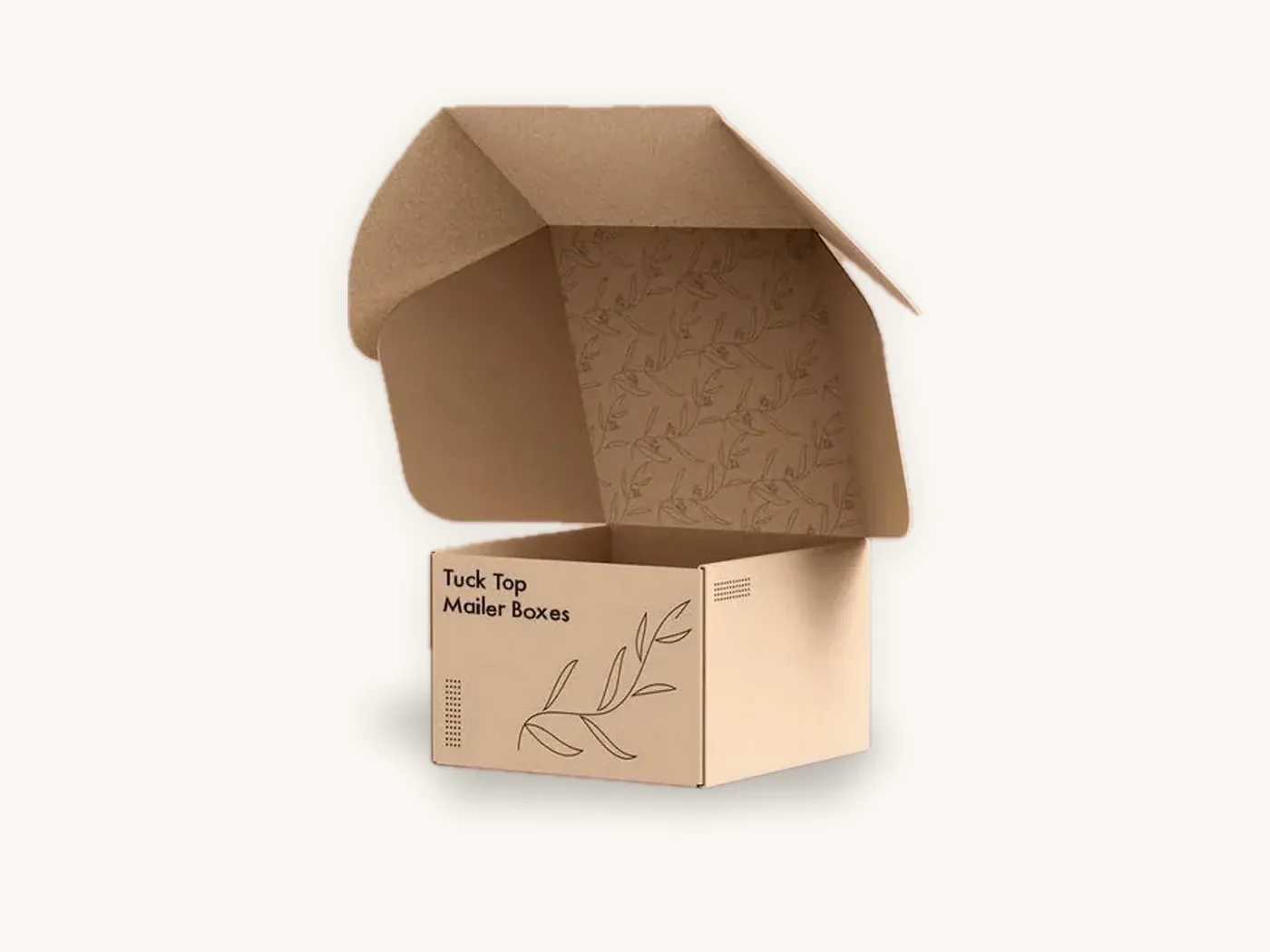
Recyclable boxes: the details that make or break it
Most paper boxes start out recyclable. They stop being recyclable, or become much less likely to be recycled, because of what gets added. Before you approve a design, check each of these.
Film lamination
Gloss, matte and soft-touch laminations bond a plastic film to the board. Whether recycling mills can process laminated board varies, and customers cannot peel it off. For everyday recyclable boxes, specify aqueous coating instead; our aqueous coating guide explains how it protects print.
Windows
A window lets shoppers see the product, but the film has to be removed for clean recycling. Ask whether you need a window at all. If you do, a die-cut opening without film, or a smaller window, reduces the problem. The PET vs PLA window film guide compares film options and their disposal realities.
Mixed-material closures and inserts
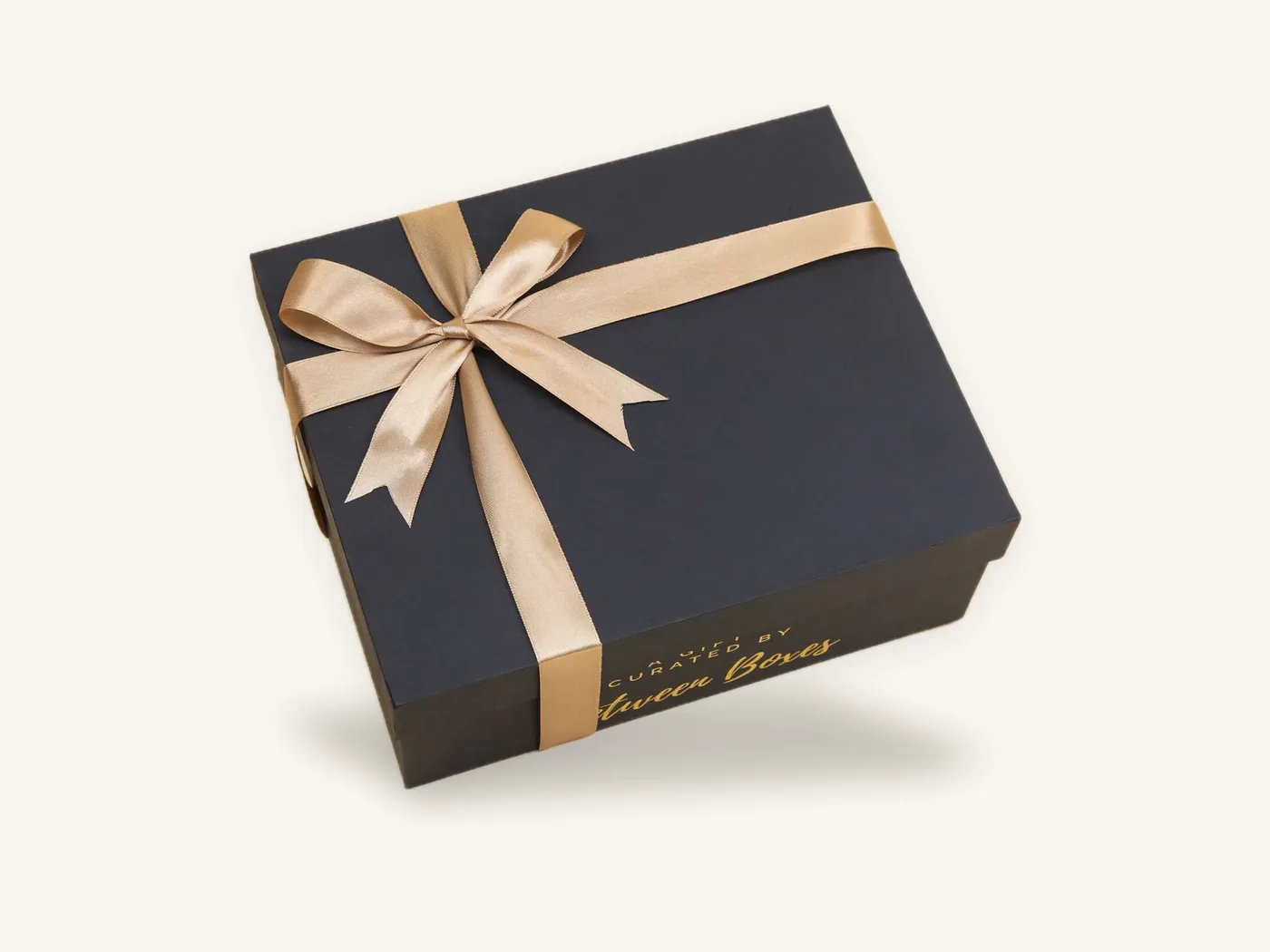
Magnets, ribbons, metal fasteners and foam inserts turn a recyclable box into a sorting job. On gift and luxury packaging they may be worth it. On everyday soap boxes, candle cartons or mailers, a tuck closure and a paperboard insert do the same job in one material.
Tape and labels
Plastic tape on a corrugated shipper is common and usually tolerated in paper recycling, but paper tape or a tear strip is cleaner and looks better. Custom packaging tape in paper form keeps branding without adding plastic. Keep large plastic labels to a minimum.
For plastic-free alternatives to every common component, the plastic-free packaging guide goes further.
Matching the eco box style to your product
The greenest box style is the one that protects your product with the least material. This comparison covers common eco packaging boxes and indicative per-unit prices from our current rates where a matching spec exists, with free US shipping included.
| Style | Material | Best for | Indicative price |
|---|---|---|---|
| Soap sleeve/box | 18 pt kraft, 3.5x2.5x1.25 in, 1-color | Bar soap, small gifts, cosmetics refills | about $0.66 at 100, $0.29 at 1,000 |
| Kraft tuck carton | 18 pt kraft, 4x3x2 in, 1-color | Small retail products, candles, tea | about $0.81 at 100, $0.36 at 1,000 |
| Straight tuck end carton | 18 pt SBS, 3x2x5 in, full color, aqueous | Color-led retail products on FSC-certified board | about $1.15 at 100, $0.51 at 1,000 |
| Corrugated mailer | E-flute, 8x6x3 in, full color outside | DTC orders and subscription items | about $2.64 at 100, $1.17 at 1,000 |
| Shipping box RSC | B-flute, 12x10x6 in, 1-color | Heavier or multi-item shipments | about $4.69 at 100, $2.08 at 1,000 |
| Paper tube | Spiral-wound board with paper ends | Premium cosmetics, tea, apparel | Priced by size; see /pricing |
A few decisions follow from this:
- Small retail items: a kraft tuck carton or straight tuck end box uses far less board than a rigid box, and one-color print on kraft keeps ink to a minimum.
- Soap and bath products: a sleeve or open-window-free carton is often enough; the soap and bath packaging page shows common formats.
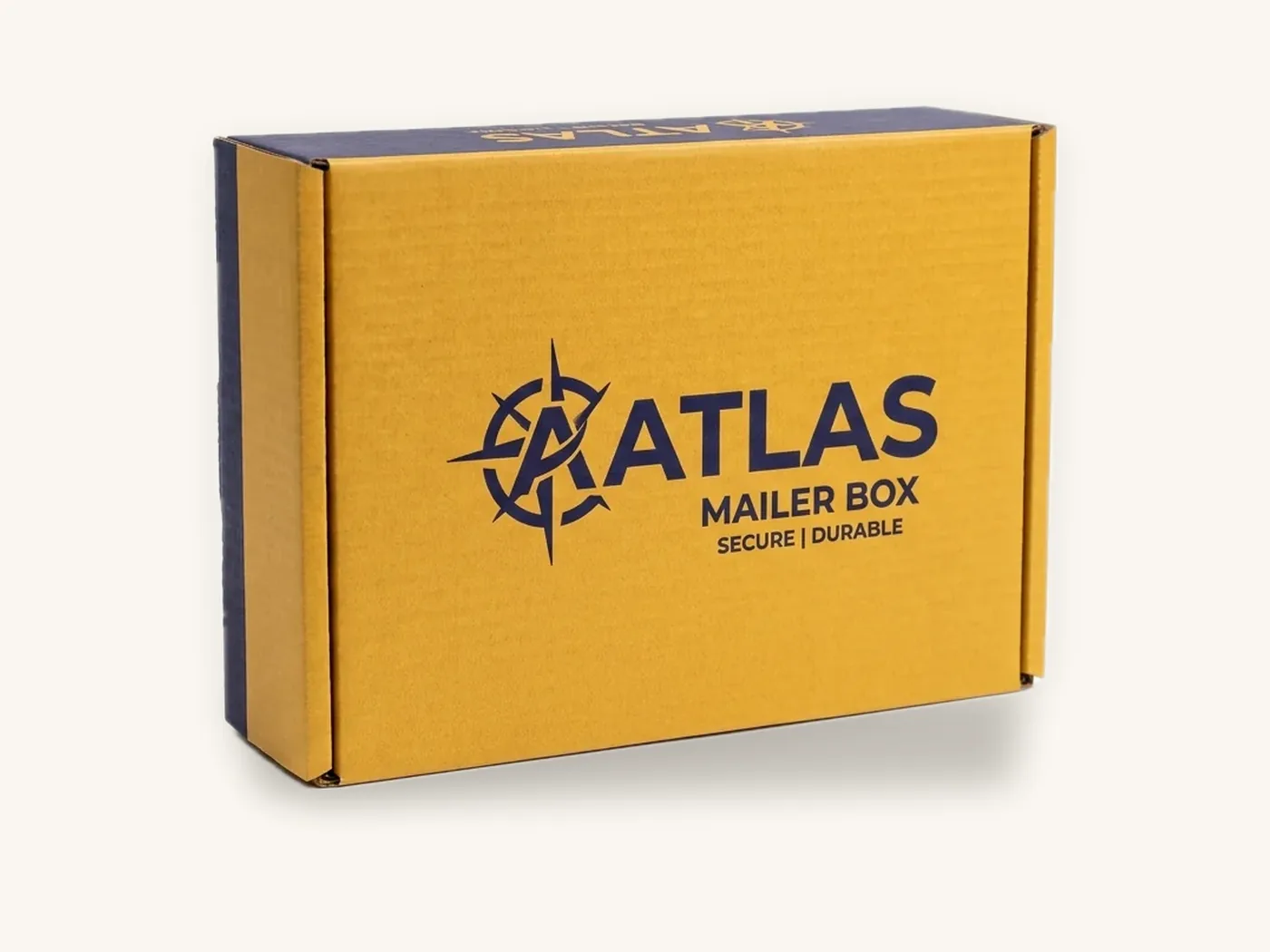
- Shipped orders: a right-sized kraft mailer box can replace a retail carton plus a shipper.
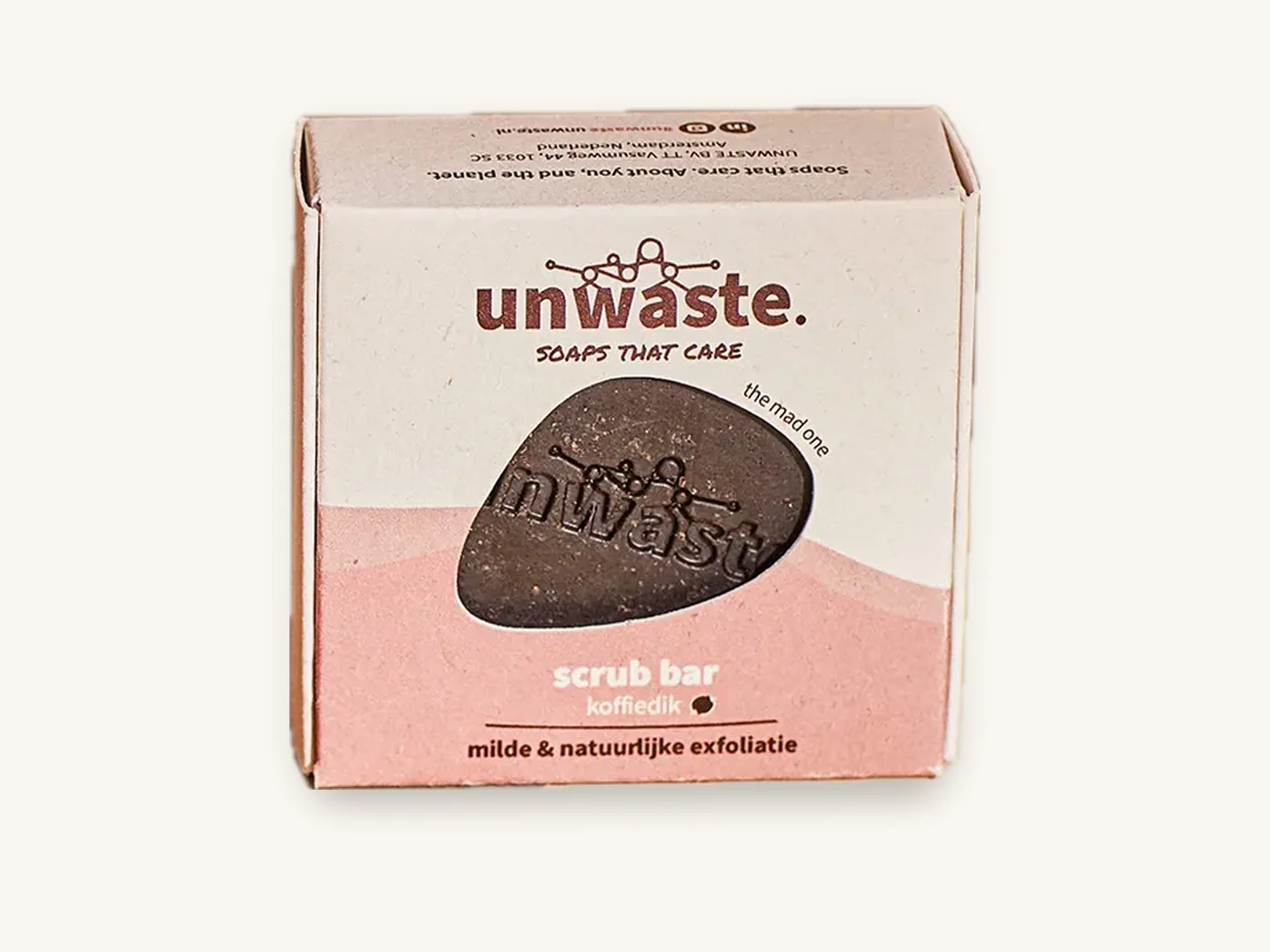
Printing eco friendly boxes without undermining them
Printing does not stop a paper box being recyclable, but design choices affect ink use and how the box looks on natural stocks.
- Use fewer colors on kraft. One or two strong colors, or opaque white ink, look deliberate on brown board. Our white ink on kraft guide shows how it works.
- Avoid full floods of dark color when a pattern or partial coverage would do. Less coverage means less ink.
- Specify soy- or water-based inks and confirm they are used for your print method.
- Print inside instead of adding extras. An inside-lid message can replace a separate printed card.
- Keep disposal instructions short and put them where customers look, such as the inside flap.
The printing and finishes page shows how each technique looks on kraft and white board.
Supplier questions to ask before you order
Use this checklist when you request quotes for eco friendly boxes. Good suppliers answer quickly and in writing.
- What exact board grade, caliper or flute are you quoting?
- Is the board FSC-certified, and can you provide chain-of-custody documentation if I want to reference it?
- What recycled content does the board contain, and how is that documented?
- Which ink system do you use for this print method?
- What coating is on the box: aqueous, UV, or film lamination?
- What is the window film, if any, and how is it attached?
- What adhesive is used on the glue seam and any insert?
- Can the insert be made from paperboard, corrugated or molded pulp instead of foam?
- Can you send an unprinted structural sample to test fit and protection?
- Can you suggest a smaller size or lighter board that still protects my product?
Watch out: be cautious of listings that call boxes "100% eco-friendly," "biodegradable" or "zero impact" with no spec behind them. Broad claims like these are hard to substantiate, and if you repeat them on your own packaging, the responsibility for the claim becomes yours.
Test that the greener box still protects
Switching from B-flute to E-flute, from 24 pt to 18 pt or from foam to paperboard can be a real improvement, but only if damage does not rise. A broken product doubles the footprint of the order.
- Order structural samples in the new spec and pack them exactly as production.
- Drop test from waist height onto a hard floor on corners, edges and faces.
- Ship test boxes through your normal carrier to a distant address.
- Check humidity effects if you ship in summer or to humid regions; paper inserts can soften.
- Compare damage rates for a few weeks after switching before rolling out across all SKUs.
Labeling your eco friendly boxes honestly
Once you have a greener box, you will want to say so. In the US, the FTC's Green Guides set out how environmental claims should be qualified. In practice:
- Prefer specific statements such as "carton made from FSC-certified paperboard" or "box made with recycled content."
- Say "recyclable" only when recycling for that item is available to a substantial majority of your customers, or qualify the claim.
- Make it clear which component the claim covers.
- Keep evidence for each statement, including the spec sheets and certificates from your supplier.
- Use FSC labels only in line with FSC's own trademark rules.
Some states have their own laws on recyclability and compostability labels. The green claims packaging guide covers wording in detail; for compostable claims specifically, read compostable packaging. Confirm with counsel before printing.
Ordering eco friendly boxes from Box Sense
We can quote both your preferred spec and a lower-impact alternative, so you can compare them side by side.
Send us
- Product dimensions and weight, packed as shipped
- Box style, or a request for a recommendation
- Board preference: kraft, FSC-certified SBS, recycled content, corrugated flute
- Print: colors, white ink, inside print
- Coating: aqueous or uncoated
- Components to remove or replace: windows, foam, magnets, plastic tape
- Quantities and your target date
What to expect
- Quote within 24 hours, with a written spec for each option.
- Free design support: dieline, artwork setup and a 3D digital proof, with two revision rounds.
- Samples: unprinted structural samples are free; a printed sample of approved artwork is free on orders of 100 or more. See samples.
- Production: 8–12 business days after proof approval, rush in 5 business days on most paperboard and corrugated styles.
- Delivery: free shipping on every US order; international shipping quoted at cost.
The minimum order is 10 boxes, and there are no die or plate charges, so you can test an eco spec on one SKU before switching the range. Browse eco-friendly boxes for the formats we make.
Frequently asked questions
What makes a box eco friendly?
An eco friendly box is made from recycled or responsibly sourced fiber, printed with soy- or water-based inks, finished with aqueous coating or left uncoated, free of hard-to-separate parts like foam, magnets or glued plastic windows, and sized to avoid wasted board and void fill. Ask suppliers for a written spec covering each of these rather than relying on a kraft color.
Are kraft boxes eco friendly?
Kraft boxes are unbleached and often contain recycled fiber, which makes them a good start. But a kraft box can still be laminated, fitted with a plastic window or oversized. Check the board's recycled content or FSC certification, the ink and coating, and every added component. Kraft is a look; the full specification is what makes it greener.
Are recyclable boxes more expensive?
Usually not. Many recyclable specs cost the same or less, because aqueous coating is typically cheaper than film lamination and removing windows or foam inserts cuts cost. As an example, an 18 pt kraft tuck carton printed one color is about $0.36 per box at 1,000 units. FSC-certified or specialty stocks can add some cost, so compare specs in an estimator.
Is a box with a window still recyclable?
The paperboard is, but the film should be removed for clean recycling, and many customers will not bother. If your product sells better with a window, keep it small or use a die-cut opening without film. PLA film is an option for some applications, but it is not accepted in most paper recycling, so disposal instructions still matter.
What should I ask a supplier about eco packaging boxes?
Ask for the exact board grade and caliper, FSC certification or recycled content documentation, ink type, coating type, window film and attachment, adhesives, and insert material. Request an unprinted structural sample and ask whether a smaller size or lighter board would still protect your product. Get the answers in writing so you can compare quotes and support any claims.
Can I print "eco friendly" on my boxes?
Broad, unqualified claims like "eco friendly" are difficult to substantiate, and the FTC Green Guides discourage them. Specific statements, such as "box made from FSC-certified paperboard" or "made with recycled content," are clearer and easier to support. Keep your supplier's spec sheets as evidence, check state labeling laws and ask counsel before printing environmental claims.
What is the most eco friendly box for shipping?
For most direct-to-consumer products, a right-sized corrugated mailer or shipping box made with recycled content, printed with minimal ink, sealed with paper tape or a tear strip and packed with paper-based inserts or fill. Corrugated is widely recycled curbside. Choose the lightest flute that protects your product, and test it through your carrier before switching.
Next steps
Copy the spec table above into your next request for quote, and ask each supplier for the same details. Then compare your current spec against a greener one in the price estimator, and request a quote for eco friendly boxes. We will confirm pricing within 24 hours, with a written spec and a free structural sample to test.
Boxes in this guide
Order the packaging we covered
Written by the Box Sense Packaging Team
Our structural designers, prepress technicians and production staff print and convert custom boxes every day for brands in the United States, United Kingdom and UAE. Questions about this guide? Talk to us.