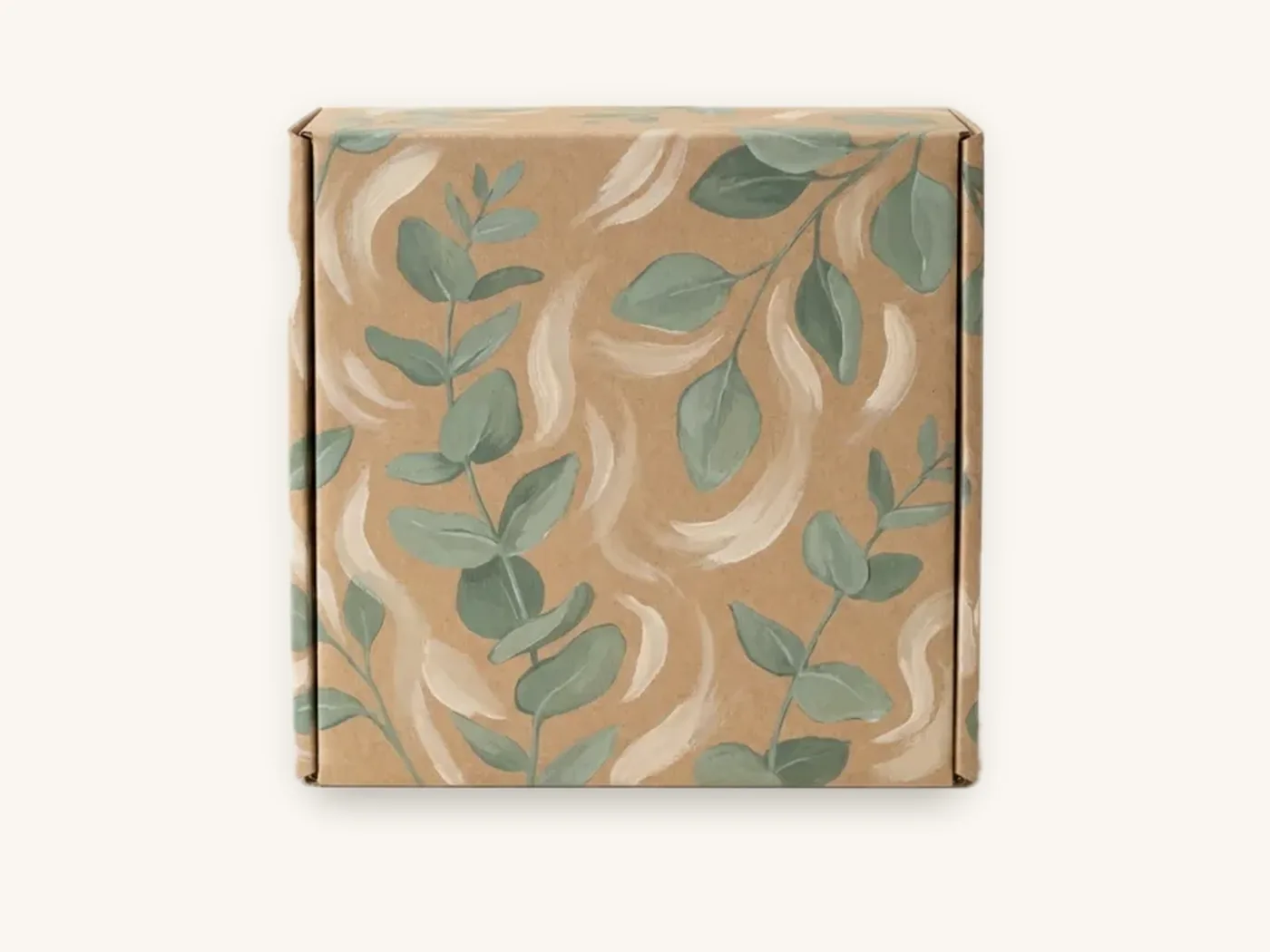
Plastic free packaging replaces the film, foam, tape and bags in a shipment with paper, board and fiber alternatives that do the same job. For most brands the box itself is already paper. The plastic hides in the extras: the poly bag around the product, the bubble wrap, the foam insert, the tape, the window and the lamination on the print.
That means going plastic-free is less about finding one new box and more about working through a short list of components and replacing each one. This guide goes part by part, explains what each alternative does well and where it falls short, and gives you a rollout plan that avoids swapping in something that breaks in transit.
Key takeaways
- In most shipments, plastic sits in six places: the outer mailer, cushioning, inner bags, tape, windows and print finishes. Tackle them one at a time.
- Corrugated mailer boxes, paperboard or molded pulp inserts, paper tape, tissue and glassine can replace most plastic parts without a drop in protection.
- PLA is a plant-based plastic, not paper. If you want a strictly plastic-free pack, use open die-cut windows rather than any film.
- Moisture and grease are the hardest jobs for paper. Food, liquids and humid supply chains may need a barrier, so test before you promise "zero plastic."
- Say exactly what is plastic-free. Claims should be accurate and substantiated under the FTC Green Guides.
- Box Sense makes plastic-free box specs from 10 units, with aqueous coatings, soy or water-based inks, paperboard and molded pulp inserts and printed paper tape.
Where plastic hides in a typical shipment
Start by knowing what you are replacing. Unpack one of your own orders on a table and sort every item into paper or plastic. Most brands find more plastic than they expected, and much of it is small.
| Component | Common plastic version | What it does | Plastic-free alternative |
|---|---|---|---|
| Outer packaging | Poly mailer bag | Keeps contents dry and together | Corrugated mailer box or paper mailer bag |
| Cushioning | Bubble wrap, air pillows, foam peanuts | Absorbs impact, fills voids | Crinkle paper, honeycomb paper wrap, right-sized box |
| Product holder | EVA or PU foam insert, plastic tray | Holds the product in place | Die-cut paperboard or corrugated insert, molded pulp tray |
| Inner wrap | Poly bag, shrink film | Keeps dust, scuffs and moisture off | Tissue paper, glassine bag, paper band |
| Sealing | Plastic packing tape | Closes and secures the box | Water-activated or self-adhesive paper tape, tear strip |
| Retail window | PET or PVC film | Shows the product | Open die-cut window with no film |
| Print finish | Gloss, matte or soft-touch lamination | Scuff resistance, look and feel | Aqueous coating or uncoated board |
| Labels and stickers | Film labels | Branding, shipping info | Paper labels or direct print on the box |
The parts customers notice versus the parts that matter
Customers notice bubble wrap and poly mailers first, because they are big and obviously plastic. Film lamination and a thin window are easy to miss, but they are what stop a paper box from being a single-material item. A thorough plastic-free project handles both.
What counts as plastic, and what does not
Before you replace anything, settle on a definition. The word "plastic" covers more materials than most people realize, and some so-called alternatives are plastics under a different name.
Bioplastics are still plastics
PLA film, used for compostable windows and some bags, is made from plant sugars instead of petroleum, but it is a polymer that behaves like plastic. It can be a good choice when you want a transparent window with a better end-of-life story. It is not a route to a plastic-free claim. Our PET vs PLA window film guide compares the two in detail.
Coatings, inks and adhesives
This is the grey area. Water-based aqueous coatings are thin, designed to repulp with the paper and far more recycling-friendly than laminations, but some formulations use polymer binders. Glues on carton seams and the adhesive on paper tape can also contain synthetic polymers in small amounts. Reinforced water-activated tape often has fiberglass strands embedded in it.
For most brands, the reasonable standard is "no plastic films, foams, bags or windows," and aqueous coating fits within that. If you want to make an absolute zero plastic packaging claim, ask each supplier for the composition of their coatings and adhesives and make sure the claim matches what you learn.
Watch out: "plastic-free" on a box is a factual claim. If the pack includes a PLA window, a laminated label or a plastic-reinforced tape, the claim is not accurate for the whole package. Qualify it or change the component.
Replacing the outer packaging: poly mailers and shippers
The poly mailer is the most visible plastic in e-commerce, and it is the easiest to replace, as long as you accept a small change in weight and size.
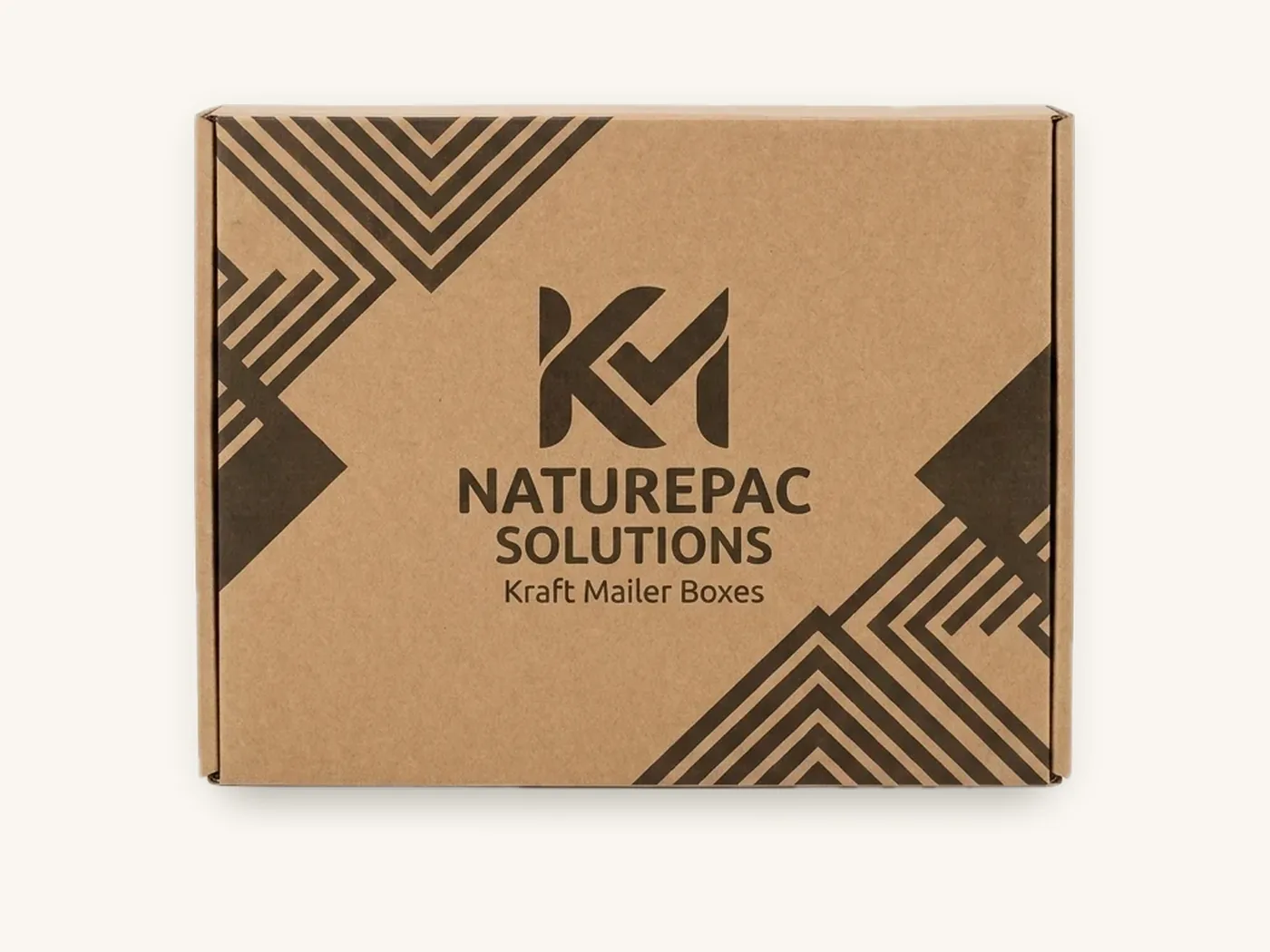
Option 1: Corrugated mailer box
A kraft mailer box in E-flute corrugated board is the standard upgrade from a poly mailer. It protects against crushing, stacks in delivery vans without deforming and doubles as the presentation box. Most styles lock together without tape.
The tradeoff is weight and volume. A box weighs more than a bag and takes up more space, which can affect carrier costs on light products. Sizing the box tightly keeps that under control.
Option 2: Paper mailer bag
For soft goods like folded apparel that do not need crush protection, a heavy kraft paper mailer bag with a paper-based closure keeps weight low. Paper bags are less water-resistant than poly, so they suit goods that are already wrapped in tissue or that ship in dry regions and seasons.
Choosing between them
| Factor | Corrugated mailer box | Paper mailer bag | Poly mailer (for reference) |
|---|---|---|---|
| Crush protection | Good to very good | Low | Low |
| Water resistance | Moderate with aqueous coating | Low to moderate | High |
| Weight added | Highest | Low | Lowest |
| Presentation | Strong, printable inside and out | Basic | Basic |
| Best for | Beauty, gifts, fragile or rigid items, subscriptions | Apparel, textiles, flat soft goods | Replaced in a plastic-free spec |
For pricing context, an 8x6x3 in E-flute mailer printed full color outside is about $2.64 each at 100 units and about $1.17 at 1,000, with free US shipping. The pricing page calculates your exact size.
Replacing bubble wrap, air pillows and foam
Cushioning is where plastic-free packaging needs the most thought, because protection is the reason those materials exist. The good news is that most damage comes from movement inside the box, and paper solutions are very good at preventing movement.
Step one: fix the fit
A box that is two inches too big needs a lot of fill. A box that fits the product, with a small clearance, needs very little. Before buying any paper cushioning, check whether a better-sized box removes the need for most of it.
Paper void fill and wraps
- Crinkle paper fills space around irregular items and looks deliberate in gift and subscription boxes.
- Honeycomb or expandable paper wrap stretches into a cellular sheet that cushions glass and ceramics in a way similar to bubble wrap.
- Folded kraft paper from a dispenser works for general void fill in larger shipping boxes.
Inserts that hold the product still
For products that ship in the same configuration every time, an insert beats loose fill. Box inserts die-cut from paperboard or corrugated board lock bottles, jars and devices in place, and they can be printed. Our foam vs paperboard inserts guide covers when paperboard is enough.
For heavier, fragile or oddly shaped products, molded pulp is the closest plastic-free equivalent to a foam cradle. It is molded to the product's shape from wet fiber and absorbs shock well. The molded pulp packaging guide explains design rules and tooling.
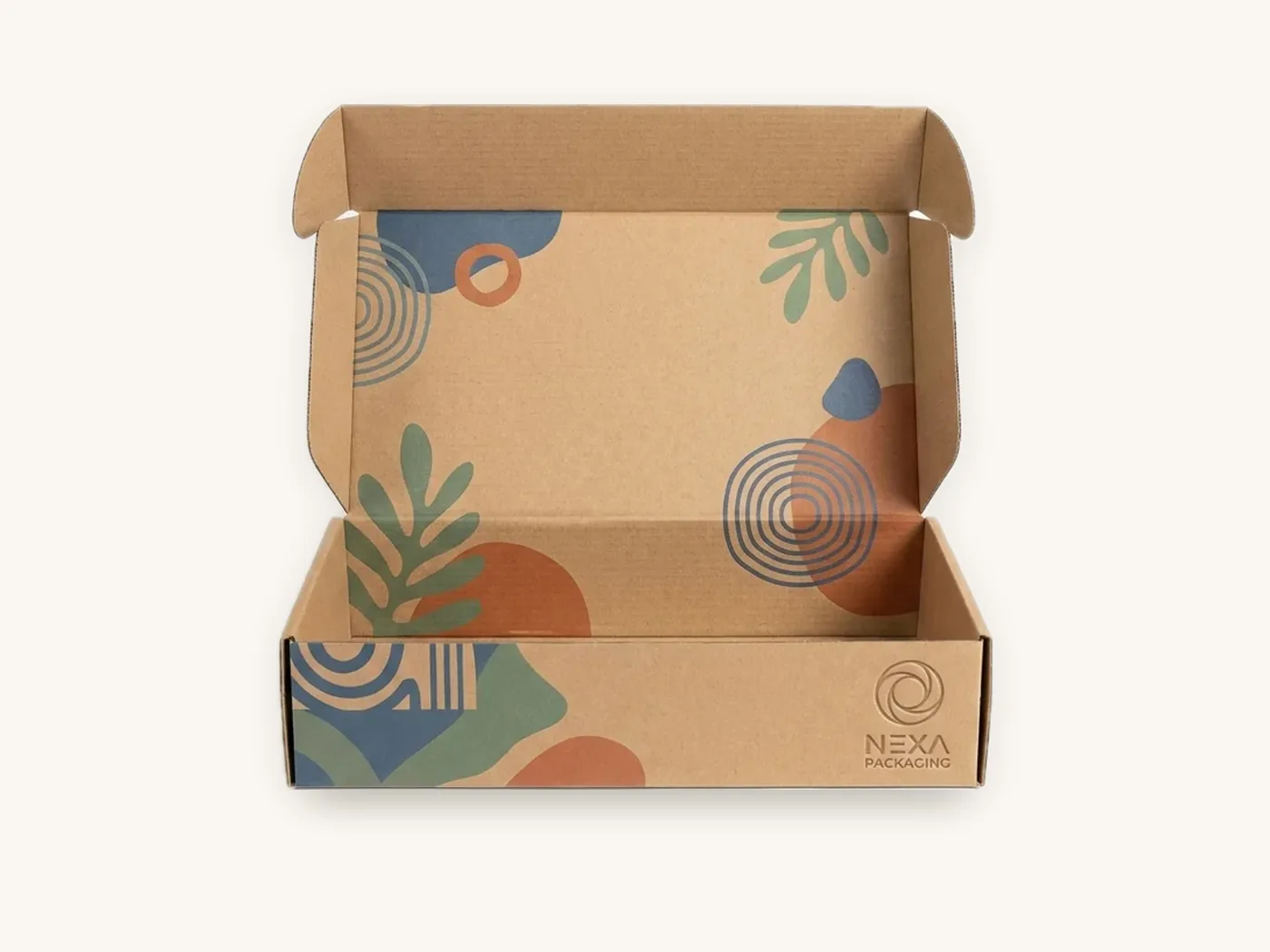
Tip: build the insert and the box together, not one after the other. The insert's board thickness changes the inside dimensions, and designing both at once is how you avoid rattle that paper fill has to hide.
Replacing plastic tape
Plastic packing tape is on almost every carton in the parcel network, and it is one of the simplest swaps. There are three main paths.
Water-activated paper tape
Also called gummed tape, this is kraft paper with a starch-based adhesive activated by water from a dispenser. It bonds into the box fibers, so it is difficult to peel off without visible tearing, which makes tampering obvious. Reinforced versions contain strands for strength, so ask about composition if you need a strictly plastic-free spec. It requires a dispenser at the packing station.
Self-adhesive paper tape
This works like plastic tape from a handheld gun, with a paper backing. It is quicker to adopt for small teams because no new equipment is needed. It holds well on light and medium boxes; test it on heavier shipments.
No tape at all
Self-locking mailer boxes close with tabs and a tuck flap. A tear strip adds a clean, tamper-evident opening without tape. If you are replacing a taped shipping box with a mailer, you may remove tape from the equation entirely.
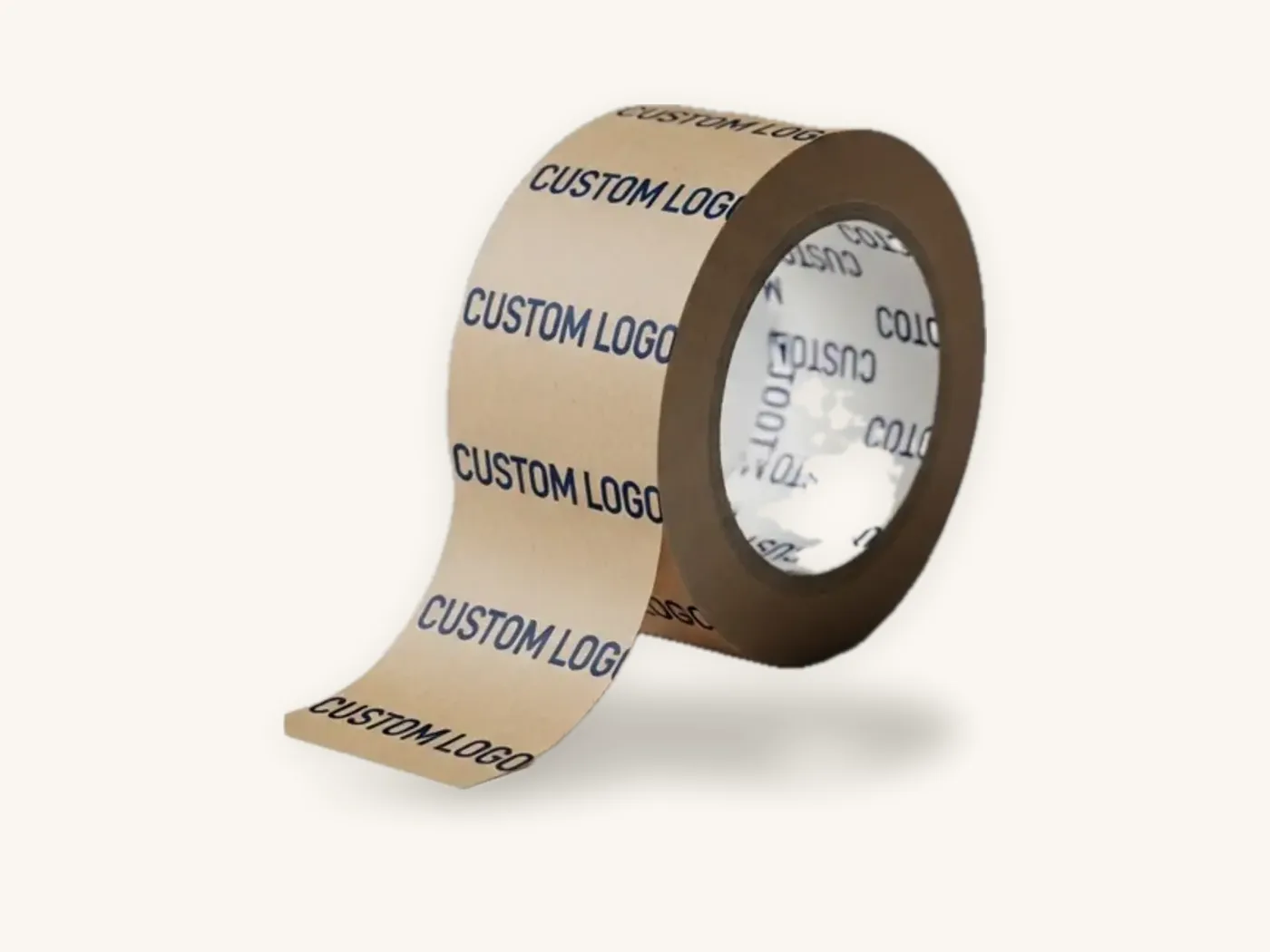
Custom packaging tape is available printed on paper as well as poly, so you can keep the branded look of printed tape while dropping the plastic.
Replacing inner bags, shrink film and windows
These are the smaller plastics that often survive a first round of changes.
Inner poly bags
Apparel and textile brands often bag each garment to protect it from dust and moisture in the warehouse. Glassine bags, made from dense, smooth paper with some grease and moisture resistance, are the usual alternative. For items that go straight into a box, a wrap of printed tissue paper and a paper sticker may be all you need. The apparel and fashion packaging page shows how brands combine these.
Check with your warehouse or marketplace before dropping bags. Some fulfillment centers have their own requirements for bagging loose items.
Shrink film and multipacks
Shrink film holds multipacks together and seals retail cartons. Paperboard bands, sleeves and seal-end cartons with glued flaps do both jobs. A sleeve over a tray holds a set together and adds a print surface.
Windows
The fully plastic-free window is an open die-cut window with no film. It works when the product is packed in its own container or when handling marks on the product are not a concern. If the product needs to be sealed from dust, consider removing the window and printing a product photograph instead.
Laminations
Replace gloss, matte and soft-touch lamination with aqueous coating. You lose some of the tactile softness of soft-touch, but embossing, textured uncoated papers and careful print design recover much of the premium feel without adding a film.
The tradeoffs to plan for
Plastic is used in packaging because it is light, cheap, waterproof and clear. Paper alternatives compete well on most of those, but not all at once. Plan for these:
| Challenge | Why it happens | How brands handle it |
|---|---|---|
| Moisture | Paper absorbs water and loses strength | Aqueous coating, heavier board, tissue or glassine inner wrap, avoiding long humid storage |
| Grease and oil | Fiber wicks oil | Grease-resistant paper grades where food-safe, or keep a barrier and qualify the claim |
| Weight and size | Boxes and paper fill weigh more than film | Tight sizing, lighter flute grades, inserts instead of loose fill |
| Visibility | No clear film | Open windows, product photography on pack |
| Packing speed | New tape dispensers and fill methods | Pilot at one packing station first, then roll out |
| Cost per unit | Some paper alternatives cost more than commodity plastic | Offset with fewer components and better fit; compare total pack cost |
Food, liquids and cosmetics
Products that are wet, oily or perishable are where zero plastic packaging is hardest. The primary container may need a barrier for safety and shelf life, and any food-contact material has to meet FDA requirements. A realistic target for these categories is often plastic-free secondary packaging, meaning the outer carton, insert and shipper, while the primary container is chosen for product safety. Be clear about that distinction on pack.
A plastic-free rollout plan
Changing every component at once makes it hard to tell what caused a problem. Work through it in order.
- Audit one order. Lay out every component, weigh it and mark it plastic or paper. Note which supplier each part comes from.
- Set your definition. Decide whether your goal is no plastic films, foams, bags and windows, or an absolute zero-plastic claim including coatings and adhesives. Write it down.
- Right-size the box. Measure the packed product and specify a box with small clearance. This removes much of the cushioning question.
- Replace the holder and fill. Move from foam or bubble wrap to a paperboard or molded pulp insert, or paper fill for irregular goods.
- Replace the finish and window. Switch lamination to aqueous coating and film windows to open die-cuts or no window.
- Replace tape, bags and labels. Paper tape, tissue or glassine, and paper labels or direct printing.
- Test in real transit. Pack real products and ship them to several addresses in different climates. Include at least one long route.
- Brief your packing team. New tape, fill and inserts change packing steps. Update instructions and photos at the station.
- Update your claims. Only once the spec is final, decide how to describe it on pack and online.
Say you sell ceramic mugs in a stock brown box with bubble wrap and plastic tape. A plastic-free version might be a printed corrugated mailer with a die-cut corrugated insert that holds the mug by its body and handle, closed with a tear strip. The customer unpacks one box and one insert, both of which go in the paper recycling bin.
Making plastic-free claims your customers can trust
Plastic-free is a strong message, which is exactly why it needs to be accurate. In the US, the FTC Green Guides set out general principles for environmental marketing claims: they should be truthful, substantiated and clear about whether they apply to the whole package or only part of it.
Practical wording choices:
- "Plastic-free packaging" only when every component, including window, tape and labels, meets your written definition.
- "Plastic-free box and insert" when the outer box and insert qualify but a primary container does not.
- Avoid vague terms like "eco-friendly" on their own; they are hard to substantiate.
- Keep the specification sheets for every component on file.
Our green claims on packaging guide goes further into substantiation, and sustainable packaging guide covers the broader material choices. Confirm current FTC guidance and any state rules with counsel before printing claims.
How to order plastic-free packaging from Box Sense
We can quote the box, insert and tape together so the whole pack is designed as one system. The eco-friendly boxes page shows common structures, and the eco-friendly materials page lists the boards, inks and coatings we use.
Specs to send
- Product dimensions, weight and fragility, packed the way it ships today
- A list of the plastic components you want to remove
- Preferred structure: mailer box, shipping box, folding carton or sleeve
- Insert type: paperboard, corrugated or molded pulp, or ask for a recommendation
- Finish: aqueous coating or uncoated; window or no window
- Tape: printed paper tape, or a tear strip instead
- Quantities to price and your target in-hand date
Proofing, samples and timeline
Quotes are confirmed within 24 hours. Design support is free and includes the dieline, artwork setup, a 3D digital proof and two revision rounds. Unprinted structural samples are free, which is the best way to test a paper insert against your product before printing. A printed sample of approved artwork is free on orders of 100 or more; see samples for details.
Standard production is 8–12 business days after proof approval, with rush in 5 business days on most paperboard and corrugated styles. Shipping is free on every US order. The minimum order is 10 boxes, and there are no die or plate charges; one-time tooling applies only to foil, embossing, spot UV and custom inserts.
Frequently asked questions
What is plastic-free packaging?
Plastic-free packaging uses paper, board, fiber and other non-plastic materials for every component of a pack, including the box, cushioning, inner wrap, tape, windows and labels. Most brands define it as containing no plastic films, foams, bags or windows. If you plan to claim it on pack, write your definition down and make sure every component meets it.
What can I use instead of bubble wrap?
The best replacement is usually a better-fitting box plus a paperboard, corrugated or molded pulp insert that holds the product still. For irregular items, honeycomb paper wrap cushions fragile goods in a similar way to bubble wrap, and crinkle paper fills gaps in gift boxes. Test with real products in transit, since protection needs vary with weight and fragility.
Is PLA packaging plastic-free?
No. PLA is a bioplastic made from plant sugars, so while it avoids petroleum-based feedstock, it is still a plastic polymer. PLA windows and films can suit brands looking for a plant-based option, but a pack that includes PLA should not be described as plastic-free. For a strictly plastic-free window, use an open die-cut window with no film.
Is paper tape as strong as plastic tape?
Water-activated paper tape bonds into the fibers of corrugated board and is very secure, often more tamper-evident than plastic tape because it tears the box surface when removed. Self-adhesive paper tape suits light and medium boxes. For heavy shipments, test your tape choice, and note that reinforced gummed tapes may contain strands that are not paper.
Can food packaging be plastic-free?
Secondary packaging such as cartons, sleeves and shipping boxes can often be plastic-free. Primary packaging that touches wet, oily or perishable food is harder, because it may need a barrier for safety and shelf life, and it must meet FDA food-contact requirements. Many food brands make the outer packaging plastic-free and clearly state which parts qualify.
Does plastic-free packaging cost more?
Some paper alternatives cost more per unit than commodity plastic, particularly molded pulp trays and specialty papers. Plastic-free projects often remove components too, such as a poly bag, foam insert and lamination, and better box sizing can reduce fill and shipping costs. Compare the total cost of the packed order rather than individual parts, using the Box Sense price estimator.
How do I tell customers my packaging is plastic-free?
State exactly which parts are plastic-free, keep supplier specifications on file, and give customers disposal guidance such as "box and insert: recycle with paper." Avoid vague terms like "eco-friendly" on their own. The FTC Green Guides set general expectations for environmental claims in the US, so review current guidance or ask counsel before printing claims.
Next steps
Unpack one of your orders, list the plastic parts and pick the biggest one to replace first. Then use the instant price estimator to compare box options, and request a plastic-free packaging quote for the box, insert and tape together. We will confirm pricing within 24 hours and send a structural sample so you can test the fit.
Boxes in this guide
Order the packaging we covered
Written by the Box Sense Packaging Team
Our structural designers, prepress technicians and production staff print and convert custom boxes every day for brands in the United States, United Kingdom and UAE. Questions about this guide? Talk to us.