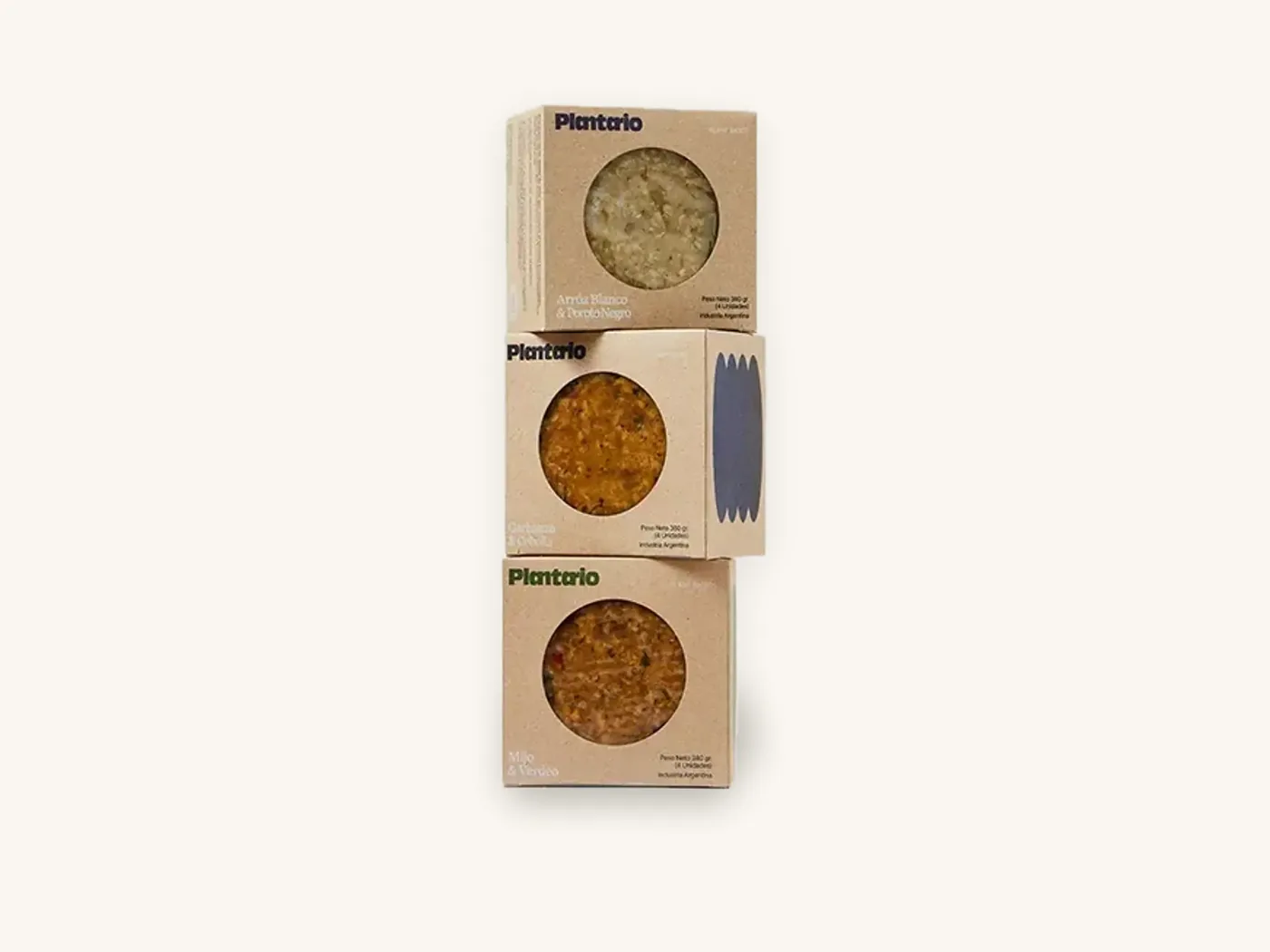
Window film for boxes comes down to three real choices: clear PET film, plant-based PLA film, or no film at all with an open die-cut window. PET is the default because it is crystal clear, stiff, heat tolerant and inexpensive. PLA looks almost the same and is made from plant sugars, but it softens at lower temperatures and is only compostable in industrial facilities. An open window removes plastic entirely, at the cost of dust, handling damage and, for food, hygiene.
The right answer depends on what sits behind the window, where the box travels, and what you plan to say on the packaging about recycling or composting. This guide walks through each option by product type rather than by material, then covers window design rules, cost and how to order.
Key takeaways
- PET window film is the clearest, stiffest and most heat-tolerant option, and it is what most retail and bakery window boxes use.
- PLA window packaging is made from fermented plant sugars and is industrially compostable, not home compostable. The claim only means something if your customers have access to a facility that accepts it.
- PLA starts to soften at roughly 130 to 140°F (about 55 to 60°C), so boxes left in hot trucks, cars or unconditioned warehouses can warp or wrinkle.
- An open window with no film is the most plastic-free choice and works for sealed or wrapped products, but not for unwrapped food or anything that attracts dust.
- Keep windows at least about 1/4 in (6 mm) away from folds, glue flaps and locking tabs, and expect the film patch to overlap the opening by roughly 1/4 in on every side.
- Box Sense offers PET and compostable PLA windows on paperboard window boxes from 10 units, with free structural samples so you can test the film with your product.
How a box window is made
A window starts as an extra cut in the carton dieline. The die punches the opening at the same time it cuts and creases the rest of the blank. After cutting, the flat blank runs through a window patching machine that lays a strip of adhesive around the opening and applies a precut piece of film from the inside.
That process has two consequences worth understanding before you choose a film.
First, the film is glued to the inside of the panel. The print, coating and any lamination sit on the outside, so the film never touches the ink. It does touch whatever sits inside the box, which matters for food.
Second, the patch is larger than the hole. The overlap gives the adhesive something to grip. If the window is too close to a crease, the film ends up spanning a fold, which makes the carton hard to erect and can pop the patch loose.
Common film gauges
Window films are measured in mils (thousandths of an inch) or microns. Most folding-carton windows use film somewhere around 3 to 10 mil. Thinner film is cheaper and lighter but can drum, wrinkle or dent on large windows. Thicker film stays flat across a wide opening and resists fingers poking through on a retail shelf. Your supplier confirms the gauge per job based on window size and product weight.
PET, PLA and no film compared
Before getting into use cases, here is how the three options compare on the properties that tend to decide the question.
| Property | PET film | PLA film | Open window (no film) |
|---|---|---|---|
| Source | Petroleum-based polyester | Plant sugars, typically corn or sugarcane | None |
| Clarity | Excellent, glass-like | Very good, close to PET | Nothing between product and viewer |
| Stiffness | High; stays flat on large windows | Good, slightly more brittle | Not applicable |
| Heat tolerance | Handles summer transit and warm storage | Softens at roughly 130–140°F (55–60°C) | Not applicable |
| Moisture and dust barrier | Good | Good, slightly more permeable | None |
| End of life | Screened out as a reject in paper recycling | Industrially compostable where facilities accept it | Box recycles as plain paperboard |
| Food contact | Food-contact grades widely available | Food-contact grades available | Product exposed to air and handling |
| Relative cost | Lowest film cost | Higher than PET | No film cost, same die cost |
PET window film in detail
PET (polyethylene terephthalate) is the same polymer family used for clear bottles. As a window film it is usually APET, the amorphous grade, which is very clear and easy to die-cut. It holds its shape in a hot delivery van, does not yellow quickly under store lighting and is tough enough that a customer pressing a thumb on a toy window will not tear it.
Choose PET window film when clarity and durability are the priority, when boxes may see heat, when the window is large relative to the panel, or when you want the lowest cost per unit. It is the practical default for toy, electronics accessory and bakery retail boxes.
PLA window film in detail
PLA (polylactic acid) is made by fermenting plant sugars into lactic acid and polymerizing it. It prints and glues like other films and looks very close to PET on the shelf. The difference shows up at the two ends of its life.
At the warm end, PLA has a much lower softening point. A carton sitting in a closed car in July, or in a shipping container crossing a hot region, can come out with a wavy or shrunken window. At the other end, PLA is industrially compostable: it breaks down under the sustained heat, moisture and microbial activity of a commercial composting facility. It is not home compostable, and it does not break down meaningfully in a backyard pile, a landfill or the ocean.
Choose PLA window packaging when your brand is built around plant-based or compostable materials, your boxes stay in climate-controlled conditions, and your customers, or a food-service partner, actually have access to commercial composting that accepts compostable packaging.
No film: the open die-cut window
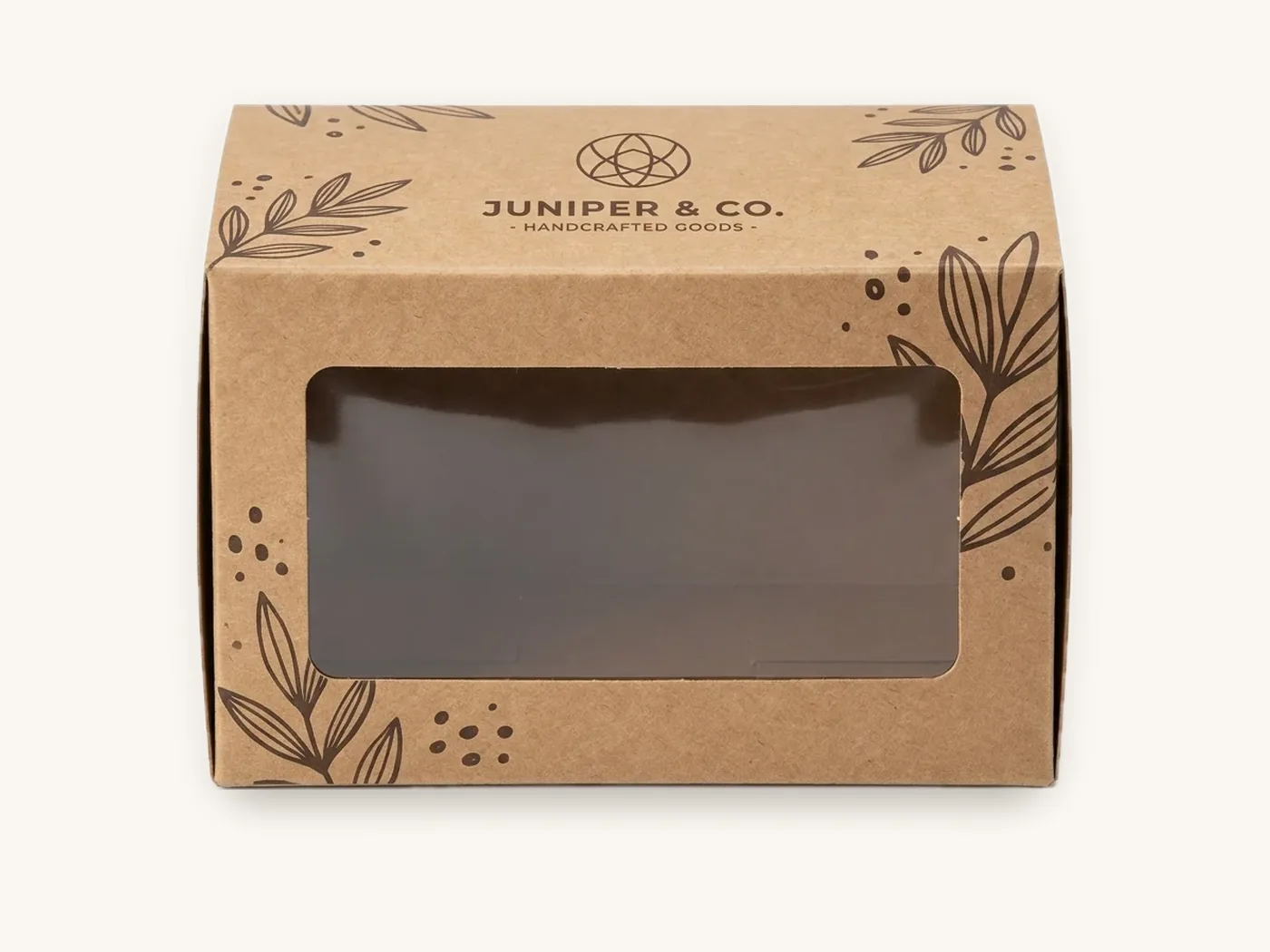
An open window is simply the cutout without a patch. It is common on soap boxes, candle sleeves and gift boxes where the product inside is already wrapped, sealed or robust. It also creates a tactile moment: customers can touch a textured soap bar or smell a candle through the opening.
Choose no film when the product is individually sealed or wrapped, when you want a plastic-free box without composting caveats, and when a little dust or handling is acceptable. Avoid it for unwrapped baked goods, cosmetics with loose powder, anything sold in dusty environments, and small parts that could slip out.
Matching window film to the product behind it
The comparison table tells you what each material does. The better question is what your product needs. Here is how the decision usually plays out across the categories that use window boxes most.
Bakery and confectionery
Cake, cupcake and cookie boxes are the classic use for film windows because the product sells itself and must stay covered. Cake boxes and cupcake boxes typically use PET because it stays flat across a wide top window and holds up in warm kitchens and delivery vehicles.
Two issues are specific to food. Condensation forms when a warm or refrigerated product meets room air, and it fogs the window. Anti-fog film grades exist for chilled bakery and should be requested if your cakes go from a cooler to a counter. Grease can also wick into board around the window edge, so the board itself needs appropriate grease resistance. Our guide to food-safe inks and coatings covers the barrier side of that problem.
PLA can work for bakeries with a compostable positioning, provided boxes are stored away from ovens and hot windows and the brand is careful about how it describes disposal.
Toys and collectibles
Toy boxes put windows under more physical abuse than any other category. Children and shoppers press on them, boxes get stacked in stores, and collectors inspect windows for dents. Thicker PET is the standard here, often paired with a die-cut paperboard or molded pulp tray so the toy does not rest on the film. For premium collectibles, ask for film with a protective masking layer that is removed during packing, so the window stays scratch-free.
Cosmetics, soap and candles
Cosmetics usually arrive already sealed in a jar, tube or compact, so all three options are viable; a small window mainly keeps dust off on a tester shelf. Soap and bath brands often prefer an open window, because scent and texture are the selling points and a plastic-free box fits the positioning.
Retail goods that travel in parcels
For window boxes shipped to customers inside a mailer, summer transit heat is the main risk for PLA, so PET is safer. If the box only lives on a store shelf, PLA's heat limit matters less.
Sustainability claims: what you can honestly say
Window film is where many brands accidentally make claims their packaging cannot support. The Federal Trade Commission's Green Guides explain how environmental marketing claims should be qualified in the US. Several states also regulate compostable and recyclable labeling. Review current FTC guidance and any state rules with counsel before printing a claim.
Recyclability with a PET window
A paperboard carton with a small PET window generally enters the paper recycling stream. At the mill, the board is pulped in water and the film is screened out as a reject. That works, but it means the PET itself is not being recycled. Whether your local program asks consumers to tear the window out first varies, so a simple "remove window before recycling" instruction is a low-cost way to be clear.
Compostability with a PLA window
A PLA window only makes a box compostable if the paperboard, inks, coatings and adhesive are also compostable, and if the finished package is accepted by composting facilities. Many facilities do not accept packaging at all, or only accept certified items. That is why "compostable" on a box usually needs qualification, such as "commercially compostable where facilities exist," rather than an unqualified statement.
Watch out: a PLA window on a carton with plastic lamination is not a compostable box. If compostability is the point of choosing PLA, pair it with aqueous coating, water-based or soy-based inks and uncoated or compostable-friendly board. Our eco-friendly materials page lists the combinations we run.
The case for no window at all
Sometimes the most honest choice is a printed product photo instead of a window. Good photography on SBS paperboard shows color and detail with no film at all.
Designing the window: shape, size and placement rules
Film choice matters less than window design if the carton does not fold, glue or display correctly. These are the rules our structural team applies to every window box.
Placement and margins
- Keep windows about 1/4 in (6 mm) or more from any crease. Film crossing a fold creases, whitens and can pull the patch loose.
- Leave room for the glue margin. The film overlaps the opening by roughly 1/4 in on each side, so a window that runs to within a hair of a panel edge has nowhere to glue.
- Stay clear of tuck flaps and locking tabs. Those areas flex every time the box opens and closes.
- Protect panel strength. A window removes board from a panel. On tall cartons, a window taking most of the front panel reduces stacking strength, so leave a solid frame of board around it or move part of the window to a side panel.
- Line the window up with the product. Mock up the product inside a plain sample before finalizing artwork, because a window that shows the back of a label is worse than no window.
- Consider an insert. A die-cut paperboard insert holds the product in the exact spot behind the window instead of letting it slide.
Shapes and corners
Any shape a steel rule die can cut is possible: circles, arches, logos and silhouettes. Round tight inside corners slightly and keep bridges of board between cutouts reasonably wide, since both are weak points. Complex shapes also enlarge the rectangular film patch that must cover them.
Printing around the window
Artwork extends past the window cutout the same way it extends past the outer edge, with bleed of about 1/8 in (3 mm), so no unprinted board shows at the cut edge. Keep text and logos about 1/8 in clear of the window edge. If you are matching a brand color on the panel that frames the window, our CMYK vs Pantone guide explains when a spot color is worth it.
Tip: ask for your structural sample with the actual film you plan to use, and put the product inside. Clarity, reflections under store lights and how the window frames the product are much easier to judge in hand than on a flat proof.
What window boxes cost, and how film affects the price
A window adds three things to a carton: the cutout in the die, the film and the patching step. The die is part of normal carton production, and Box Sense charges no die or plate fees. Film and patching add a small per-unit cost that scales with the window size.
The table below shows two windowed specs from our current rates, with free US shipping included. Use the price estimator for your exact size, film and quantity.
| Spec | 10 | 100 | 500 | 1,000 | 5,000 |
|---|---|---|---|---|---|
| Window box, 18 pt SBS, 4x4x4 in, full color, aqueous, window | $2.52 | $1.66 | $0.89 | $0.74 | $0.53 |
| Bakery/cake box with window, 18 pt SBS, 10x10x5 in, full color | $6.17 | $4.09 | $2.18 | $1.82 | $1.29 |
The larger bakery box costs more mainly because of its bigger blank, not just its window.
Cost drivers to know
| Driver | Effect on price | How to manage it |
|---|---|---|
| Window size | Larger window means a larger film patch | Size the window to what shoppers need to see |
| Film type | PLA costs more than PET | Reserve PLA for products and claims that justify it |
| Film gauge | Thicker film costs more | Use thicker film only for large or heavily handled windows |
| Number of windows | Each opening may need its own patch | Combine nearby openings into one patch where the design allows |
| Anti-fog or special grades | Adds material cost | Request only for chilled or condensation-prone products |
| Quantity | Setup spread across more units | Compare tiers in the estimator before ordering |
For the broader picture of coatings and add-ons that often ride alongside a window, see our packaging finishes guide and the printing and finishes page.
A quick decision guide
If you are still undecided, work through these questions in order. The first "yes" usually settles it.
- Is the product unwrapped food? Use film. PET for warm or variable conditions, PLA only if storage stays cool and your compostable claim is qualified.
- Will boxes ship through summer parcel networks or sit in hot storage? Use PET.
- Is the window large, or will shoppers press on it? Use thicker PET.
- Is the whole package designed to be compostable, including coatings and board? PLA is a coherent choice.
- Is the product already sealed, and do you want zero plastic? Use an open window.
- Does a window add little beyond what a good photo would show? Consider printing the product image instead.
How to order window boxes with Box Sense
We make window boxes in paperboard styles such as tuck end cartons, bakery boxes and sleeves, with PET or compostable PLA film. Here is what speeds up a quote and avoids a second round of sampling.
What to send
- Product dimensions, and whether it is wrapped, sealed or loose
- Box style, or the product type so we can recommend one
- Window shape, approximate size and which panel it sits on
- Film preference: PET, PLA or no film, plus anti-fog if the product is chilled
- Storage and transit conditions, especially heat exposure
- Print and coating: full color, PMS, aqueous coating or lamination
- Quantities to price, for example 100, 500 and 1,000
- Artwork, or a note that you want help from our design services team
What happens next
- Quote within 24 hours, confirming film, board and pricing for each quantity.
- Free design support: we supply a dieline with the window placed correctly, set up artwork, and send a 3D digital proof with two revision rounds.
- Samples: unprinted structural samples are free, which is the best way to check window placement with your product. A printed sample of approved artwork is free on orders of 100 or more. See samples.
- Production: standard production takes 8–12 business days after proof approval, with rush production in 5 business days on most paperboard styles.
- Delivery: free shipping on every US order; international shipping is quoted at cost.
The minimum order is 10 boxes, and defective boxes reported within 14 days are reprinted free. Bakeries can see more options on our bakery and confectionery packaging page, and toy brands on toys and games packaging.
Frequently asked questions
Is PLA window film compostable at home?
No. PLA is industrially compostable, which means it breaks down under the high, sustained temperatures and controlled conditions of a commercial composting facility. In a backyard compost pile it breaks down very slowly, if at all. Whether a PLA-windowed box is actually composted depends on local facilities accepting compostable packaging, so any compostable claim on the box should be qualified accordingly.
What is the difference between PET and PLA window film?
PET is a petroleum-based polyester film that is very clear, stiff and heat tolerant, and it is the lowest-cost window option. PLA is made from fermented plant sugars, looks almost as clear, and is industrially compostable, but it softens at roughly 130 to 140°F and costs more. Choose PET for durability and heat, PLA for a compostable package kept in cool conditions.
Can you recycle a box with a plastic window?
Generally, yes. A paperboard box with a small film window usually goes in paper recycling, where the board is pulped and the film is screened out at the mill. Local programs differ, and some ask consumers to remove the window first. Printing a short "remove window before recycling" note is a simple way to help, and you should check local guidance before making a recyclability claim.
Is window film safe for direct food contact?
Food-contact grades of both PET and PLA film are widely used in bakery and confectionery packaging. Safety depends on the specific film grade being suitable for the food type and conditions of use, such as fatty foods or refrigeration. Ask your packaging supplier for compliance documentation on the film and adhesive, and confirm current FDA requirements for your product.
Will a window weaken my box?
A window removes board from a panel, so it reduces that panel's stiffness and stacking strength somewhat. The effect is small for modest windows with a solid border of board around them. Large windows on tall cartons, or windows placed near folds and closures, weaken the box more. Keeping windows about 1/4 in from creases and adding an insert both help.
Why does my PLA window look wrinkled?
The most common cause is heat. PLA softens at a much lower temperature than PET, so boxes stored in hot warehouses, vehicles or near sunny windows can warp or shrink. Storing cartons flat in a cool, dry place usually prevents it. If boxes will face summer transit or uncontrolled storage, PET film is the more reliable choice.
How much does a window add to the cost of a box?
A window adds film and a patching step, so it raises the per-unit price modestly, more for large windows or PLA film. As a reference, a 4x4x4 in 18 pt SBS window box printed full color with aqueous coating is about $1.66 per unit at 100 and about $0.74 at 1,000, including US shipping. Use the pricing estimator for your size.
Should I choose an open window instead of film?
An open window suits products that are already sealed or wrapped, such as soap in a wrapper, candles in jars or boxed cosmetics, and it keeps the box plastic-free without compostability caveats. It is a poor choice for unwrapped food, powders or small loose items, because the product is exposed to dust and handling. A structural sample shows how it looks in practice.
Next steps
Decide what your product needs from the window, then price the spec with our window box price estimator. When you are ready, request a window box quote and we will confirm pricing within 24 hours, place the window on a dieline for your product and send a free structural sample with the film you chose. For box styles and board grades, see the custom window boxes guide.
Boxes in this guide
Order the packaging we covered
Written by the Box Sense Packaging Team
Our structural designers, prepress technicians and production staff print and convert custom boxes every day for brands in the United States, United Kingdom and UAE. Questions about this guide? Talk to us.