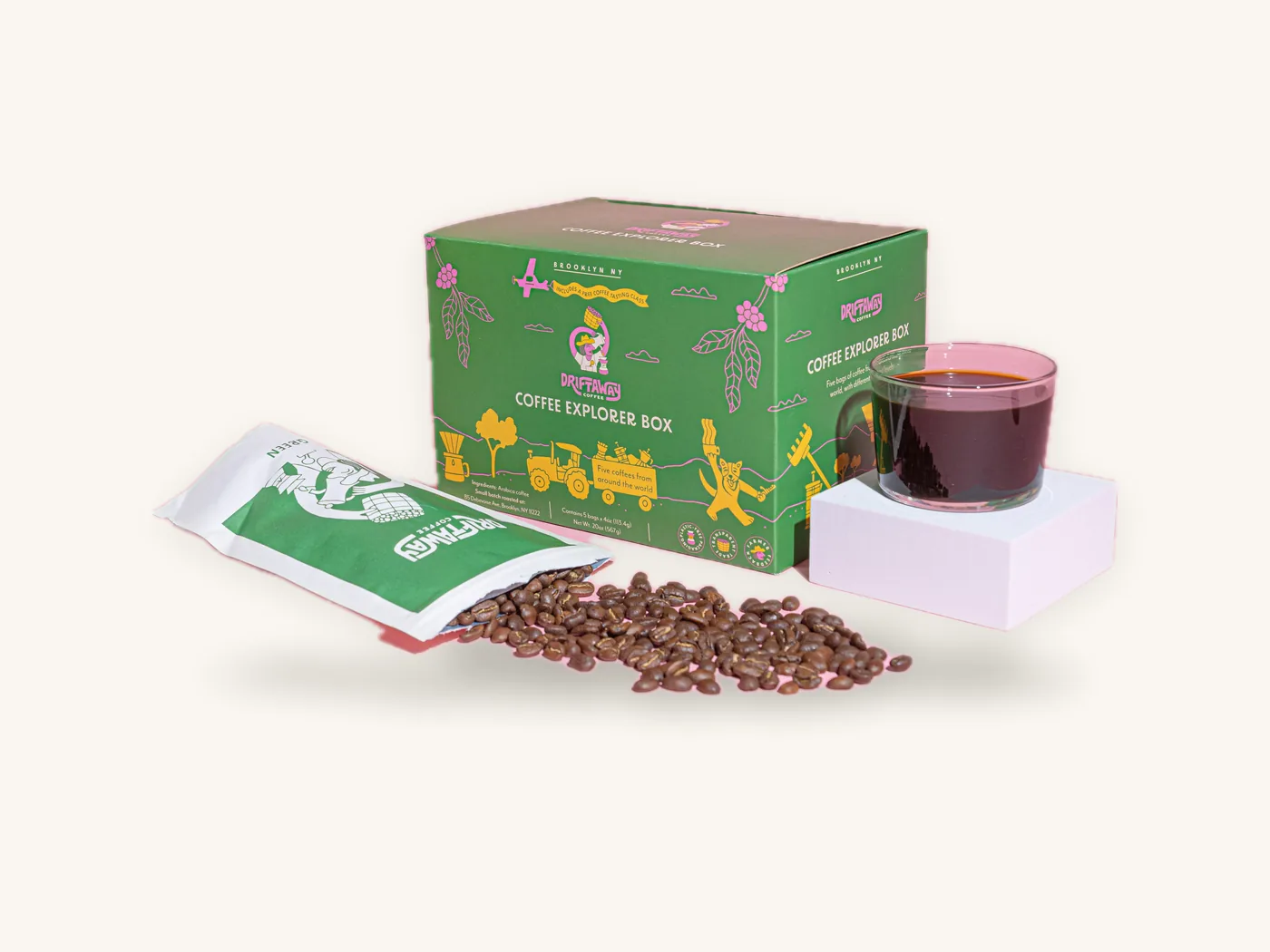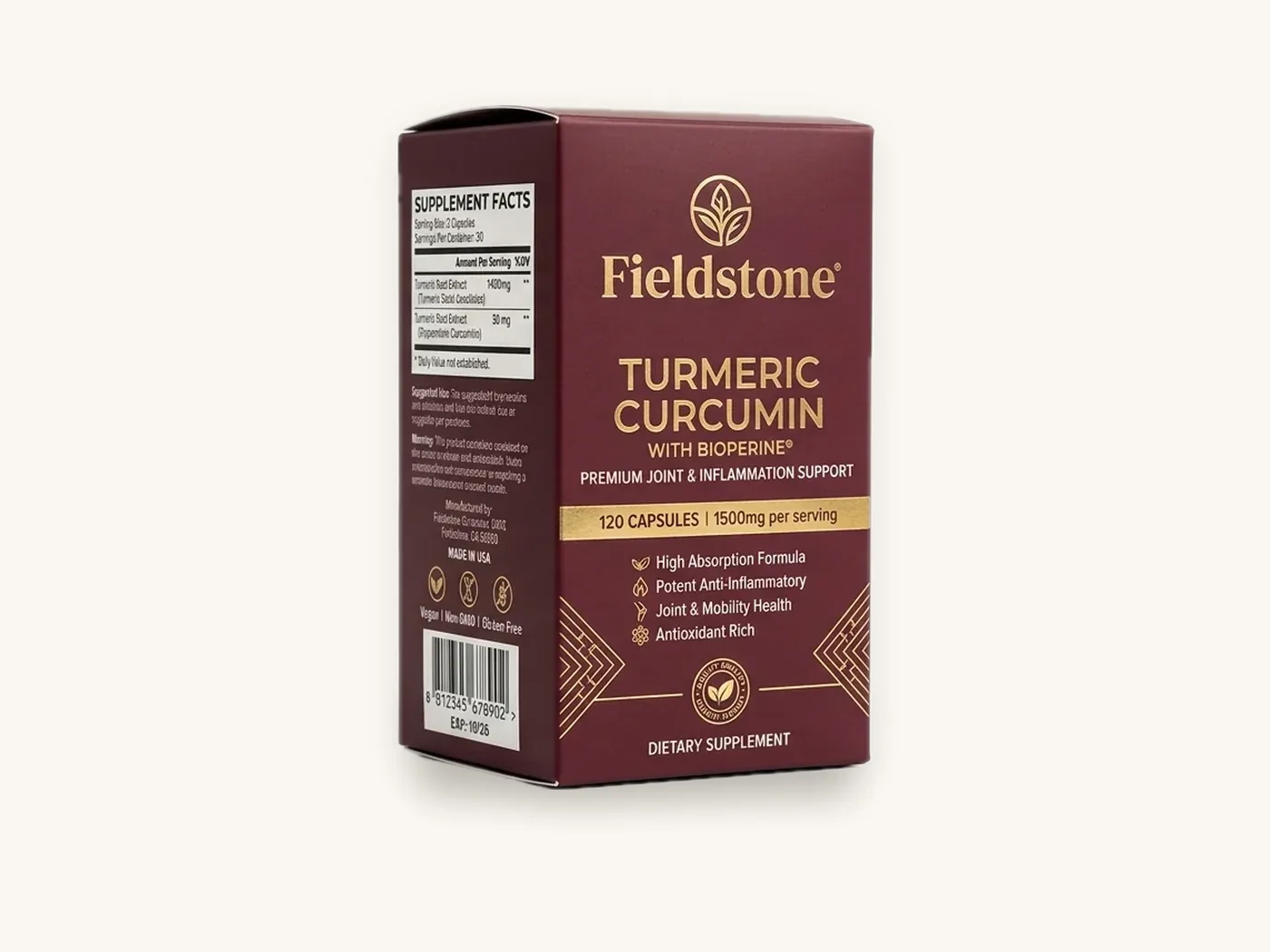
Pharmaceutical packaging is the layered system that contains, protects, identifies and tracks a medicine from the production line to the patient. For most brands the part they buy from a box maker is the secondary carton: a folding paperboard box, usually 14 to 18 pt SBS, that holds a bottle, blister card, tube or vial along with its leaflet, and carries the labeling, Braille, lot and expiry codes and a tamper-evident closure.
This guide is about those cartons. It covers where the carton sits in the packaging stack, which medicine box styles run well on filling lines, how Braille and tamper evidence are built into the structure, and how to leave room on the artwork for codes printed later. It also shows indicative carton prices and what to send when you request a quote.
One boundary up front: Box Sense makes secondary packaging such as cartons, kit boxes and inserts. We do not manufacture primary drug packaging (anything that touches the medicine) or sterile packaging, and nothing here replaces your regulatory team's review of labeling and packaging requirements.
Key takeaways
- A pharma carton is secondary packaging; the bottle, blister or tube inside is the primary package and carries its own requirements.
- Reverse tuck end and seal end cartons in 14 to 18 pt SBS cover most over-the-counter and prescription retail packs; auto lock bottoms suit heavier bottles.
- Braille on the carton is generally required for medicines sold in the EU and UK; in the US it is not a general federal requirement for drug cartons, so confirm per market.
- Tamper evidence can be built into the carton itself with glued ends, perforated tear panels or seal labels, and must match what your labeling says.
- Leave an unvarnished, unprinted coding window for lot, expiry and any serialized 2D barcode added on your line.
- A 3x2x5 in straight tuck carton in 18 pt SBS runs about $1.15 each at 100 units and about $0.51 at 1,000, with US shipping included.
Where the carton fits in the pharmaceutical packaging stack
Regulators and packaging engineers split medicine packaging into levels. Knowing which level you are buying keeps quotes accurate and keeps responsibilities clear between your contract manufacturer, your packaging supplier and your regulatory team.
| Level | Typical components | Main job | Usually supplied by |
|---|---|---|---|
| Primary | Bottles, closures, blister film and foil, tubes, vials, sachets | Contact with the drug, barrier, dosing, often child resistance | Specialist primary packaging suppliers qualified by the drug maker |
| Secondary | Folding cartons, leaflets, carton inserts, shelf-ready trays | Labeling, Braille, protection of the primary pack, tamper evidence, coding | Carton converters such as Box Sense |
| Tertiary | Shipper cases, pallets, stretch wrap | Distribution, aggregation of serialized units | Corrugated suppliers and 3PLs |
The secondary carton does more regulatory work than its simple shape suggests. It is often the surface that carries the most complete label, the Braille name, the tamper-evident feature and the human-readable and barcoded identifiers. That is why artwork control matters as much as board choice.
Your quality system may still require supplier approval, specification sheets and incoming inspection for cartons, so ask your QA lead what documentation they need before the first order.

Medicine box styles compared
Most pharma cartons are variations of the folding carton: a single die-cut sheet, glued along one side seam, shipped flat and erected by hand or on a cartoning machine. The closure style at each end is what changes. Our folding carton guide explains the construction in more depth.
| Style | How it closes | Tamper evidence built in | Choose it when |
|---|---|---|---|
| Reverse tuck end | Top tuck folds front to back, bottom tuck back to front | None by default; add seal label or glue | Hand packing, blister cards, light tubes and bottles |
| Straight tuck end | Both tucks fold from the same side | None by default | Clean front panel with no flap edge showing; retail shelf packs |
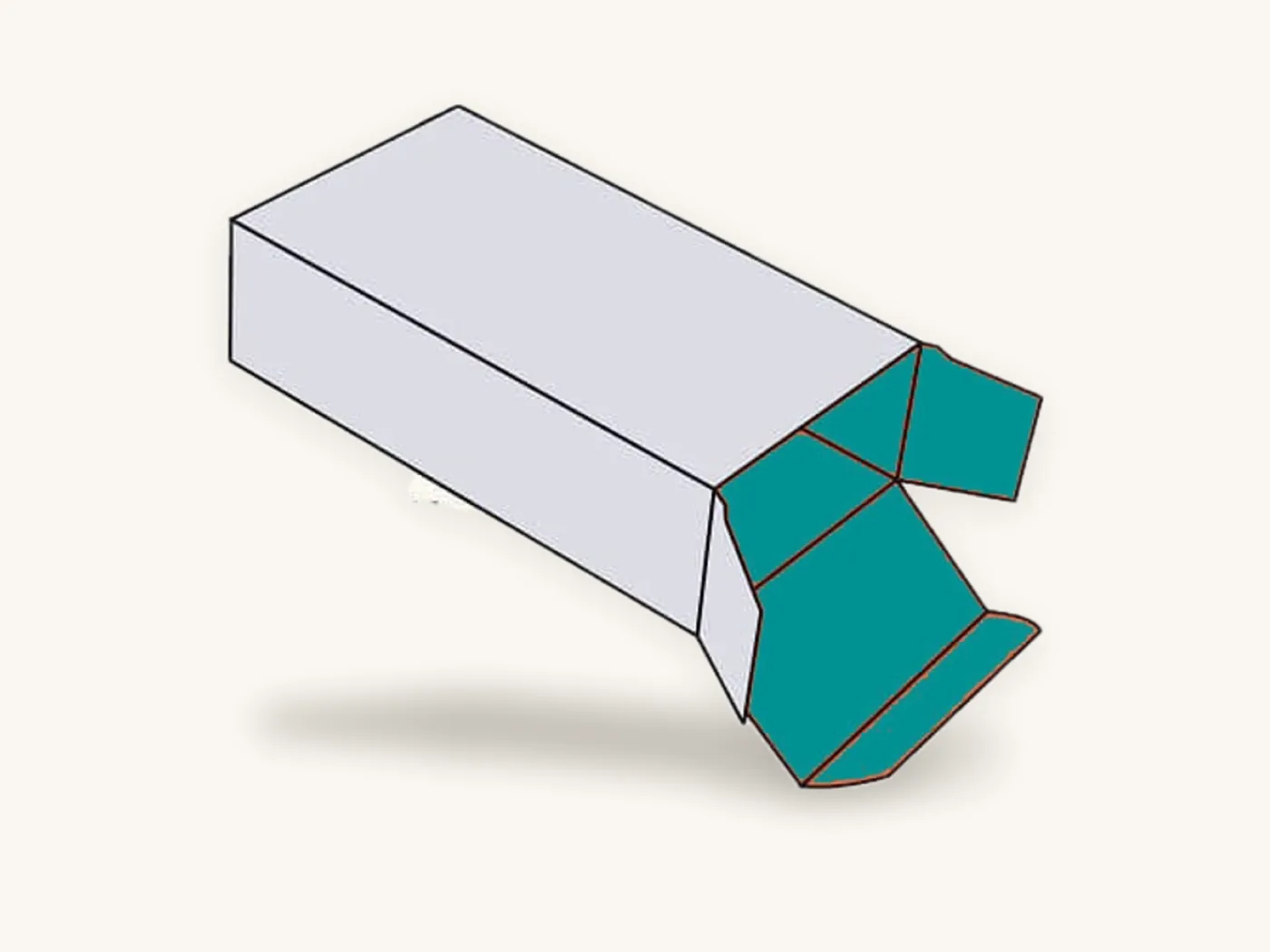
| Seal end | Dust flaps and end panels are glued shut | Yes, opening tears or distorts the board | Machine cartoning, OTC retail packs that need visible tamper evidence |
| Seal end with tear strip | Glued ends plus a perforated opening panel | Yes, and opening is easy for the patient | OTC packs where easy opening matters as much as evidence |
| Auto lock bottom with tuck top | Pre-glued crash-lock base, tuck top | Only if the top is glued or labeled | Heavier glass bottles, bulkier kits |
Tuck end cartons for flexible, lower-volume packs
Reverse tuck end boxes are the most common medicine box for smaller runs because they are easy to erect by hand and use the least board. The two tucks fold in opposite directions, which makes the flat blank efficient to cut. The trade-off is that a tuck end on its own shows no sign of being opened, so you add a seal label or a spot of glue.
Straight tuck end boxes put both tuck flaps on the same side, so the front panel stays clean. Some brands prefer this for retail presentation, since the cut edge of the tuck never interrupts the product name.
Seal end cartons for machine lines and visible tamper evidence
Seal end boxes have no tuck flaps. The end panels are glued on the filling line or by hand, and the only way in is to tear the board or a perforated opening. That makes them a natural fit for tamper-evident OTC packs and for high-speed cartoners, which handle glued ends more reliably than tuck flaps. The seal end boxes guide covers glue patterns and opening designs.
Auto lock bottoms for glass and weight
Auto lock bottom boxes have a pre-glued base that snaps square as the carton is opened. They carry more weight than a tuck bottom, which suits syrups in glass bottles or larger multi-pack cartons. They cost a little more per unit because of the extra glue line.
Choosing board for pharma cartons
Nearly all medicine cartons are made from solid bleached sulfate, usually called SBS paperboard. It is bright white on the print side, clean on the inside, prints small type sharply and folds without cracking. Kraft and recycled grades exist, but the grey or brown inside surface and less consistent caliper make them uncommon in pharma.
Caliper by pack type
| Pack inside the carton | Typical caliper | Why |
|---|---|---|
| Single blister card or sachets | 14 pt SBS | Light load; thinner board folds crisply and saves space |
| Tube of cream or gel | 14 to 16 pt SBS | Enough stiffness to protect the tube from crushing on shelf |
| Plastic bottle up to about 4 oz | 16 to 18 pt SBS | Holds shape when stacked in shipper cases |
| Glass bottle or dropper | 18 pt SBS with auto lock bottom, or a paperboard insert | Heavier load and breakage risk |
| Multi-component pack | 18 pt SBS or E-flute with an insert | Protects several items and keeps them in order |
A point (pt) is one thousandth of an inch, so 18 pt board is about 0.46 mm thick. Thicker board is stiffer, but it also needs wider score allowances and slightly larger outside dimensions for the same inside space.
Why runnability matters
If the cartons will go on an automatic cartoner, give your packaging engineer the machine make and model early. Cartoners are sensitive to board caliper, the direction of the paper grain relative to the carton's panels, glue flap width and how easily the carton opens from flat. A carton that looks perfect by hand can jam a machine if the grain runs the wrong way.
Watch out: changing board caliper mid-project changes the dieline. If your team switches from 16 pt to 18 pt after artwork is approved, the panels shift by fractions of an inch, and small text near a score line can land on the fold.
Braille on medicine boxes
Braille is one of the features that separates pharma cartons from general retail cartons. It is also one of the easiest places to make an expensive mistake, because it is physical tooling rather than ink.
Where Braille is required
In the European Union, medicine packaging must generally carry the product name in Braille, and the United Kingdom has a comparable requirement. In the United States there is no general federal requirement for Braille on prescription or OTC drug cartons, although some brands add it voluntarily for accessibility. Rules differ by market and product category, so confirm what applies with your regulatory team before artwork is finalized.
How Braille is applied
Braille on a carton is embossed: a male and female tool press raised dots into the board while it is die-cut or in a separate pass. The guidance most pharma artwork teams work from is EN ISO 17351, which covers Braille on medicinal product packaging, including the dot pattern and the need for dots to be legible by touch after the carton is folded and handled.
Practical rules that save rework:
- Keep Braille on a flat panel. Place it away from scores, glue flaps and the tuck, where folding flattens dots.
- Check the reverse side. Embossing pushes through, so do not place a coding window, barcode or critical text on the back of the Braille area.
- Proof it physically. A flat PDF cannot show whether dots are readable, so request a structural sample with embossing when possible.
- Treat it as tooling. Braille is quoted like other embossing, with a one-time tooling charge on the first order.
Tamper evidence built into the pharma carton
For most OTC human drug products sold at retail in the US, the FDA requires tamper-evident packaging under 21 CFR 211.132, along with a labeling statement that tells consumers what the feature is. The feature can sit on the primary container, the carton or both. The official text is on the Electronic Code of Federal Regulations, and your regulatory team should confirm which products are covered and whether your chosen feature qualifies.
In the EU, many prescription medicines must carry an anti-tampering device on the outer pack under the Falsified Medicines Directive. Our tamper-evident packaging guide compares features across industries; the options below are the ones that belong to the carton.
| Carton feature | How it shows tampering | Where it is added | Considerations |
|---|---|---|---|
| Glued seal ends | Board tears or flaps distort when forced | Filling line or hand gluing | Needs a glue-friendly, uncoated glue zone |
| Perforated tear panel | Panel is visibly removed | Die-cut into the carton | Perforation strength must survive shipping |
| Tamper-evident seal label | Label tears, voids or leaves residue | Applied over the tuck after filling | Label size and position planned on the dieline |
| Glue spot on tuck flap | Flap tears when opened | Filling line | Low cost; confirm it meets your labeling claim |
| Shrink film over the carton | Film is visibly broken | Packaging line | Adds plastic; check sustainability goals |
The most important rule is consistency. If the carton says the pack is sealed with a printed seal, the seal must be present and match that description on every unit. Build the statement and the structure together at the proof stage.
Tip: ask for the glue zone to be left free of varnish and lamination. Coatings resist adhesives, and a weak glue bond undermines both tamper evidence and carton strength.
Coding, serialization and the unprinted window
Pharma cartons are usually printed in advance with fixed artwork and then coded on the packaging line with variable data. Plan space for that data before the artwork is approved.
What gets added on the line
- Lot or batch number and expiration date, commonly printed by inkjet, thermal transfer or laser.
- A serialized 2D Data Matrix barcode where required. Under the Drug Supply Chain Security Act, prescription drug packages in the US carry a product identifier that includes the National Drug Code, a serial number, lot and expiration date in human-readable and machine-readable form. FDA's DSCSA overview explains the scope; your serialization provider handles the data.
- A linear UPC or GTIN barcode for retail, often preprinted because it does not change.
- A carton identification code such as a pharmacode bar pattern, which lets line cameras confirm the right carton is on the right product.
Designing the coding window
A coding window is a clear, flat panel area with no printing, varnish or lamination, sized to fit the coder's print area plus a margin. Inkjet ink and laser marks behave very differently on coated and uncoated board, so tell us your coding technology and we will specify the finish accordingly. Many teams choose aqueous coating overall with a knocked-out window, rather than a film lamination that can resist ink.
Keep the window on a panel the coder can reach when the carton moves through the machine. Its position, orientation and size belong on the dieline, not in a note added later.
Artwork control for pharma cartons
Medicine carton artwork is subject to more review than almost any other retail packaging. OTC drugs sold in the US generally must follow the Drug Facts labeling format in 21 CFR 201.66, and prescription products follow their approved labeling. What goes on the panel is your regulatory team's decision. Our job is to reproduce approved artwork exactly and flag physical conflicts.
A controlled artwork approval process
- Freeze the structure first. Approve the dieline, board caliper, closure style and coding window before placing text.
- Place mandatory text on the correct panels. Keep the principal display panel, Drug Facts or equivalent, and manufacturer details on flat areas clear of glue flaps.
- Check minimum type sizes against your rules. Small type on a folding carton also needs sharp print, so avoid reversing tiny text out of dark backgrounds.
- Mark every variable field. Show the coding window, Braille position and any seal label on a separate technical layer.
- Assign a version number. Print the artwork code and version in a discreet position so the line and QA can match cartons to approved files.
- Review a 3D digital proof. Confirm that text reads correctly when folded and nothing critical wraps around an edge.
- Approve a physical sample where possible. Check fit with the real primary pack, Braille legibility, glue bond and how the carton runs on your line.
- Archive the approved proof. Keep it with the batch record so reorders use the identical file.
Many brands also use a distinct color band for each strength so packs are easy to tell apart; specify PMS spot colors if those bands must match across reorders.
What pharma cartons cost
Carton price depends on size, board caliper, print coverage, coatings, embossed Braille, closure style and quantity. Quantity has the largest effect because setup is spread across more cartons. These indicative per-unit prices come from our current rates with US shipping included; check your exact size and spec in the packaging price estimator.
| Spec | 100 | 500 | 1,000 | 5,000 | 10,000 |
|---|---|---|---|---|---|
| Straight tuck end, 18 pt SBS, 3x2x5 in, full color outside, aqueous | about $1.15 | about $0.61 | about $0.51 | about $0.36 | about $0.33 |
| Reverse tuck end, 14 pt SBS, 2x2x6 in, full color, gloss lamination | about $1.17 | about $0.63 | about $0.52 | about $0.37 | about $0.33 |
A seal end or auto lock bottom version of the same size costs slightly more because of the extra glue work. Embossing, including Braille, carries one-time tooling of about $60, and a custom insert die about $45. There are no die or plate charges on standard cartons.
To keep costs down, share one dieline across strengths, choose aqueous coating over lamination where it does the job, and avoid oversized cartons that waste board and shipper space.
How to order medicine boxes from Box Sense
We make medicine and pharma boxes as secondary packaging: cartons, carton inserts and kit boxes. We do not supply primary containers or sterile packaging, and we do not certify labeling compliance. Your regulatory and QA teams approve content; we produce exactly what is approved.
What to send with a quote request
- The primary pack you are cartoning, with dimensions, weight and a sample if you have one
- Closure style preference: reverse tuck, straight tuck, seal end or auto lock bottom
- Board caliper, or a request for a recommendation
- Whether cartons are packed by hand or on a cartoner, with machine details
- Braille text and target markets, if Braille is required
- Tamper-evident approach, such as glued ends, tear panel or seal label
- Coding method and the size of the coding window
- Leaflet dimensions when folded, so the carton leaves room
- Quantities to price and a target delivery date
What happens after you send it
Quotes are confirmed within 24 hours. Our design services team supplies the dieline, sets up approved artwork and sends a 3D digital proof with two revision rounds included. Unprinted structural samples are free, which is the right way to test fit with your bottle or blister card, and a printed sample of approved artwork is free on orders of 100 or more. See samples for details.
Standard production is 8–12 business days after proof approval, and rush production in 5 business days is available on most paperboard styles. The minimum order is 10 cartons, shipping is free on every US order, and defective cartons reported within 14 days are reprinted free.
If your product is a device or diagnostic kit rather than a medicine, the medical device packaging guide covers rigid boxes, foam inserts and kit layouts, and our pharma and healthcare packaging page shows the full range.
Frequently asked questions
What is secondary packaging in pharmaceutical packaging?
Secondary packaging is everything around the primary container that does not touch the medicine. For most products it is the folding carton, plus any leaflet and carton insert. It carries labeling, Braille where required, lot and expiry codes and often the tamper-evident feature. Primary packaging, such as bottles and blister packs, holds the drug itself and is qualified separately by the drug manufacturer.
What board is used for medicine boxes?
Most medicine boxes use solid bleached sulfate (SBS) paperboard between 14 and 18 pt. SBS is bright white, prints small type sharply and folds cleanly on cartoning machines. Use 14 pt for blister cards and sachets, 16 to 18 pt for bottles and tubes, and add an auto lock bottom or insert for heavier glass.
Do pharmaceutical cartons need Braille in the US?
There is no general federal requirement for Braille on drug cartons sold in the United States, although some brands add it for accessibility. Medicines sold in the European Union and the United Kingdom generally must show the product name in Braille. Because rules vary by market and product, confirm the requirement with your regulatory team before approving artwork.
How do you make a medicine carton tamper evident?
Common carton-level options are glued seal ends, a perforated tear panel, a tamper-evident seal label over the tuck, or glue on the tuck flap. Shrink film is another option on the line. Whichever you choose must match the tamper-evident statement on your labeling, so design the structure and the text together and confirm the approach with your regulatory team.
Can Box Sense print serialization barcodes on pharma cartons?
Serialized 2D barcodes contain unique data for each unit, so they are normally printed on your packaging line after filling, not at the carton plant. We print the fixed artwork and leave an unvarnished coding window sized for your coder. Fixed barcodes, such as a retail UPC, can be preprinted as part of the artwork.
What is the minimum order for pharma cartons?
Box Sense makes custom medicine boxes from 10 units. Short runs are printed digitally without plates, which suits clinical packs, market tests and small OTC launches. Unit prices fall steeply with quantity, so a straight tuck carton that costs about $1.15 at 100 units is about $0.51 at 1,000 in the same spec.
Are seal end or tuck end cartons better for medicines?
Seal end cartons are better when you need visible tamper evidence or run an automatic cartoner, because glued ends show damage when opened and machines handle them reliably. Tuck end cartons are better for hand packing and short runs, since they close without glue and use less board. Tuck ends usually need a seal label for tamper evidence.
How long does it take to produce custom medicine boxes?
Quotes are confirmed within 24 hours, and standard production takes 8–12 business days after proof approval. Rush production in 5 business days is available on most paperboard cartons. Allow extra time for your internal artwork review and for a physical sample if you need to test Braille, glue bonds or cartoner performance before the full run.
Next steps
Collect your primary pack dimensions, closure preference, Braille text and coding window size, then check indicative carton costs in the instant price estimator. When your regulatory team is ready to review proofs, request a pharma carton quote and we will confirm pricing within 24 hours and send a dieline for your artwork.
Boxes in this guide
Order the packaging we covered
Written by the Box Sense Packaging Team
Our structural designers, prepress technicians and production staff print and convert custom boxes every day for brands in the United States, United Kingdom and UAE. Questions about this guide? Talk to us.