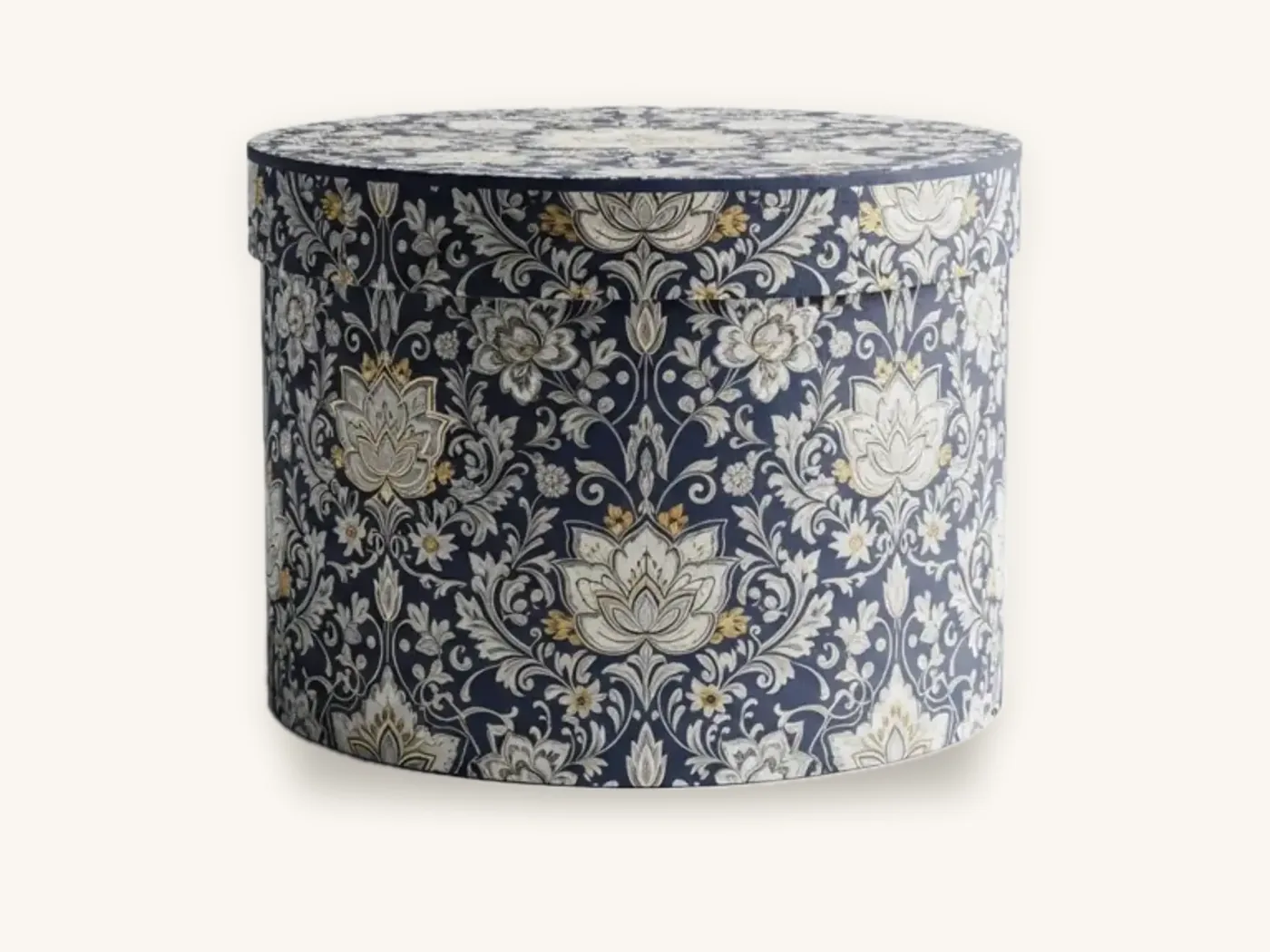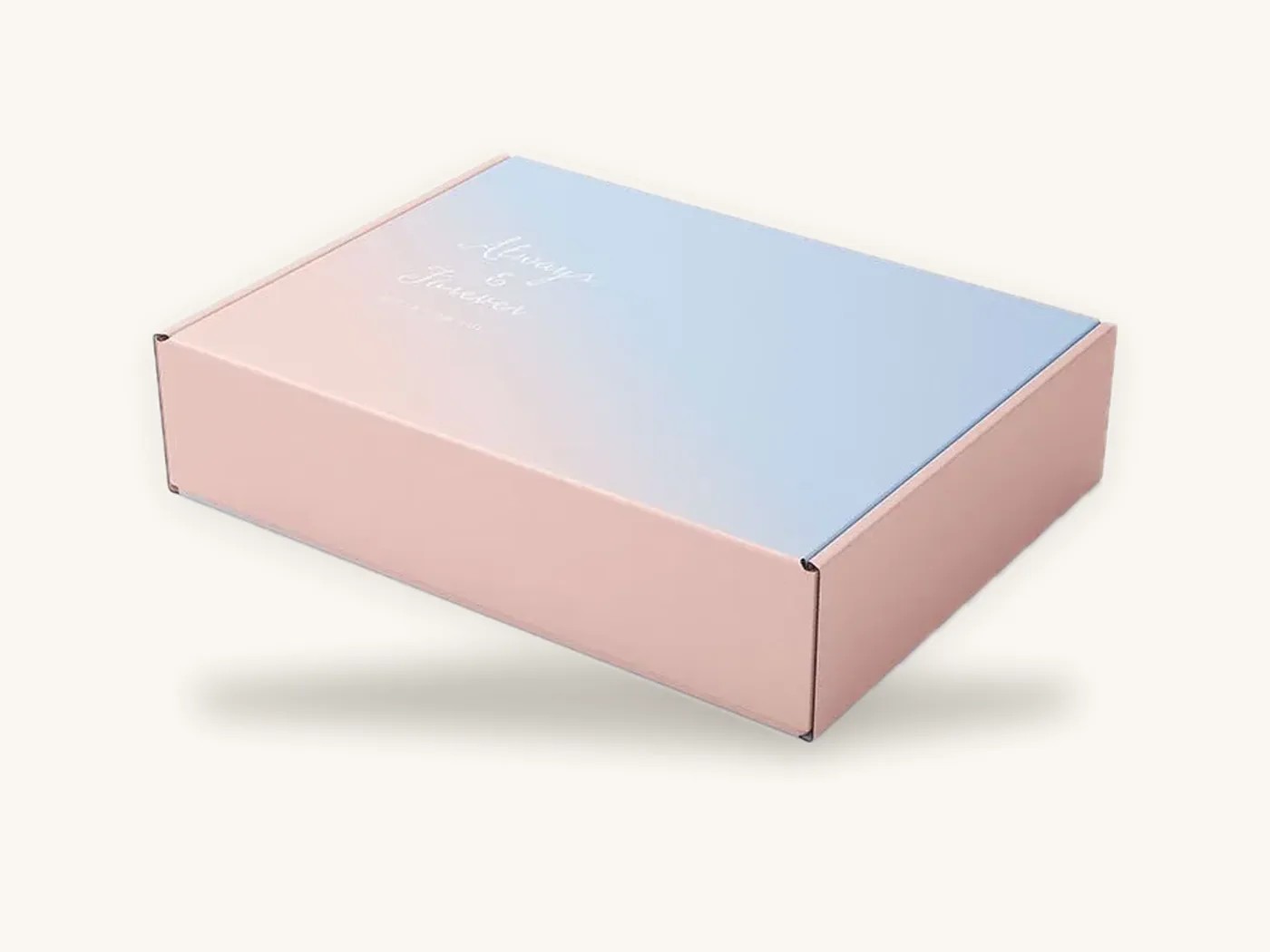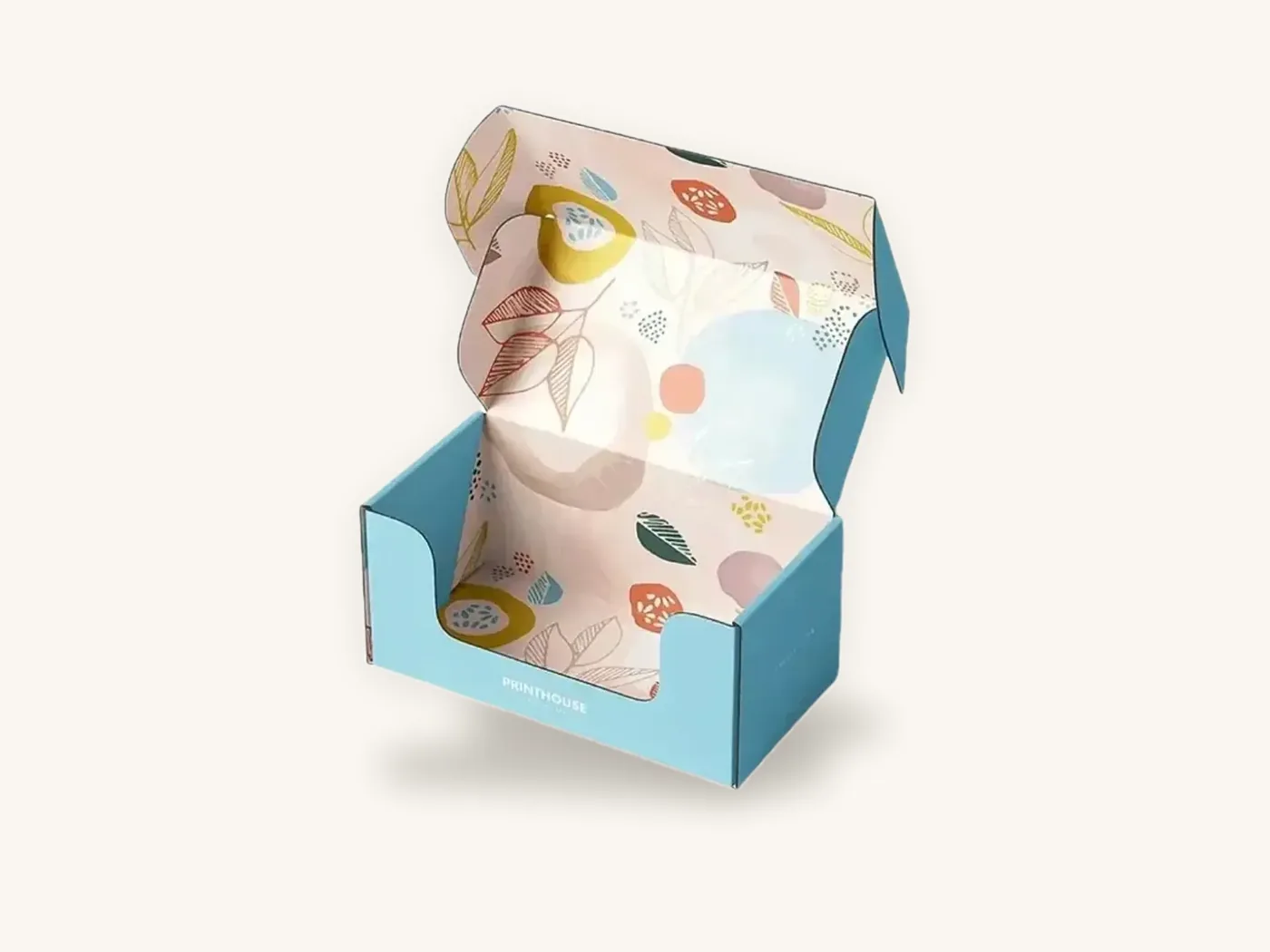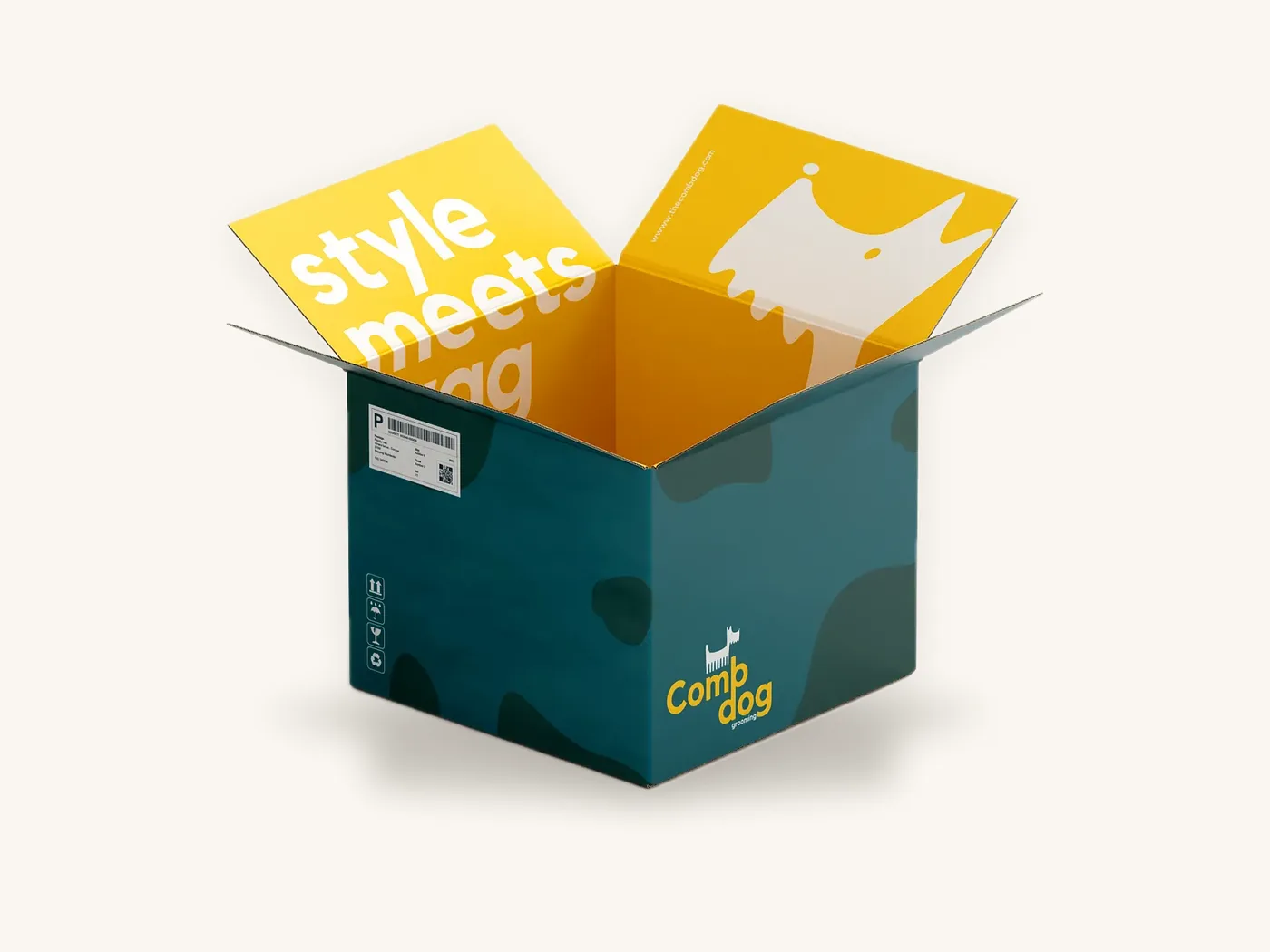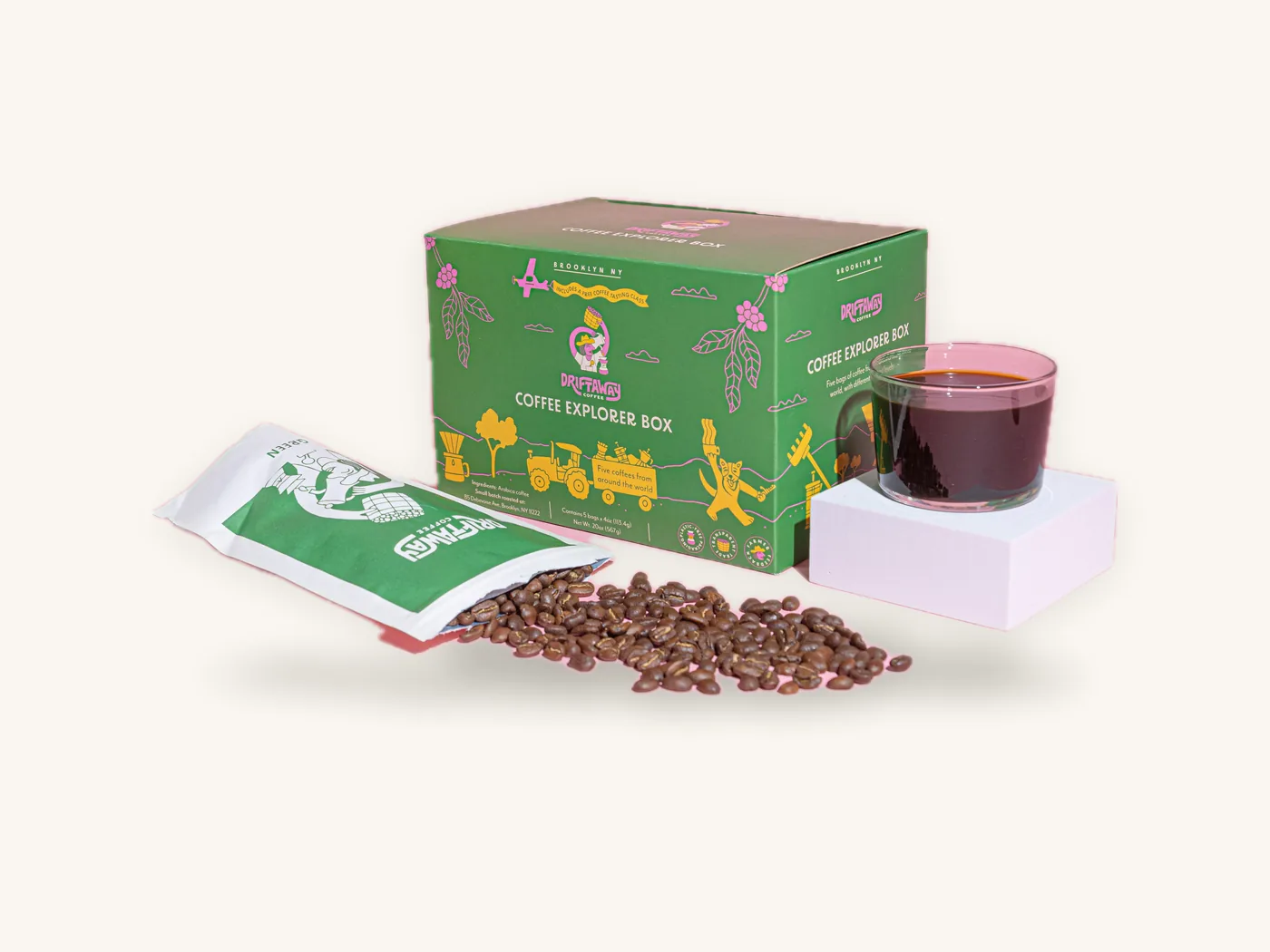
Folding cartons are printed paperboard boxes that are die-cut, creased and glued, then shipped to you flat and folded into shape at packing. They are the box on nearly every retail shelf: skincare, supplements, tea, candles, toys, electronics accessories and pharmacy products. A single sheet of board, usually 14 pt to 24 pt thick, gives you a printed billboard on six sides for well under a dollar a unit at volume.
For a product brand, specifying custom folding cartons comes down to choosing the right board, the right thickness, the right closure style and the right print and finish for how the box will be sold. This guide explains each decision the way a carton converter thinks about it, shows what paperboard cartons cost at different quantities, and walks through the specification you need to send for a quote.
Key takeaways
- A folding carton is a single-layer paperboard box, not corrugated. It protects and presents the product on the shelf but usually needs a shipper for parcel transit.
- SBS paperboard gives the brightest print; kraft reads natural; recycled-core boards such as bux board cost less for simpler graphics.
- Thickness is measured in points (pt), where 1 pt equals 0.001 in. Most retail cartons use 16–18 pt; heavier products move to 20–24 pt.
- The closure style (tuck end, auto lock bottom, seal end, sleeve) matters as much as the board, because it sets packing speed and how much weight the base can carry.
- An 18 pt SBS straight tuck end carton, 3x2x5 in, full color with aqueous coating, runs about $1.15 each at 100 units and about $0.51 at 1,000, with US shipping included.
- Box Sense produces custom folding cartons from 10 units, with no die or plate charges, and rush production in 5 business days on most paperboard styles.
What makes a folding carton different from other boxes
People use "box" for everything, but converters split packaging into three families that are made on different machines and solve different problems.
| Family | Material | Typical thickness | Main job | Ships flat? |
|---|---|---|---|---|
| Folding carton | Paperboard (SBS, kraft, recycled board) | about 0.35–0.6 mm | Retail presentation, product information, light protection | Yes |
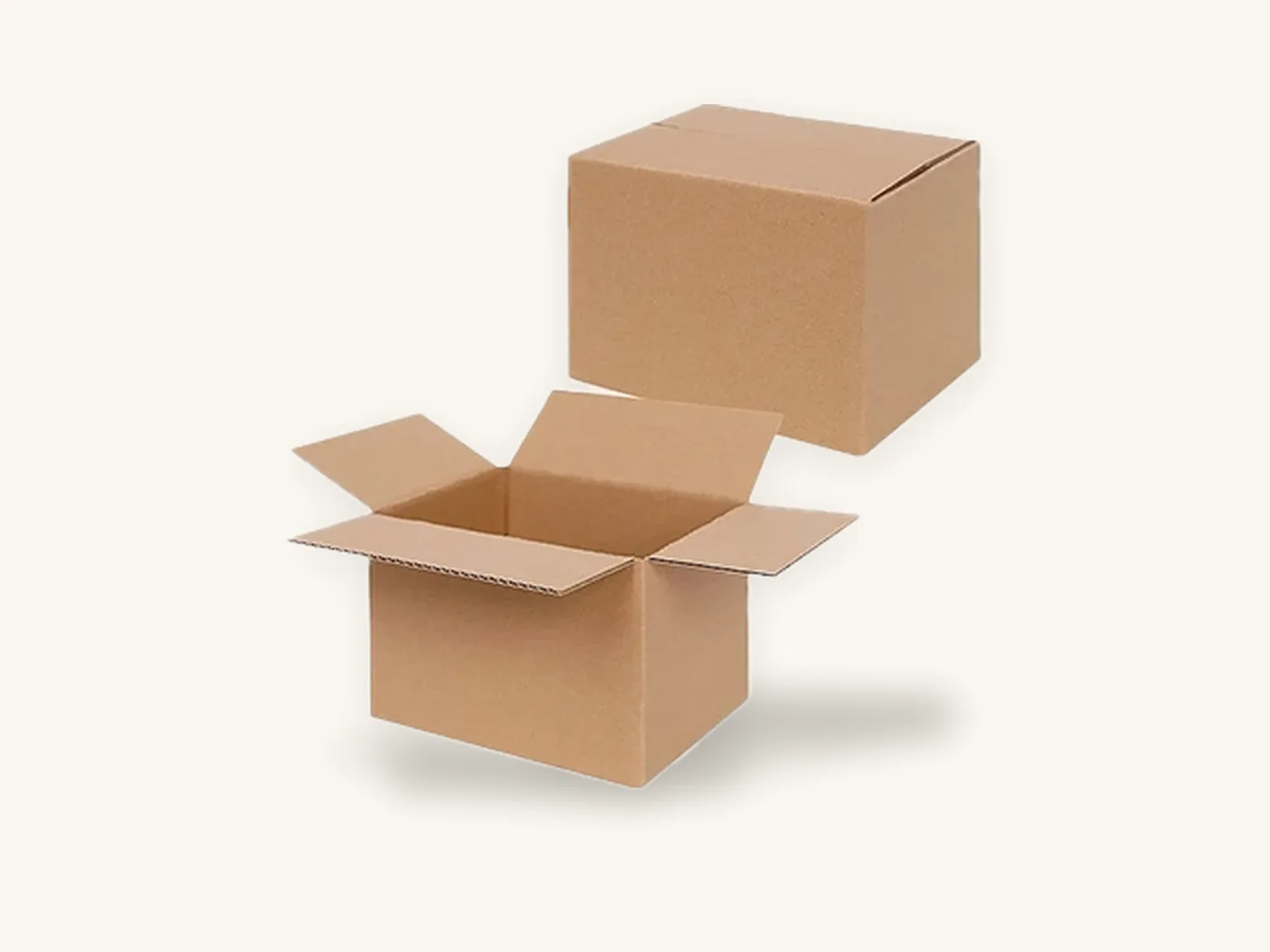
| Corrugated box or mailer | Fluted board between liners | about 1.5–7 mm | Transit protection, e-commerce shipping | Yes |
| Rigid box | Greyboard wrapped in paper | about 1.2–3 mm | Premium presentation and keepsake value | Usually no |
A folding carton is the lightest and most print-friendly of the three. It creases crisply, so edges look sharp, and its smooth surface takes fine type, barcodes and photography without the flute texture of corrugated board. It also packs densely: a thousand flat cartons may fit in a single case.
The trade-off is protection. A carton alone resists scuffs and light handling, not drops in a parcel network. If you sell direct to consumers, plan on shipping cartons inside a mailer or shipper. Our mailer vs shipping box vs folding carton comparison lays out the three side by side, and the corrugated boxes guide covers the transit side.
Paperboard grades for custom folding cartons
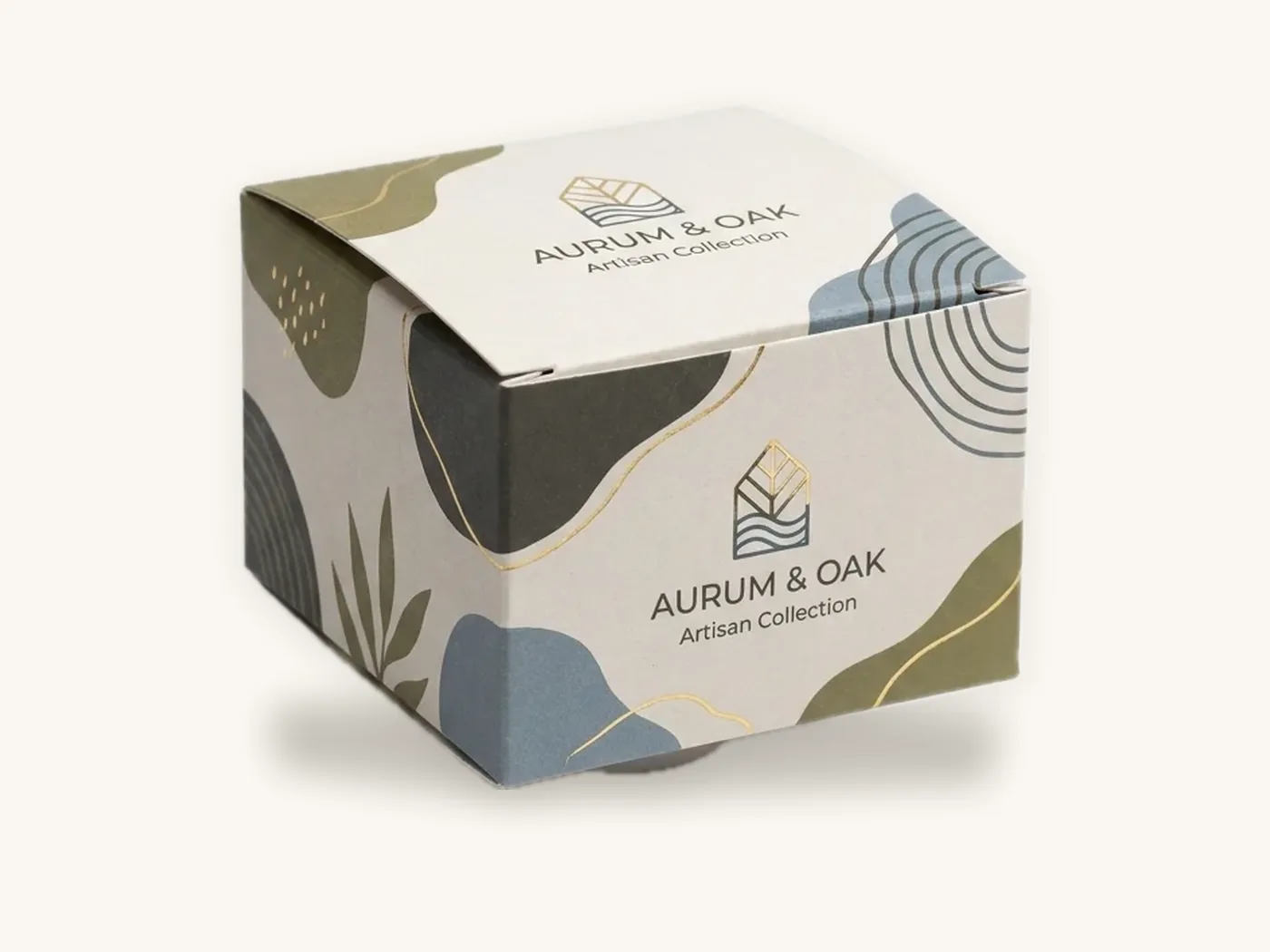
The board grade sets the color of the base, how sharp the print looks, how well the carton folds and how it is perceived. Here are the grades most product brands choose between.
Solid bleached sulfate (SBS)
SBS paperboard is made from bleached virgin fiber all the way through, with a clay coating on one side (C1S) or both (C2S). It is the whitest, smoothest base available, which makes it the standard for cosmetics, pharma, supplements and any artwork where color accuracy matters. C2S is worth specifying when you print the inside of the carton.
Kraft paperboard
Kraft paperboard keeps the natural brown color of unbleached fiber. It is strong for its thickness and signals a natural, minimal or eco-positioned product. Full-color ink printed on kraft looks darker because the brown shows through, so designs usually rely on one or two colors, black, or white ink as a base.
Recycled-core boards
Bux board and similar grades have a coated white top layer over a recycled-fiber core. They print well on the coated face at a lower material cost than SBS. The cut edges and inside show a grey or off-white back, which is fine for many retail products but less suited to premium beauty.
Specialty boards
Metallic and holographic boards, textured stocks and FSC-certified versions of the grades above are all available. Metallic board is often printed with white ink under colored areas so that only selected parts keep the mirror effect.
| Grade | Print quality | Look | Cost position | Best for |
|---|---|---|---|---|
| SBS C1S | Excellent outside | Bright white | Higher | Beauty, pharma, supplements, color-critical art |
| SBS C2S | Excellent inside and out | Bright white both sides | Higher | Inside printing, open-top or window displays |
| Kraft | Good for bold graphics | Natural brown | Moderate | Soap, candles, food, natural brands |
| Bux or recycled-core | Good on coated face | White face, grey back | Lower | Everyday retail, toys, household goods |
| Metallic or holographic | Striking with white ink | Mirror or rainbow | Highest | Fragrance, cosmetics, limited editions |
Choosing carton thickness (caliper)
Paperboard thickness is measured in points. One point equals one thousandth of an inch, so 18 pt board is 0.018 in, or about 0.46 mm. Thicker board resists bulging, holds its shape on the shelf and feels more substantial, but it also costs more and can crack along creases if it is too stiff for a small carton.
| Product (packed weight) | Typical caliper | Example |
|---|---|---|
| Under about 4 oz, small format | 14–16 pt | Lip balm, single sachets, lipstick |
| About 4 oz to 1 lb | 16–18 pt | Serums, tinctures, tea, candles up to 8 oz |
| About 1–2 lb | 18–20 pt | Supplement tubs, 12 oz candles, small appliance accessories |
| About 2–3 lb | 20–24 pt, often with an auto lock bottom | Glass jars, heavier kits, kitchenware |
| Over about 3 lb | Consider corrugated or E-flute cartons | Heavy bottles, tools, multi-packs |
These are practical ranges, not structural guarantees. Product shape matters: a dense glass jar puts more stress on the bottom than a light, bulky item of the same weight. When the base needs to carry weight, the closure style usually matters more than a few extra points of board, which is why heavier cartons pair thicker board with a crash-lock base.
Tip: grain direction affects how a carton holds its shape. Board is stiffer along the grain, so tall, narrow cartons stand straighter when the grain runs vertically around the body. Your manufacturer sets this on the press sheet, but mention if a carton will be displayed standing on a shelf.
Carton structures: the main folding carton styles
The same board can become very different boxes depending on how it is cut and glued. The folding cartons style page shows the complete family. These are the structures product brands use most.
Tuck end cartons
Flaps at the top and bottom tuck into the body. In a straight tuck end box, both tucks close from the same side, which keeps the front panel clean. In a reverse tuck end, the tucks close from opposite sides, which nests the dieline more efficiently on the sheet and lowers the price. Both are fast to set up and easy to reclose. Our tuck end boxes guide compares them in detail.
Auto lock bottom cartons
The bottom is pre-glued so it snaps into a locked base as soon as the carton is squared up. Auto lock bottom boxes pack faster and carry heavier products than a tucked base. The auto lock bottom boxes guide explains how the mechanism works and when it pays off.
Seal end cartons
Flaps are glued shut at one or both ends, usually on an automated line. Seal end boxes are the standard for cereal, dry food and many pharmacy products, and they show evidence of opening.
Other folding carton structures
- Sleeve and tray: a printed sleeve slides over an inner tray for a two-stage reveal.
- Five-panel hanger and hang tab cartons: an extra panel with a hole for peg displays.
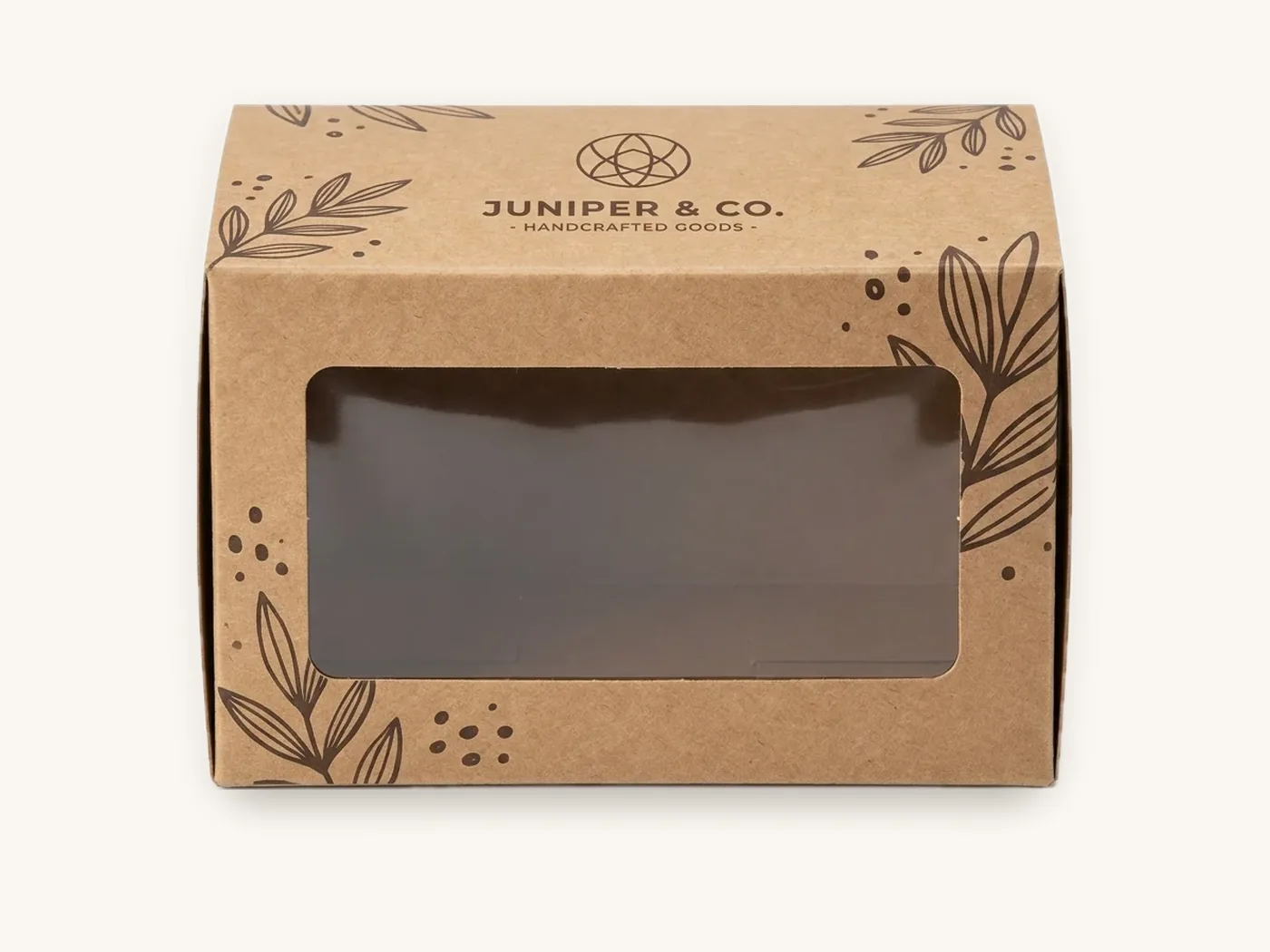
- Window cartons: a die-cut opening, often backed with PET or PLA film.
- Dispenser cartons: a perforated front tears away to serve single units from a counter.
- Two-piece cartons: a separate lid and base, both folded from paperboard.
| Structure | Packing speed | Weight capacity | Reclosable | Best for |
|---|---|---|---|---|
| Straight tuck end | Moderate | Light | Yes | Cosmetics, pharmacy, retail with a clean front |
| Reverse tuck end | Moderate | Light | Yes | Small, economical cartons in volume |
| Auto lock bottom | Fast | Medium to heavy | Top only | Jars, bottles, supplements, kitchenware |
| Seal end | Very fast on machines | Medium | No | Cereal, dry food, tamper-evident products |
| Sleeve and tray | Slow | Light to medium | Yes | Premium sets, chocolates, soap |
| Window carton | Moderate | Light | Depends on closure | Products that sell on appearance |
How folding cartons are made
Knowing the production steps helps you understand lead times, why proofs matter and where certain costs come from.
- Dieline and structural design. The flat layout of panels, flaps, glue areas, cut lines and crease lines is drawn around your product's internal dimensions.
- Artwork placement and proofing. Your design is placed on the dieline with bleed, and a digital or 3D proof is approved before anything is printed.
- Printing. Short runs are printed digitally; larger runs are printed offset, which gives the most consistent color and the lowest unit price at volume.
- Coating or lamination. Aqueous coating, matte, gloss or soft-touch lamination is applied to protect the print and set the surface feel.
- Special finishes. Foil, embossing and spot UV are added at this stage.
- Die-cutting and creasing. Each sheet is cut to shape and creased along fold lines in one pass.
- Stripping. Waste board is removed from between the cartons.
- Window patching. If the design has a window, film is applied over the opening.
- Folding and gluing. The side seam, and the bottom on auto lock styles, is glued so the carton ships flat but opens into shape.
- Inspection and packing. Finished cartons are checked and packed flat in cases.
Why this matters for your order
Every finish adds a step. Foil and embossing need their own tooling and a pass through a separate machine, which is why they carry one-time charges. Windows add a patching step. An auto lock bottom adds glue points. None of these is a problem, but they explain why a simple coated carton is the cheapest and fastest spec.
Designing panels for retail
A folding carton has a job on the shelf that a shipper does not: it must identify the product in a second or two, answer the buyer's questions, and carry any information the law requires for the category.
Panel roles
- Front (principal display panel): brand, product name, the main benefit and the net quantity where required.
- Sides: ingredients, directions, warnings, supplement or nutrition facts, depending on the category.
- Back: story, usage, barcode, manufacturer or distributor details and recycling guidance.
- Top and bottom: batch and expiry codes, a secondary logo, or shade and variant identifiers visible when cartons are stacked.
Print-ready basics
Extend background artwork 1/8 in (3 mm) past every cut line as bleed. Keep text at least 1/8 in inside cuts and creases so it does not wrap around a corner. Place barcodes on a flat panel away from folds, with enough light quiet space around them to scan reliably. Our artwork preparation guide covers file setup in more detail.
Labeling requirements
Food, cosmetics, supplements and drugs each have specific packaging label rules in the US, set out by the Food and Drug Administration, and the Federal Trade Commission covers claims such as "recyclable." Requirements change and depend on your exact product, so confirm current rules with the relevant agency or your regulatory counsel before finalizing the panels.
Watch out: designers often lay out a carton as a flat rectangle and forget that the tuck flap and dust flaps hide part of the top and bottom panels. Always review a 3D proof and check what the customer sees when the carton is closed on the shelf.
What custom folding cartons cost
Carton pricing is driven by board grade, caliper, size, print coverage, finishes, structure and quantity. Quantity has the biggest effect, especially below a few hundred units, because setup is spread across fewer boxes.
Indicative prices by carton type
These per-unit figures come from our current rates, with free US shipping included. Check your own size and finish in the instant pricing estimator.
| Spec | 10 | 100 | 500 | 1,000 | 5,000 | 10,000 |
|---|---|---|---|---|---|---|
| Straight tuck end, 18 pt SBS, 3x2x5 in, full color, aqueous | $1.73 | $1.15 | $0.61 | $0.51 | $0.36 | $0.33 |
| Reverse tuck end, 14 pt SBS, 2x2x6 in, full color, gloss lamination | $1.77 | $1.17 | $0.63 | $0.52 | $0.37 | $0.33 |
| Kraft tuck carton, 18 pt kraft, 4x3x2 in, 1-color print | $1.22 | $0.81 | $0.43 | $0.36 | $0.25 | $0.23 |
| Cosmetic carton, 18 pt SBS, 2.5x2.5x6 in, full color, soft-touch and foil | $2.91 | $1.93 | $1.03 | $0.86 | $0.61 | $0.55 |
| Window box, 18 pt SBS, 4x4x4 in, full color, aqueous, window | $2.52 | $1.66 | $0.89 | $0.74 | $0.53 | $0.47 |
Two things stand out. First, finishes matter: the soft-touch and foil cosmetic carton costs noticeably more than the aqueous-coated tuck carton at every quantity. Second, the curve flattens: between 5,000 and 10,000 units the saving per carton is small, because board and ink make up most of the cost at that point.
Cost levers worth knowing
- Right-size the carton. Board is bought by area, so an oversized carton pays for material that does no work.
- Pick the coating by need. Aqueous coating protects most retail cartons; lamination adds scuff resistance and a premium feel.
- Limit specialty finishes. Foil is about $60 in one-time tooling, embossing about $60 and spot UV about $40.
- Consolidate SKUs on one size. Several flavors or shades sharing one dieline can be printed together, which lowers the cost of each design.
- Order to your real reorder cycle. A larger run lowers the unit price, but storage space and design changes have costs too.
Folding cartons and sustainability
Paperboard cartons are among the easier packaging formats to recycle, as long as the choices around the board keep them that way.
Uncoated or aqueous-coated paperboard is widely accepted in curbside recycling. Plastic lamination, large plastic windows and metallized films can make recycling harder, so use them where they earn their place rather than by default. PLA window film is available as a plant-based alternative to PET, and FSC-certified boards and soy or water-based inks are available across our carton range. Our sustainability page explains each option.
Right-sizing is often the most effective step. A carton that fits the product closely uses less board and may allow a smaller shipper. If you print environmental claims, the FTC's Green Guides explain how those claims should be qualified; review current guidance before adding a recycling or compostability statement.
When a folding carton is not the right box
Folding cartons are versatile, but they are not always the best answer:
- Heavy or fragile products shipped by parcel need corrugated protection. Consider custom mailer boxes as a combined shipper and presentation box, or ship the carton inside a corrugated outer.
- Bulk and wholesale shipments belong in corrugated shippers; our custom shipping boxes guide covers RSC grades.
- Cylindrical products or gift presentations may suit a rigid round box better; see the round boxes guide.
- Keepsake packaging that customers keep for years is usually a rigid box.
For a broad range of retail items, though, a well-specified carton gives the best balance of print quality, shelf presence and unit cost. Our custom product boxes page shows how cartons are built around specific products.
How to order custom folding cartons from Box Sense
You can send a rough brief and let our structural team fill in the details. The clearer the brief, the faster and more accurate the quote.
Your specification checklist
- Product dimensions and weight, including any bottle, jar or insert
- Carton style, or "recommend a style" with a note on how the carton will be packed
- Board grade and thickness, or a note on the look you want
- Print coverage: outside only, or inside and outside; full color, one color or PMS
- Coating or lamination, and any foil, embossing, spot UV or window
- Number of designs (SKUs) sharing the same size
- Quantities to price, for example 250, 1,000 and 5,000
- Target in-hand date and delivery address
From quote to delivery
- Quote within 24 hours, confirming pricing for each quantity.
- Free dieline and artwork setup with a 3D digital proof and two revision rounds.
- Free unprinted structural samples to test fit and closure. A printed sample of approved artwork is free on orders of 100 units or more; see samples.
- Production in 8–12 business days after proof approval, or rush in 5 business days on most paperboard styles.
- Free shipping on every US order; international shipping is quoted at cost.
The minimum order is 10 cartons, with no die or plate charges. Short runs of roughly 10 to 500 are printed digitally, and larger runs offset. Defective cartons reported within 14 days are reprinted free.
Frequently asked questions
What is a folding carton?
A folding carton is a box made from a single layer of paperboard that is printed, die-cut, creased and usually glued along one seam, then delivered flat. It folds into shape when packed. Folding cartons are used for retail products such as cosmetics, supplements, food and pharmacy items, where print quality and shelf presence matter more than heavy transit protection.
What is the difference between a folding carton and a corrugated box?
A folding carton is a single sheet of paperboard, usually 14 pt to 24 pt thick. A corrugated box has a fluted layer glued between two liners, making it much thicker and stronger against drops and stacking. Cartons are better for printed retail presentation; corrugated boxes are better for shipping. Many brands use both, placing cartons inside a corrugated shipper.
What thickness of paperboard should I use for my cartons?
Most retail folding cartons use 16 pt to 18 pt board. Very small, light products can use 14 pt, while heavier items of roughly 1 to 3 lb often use 20 pt to 24 pt with an auto lock bottom. Beyond about 3 lb, E-flute corrugated usually performs better. A structural sample with your real product is the most reliable test.
How much do custom folding cartons cost?
It depends on size, board, print, finishes, structure and quantity. As a reference, an 18 pt SBS straight tuck end carton measuring 3x2x5 in, printed full color with aqueous coating, costs about $1.15 each at 100 units and about $0.51 at 1,000, including US shipping. Adding soft-touch lamination and foil raises the price. Use the pricing estimator for your spec.
Are paperboard cartons recyclable?
Paperboard cartons with aqueous coating or no coating are widely accepted in curbside paper recycling. Plastic lamination, large plastic windows and metallic films can make recycling more difficult. To keep cartons as recyclable as possible, choose aqueous coating, PLA or no window film, and soy or water-based inks, and check local program rules before printing a recycling claim.
What is the minimum order for custom folding cartons?
Box Sense produces custom folding cartons from a minimum of 10 units. Short runs are printed digitally without plates, which makes small quantities practical for launches, retailer samples and testing packaging before a large run. The unit price drops substantially as quantity increases, so compare several quantity tiers before ordering.
How long does it take to make folding cartons?
After you approve the proof, standard production at Box Sense takes 8–12 business days, and rush production in 5 business days is available on most paperboard styles. Quotes are confirmed within 24 hours. Allow extra time for artwork revisions or a physical sample. US shipping is free, and international transit time depends on the destination.
Next steps
Start with your product's packed dimensions and weight, choose a board and closure style, then compare quantities in the folding carton price estimator. When your spec is ready, request a custom folding carton quote and we will confirm pricing within 24 hours and send a dieline built around your product.
Boxes in this guide
Order the packaging we covered
Written by the Box Sense Packaging Team
Our structural designers, prepress technicians and production staff print and convert custom boxes every day for brands in the United States, United Kingdom and UAE. Questions about this guide? Talk to us.