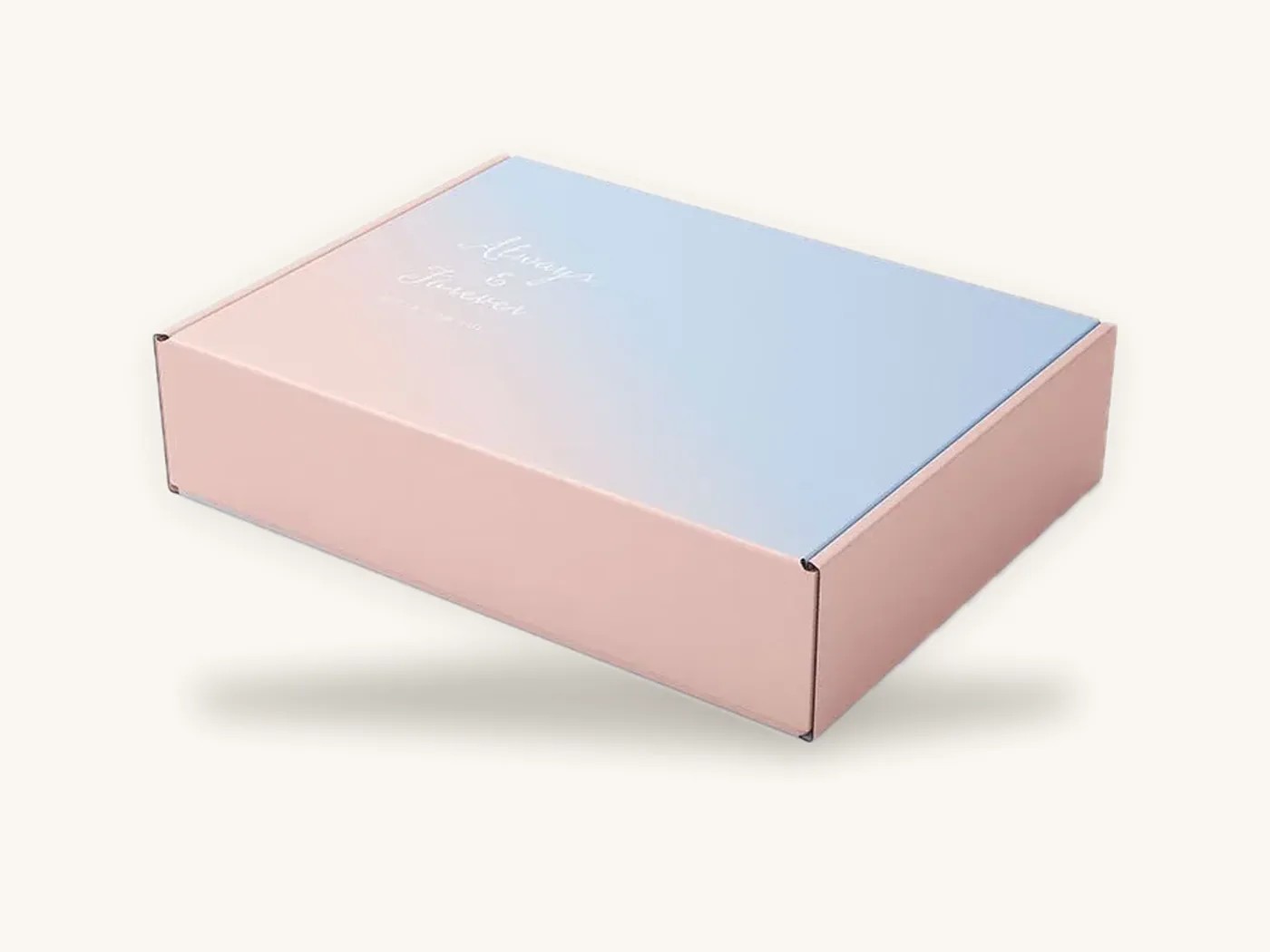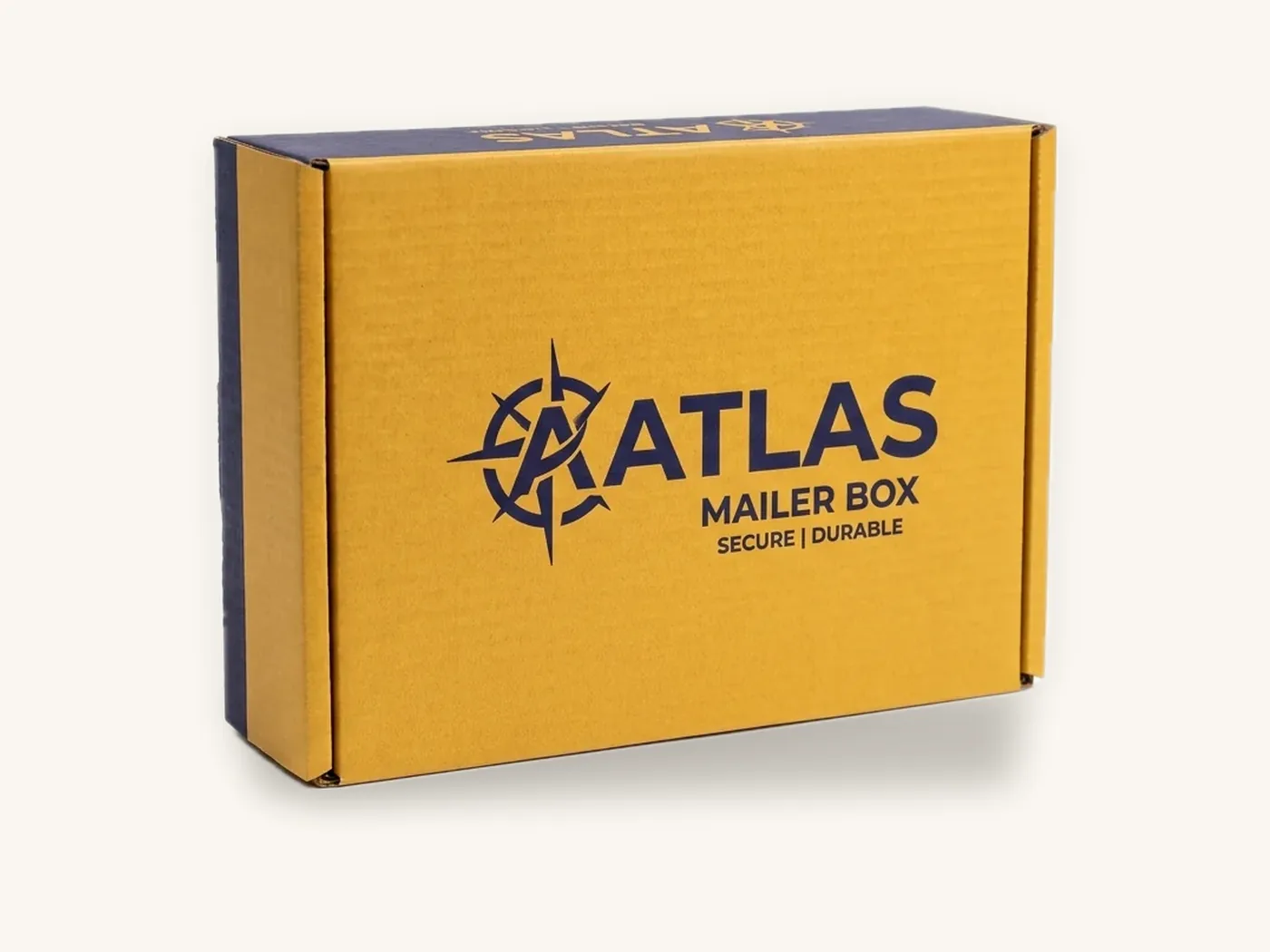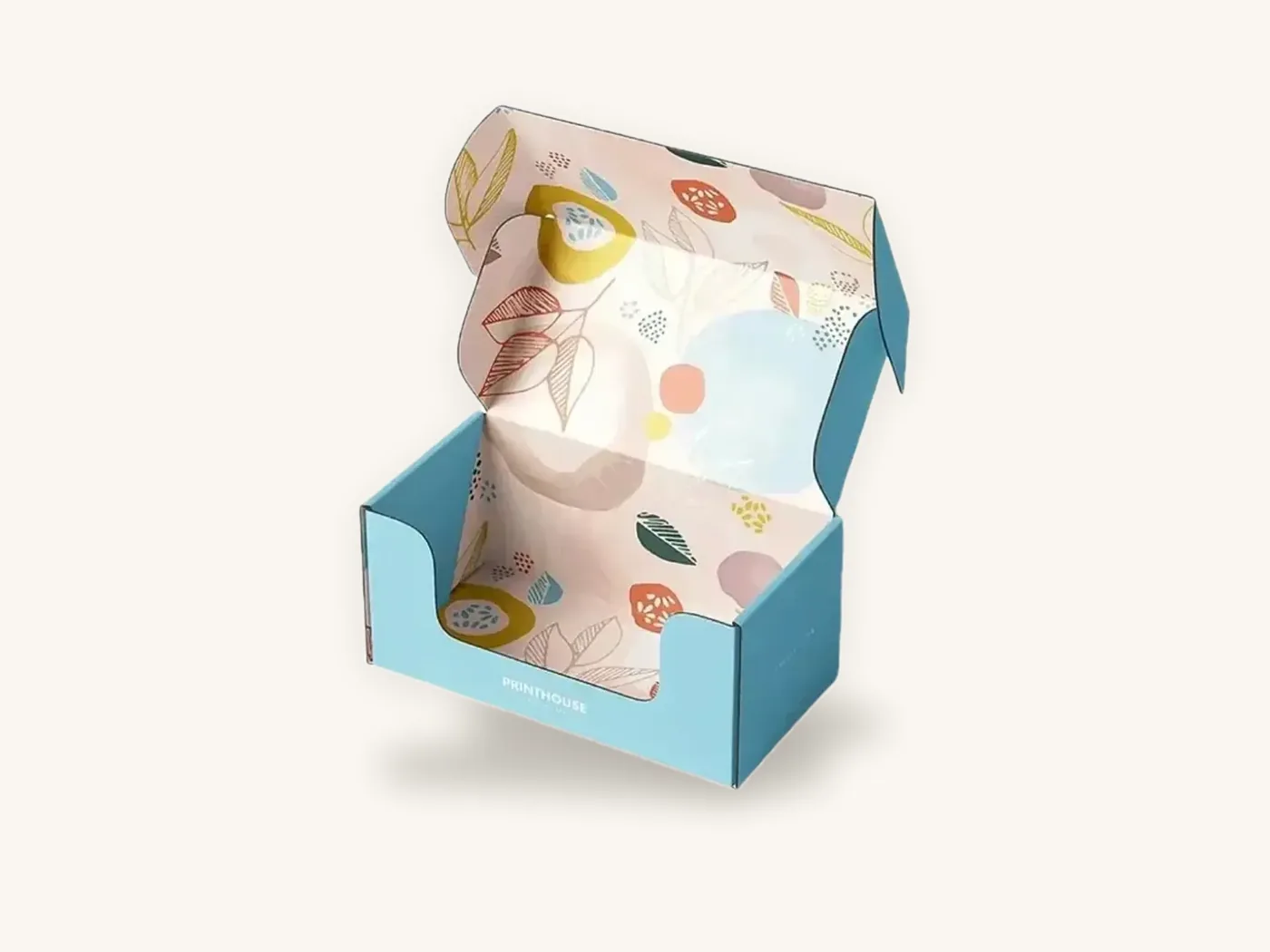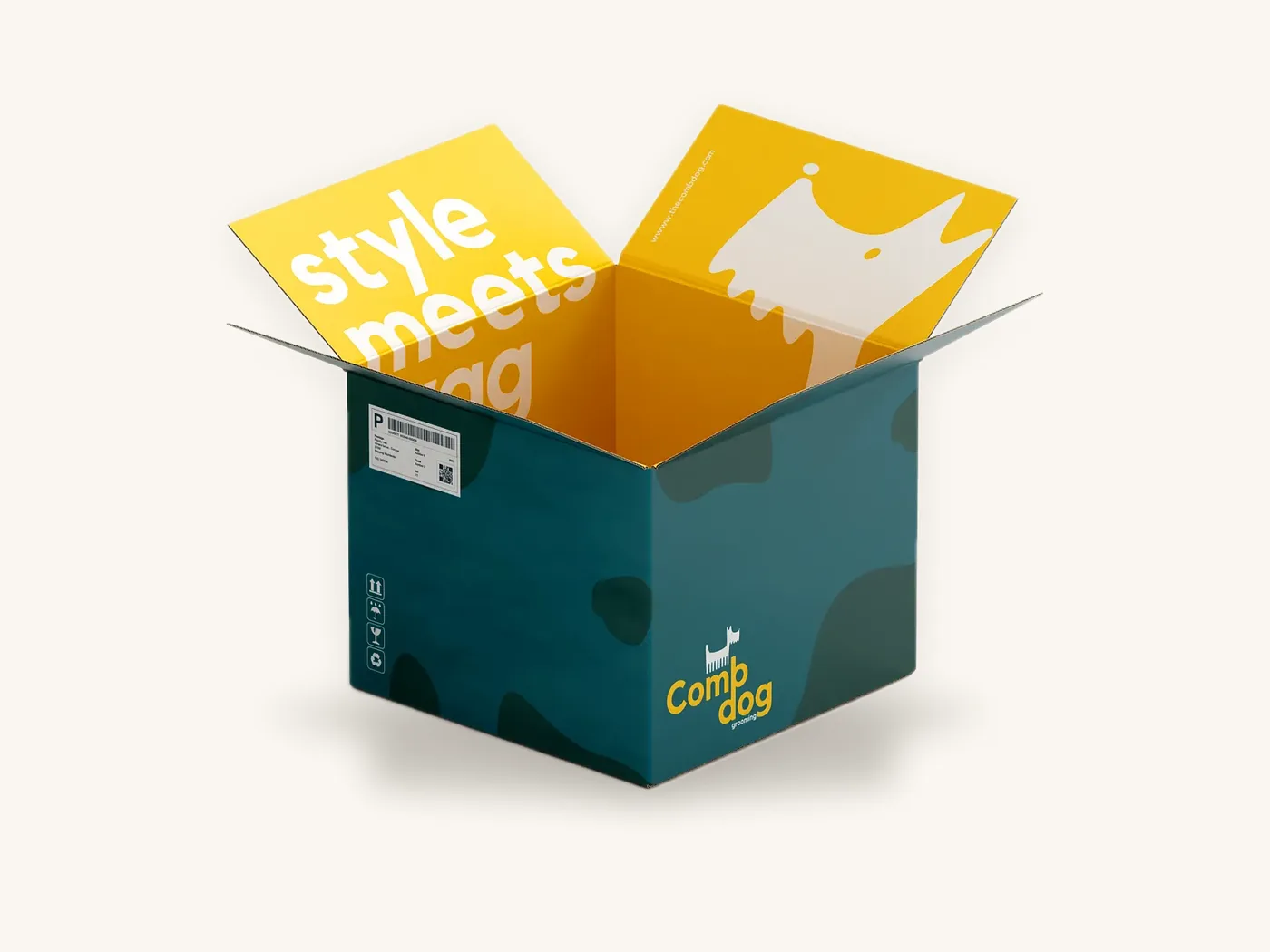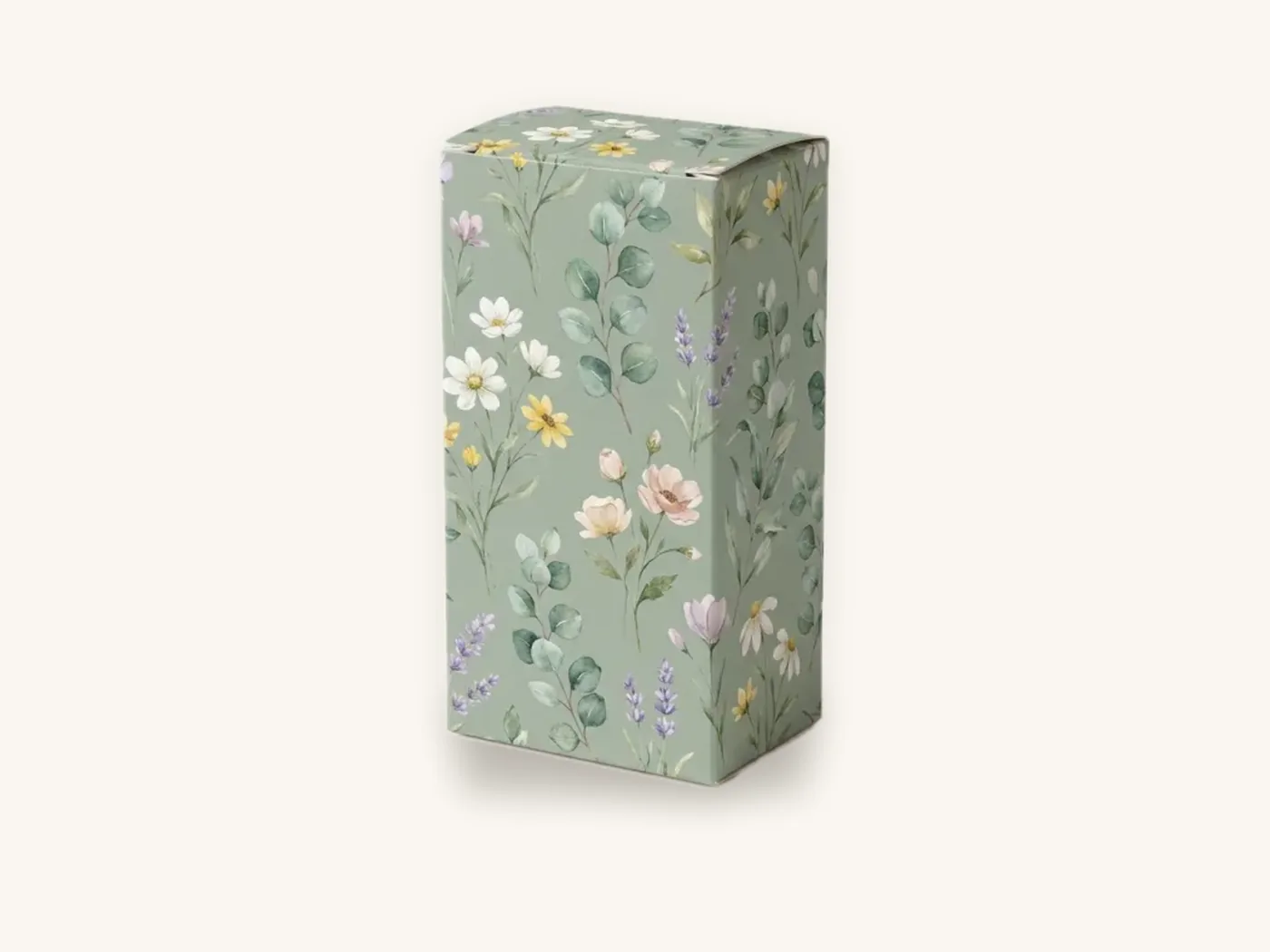
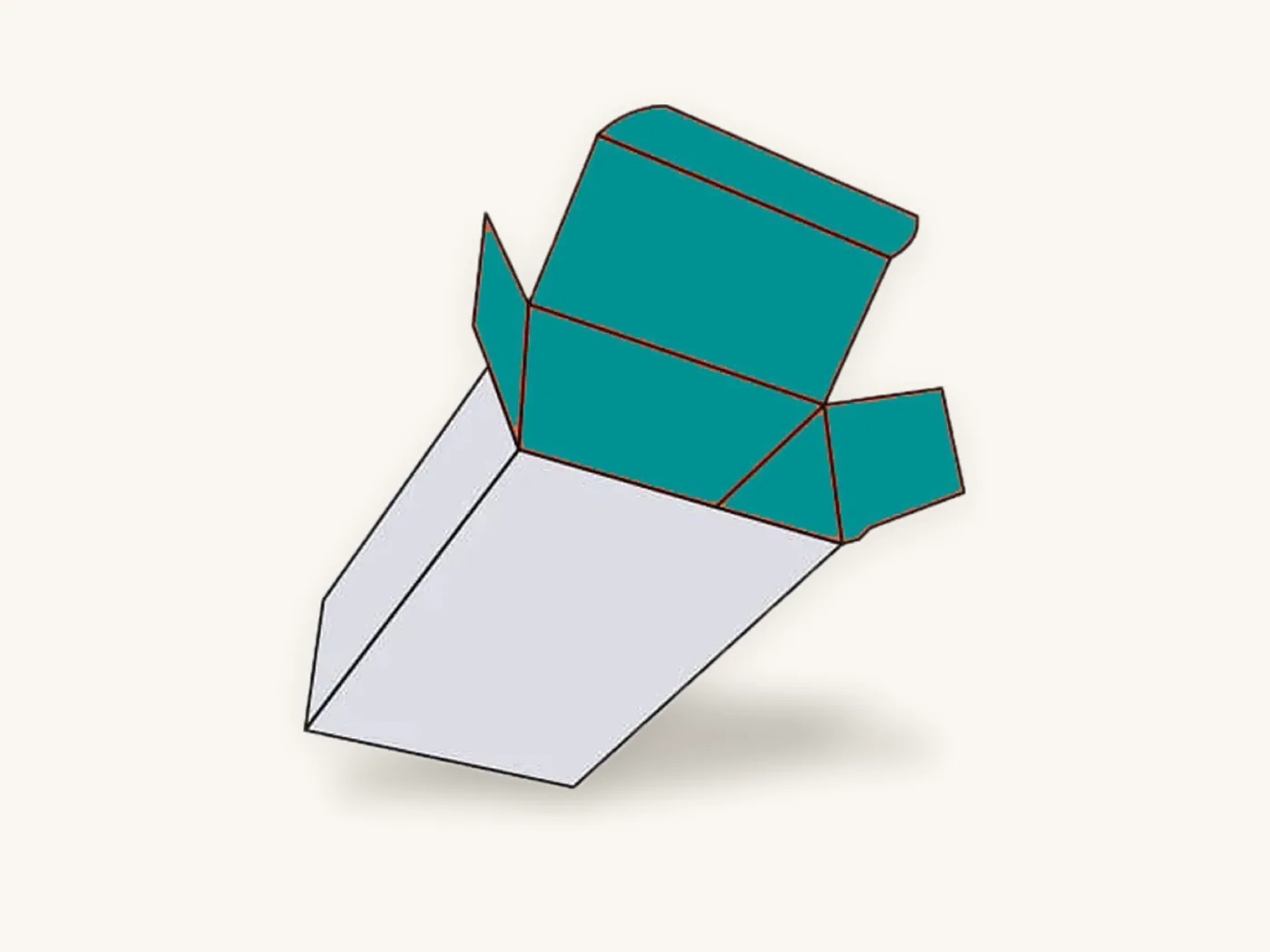
Tuck end boxes are paperboard cartons that close with a flap tucked into the body at each end, and they come in two main versions. In a straight tuck end box, the top and bottom tuck flaps are both hinged to the same panel, so they close in the same direction. In a reverse tuck end box, the top flap is hinged to one panel and the bottom flap to the opposite panel, so they close in opposite directions.
That one difference changes how the carton looks from the front, how artwork is laid out, how many cartons fit on a press sheet and, as a result, what each unit costs. Choose straight tuck when the front panel must look clean or carries a window. Choose reverse tuck when the carton is small, ordered in volume and price matters most. The rest of this guide shows why, with worked product examples and a checklist for approving your dieline.
Key takeaways
- Both styles are one-piece paperboard cartons glued along a side seam, shipped flat and reclosable at both ends.
- A straight tuck end box hinges both tucks on the back panel, leaving the front panel free of fold lines at the top and bottom edges.
- A reverse tuck end box hinges the top tuck on the back and the bottom tuck on the front, which lets the layout nest tightly on the press sheet and saves board.
- Straight tuck suits windows, premium beauty and front-facing displays; reverse tuck suits pharmacy, supplements, tinctures and other small, high-volume SKUs.
- As a reference, an 18 pt SBS straight tuck carton at 3x2x5 in costs about $0.51 at 1,000 units, and a 14 pt SBS reverse tuck carton at 2x2x6 in with gloss lamination about $0.52.
- Box Sense makes both styles from 10 units with no die or plate charges, and rush production in 5 business days on most paperboard styles.
Anatomy of a tuck end carton
Before comparing the two styles, it helps to name the parts, because quotes, dielines and proofs all use these terms.
| Part | What it is | Why it matters |
|---|---|---|
| Front and back panels | The two largest faces of the carton | Carry the main design and most of the product information |
| Side panels | The two narrower faces | Often hold ingredients, directions and the barcode |
| Glue flap | A narrow strip glued to the inside of a panel to form the side seam | Its position decides which panel shows a visible seam line |
| Tuck flap | The panel extension that folds over the opening and slides inside | Holds the end closed; its hinge location defines straight vs reverse |
| Dust flaps | Small side flaps that fold in under the tuck flap | Keep dust out and help the tuck grip |
| Friction lock | Small shoulders or curves where the tuck meets the dust flaps | Stops the tuck from sliding back out |
| Slit lock | A slit on the tuck hinge that catches the dust flap | A firmer closure for heavier contents or rough handling |
On both styles the carton ships flat, glued at the side seam. At packing, someone squares it up, closes one end, drops the product in and closes the other end. The tuck is held by friction, not glue, so customers can open and reclose it.
How a straight tuck end box works
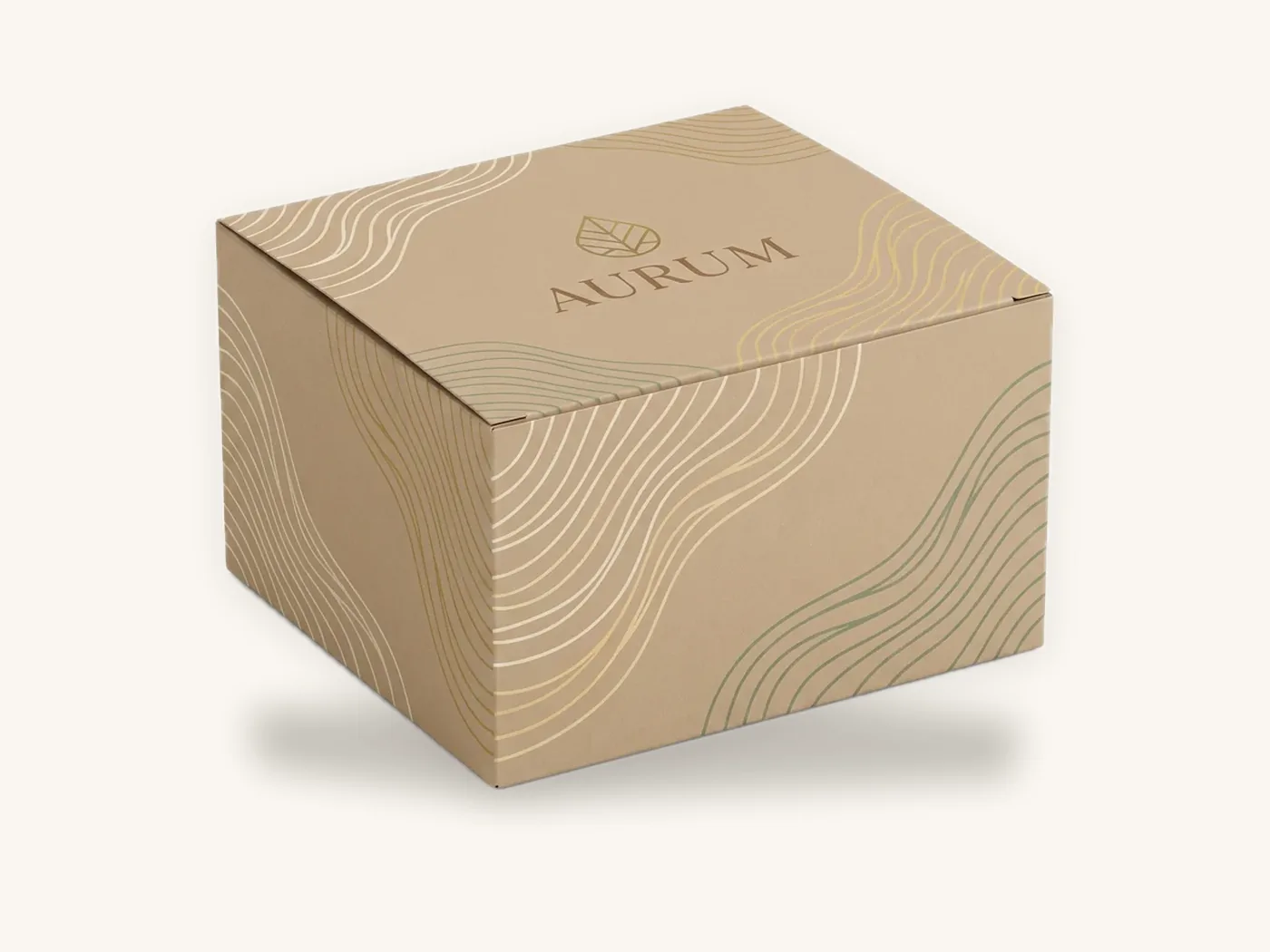
In a straight tuck end box, the top tuck and the bottom tuck are both attached to the back panel. When you close the carton, both flaps swing from back to front and tuck in behind the front panel. The style is sometimes called an airplane-style carton in the trade.
What that gives you
The front panel has no hinge running along its top or bottom edge. The only lines on it are the cut edges, so artwork runs cleanly from edge to edge. When a customer opens the top, the lid lifts toward them from the back, which feels natural when the carton faces them on a shelf.
Because both tucks sit on the back, the front is also the best place for a die-cut window. The window can extend close to the top and bottom edges without interfering with a fold.
The drawback
Laying both tucks on the same side makes the flat dieline more lopsided, so cartons do not nest as tightly on a printing sheet. More board is trimmed away as waste, and that shows up as a slightly higher unit cost for the same size carton, especially on small formats run in large quantities.
How a reverse tuck end box works
In a reverse tuck end box, the top tuck is attached to the back panel and the bottom tuck to the front panel. The top closes from back to front and the bottom closes from front to back.
What that gives you
The flat dieline has flaps pointing in opposite directions at each end, so one carton's flaps can interlock with its neighbor's on the press sheet. That tighter nesting uses less board per carton, which is why reverse tuck is the default for small cartons made in large runs: tinctures, supplements, over-the-counter products, lip care and many retail accessories.
It is also familiar to customers. People open reverse tuck cartons from the top every day and rarely notice the bottom.
The drawback
The front panel has a fold line along its bottom edge where the bottom tuck is hinged. Artwork that crosses that fold wraps onto the bottom flap, and a window placed low on the front panel can conflict with the hinge. On premium products shot for e-commerce from a low angle, that line is sometimes visible.
Straight tuck vs reverse tuck compared
| Factor | Straight tuck end box | Reverse tuck end box |
|---|---|---|
| Tuck hinges | Both on the back panel | Top on back, bottom on front |
| Front panel appearance | Clean at top and bottom edges | Fold line along the bottom edge |
| Windows on the front | Easy, can run close to both edges | Keep clear of the bottom hinge |
| Board use on the press sheet | Less efficient nesting | Tighter nesting, less waste |
| Unit cost at the same spec | Slightly higher | Slightly lower |
| Reclosable | Yes, both ends | Yes, both ends |
| Typical products | Premium cosmetics, fragrance minis, windowed retail, gift items | Tinctures, supplements, pharmacy, lip care, small accessories |
| Weight suited to | Light, up to roughly 1 lb with friction locks | Light, up to roughly 1 lb with friction locks |
Neither style is stronger than the other in normal use. Load capacity comes from board caliper and lock design, not from which way the tucks face. Once a product passes roughly a pound, or has a dense glass base, both tuck styles start to struggle, and a crash-lock base is usually the better choice.
What each style costs
Prices below are indicative per-unit figures from our current rates, including free US shipping. The two specs differ in board, size and finish, so treat this as a reference point rather than a like-for-like comparison. For your exact carton, try the price estimator.
| Spec | 10 | 100 | 250 | 1,000 | 2,500 | 10,000 |
|---|---|---|---|---|---|---|
| Straight tuck end, 18 pt SBS, 3x2x5 in, full color outside, aqueous | $1.73 | $1.15 | $0.82 | $0.51 | $0.43 | $0.33 |
| Reverse tuck end, 14 pt SBS, 2x2x6 in, full color, gloss lamination | $1.77 | $1.17 | $0.83 | $0.52 | $0.44 | $0.33 |
| Cosmetic tuck carton, 18 pt SBS, 2.5x2.5x6 in, full color, soft-touch and foil | $2.91 | $1.93 | $1.37 | $0.86 | $0.73 | $0.55 |
| Kraft tuck carton, 18 pt kraft, 4x3x2 in, 1-color print | $1.22 | $0.81 | $0.57 | $0.36 | $0.30 | $0.23 |
Reading the table
The reverse tuck row carries gloss lamination and still lands at nearly the same price as the aqueous-coated straight tuck row. Part of that is the lighter 14 pt board, and part is efficient nesting. The cosmetic row shows how much finishes move the number: soft-touch lamination and foil add more than the choice of tuck direction ever will.
That is the practical lesson. Tuck direction makes a small cost difference that grows with volume. Board caliper, lamination, foil and size make a bigger one at every quantity.
Tip: if you are torn between the two styles purely on price, ask for both in your quote at your real quantity. At a few hundred units the gap is usually negligible, and the better-looking style wins. At tens of thousands it can justify reverse tuck.
How tuck direction changes your artwork
This is where most first-time carton buyers get caught out. The dieline for each style places the tuck flaps and glue flap in different positions, and your artwork must follow.
Straight tuck artwork layout
On a straight tuck dieline, the top and bottom tuck flaps extend from the back panel. Anything you print on those flaps is seen when the carton is opened, not when it is closed. Many brands put a short message or a logo on the inside face of the top tuck. The top and bottom panels of the closed carton are formed by the tuck flaps themselves, printed on their outer faces.
Reverse tuck artwork layout
On a reverse tuck dieline, the top tuck extends from the back panel and the bottom tuck from the front panel. The bottom face of the closed carton is printed on the flap attached to the front, which means it reads upside down on the flat dieline relative to the top. Batch codes, shade names and barcodes placed on the bottom need to be oriented carefully.
Artwork checks for either style
- Confirm which panel is the front on the supplied dieline before placing any design.
- Extend background artwork 1/8 in (3 mm) past cut lines as bleed.
- Keep text and logos 1/8 in inside all cuts and creases.
- Check the direction of type on the top and bottom flaps so it reads correctly when the carton stands up.
- Keep barcodes off the glue flap and at least 1/8 in from folds.
- Leave the glue flap area unprinted or uncoated if your manufacturer asks, so the seam bonds properly.
- Review the 3D proof with the carton closed and opened, and check every face.
Our artwork preparation guide goes deeper on file setup, and the printing and finishes page shows which coatings work on each board.
Choosing by product: worked examples
The fastest way to decide is to start from the product and how it is sold. These hypothetical examples cover common tuck end box uses.
| Product | Recommended style | Board | Why |
|---|---|---|---|
| 30 ml dropper bottle, sold in pharmacies and online | Reverse tuck with a paperboard insert | 16–18 pt SBS | Small, high-volume, needs a neck-holding insert |
| Premium 50 ml serum with a front window | Straight tuck | 18 pt SBS | Clean front and room for a tall window |
| Lipstick bullet | Reverse tuck | 14–16 pt SBS or metallic | Tiny format where nesting savings add up |
| 4 oz handmade soap bar | Straight or reverse tuck, often kraft | 18 pt kraft | Light and simple; look matters more than direction |
| 8 oz candle in glass | Straight tuck with an insert, or crash-lock base | 18–20 pt SBS | Glass weight pushes toward a locking base |
| Earbud accessory set with a hang hole | Straight tuck with a hang tab panel | 18 pt SBS | Clean front on a peg display |
| Supplement bottle of 60 capsules | Reverse tuck, or crash-lock for larger bottles | 18 pt SBS | High volume and a light product |
Beauty and personal care
For cosmetic boxes sold under bright store lighting, a straight tuck front with no bottom hinge line photographs better and holds a window cleanly. For everyday lipstick boxes and minis made by the thousand, reverse tuck is common. Our cosmetics and beauty packaging page shows both in context.
Wellness, CBD and pharmacy
Dropper bottles in tincture boxes usually use reverse tuck with an insert that holds the bottle neck steady. Regulated categories often need child-resistant or tamper-evident features on top of the tuck closure, so confirm current requirements for your product with the relevant regulator or counsel.
Locks, inserts and add-ons for tuck end boxes
The tuck direction is only one part of the structure. These additions often matter more to how the carton performs.
Friction locks and slit locks
Friction locks are the default: small shoulders on the tuck flap press against the dust flaps and hold the tuck in place. For heavier products or cartons that will be opened and closed often, slit locks add a small slot that catches the dust flap, so the tuck does not work loose.
Inserts
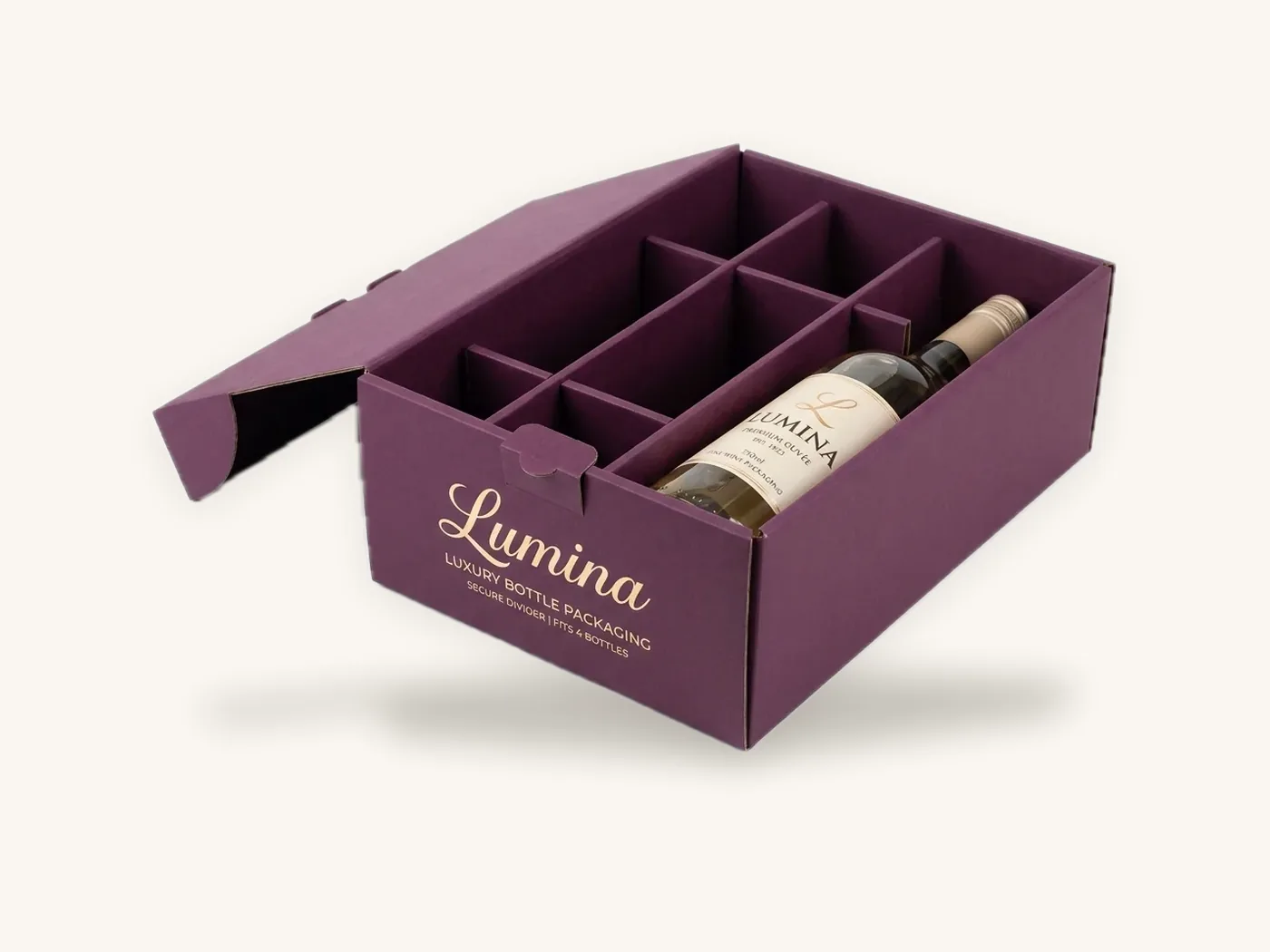
A paperboard insert keeps a bottle upright, holds a jar in the center of the carton or separates two items. Inserts are designed with the carton, since they change internal dimensions. See box inserts and dividers for options.
Hang tabs and windows
A straight tuck carton can add a fifth panel with a hang hole for peg displays; five panel hanger boxes are a common version. Windows can be added to either style, but are simplest on a straight tuck front.
Tamper evidence
Tuck cartons are reclosable by design, so they do not show if they have been opened. A clear or printed seal sticker across the top tuck adds visible tamper evidence without changing the structure.
When to use neither: other carton styles
Tuck end boxes are the right starting point for most light retail products, but a few situations call for a different structure.
- Heavier or dense products. Once a product passes about a pound, a pre-glued crash-lock base carries the weight better and packs faster. Our auto lock bottom boxes guide covers this in detail.
- Automated, tamper-evident filling. Seal end boxes are glued shut on packing lines and show evidence of opening.
- Counter and checkout sales. Single tuck cartons are often packed into a printed shelf display; see our custom display boxes guide.
- Direct shipping to customers. A carton alone is not a shipper. Pack it in a mailer or corrugated box; the corrugated boxes guide and custom mailer boxes guide explain the options.
- A natural or eco look. Both tuck styles work on kraft board; the kraft boxes guide explains how to design for brown stock.
For the full family of paperboard structures, the folding cartons guide and the tuck end boxes style page are good next reads.
How to order tuck end boxes from Box Sense
Whether you already know your style or want a recommendation, the ordering process is the same.
What to send
- Product dimensions and weight, measured with any bottle, cap or insert
- Style preference: straight tuck, reverse tuck, or "recommend"
- Board: SBS, kraft or specialty, and a caliper if you know it
- Print: full color, one color or PMS, outside only or inside as well
- Finish: aqueous coating, matte, gloss or soft-touch lamination, foil, spot UV or embossing
- Add-ons: insert, window, hang tab, slit locks
- Number of designs sharing one size, and quantities to price
- Target delivery date and address
What happens next
- We confirm your quote within 24 hours, and can price both tuck styles side by side.
- We supply a dieline built around your product, set up your artwork and send a 3D digital proof, with two free revision rounds.
- Structural samples are free, so you can test fit and the tuck grip with your product. A printed sample of approved artwork is free on orders of 100 units or more. Details are on the samples page.
- Production takes 8–12 business days after proof approval, or 5 business days with rush on most paperboard styles.
- US shipping is free; international shipping is quoted at cost.
The minimum order is 10 cartons, and there are no die or plate charges. Foil, embossing, spot UV and custom inserts carry one-time tooling only if you choose them. Any defective cartons reported within 14 days are reprinted free. For a range of shapes built around specific items, see our custom product boxes.
Frequently asked questions
What is the difference between a straight tuck end box and a reverse tuck end box?
In a straight tuck end box, the top and bottom tuck flaps are both hinged to the back panel and close in the same direction. In a reverse tuck end box, the top flap is hinged to the back and the bottom flap to the front, so they close in opposite directions. Straight tuck gives a cleaner front panel; reverse tuck uses board more efficiently.
Which is cheaper, straight tuck or reverse tuck?
Reverse tuck end boxes are usually slightly cheaper at the same size and spec, because their flaps interlock on the press sheet and waste less board. The difference is small on short runs and grows with volume. Board thickness, lamination, foil and carton size affect price far more than tuck direction, so compare both styles at your real quantity.
How much weight can a tuck end box hold?
With standard friction locks, tuck end boxes suit light products up to roughly a pound, depending on board caliper and product shape. Slit locks and thicker board help somewhat. For dense glass jars, larger bottles or anything heavier, an auto lock bottom carton carries weight better, because its pre-glued base does not rely on a tucked flap.
Is a reverse tuck end box good for cosmetics?
Yes. Reverse tuck end boxes are widely used for lipsticks, minis, skincare tubes and other small beauty products, especially in larger runs. Choose straight tuck instead when the front panel needs a tall window, when a fold line along the bottom front edge would spoil the design, or when the product is a premium item photographed closely.
Can tuck end boxes have windows?
Both styles can have a die-cut window, usually backed with PET or plant-based PLA film. Straight tuck end boxes are easier, because nothing is hinged to the front panel, so the window can run close to the top and bottom edges. On reverse tuck end boxes, keep the window clear of the bottom hinge line on the front panel.
What board thickness should I use for tuck end boxes?
Most tuck end boxes use 16 pt to 18 pt SBS or kraft paperboard. Very small, light products such as lipstick or lip balm can use 14 pt. Larger or heavier items may use 20 pt, but once a product passes about a pound, switching to an auto lock bottom usually works better than adding thickness alone.
What is the minimum order for custom tuck end boxes?
Box Sense makes custom tuck end boxes, both straight and reverse tuck, from a minimum of 10 units. Short runs are printed digitally with no plates, so small orders for launches, samples and testing are practical. Unit prices fall significantly as quantities increase, so compare a few tiers in the estimator before ordering.
Next steps
Measure your product, decide whether a clean front panel or the lowest unit cost matters more, and compare both styles in the tuck end box price estimator. When you are ready, request a tuck end box quote and we will price straight and reverse tuck side by side within 24 hours.
Boxes in this guide
Order the packaging we covered
Written by the Box Sense Packaging Team
Our structural designers, prepress technicians and production staff print and convert custom boxes every day for brands in the United States, United Kingdom and UAE. Questions about this guide? Talk to us.