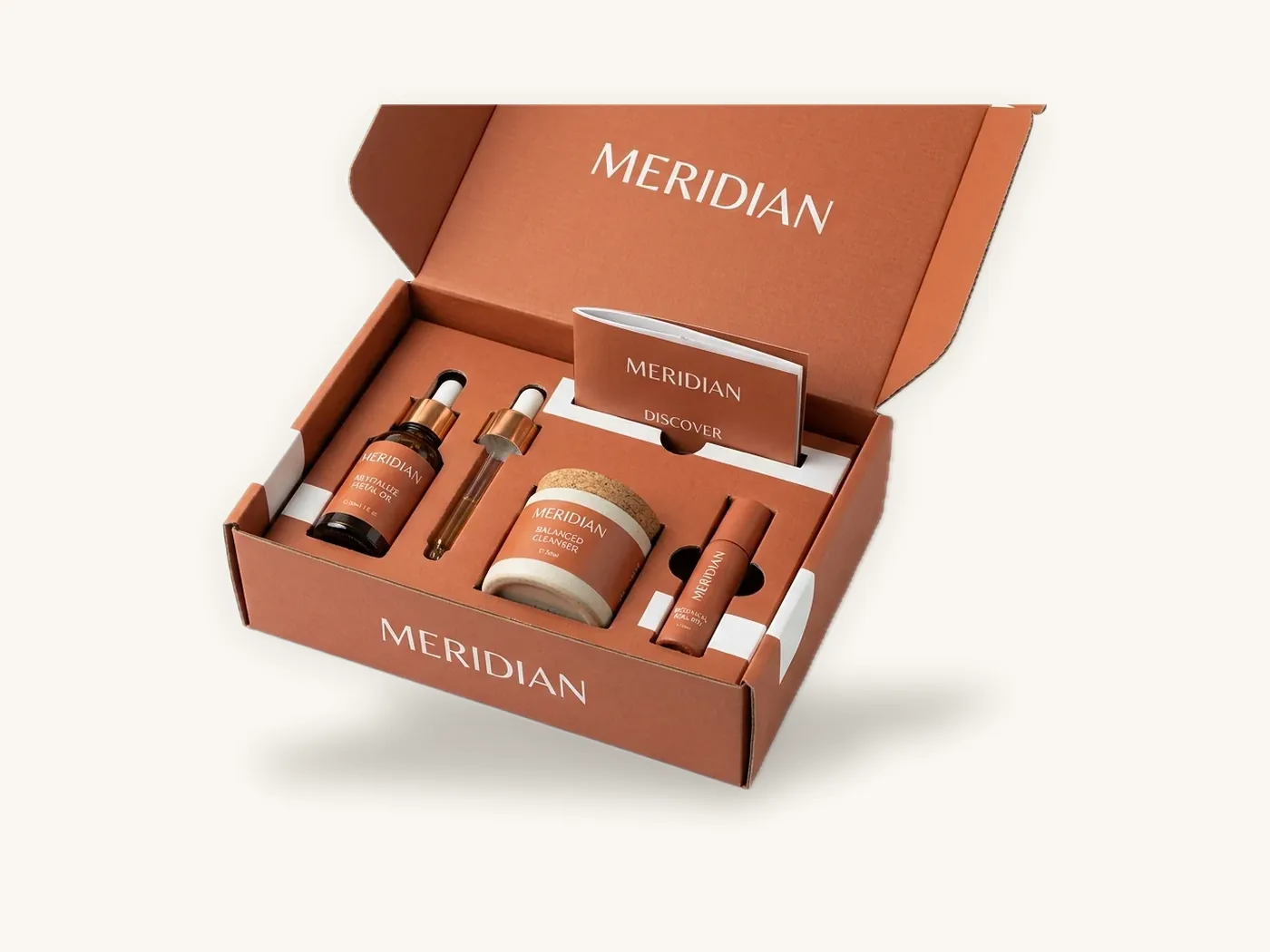
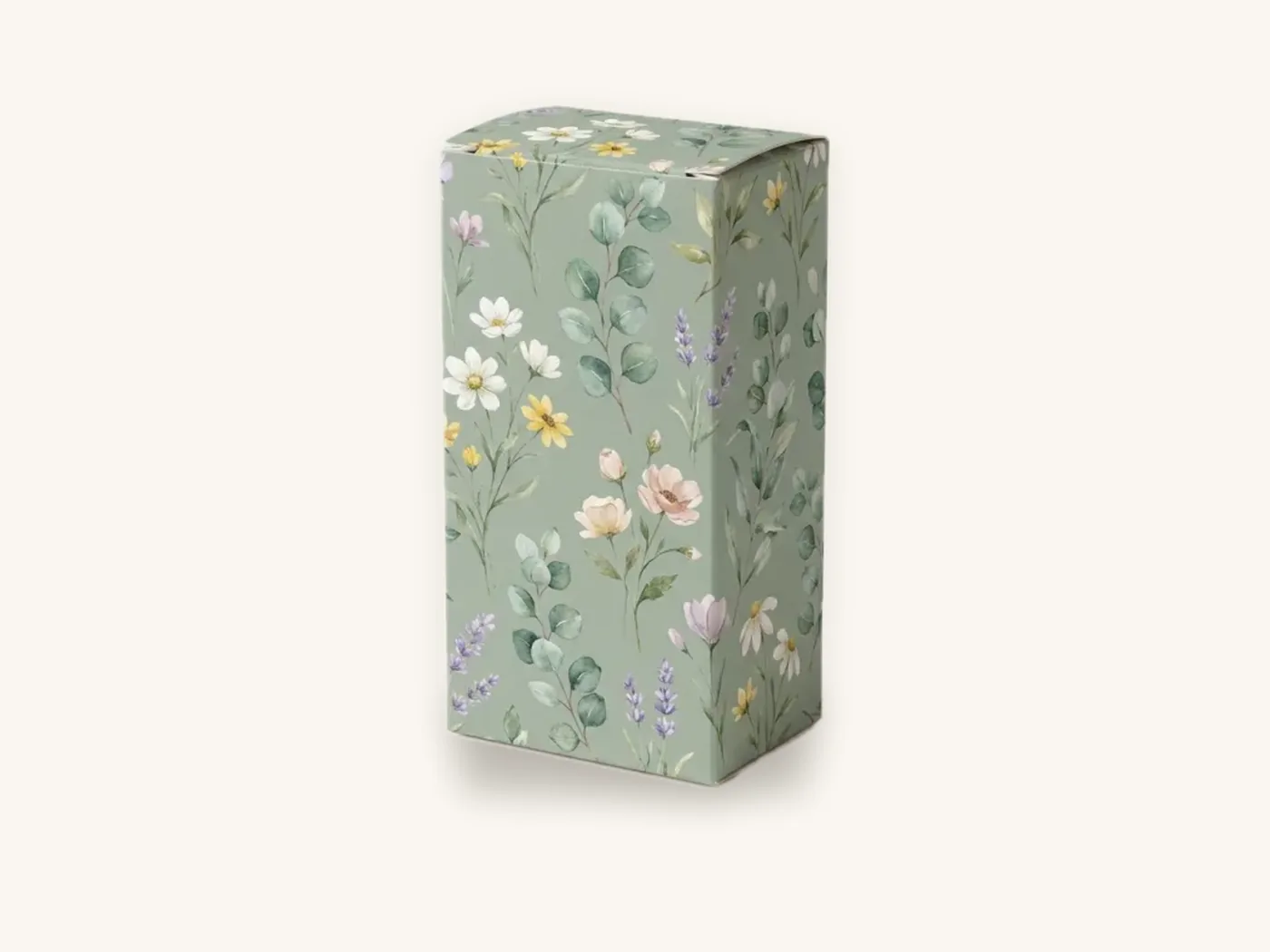
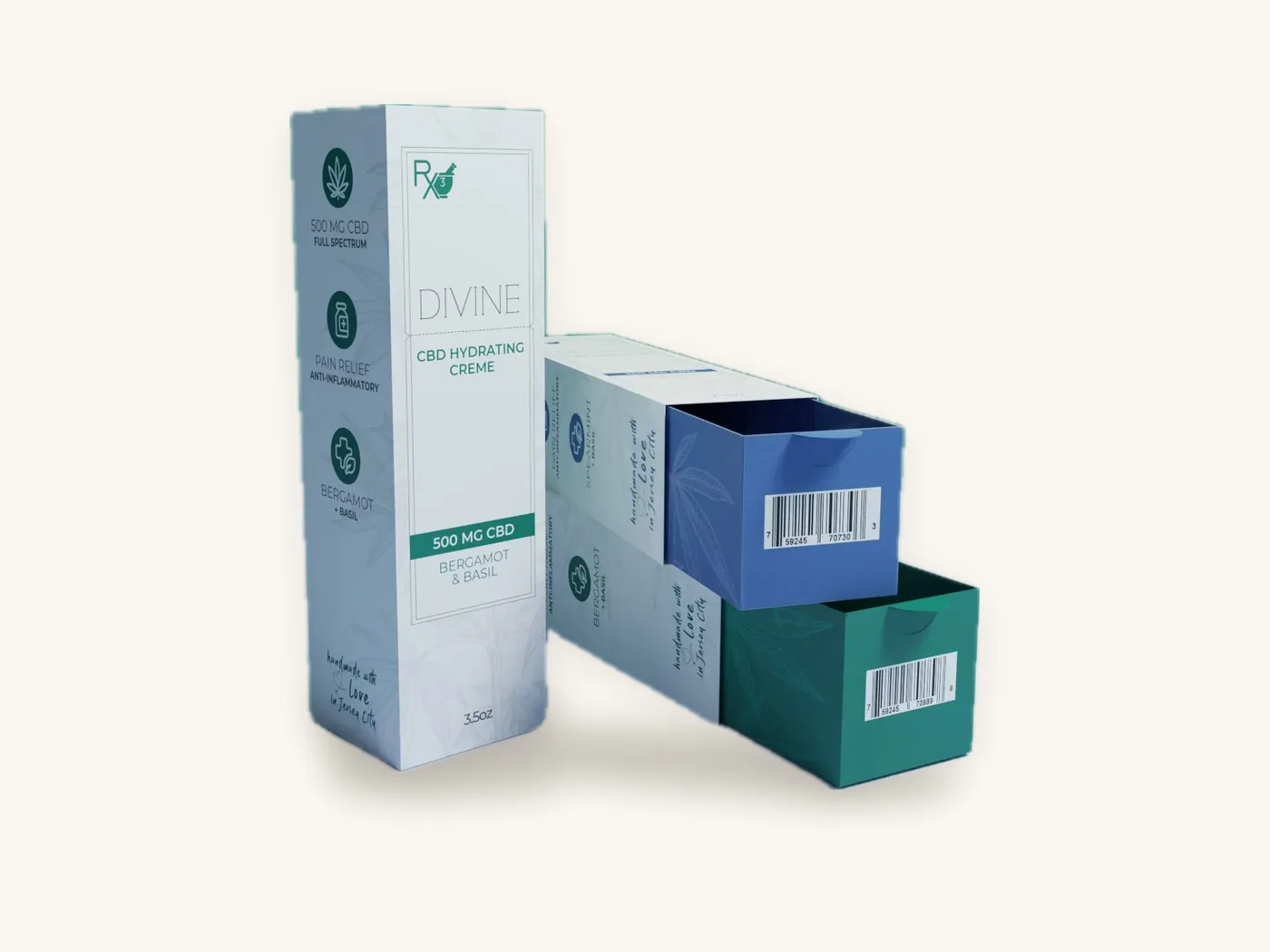
Tincture boxes are slim paperboard cartons made to hold a single glass dropper bottle, usually 15 ml, 30 ml or 60 ml, snugly enough that the glass and the rubber bulb survive shipping and shelf handling. The standard build is an 18 pt SBS tuck end carton sized a few millimeters larger than the bottle, often with a paperboard insert that locks the bottle's neck in place.
They are used far beyond CBD. Herbal extracts, essential oils, face serums, beard oils and liquid supplements all ship in the same dropper bottles and benefit from the same carton engineering. This guide focuses on the engineering: how to size dropper bottle boxes, which insert to use, how to divide information between the bottle label and the carton, and what tincture packaging costs.
Key takeaways
- Size the carton to the bottle with its dropper fitted, measured at the widest point, usually the shoulder or the dropper collar.
- A 30 ml dropper bottle commonly fits a carton around 1.5x1.5x4.5 in, but bottle shapes vary by supplier, so always measure your actual bottle.
- A neck insert stops the bottle from sliding and protects the bulb; it is the single most useful upgrade for glass tinctures.
- Split content deliberately: the bottle label carries what must stay with the product after the carton is discarded, while the carton carries the brand story and extended information.
- A 1.5x1.5x4.5 in tincture box on 18 pt SBS with full color, gloss and spot UV is about $1.31 at 100 units and about $0.58 at 1,000, with US shipping included.
- Box Sense makes custom tincture boxes from 10 units, with free dielines, 3D proofs and unprinted samples for fit testing.
Dropper bottle anatomy and common sizes
A dropper bottle has three parts that matter for packaging: the glass body, the dropper assembly (a collar that screws onto the neck, a rubber or silicone bulb, and a glass pipette inside), and in many cases a tamper-evident ring or a child-resistant collar.
The bulb is the tallest and softest part. A carton that is even slightly too short presses on it, and over time a compressed bulb can deform or leak. The collar is usually the widest point on smaller bottles, while on 60 ml bottles the shoulder of the glass may be wider.
| Bottle size | Common shapes | Rough outer diameter | Rough height with dropper | Typical carton starting point |
|---|---|---|---|---|
| 15 ml | Boston round, cylinder | About 25–28 mm | About 85–100 mm | About 1.25x1.25x4 in |
| 30 ml | Boston round, cylinder, square | About 30–35 mm | About 100–115 mm | About 1.5x1.5x4.5 in |
| 50 ml | Boston round, cylinder | About 35–38 mm | About 115–125 mm | About 1.75x1.75x5 in |
| 60 ml | Boston round | About 38–42 mm | About 120–135 mm | About 1.75x1.75x5.5 in |
| 100 ml | Boston round | About 45–48 mm | About 140–155 mm | About 2x2x6.5 in |
These ranges are illustrative. Two 30 ml bottles from different suppliers can differ by several millimeters in height, and child-resistant dropper collars are often taller and wider than standard ones. Use the table to set expectations, then measure.
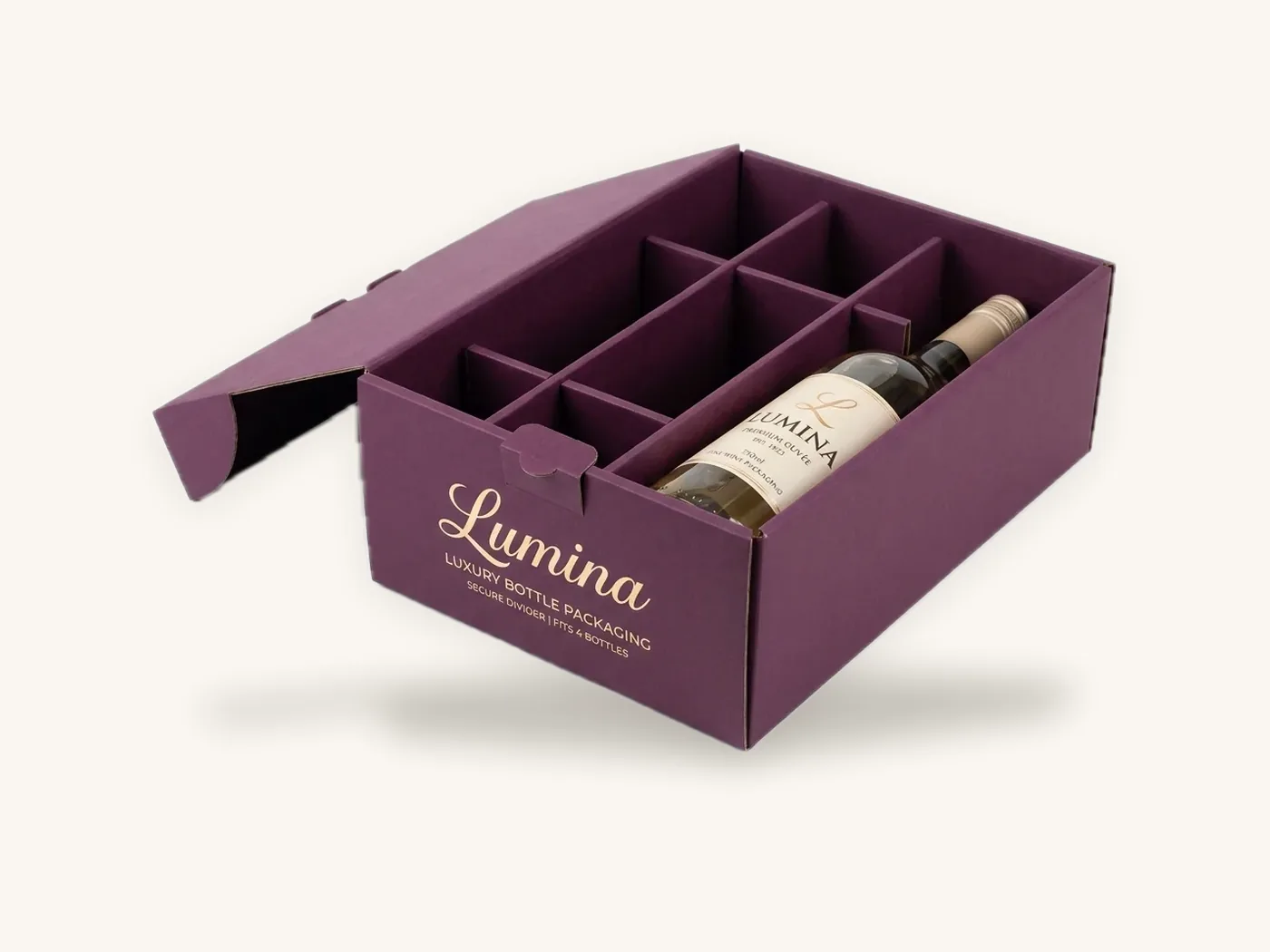
How to size dropper bottle boxes
Carton dimensions for tincture packaging are internal and given as length x width x depth, where depth is the tall dimension. Getting them right is a short process.
- Measure the assembled bottle. Fit the dropper and any tamper ring or child-resistant collar. Measure height from the base to the top of the bulb.
- Measure the widest point. Check the shoulder, the collar and the label. A thick or textured label adds a fraction of a millimeter all around.
- Add side clearance. Roughly 1–2 mm per side on width and length lets the bottle slide in without scuffing the label. Without an insert, stay at the low end.
- Add height clearance. Roughly 2–3 mm over the bulb avoids pressure on it when cartons are stacked or the tuck flap is closed.
- Decide on an insert. A neck insert adds height or occupies space at the shoulder, so size it together with the carton.
- Check shelf and case fit. If a retailer or distributor specifies a shelf depth or case count, confirm the carton suits it.
- Order an unprinted structural sample. Test with filled bottles, close the carton, shake it and drop it from counter height.
A worked example
Say your 30 ml Boston round with a standard dropper measures 33 mm across and 112 mm tall. Adding about 2.5 mm per side gives an internal width of roughly 38 mm, which is 1.5 in. Adding about 2 mm of headroom gives a depth of 114 mm, or 4.5 in. A 1.5x1.5x4.5 in carton fits with a little room for a folded paperboard insert at the neck.
Swap in a child-resistant dropper that stands 6 mm taller and that same carton pushes on the bulb. You would move to a depth of roughly 4.75 in instead.
Watch out: do not order cartons against a bottle spec sheet alone. Finished bottles vary between glass batches, and a filled bottle with a label and a dropper is not the same object as the drawing. Measure several filled units from the batch you will actually pack.
Inserts for tincture packaging
An insert turns a carton that merely contains a bottle into one that holds it. For glass dropper bottles, it is usually worth the small cost.
| Insert | How it works | Protection level | Best for |
|---|---|---|---|
| None (snug carton only) | Carton walls touch the bottle | Basic | Plastic bottles, retail-only sales, lowest cost |
| Neck or shoulder collar | Paperboard card with a punched hole that grips the neck below the collar | Good | Single glass bottles, stops sliding and bulb pressure |
| Folded cradle | Scored paperboard that supports the base and the neck | Very good | Glass bottles that ship to consumers |
| Two-bottle divider | Center wall or double collar | Good | Duo sets, day and night formulas |
| Molded pulp or foam tray | Formed cavity | Very good | Gift sets, rigid boxes, multi-bottle kits |
A collar insert has one extra benefit: it keeps the bottle centered, so the label faces the front panel's window or the bottle is presented upright the moment the carton opens. The box inserts guide covers insert materials in more detail, and custom insert dies carry a one-time tooling charge of about $45.
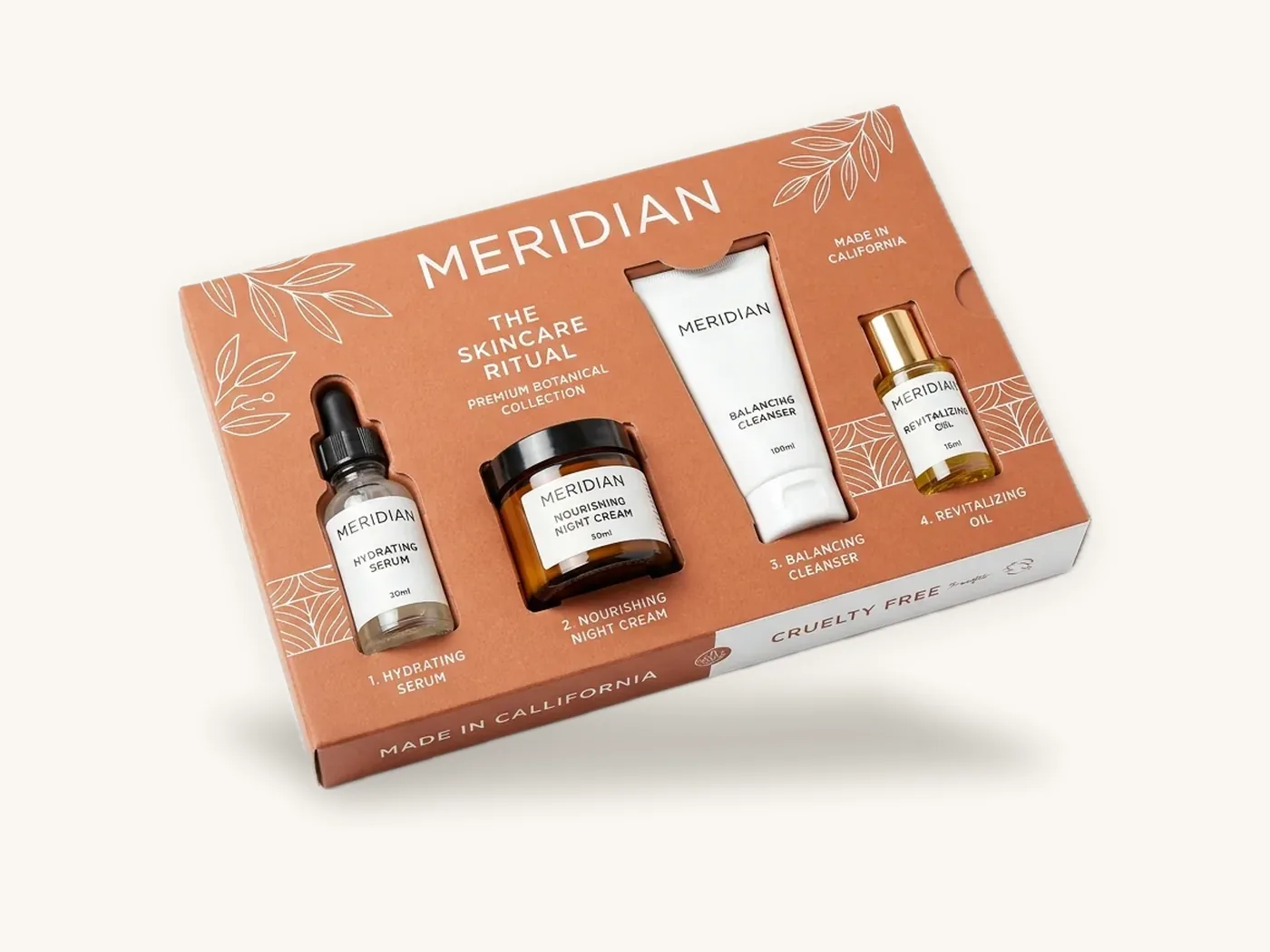
Carton structures: tuck end or auto lock
Most tincture boxes are tuck end cartons, and the choice between the variants is mostly about weight and presentation.
Straight and reverse tuck end
A straight tuck end box has both closing flaps tucking from the same side, leaving an uninterrupted front panel. A reverse tuck end carton tucks top and bottom from opposite sides and is slightly more economical on the press sheet. Both are fine for 15 ml and 30 ml bottles. Our tuck end boxes guide compares the two in detail.
Auto lock bottom
For 60 ml and 100 ml glass bottles, the weight of the bottle can push a tuck bottom open when the carton is picked up by the top. An auto lock bottom box has a crash-lock base that pops into place and holds firmly, and it also speeds up packing on larger runs.
Window cartons
A small die-cut window can show amber or cobalt glass, which suits apothecary-style branding. It removes printable area on a carton that is already narrow, so check your text fits first, and confirm that your market does not restrict transparent packaging for your product type.
Sets and gift packaging
Two or three bottles, or a bottle with a roller or balm, suit a wider tuck carton with a divider, a sleeve and tray, or a small rigid box with a pulp or foam tray.
Bottle label vs carton: dividing the information
A tincture carton is typically discarded once the bottle is in use, so anything the user needs every time they take a dose belongs on the bottle. The carton then earns its space by carrying brand, context and the longer information that does not fit on a small wrap label.
| Information type | Bottle label | Carton |
|---|---|---|
| Brand and product name | Yes | Yes, largest on front |
| Strength or concentration | Yes | Yes |
| Directions and serving size | Yes, short form | Yes, full form |
| Full ingredients | Where required or where it fits | Yes |
| Warnings | Yes, if required on the immediate container | Yes |
| Batch or lot number and dates | Yes | Often also on carton |
| QR code to test results or product page | Optional | Yes |
| Brand story, sourcing, usage tips | No | Yes |
| Barcode | Sometimes | Yes, for retail |
Which items are legally required, and on which layer, depends on the product category and your market. Supplements, cosmetics, hemp-derived products and state-licensed cannabis products each have different rules. For supplements, our supplement label requirements guide outlines the federal framework; for hemp and cannabis products, the CBD packaging guide covers common requirement types and the child-resistant packaging guide explains when closures need testing. Confirm current rules with your regulator and counsel before approving artwork.
Panel layout for a narrow carton
On a 1.5 in square carton, a practical layout is: front panel for brand, product name and strength; left side for directions and serving information; right side for ingredients; back panel for warnings, QR code, business details and barcode. Keep a blank, uncoated patch on the back or a flap for batch codes applied at packing.
Tamper evidence and closures
Tamper evidence can live on the bottle, on the carton, or both, and shoppers increasingly look for it on wellness products.
- Bottle level: tamper-evident dropper collars break a ring on first opening. Many brands also use a shrink band over the collar.
- Carton level: a clear or printed seal label across the tuck flap, or a tear-strip tuck, shows if the box has been opened on shelf.
- Child resistance: where required, it is usually delivered by a child-resistant dropper collar rather than by the carton.
A shrink band or taller child-resistant collar adds height and width, which is one more reason to finalize the closure before sizing the carton.
Tip: if you apply a seal sticker across the tuck flap, leave that strip of the carton uncoated or aqueous-coated in your artwork. Stickers adhere far better to aqueous coating than to soft-touch lamination.
Finishes and design for a narrow shelf face
A tincture box presents a front face about 1.5 in wide on the shelf. That is roughly the width of a thumb, so design decisions should favor instant recognition over detail.
What reads well at small size
- One strong brand mark, not a full logo lockup with a tagline
- Strength or concentration in large numerals, color-coded across the range
- High contrast between type and background
- A consistent top band or cap color, so a row of cartons reads as a family
Finish choices
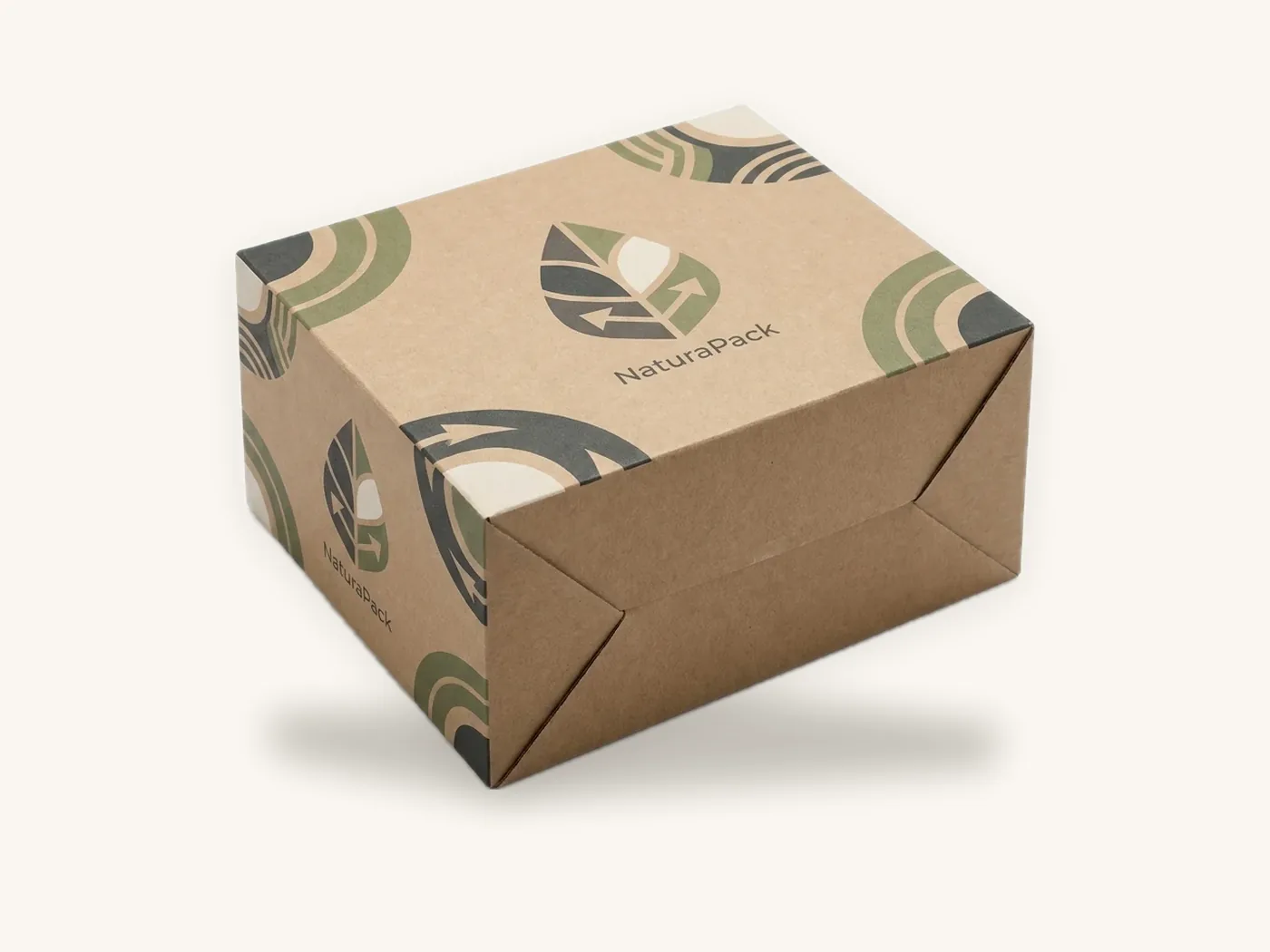
Gloss lamination and spot UV on the brand mark give a clean, clinical look. Soft-touch lamination with foil suits premium skincare-style oils. Kraft paperboard with one dark ink suits herbal and apothecary positioning. The printing and finishes page shows each, and SBS paperboard explains why 18 pt board is the default caliper for small cartons.
Tincture packaging beyond CBD
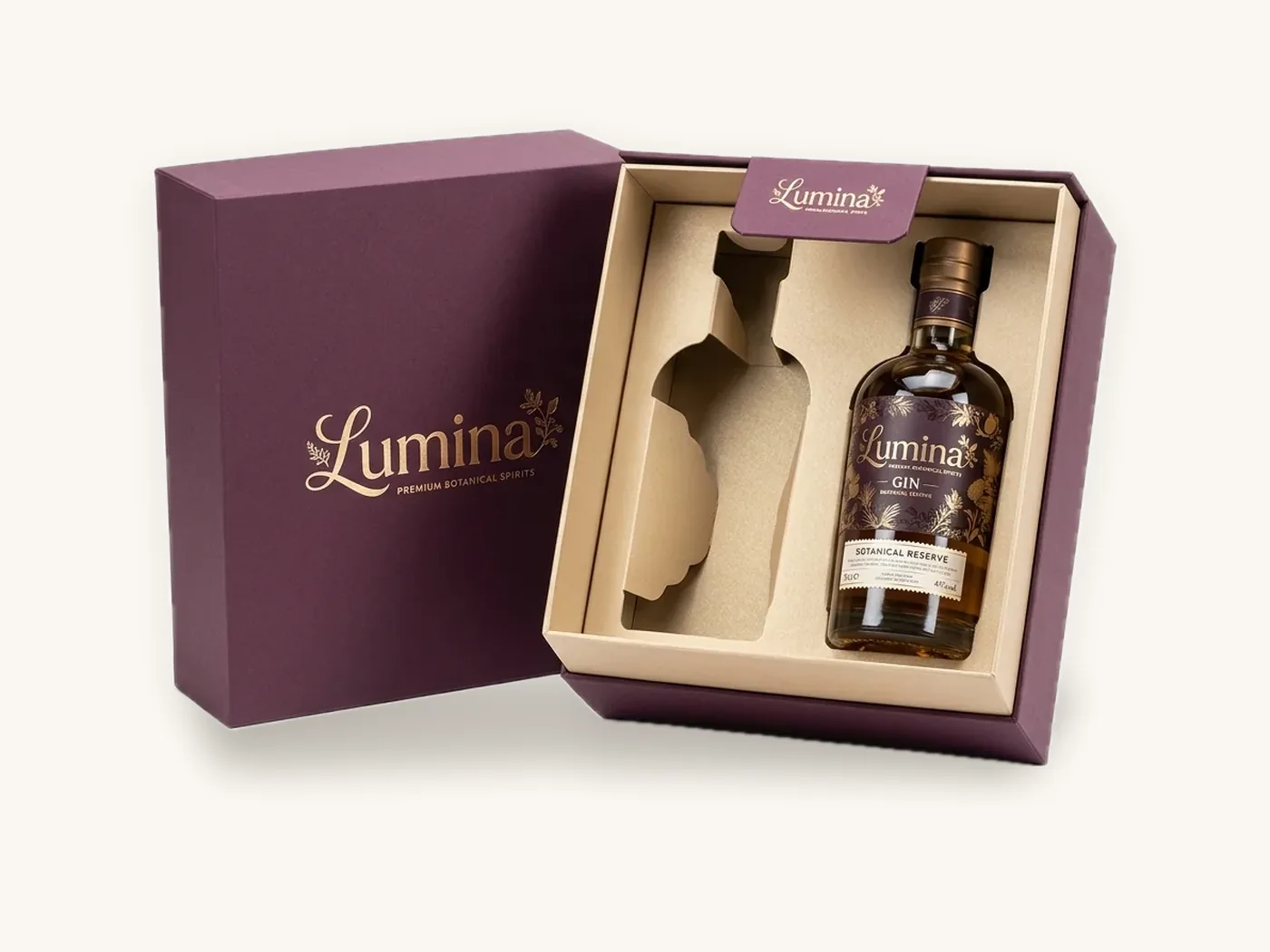
The same carton and insert engineering serves a wide range of dropper-bottle products. What changes is the regulatory framework and the visual language.
| Product | Common positioning | Structure notes |
|---|---|---|
| Herbal extracts and botanical tinctures | Apothecary, natural | Kraft board, amber glass, window optional |
| Liquid dietary supplements | Clinical, clean | White SBS, room for a Supplement Facts panel |
| Facial serums and oils | Premium beauty | Soft-touch, foil, collar insert |
| Beard and hair oils | Grooming, bold | Matte black print, auto lock for larger bottles |
| Essential oils | Wellness, aromatherapy | Small 10–15 ml cartons, multi-bottle sets |
| Hemp and CBD oils | Wellness, trust-focused | Room for QR codes and batch information |
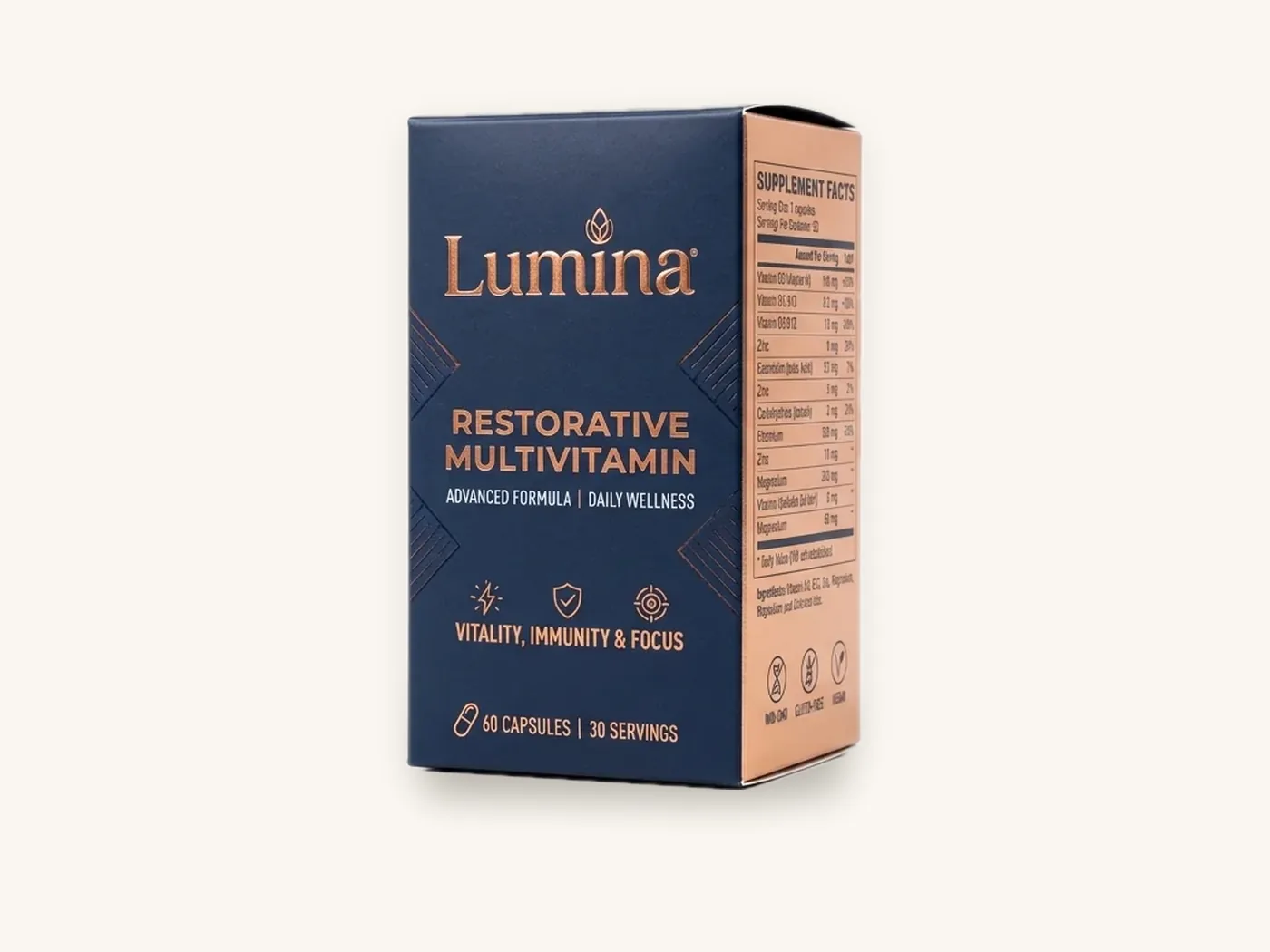
For liquid supplements, the supplement packaging guide covers panel planning for Supplement Facts, and the supplement and vitamin boxes page shows carton styles. Beauty-positioned oils often borrow from skincare boxes.
What tincture boxes cost
The price of a tincture box depends on size, board, print coverage, finishes, inserts and quantity. The reference spec below is a common 30 ml carton, with free US shipping included.
| Quantity | CBD tincture box, 18 pt SBS, 1.5x1.5x4.5 in, full color, gloss, spot UV |
|---|---|
| 10 | about $1.98 |
| 50 | about $1.51 |
| 100 | about $1.31 |
| 250 | about $0.93 |
| 500 | about $0.70 |
| 1,000 | about $0.58 |
| 2,500 | about $0.49 |
| 5,000 | about $0.41 |
| 10,000 | about $0.37 |
Spot UV carries a one-time tooling charge of about $40 on top of the unit price. A neck insert adds a one-time insert die of about $45, and foil adds about $60 in tooling. Larger 60 ml cartons, auto lock bottoms and soft-touch lamination change the unit price, so run your spec in the instant price estimator.
Where the savings are
- One carton size across strengths or scents, with color-coded artwork, lets you combine SKUs into one run.
- Dropping spot UV on a gloss-laminated carton saves the tooling and still looks crisp.
- Moving from 250 to 500 units roughly cuts the unit price by a quarter, which often pays for itself if you will reorder within a few months.
How to order tincture boxes from Box Sense
We make tincture boxes in-house and can start at 10 units, which is useful for a new flavor, strength or retailer test. For hemp-derived products, the CBD boxes page shows related structures.
What to send
- Bottle size and exact measurements with the dropper fitted, or a filled sample
- Whether you need a neck insert, divider or tray
- Structure preference: tuck end, auto lock bottom, window, or a recommendation
- Board (SBS or kraft) and finishes
- Number of SKUs and quantity per SKU
- Artwork, or a note that you want help from our design services team
What happens next
- Quote within 24 hours, priced at each quantity you ask for.
- Free dieline, artwork setup and 3D proof, with two revision rounds.
- Free unprinted structural sample to test with your filled bottles; a printed sample of approved artwork is free on orders of 100 or more.
- Production in 8–12 business days after proof approval, or rush in 5 business days on most paperboard styles.
- Free US shipping, with international shipping quoted at cost. Defective boxes reported within 14 days are reprinted free.
Frequently asked questions
What size box do I need for a 30 ml dropper bottle?
Many 30 ml dropper bottles fit a carton around 1.5x1.5x4.5 in internal, but bottle diameters and dropper heights vary by supplier. Measure the assembled bottle at its widest point and to the top of the bulb, add about 1–2 mm per side and 2–3 mm of headroom, then confirm with a free structural sample before printing.
Do tincture boxes need an insert?
Not always, but glass dropper bottles benefit from one. A snug carton alone works for plastic bottles and retail-only sales. A neck collar insert stops the bottle from sliding, keeps pressure off the rubber bulb and centers the bottle for presentation. For bottles shipped to consumers, a folded cradle insert gives the best protection at a small added cost.
What board is best for tincture packaging?
18 pt SBS paperboard is the standard for tincture packaging. It is stiff enough to protect a glass bottle at small sizes, folds cleanly and gives bright, sharp print. Kraft paperboard suits herbal or apothecary branding with one or two dark inks. For premium gift sets holding several bottles, rigid greyboard boxes with trays are the step up.
Should information go on the bottle or the box?
Put everything the user needs during use on the bottle label, since cartons are usually thrown away: product name, strength, directions, key warnings and the batch number. Use the carton for the full ingredient list, extended directions, brand story, QR codes and retail barcodes. Which items are legally required on each layer depends on your product category, so confirm with counsel.
How much do tincture boxes cost?
A 1.5x1.5x4.5 in tincture box on 18 pt SBS with full color, gloss lamination and spot UV is about $1.31 each at 100 units, about $0.58 at 1,000 and about $0.41 at 5,000, with US shipping included. Inserts, larger sizes, soft-touch lamination and foil change the price. Use the pricing estimator to check your exact spec.
Can one box design work for several tincture strengths?
Yes. Keep the same carton size, dieline and panel layout for every strength, and change only the strength numeral and a color band or cap color. This keeps the range looking consistent, makes proofing faster and lets you print several SKUs in one combined run, which usually lowers the unit price for each.
What is the minimum order for custom tincture boxes?
Box Sense produces custom tincture boxes from a minimum of 10 units. Short runs are printed digitally with no plates, so small orders are practical for new strengths, samples for retailers or seasonal scents. Unit prices drop steeply as quantity rises, so compare a few quantity tiers in the estimator before placing your first order.
Next steps
Measure a few filled bottles with droppers fitted, decide whether you need an insert, and price your carton in the tincture box price estimator. When the fit and spec are settled, request a tincture box quote and we will confirm pricing within 24 hours and send a dieline built around your bottle.
Boxes in this guide
Order the packaging we covered
Written by the Box Sense Packaging Team
Our structural designers, prepress technicians and production staff print and convert custom boxes every day for brands in the United States, United Kingdom and UAE. Questions about this guide? Talk to us.