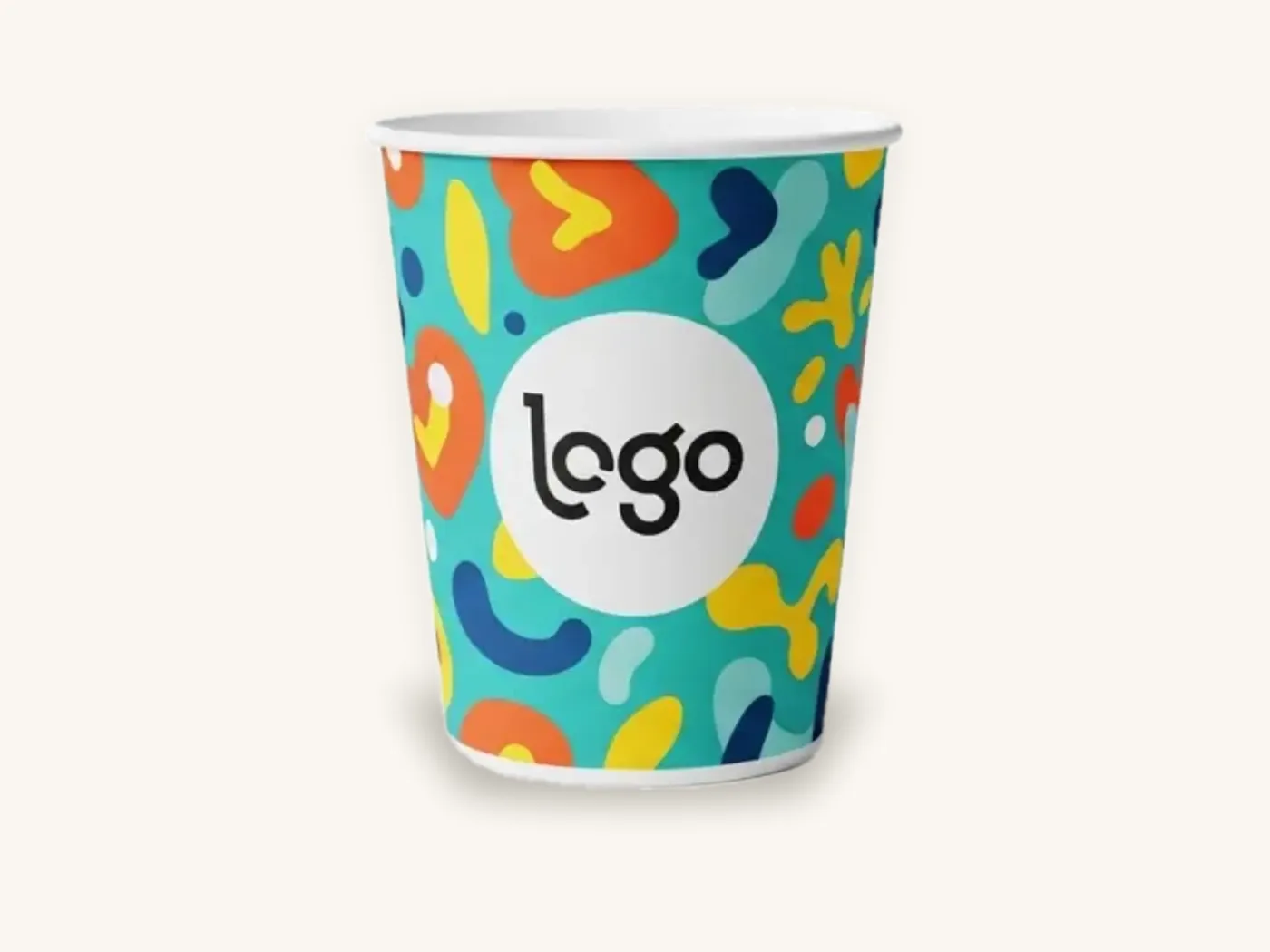
Custom paper cups are paperboard cups printed with your logo and artwork, lined on the inside so they hold hot or cold drinks, and sized to fit standard lids. For a cafe they are the piece of packaging customers carry down the street; for an event they turn every drink into a small branded moment. The key decisions are size range, wall construction, lining, lid compatibility, artwork and whether a sleeve does the job better than a thicker cup.
Getting those decisions right saves more money than negotiating price. A cafe that picks the wrong wall type ends up buying sleeves for every hot drink, and an event that orders the wrong size runs short on the cup everyone actually wants. This guide works through the choices in the order an operator faces them.
Key takeaways
- Most cafes need three hot sizes (commonly 8, 12 and 16 oz) and one or two cold sizes; many cup lines share one lid across the larger hot sizes, which simplifies stock.
- Single-wall cups plus a sleeve are flexible and cheap to stock; double-wall or ripple-wall cups remove the sleeve and feel more premium in the hand.
- The inner lining decides how the cup behaves at end of life. Conventional plastic-lined cups, aqueous-lined cups and PLA-lined cups each have different disposal routes.
- Printed coffee cups use a fan-shaped, curved artwork template. Keep logos away from the side seam and the rolled rim.
- Custom cup sleeves are the lowest-risk way to brand cups for a pop-up, launch or seasonal campaign.
- FDA rules govern food-contact materials in the US; ask your supplier for documentation that the lining and inks are suitable for the drinks you serve.
Paper cup sizes and what each one is for
Cup "ounces" are the brimful capacity, not the drink size. A 12 oz cup filled to a sensible line below the rim holds a little less, which leaves room for milk, foam and a lid that does not leak when pressed on.
| Cup size | Typical drink | Common rim diameter group | Notes |
|---|---|---|---|
| 4 oz | Espresso, samples, tastings | Small rim | Useful at events and for sampling programs |
| 8 oz | Small latte, flat white, tea | Medium rim | Often has its own lid size |
| 10 oz | Cortado or a mid size in some menus | Large rim in many lines | Consider skipping to reduce stock |
| 12 oz | Standard latte or drip coffee | Large rim | The size most cafes sell most of |
| 16 oz | Large hot drink | Large rim | Frequently shares a lid with 12 oz |
| 20 oz | Extra large hot or iced | Large rim | Check that it fits car cup holders |
| 12 to 24 oz cold cups | Iced coffee, cold brew, smoothies | Varies | Need a moisture-resistant lining on both sides |
Rim diameters vary by manufacturer, so treat the lid groups above as a planning pattern, not a guarantee. Always confirm the exact rim diameter and test the lid you plan to use on a sample cup before approving a print run.
How many sizes to carry
Every extra size means another sleeve fit, another stack of cases in the back room and another reorder to track. A tight menu of 8, 12 and 16 oz hot cups covers most cafes. Events usually do best with a single hot size and a single cold size, which keeps service fast and waste low.
Tip: before committing to a lid, pour a full hot drink, press the lid on, and tilt the cup the way a customer walking to a car would. A lid that fits by measurement but pops off with a thumb press will cost you more in complaints than any saving on the cup.
Single wall, double wall or ripple wall
Wall construction decides how hot the cup feels, how rigid it is, and whether you need sleeves at all. Our custom paper cups come in each construction below.
| Construction | How it is made | Heat in the hand | Rigidity | Best for | Tradeoff |
|---|---|---|---|---|---|
| Single wall | One layer of lined paperboard | Hot with fresh coffee | Standard | Cold drinks, tea, sampling, cafes using sleeves | Needs a sleeve or double-cupping for very hot drinks |
| Double wall | A second paper wall wrapped around the inner cup, with a small air gap | Comfortable | High | Specialty cafes, premium takeaway | Higher unit cost; bulkier cases |
| Ripple wall | An outer corrugated-style ribbed wrap | Most insulated | Highest | Very hot drinks, long carry times | Ribs break up artwork; highest cost |
| Single wall + sleeve | Standard cup with a separate band | Comfortable where held | Standard | Mixed menus and seasonal branding | Two items to stock and hand out |
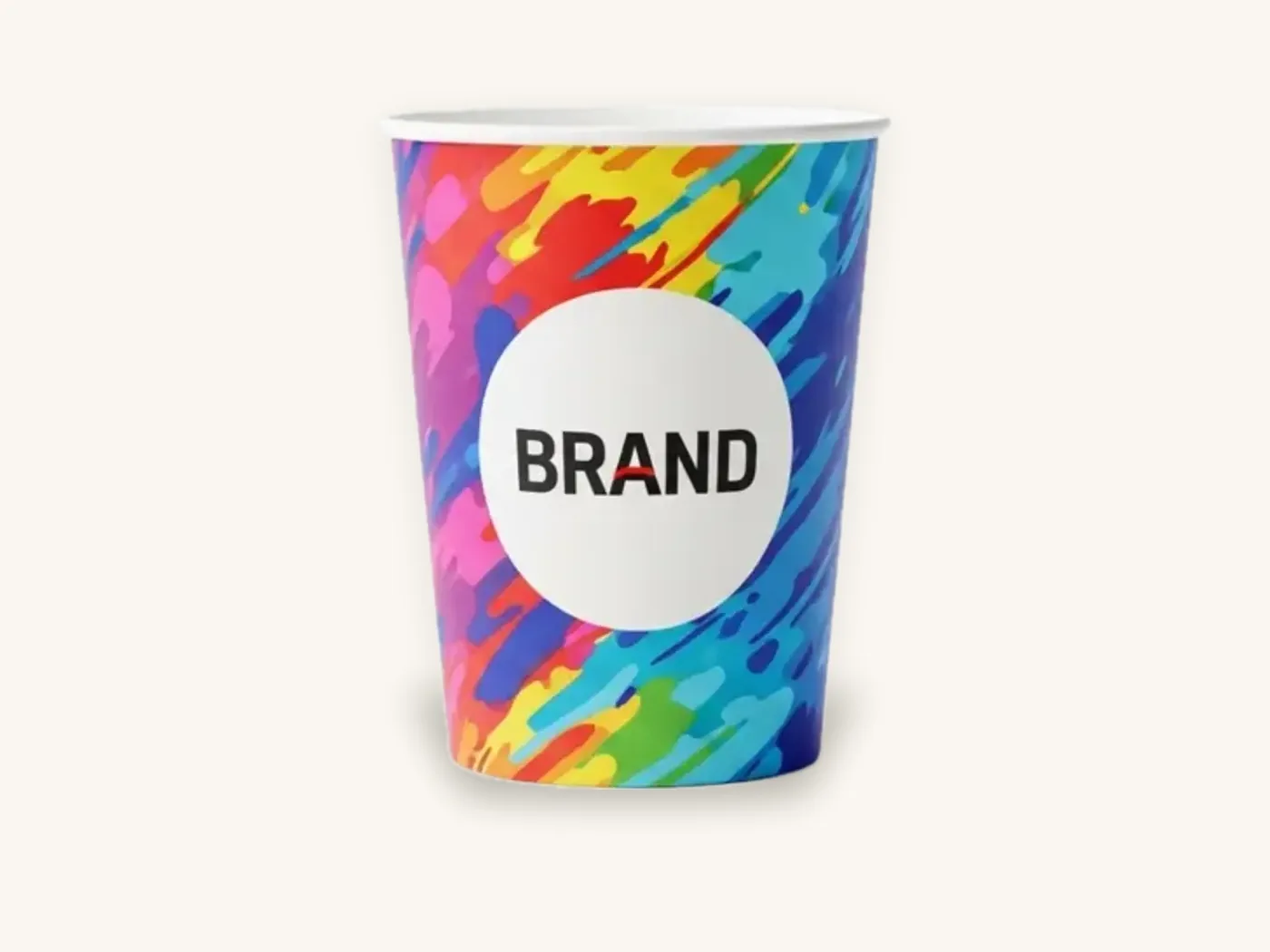
When to choose double wall
Choose double wall when most of your volume is hot espresso drinks, when your cups are the primary branding surface, and when counter speed matters more than a small difference in unit cost. Staff never reach for a sleeve, and the cup feels substantial.
When a single wall plus sleeve makes more sense
Choose single wall cups with a sleeve when you serve a large share of iced drinks or tea, when you want plain or lightly printed cups to double as cold cups, or when you plan to change branding often. A sleeve can carry a seasonal design while the cup stays the same all year.
Double-cupping is the expensive option
Some cafes stack two single-wall cups for hot drinks. It works, but it doubles cup use for those drinks, hides the inner cup print and adds waste. If staff double-cup routinely, that is a sign to switch to double-wall cups or add sleeves.
Linings, food contact and end-of-life
Paper alone would soak through in minutes. Every paper cup has a thin barrier on the inside (and on the outside too for cold cups, to resist condensation). That barrier is the main factor in how the cup can be disposed of.
Common lining types
- Polyethylene (PE): the conventional lining. Reliable for hot and cold drinks. Recycling depends on whether local facilities accept poly-coated paper cups, which varies widely.
- Aqueous dispersion coating: a water-based barrier applied as a thin coating rather than a laminated film. Designed to make the cup easier to repulp; acceptance still depends on local facilities.
- PLA (polylactic acid): a plant-based lining intended for industrial composting. It does not break down in a home compost pile, and it only helps if customers can reach a composting stream that accepts cups.
Food contact
In the US, materials that touch food and drink fall under FDA food-contact regulations. For cups, that means the lining, adhesives and any inks that could contact the drink or the drinker's lips. Ask for documentation that the materials are suitable for hot beverages and for the temperature you actually serve at, and keep it on file. The FDA's food contact substances pages explain the framework.
Claims and local rules
"Compostable" and "recyclable" claims on cups draw scrutiny because the answer depends on the lining and on what local facilities accept. The FTC's Green Guides describe how environmental claims should be qualified, and some cities and states have their own rules for food-service ware. Confirm current local requirements before printing any disposal claim, and read our sustainable packaging guide for how board and coating choices interact.
Watch out: a "compostable" logo printed on a cup that most of your customers will throw in a trash can may not meet the qualification standard for that claim. If you use PLA-lined cups, consider wording that tells customers where to dispose of them, and check that it matches what is available in your area.
Printed coffee cups: artwork that survives a curved surface
A paper cup is a cone, so the flat printed blank is a curved fan shape. Artwork that looks perfect on a rectangle distorts when it wraps: vertical lines lean outward, and horizontal text follows an arc.
Artwork rules for cups
- Start from the supplier's cup template. Each size has its own arc; artwork cannot be scaled from 8 oz to 16 oz without rework.
- Mind the side seam. The blank overlaps where it is sealed. Keep logos and text well clear of that overlap, or the seam will cut through them.
- Leave the rim and base clear. The top edge is rolled into a lip and the bottom is folded under. Critical detail placed there disappears.
- Use one hero face. Customers hold cups with the seam toward the palm or away from it; design one strong front view rather than a continuous wrap that must line up.
- Keep fine type large. Paperboard and cup print processes do not hold hairline strokes or very small text as well as a folding carton.
- Specify brand colors precisely. Name PMS colors if exact matching matters; full-color gradients can shift from run to run.
- Check readability with a lid and sleeve on. A lid covers the top band, and a sleeve covers the middle third.
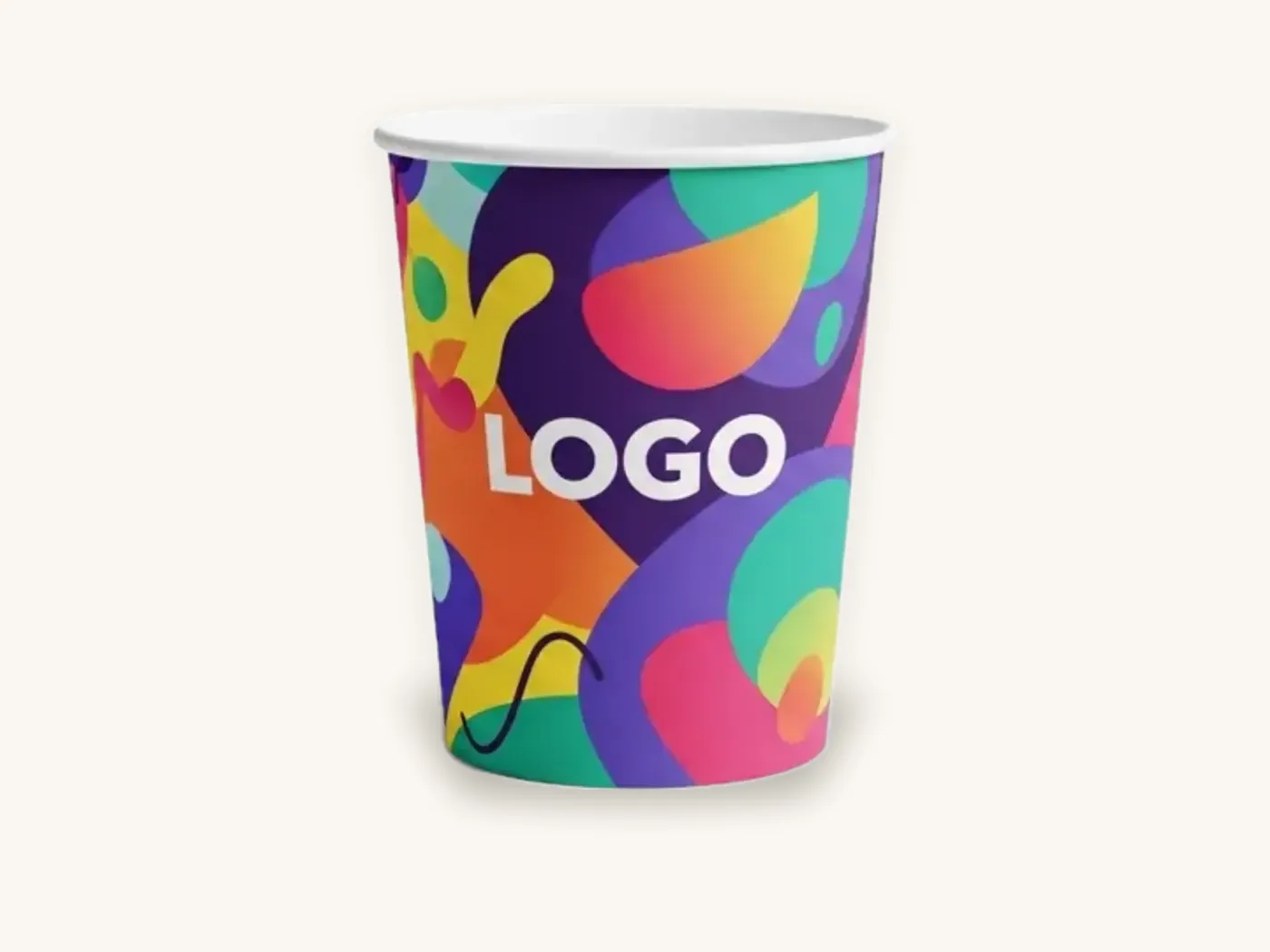
Print coverage choices
One or two spot colors on a white or kraft cup are bold, readable and consistent. Full-color artwork allows photography and gradients but is more sensitive to color variation. A small logo repeated around the cup makes seam placement irrelevant, which is useful if you cannot control how staff hand out cups.
Our printing and finishes page shows spot color, full color and white ink on kraft options for the sleeves and boxes that accompany cups.
Custom cup sleeves: when a sleeve does the job better
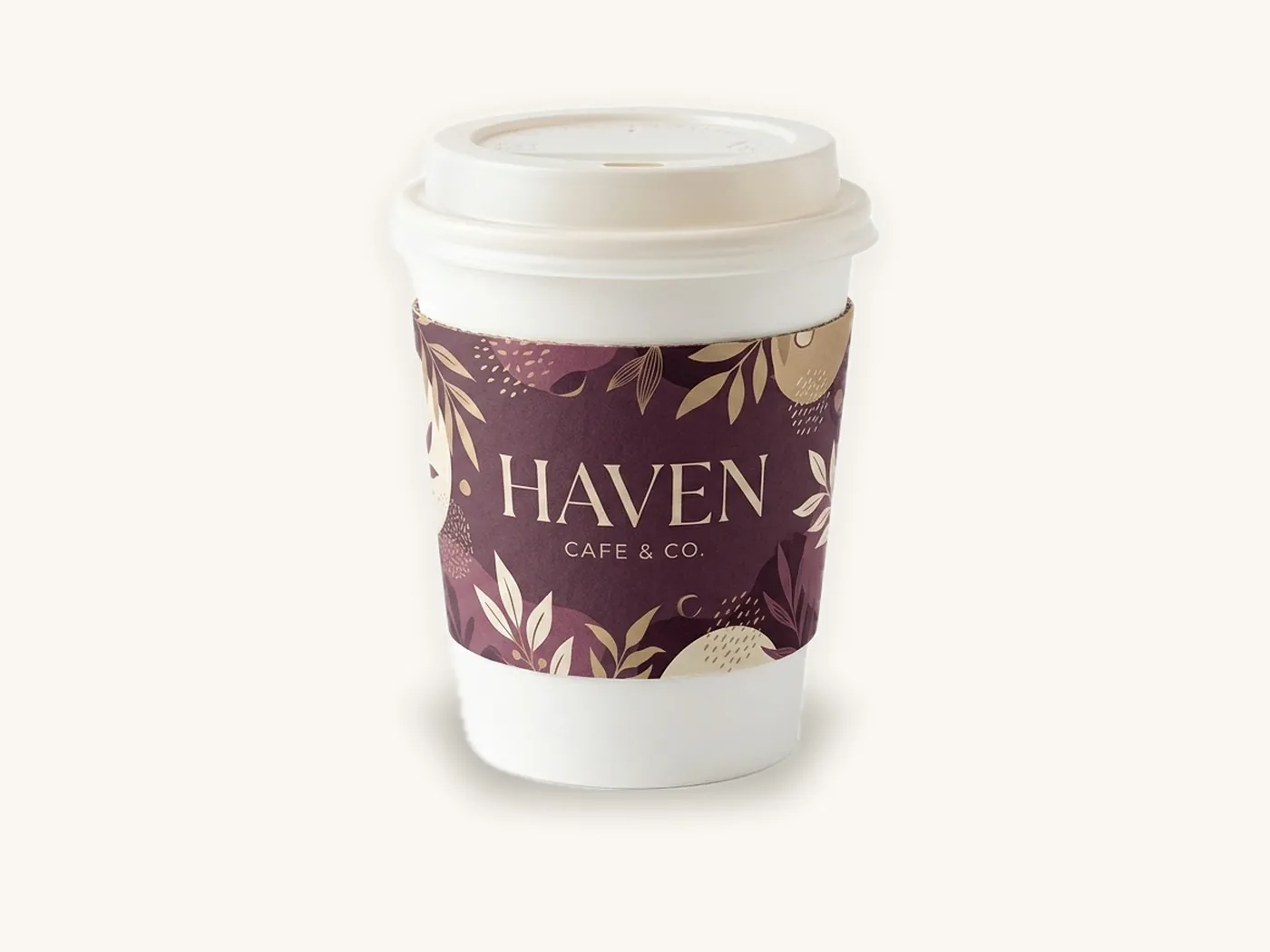
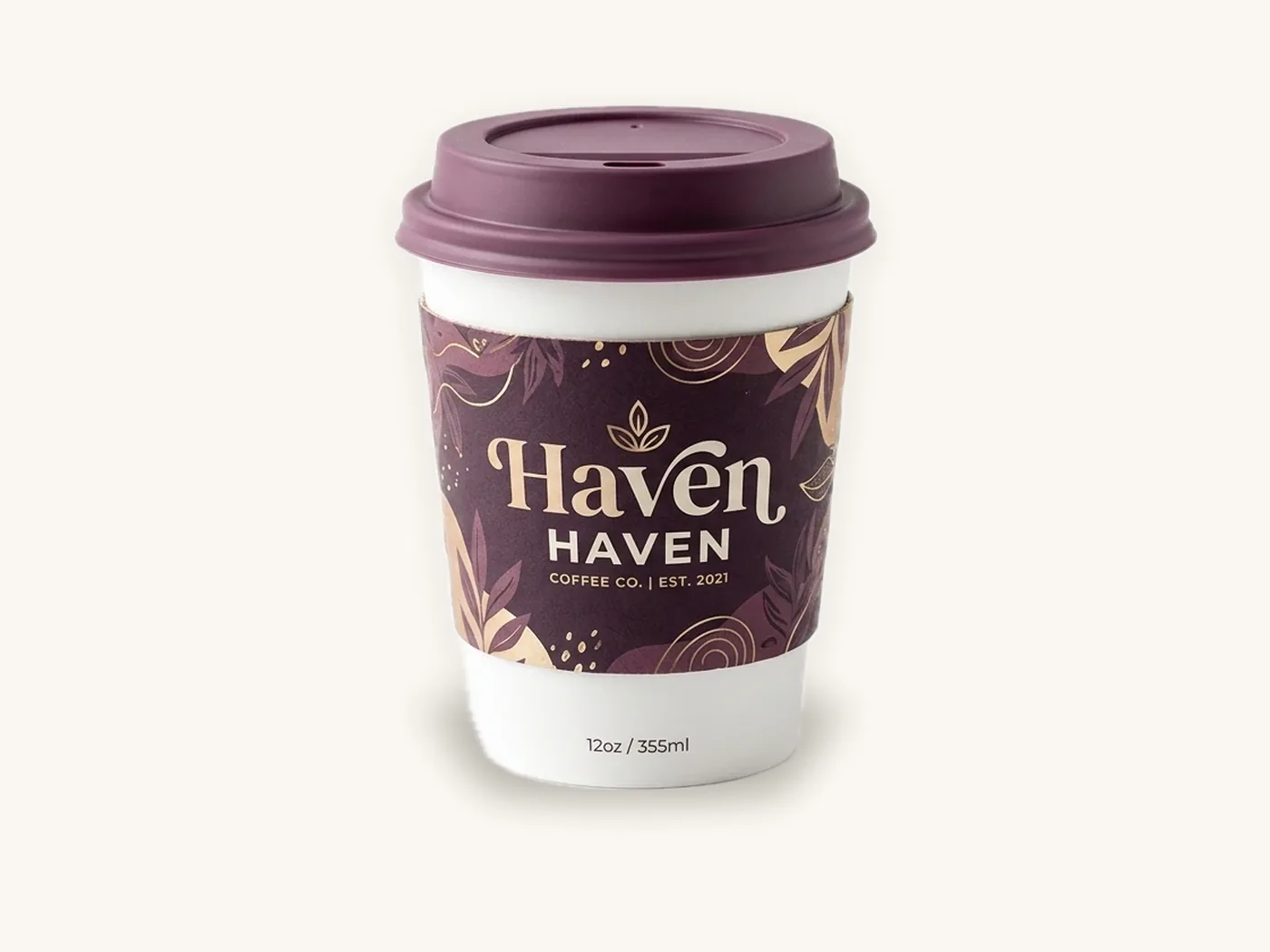
A cup sleeve is a die-cut band of paperboard, often with a fine embossed or corrugated texture, that slips around a cup to insulate the hand. For many brands it is the most flexible branding tool in the cafe.
Why sleeves work for branding
Sleeves are flat, light and easy to store. They can be changed each season without replacing a whole cup inventory, and they can be printed for one event, one partner or one limited drink. Our custom cup sleeves are available in kraft and white with full-color print and an embossed grip.
Sleeve fit and specs
| Spec | Options | How to choose |
|---|---|---|
| Fit range | Most sleeves fit a band of cup sizes, often 12 to 20 oz | Test on every cup size you stock |
| Board | Kraft or white paperboard, smooth or textured | Kraft for natural look and scuff hiding; white for bright color |
| Insulation | Flat, embossed or fluted inner surface | Textured inside for very hot drinks |
| One color, spot colors or full color, one or both sides | Outside print is what customers see | |
| Delivery | Flat blanks or pre-glued bands | Pre-glued is faster at a busy counter |
Sleeves for events and pop-ups
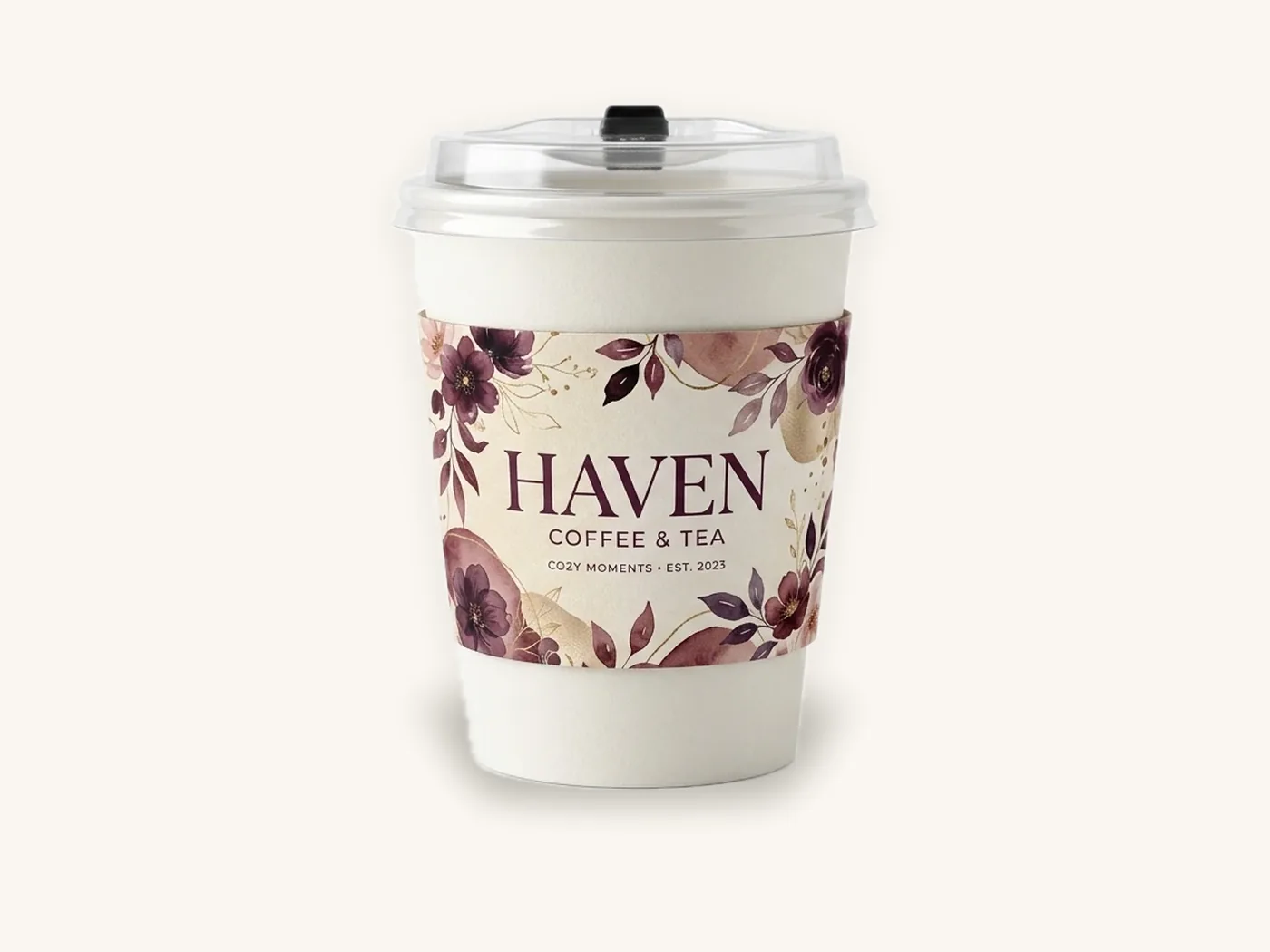
For conferences, weddings, product launches and sponsored events, custom cup sleeves put a logo or message on plain stock cups the venue or caterer already owns. They also suit coffee carts that serve at different events under different partner names. Order a few extra, because staff often use two on the hottest drinks.
Planning cup quantities for a cafe or an event
Ordering too few printed coffee cups means running out mid-promotion; ordering too many ties up cash and storage space. A simple planning method avoids both.
For a cafe
- Pull sales by size for a typical month from your point-of-sale system, counting dine-in drinks separately from takeaway.
- Add a buffer for the reorder lead time plus a margin for busy weeks and waste.
- Check storage. Cups ship in cases that take real shelf space; confirm how many cases fit in your stock room before ordering a large run.
- Group reorders. Align cup and sleeve reorders with coffee bags and other packaging so artwork updates and deliveries happen together.
For an event
- Estimate drinks per guest per hour for the service window, based on your own past events or the caterer's experience.
- Split hot and cold based on season, venue and time of day.
- Add spillage and staff use. Dropped cups, remade drinks and staff drinks all consume stock.
- Plan the leftovers. Event-specific artwork has no second use, so consider printing the event name on sleeves and keeping the cups generic.
Cost drivers for custom paper cups and sleeves
Cup prices depend heavily on construction, size and print method, so we confirm them in a quote rather than list them here. These are the main levers.
| Driver | Effect | How to manage it |
|---|---|---|
| Wall construction | Double and ripple wall cost more than single wall | Compare against single wall plus sleeve |
| Size | Larger cups use more board | Trim rarely used sizes from the menu |
| Lining | Specialty barriers can cost more than conventional | Match the lining to what your area can process |
| Print colors and coverage | More colors and full coverage add cost | Use one or two strong spot colors |
| Quantity per design | Setup is spread over more cups | Keep cups evergreen; put campaigns on sleeves |
| Number of sizes | Each size needs its own artwork and setup | Share one design system across sizes |
| Storage and freight | Cups are bulky | Order in quantities your space can hold |
How to order custom paper cups and sleeves with Box Sense
We make the printed packaging around your drinks, from cups and sleeves to coffee and tea retail packaging and takeout and food-service items, so artwork and color can stay consistent across everything a customer carries away.
What to send
- Cup sizes and quantities per size, hot and cold
- Wall construction preference (single, double, ripple) or a request for a recommendation
- Lining preference and where the cups will be used and disposed of
- The lids you already use or plan to use, so we can confirm rim fit
- Sleeve needs: fit range, kraft or white, print colors
- Artwork, or a request for help from our design services team
- Delivery address and the date you need cups on site
What to expect
- Quote within 24 hours. We confirm constructions, minimums and pricing for your sizes and quantities.
- Artwork setup. We place your artwork on the correct cup and sleeve templates, flag seam and rim issues, and send a digital proof with two revision rounds included.
- Production and delivery. We confirm the production schedule for cups and sleeves in your quote. Shipping is free on every US order, and international shipping is quoted at cost.
If you also need boxes for pastries or retail bags of beans, our minimum for boxes is 10 units with no die or plate charges, and our coffee packaging guide covers bags, valves and mailers.
Frequently asked questions
What sizes do custom paper cups come in?
Hot paper cups commonly come in 4, 8, 10, 12, 16 and 20 oz, and cold paper cups in a range from about 12 to 24 oz. Most cafes stock three hot sizes, typically 8, 12 and 16 oz. Rim diameters vary by manufacturer, so confirm which lid fits each size before ordering printed cups.
Do I need double wall cups or sleeves?
For very hot espresso drinks, you need either a double-wall cup or a sleeve to keep the cup comfortable to hold. Double wall is faster at the counter and feels premium. Single wall plus a sleeve is more flexible, because the same cup can serve cold drinks and the sleeve can carry seasonal branding.
Are paper coffee cups recyclable?
It depends on the lining and on local facilities. Most paper cups have a plastic or plant-based barrier inside, and not every recycling program accepts lined cups. Aqueous-coated cups are designed to repulp more easily, and PLA-lined cups are intended for industrial composting. Check what your local facilities accept before printing any disposal claim.
How do I design artwork for a printed coffee cup?
Start from the cup maker's curved template for each size, because cups are cones and flat artwork distorts. Keep logos and text away from the side seam, the rolled rim and the folded base. Design one strong front view, use large, simple type and specify brand colors precisely. Check the design with a lid and sleeve in place.
Are custom cup sleeves worth it for events?
Often yes. Custom cup sleeves put a logo or event name on plain stock cups, cost less to change than a whole cup run, and are easy to store and transport. They suit weddings, conferences, pop-ups and sponsored coffee carts. Order extras, since some drinks get two sleeves and a few get spoiled at service.
Are printed paper cups safe for hot drinks?
Paper cups made for hot drinks use linings, adhesives and inks intended for that use. In the US, food-contact materials are regulated by the FDA. Ask your supplier for documentation that the cup is suitable for hot beverages at your serving temperature, and never use a cold-drink cup for hot liquids.
How long does it take to get custom paper cups?
Box Sense confirms quotes within 24 hours, then sets up artwork on the correct templates and sends a digital proof. The production schedule for cups and sleeves depends on construction and quantity, so we confirm it in your quote. Build in time for proof revisions, and order well ahead of a launch or event date.
Next steps
List your cup sizes, your lids and a month of sales by size, then decide between double-wall cups and single wall with sleeves. When you are ready, request a custom paper cup quote and we will confirm options and pricing within 24 hours. For the boxes and bags that go alongside your cups, the packaging price estimator gives instant figures, and the beverage carrier guide covers carriers for canned and bottled drinks.
Boxes in this guide
Order the packaging we covered
Written by the Box Sense Packaging Team
Our structural designers, prepress technicians and production staff print and convert custom boxes every day for brands in the United States, United Kingdom and UAE. Questions about this guide? Talk to us.