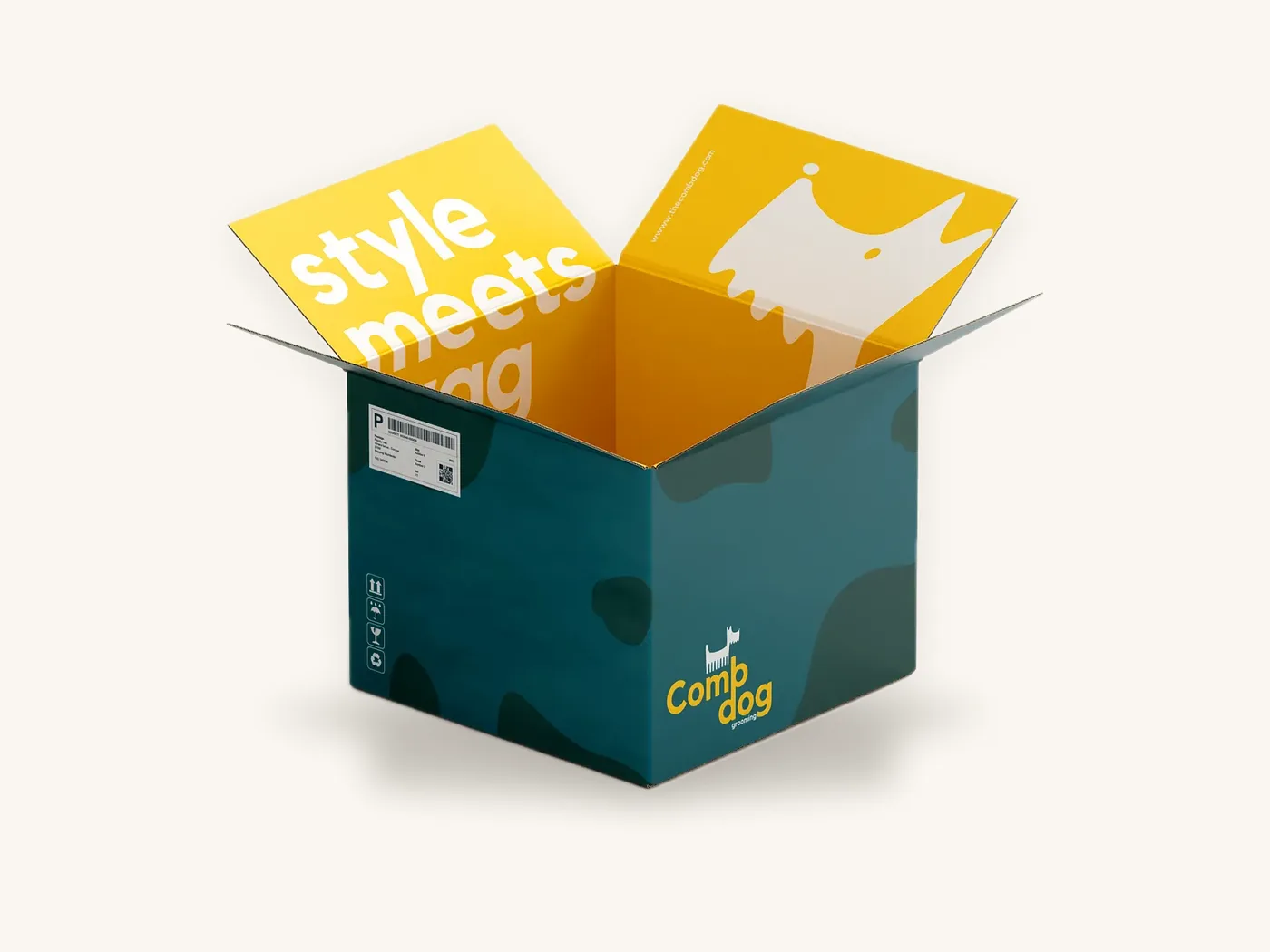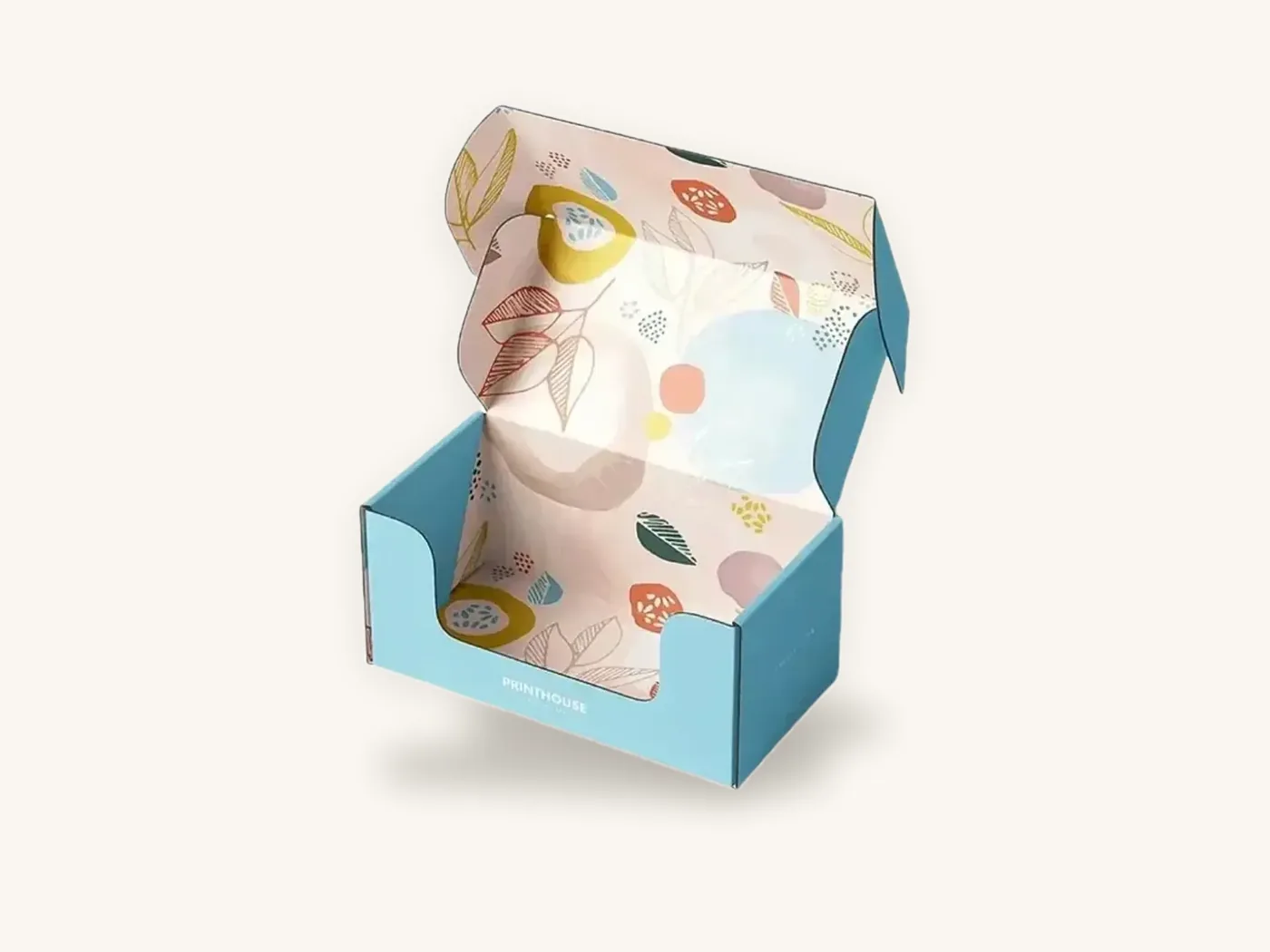
Branded packaging pays off when the extra cost per order is smaller than the extra profit it creates through repeat purchases, reviews, shared content, referrals and fewer damaged shipments. Whether that is true for your store is measurable. You do not need industry surveys to answer it; you need your own incremental cost, your own margins and a simple test.
This guide treats branded packaging ROI as a finance question rather than a design question. It shows how to calculate what custom boxes really add per order, how much lift you need to break even, which metrics to track and how to run a split test that gives an honest answer.
Every number below is either from the Box Sense price sheet or clearly labeled as a hypothetical example. Plug in your own figures, because the answer depends on your category, margin and customer behavior.
Key takeaways
- ROI depends on the incremental cost of branded packaging compared with what you use now, not the full cost of the box.
- Break-even is simple: incremental cost per order divided by the contribution margin of one extra repeat order tells you how much lift you need.
- The main value levers are repeat purchase rate, review rate, user-generated content, referrals and damage or return reduction.
- The strongest evidence comes from a split test: ship some customers in branded packaging and some in your current packaging, then compare cohorts.
- Branded packaging tends to pay back fastest for consumables, subscriptions and giftable products, and slowest for one-time purchases with thin margins.
- You can raise the return without raising cost by printing only where it matters, such as the inside lid, and by right-sizing the box.
What branded packaging ROI actually measures
Return on investment is the extra profit an investment produces, divided by what it costs. For packaging, both sides need care, because a box is a cost you pay anyway.
Incremental cost is the difference between your branded setup and your current or cheapest acceptable setup. If you already ship in a plain corrugated mailer, the investment is the price difference plus any added inserts, tissue or labor, not the full box price.
Incremental profit is the extra contribution margin created by customers who behave differently because of the packaging: buying again, leaving a review, posting a photo, telling a friend, or not requesting a replacement for a broken item.
The formula:
Packaging ROI = (incremental profit - incremental cost) / incremental cost
A result above zero means the packaging paid for itself over the period you measured. Because repeat purchases arrive over months, always state the time window, for example "90-day ROI" or "12-month ROI".
Step one: calculate the true incremental cost per order
Start with your invoices, not a guess. List every component that changes when you switch to branded packaging.
| Cost component | What to include | Can it be negative? |
|---|---|---|
| Box price difference | Branded box price minus current box price, at the quantity you actually order | Rarely, but possible if you right-size |
| Inside extras | Printed tissue, insert, thank-you card, sticker | No |
| One-time tooling and design | Foil, embossing or insert tooling, spread across the run | No |
| Packing labor | Extra seconds per order for tissue, cards or folding | Yes, if a mailer replaces box plus tape plus fill |
| Shipping cost | Change in billable weight from a new box size | Yes, often, when the box is smaller |
| Damage and replacements | Change in replacement shipments and refunds | Yes, if the new box protects better |
| Storage | Change in space needed | Usually small |
A hypothetical cost calculation
Say you currently ship in a plain stock mailer that costs you about 50 cents. You are considering an 8x6x3 in E-flute mailer printed full color outside, which runs about $1.41 per box at 500 units or about $1.17 at 1,000. At the 1,000 tier, the box difference is roughly 67 cents.
You add a small printed sticker to seal tissue, and it adds a few cents. Your old stock box was half an inch taller than needed; the custom size drops billable weight on a share of orders, saving a little on shipping. Net, your incremental cost might land around 60 to 70 cents per order. That single figure is what the rest of the analysis is measured against.
If you are comparing more elaborate options, such as a 10x8x4 in mailer printed inside and outside (about $1.92 at 1,000) or a 12x9x4 in subscription mailer with an insert and tear strip (about $2.60 at 1,000), run the same calculation for each. The custom packaging cost guide explains which specs drive price, and the pricing estimator gives exact figures for your size.
The value levers: where the return comes from
Packaging influences customer behavior through a handful of mechanisms. Each needs its own metric and its own measurement method.
| Lever | Mechanism | Metric to track | How to measure | Time to see a signal |
|---|---|---|---|---|
| Repeat purchase | Stronger brand recall and a better first experience | Repeat rate within 60, 90 or 180 days | Cohort report by first-order month and packaging group | 2 to 6 months |
| Reviews | A positive moment close to the review request | Reviews per 100 orders, average rating | Review platform export by order | 2 to 6 weeks |
| User-generated content | A box that people want to photograph | Tagged posts and mentions per 1,000 orders | Social listening, hashtag on the inside lid | 2 to 8 weeks |
| Referrals | Recipients and onlookers see the brand | Referral code uses, "how did you hear" answers | Unique codes on inserts, post-purchase survey | 1 to 6 months |
| Damage and returns | Better fit and stronger board | Damage claims and "arrived damaged" returns per 1,000 orders | Support tags and return reasons | 4 to 8 weeks |
| Price tolerance | Higher perceived value | Discount usage, conversion at full price on repeat orders | Order data by cohort | 3 to 6 months |
Repeat purchase is usually the biggest lever
For most stores, one extra repeat order is worth more than a review or a social post, because it carries a full contribution margin and usually costs nothing to acquire. That is why the break-even math below is built on repeat orders. The other levers add to the return, and you can convert them into money once you know their value to your business.
Damage reduction is the most certain lever
Brand effects are probabilistic. Damage savings are concrete: each avoided replacement saves product cost, a second shipment and support time. If your current packaging has a noticeable damage rate, measure it first. Our guide to reducing shipping damage shows how box fit and board choice affect it.
Break-even math: how much lift you need
The core question is not "does packaging work" but "how many extra repeat orders do I need to cover the cost". The formula:
Extra repeat orders needed = (incremental cost per order x orders shipped) / contribution margin per repeat order
Contribution margin here means revenue from the repeat order minus product cost, fulfillment, shipping, payment fees and any discount. It is not revenue.
A break-even table
The table shows, for every 1,000 first-time customers, how many percentage points your repeat purchase rate must rise to cover the packaging cost. All values are hypothetical.
| Incremental cost per order | Margin per repeat order: 15 dollars | Margin: 25 dollars | Margin: 40 dollars |
|---|---|---|---|
| 40 cents | about 2.7 points | about 1.6 points | about 1.0 point |
| 70 cents | about 4.7 points | about 2.8 points | about 1.8 points |
| 1.50 dollars | about 10 points | about 6 points | about 3.8 points |
Read it like this: if branded boxes add 70 cents per order and a repeat order earns 25 dollars in contribution margin, you need 28 extra repeat orders per 1,000 customers. If your repeat rate goes from, say, 20% to 22.8% or better, the packaging has paid for itself on repeat orders alone.
What the table tells you before you test
- High-margin, consumable products clear the bar easily; a modest lift is enough.
- Thin-margin products with expensive packaging need lift that may be unrealistic. Simplify the spec before testing.
- Every other lever lowers the bar. If the new box also cuts damage replacements, subtract those savings from the incremental cost before reading the table.
Watch out: do not count the first order's margin as packaging return. The customer bought before seeing the box. Only behavior after delivery, such as repeat orders, reviews, referrals and avoided replacements, belongs in the return side of the calculation.
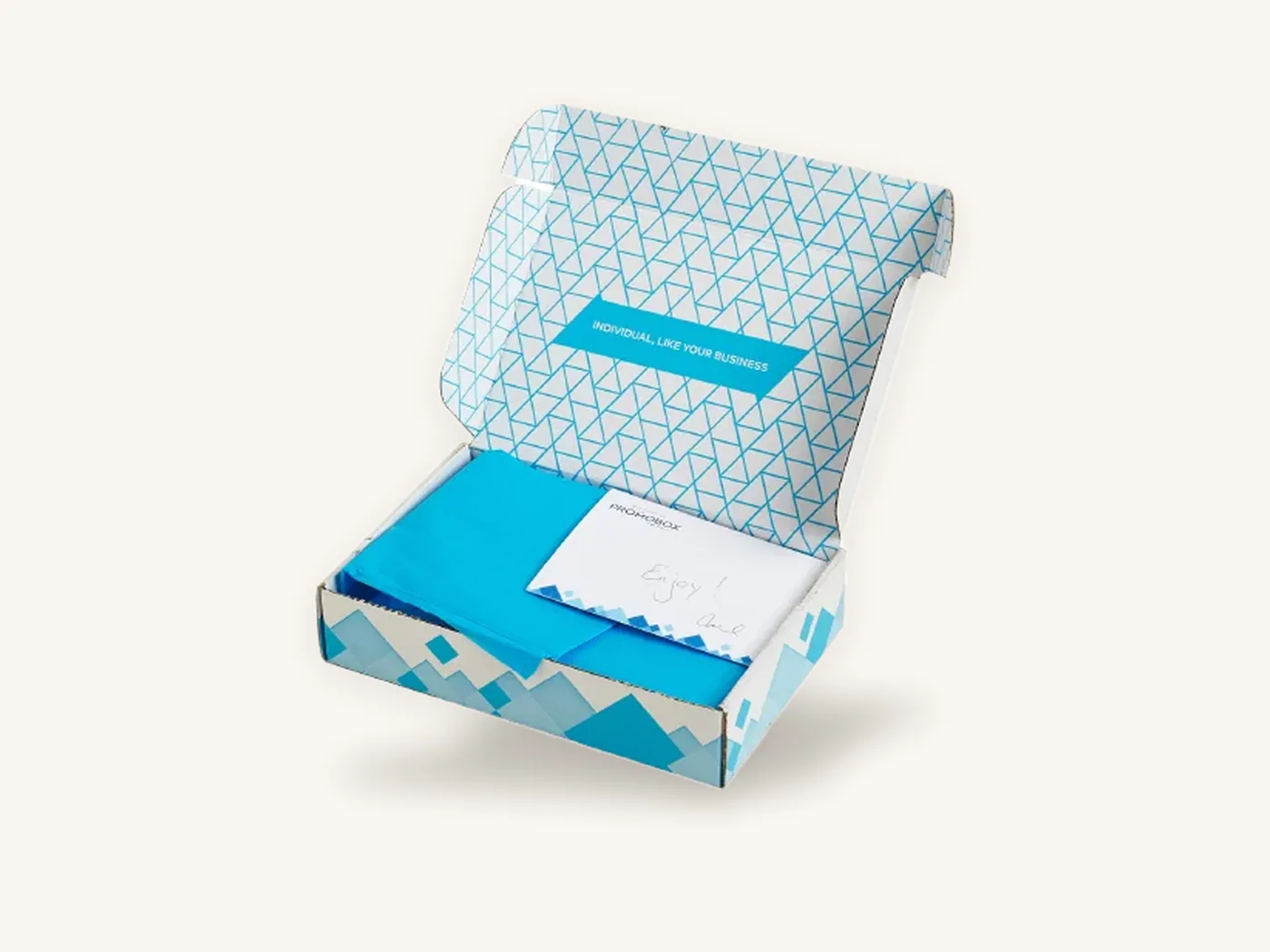
How to measure branded packaging ROI with a split test
Before-and-after comparisons are tempting, but seasonality, promotions and ad changes make them unreliable. A split test compares two groups shipped over the same period, so outside factors affect both equally.
Running a packaging split test
- Define the question. For example: "Does our printed mailer raise 90-day repeat rate among first-time customers compared with our plain mailer?"
- Choose one change. Test branded versus current packaging, not five variables at once.
- Pick the group. Use first-time customers only, since returning customers already know the brand.
- Assign randomly. Alternate by order number (even numbers get branded, odd numbers get plain) so neither group is picked by hand.
- Tag the orders. Add an order tag or note in your store platform so you can filter cohorts later.
- Keep everything else equal. Same product, same shipping speed, same post-purchase emails, same discount offers.
- Set the sample size and window in advance. Decide how many customers per group and how many days you will wait before judging.
- Collect the metrics. Repeat rate, reviews per 100 orders, tagged posts, referral code uses, damage claims and return reasons.
- Check whether the difference is real. Use a free statistical significance calculator for two proportions.
- Calculate ROI using the incremental cost and the observed lift, then decide whether to roll out, adjust the spec or stop.
How big the test needs to be
Small differences need large samples. With a few hundred customers per group, a gap of a few percentage points in repeat rate can easily be random. If your volume is modest, run the test longer, focus on lever metrics with faster signals such as reviews and damage claims, or test a bigger, more noticeable packaging change so any effect is easier to detect.
Attribution tools that make results clearer
- A unique code on the inside lid or insert used only in the branded group
- A QR code that opens a landing page with tracking parameters; the QR codes on packaging guide covers setup
- A branded hashtag printed inside the box, so posts are easy to find
- A post-purchase survey asking what customers remember about the delivery and how they heard about you
A hypothetical test, worked from start to finish
Say you run a hypothetical pet accessories store with about 1,200 first-time customers a quarter. You split them evenly: 600 receive the current plain mailer, 600 receive a printed mailer with a printed inside lid and a referral card.
Your incremental cost per order works out to about 70 cents after accounting for a small shipping saving from a better-fitting size. For 600 branded orders, that is about 420 dollars of extra cost.
After 90 days, suppose the branded group placed 30 more repeat orders than the plain group, and a repeat order carries about 22 dollars of contribution margin. That is about 660 dollars of incremental profit. Suppose you also avoided four damage replacements worth about 18 dollars each, roughly 72 dollars.
90-day ROI = (660 + 72 - 420) / 420, or about 74%.
Before celebrating, check significance. Thirty extra repeat orders across 600 customers is a five-point difference, which is at the edge of what a sample this size can confirm. The sensible move would be to keep the test running for another quarter, then decide. And because repeat orders keep arriving after 90 days, a 12-month view would likely look different in either direction.
When branded packaging is most and least likely to pay off
You can estimate the odds before spending anything by looking at how your business makes money.
| Business profile | Likely payback | Why | What to do |
|---|---|---|---|
| Subscriptions and consumables | Strong | Many repeat orders for the box to influence | Invest in inside printing and inserts |
| Giftable products | Strong | Recipient sees the brand; acts like acquisition | Prioritize presentation and a referral card |
| Social-native categories (beauty, fashion, collectibles) | Good | Unboxing content is common | Design for photos; print a hashtag |
| High-ticket, one-time purchases | Mixed | Few repeat orders; reviews and referrals matter more | Focus on protection and review prompts |
| Low-margin commodity products | Weak | Required lift is high | Keep a simple one-color or sticker-branded setup |
| Marketplace-fulfilled orders | Weak to mixed | Packaging may be overboxed or not seen as intended | Brand the product carton rather than the shipper |
Ways to raise the return without raising the cost
The cheapest way to improve packaging ROI is to lower incremental cost while keeping the moments customers notice.
Print where attention is highest
The inside lid is seen at the moment of opening, when the customer is paying attention, while the outside gets scuffed and covered with labels. Printing only the inside lid, or one color outside with a full-color inside, can deliver most of the effect for less. See inside printing for boxes for layout ideas.
Use low-cost brand layers
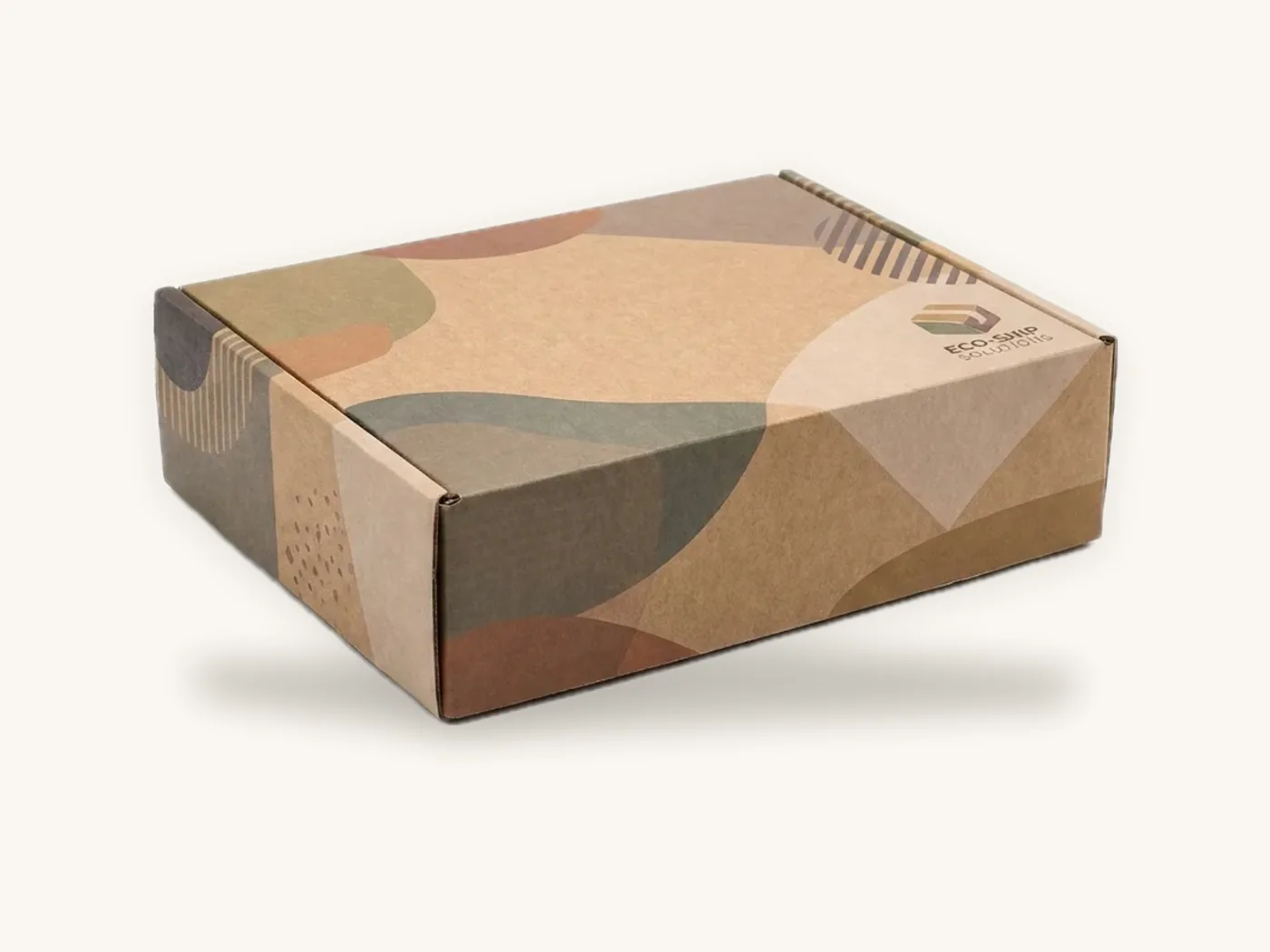
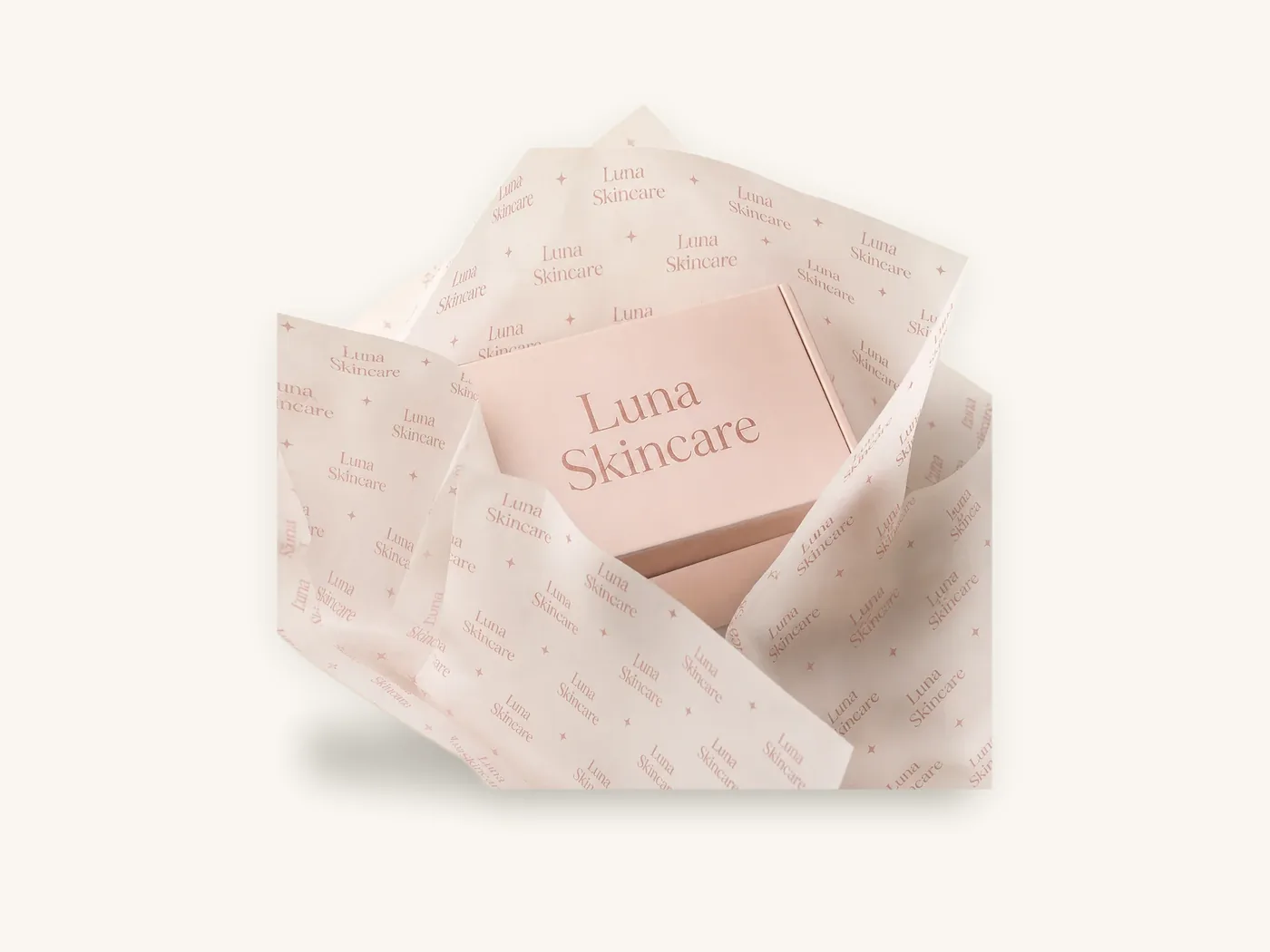
A plain kraft mailer box closed with a custom sticker and wrapped in printed tissue paper creates a branded opening at a lower cost than full coverage. It is also a smart way to run a first test before committing to a fully printed box.
Right-size the box
A box designed around your product often reduces billable shipping weight and void fill, which can offset part of the print cost. The right-sized packaging guide and dimensional weight guide show how to calculate it.
Give every print surface a job
Put a referral code, a reorder QR code or care instructions on the insert. A message that prompts a measurable action turns packaging into a channel you can track.
Tip: before designing anything, decide which lever you are targeting. A box built to earn reviews needs a clear review prompt; a box built for referrals needs a shareable code; a box built for social content needs an interior worth photographing. Designs that try to do everything tend to do nothing measurable.
Testing branded packaging with Box Sense
A proper test needs a small, fast, low-risk run of branded boxes. That is where short-run digital printing helps.
Why test runs are practical
- The minimum order is 10 boxes, so you can check fit and presentation before printing a test batch.
- Digital printing keeps runs of roughly 10 to 500 affordable, which covers a typical split-test group.
- There are no die or plate charges; one-time tooling applies only to foil, embossing, spot UV and custom inserts, so skip those for a first test.
- Unprinted structural samples are free, and a printed sample of approved artwork is free on orders of 100 or more. See samples.
What to send
- Product dimensions packed for shipping, and your current box size
- The test spec: print coverage, inside printing, inserts or tear strip
- Quantities to compare, for example 250 and 500 for the test, and 2,500 for rollout
- Your artwork, or a request for our free design services, which include a dieline, artwork setup, a 3D digital proof and two revision rounds
Timeline
Quotes are confirmed within 24 hours. Standard production takes 8–12 business days after proof approval, with rush in 5 business days on most corrugated styles. US shipping is free; international shipping is quoted at cost. Explore mailer constructions on the mailer boxes style page and kit ideas on our e-commerce and subscription packaging page.
Frequently asked questions
Is custom packaging worth it for a small business?
It can be, if the extra cost per order is covered by more repeat purchases, reviews, referrals or fewer damaged shipments. Calculate your incremental cost per order, then use your repeat-order margin to find the lift you need to break even. Consumable, giftable and subscription products usually clear that bar more easily than one-time, low-margin purchases.
How do you calculate branded packaging ROI?
Subtract the incremental cost of branded packaging from the incremental profit it creates, then divide by the incremental cost. Incremental profit includes margin from extra repeat orders, plus savings from fewer damage replacements, measured over a defined window such as 90 days. The most reliable way to measure the lift is a split test against your current packaging.
What metrics show whether packaging is working?
Track repeat purchase rate by cohort, reviews per 100 orders, tagged social posts per 1,000 orders, referral code redemptions, damage claims and return reasons. Compare them between customers who received branded packaging and customers who did not, over the same period. Cost per order, including box, extras, labor and shipping, completes the picture.
How long does it take to see a return from branded packaging?
Damage claims and review rates can show a difference within a few weeks. Repeat purchase effects take longer, typically two to six months depending on how often customers reorder in your category. Decide your measurement window before the test starts, and consider a longer view, because repeat orders continue to accrue after the first quarter.
Can I test branded packaging without a big order?
Yes. Short-run digital printing makes small test batches practical. With a minimum order of 10 boxes, you can confirm fit and presentation first, then print a few hundred boxes for a split test. Avoid foil, embossing and other tooled finishes for the test, so the result reflects the core packaging rather than extra setup cost.
Does branded packaging reduce returns?
It can reduce returns and replacements caused by damage, when the new box fits better or uses stronger board. It will not change returns caused by sizing, quality or expectation issues. Tag return reasons in your support system and compare "arrived damaged" rates between packaging groups to see whether the new box is making a difference.
What is the cheapest way to make packaging feel branded?
Use a plain kraft or white mailer with a printed sticker, printed tissue paper and a printed card, or print only the inside lid. These options create a branded opening at lower incremental cost than full-coverage printing on every surface. They are also useful as a first test before committing to a fully printed box.
Next steps
Pull your current packaging cost per order and your repeat-order contribution margin, then use the break-even table to see how much lift you need. Price a few branded specs in the custom box price estimator, and when you are ready to run a test batch, request a quote and we will confirm pricing within 24 hours.
Boxes in this guide
Order the packaging we covered
Written by the Box Sense Packaging Team
Our structural designers, prepress technicians and production staff print and convert custom boxes every day for brands in the United States, United Kingdom and UAE. Questions about this guide? Talk to us.