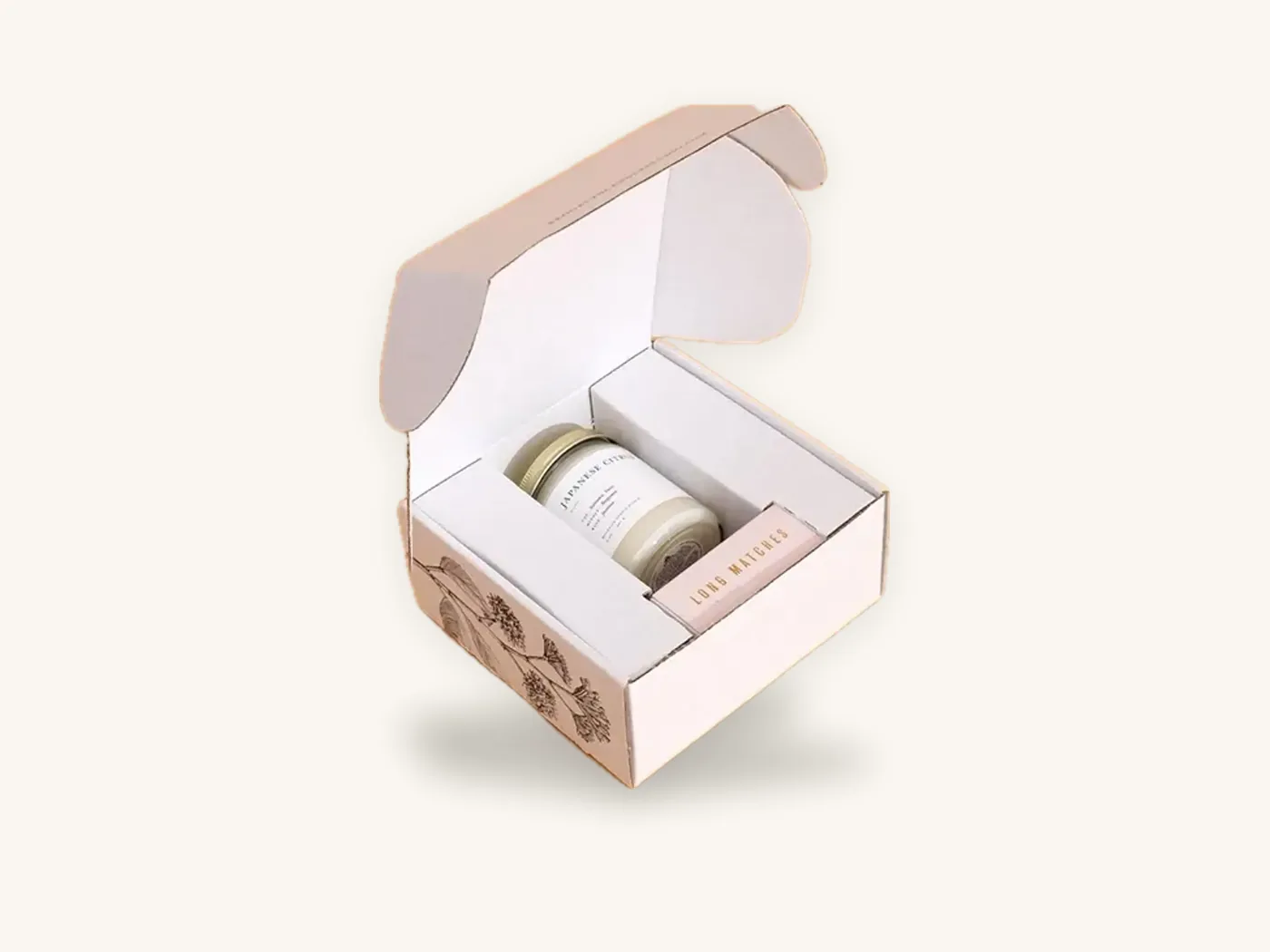
Good candle packaging does two jobs that pull in opposite directions: it has to keep a heavy, breakable glass or ceramic vessel intact through retail handling and parcel shipping, and it has to communicate a scent the shopper cannot smell through the box. The practical answer for most brands is a snug paperboard box, usually 18 pt SBS or kraft, with a die-cut insert that holds the vessel off the walls, finished in a way that signals the fragrance family.
The right structure depends on the vessel first and the sales channel second. A 3 oz tin sold at a farmers market needs very different custom candle boxes than an 8 oz three-wick tumbler shipped to a customer three states away. This guide works through those decisions in the order a candle maker should make them, with specs, prices and candle box ideas at each level.
Key takeaways
- Start with the vessel: its shape, weight, lid and glass thickness decide the box style and insert before any artwork is discussed.
- For glass jars, the insert does most of the protective work; a well-fitted paperboard or corrugated insert matters more than a thicker outer box.
- Wax softens in hot delivery trucks and fragrance oil can stain uncoated board, so seal the vessel and choose a coated or laminated interior when oil contact is possible.
- A candle box in 18 pt SBS, 3.5x3.5x4 in, full color with matte lamination, foil and an insert runs about $2.33 each at 100 units and about $1.03 at 1,000.
- Candle warning labels are commonly based on the voluntary ASTM F2058 standard; plan space for them on the box, not as an afterthought.
- Box Sense makes custom candle boxes from 10 units, with free dielines and 3D proofs and standard production of 8–12 business days after proof approval.
Start with the vessel: matching candle types to box styles
Most candle packaging problems trace back to choosing a box from a photo instead of from the vessel. Glass tumblers are top-heavy once filled, tins dent rather than shatter, pillars scuff and deform, and tapers snap. Each failure mode points to a different structure.
Write down four facts about your candle before you look at styles: filled weight, the widest diameter including any lip, overall height with the lid on, and whether the lid is wood, metal, glass or none. Those numbers set the internal dimensions, and weight sets the board.
| Candle type | Typical risk | Box style that works | Insert needed? |
|---|---|---|---|
| Glass tumbler, single wick (6–10 oz) | Glass breakage, lid popping off | Tuck end or auto-lock bottom carton, 18 pt SBS | Yes, a collar or cradle |
| Three-wick glass bowl | Heavy, wide, rim chipping | Rigid two-piece or crash-lock carton | Yes, full cradle with a floor pad |
| Travel tin (2–4 oz) | Dents, lid scratching | Kraft tuck carton or sleeve | Usually no |
| Pillar candle | Scuffs, heat deformation | Window box or paper tube | Optional base disc |
| Taper pair | Snapping in the middle | Long two-piece or drawer box | Yes, channel insert |
| Ceramic or concrete vessel | Weight, chipped edges | Rigid box or corrugated mailer | Yes, corrugated or molded pulp |
| Gift set (candle, matches, snuffer) | Items colliding | Magnetic closure or two-piece rigid | Yes, multi-cavity |
Why the lid changes everything
A wood or bamboo lid sits on a silicone seal and can pop off if the box is dropped on its end. Box depth should include the lid plus a clearance of roughly 1/16 in, so the top panel holds the lid down lightly. A glass cloche lid is a second breakable part, so treat it like another vessel in the insert design.
Candle box styles and when each one pays off
Once the vessel is defined, the style question is really about channel and price point. The candle boxes product page covers the full range we produce; here is how to choose between them.
Folding cartons for retail shelves
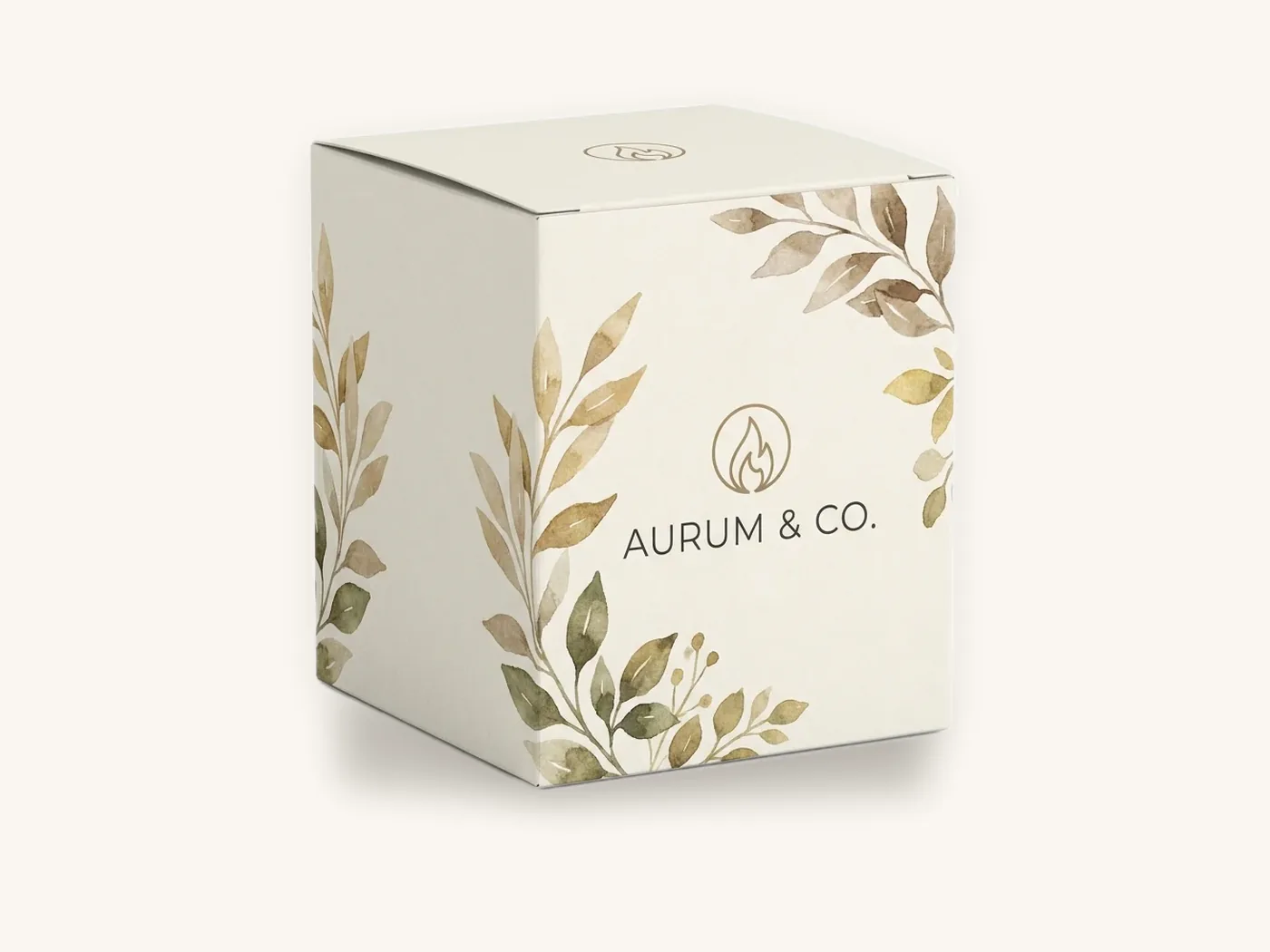
Tuck end cartons are the workhorse of wholesale candle packaging. They ship flat, pack fast and give you four printable side panels for scent notes, burn time and warnings. For vessels above roughly 10 oz filled, specify an auto-lock bottom instead of a tucked bottom, so the weight rests on locked panels rather than a friction flap. The tuck end boxes style page shows both closures.
18 pt SBS is the usual board. It is stiff enough for a single tumbler and prints color accurately. SBS paperboard also takes foil, embossing and soft-touch lamination cleanly, which matters when the box is doing the selling.
Window boxes for pillars and colored wax
If the wax color, a dried botanical top or a hand-poured texture is part of the appeal, a die-cut window lets shoppers see it without opening anything. Keep the window away from the bottom third of the box, where most of the structural load sits. Our window boxes can use PET or compostable PLA film.
Rigid boxes for luxury and gifting
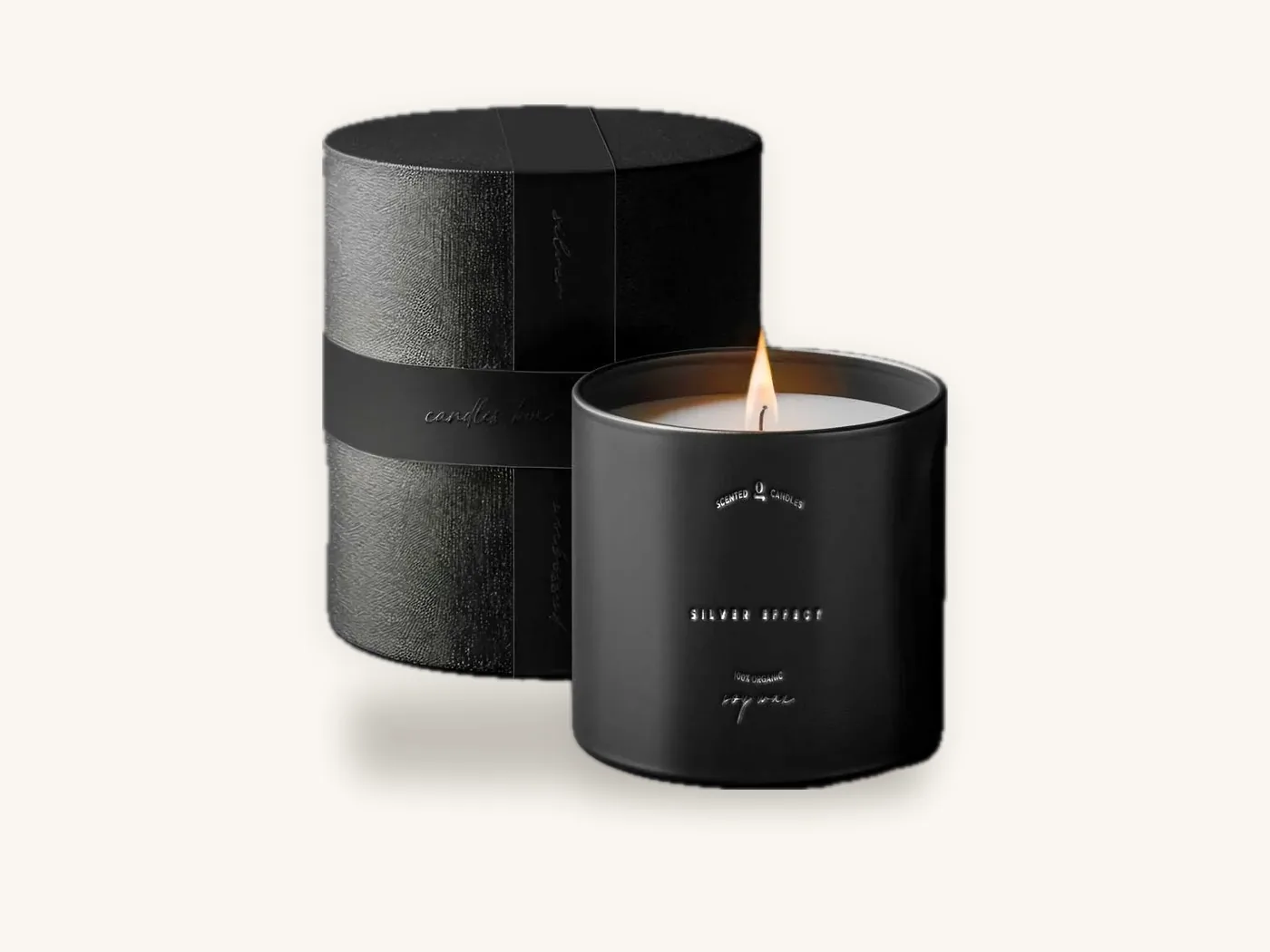
A 2 mm greyboard rigid box does not flex, which makes it the most forgiving structure for heavy three-wick candles. It is also the one customers keep. Two-piece lid-and-base rigid boxes suit round and square vessels; magnetic closure boxes suit gift sets that are opened and reclosed. The custom rigid boxes guide explains wrap papers and board thickness in more depth.
Paper tubes for a cylindrical story
A paper tube mirrors the round shape of most candles and feels considered in the hand. It works best when the vessel diameter is within a narrow tolerance, because a loose tube lets the jar rattle. Add a paperboard disc at the base if the vessel has a pronounced foot.
Mailers for direct-to-consumer shipping
If you sell mostly online, the retail box may never see a shelf. Many brands put the candle straight into a printed E-flute custom mailer box with a corrugated insert, which removes a layer of packaging and a step in fulfillment.
Inserts: the part of candle packaging that actually saves the glass
An outer box spreads and absorbs impact. The insert decides whether that impact reaches the glass. A tumbler resting on the floor of a carton with 1/4 in of air on each side will hit the wall on the first drop, and glass fails at the point of contact.
Box inserts and dividers come in four materials that suit candles differently.
| Insert material | Protection level | Look and feel | Best for |
|---|---|---|---|
| Paperboard collar or cradle | Moderate | Clean, printable, recyclable | Retail cartons, single tumblers under 10 oz |
| Corrugated E-flute cradle | High | Utilitarian, can be printed | Shipping heavy jars and ceramic vessels |
| Molded pulp tray | High | Natural, textured, plastic-free | Eco-positioned brands, multi-candle sets |
| EVA or PU foam | Very high | Premium, precise cavities | Rigid gift boxes, fragile glass lids |
For a deeper comparison of cost and recyclability, see our guide to foam vs paperboard inserts and the broader box inserts guide.
A drop-test process before you order the full run
- Order an unprinted structural sample of the box and insert together, sized to your actual filled vessel.
- Pack a real candle, lid on, exactly as it will ship, including any tissue or care card.
- Drop it from about waist height onto a hard floor on the bottom, the top, one long edge and one corner.
- Open and inspect the rim, the base of the glass, the lid seal and the wax surface for cracks or dents.
- Shake the closed box. Any audible movement means the insert tolerance is too loose.
- Repeat inside the shipping carton if the retail box will be overboxed for e-commerce orders.
- Adjust one variable at a time, usually the insert cavity diameter first, then board grade.
Our guide to shipping fragile items covers carton-in-carton packing and void fill for multi-candle orders.
Tip: size the insert cavity to the vessel's widest point, then add only about 1/32 in. Glass jars from the same supplier vary slightly from batch to batch, so measure five or six jars and use the largest.
Heat, wax and fragrance oil: materials and finishes for candle boxes
Candles are one of the few packaged goods that change physically in transit. Soy and coconut blends soften at lower temperatures than paraffin, and a parcel van in summer can get hot enough to cause frosting, sweating or a sunken top. Packaging cannot refrigerate a candle, but it can avoid making the problem worse.
Keeping oil off the board
Fragrance oil migrates. If wax touches uncoated paperboard, or oil wicks around a loose lid, you get translucent stains on the box that look like a defect. Seal the vessel with a lid or a wax-paper disc, and choose a finish on the interior where contact is likely. Gloss or matte lamination creates a film barrier; aqueous coating resists light scuffing but is not a true oil barrier.
Picking a finish that suggests the scent
Shoppers read texture and finish as a proxy for fragrance. These pairings are starting points rather than rules:
- Soft-touch lamination with foil: amber, oud, tobacco and other warm, evening scents.
- Uncoated kraft with one dark ink: woodsy, fireside and botanical ranges.
- Matte white SBS with a single PMS color: clean linen, citrus and spa scents.
- Embossed or debossed logo, no ink: minimal, unscented or "pure soy" positioning.
- Spot UV pattern on matte: seasonal limited editions that need shelf contrast.
The printing and finishes page shows each option on real board. Foil, embossing and spot UV each carry a one-time tooling charge, so a seasonal line that swaps artwork but keeps the same foil logo reuses the tool.
Kraft or white board
Kraft paperboard hides scuffs and signals a handmade, natural product. White SBS gives accurate color for photographic or pastel artwork. If a scent collection relies on color coding, white board with a full-color print is more reliable, because the brown liner mutes every ink laid over it.
What to print on a candle box
The candle box is often the only place a customer finds safety and use information once the jar is out of the store. Plan these panels before the design stage so the front panel does not end up crowded.
Safety labeling
In the US, candle fire safety labeling commonly follows ASTM F2058, a voluntary standard that sets out warning wording and pictograms such as never leaving a burning candle unattended and keeping it away from children, pets and flammable objects. Many retailers expect it. The label is usually placed on the vessel base, with the same guidance repeated on the box.
For net quantity, many non-food consumer products sold at retail fall under the Fair Packaging and Labeling Act, which the Federal Trade Commission administers, and weight is typically stated on the principal display panel. The UK and EU use their own candle safety labeling standard. Confirm current requirements with the regulator, your retail buyers or counsel before printing a large run.
Selling panels
- Scent name and fragrance notes (top, heart, base)
- Wax type, wick type and approximate burn time
- Vessel size and whether it is reusable
- Care instructions: trim the wick, first burn to a full melt pool
- Your website, a QR code to reorder, and a batch or lot code area
Keep warnings and small type at least 1/8 in inside every fold and cut. Text that wraps a crease on a small carton becomes unreadable.
Candle box ideas by price point
The best candle box ideas are usually structural or systematic rather than decorative. A single box design that flexes across a whole scent range is easier to stock and reorder than twelve unique boxes.
Entry and market-stall candles
- A kraft tuck carton printed in one color, with the scent name added by a small round label so one printed box covers every fragrance.
- A printed sleeve slid over an unboxed tin, showing the lid through open ends.
- A one-color stamp style logo on the inside flap as a small surprise.
Mid-range retail candles
- One SBS carton structure with a color-coded band per scent, printed on the same sheet to keep cost flat.
- A half-moon thumb notch on the tuck flap so the box opens cleanly without tearing.
- A window on one side panel that shows the wax surface.
Luxury and gift candles
- A two-piece rigid box with a foam or pulp cradle and a ribbon pull under the candle.
- A drawer box that slides out to reveal the candle and a matching box of matches.
- Inside-lid printing with the fragrance story, seen only on opening.
For brands that also sell diffusers, reed diffuser boxes can share the same board, finish and foil tool, so the two lines look like a family on shelf. The candles and home fragrance industry page shows how lines usually combine.
What custom candle boxes cost
Candle box pricing depends on the structure, board, print coverage, finish, insert and quantity. Quantity has the largest effect because setup is spread across more boxes. The table below uses indicative per-unit prices from our current rates, with free US shipping included.
| Spec | 10 | 100 | 250 | 500 | 1,000 | 5,000 |
|---|---|---|---|---|---|---|
| Candle box, 18 pt SBS, 3.5x3.5x4 in, full color, matte + foil + insert | $3.52 | $2.33 | $1.66 | $1.24 | $1.03 | $0.73 |
| Kraft tuck carton, 18 pt kraft, 4x3x2 in, 1-color print | $1.22 | $0.81 | $0.57 | $0.43 | $0.36 | $0.25 |
| Rigid box, 2 mm greyboard wrapped, 8x6x3 in, full color, matte | $13.76 | $9.10 | $6.47 | $4.85 | $4.05 | $2.87 |
| Rigid magnetic box, 2 mm, 10x8x3 in, soft-touch, foil, insert | $21.50 | $14.23 | $10.12 | $7.59 | $6.32 | $4.49 |
The kraft tuck carton row is a reasonable reference for travel tins, and the rigid rows for single luxury candles and gift sets. One-time tooling applies only when you choose it: about $60 for foil, $60 for embossing, $40 for spot UV and $45 for an insert die. Enter your exact vessel size in the candle box price estimator for a spec-specific number.
Where the money goes
- Foil and soft-touch add both a per-unit cost and, for foil, the one-time tool. Use them on the lid or front panel only.
- Inserts add board, a die and packing time. They are rarely the place to save on glass.
- Unique sizes per scent multiply setups. Standardizing on one or two vessel sizes keeps every scent on the same box.
- Rigid structures cost several times more than cartons but can replace a carton plus a gift bag.
How to order custom candle boxes from Box Sense
Ordering goes faster when the vessel is measured and the channel is decided. You can start with rough numbers and our structural team will refine them.
What to send
- Vessel type, filled weight and dimensions with the lid on (diameter at the widest point and height)
- Whether the candle ships in this box or gets overboxed
- Preferred style, or a note asking for a recommendation
- Board and finish preferences: SBS or kraft, matte, soft-touch, foil
- Insert needs: none, paperboard, corrugated, pulp or foam
- Number of scents and whether they share one box design
- Quantities to price, such as 100, 500 and 1,000, and your target in-hand date
- Artwork, including warning text, or a request for design services
What happens next
- Quote within 24 hours for your spec and quantities.
- Free design support: we supply the dieline, set up artwork and send a 3D digital proof with two revision rounds.
- Samples: unprinted structural samples are free, which is the right moment for the drop test above. A printed sample of approved artwork is free on orders of 100 or more. See samples.
- Production: 8–12 business days after proof approval, with rush in 5 business days on most paperboard styles.
- Delivery: free shipping on every US order, with international shipping quoted at cost.
The minimum order is 10 boxes, and there are no die or plate charges. Defective boxes reported within 14 days are reprinted free.
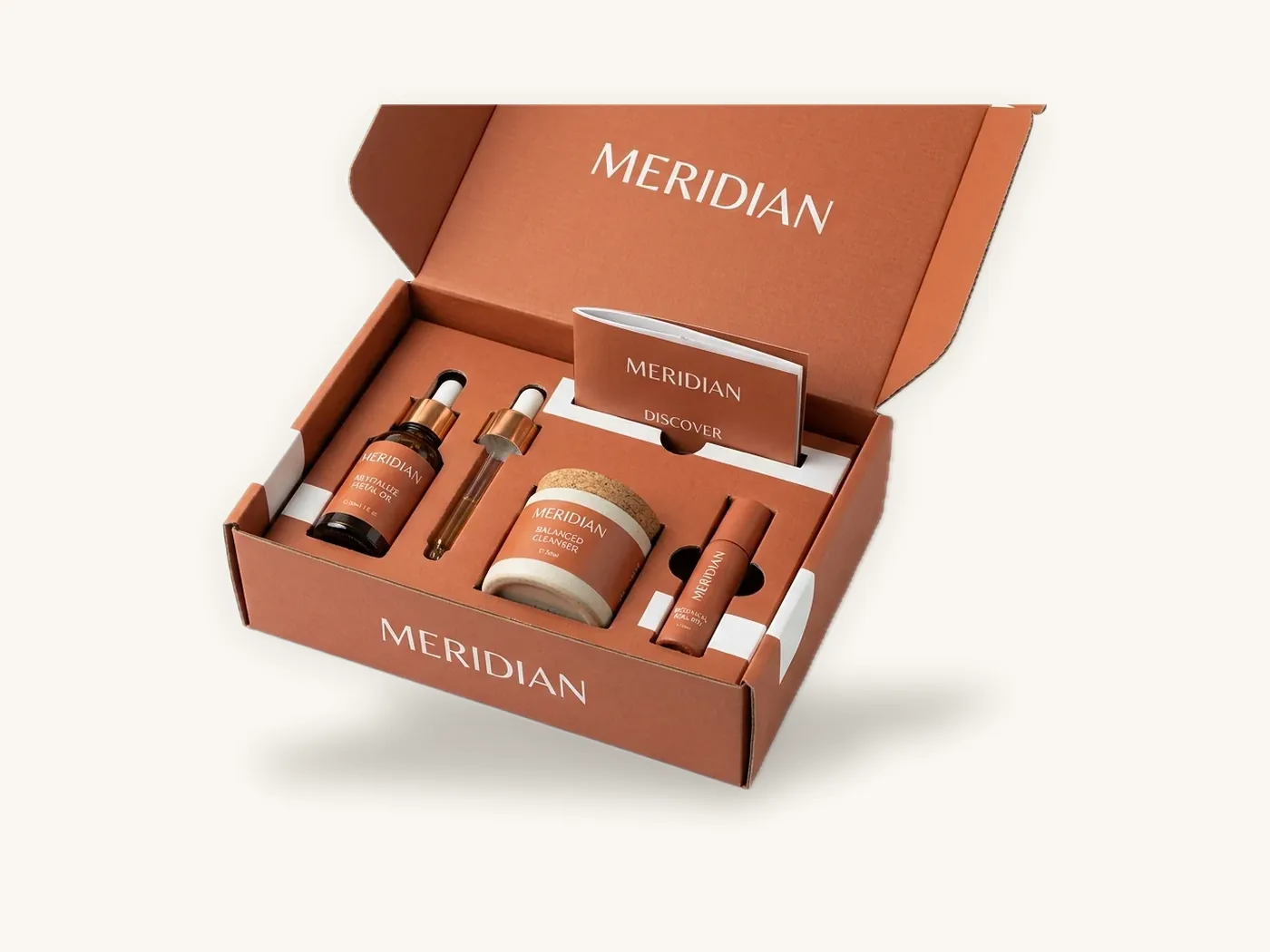
If your line extends into beauty or bath products, the cosmetic packaging guide and the soap packaging guide show how to carry the same board and finish decisions across categories.
Frequently asked questions
What is the best packaging for candles in glass jars?
A snug folding carton or rigid box with an insert that holds the jar away from the walls works best. The insert matters more than the outer board, because glass cracks where it touches a hard surface during a drop. For shipping, add a corrugated cradle or use a printed E-flute mailer. Always test a packed sample before ordering the full run.
How much do custom candle boxes cost?
For reference, an 18 pt SBS candle box at 3.5x3.5x4 in, full color with matte lamination, foil and an insert, is about $2.33 per box at 100 units and about $1.03 at 1,000, including US shipping. Simpler kraft cartons cost less and rigid gift boxes cost more. Use the pricing estimator with your vessel size for an exact figure.
Do candle boxes need warning labels?
Candle warning labels in the US commonly follow ASTM F2058, a voluntary standard that many retailers expect. It covers wording and pictograms about unattended burning, children, pets and flammable objects. Warnings usually go on the vessel and are repeated on the box. Requirements differ in the UK and EU, so confirm with retail buyers, the regulator or counsel.
Can I use one box design for multiple candle scents?
Yes, and it is usually the most efficient approach. Print one shared carton and identify each scent with a small label, a colored band printed on the same sheet, or a rubber-stamp area. This keeps a single size and setup across the range, simplifies reorders and avoids running out of one scent's box while others sit in storage.
How do I stop fragrance oil staining my candle boxes?
Seal the vessel with a lid or a wax-paper disc so oil cannot reach the board, and let candles cure fully before packing. On the box, a gloss or matte lamination forms a film barrier on the printed surface. Aqueous coating helps against scuffs but is not a reliable oil barrier, so choose lamination where direct contact is likely.
What board thickness should a candle box be?
18 pt SBS or kraft paperboard suits most single candles up to roughly 10 oz filled, especially with an insert. Heavier three-wick vessels and ceramic containers do better in an auto-lock bottom carton, an E-flute corrugated box or a 2 mm rigid box. If the box bows when you lift it by the lid, the board is too light.
Are kraft candle boxes eco-friendly?
Kraft paperboard is widely recyclable and suits natural positioning, particularly with aqueous coating, soy or water-based inks and paper inserts. FSC-certified board is available. Plastic lamination and foam inserts make recycling harder. If you print environmental claims on the box, they need to be accurate and qualified in line with the FTC Green Guides.
Next steps
Measure one filled vessel with its lid, decide whether the box ships on its own, then check where your spec lands in the instant candle packaging estimator. When you are ready, request a custom candle box quote and we will confirm pricing within 24 hours and send a free structural sample for your drop test.
Boxes in this guide
Order the packaging we covered
Written by the Box Sense Packaging Team
Our structural designers, prepress technicians and production staff print and convert custom boxes every day for brands in the United States, United Kingdom and UAE. Questions about this guide? Talk to us.