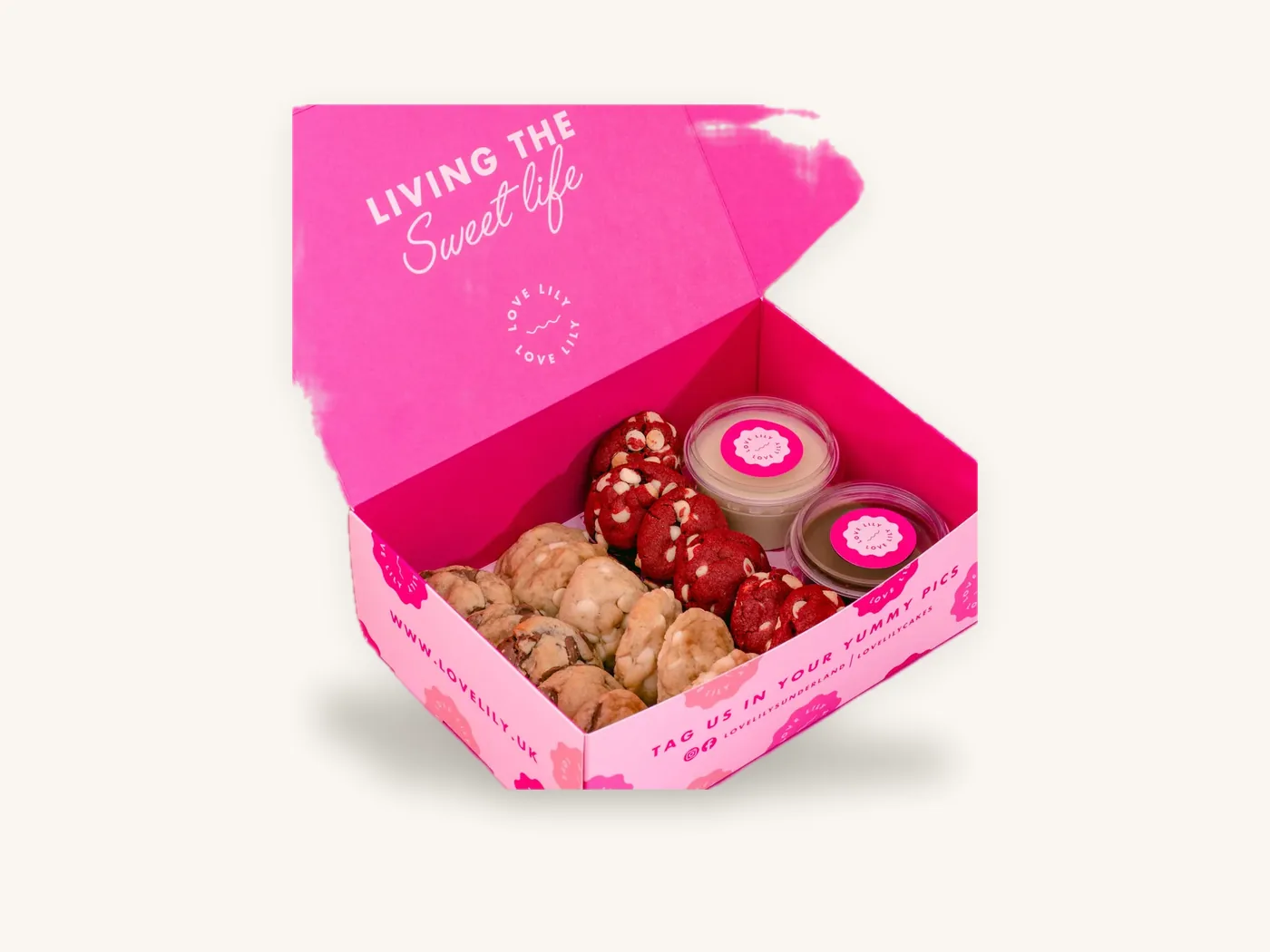
Custom cookie boxes keep cookies fresh only when they are paired with a moisture barrier, because paperboard on its own lets air and humidity pass through. The reliable setup is an inner layer that controls moisture, such as a sealed bag or a lined tray, inside a printed box that does the protecting, the selling and the gifting. Get that pairing right and you can choose almost any outer format, from a simple window carton to a keepsake rigid box.
This guide starts with why cookies go stale or soggy, then compares freshness layers, weighs cookie tins against boxes, walks through gift box formats and layouts, and covers labeling basics and costs. It ends with a planning process for a cookie packaging range and how to order it from Box Sense.
Key takeaways
- Staling is mostly moisture moving. Crisp cookies absorb humidity and go soft; chewy cookies lose moisture and go hard. Packaging slows the exchange.
- Paperboard is not a moisture barrier. Freshness depends on the inner layer: a heat-sealed bag, a sealed sleeve or a lined tray.
- Never pack crisp and chewy cookies together without separate wrapping; they trade moisture until both are wrong.
- Tins suit long shelf life and reuse; paperboard and rigid boxes are lighter, faster to customize and easier to print in short runs.
- For cookie gift boxes, a plain branded box plus seasonal sleeves or stickers is often cheaper than printing a new box every holiday.
- A 4x4x4 in window box in 18 pt SBS printed full color costs about $1.66 each at 100 units and about $0.74 at 1,000.
Why cookies go stale, soft or soggy
Every cookie has a moisture level that makes it taste right. Packaging exists to hold that level steady. When it changes, texture changes before flavor does.
Crisp cookies absorb moisture
Shortbread, biscotti, gingersnaps and thin crisp cookies are dry. Put them in humid air and they pull water from it, turning soft and bendy. This happens faster in summer, in steamy kitchens and in boxes stored near dishwashers.
Chewy and soft cookies lose moisture
Chocolate chip, oatmeal and soft sugar cookies hold more water. In dry air they give it up and harden from the edges in. Air-conditioned offices and heated homes in winter both speed this up.
Fats, light and air
Butter-rich cookies can pick up off-flavors from stale air and strong odors. Light and oxygen slowly change fats over time, which matters more for cookies sold on a shelf for weeks than for cookies eaten within days. Cookies with nuts are especially sensitive.
Why mixed boxes go wrong
Put crisp and chewy cookies together in one open space and moisture moves from the chewy ones to the crisp ones. Within a day or two the chewy cookies are drier and the crisp ones are softer. Wrap each type separately, or give them separate compartments with a sealed barrier.
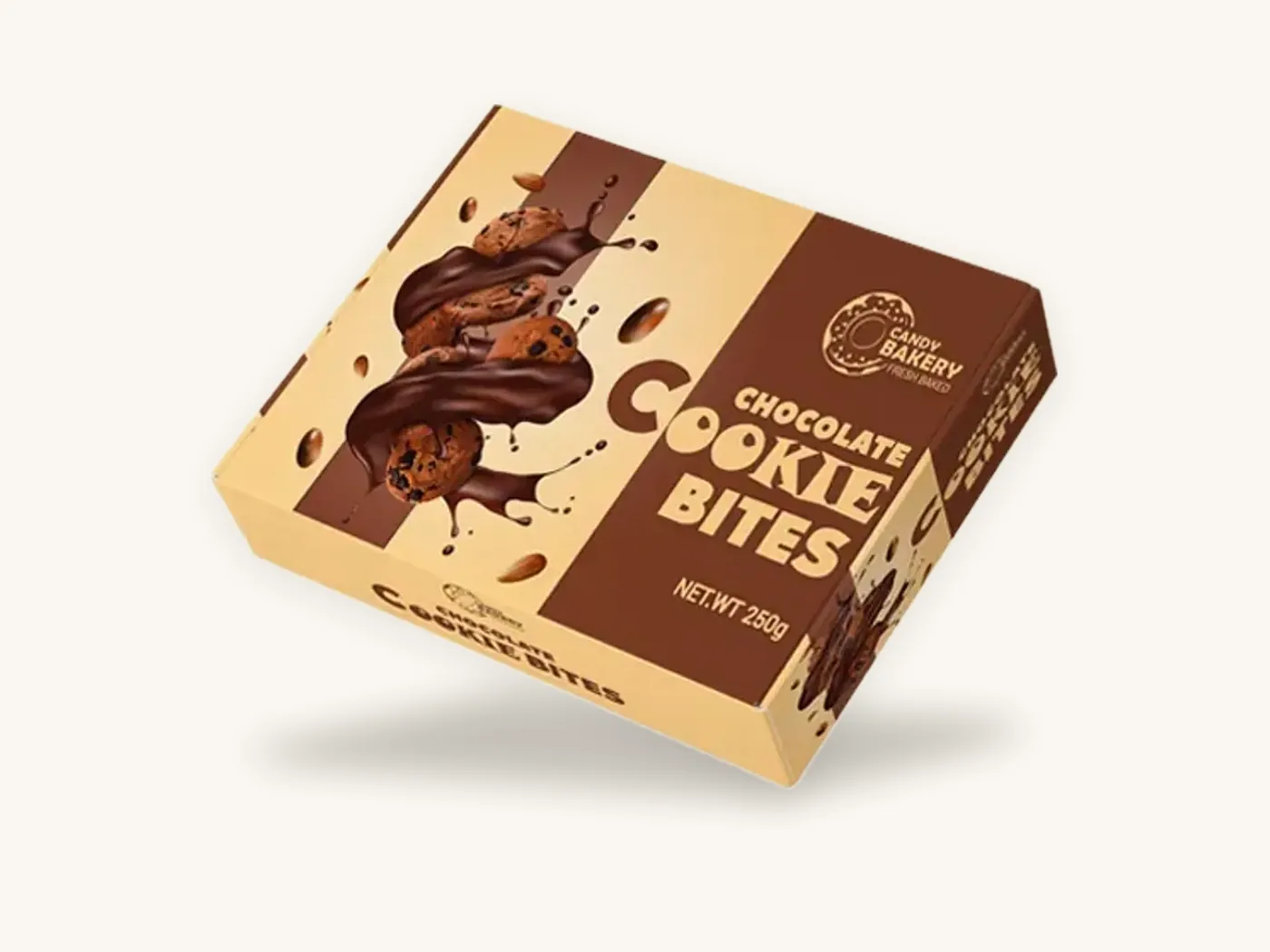
Freshness layers: what actually keeps cookies fresh
The outer box and the inner layer do different jobs. The box resists crushing, blocks light and carries your brand. The inner layer controls moisture and air. Choose the inner layer based on how long cookies must stay fresh.
| Inner layer | Moisture barrier | Best for | Look and feel | Notes |
|---|---|---|---|---|
| None (cookies loose in box) | Very low | Cookies eaten the same day | Most natural, bakery-style | Fine for counter sales; poor for gifts |
| Glassine or wax paper wrap | Low to moderate | Next-day eating, separating layers | Classic bakery | Stops grease and sticking more than moisture |
| Folded clear bag, twist-tied | Moderate | A few days, farmers markets | Casual, visible product | Air still exchanges at the tie |
| Heat-sealed film bag | High | Gifts, shipping, retail shelves | Clean and visible | Needs a heat sealer; the most common upgrade |
| Individually sealed cookies | High | Mixed boxes, corporate gifts, samplers | Neat, portion controlled | More labor; lets crisp and chewy share a box |
| Sealed lined tray with lidding | High | Longer shelf life retail | Structured, commercial | More complex supply chain |
Match the layer to the time
- Same-day counter sales: a box with a glassine sheet is enough.
- Up to a few days, such as event orders or local delivery: a folded or twist-tied bag inside the box.
- A week or longer, such as shipped gifts and retail: heat-sealed bags, ideally for each cookie type.
Shelf life depends on your recipe, your kitchen and storage conditions, so test your own cookies. Seal a batch, store boxes in realistic conditions and taste at set intervals.
Food contact
Whatever touches the cookie should be suitable for food contact. Keep printed surfaces on the outside of the box or on bags designed for printing, and let a food-contact liner or film sit next to the cookies. Our guide to food-safe inks and coatings explains the principles in general terms; confirm specifics for your materials with your suppliers.
Tip: add a small desiccant packet only to crisp cookies in sealed bags, and never to soft cookies, which it will dry out. Make sure any desiccant is food-safe and clearly marked "do not eat".
Cookie tins vs boxes: an honest comparison
Tins have a long association with holiday cookies, and they do some things very well. Paperboard and rigid boxes do other things better. The choice depends on your price point, shelf life, how you ship and how often your design changes.
| Factor | Metal tin | Paperboard cookie box | Rigid cookie gift box |
|---|---|---|---|
| Moisture protection | Good with a tight lid, better with an inner bag | Needs an inner bag | Needs an inner bag |
| Crush resistance | Very high | Moderate | High |
| Weight for shipping | Heaviest | Lightest | Moderate |
| Custom printing on short runs | Usually larger minimums and longer lead times | Practical from very small runs | Practical from small runs |
| Custom sizes | Limited by available tooling | Any size | Any size |
| Keepsake and reuse value | High | Low to moderate | High |
| Storage before use | Bulky; does not flatten | Ships and stores flat | Bulky unless collapsible |
| Recyclability | Metal recycling | Paper recycling | Often mixed materials; check wraps |
When a tin makes sense
Choose a tin when cookies must sit on a shelf for a long time, when you sell a heritage or holiday product where reuse is part of the appeal, and when order volumes are high and predictable.
When a box makes more sense
Choose paperboard when you want a custom size, a short run, frequent design changes or lighter shipping. Choose a rigid box when you want the keepsake feel of a tin with a custom size, print and finish, and a lighter parcel. Our custom rigid boxes guide covers rigid construction in depth, and a collapsible rigid box ships flat if storage space is tight.
Cookie box formats for gifting and retail
"Cookie box" covers many structures. Each suits a different sales channel and price point.
Window cartons
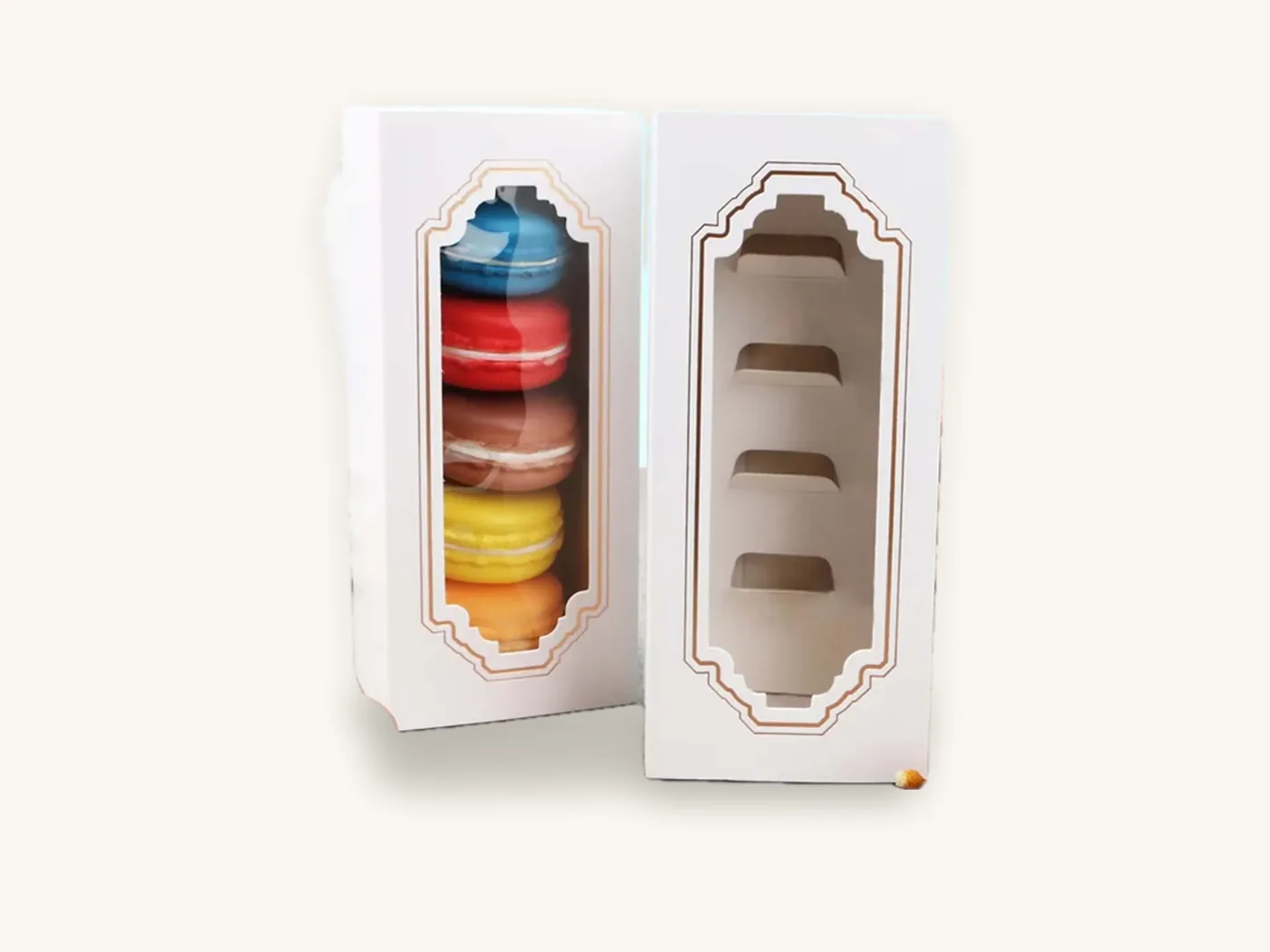
A windowed tuck or lock-corner carton shows the cookies and costs the least. It is the everyday retail format for counters, markets and cafés. Keep the window over the cookies and use a heat-sealed bag if they need to stay fresh for more than a day or two. See our window boxes for structures and window shapes.
Gable boxes with handles
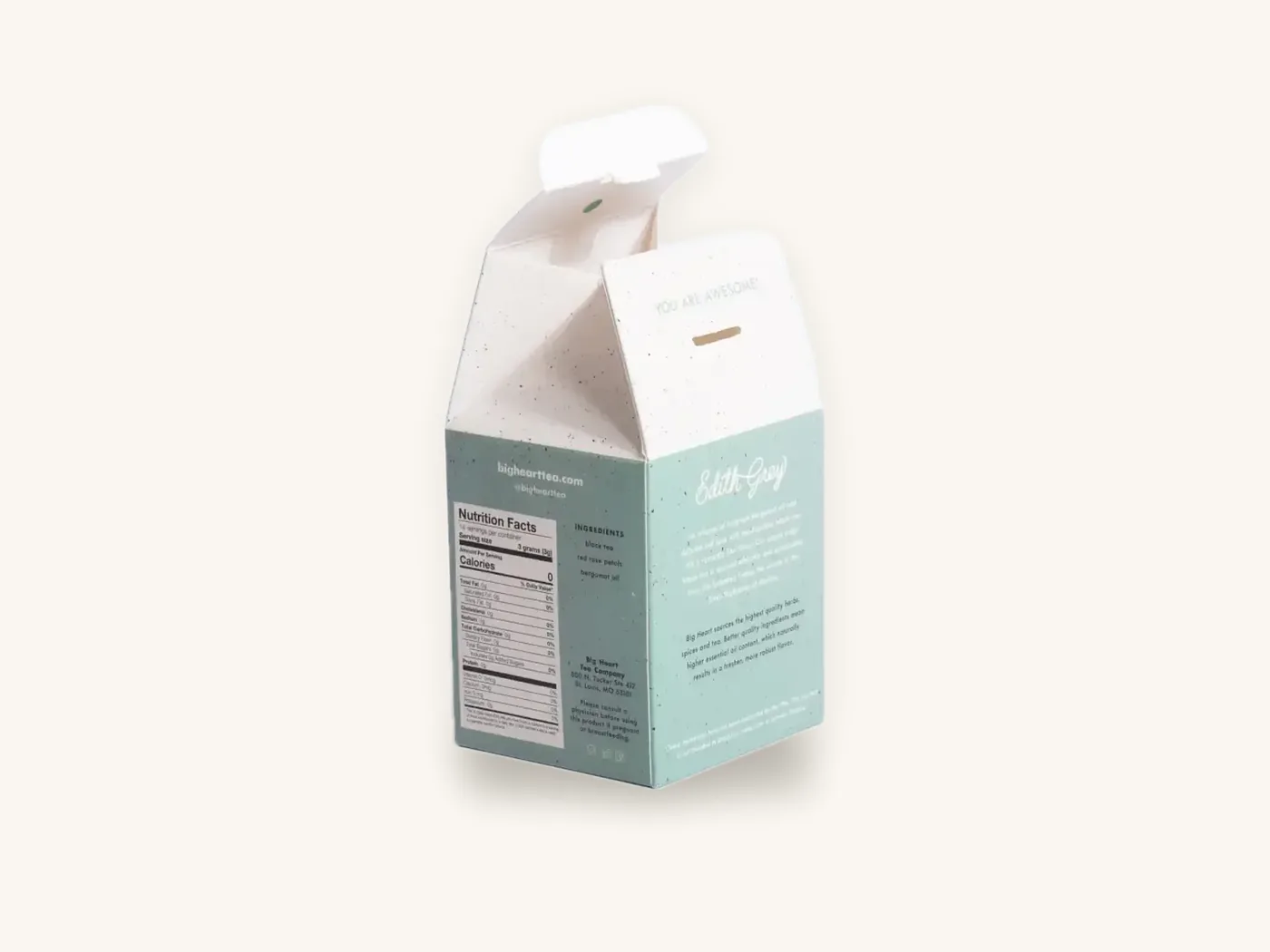
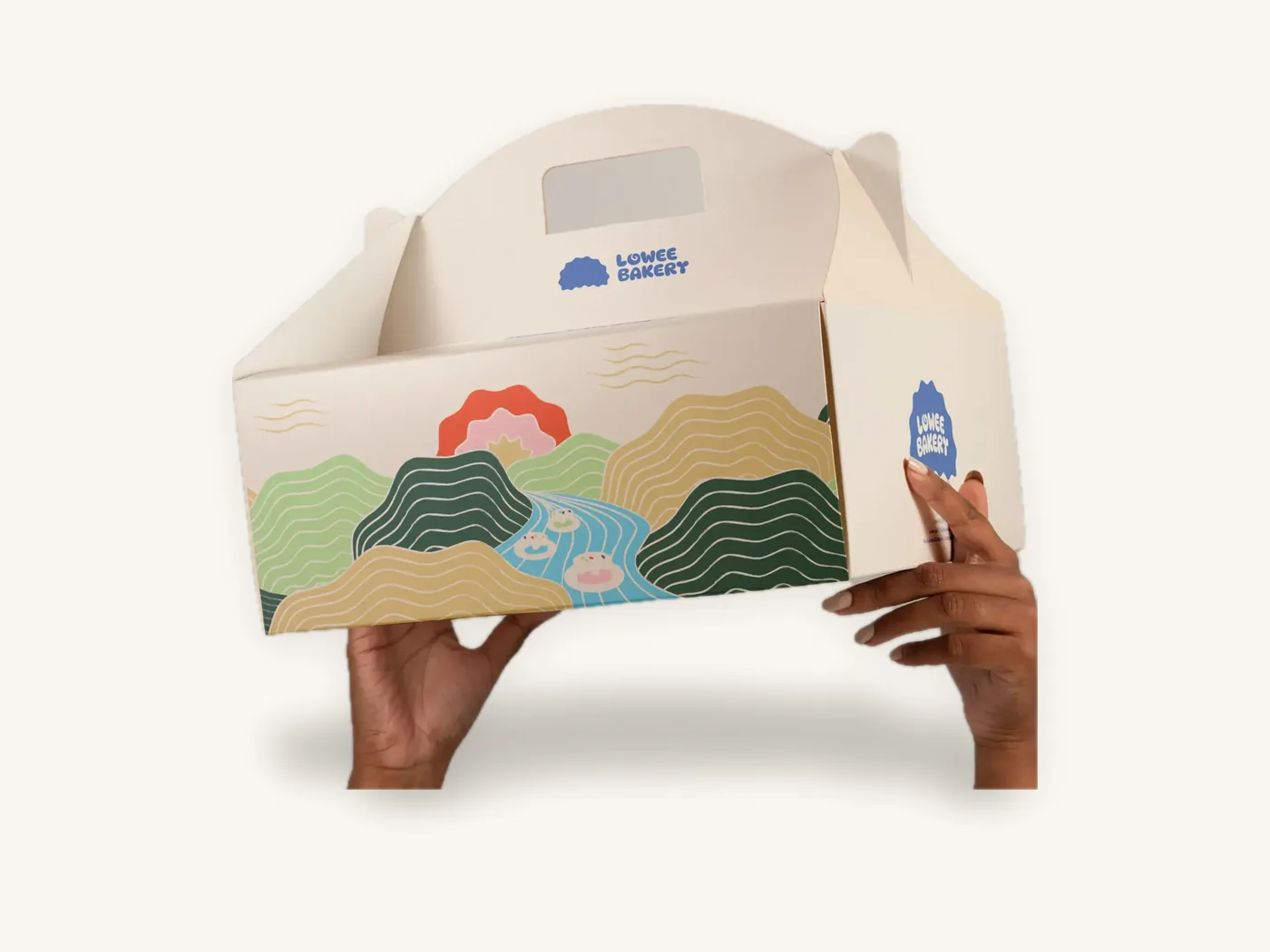
A gable box has a built-in carry handle and a peaked top, which makes it a natural gift and party format. It suits cookie assortments in bags, cookie decorating kits and event favors. The handle concentrates weight, so keep contents to a modest weight. The custom gable boxes guide goes deeper on sizing.
Rigid lid-and-base and drawer boxes
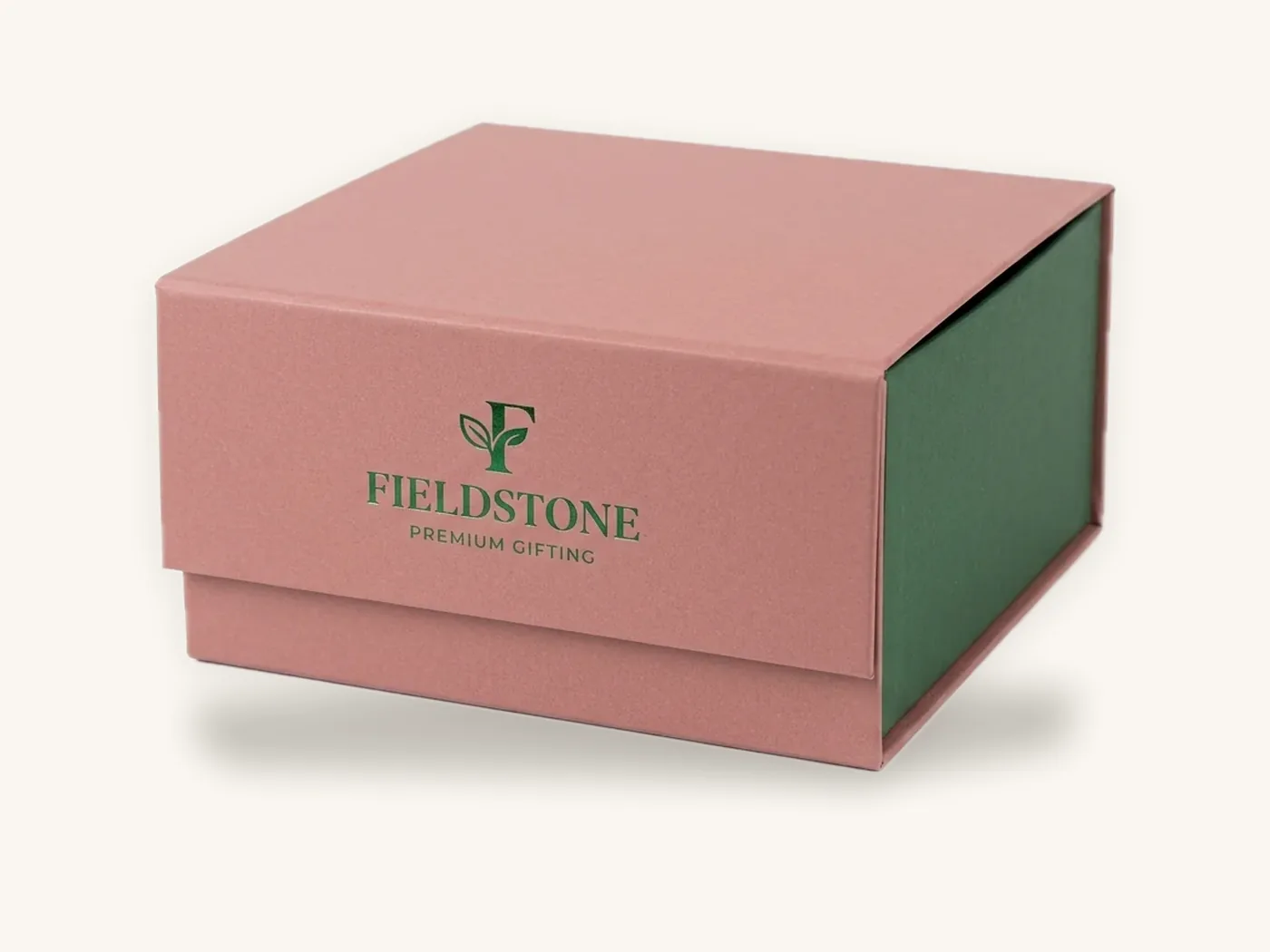
For premium cookie gift boxes, corporate gifts and holiday collections, a rigid two-piece box or a drawer box gives weight, a slow reveal and space for a printed card. These boxes are kept and reused, which keeps your brand in a customer's kitchen long after the cookies are gone.
Tubes and sleeves for stacked cookies
Round cookies stacked on edge or flat in a tube look distinctive and protect edges well. A paper tube with a sealed inner bag suits shortbread rounds and thin wafers. A tray with a printed sleeve suits a row of large cookies laid flat.
Single cookie boxes
A small window box or pillow box for one large cookie works for wedding favors, samples and add-on sales at the register. Wrap the cookie in a sealed bag first so it can sit in a basket for days.
Layout and sizing: flat, stacked or shingled
Cookies are flat, fragile at the edges and often irregular. How you arrange them sets the box size and affects breakage.
| Arrangement | How it looks | Breakage risk | Box shape | Best for |
|---|---|---|---|---|
| Single layer, flat | Every cookie visible | Low | Wide and shallow | Decorated sugar cookies, window boxes |
| Shingled (overlapping) | Row of partly overlapping cookies | Low to moderate | Long and shallow | Chocolate chip and oatmeal assortments |
| Stacked flat | Columns of cookies | Moderate at the base | Small footprint, taller | Shortbread, uniform crisp cookies |
| On edge in rows | Cookies standing in channels | Low if channels fit | Narrow and deep | Thin rounds, sandwich cookies |
| Separate compartments | Divider for each type | Lowest | Any | Mixed boxes, corporate gifts |
Sizing a cookie box
- Measure the largest cookie's diameter and thickness, including icing or toppings.
- Decide the arrangement and count per layer.
- Add about 1/4 in around each stack or row for fingers and bag material.
- Add the thickness of any inner bag, divider or tray.
- Set depth with about 1/4 in of clearance above the top cookie, so the lid does not press on iced decorations.
Decorated sugar cookies with royal icing are the exception: they need a flat single layer, each cookie in its own sealed bag, and a snug box so they do not slide and chip.
Dividers and inserts
Paperboard dividers keep assortments neat and stop mixing. For heavier stacks or shipping, a die-cut insert holds each stack in place. Our box inserts can be designed with the box so they fit as a set.
Shipping cookies by mail
Mail-order cookies face more handling than any bakery counter box. The standard approach is three layers: sealed bag, printed cookie box, and a corrugated shipper with enough padding that the cookie box cannot shift.
- Freeze or chill soft cookies before packing if they will travel several days.
- Fill every gap in the cookie box with a divider or crinkle paper so stacks cannot move.
- Choose a mailer that fits the cookie box closely, with no more than about 1/2 in of space on each side filled with paper.
- Avoid peak heat in summer for chocolate-topped cookies.
A printed custom mailer box can replace a plain shipper and a separate gift box for simpler cookie gifts, since it arrives presentation-ready.
Seasonal and corporate cookie gift boxes
Cookie gift sales often concentrate around holidays and year-end corporate gifting. The packaging plan matters as much as the recipes.
One box, many seasons
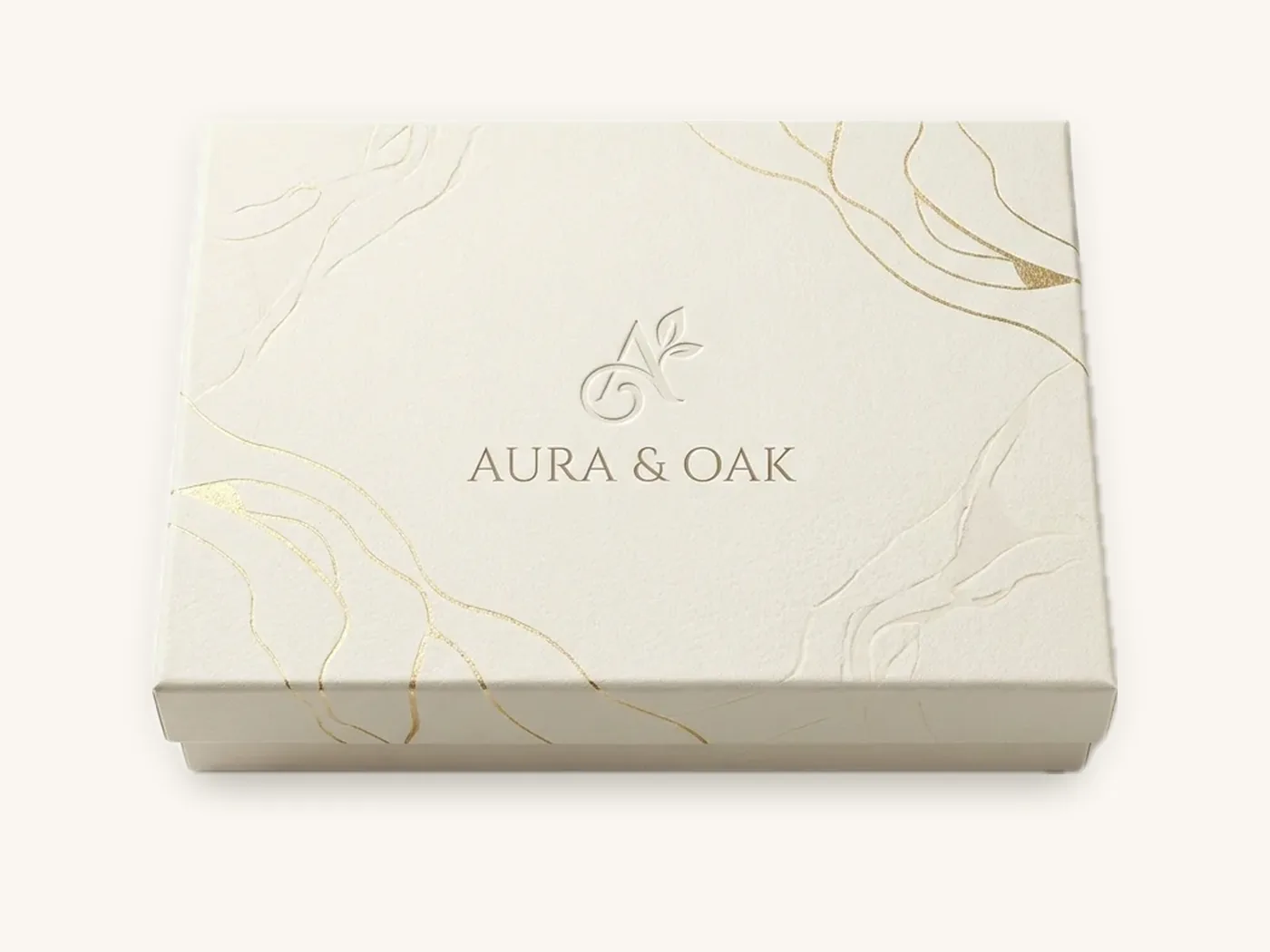
Printing a separate box for every holiday means reordering and storing several designs, each with its own leftover stock. A common alternative is a single branded box in a neutral design, plus seasonal sleeves, belly bands, stickers or ribbon. The box is ordered in larger, cheaper runs; the seasonal elements are short runs. See custom labels and stickers for seal and label options.
Corporate orders
Businesses buying cookie gifts often want a logo on the box, a printed card and individually sealed cookies for hygiene and shelf life. Short-run digital printing makes co-branded boxes feasible even for small client lists. The corporate gift boxes page shows gift structures, and our gifts and events page covers event formats.
Labeling basics for packaged cookies
If you sell packaged cookies at retail, online or through wholesale, labeling rules may apply. In the US, the FDA sets food labeling requirements for packaged foods, generally covering the product name, net quantity, ingredient list, allergen declarations, the name and address of the manufacturer or distributor, and in many cases nutrition information. Some small businesses and some sales channels have exemptions, and cottage food rules vary by state.
Rules change and depend on how and where you sell, so confirm current requirements with the FDA and your state program before printing. Our overview of FDA food labeling for packaging explains how to plan panel space. A practical approach is to print branding on the box and apply a product-specific label for ingredients and allergens, so one box covers many flavors.
What custom cookie boxes cost
Price depends on the format, size, board, windows, print, finishes, inserts and quantity. Two useful references from our current rates, with US shipping included:
| Spec | 100 | 250 | 500 | 1,000 | 5,000 |
|---|---|---|---|---|---|
| Window box, 18 pt SBS, 4x4x4 in, full color, aqueous, window | about $1.66 | about $1.18 | about $0.89 | about $0.74 | about $0.53 |
| Rigid box, 2 mm greyboard wrapped, 8x6x3 in, full color, matte | about $9.10 | about $6.47 | about $4.85 | about $4.05 | about $2.87 |
The window box suits a small stack or a few cookies; the rigid box suits a premium gift assortment. Foil stamping and embossing each add one-time tooling of about $60, and a custom insert die about $45. Use the instant price estimator for your exact spec.
Planning a cookie packaging range: a step-by-step process
- List every product and channel. Counter sales, markets, online gifts, wholesale and corporate orders each need different protection.
- Set freshness targets. Decide how many days each product must stay good, and pick the inner layer from that.
- Pick two or three outer formats. For example, a window carton for everyday sales, a gable box for gifting and a rigid box for premium sets.
- Standardize sizes. Design around your most common counts so one box fits several flavors.
- Separate brand from seasonal. Keep the box neutral and use sleeves, stickers or ribbon for seasons.
- Plan labeling space. Leave a clear panel for product labels with ingredients and allergens.
- Order structural samples. Pack real cookies, store them, ship a test box and taste the results.
- Schedule production before peaks. Allow proofing time plus 8–12 business days of production ahead of your busiest season.
How to order custom cookie boxes from Box Sense
Send your formats, sizes and quantities and we will confirm pricing within 24 hours. Helpful details include cookie sizes and counts, arrangement, inner packaging, board or rigid preference, window, print surfaces, finishes and your in-hand date.
Design support is free, including the dieline, artwork setup and a 3D digital proof with two revision rounds; our design services team can also build artwork from your logo. Unprinted structural samples are free, and a printed sample of approved artwork is free on orders of 100 or more; see samples. Standard production is 8–12 business days after proof approval, rush is 5 business days on most paperboard styles, and the minimum order is 10 boxes. US shipping is free, and FSC-certified boards and soy or water-based inks are available.
Browse cookie boxes, and see the bakery packaging guide for how cookie packaging fits a full bakery range. If your cookies pair with drinks, the tea packaging guide covers matching gift sets.
Frequently asked questions
How do you keep cookies fresh in a cookie box?
Put cookies in a moisture barrier, such as a heat-sealed film bag, before placing them in the box, because paperboard lets humidity through. Pack crisp and chewy cookies separately so they do not trade moisture. Let cookies cool completely before sealing, store boxes somewhere cool and dry, and test shelf life with your own recipes.
Are tins or boxes better for cookies?
Tins give strong crush resistance and reuse value and suit long shelf life and heritage holiday products. Paperboard boxes are lighter, ship flat, and are practical for custom sizes and short print runs. Rigid boxes sit between the two, with a keepsake feel and full custom print. Whichever you choose, use an inner bag for freshness.
What is the best box for shipping cookies?
Use three layers: cookies in sealed bags, a snug printed cookie box with dividers or fill so nothing shifts, and a corrugated mailer or shipper with a close fit. Chill or freeze soft cookies before long trips and avoid shipping chocolate-topped cookies in peak heat. A printed mailer box can double as the gift box for simpler orders.
What size box do I need for a dozen cookies?
It depends on cookie size and arrangement. Twelve 3 in cookies in two shingled rows fit a box of roughly 9 x 7 in inside; the same cookies stacked in three columns of four fit a smaller footprint with more depth. Measure your largest cookie, choose an arrangement, then add about 1/4 in around each stack and room for bags.
Do I need a label on my cookie packaging?
If you sell packaged cookies at retail, online or wholesale, US food labeling rules from the FDA generally apply, covering items like product name, net quantity, ingredients and allergens. Some small businesses and cottage food sellers have exemptions that vary by state. Confirm current requirements with the FDA and your state program before printing labels.
Can I get custom cookie gift boxes in small quantities?
Yes. Box Sense produces custom cookie boxes from 10 units. Short runs are printed digitally without plates, which suits holiday collections, corporate gifts and event orders. Many bakeries order a neutral branded box in a larger run and add short-run seasonal sleeves or stickers, which keeps unit costs down across the year.
How much do custom cookie boxes cost?
As a reference, a 4x4x4 in window box in 18 pt SBS printed full color costs about $1.66 each at 100 units and about $0.74 at 1,000, with US shipping included. A premium 8x6x3 in rigid box costs about $9.10 at 100 and about $4.05 at 1,000. Use the pricing estimator for your exact size and finish.
Next steps
Decide how long your cookies need to stay fresh in each channel, choose an inner layer, then pick the two or three outer formats that cover most sales. Price them in the cookie box price estimator and request a custom cookie box quote when you are ready; we confirm pricing within 24 hours.
Boxes in this guide
Order the packaging we covered
Written by the Box Sense Packaging Team
Our structural designers, prepress technicians and production staff print and convert custom boxes every day for brands in the United States, United Kingdom and UAE. Questions about this guide? Talk to us.