The right tea packaging depends first on what form the tea takes. Tea bags and sachets usually go in a printed folding carton, loose leaf needs an airtight inner pouch or tin inside a box or tube, and premium gift teas often move up to drawer boxes or rigid presentation sets. The outer package sells; the inner layer keeps the aroma in.
Tea is lighter and more forgiving than coffee, since it does not release gas after packing. It is, however, extremely sensitive to moisture, light and odors from its surroundings, and a single box can hold tea that ranges from dense rolled pellets to bulky dried flowers. That combination is what makes sizing and material choice more important than they first appear.
This guide starts with the tea format, then covers liners, box structures, custom tea boxes sizing, tea box design and labeling, costs, and how to order.
Key takeaways
- Choose the structure by tea format: cartons for bagged tea, tubes or tins for loose leaf, drawer and rigid boxes for gifts and tasting sets.
- Paperboard is not a moisture or aroma barrier. Loose tea needs a sealed inner pouch, foil-lined bag or tin, with the box as the outer shell.
- Loose leaf volume varies hugely by style: the same weight of white tea or chamomile can need several times the space of a rolled oolong.
- An 18 pt SBS straight tuck end carton at 3x2x5 in, full color with aqueous coating, runs about $1.15 each at 100 units and about $0.51 at 1,000.
- Packaged tea sold in the US falls under FDA food labeling rules; herbal and wellness blends need extra care with health-related wording.
- Box Sense makes custom tea boxes from 10 units with free design support, a 3D proof and standard production of 8–12 business days after approval.
Start with the tea: formats and what each needs
Before choosing a box, write down what physically goes inside and how the customer will use it. Five formats cover almost every tea brand.
| Tea format | What it needs from packaging | Usual outer package | Common mistake |
|---|---|---|---|
| String-and-tag tea bags | Keep bags dry, stop tags tangling, dispense easily | Tuck end carton, dispenser box | Box too tall, bags slide into a pile |
| Individually enveloped bags | Envelope handles freshness; box handles display | Carton, window box, hospitality chest | Envelopes crushed in an undersized carton |
| Pyramid sachets | Room so the shape is not flattened | Deeper carton or tube | Sizing from flat-bag dimensions |
| Loose leaf | Airtight, lightproof inner layer and reseal | Tube, tin, pouch in a carton | Relying on the box alone for freshness |
| Matcha and powdered blends | Very high light and oxygen protection, small portion | Small tin or foil pouch inside a carton | Clear windows that let light reach the powder |
Bagged tea
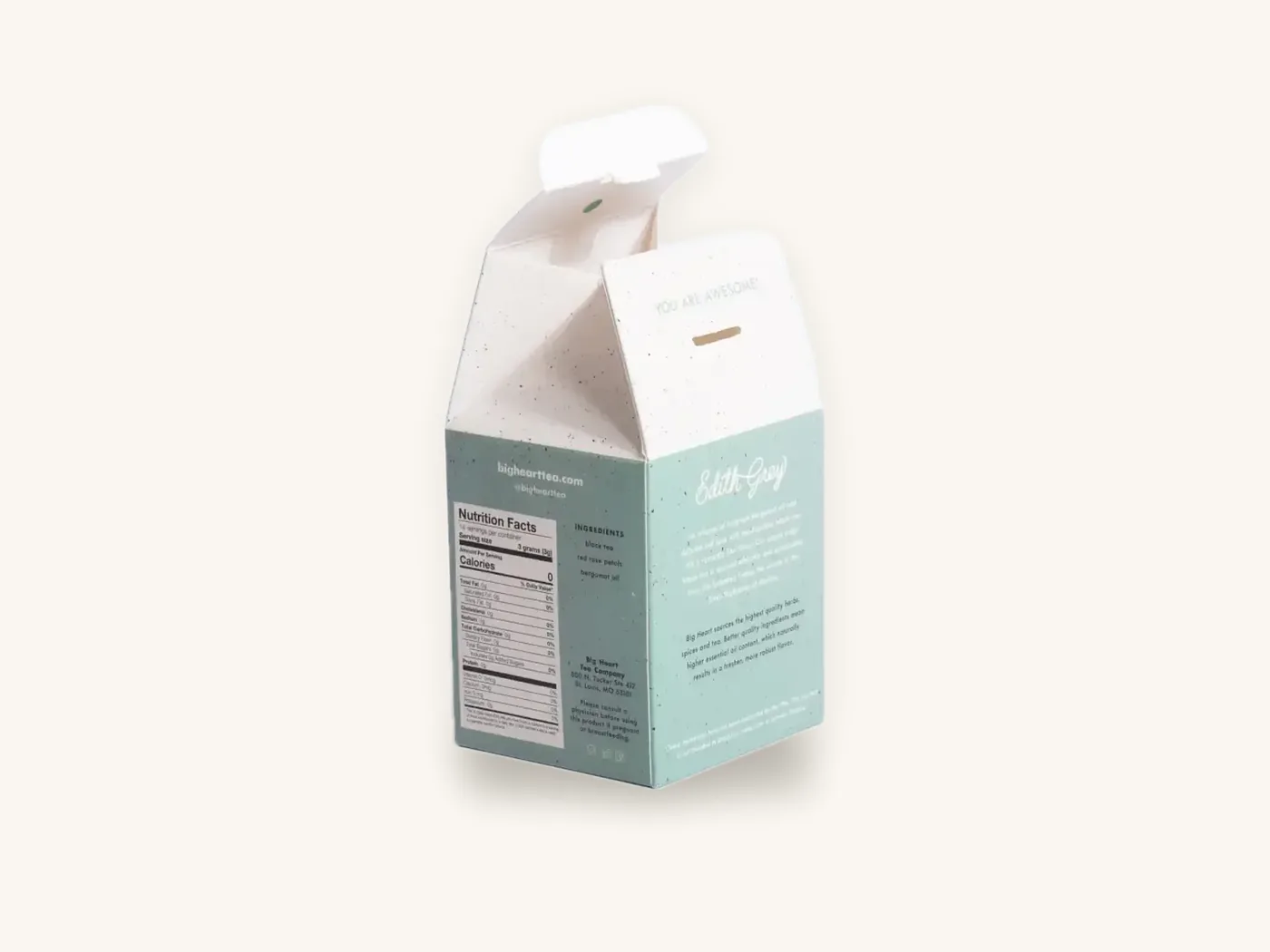
Bagged tea is where most shelf competition happens, and a printed folding carton does most of the work. The inner protection can be a sealed overwrap on the carton, individual envelopes, or a foil-lined bag inside. The carton needs a clean opening and a way to keep bags standing in rows as the count drops.
Loose leaf
Loose leaf customers reopen the package dozens of times, so the reseal matters as much as the first impression. A tin, a lined tube with a snug lid, or a resealable pouch inside a carton all work. The outer box then carries origin, brewing temperature and steep time.
Compressed teas and tasting sets
Pu-erh cakes, bricks and multi-tea samplers are often bought as gifts or collected. They suit flatter presentations: drawer boxes, two-piece rigid boxes and sleeves over trays, often with a die-cut insert that holds each sample in its own cavity.
Keeping tea fresh: liners, pouches and tins
The single biggest decision in tea packaging is what touches the tea. Paperboard absorbs humidity and does not block odors, so a carton stored next to spices or cleaning products can transfer smells to unprotected leaves.
Inner layer options
- Foil-lined bag or pouch: a strong barrier against moisture, light and odor. Heat sealed, often with a zipper for loose leaf.
- Glassine or waxed paper bag: a lighter, paper-like barrier for fast-moving tea with a short shelf window.
- Sealed overwrap on the carton: a clear or printed film around the whole box. Keeps bagged tea fresh until first opening.
- Tins: metal canisters with friction or double lids. Excellent reseal and light protection; heavier and more expensive to ship.
- Lined paper tubes: a paperboard tube with an inner liner and tight lid. Lighter than a tin with a similar shelf look.
Stand-up pouches are the most flexible inner layer for loose leaf, because the same pouch can sit inside a carton for retail or ship alone for refills. Our coffee packaging guide covers barrier film structures in more depth.
Watch out: if a box touches the tea directly, with no pouch or liner, ask for board, inks and coatings suitable for food contact and confirm the documentation with your supplier. Most tea brands avoid the question entirely by using an inner pouch, which is also better for freshness.
Tins versus paper tubes
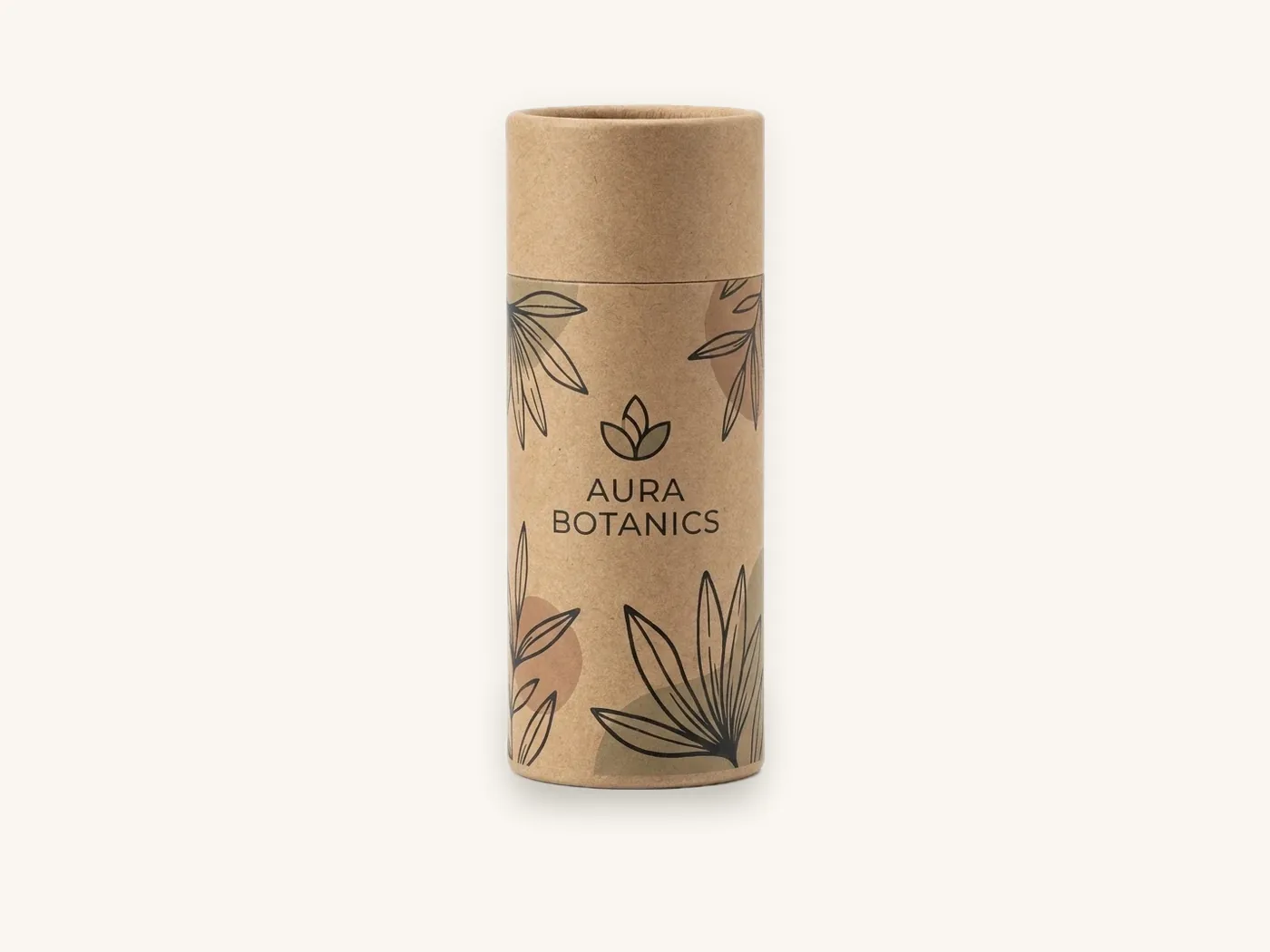
Tins are the traditional loose leaf container and signal a premium, reusable product. Paper tubes offer a similar cylinder silhouette with lighter weight, full-color printed wraps, and a paper-based body that many customers read as lower impact.
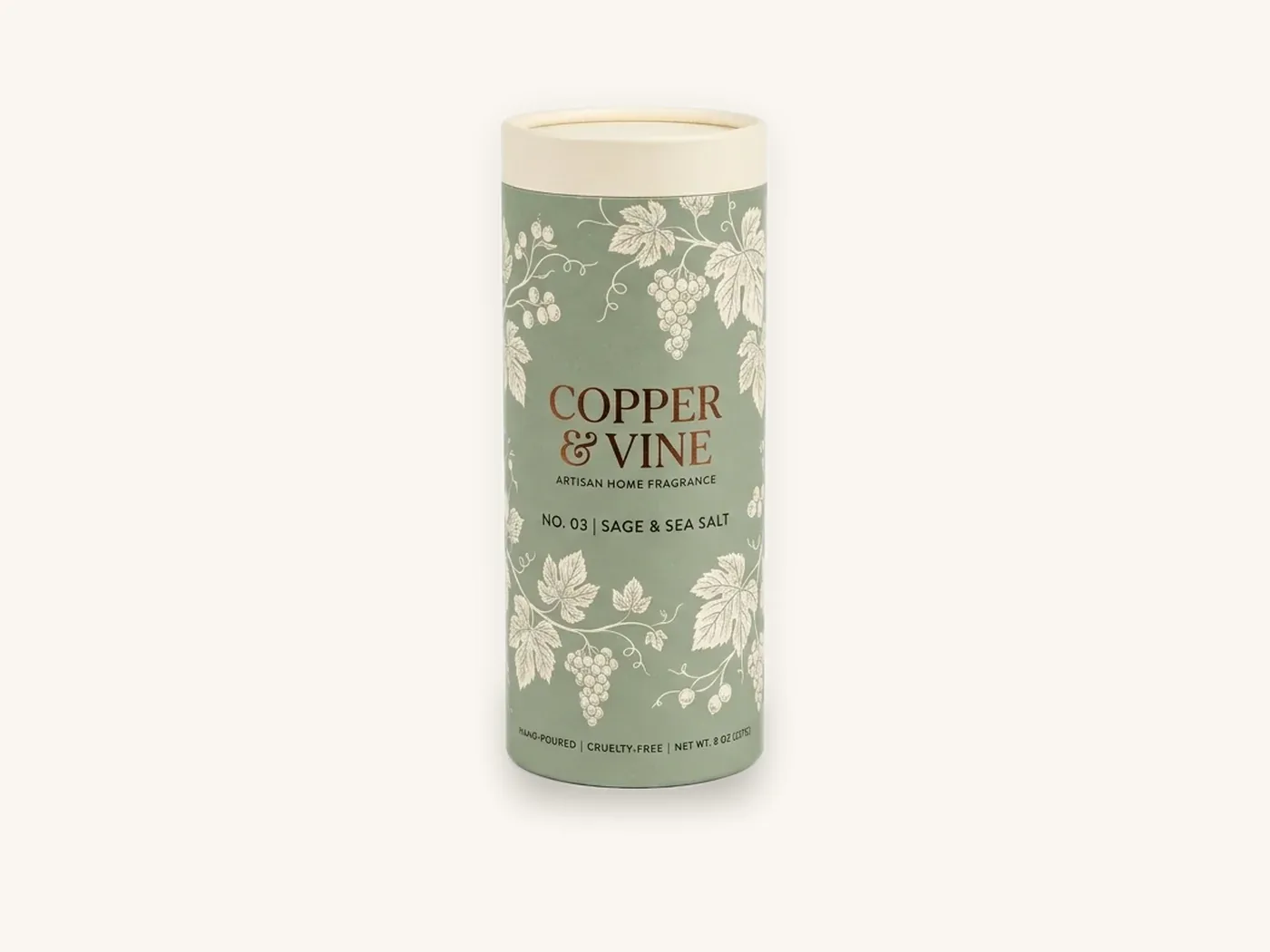
Choose a tin when the container is meant to live in a kitchen for years and the price point absorbs the added cost and shipping weight. Choose a lined paper tube when you want the cylinder look, a lower landed cost and more printable surface. Box Sense makes paper tubes and boxes rather than metal tins, and the paper tube packaging guide covers tube construction, lids and wraps.
Custom tea box structures compared
Once the inner layer is chosen, the outer structure is about shelf presence, opening experience and cost. The tea boxes product page shows the structures we produce most for tea brands.
| Structure | Board | Best tea use | Shelf presence | Relative cost |
|---|---|---|---|---|
| Straight or reverse tuck end carton | 14–18 pt SBS or kraft | 15 to 25 count bagged tea | Clean, efficient | Lowest |
| Window box | 18 pt SBS with PET or PLA window | Pyramid sachets, blooming teas | Shows the product | Low to medium |
| Dispenser carton | 18 pt SBS | Hospitality, office, cafe counters | Functional | Low to medium |
| Paper tube | Spiral or convolute paperboard | Loose leaf, gift singles | Distinctive | Medium |
| Drawer box (paperboard or rigid) | SBS or wrapped greyboard | Sampler sets, premium sachets | Premium | Medium to high |
| Sleeve and tray | SBS sleeve over a tray | Tasting flights, seasonal editions | Premium, easy to update | Medium |
| Two-piece rigid box | Wrapped greyboard | Gift sets with tins or tubes inside | Luxury | Highest |
Folding cartons for bagged tea
The tuck end carton is the workhorse of retail tea. It prints well, ships flat, packs fast by hand or machine and fits standard shelf depths. Most brands use a front-to-back tuck so the shelf face stays clean. The folding carton guide covers board calipers and closure styles if you want the details.
Window boxes for showing the tea
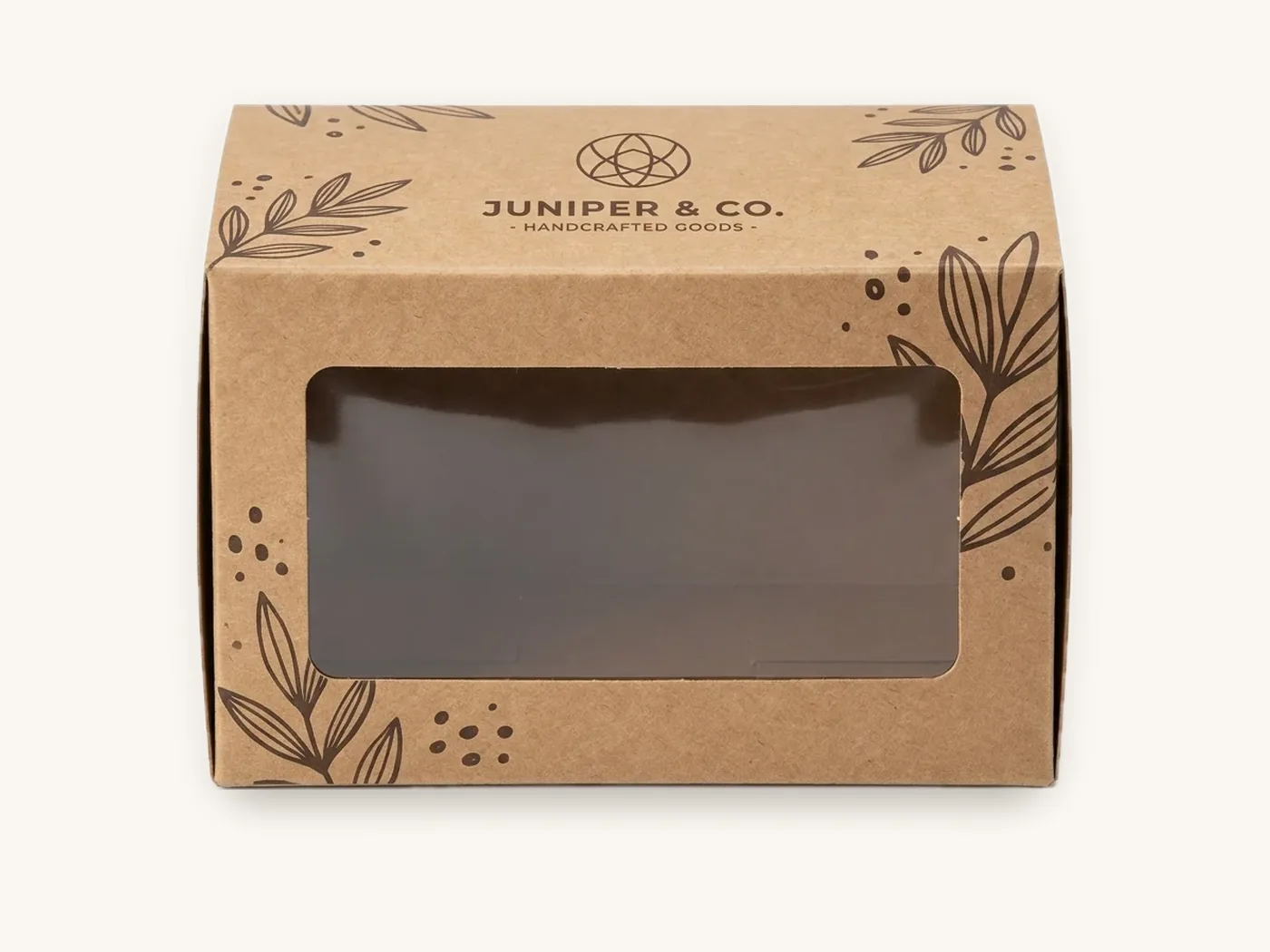
Pyramid sachets filled with whole leaves, flowers or fruit pieces are worth showing. A die-cut window with PET or compostable PLA film lets shoppers see the contents, while the rest of the panel stays opaque. Keep windows small for teas sensitive to light, and always pair them with an inner sealed layer. See window boxes for window shapes.
Dispenser and hospitality boxes
Hotels, offices and restaurants want tea that dispenses one envelope at a time. A dispenser box with a perforated front tear-out keeps envelopes upright and visible. For a tea chest with several flavors, a divided carton or a tray with inserts keeps each variety in its own row.
Drawer boxes and sleeves for gifts
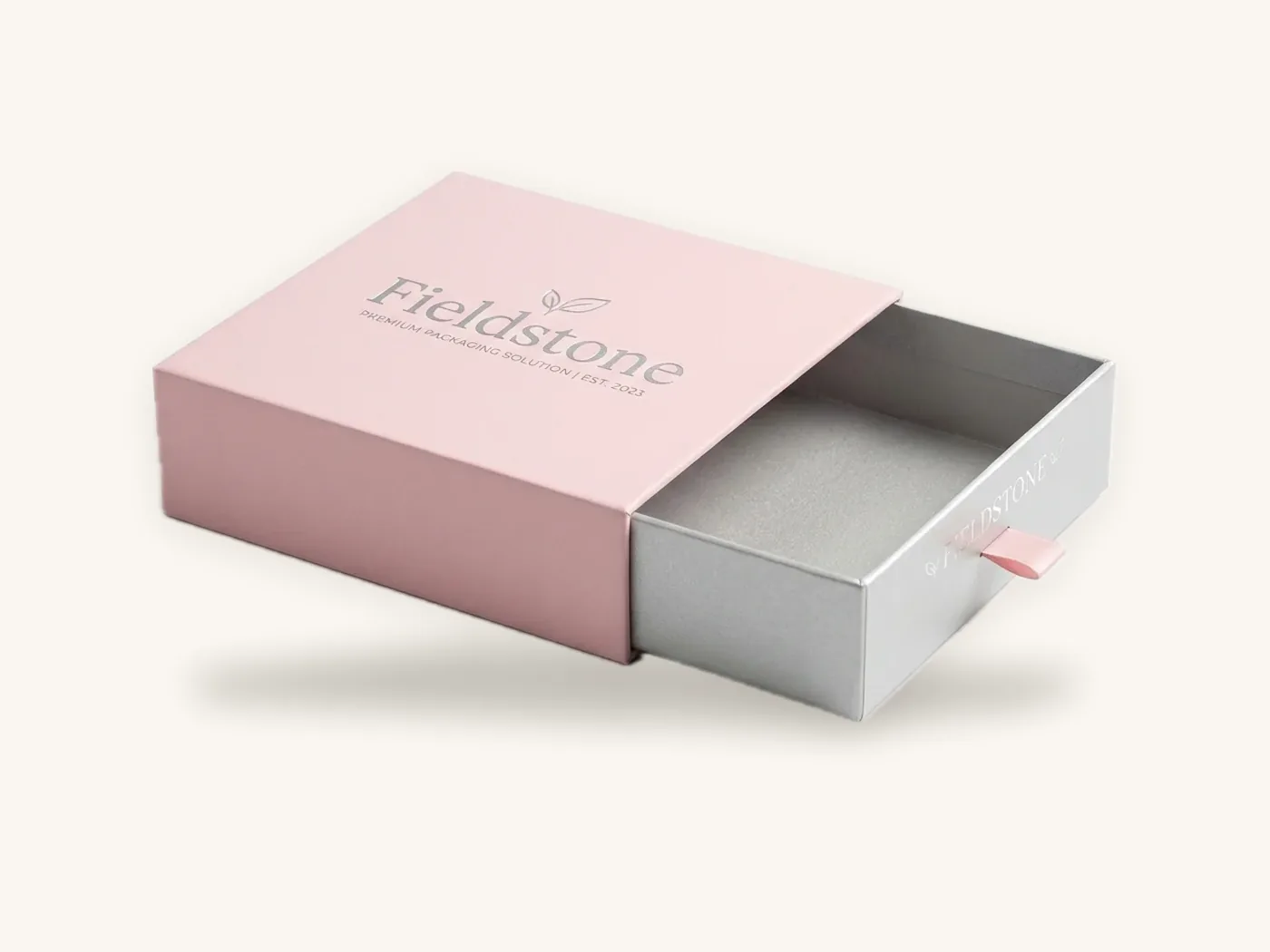
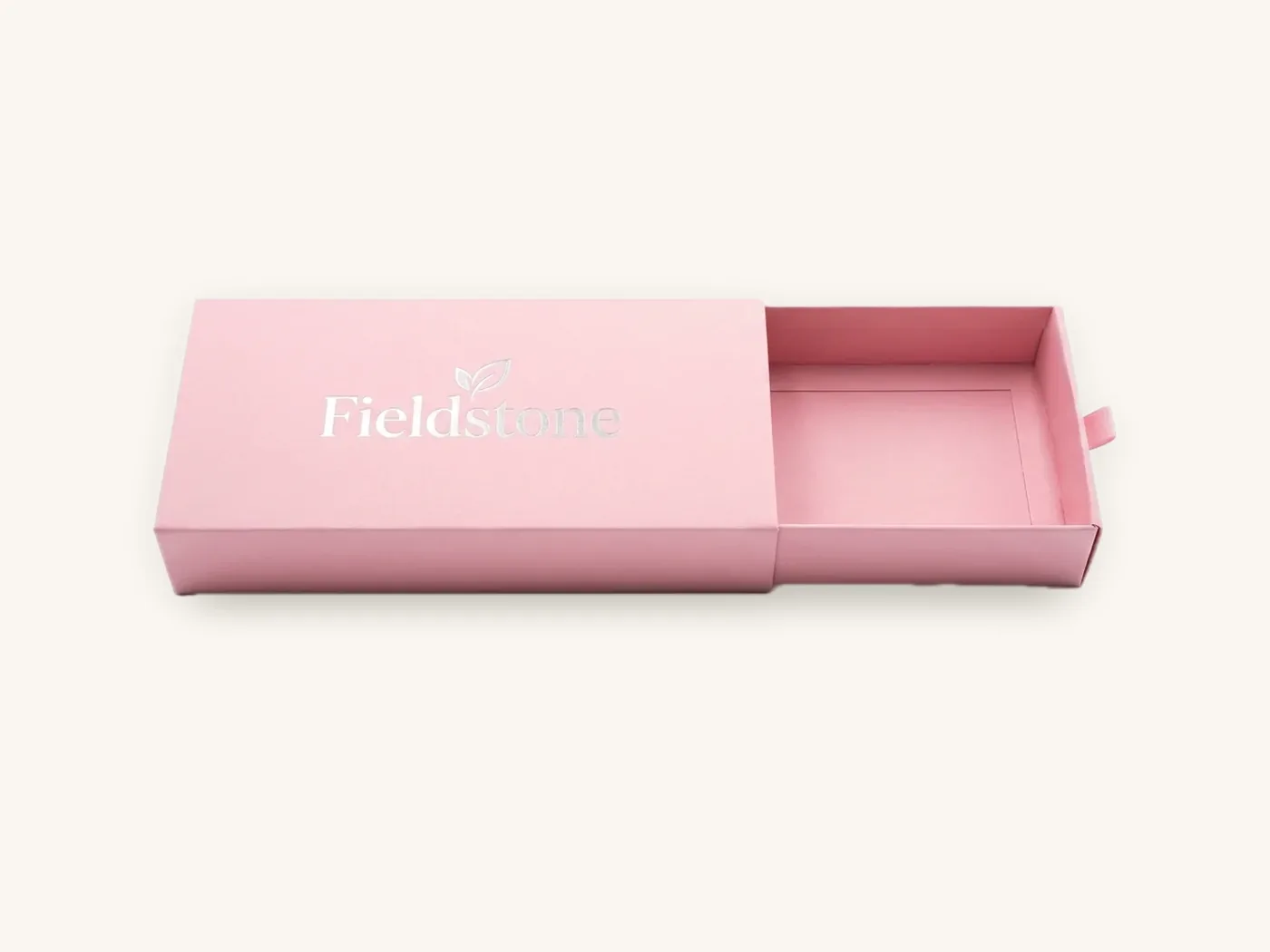
A drawer box slides open like a matchbox and gives a slower, more deliberate reveal. It suits sampler sets of six or twelve sachets, a small tin with a scoop, or loose leaf pouches lined up with printed dividers. Our drawer boxes guide explains ribbon pulls, thumb cuts and rigid versus paperboard drawers. Sleeve and tray boxes are a close alternative: print a new sleeve for each season while the tray stays the same.
How to size custom tea boxes
Tea sizing goes wrong for predictable reasons. Weight is not volume, bags are not all the same size, and envelopes add thickness that looks trivial until you multiply it by twenty.
Sizing process for tea
- Pack the real product. Fill the inner pouch or stack the real envelopes exactly as they will ship. Do not measure from a spec sheet.
- Measure the bundle at its widest points. Pouches bulge in the middle; stacks of envelopes fan out at the top.
- Add clearance. For cartons, allow roughly 1/16 to 1/8 in on length and width so the bundle slides in without scuffing the print.
- Check the depth against the shelf. Standard grocery shelving favors cartons that face forward with their largest panel; very deep boxes can hide behind neighbors.
- Plan the dispense or reseal. A tear-out front, a thumb notch or a lid must work when the box is full and when it is half empty.
- Test your bulkiest blend. If one box design covers several teas, size it for the least dense one, then use an insert or card for the denser teas if needed.
- Order a structural sample. A free unprinted sample confirms fit before artwork is final.
Volume by tea style
Loose leaf density swings widely, so plan box size by the style, not by the weight printed on the label.
| Tea style | Relative volume for the same weight | Packaging implication |
|---|---|---|
| Tightly rolled oolong, gunpowder green | Compact | Small tube or tin; watch for underfilled look |
| Twisted black tea, standard green | Moderate | Most standard tins and tubes fit |
| Whole-leaf white tea | Bulky | Needs a taller tube or larger pouch |
| Herbal blends with flowers and fruit | Very bulky, uneven | Size generously; a window flatters these |
| Matcha and powders | Very compact | Small tin or foil pouch; protect from light |
Tip: if you sell a range of teas in matching tubes, fill each tube to a consistent visual level rather than a consistent weight. Customers judge value by how full the container looks, so it is often better to label the net weight accurately and vary it by style than to ship half-empty tubes.
Tea box design and labeling
Tea box design has to balance mood and information. Tea buyers read panels, and the brewing guide is one of the most used pieces of text on the box.
What to put on each panel
- Front: brand, tea name, tea type (for example, green tea), net quantity and one visual cue for flavor.
- Side: brewing temperature, steep time and amount per cup, ideally as simple icons.
- Back: origin story or tasting notes, ingredients for blends, company name and address.
- Bottom or flap: lot code and best-by date area, left blank for a stamp or label.
Labeling rules to confirm
In the US, packaged tea is a food, so FDA food labeling rules apply. In general terms, that means a statement of identity and net quantity on the principal display panel, and the name and place of business of the manufacturer, packer or distributor, with an ingredient list for blends. Allergens in flavored blends also need attention.
Herbal and "wellness" teas deserve particular caution. Statements that a tea treats or prevents a disease can move a product into drug territory under FDA rules. Keep wording to flavor and experience, and have a regulatory consultant or counsel review any benefit claim before it goes to print. The FDA's food labeling and nutrition pages are the place to start.
Print and finish choices that suit tea
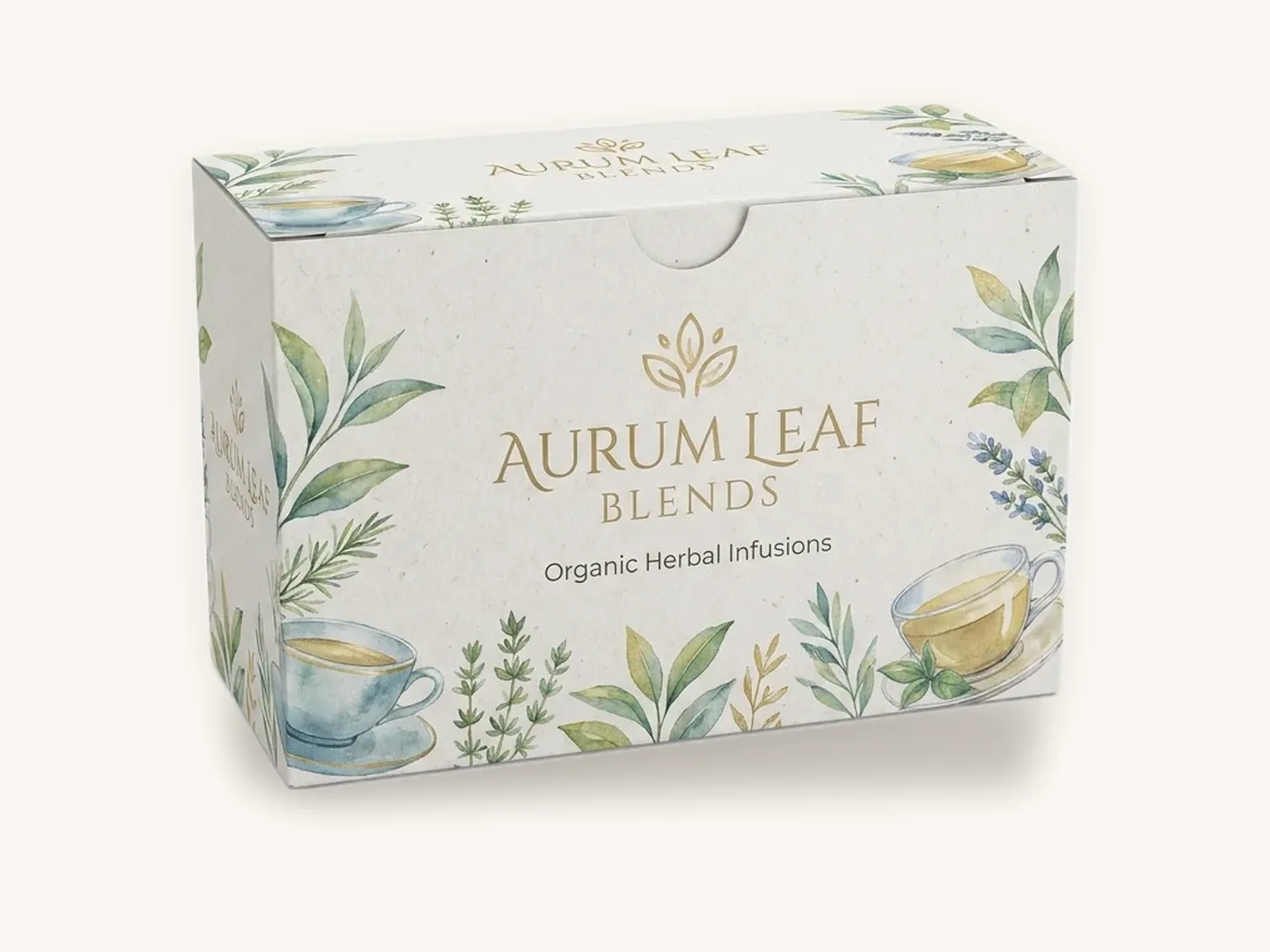
Tea brands often lean toward natural and calm. Kraft paperboard with one or two ink colors reads organic and handmade. SBS paperboard gives brighter full color for fruit and floral blends. Soft-touch lamination, foil and embossing work well on gift lines. The printing and finishes page shows each option.
Tea packaging costs and price examples
Unit price for custom tea boxes depends on structure, size, board, print coverage, finishes, inserts and quantity. The prices below are indicative figures from our current rates, with free US shipping included.
| Spec | 100 | 500 | 1,000 | 5,000 |
|---|---|---|---|---|
| Straight tuck end carton, 18 pt SBS, 3x2x5 in, full color outside, aqueous | $1.15 | $0.61 | $0.51 | $0.36 |
| Kraft tuck carton, 18 pt kraft, 4x3x2 in, 1-color print | $0.81 | $0.43 | $0.36 | $0.25 |
| Window box, 18 pt SBS, 4x4x4 in, full color, aqueous, window | $1.66 | $0.89 | $0.74 | $0.53 |
| Rigid box, 2 mm greyboard wrapped, 8x6x3 in, full color, matte | $9.10 | $4.85 | $4.05 | $2.87 |
A 3x2x5 in carton is in the range many brands use for a small count of bagged tea, and a 4x4x4 in window box suits pyramid sachets. An 8x6x3 in rigid box is a typical footprint for a gift set holding a couple of tubes or a sachet sampler. Run your exact size in the tea box price estimator.
Where the money goes
- Finishes: foil stamping carries a one-time tooling charge of about $60, and spot UV about $40. Keep them to the logo on gift lines.
- Inserts: a die-cut insert for a sampler adds material and a one-time insert die of about $45.
- SKU count: a single carton design with a color-coded flavor band is cheaper to run than separate artwork for every flavor at small quantities, although digital printing makes short runs of each design practical.
- Structure: moving from a carton to a rigid box multiplies cost; reserve rigid for gifting and seasonal sets.
Sustainable tea packaging choices
Tea customers often care about sourcing, so the package should not contradict the story. Paperboard cartons and tubes printed with soy or water-based inks and finished with aqueous coating stay in the paper stream. FSC-certified board is available if you want to reference responsible sourcing.
The weak points are usually the inner layer and the window. Foil-lined pouches protect best but are hard to recycle; compostable films exist but must be tested for your shelf life. PLA windows are an alternative to PET. Any claim you print, such as "plastic free" or "compostable," needs to be accurate for every component, and the FTC's Green Guides describe how such claims should be qualified. The eco-friendly materials page lists our paper-based options.
How to order custom tea boxes with Box Sense
Specs to gather
- Tea format and count or net weight per box
- Inner layer: envelopes, pouch, liner or tin, with its measured size
- Preferred structure (carton, window box, tube, drawer, sleeve) or a request for a recommendation
- Board: SBS white or kraft; print coverage and finishes
- Number of flavors or SKUs and quantity of each
- Artwork files, or a note that you need our free design support
- Target in-hand date and delivery location
From quote to delivery
- Quote within 24 hours for each structure and quantity you ask about.
- Dieline and 3D proof. Our team supplies the dieline, sets up artwork and sends a 3D digital proof with two revision rounds included.
- Samples. An unprinted structural sample is free; a printed sample of approved artwork is free on orders of 100 or more. Details are on our samples page.
- Production. Standard production takes 8–12 business days after proof approval, and rush in 5 business days is available on most paperboard styles.
- Delivery. Free shipping on every US order, with international shipping quoted at cost.
The minimum order is 10 boxes, and there are no die or plate charges. Short runs are printed digitally, so a limited-edition blend can have its own box. More tea and coffee structures are on our coffee and tea industry page, and all carton styles are on the folding cartons page.
Frequently asked questions
What is the best packaging for loose leaf tea?
An airtight, lightproof inner layer with a good reseal, inside an outer tube, tin or box. Foil-lined resealable pouches offer strong protection at low cost, tins give the best long-term reseal, and lined paper tubes give a canister look with less weight. Paperboard alone does not protect loose leaf from moisture or odors.
How do you keep tea fresh in a paper box?
Add a barrier between the tea and the board. Common choices are individual envelopes for tea bags, a sealed overwrap around the carton, or a foil-lined or resealable pouch inside the box for loose leaf. Store packed stock away from strong odors and humidity, because paperboard absorbs both.
What size box do I need for 20 tea bags?
It depends on bag dimensions, whether bags are enveloped and how they are stacked. Measure a real stack of twenty bags or envelopes arranged the way they will sit in the box, then add a little clearance on length and width. Enveloped bags need noticeably more space than bare bags, so always test with the finished contents.
Are tins or paper tubes better for tea?
Tins offer an excellent reseal and suit containers that customers keep and refill for years. Paper tubes are lighter, cheaper to ship, fully printable and paper based. Choose tins for a heritage or refill-focused line with a higher price point; choose lined paper tubes for gift singles and ranges where landed cost and printable surface matter more.
What needs to be printed on tea packaging?
Packaged tea sold in the US generally needs a statement of identity, net quantity, and the name and place of business of the manufacturer, packer or distributor under FDA food labeling rules, plus ingredients for blends. Most brands add brewing instructions and a lot or date code. Avoid health claims on herbal teas unless a regulatory expert has reviewed them.
How much do custom tea boxes cost?
It depends on structure, size, print and quantity. As a reference, an 18 pt SBS tuck end carton at 3x2x5 in with full color and aqueous coating is about $1.15 each at 100 units and about $0.51 at 1,000. A 4x4x4 in window box is about $0.74 at 1,000. Use the pricing estimator for your exact spec.
Can I get a small run of tea boxes for a new blend?
Yes. Box Sense produces custom tea boxes from 10 units, and short runs are printed digitally without plates, so a seasonal or limited blend can have its own printed box. Unit prices are higher at very small quantities, so compare a few quantity tiers before ordering and consider a shared carton with a flavor label if you have many blends.
Next steps
Pack one real unit of your tea with its inner layer, measure it, and decide whether you need a carton, tube, drawer box or gift set. Then price your structure in the instant packaging estimator and request a custom tea box quote. We will confirm pricing within 24 hours and send a dieline and 3D proof for your artwork.
Boxes in this guide
Order the packaging we covered
Written by the Box Sense Packaging Team
Our structural designers, prepress technicians and production staff print and convert custom boxes every day for brands in the United States, United Kingdom and UAE. Questions about this guide? Talk to us.