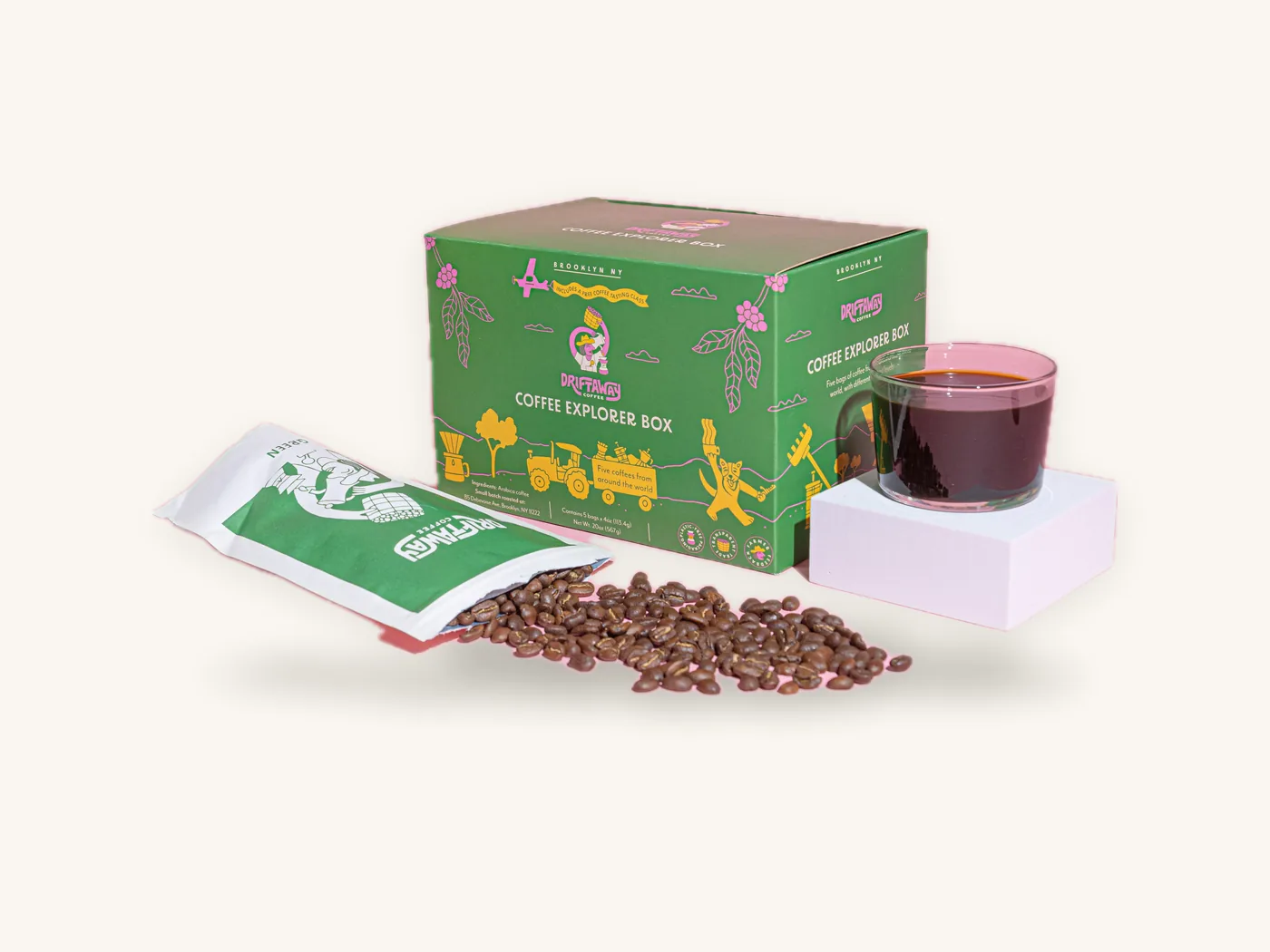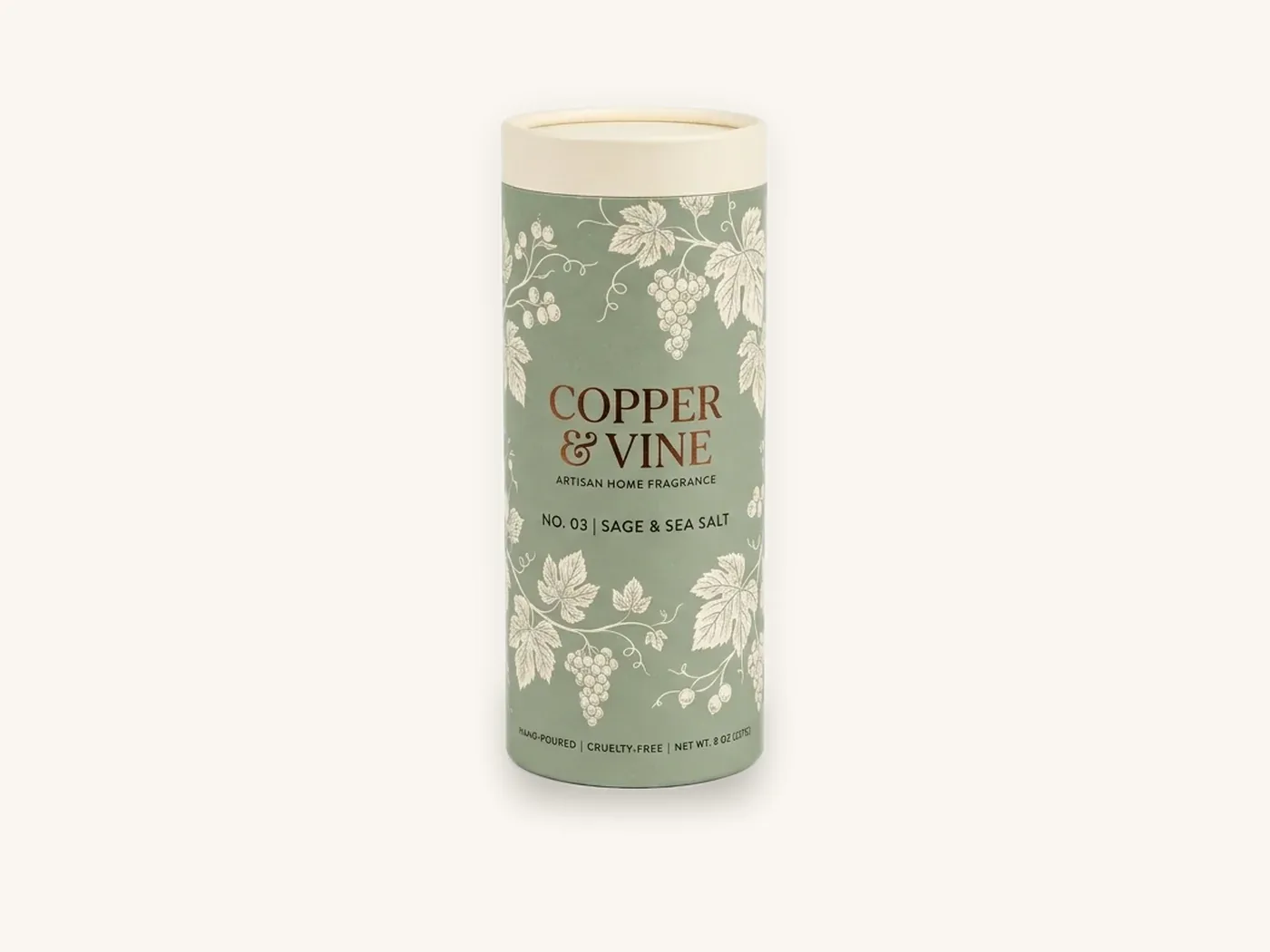
Paper tube packaging is a rigid cylinder made from layers of paperboard wound around a mandrel, wrapped in a printed label paper and closed with a lid, a plug or a fixed end. It gives products like tea, candles, spirits, cosmetics and rolled apparel a solid, premium container that is mostly paper, feels substantial in the hand and reads as different from every rectangular box on the shelf.
Custom cardboard tubes are more engineered than they look. Wall thickness, the way the body is wound, the closure and any inner liner all change how the tube protects, seals and presents your product. This guide explains how paper tubes are made, which closures and liners to choose, how to size a tube around a product, how to set up artwork for a cylinder, and what drives cost.
Key takeaways
- A paper tube has three parts: a wound paperboard body, a printed outer wrap and end closures (lid, base, plug or neck).
- Wall thickness sets strength; thin walls suit light cosmetics and tea, thicker walls suit glass bottles, candles and anything shipped long distances.
- Size tubes from the inside diameter first, then the height, and add clearance so the product slides out without catching.
- Food products such as loose tea, coffee or spices usually need an inner liner suited to direct food contact; confirm current FDA requirements for your product.
- Artwork is set up as a flat rectangle whose width equals the tube circumference plus overlap; keep barcodes and key text away from the seam.
- Box Sense makes custom paper tubes from 10 units, with free design support, free unprinted structural samples and standard production of 8–12 business days after proof approval.
How paper tubes are made
Understanding the manufacturing process explains most of the specs you will be asked to choose.
Spiral winding
In spiral winding, several narrow strips of paperboard are glued and wound at an angle around a steel mandrel, forming a continuous tube that is cut to length. Spiral tubes are efficient to produce in long lengths and are the most common construction for shipping tubes, cores and many retail tubes. The body shows a faint diagonal seam line, which the outer wrap covers.
Convolute (parallel) winding
In convolute winding, a single wide sheet is wrapped straight around the mandrel, layer on layer, so the seam runs lengthwise. Convolute tubes tend to have smoother walls and cleaner cut edges, which makes them well suited to premium retail tubes where the lid slides over the body with a precise fit.
Wrapping and finishing
Once the body is cut, a printed paper wrap is glued around the outside. The wrap is typically coated art paper, kraft paper or a specialty textured paper, and it can be laminated, foil-stamped or embossed before wrapping. Ends are then fitted: a paper disc and rolled edge for the base, a matching tube cap for the lid, or a neck insert for a friction fit.
| Construction | Seam | Strength | Surface | Typical use |
|---|---|---|---|---|
| Spiral wound | Diagonal, hidden under wrap | High for the weight | Good | Shipping tubes, long formats, cores |
| Convolute wound | Straight, lengthwise | High, very uniform | Smooth | Premium retail tubes, cosmetics, spirits |
| Wrapped rigid cylinder | Straight seam on greyboard | High | Very smooth | Short, wide round gift boxes |
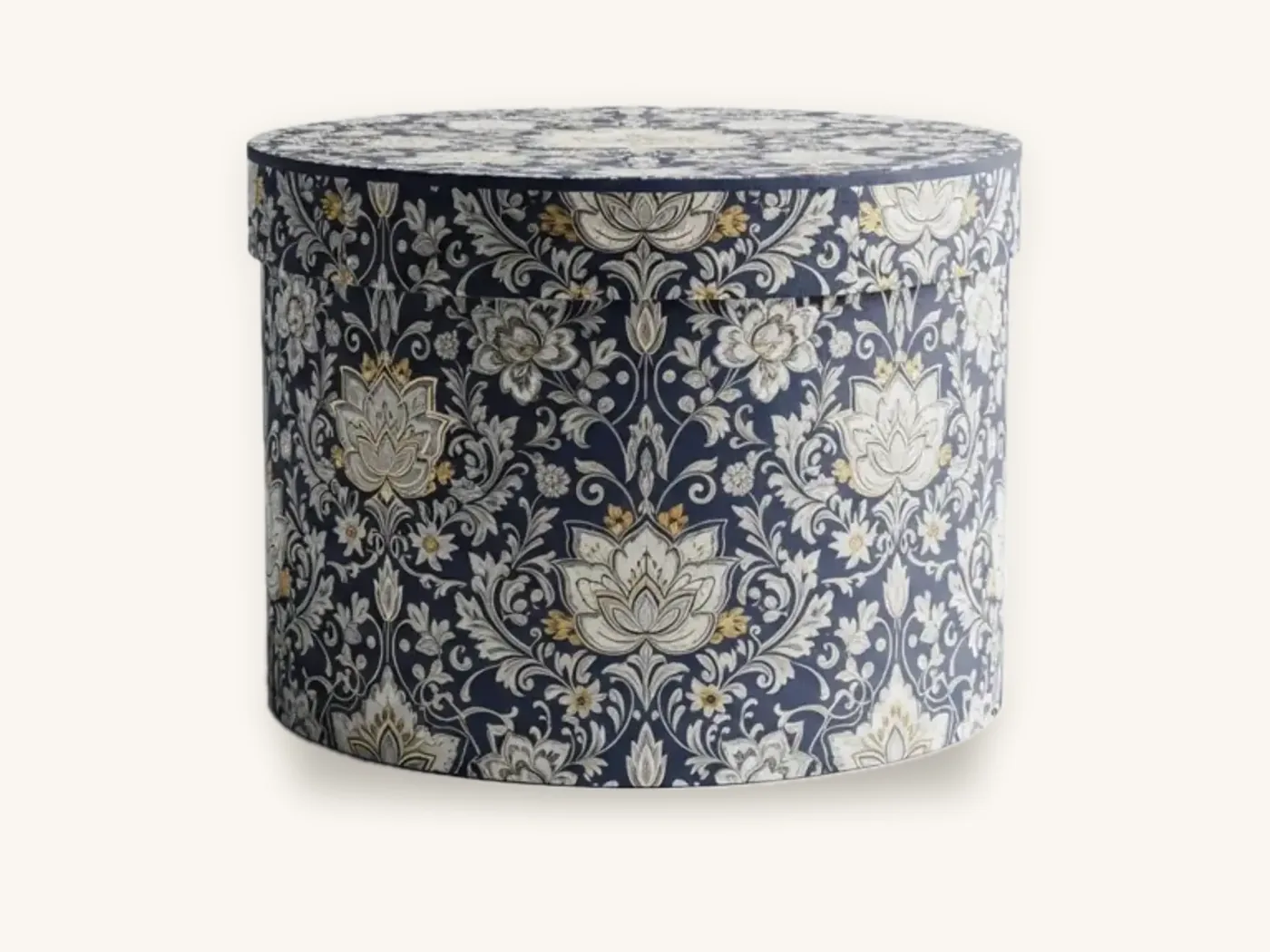
Short, wide cylinders such as hat and flower boxes are usually built differently, as a wrapped rigid structure; the round boxes guide covers those.
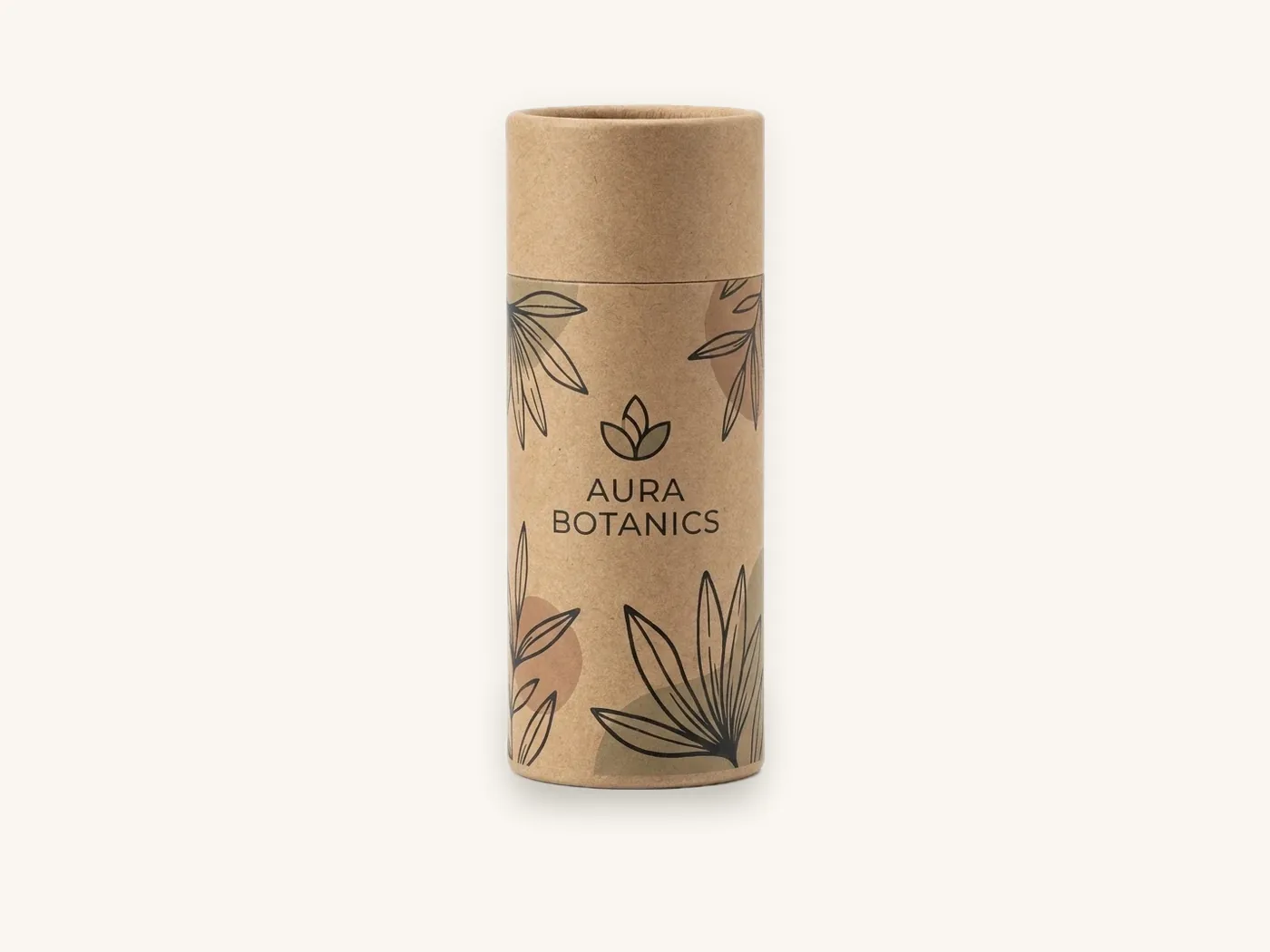
Closures and end options
The closure decides how the tube opens, how well it seals and how the customer experiences it. This is the single most important choice after size.
| Closure | How it works | Feel | Best for |
|---|---|---|---|
| Telescoping lid | A wider tube cap slides over the body | Simple, classic | Posters, rolled prints, apparel, general retail |
| Neck (shoulder) lid | Inner collar glued inside the body; lid slides over and sits flush | Slow, cushioned lift | Candles, spirits, cosmetics, gift sets |
| Paper plug end | Paper disc pressed into the end | Minimal, all-paper | Tea, dry goods, low-cost retail |
| Rolled paper end | Base disc with the body edge rolled over it | Clean, finished base | Most retail tubes |
| Metal end | Tin-plate or aluminum end seamed on | Sturdy, can be sealed | Coffee, powders, heavier products |
| Plastic plug or cap | Push-in or snap-on plastic end | Resealable | Shipping tubes, reusable containers |
| Sifter or shaker top | Perforated inner lid under a cap | Functional dispensing | Spices, salts, bath products |
Friction fit and the neck lid
The neck lid gives paper tubes their luxury feel. An inner collar sits inside the body and rises above it; the lid slides over that collar and lands on the body edge so the outside reads as one smooth cylinder. The narrow gap slows the lid as it lifts, creating the same controlled reveal described in the shoulder neck boxes guide. A contrasting color on the neck shows as a band when the lid comes off.
Resealability
Paper plugs and telescoping lids reclose easily. If a product is used over weeks, such as tea or bath salts, test that the lid still fits snugly after repeated opening. Metal ends suit products that need a firmer seal, but they add weight and change how the tube is recycled.
Wall thickness and strength
Wall thickness is the main strength variable. Tubes are strong in compression along their length and resist crushing well because of their round shape, but thin walls dent at the ends and can be crushed from the side.
| Use | Common wall thickness range | Why |
|---|---|---|
| Lipstick, balm, small cosmetics | About 1 mm | Light product; slim profile matters |
| Loose tea, dry goods, apparel | About 1–1.5 mm | Moderate weight, frequent handling |
| Candles, jars, gift sets | About 1.5–2 mm | Glass weight and a premium, solid feel |
| Wine and spirits bottles | About 2–3 mm | Heavy glass; resists side crush in transit |
| Posters and documents for mailing | About 1.5–3 mm | Protects contents through parcel handling |
Thicker walls feel more premium but add weight and material cost. For most retail tubes, the right thickness is the thinnest one that passes a squeeze test and a drop test with your actual product.
Tip: squeeze a sample tube gently at its open end before approving. Tube ends are the weakest point, and a tube that feels firm in the middle can still oval out at the rim, which makes the lid stick.
Which products suit custom cardboard tubes
Tubes work best for products that are already round or that can be rolled, and for brands that want a container customers keep.
Tea and coffee
Loose-leaf tea, tea sachets, ground coffee and whole beans are natural fits. The tube stands on a shelf, reseals and holds a meaningful quantity. Food contact and aroma protection make liners important here; see the section below. Our tea boxes, the coffee and tea page and the tea packaging guide cover rectangular alternatives and gift sets.
Candles and home fragrance
Jar candles slide neatly into a tube, and the lid covers the vessel completely. A neck lid and a paperboard disc insert under the jar give a premium feel. See candle boxes for boxed alternatives.
Wine and spirits
A single bottle in a tube reads as a gift and protects the glass. Thicker walls, a fitted base insert and a neck to hold the bottle steady are standard. The wine and spirits boxes page shows rectangular formats if you need to compare.
Cosmetics and personal care
Lipstick, lip balm, deodorant sticks, serums and perfume bottles all use slim tubes. Tubes also appear as plastic-free alternatives to squeeze and twist containers for solid products.
Apparel and rolled goods
T-shirts, socks, scarves and art prints can be rolled into a tube for a compact, distinctive package that also ships well.
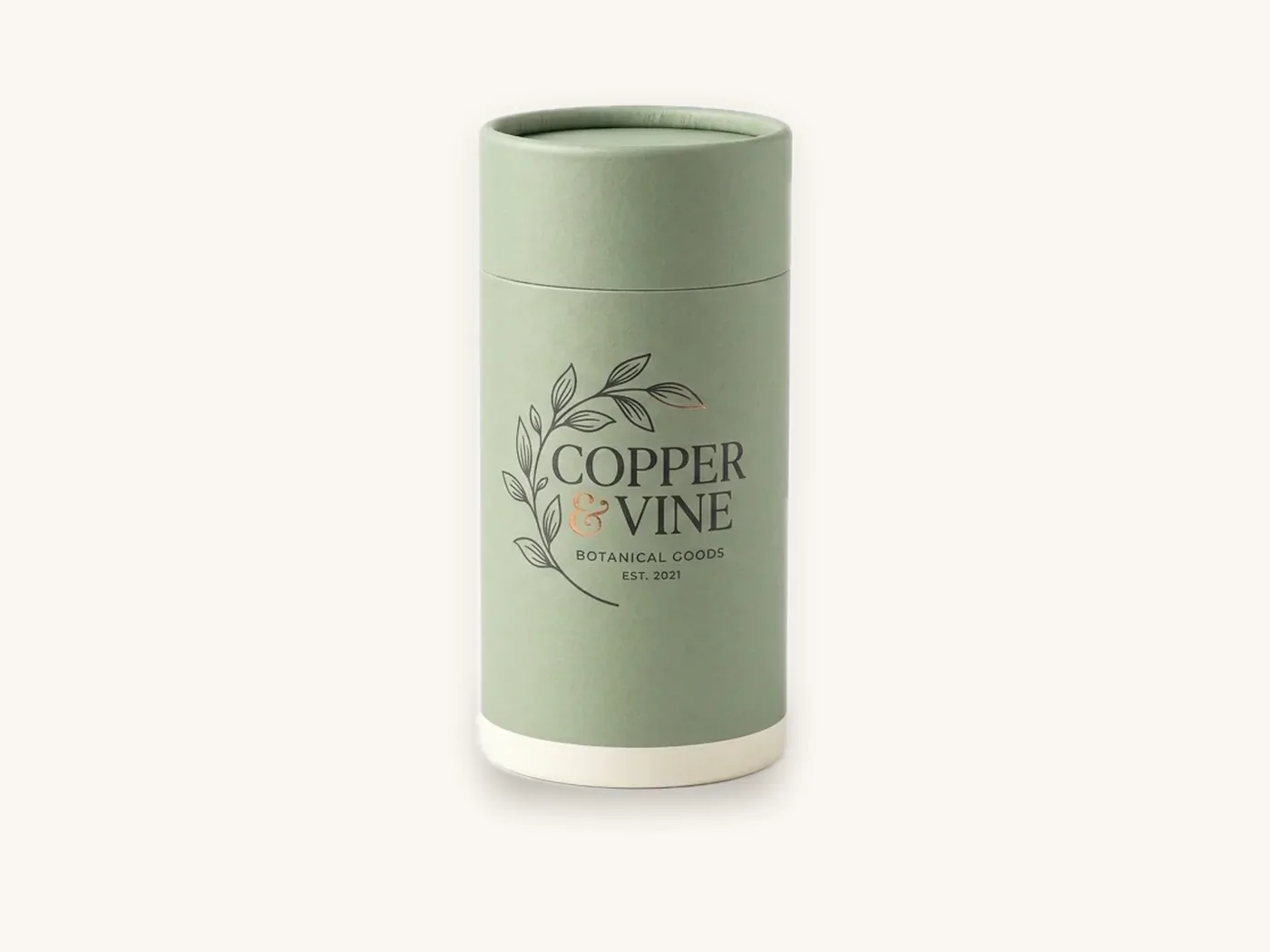
Food-safe paper tubes and liners
Paperboard alone is porous. For dry foods it can transfer odors, absorb oils and let moisture in. That is why food tubes often use an inner liner or a food-contact paper on the inside surface.
Common liner options
- Food-grade paper liner: a basic barrier for dry, low-fat products such as tea sachets or wrapped chocolates.
- Glassine or greaseproof paper: resists oil migration, useful for nuts, cookies and chocolate.
- Foil or foil-laminate liner: a stronger moisture and aroma barrier for coffee, loose tea and spices.
- Inner bag: product goes in a sealed pouch and the tube is the outer presentation. This keeps the tube itself out of direct contact with food.
Materials that touch food in the US are regulated by the Food and Drug Administration, which sets rules for food contact substances. Requirements depend on the food, its fat and moisture content and how long it stays in contact. Review current guidance from the FDA on food contact substances and confirm with counsel or your food safety lead before choosing a liner. For many small brands, an inner pouch is the simplest route, because it separates food-contact questions from the printed tube.
How to size a paper tube
Tubes are specified by inside diameter and inside height. Unlike a box, there is no flexibility in the corners, so small errors show up quickly.
Sizing process
- Measure the product's widest diameter, including labels, caps, shoulders and any flared base. Glass bottles vary slightly, so measure several.
- Add diameter clearance. For rigid items, roughly 1/16 to 1/8 in on the diameter lets the product slide in and out. Soft or rolled goods can be tighter.
- Measure the tallest point of the product, including any pump or cap.
- Add height for inserts and headroom. A base disc, a neck ring or a top pad each adds thickness.
- Decide the lid depth. Deeper lids feel more secure and show more of the neck band; shallow lids expose more of the body artwork.
- Check how it will pack. Cylinders waste space in rectangular shipping cartons, so confirm how many fit per case.
- Request a structural sample and test fit, lid feel and a gentle drop.
Say you sell a candle in a glass jar 3.1 in across and 3.6 in tall. A tube with a 3.25 in inside diameter and about 4 in inside height leaves room for a thin base pad and a little headroom, and the lid still closes without touching the wick.
Artwork for a cylinder
Designing for a tube is not like designing for a box. There are no panels, no front and no natural edges, so plan the layout around how people hold and turn the tube.
Setting up the wrap
The wrap artwork is a flat rectangle. Its width equals the outer circumference of the tube (diameter multiplied by roughly 3.14) plus an overlap for the glued seam, and its height equals the tube length plus allowance for turning over at the ends. The lid has its own wrap and, often, a separate printed top disc. Your supplier provides a dieline with exact figures.
Layout rules for round packaging
- Pick a front. Put the logo and product name in one zone so the tube has a clear face on shelf.
- Hide the seam. Place the overlap at the back, under the barcode panel or in a solid color area, never through the logo.
- Watch line length. On narrow tubes, long text lines curve out of view; stack text in short lines.
- Place barcodes vertically on slim tubes so the bars run around the cylinder rather than across it; ask your retailer or scanner provider what works for them.
- Design the lid top. On shelf and in gift boxes, tubes are often seen from above.
- Allow for the neck band. If you use a neck lid, the band between lid and body can carry a color or pattern.
Finishes that suit tubes
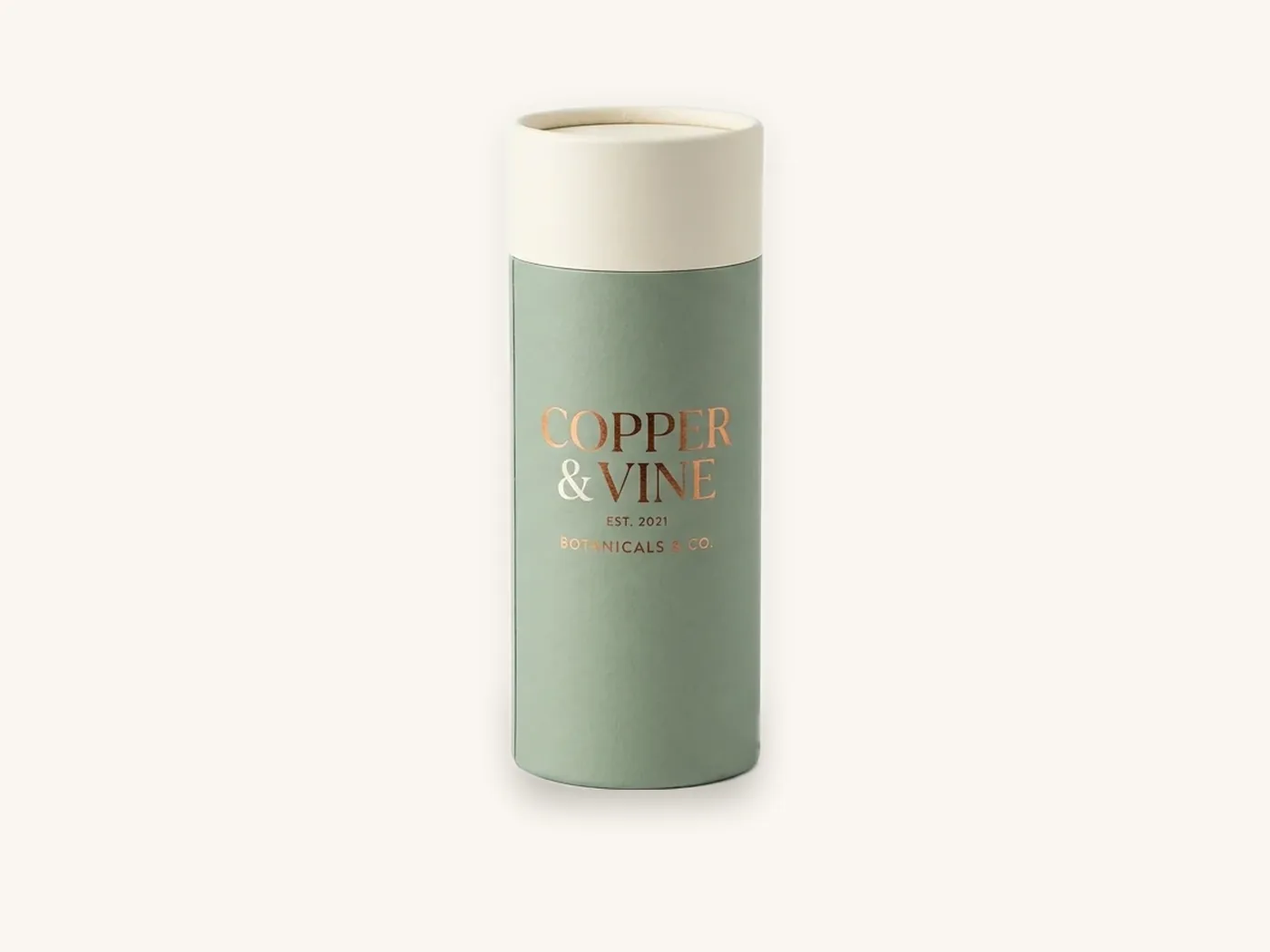
Matte and soft-touch lamination protect the wrap from scuffing as the tube rolls around. Foil stamping and embossing work well on the lid top and body, applied to the flat wrap before it is glued on. Kraft wraps with a single dark color or white ink suit natural and organic brands. The printing and finishes page shows each option, and the kraft paperboard page explains how color behaves on brown stock.
Sustainability of paper tubes
An all-paper tube with paper ends, a water-based coating and no plastic window is one of the most straightforward packaging formats to position as plastic-free. Many customers also keep tubes for storage, which extends their use.
Recyclability depends on the whole assembly. Metal ends, plastic caps, foil liners and plastic laminations can complicate curbside recycling, even when the tube body is paper. If sustainability is central to your positioning, choose paper plugs or rolled paper ends, an aqueous coating or uncoated kraft wrap, a paper liner or separate pouch, and FSC-certified board. Our eco-friendly materials page and the sustainability page cover the options.
If you print claims such as "recyclable" or "plastic-free" on the tube, they must be accurate and qualified. The Federal Trade Commission's Green Guides set out how environmental marketing claims should be made in the US, so check current FTC guidance or ask counsel before adding a claim.
What drives the cost of paper tube packaging
Paper tubes are not on our standard price sheet because the construction varies so much by diameter, length, closure and liner. These are the factors that move the price, and how to control them.
| Cost driver | Effect on price | How to manage it |
|---|---|---|
| Diameter and length | Larger tubes use more board and wrap | Size tightly around the product |
| Wall thickness | Thicker walls add material and weight | Use the thinnest wall that passes a squeeze and drop test |
| Closure type | Neck lids and metal ends add components and steps | Use a telescoping lid or paper plug where the reveal is less important |
| Liner | Foil or specialty liners add material and a process | Use an inner pouch, or a liner only where the product needs it |
| Wrap paper and print | Specialty papers and full coverage add cost | Keep the specialty paper for the lid or neck only |
| Finishes | Foil and embossing each add about $60 one-time tooling; spot UV about $40 | Put a single finish on the lid top |
| Inserts | Base pads and custom holders add material; custom insert dies about $45 | Use a simple paperboard disc |
| Quantity | Unit price falls as runs grow | Standardize diameters across your range |
The biggest long-term saving is standardization. If three products share one diameter and lid, you can order lids and inserts together and only change body height and wrap. Use the instant price estimator for boxed alternatives, and request a quote for your tube spec.
Tubes vs boxes: when to choose each
Tubes are not always the right answer. Choose a paper tube when your product is round or rollable, when shelf differentiation matters, when you want a reusable keepsake container, or when you sell a premium single item like a bottle or candle.
Choose a rectangular carton or rigid box when you need to fit several items in a set, when shipping efficiency in cases matters more than shelf presence, or when you need a large flat panel for regulatory text. The mailer box vs shipping box vs folding carton comparison explains the main rectangular formats, and the box styles glossary defines the rest.
For e-commerce, most tubes travel inside a mailer or shipping carton with void fill, because round shapes roll on conveyors and label poorly. Mailing tubes for posters and prints are the exception and are designed to ship on their own.
How to order paper tubes from Box Sense
What to send
- Product dimensions: widest diameter and height, including caps and labels
- Product weight and whether it is glass, food or fragile
- Closure preference: telescoping lid, neck lid, paper plug, metal end or "recommend"
- Liner needs if the product is food or needs a moisture or aroma barrier
- Wrap paper, print coverage and finishes for the body, lid and lid top
- Insert ideas, such as a base pad or bottle holder
- Quantities to price and your target in-hand date
- Artwork, or a request for help from our design services team
What happens next
- Quote within 24 hours for each quantity.
- Free design support: we provide the wrap dieline, set up artwork and send a 3D digital proof, with two revision rounds included.
- Samples: unprinted structural samples are free, so you can test fit and lid feel. A printed sample of approved artwork is free on orders of 100 or more. Details are on the samples page.
- Production: standard production takes 8–12 business days after proof approval.
- Delivery: US shipping is free on every order, and international shipping is quoted at cost.
The minimum order is 10 tubes, and there are no die or plate charges. One-time tooling applies only to optional foil, embossing, spot UV or custom inserts. Defective units reported within 14 days are reprinted free. You can browse standard options on the paper tube packaging product page and the paper tubes style page.
Frequently asked questions
What is paper tube packaging?
Paper tube packaging is a cylindrical container made by winding layers of paperboard into a rigid tube, wrapping it in printed paper and fitting ends such as a lid, paper plug or metal end. It is used for tea, coffee, candles, cosmetics, spirits and rolled goods. Tubes feel solid, stand out from rectangular boxes and are largely paper-based.
Are cardboard tubes strong enough for glass bottles?
Yes, with the right wall thickness and insert. Wine and spirits tubes commonly use walls of about 2 to 3 mm, plus a base insert or neck ring to stop the bottle moving. The round shape resists crushing well. For parcel shipping, place the tube inside a snug corrugated carton, because tubes roll and their printed wraps can scuff.
Are paper tubes food safe?
The tube body is usually not intended for direct food contact on its own. Food brands typically add a food-contact liner, such as glassine, food-grade paper or a foil laminate, or pack the food in a sealed inner pouch. US food contact materials fall under FDA rules, so confirm current requirements for your specific product with the agency or counsel.
What is the difference between spiral and convolute tubes?
Spiral tubes are wound from narrow strips at an angle, producing a diagonal seam and efficient long lengths. Convolute tubes are wound from one wide sheet, so the seam runs straight along the length and the wall is very uniform and smooth. Both are strong; convolute construction is often preferred for premium retail tubes with close-fitting lids.
How do I measure for a custom paper tube?
Measure the widest diameter of your product, including caps and labels, and add roughly 1/16 to 1/8 in for rigid items. Then measure the tallest point and add height for any base pad, neck ring or headroom under the lid. Specify inside diameter and inside height, and confirm the fit with a free structural sample.
Can paper tubes be recycled?
An all-paper tube with paper ends and a water-based coating is generally accepted where paperboard is recycled. Metal ends, plastic caps, foil liners and plastic laminations can make recycling harder, so the whole assembly matters. If you want to make a recyclability claim, choose paper components and check current FTC guidance on environmental marketing claims first.
What is the minimum order for custom paper tubes?
Box Sense makes custom paper tubes from a minimum of 10 units, with no die or plate charges. Short runs suit product launches, gift editions and testing a new closure before a larger order. Unit prices fall as quantity rises, and standardizing one diameter across several products helps you reach better quantity tiers sooner.
Next steps
Measure your product's diameter and height, choose a closure and decide whether it needs a liner. Then request a paper tube quote and we will confirm pricing within 24 hours, supply a wrap dieline and prepare a 3D proof. If you are weighing a tube against a boxed format, compare carton and rigid box prices in the instant pricing tool first.
Boxes in this guide
Order the packaging we covered
Written by the Box Sense Packaging Team
Our structural designers, prepress technicians and production staff print and convert custom boxes every day for brands in the United States, United Kingdom and UAE. Questions about this guide? Talk to us.