There are dozens of box styles, but almost all of them belong to five families: corrugated shipping and mailer boxes, paperboard folding cartons, food-service cartons, rigid set-up boxes, and tubes and displays. This guide names the 40 types of boxes packaging manufacturers make most often, explains how each one is built and closes, and tells you when each is the right choice.
Use it as a reference when a supplier, designer or retail buyer uses a term you do not recognize, or when you are trying to pick between two box styles that look similar. Each entry links to the matching product page where you can see the structure and request pricing.
Key takeaways
- The material family decides most of the cost and protection: corrugated for shipping, paperboard for retail shelves, greyboard for premium presentation.
- Within a family, the closure is what separates one style from another: tuck flaps, lock bottoms, glued seals, magnets, sleeves or lids.
- Style names describe construction, not size or print. A "reverse tuck end" can be a lipstick carton or a cereal-sized box.
- When two styles would both work, choose the one that packs fastest on your line and still survives your heaviest product.
- Most brands need two or three styles working together, such as a folding carton inside a corrugated mailer.
- Box Sense makes every style below from a minimum of 10 boxes, with no die or plate charges.
How to read a box style name
Box style names come from the way the box is cut, folded and closed. Once you know a handful of terms, most names decode themselves.
| Term | What it means |
|---|---|
| Tuck | A flap that slides inside the box to close it, held by friction and small locking slits |
| Lock bottom | A base with interlocking flaps that snap together when the box is opened |
| Slotted | Flaps separated by slots, folded down and usually taped |
| Roll end | A side wall made by rolling a double panel over itself, so no raw edge shows |
| Seal end | Flaps held shut with glue rather than tucks |
| Set-up | A rigid box delivered already assembled, rather than flat |
| Sleeve | An open-ended tube of board that slides over a tray or product |
| Dieline | The flat drawing of cuts and folds that defines the structure |
| Caliper | Board thickness; paperboard is measured in points, where 1 pt equals 0.001 in |
| Flute | The wavy middle layer in corrugated board; E, B and C flutes are common |
Two code systems are also worth knowing. Corrugated styles are often referred to by FEFCO code, where 0201 is the regular slotted container and the 04 series covers folders and mailers. Folding cartons have an equivalent ECMA code system. You do not need either to order, but they help when comparing quotes from different suppliers.
Corrugated boxes: shipping, mailer and bin styles (1–9)
Corrugated board is paper liners glued to a fluted medium. It is the family to choose when a box has to survive a carrier network, warehouse stacking or heavy contents. See corrugated board for the grades we run.
| # | Style | How it is built | Use it for |
|---|---|---|---|
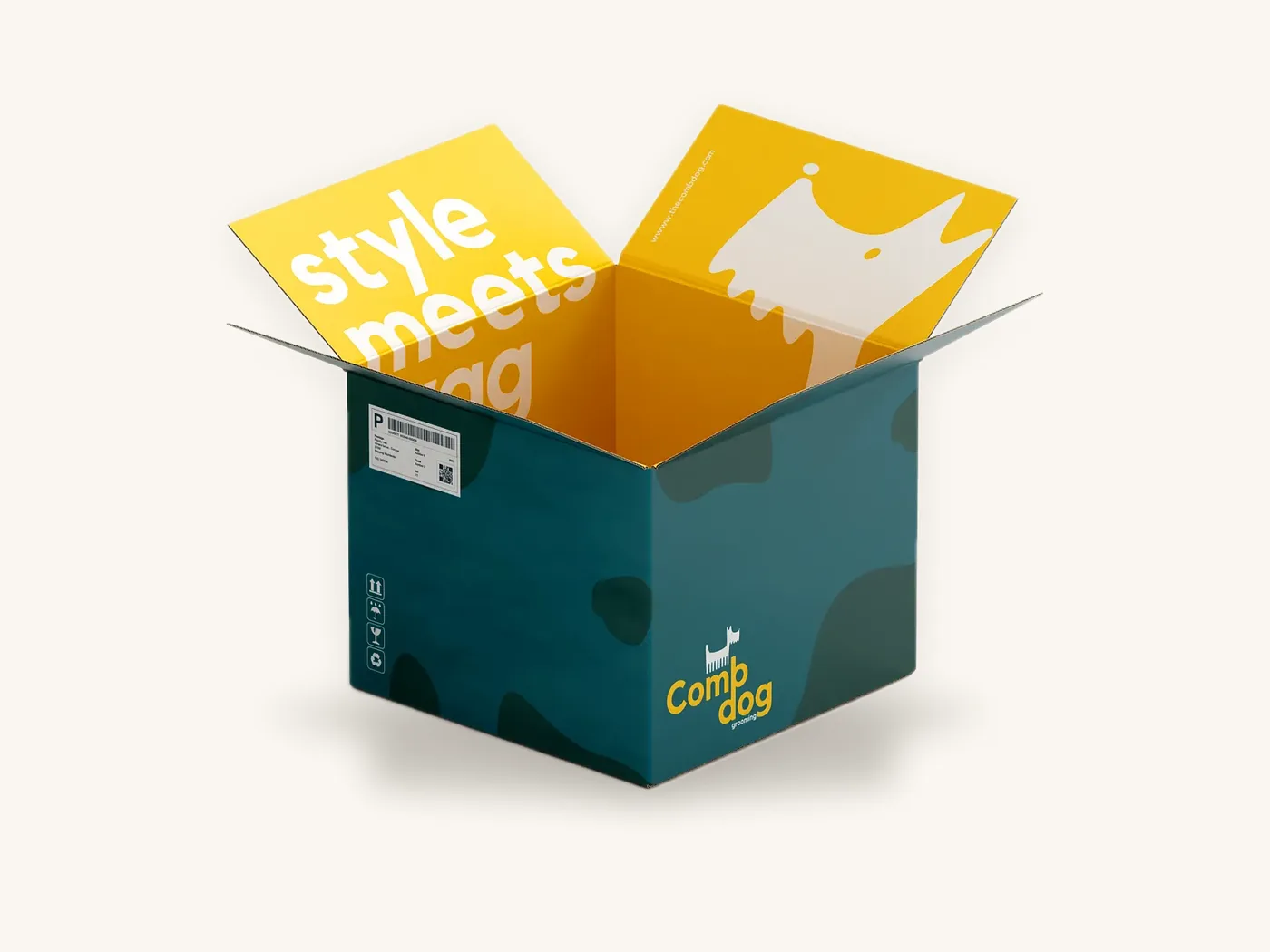
| 1 | Regular slotted container (RSC) | Four flaps top and bottom that meet in the middle; taped | General shipping, bulk and overboxing |
| 2 | Half slotted container (HSC) | An RSC with no top flaps; often paired with a lid | Trays, open-top storage, telescoping lids |
| 3 | Full overlap container (FOL) | Outer flaps overlap fully across the width | Heavy or rough-handled loads that need a stronger top |
| 4 | Double-wall heavy-duty box | Two layers of flute, usually BC flute | Dense, heavy or high-value freight |
| 5 | Five-panel folder | A flat sheet that wraps around a long, flat item | Frames, rods, panels and long parts |
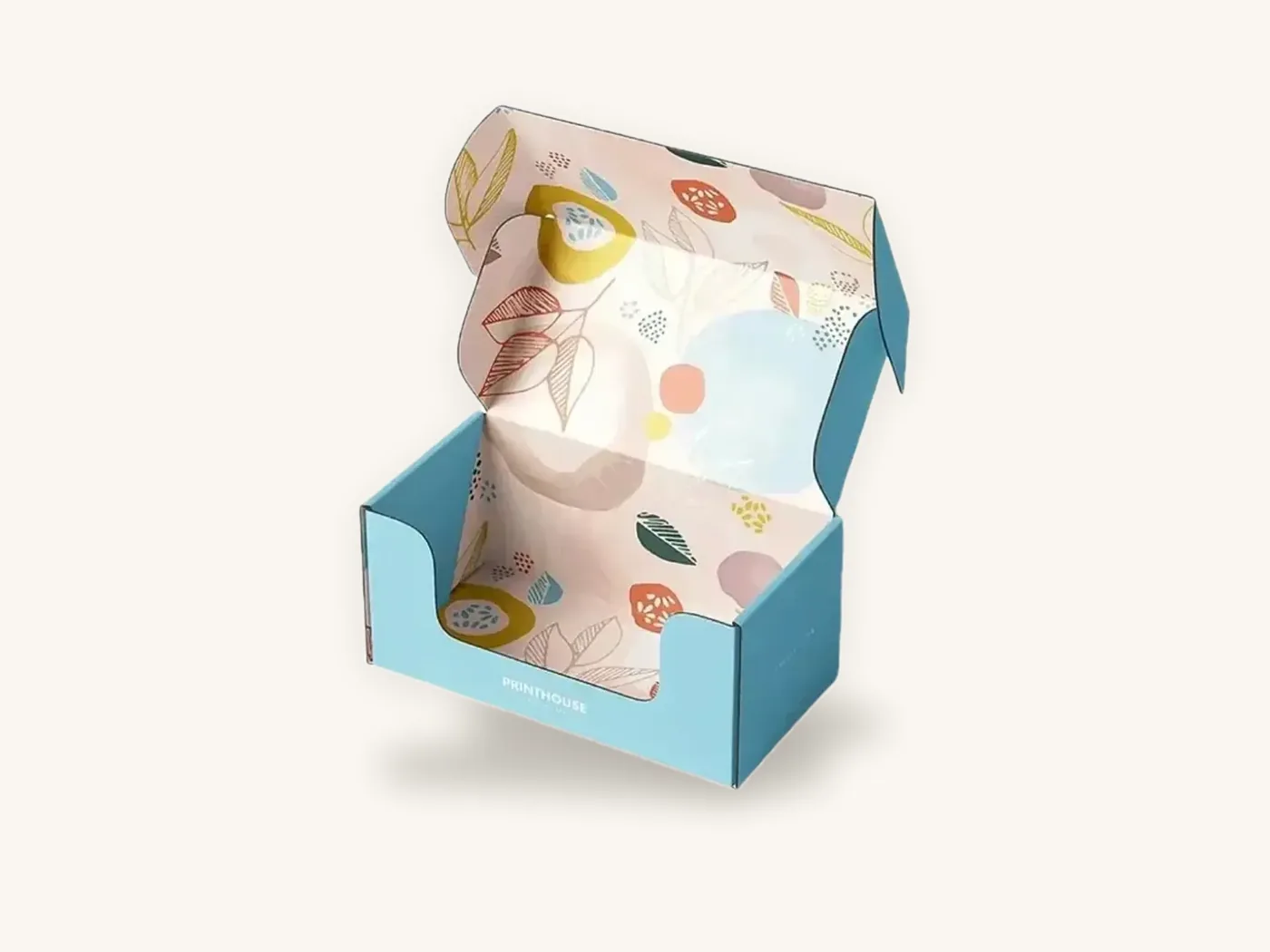
| 6 | Roll-end tuck-front mailer | One piece, rolled side walls, lid tucks inside the front | Direct-to-consumer shipping with a branded unboxing |
| 7 | Tuck-top mailer | Lid tucks over the outside of the front wall, often with a tear strip | Subscription kits, tamper-evident deliveries |
| 8 | Book or wrap mailer | Flat tray with flaps that fold around the item | Books, planners, prints and other flat goods |
| 9 | Bin box | Open-front corrugated tray with a lowered front panel | Shelving, parts storage and bulk retail |
Slotted containers (styles 1–4)
The RSC is the most efficient box ever designed for moving goods: nearly every part of the blank becomes box, so waste is low. Our custom shipping boxes and corrugated boxes are RSCs by default, and heavy duty double wall boxes cover style 4. The custom shipping boxes guide goes deeper on board ratings.
Mailers and folders (styles 5–8)
Mailers are die-cut, so they cost more per cubic inch than an RSC, but they assemble without tape and present well. Custom mailer boxes are style 6, tuck top mailer boxes are style 7, and book mailer boxes are style 8. The custom mailer boxes guide compares them in detail.
Folding cartons: tuck, lock and seal styles (10–17)
Folding cartons are printed paperboard boxes, usually 14 pt to 24 pt, delivered flat and folded on a packing line or by hand. They are the retail shelf family: excellent print, light weight, low cost, but little protection in the mail. These eight styles are the workhorses; they differ mainly in how the top and bottom close.
| # | Style | Top closure | Bottom closure | Use it for |
|---|---|---|---|---|
| 10 | Straight tuck end (STE) | Tuck flap | Tuck flap on the same side as the top | Cosmetics, retail goods with a clean front panel |
| 11 | Reverse tuck end (RTE) | Tuck flap | Tuck flap on the opposite side | Light items on high-speed lines; lowest-cost carton |
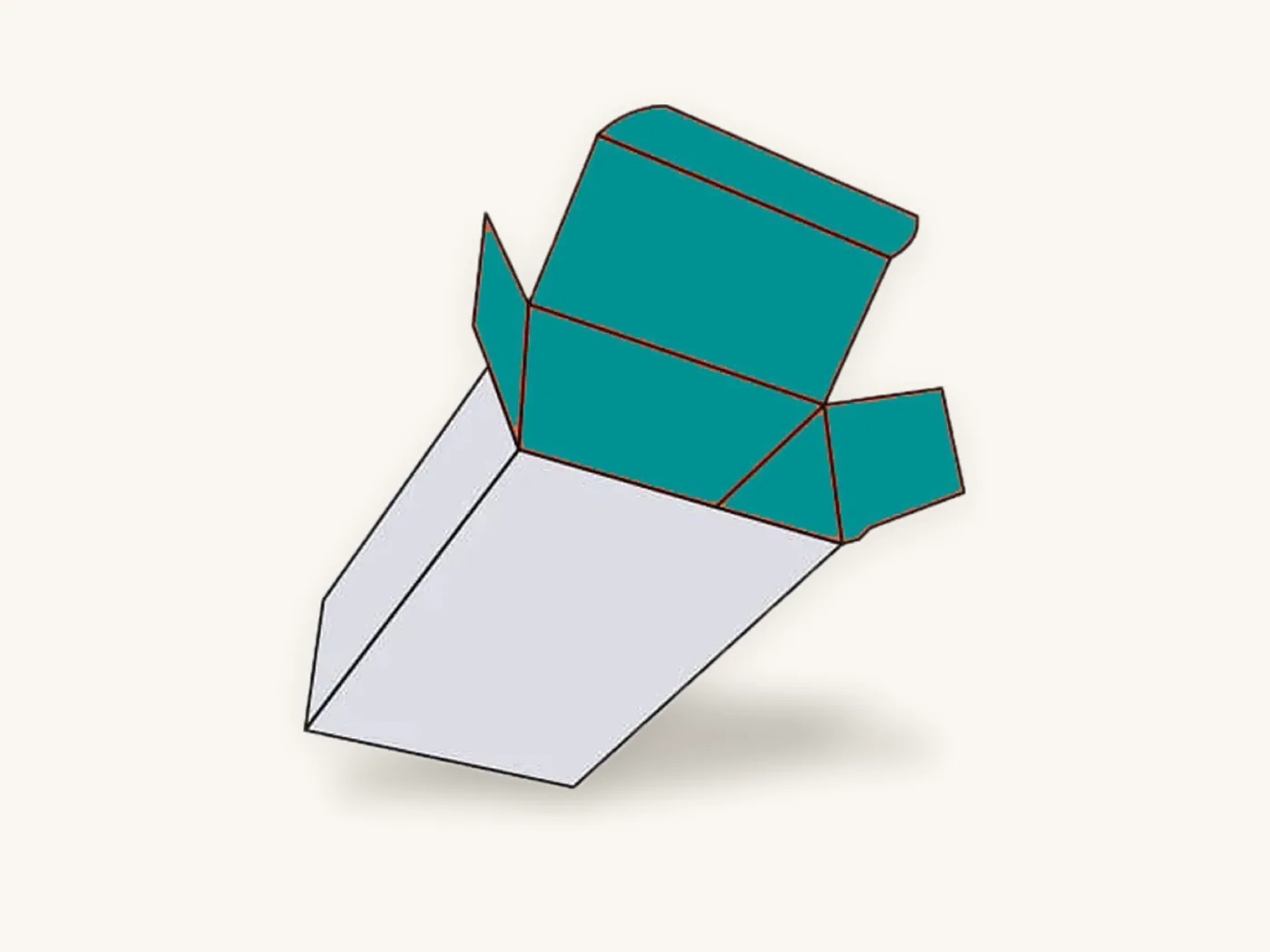
| 12 | Auto lock bottom (crash lock) | Tuck flap | Pre-glued base that locks as the box opens | Heavier bottles and jars; fast hand packing |
| 13 | Snap lock bottom (1-2-3 bottom) | Tuck flap | Four flaps folded in sequence, no glue | Medium-weight items where glue is unwanted |
| 14 | Seal end | Glued flaps | Glued flaps | Food, pharma and automated cartoning; tamper evidence |
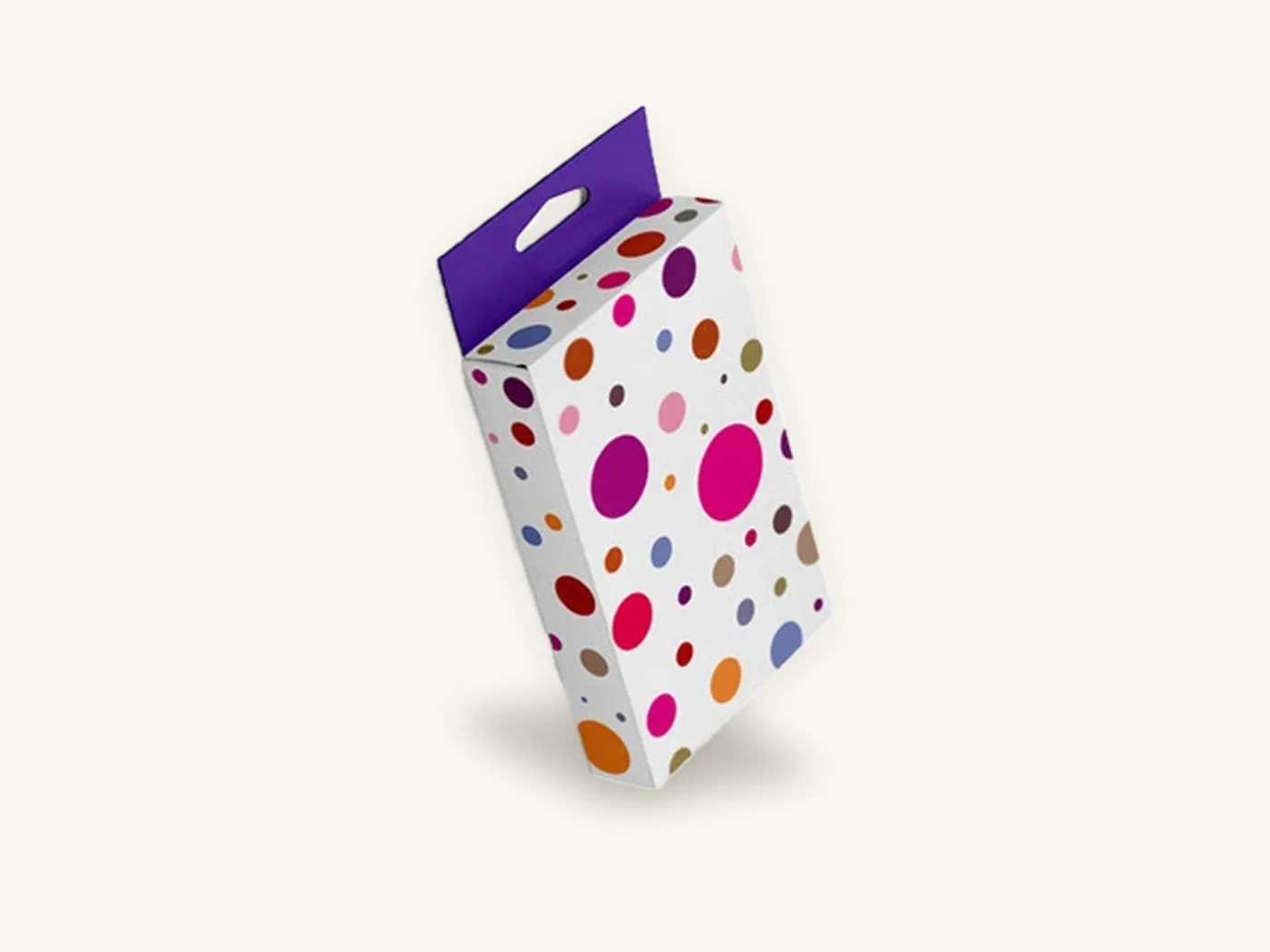
| 15 | Five-panel hanger | Tuck flap | Tuck flap | Items hung on pegs, with an extra hanging panel |
| 16 | Hang-tab carton | Tuck or seal | Tuck or seal | Peg-hook retail with a die-cut tab on top |
| 17 | Dispenser carton | Tuck or seal | Tuck or seal | Counter or shelf dispensing through a tear-away front |
Tuck ends (styles 10 and 11)
A straight tuck end box closes both ends from the same side, which leaves the front panel seamless. A reverse tuck end box closes them from opposite sides, which nests blanks more efficiently on the press sheet and usually costs slightly less. The tuck end boxes guide compares the two in detail.
Lock bottoms and seal ends (styles 12–14)
An auto lock bottom box is glued at the factory so the base springs into place when you square the carton. It is the fix when a tuck bottom keeps falling open under a heavy jar. Seal end boxes are glued shut on both ends and suit automated lines; the seal end boxes guide explains when that matters.
Hanging and dispensing styles (styles 15–17)
Five panel hanger boxes add a doubled panel above the carton with a hang hole. Hang tab boxes put the tab on the top panel instead; our hang tab boxes guide covers hole sizes and peg compatibility. Dispenser boxes turn the carton into a shelf-ready tray with a perforated front.
Specialty folding cartons (18–27)
These styles are still paperboard, but they solve a specific display, carry or safety need. Most cost more than a plain tuck end because they use more board, extra glue points or a window.
| # | Style | What makes it different | Use it for |
|---|---|---|---|
| 18 | Window box | A die-cut opening, usually covered with PET or PLA film | Bakery, toys and anything that sells on sight |
| 19 | Gable box | A tall carton with a built-in carry handle on a peaked top | Takeout, gifts, party favors |
| 20 | Pillow box | Curved ends that press closed; no flat top or bottom | Small gifts, jewelry, soap, hair accessories |
| 21 | Hexagon box | Six sides, often with a separate lid or tuck top | Candles, chocolates, specialty gifts |
| 22 | Sleeve | An open-ended printed wrap | Adding branding to a stock box, bundling items |
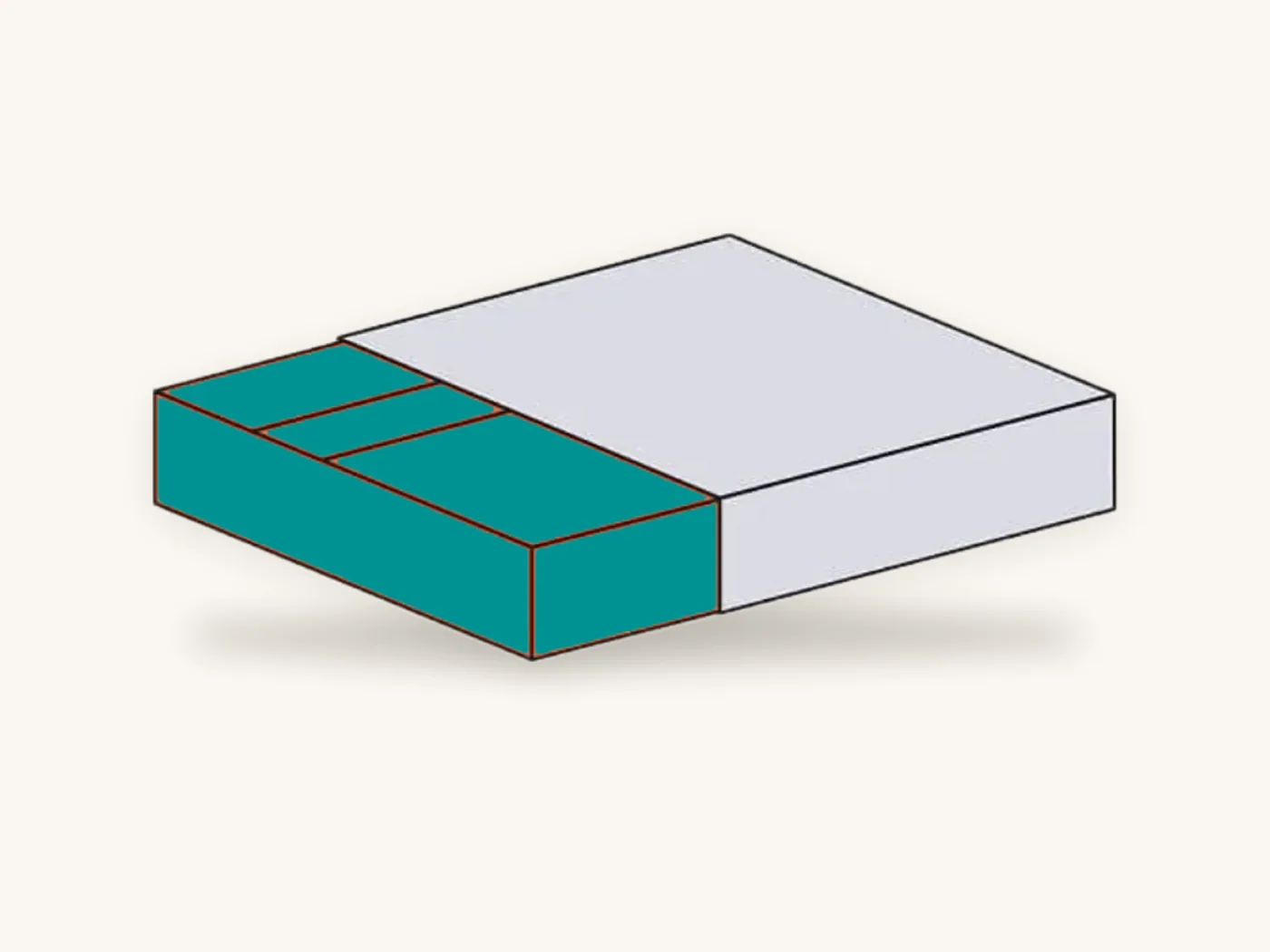
| 23 | Sleeve and tray | A tray that slides out of a sleeve like a drawer | Premium kits at paperboard cost |
| 24 | Two-piece paperboard | A separate lid over a base | Apparel, stationery, gift sets |
| 25 | Four-corner tray | A tray with glued corners, often with a hinged or separate lid | Bakery items, cookies, cakes |
| 26 | Flip-top carton | A hinged lid that folds back over an inner collar | Cards, small consumables, reclosable packs |
| 27 | Child-resistant carton | A locking mechanism or sleeve that requires two actions to open | Cannabis, some pharma and household products |
Display and carry cartons (styles 18–21)
Window boxes sell by showing the product; choose film thickness based on how much the box flexes. Gable boxes and pillow boxes need no tape and pack fast by hand. Hexagon boxes are harder to pack and ship efficiently, so reserve them for products where shape is part of the appeal.
Sleeves, trays and lids (styles 22–25)
Sleeve and tray boxes give a drawer-like reveal at folding carton prices. Two piece boxes in paperboard look like a small rigid box but ship flat or nested. Cake boxes are usually four-corner trays with a lid or self-locking panel.
Reclosable and restricted-access cartons (styles 26–27)
Cigarette and flip-top boxes use an inner collar to hold the lid closed between uses. Child resistant boxes use certified mechanisms; whether a design meets a particular regulation depends on testing under the relevant rules, so confirm requirements with the regulator or your compliance advisor.
Food-service cartons (28–30)
Food-service structures are folding cartons designed for grease, heat, carrying or quick assembly behind a counter. They often use coated or food-safe board and inks.
- 28. Folded takeout pail. A leak-resistant folded carton with a wire or paper handle. See takeout and noodle boxes.
- 29. Clamshell. A one-piece hinged carton that locks shut, used for burgers and sandwiches. See burger and sandwich boxes.
- 30. Basket carrier. An open carrier with dividers and a handle for bottles and cans. See beverage carriers.
Pizza boxes are also a food-service structure, but they are a corrugated roll-end tray and behave like a mailer.
Rigid set-up boxes (31–36)
Rigid boxes are made from thick greyboard, usually around 1.5 to 3 mm, wrapped in printed or textured paper. They do not flex, they feel substantial, and most are delivered set up, so they take far more storage and freight space than cartons. The rigid greyboard page covers the board.
| # | Style | How it opens | Best for | Trade-off |
|---|---|---|---|---|
| 31 | Two-piece rigid (lid and base) | Lift-off lid | Gifts, apparel, keepsake sets | Lid can slide off if the box is carried upside down |
| 32 | Shoulder-neck | Lid rests on a raised inner neck | Fragrance, jewelry, premium spirits | Three-part construction adds cost |
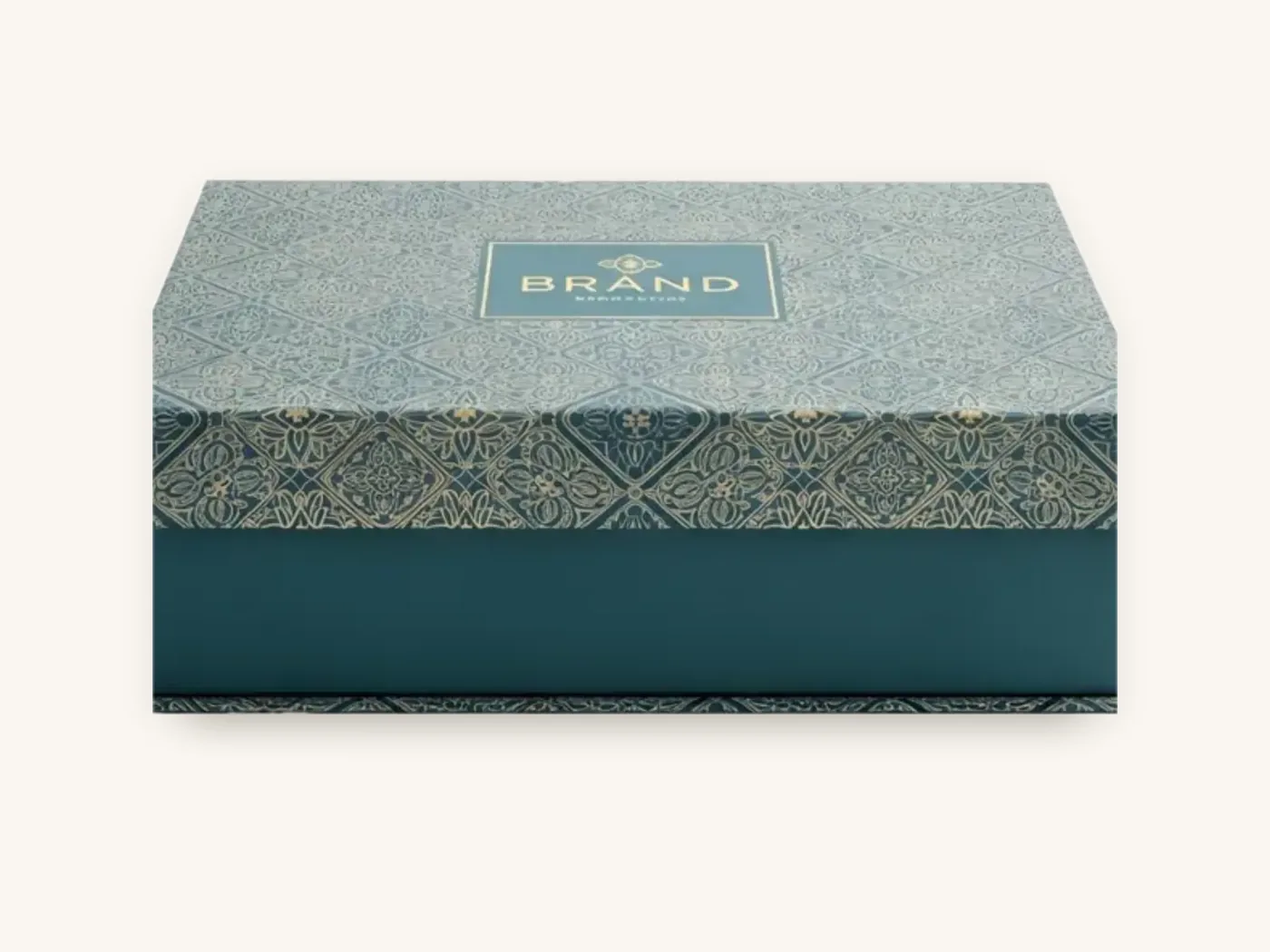
| 33 | Magnetic book-style | Front flap closes with hidden magnets | Electronics, beauty sets, corporate gifts | Magnets add weight and cost |
| 34 | Drawer (matchbox) | Tray slides out of an outer shell | Jewelry, chocolates, lashes | Needs a ribbon pull or thumb cut |
| 35 | Collapsible rigid | Folds flat, then snaps into shape with magnets or tabs | Premium boxes that must ship flat | Slightly less crisp than fixed rigid |
| 36 | Hinged-lid rigid | Lid attached along one edge | Watches, pens, presentation sets | Hinge wrap adds labor |
Choosing among rigid styles
Custom rigid boxes in the lid-and-base format are the simplest and least expensive rigid option. Shoulder neck boxes create a stepped reveal, and magnetic closure boxes give the familiar snap. If storage and freight costs are a concern, collapsible rigid boxes keep most of the look while shipping flat. Drawer boxes suit small, high-value items.
For reference, a 2 mm wrapped rigid box at 8x6x3 in, printed full color with matte finish, is about $9.10 each at 100 units and about $4.05 at 1,000, which shows why rigid is usually reserved for premium lines.
Tubes, round boxes and retail displays (37–40)
The final family covers shapes that are not rectangles and structures built to sell rather than to hold a single product.
- 37. Paper tube. Spiral or convolute wound board with a lid and base, often with a rolled edge. See paper tube packaging.
- 38. Round box. A rigid or semi-rigid cylinder with a lift-off lid, the classic hat-box format. See round boxes.
- 39. Counter display. A corrugated or paperboard tray with a printed header that holds units at checkout. See counter display boxes.
- 40. Floor display stand. A free-standing corrugated fixture with shelves, hooks or a bin. See floor display stands and our floor display stands guide.
Anything outside these 40 is usually a custom die-cut structure, such as a carton with a built-in handle or an unusual shape. Custom die cut boxes start from your drawing or a description of the product.
Choosing a box style: a decision table by situation
Most people arrive at a style from a situation, not a name. Start from the row that matches your product and narrow down from there.
| Your situation | Start with | Also consider |
|---|---|---|
| Shipping direct to customers, under a few pounds | Roll-end tuck-front mailer (6) | Tuck-top mailer (7) for tamper evidence |
| Shipping heavy or bulk goods | RSC (1) | Double-wall (4) or FOL (3) |
| Selling on a retail shelf | Straight or reverse tuck end (10, 11) | Window box (18) to show the product |
| Heavy glass jar or bottle on a shelf | Auto lock bottom (12) | Carton plus insert |
| Selling from peg hooks | Hang-tab carton (16) | Five-panel hanger (15) |
| Premium gift or launch kit | Magnetic book-style (33) | Collapsible rigid (35) to ship flat |
| Premium feel on a carton budget | Sleeve and tray (23) | Two-piece paperboard (24) |
| Food to go | Gable box (19) or clamshell (29) | Takeout pail (28) |
| Impulse sales at checkout | Counter display (39) | Dispenser carton (17) |
| Regulated product needing restricted access | Child-resistant carton (27) | Confirm requirements with the regulator |
Tip: when two styles both fit, time how long it takes to pack ten of each by hand. A style that saves 15 seconds per box adds up quickly across a few thousand orders, and it is often a better tiebreaker than a small difference in unit price.
A checklist for picking the right box style
Run through these questions before requesting a quote. They narrow 40 options to two or three in a few minutes.
- Where does the box travel? Carrier network, retail shelf, counter or hand delivery.
- How heavy is the packed product? Light items can use tucks; heavier items need lock bottoms, corrugated or rigid board.
- Is the box the shipper, or does it go inside one? A carton inside a mailer needs less strength than a carton shipped alone.
- Who packs it? Hand packing favors lock bottoms and pillow boxes; automated lines favor reverse tuck and seal end cartons.
- Does it need to hang, dispense or show the product? Hang tabs, dispensers and windows solve those.
- Does it need to be reclosable, tamper-evident or restricted-access? Flip-tops, tear strips and child-resistant designs.
- How premium should it feel? Paperboard, sleeve and tray, or rigid.
- What are the storage and freight limits? Set-up rigid boxes take much more space than flat cartons.
- How many SKUs share the structure? One dieline in several sizes keeps design and ordering simpler.
For a head-to-head on the three styles people confuse most often, read mailer box vs shipping box vs folding carton.
How to order any box style from Box Sense
You do not need to know the style name to order. Describe the product and how it is sold, and our structural team will recommend two or three options.
What to send
- Product dimensions and weight, and whether it ships, sits on a shelf or both
- The style you have in mind, or a request for a recommendation
- Board preference, if you have one: corrugated, SBS paperboard, kraft or rigid
- Print coverage and finishes
- Quantities to price and your target in-hand date
What happens next
We confirm a quote within 24 hours. Free design support includes the dieline, artwork setup and a 3D digital proof, with two revision rounds. Unprinted structural samples are free, which is the fastest way to compare two styles in your hand, and a printed sample of approved artwork is free on orders of 100 or more. Standard production takes 8–12 business days after proof approval, with rush production in 5 business days on most paperboard and corrugated styles. Shipping is free on every US order. Browse all custom product boxes or the full products catalog to see each structure.
Frequently asked questions
What are the main types of packaging boxes?
Most packaging boxes fall into five families: corrugated boxes for shipping, paperboard folding cartons for retail, food-service cartons, rigid set-up boxes for premium products, and tubes and displays. Within each family, styles differ mainly by how they close, such as tuck flaps, lock bottoms, glued seals, lids, sleeves or magnets. The family sets cost and strength; the style sets usability.
What is the difference between a folding carton and a corrugated box?
A folding carton is a single layer of printed paperboard, usually 14 pt to 24 pt, designed for retail shelves. A corrugated box has a fluted layer between two liners, which makes it much stronger and suited to shipping. Cartons print more finely and cost less; corrugated protects better. Many brands put a folding carton inside a corrugated mailer or shipper.
What box style is cheapest?
For retail cartons, the reverse tuck end is usually the least expensive because its blanks nest efficiently on the press sheet and it needs no glue beyond the side seam. For shipping, the regular slotted container is the most material-efficient corrugated box. Size, board grade, print coverage and quantity still affect price more than style, so compare options in the estimator.
Which box style is best for heavy products?
For shipping, choose a double-wall corrugated box or a full overlap container. On a retail shelf, an auto lock bottom carton holds heavier jars and bottles far better than a tuck bottom, which can pop open. Rigid boxes also carry weight well. Whatever the style, a snug fit or an insert keeps the product from shifting and stressing the closures.
What is a tuck end box?
A tuck end box is a folding carton whose top and bottom close with flaps that tuck inside the box. In a straight tuck end, both flaps close from the same side, giving a clean front panel. In a reverse tuck end, they close from opposite sides, which is slightly cheaper to produce. Both ship flat and fold quickly by hand or machine.
What is the difference between a rigid box and a collapsible rigid box?
A standard rigid box is assembled at the factory from thick greyboard and arrives set up, so it takes significant storage and freight space. A collapsible rigid box uses the same wrapped greyboard but folds flat and snaps into shape with magnets or tabs. It costs more to make than a basic rigid box but can save considerably on shipping and warehouse space.
How do I know which box style my product needs?
Start with where the box travels, how heavy the packed product is and who packs it. Shipping boxes and mailers suit the carrier network, folding cartons suit shelves, and rigid boxes suit premium presentation. Narrow to two styles, then order free unprinted structural samples of both and test them with your real product before committing to printed production.
Next steps
Shortlist two or three styles from the decision table, then compare them in our instant price estimator. If you are unsure, request a quote with your product dimensions and how you sell it, and we will recommend a structure, send free unprinted samples and confirm pricing within 24 hours.
Boxes in this guide
Order the packaging we covered
Written by the Box Sense Packaging Team
Our structural designers, prepress technicians and production staff print and convert custom boxes every day for brands in the United States, United Kingdom and UAE. Questions about this guide? Talk to us.