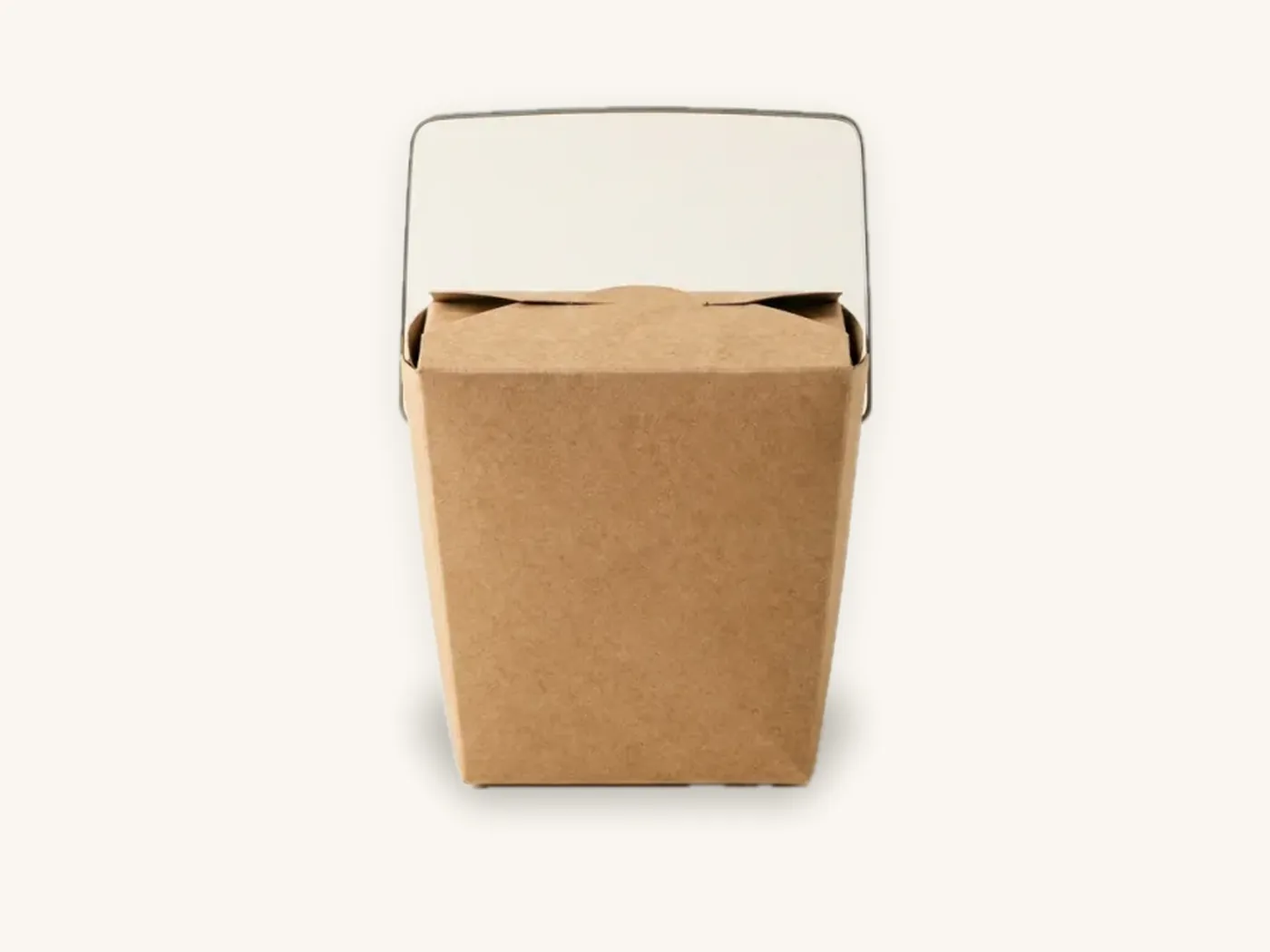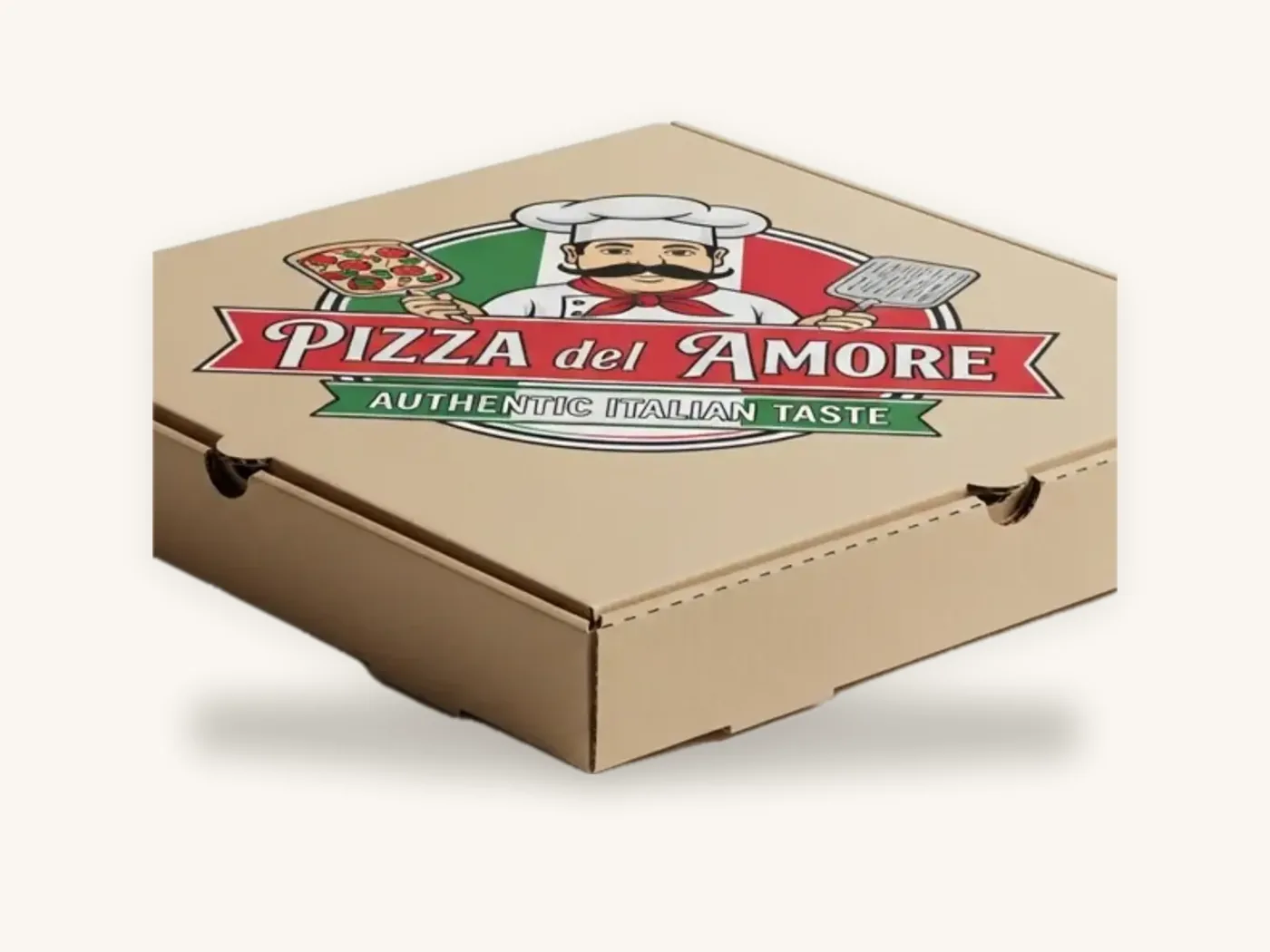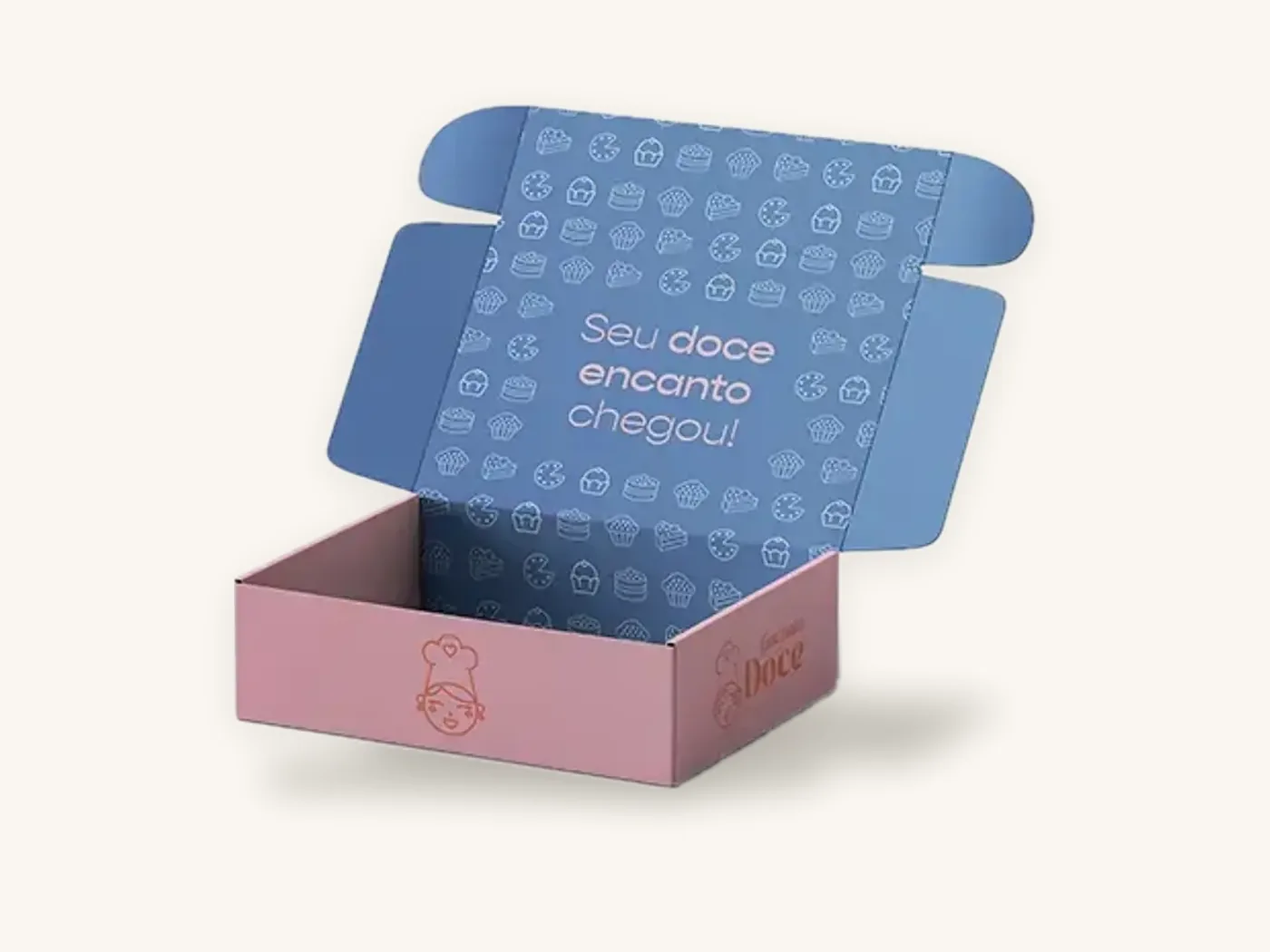
Bakery packaging works best as a system rather than a pile of individual box orders. A typical bakery sells cakes, cupcakes, cookies, pastries and seasonal gifts, and each item has different needs: frosting that must not touch the lid, butter that spots paperboard, and crisp textures that go soft in a closed box. The right approach is to group your menu into a few box families, choose food-contact-appropriate materials for each, and brand them consistently.
This guide is the strategic overview. It maps each bakery product to the right box format, explains the problems all bakery boxes share, compares options by sales channel and shows how to control cost. For item-specific detail, it links out to our dedicated guides for cake, cupcake, donut, cookie and macaron boxes.
Key takeaways
- Group your menu into box families (tall and wide for cakes, insert trays for cupcakes, flat boxes for cookies and pastries) instead of buying a unique box for every item.
- Grease, condensation and decoration damage are the three bakery box problems; each has a structural or material fix.
- Food-contact suitability matters wherever baked goods touch the board directly, so choose appropriate board and coatings or use a liner.
- The sales channel changes the spec: a counter box can be light, while shipped cookies need a mailer and an inner bag.
- A bakery box with window in 18 pt SBS, 10x10x5 in, full color, is about $4.09 each at 100 units and about $1.82 at 1,000.
- Box Sense makes custom bakery boxes from 10 units, with free design support and standard production of 8–12 business days after proof approval.
Map your menu to bakery boxes
Start by listing everything that leaves your counter in a box, then sort it by shape and fragility rather than by name. You will usually find that four or five structures cover almost the whole menu.
| Menu item | Main risk | Box format that fits | Insert? | Detailed guide |
|---|---|---|---|---|
| Layer and celebration cakes | Frosting touching walls and lid; tipping | Tall window cake box with a cake board | Cake board, sometimes a collar | Custom cake boxes |
| Cupcakes | Toppling and smeared frosting | Window box with cavity insert | Yes, holders for 1 to 12 | Custom cupcake boxes |
| Donuts | Glaze sticking and grease | Low window box or single donut box | Optional divider | Custom donut boxes |
| Cookies | Breakage and staleness | Flat box, tin-style two-piece or gable | Liner or inner bag | Custom cookie boxes |
| Macarons | Crushing, very fragile shells | Slim sleeve or window box with tray | Yes, row insert | Macaron packaging |
| Croissants and pastries | Flaking and butter spots | Low, wide window box or clamshell | Greaseproof liner | This guide |
| Pies and tarts | Crust breakage, juice leaks | Square low box with lock corners | Pie board or tray | This guide |
| Bread loaves | Crust softening | Paper bag or open-ended sleeve | No | This guide |
Box families that cover most bakeries
- Tall square box for whole cakes, in two or three sizes.
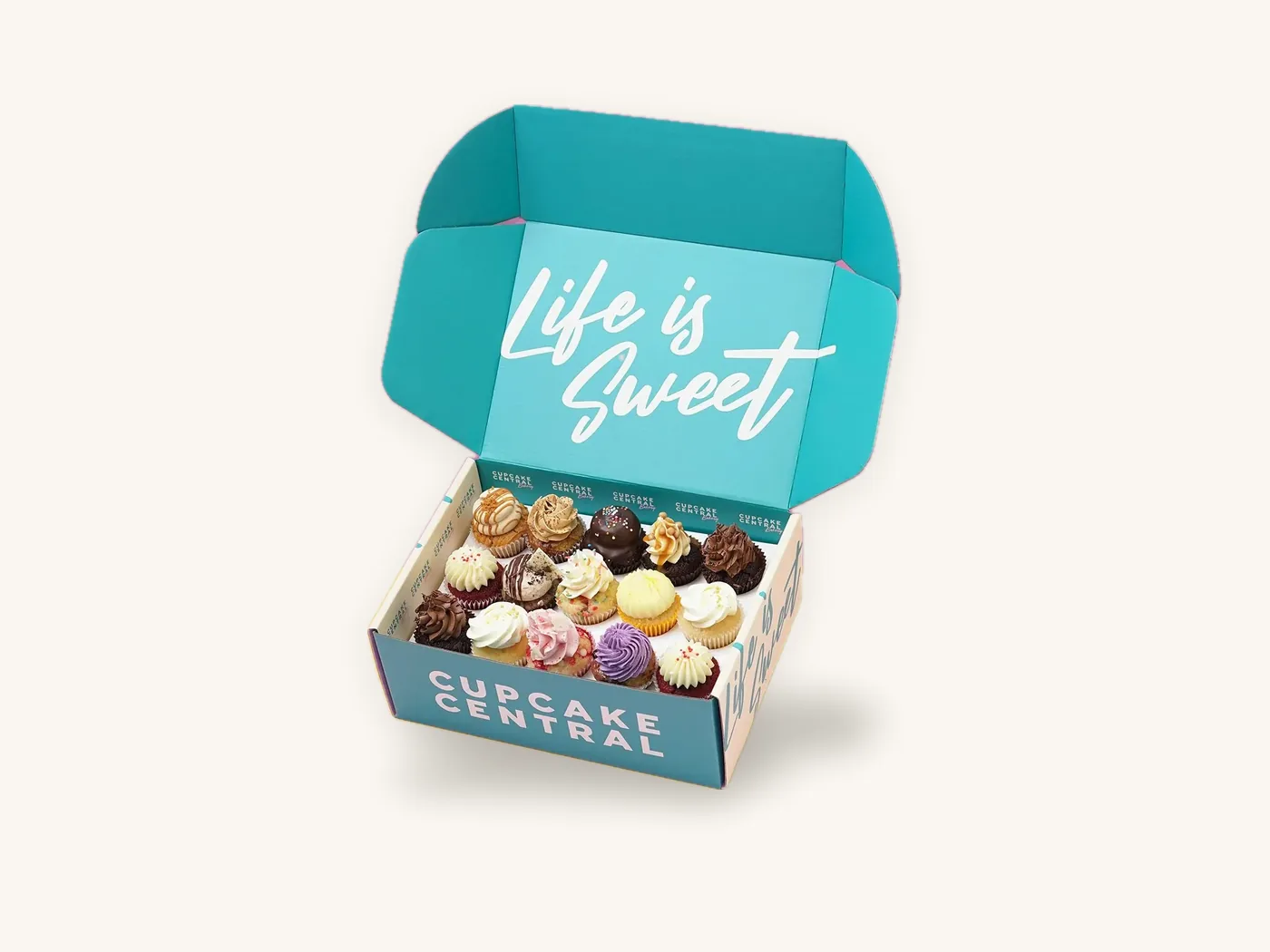
- Window insert box for cupcakes, with one insert per count.
- Low wide window box shared by donuts, pastries and pies.
- Flat or gable gift box for cookies, brownies and assortments.
- Slim sleeve box for macarons and small confections.
Limiting the range to five families means fewer setups, easier storage and one visual system across the shop.
The three problems every bakery box must solve
Grease and butter spotting
Butter-rich pastries, cookies and donuts release fat into anything they touch. On uncoated paperboard it shows up as dark translucent spots within hours. Fix it with a grease-resistant board or coating on the inside, a greaseproof liner sheet or glassine bag, or a darker or patterned design that hides small marks.
Condensation and texture loss
Warm bakes release steam. Closed in a box, that moisture condenses on the lid and softens crisp crusts, laminated pastry and cookie edges. Let products cool before boxing where you can. When you cannot, choose a box with small vents or a window that is not sealed tight, and avoid packing hot bread in anything fully closed.
Decorations and frosting damage
Tall frosting, piped rosettes, fondant figures and glaze all smear on contact. Height is the most common mistake: a cake box that is exactly as tall as the cake will touch it the moment the lid flexes. Leave clearance above the highest decoration, and use inserts that hold cupcakes by the base rather than letting them slide.
Tip: measure your tallest decorated item from the board to the highest point, then add about 1/2 in. Build your cake box heights from that number rather than from the height of an undecorated sponge.
Food-contact basics for bakery boxes
Many baked goods touch the box directly, which makes material choice more than a branding decision. In the US, the FDA regulates substances used in food-contact materials, including paper and paperboard components, coatings and adhesives. Suitability depends on the food: dry cookies ask less of the board than buttery croissants or fruit tarts.
Direct and indirect contact
A croissant placed straight into a pastry box is direct contact, so the inside surface must be suitable for fatty food. Cookies sealed in a bag, or a cake sitting on a coated cake board, are closer to indirect contact, which gives more freedom on printing and finishes. Using a liner, a food-safe bag or a cake board is often the simplest way to use a fully printed box safely.
Practical rules for bakers
- Print on the outside of direct-contact boxes, and keep ink off food-contact surfaces.
- Ask your supplier what gives a board its grease resistance, since several states restrict PFAS-based treatments in food packaging.
- Avoid foil and metallic finishes on boxes a customer might microwave.
- Keep documentation from your supplier for any retailer that asks.
Our guides to food-safe inks and coatings and to custom food packaging materials explain the barrier options. If you sell prepackaged goods to shops, the FDA food labeling and packaging guide covers ingredient, allergen and net quantity panels. Home bakers selling under state cottage food laws often have specific label wording to include. Confirm current requirements with the FDA, your state agency or counsel.
Window or no window: a quick decision guide
Windows sell baked goods, but they are not always the right call.
| Choose a window when | Skip the window when |
|---|---|
| The decoration is the selling point, such as custom cakes and cupcakes | The product is plain and the brand story matters more |
| Customers pick from a display and want to confirm the order | The box will be shipped and scuffed in transit |
| Products are colorful, glazed or sprinkled | Products are greasy and could mark film from inside |
| You want staff to check orders without opening boxes | The box is a gift and the reveal matters |
Windows can use clear PET film or compostable PLA film. Keep the window clear of fold lines and away from the bottom edge where most load sits. The window boxes style page shows placement options.
Bakery boxes by sales channel
The same croissant needs different packaging on a counter, in a delivery bag and in a shipped gift box. Decide your main channels first, then set a spec for each.
| Channel | Priorities | Typical construction | Common add-ons |
|---|---|---|---|
| Counter and walk-in | Speed, visibility, low cost | 18 pt SBS or kraft paperboard, pre-glued or quick-fold | Window, sticker seal |
| Local delivery apps | Stability in a bag, tamper evidence | Paperboard with lock corners, snug fit | Tamper sticker, handle or bag |
| Nationwide shipping | Crush and drop resistance, freshness | Inner bag or tin, plus corrugated mailer | Dividers, tissue, cold packs for some items |
| Wholesale to cafes and grocers | Stacking, labeling, shelf life | Retail carton with full label panels | Barcode, date code |
| Gifting and corporate orders | Presentation and keepsake value | Rigid or two-piece box, sleeve | Ribbon, inside print, card |
| Events and weddings | Uniformity and small formats | Favor boxes and pillow boxes | Name labels, matching sleeves |
Shipping baked goods
Shipped cookies and brownies travel best sealed in a bag or wrapped individually, packed in a snug box, then placed in a printed corrugated mailer with dividers. Cakes with soft frosting generally do not ship well by parcel unless frozen, which takes you into cold-chain packaging. Our cold-chain packaging guide explains insulated options.
Delivery and takeout
For delivery app orders, the key issues are staying level in a bag and showing whether a box was opened. A tamper-evident sticker across the lid is cheap and reassuring. Bakeries that also sell savory items can borrow ideas from the takeout packaging guide.
Build a bakery packaging system in seven steps
- Audit your menu. List every boxed item, its dimensions including decorations, weekly volume and channel.
- Group into families. Sort items by footprint and height into the five families above, merging sizes within roughly 1/2 in of each other.
- Set clearance rules. Decide standard allowances, such as 1/2 in above decorations and about 1/4 in around the base of cakes.
- Choose materials per family. Decide where you need grease resistance, windows or inserts, and where a plain board is enough.
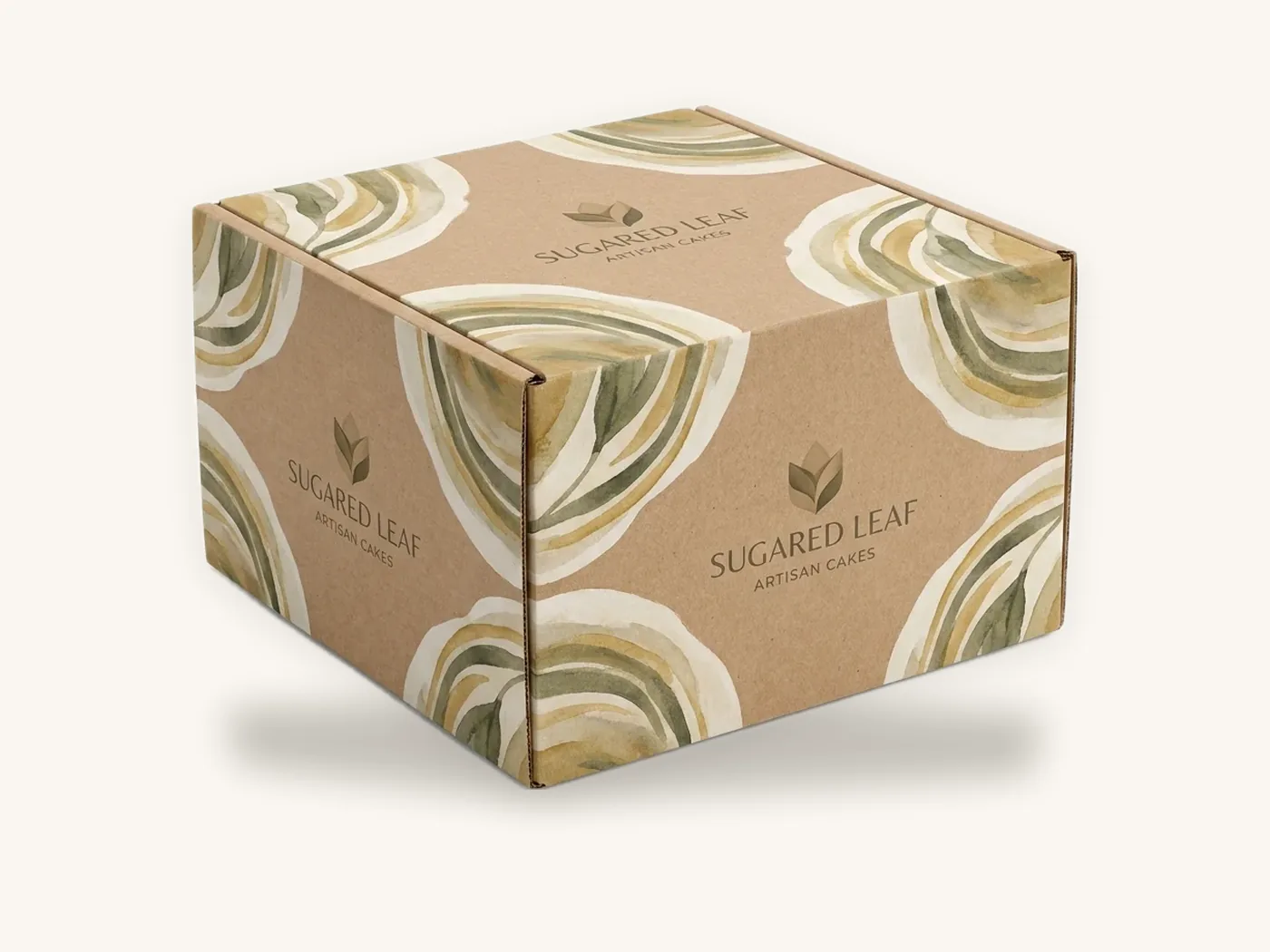
- Design one visual system. Use the same logo position, color and pattern across every family so the counter looks cohesive.
- Order structural samples. Test each family with real product on your busiest day, including stacking and carrying.
- Set reorder points. Order high-volume families in larger batches and keep seasonal sleeves or stickers as the flexible layer.
A system like this often cuts the number of stocked box sizes considerably, which frees shelf space behind the counter and simplifies staff training.
Branding custom bakery boxes on a bakery budget
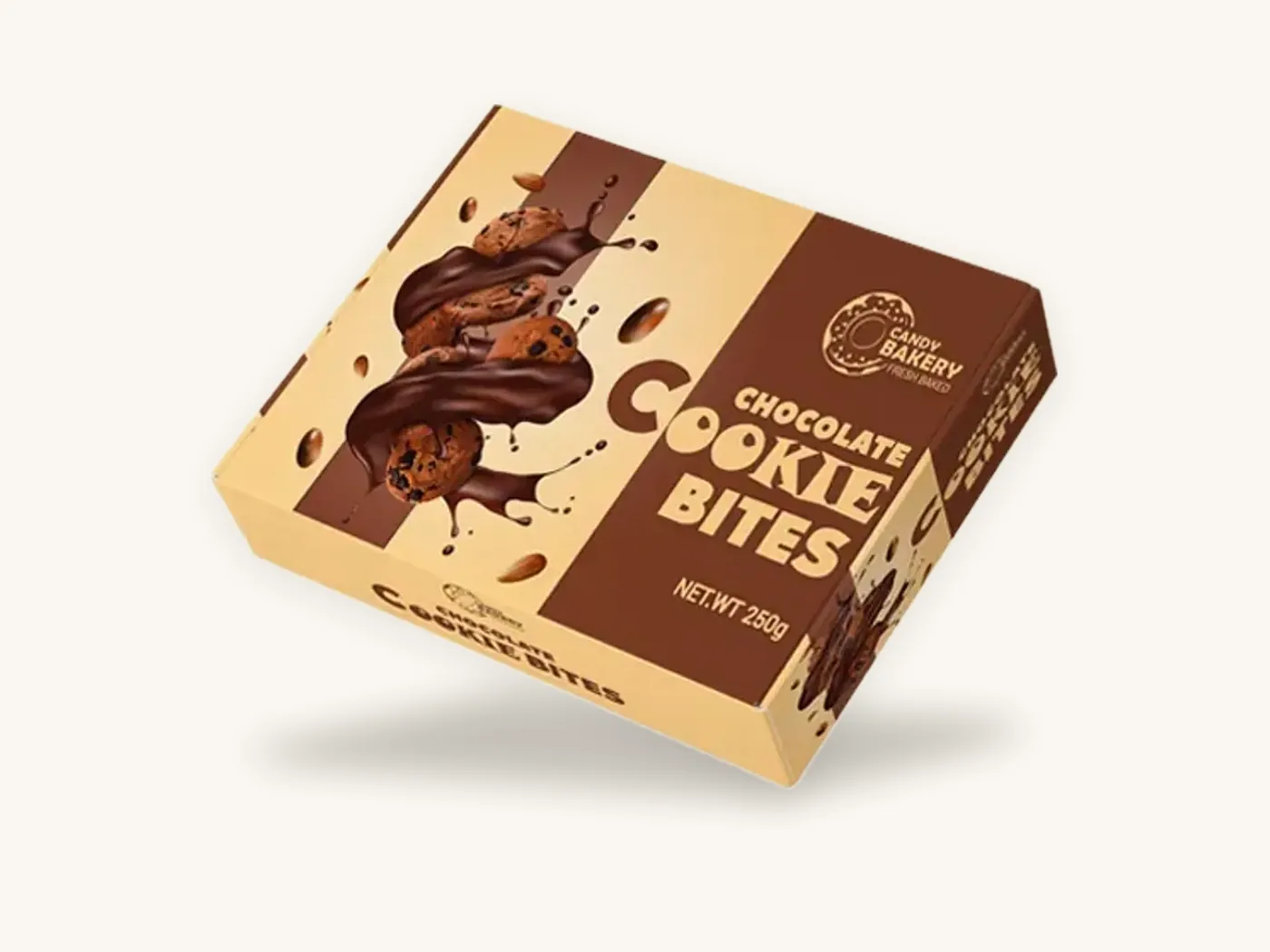
Small bakeries do not need full-color printing on every box to look distinctive. A few focused choices go a long way.
High impact, modest cost
- One or two spot colors on kraft or white board for everyday boxes, keeping full color for gift formats.
- A repeating pattern in place of a large logo, which hides grease marks and looks good from any angle.
- A printed sticker seal that changes with seasons, while the box stays the same all year.
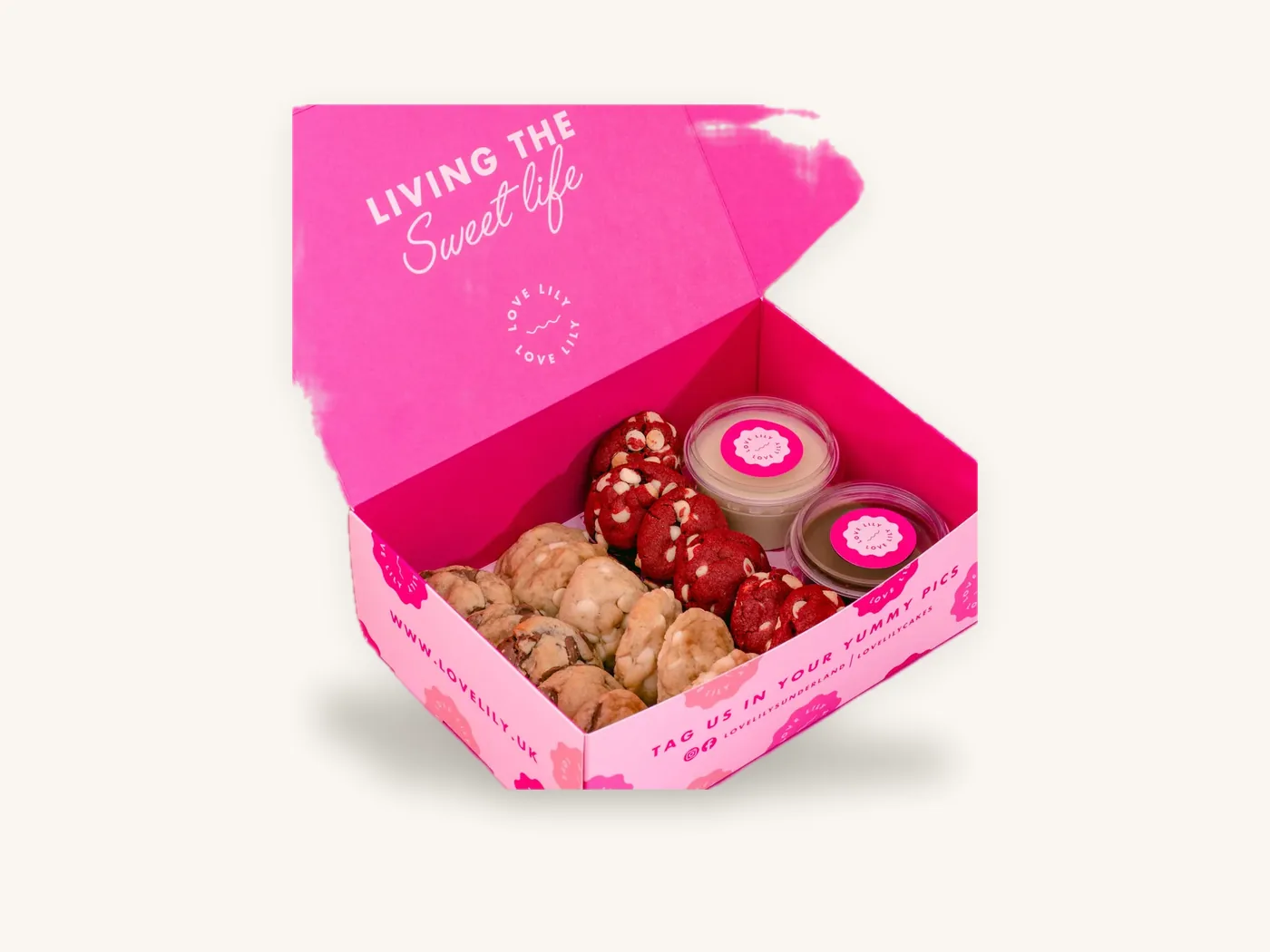
- Inside-lid printing on celebration cake boxes, seen as the customer lifts the lid at the party.
- A printed sleeve that turns a plain window box into a gift for holidays.
Where to spend more
Custom bakery boxes for gifting, weddings and corporate orders carry more of your brand's perceived value. Consider soft-touch lamination, foil on the lid, or a rigid two-piece box for premium cookie and chocolate assortments. Browse finishes on the printing and finishes page, and see the full range of formats on the bakery and confectionery industry page.
Seasonal and holiday bakery packaging
Holiday sales can bring volume spikes that outpace your usual stock. Plan packaging on the same calendar as your menu.
- Lock seasonal designs early. Allow time for design, proofing and 8–12 business days of production, plus shipping, well ahead of the rush.
- Use sleeves and stickers for themes. Changing a sleeve rather than the whole box keeps base stock usable after the season.
- Order gift formats separately. Christmas and holiday boxes and assortment boxes often need different inserts than everyday stock.
- Keep some buffer. Rush production in 5 business days is available on most paperboard styles, but planning ahead avoids paying for speed.
What bakery boxes cost
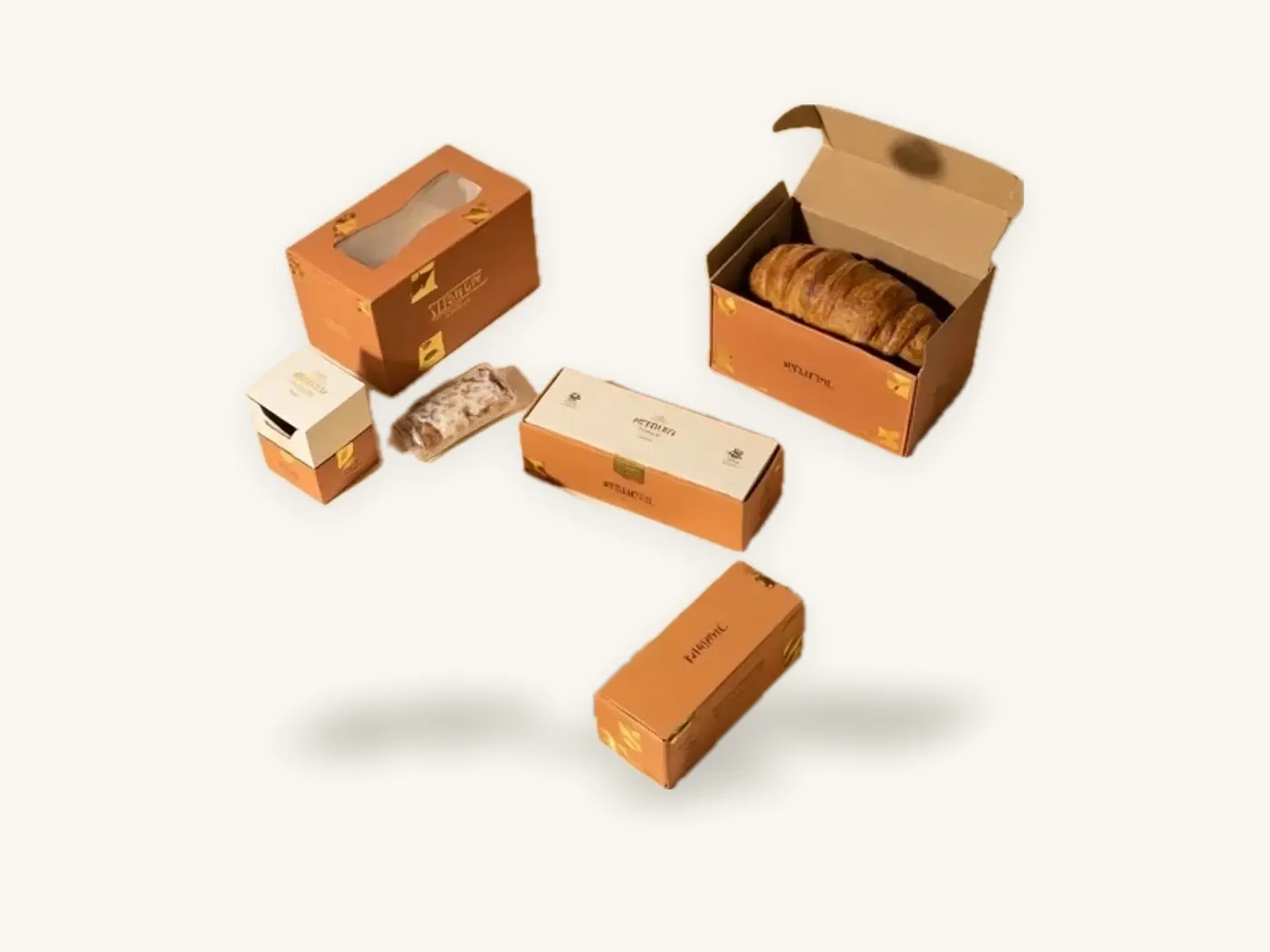
Bakery box prices depend on size, board, windows, inserts, print coverage and quantity. The indicative per-unit prices below come from our current rates and include free US shipping.
| Spec | 10 | 100 | 250 | 500 | 1,000 | 5,000 | 10,000 |
|---|---|---|---|---|---|---|---|
| Bakery/cake box with window, 18 pt SBS, 10x10x5 in, full color | $6.17 | $4.09 | $2.91 | $2.18 | $1.82 | $1.29 | $1.16 |
| Window box, 18 pt SBS, 4x4x4 in, full color, aqueous, window | $2.52 | $1.66 | $1.18 | $0.89 | $0.74 | $0.53 | $0.47 |
| Kraft tuck carton, 18 pt kraft, 4x3x2 in, 1-color print | $1.22 | $0.81 | $0.57 | $0.43 | $0.36 | $0.25 | $0.23 |
The 10x10x5 in row is a reasonable reference for a whole cake or a dozen-cupcake box. The 4x4x4 in window box suits single cupcakes and small pastries, and the kraft carton suits a few cookies or a single brownie. An insert die is a one-time charge of about $45. Enter your sizes in the bakery box price estimator for exact figures.
Cost levers for bakeries
- Fewer sizes: every size you drop removes a setup and a storage slot.
- Higher quantities on core families: unit prices fall steeply from 100 to 1,000.
- Print coverage: one or two colors outside is usually enough for counter boxes.
- Windows and inserts: use them where they sell or protect, not by default.
How to order bakery boxes from Box Sense
Information that speeds up a quote
- Your box families and the dimensions of the tallest and widest item in each
- Whether food touches the board directly, and whether you use liners or bags
- Window, insert and grease-resistance needs per family
- Board choice: white SBS or kraft
- Print colors, inside printing and finishes
- Quantities per family, and seasonal items with dates
- Artwork, or a request for our design services team to build the dielines and layout
The process
- We confirm pricing within 24 hours.
- We provide dielines, set up artwork and send a 3D digital proof, with two revision rounds included free.
- Unprinted structural samples are free, so you can test each box family with real product. A printed sample of approved artwork is free on orders of 100 or more; see samples.
- Standard production takes 8–12 business days after proof approval, with rush in 5 business days on most paperboard styles.
- Shipping is free on every US order.
The minimum order is 10 boxes, and there are no die or plate charges. Defective boxes reported within 14 days are reprinted free. For individual items, the cake boxes, cupcake boxes and cookie boxes product pages list the standard styles.
Frequently asked questions
What kind of packaging do bakeries use?
Most bakeries use folding paperboard boxes in a few formats: tall window boxes for cakes, window boxes with inserts for cupcakes, low wide boxes for donuts and pastries, flat or gable boxes for cookies, and slim sleeves for macarons. Paper bags cover bread. Gift and wedding orders often move up to rigid or two-piece boxes with sleeves or ribbons.
How do I choose the right size bakery box?
Measure each item at its tallest and widest point, including decorations and any cake board. Add about 1/2 in above the highest decoration and a little room around the base so the product slides in without smearing. Then group items within about 1/2 in of each other into shared sizes to keep your range small.
Are bakery boxes food safe?
They can be, when the board, coatings and adhesives are suitable for the food and how it contacts the box. Plain paperboard suits dry, wrapped items; buttery or moist bakes touching the board need an appropriate grease-resistant surface or a liner. Ask your supplier for food-contact documentation and confirm requirements with the FDA or your state agency.
How do I stop grease stains on pastry boxes?
Use a grease-resistant interior surface, add a greaseproof liner sheet or glassine bag, or choose a darker or patterned design that hides small marks. Let pastries cool before boxing, since warm butter spreads faster. Ask what provides the grease resistance, because several US states restrict PFAS-based treatments in food packaging.
How much do custom bakery boxes cost?
For reference, a bakery box with a window in 18 pt SBS at 10x10x5 in, printed full color, is about $4.09 per box at 100 units and about $1.82 at 1,000, with US shipping included. Smaller window boxes and kraft cartons cost less. Use the pricing estimator for your own sizes and quantities.
Should bakery boxes have windows?
Choose windows when decoration or color sells the product, when customers pick from a display, or when staff need to check orders quickly. Skip them for shipped boxes, very greasy products, or gifts where the reveal matters. PET film is clear and inexpensive, while PLA film is a compostable alternative.
Can I order small quantities of custom bakery boxes?
Yes. Box Sense produces custom bakery boxes from 10 units, printed digitally for short runs with no plate charges. That suits new bakeries testing designs, seasonal items and wedding or event orders. Unit prices drop substantially as quantities increase, so most bakeries order core box families in larger runs once sizes are proven.
Next steps
Audit your menu, group it into box families, and check your core sizes in the bakery packaging price estimator. When you are ready, request a custom bakery box quote and we will confirm pricing within 24 hours and send free structural samples for each family.
Boxes in this guide
Order the packaging we covered
Written by the Box Sense Packaging Team
Our structural designers, prepress technicians and production staff print and convert custom boxes every day for brands in the United States, United Kingdom and UAE. Questions about this guide? Talk to us.